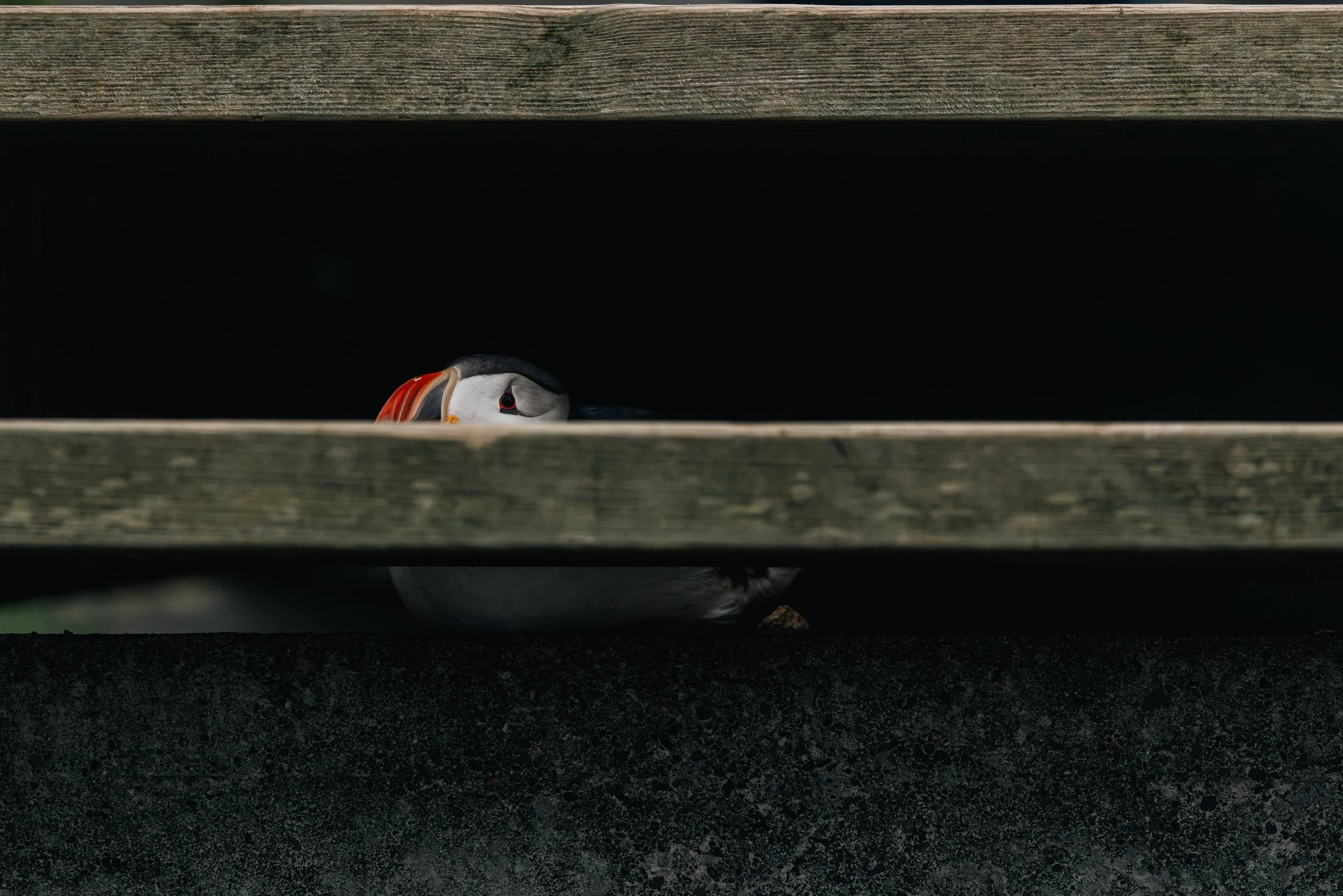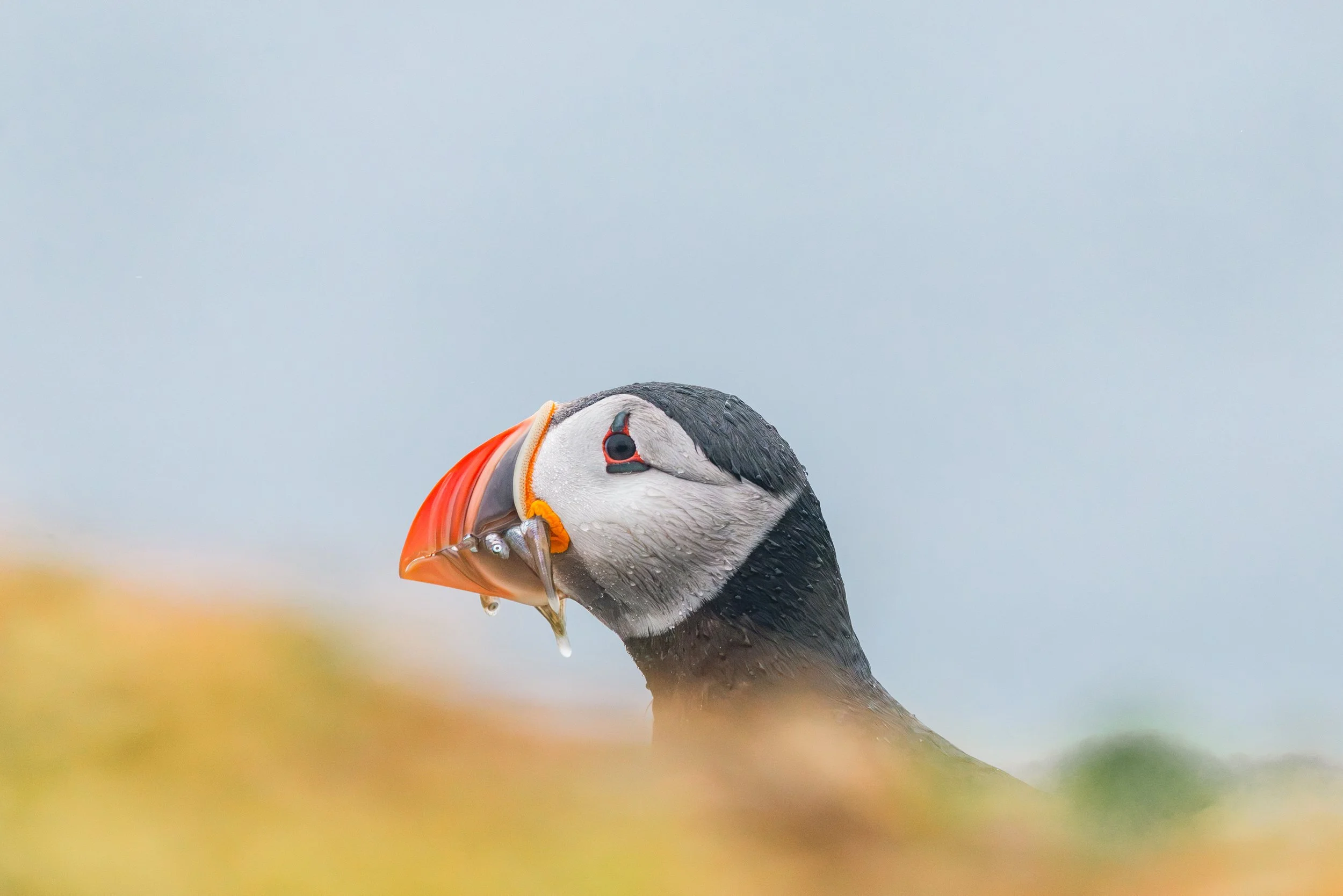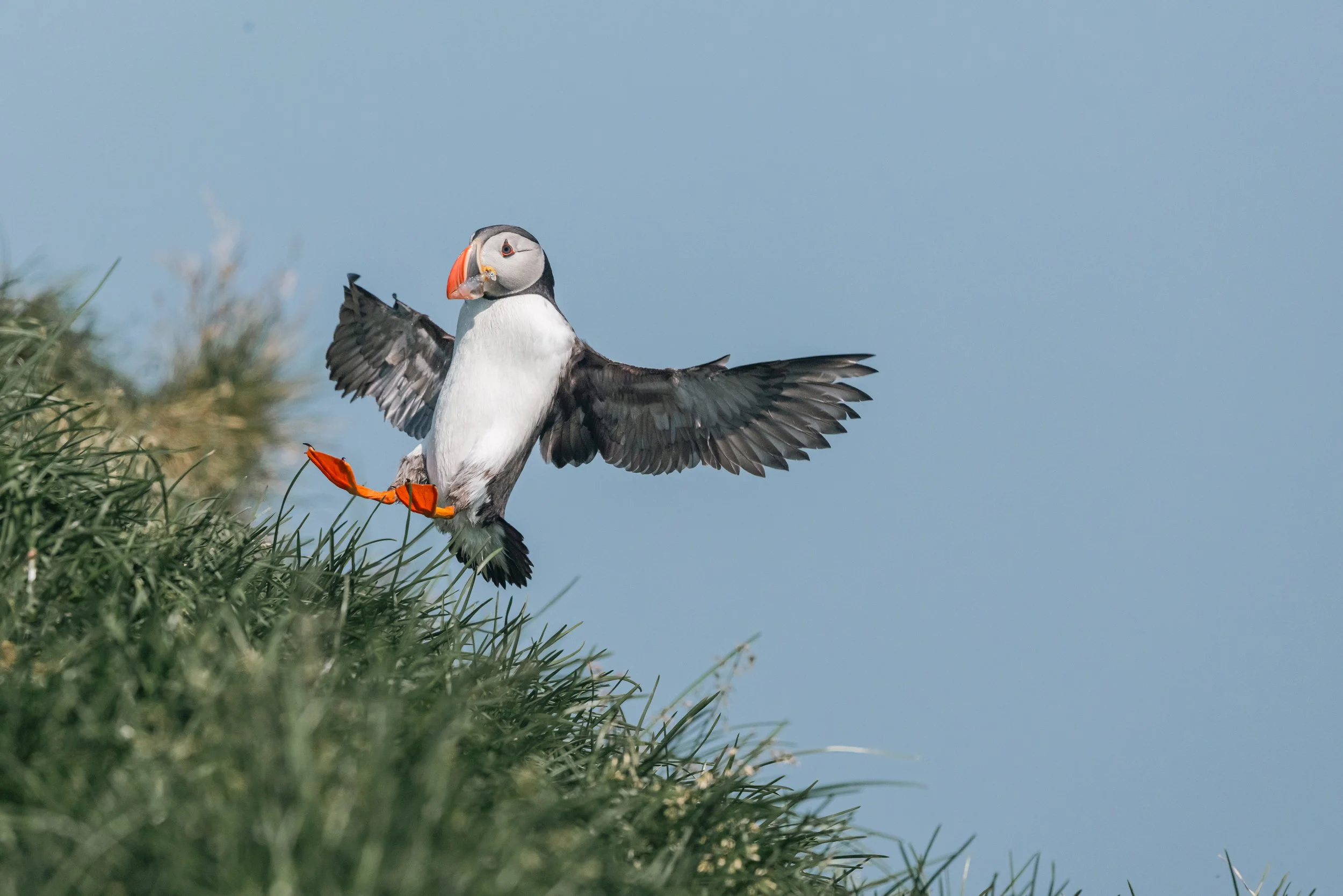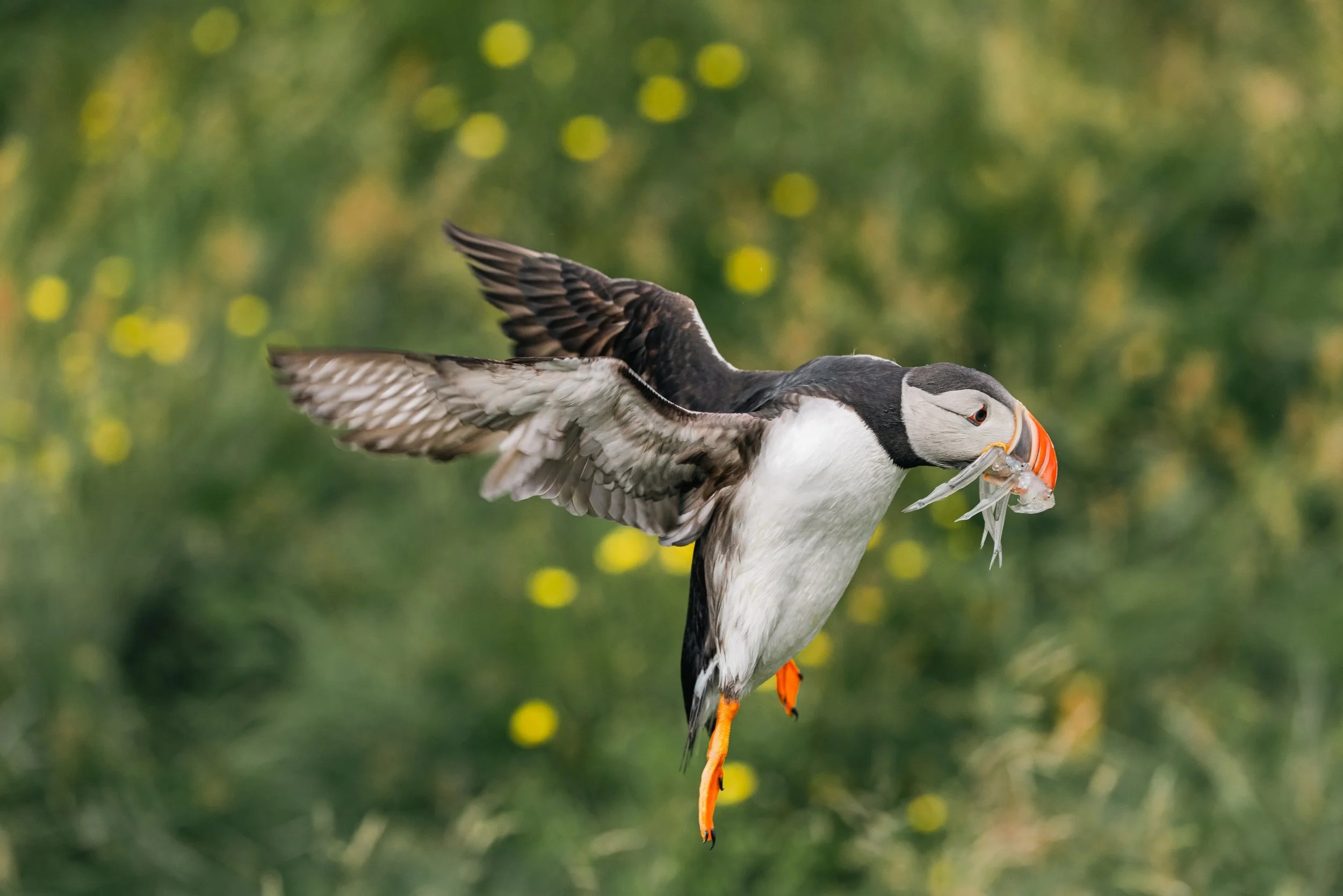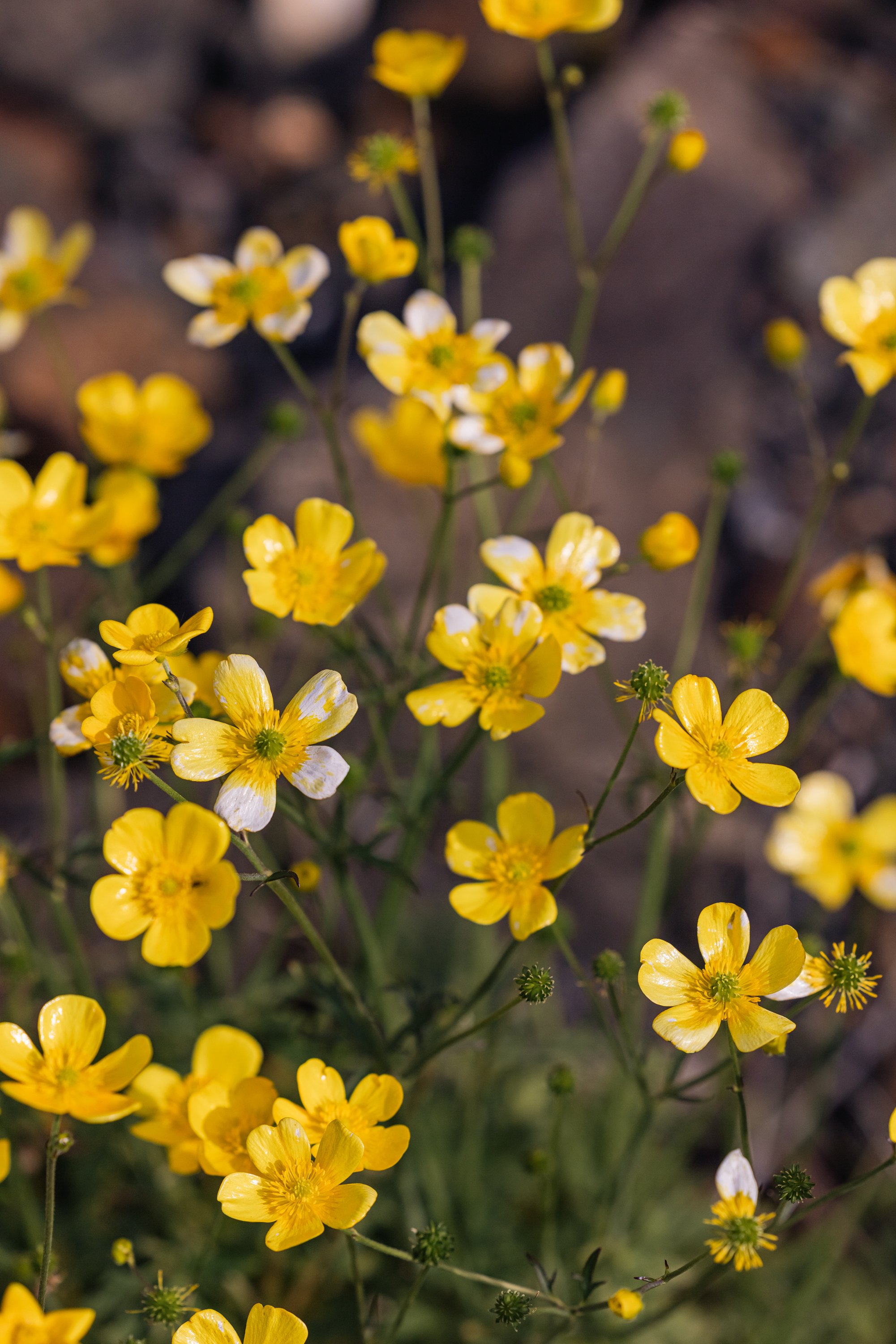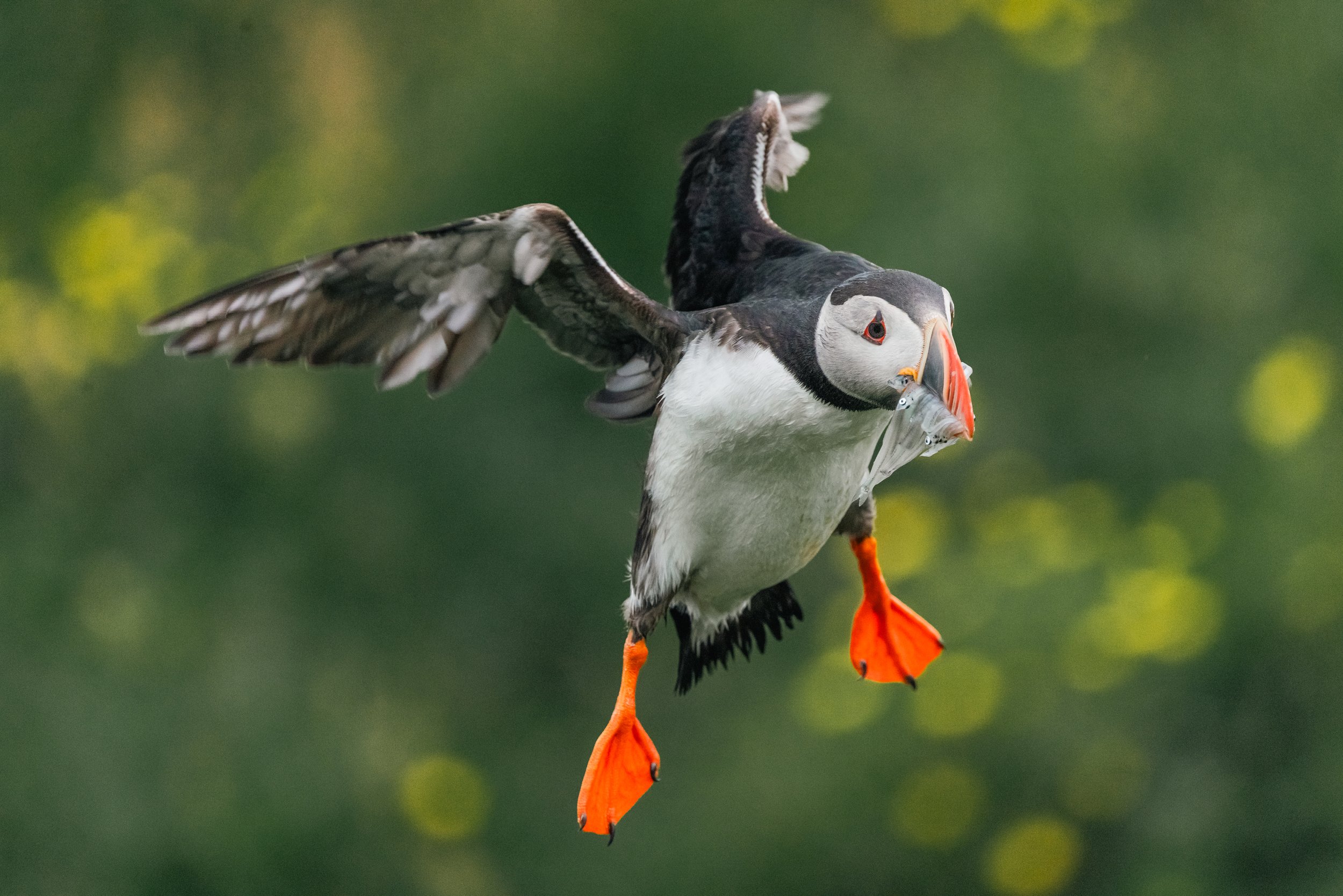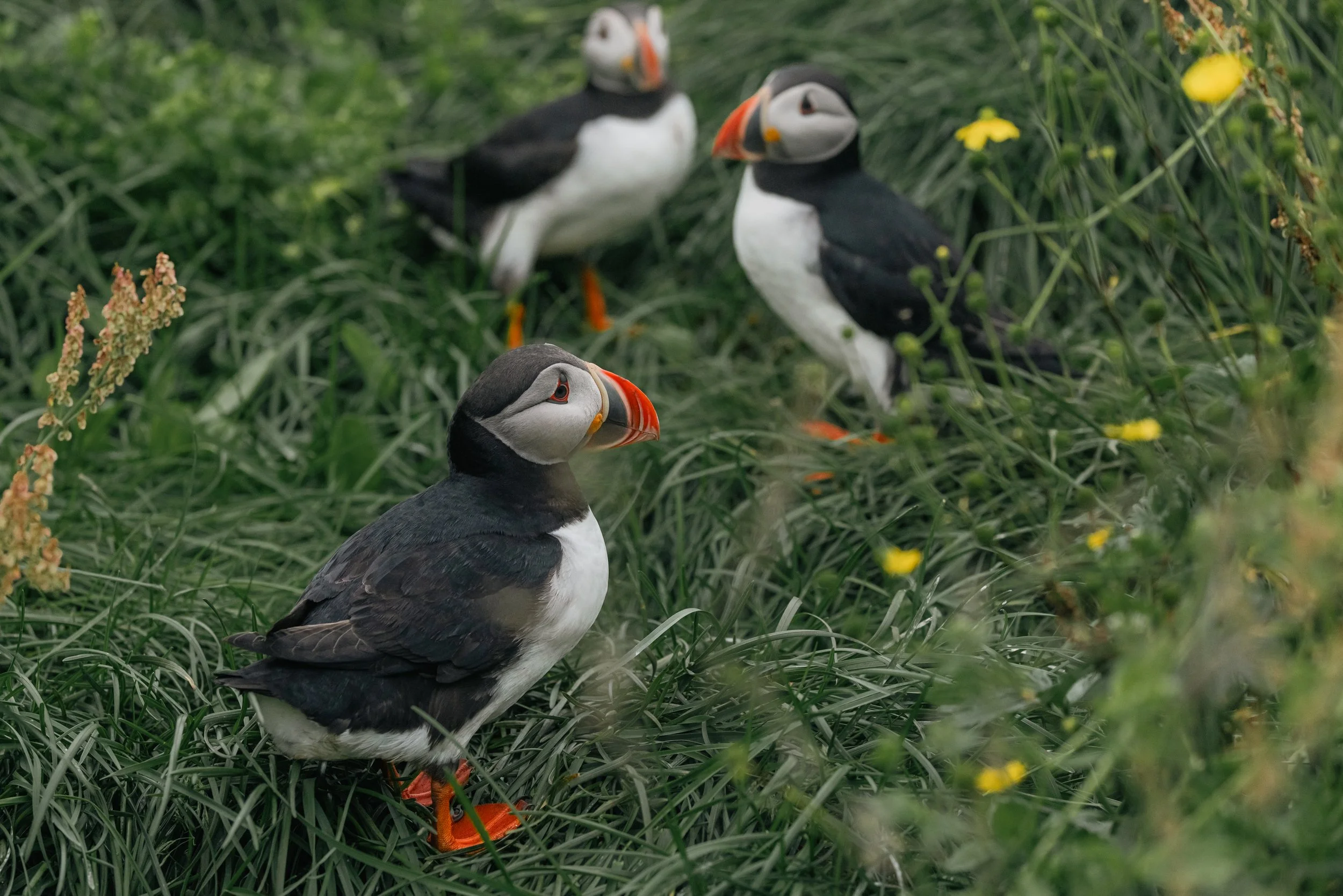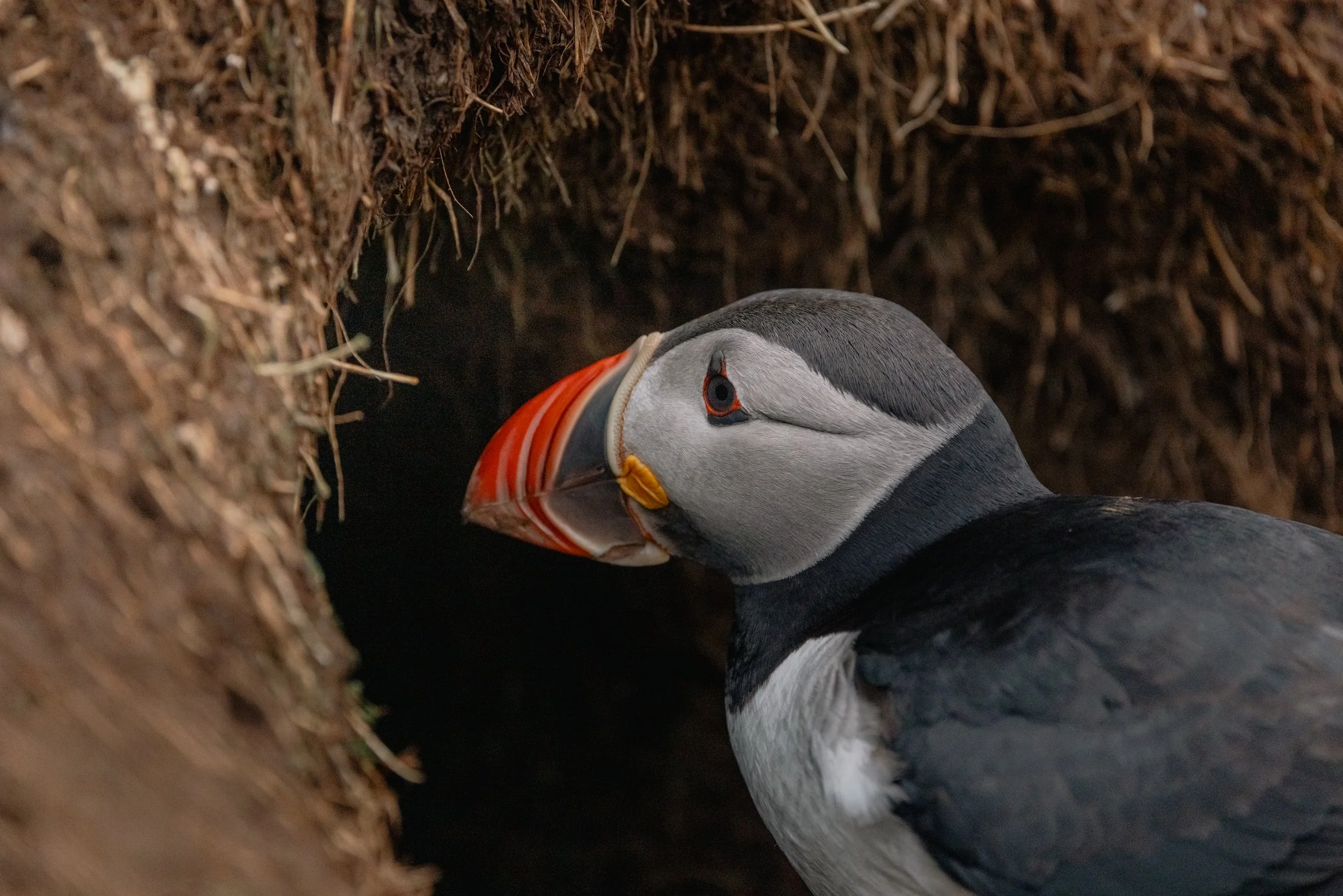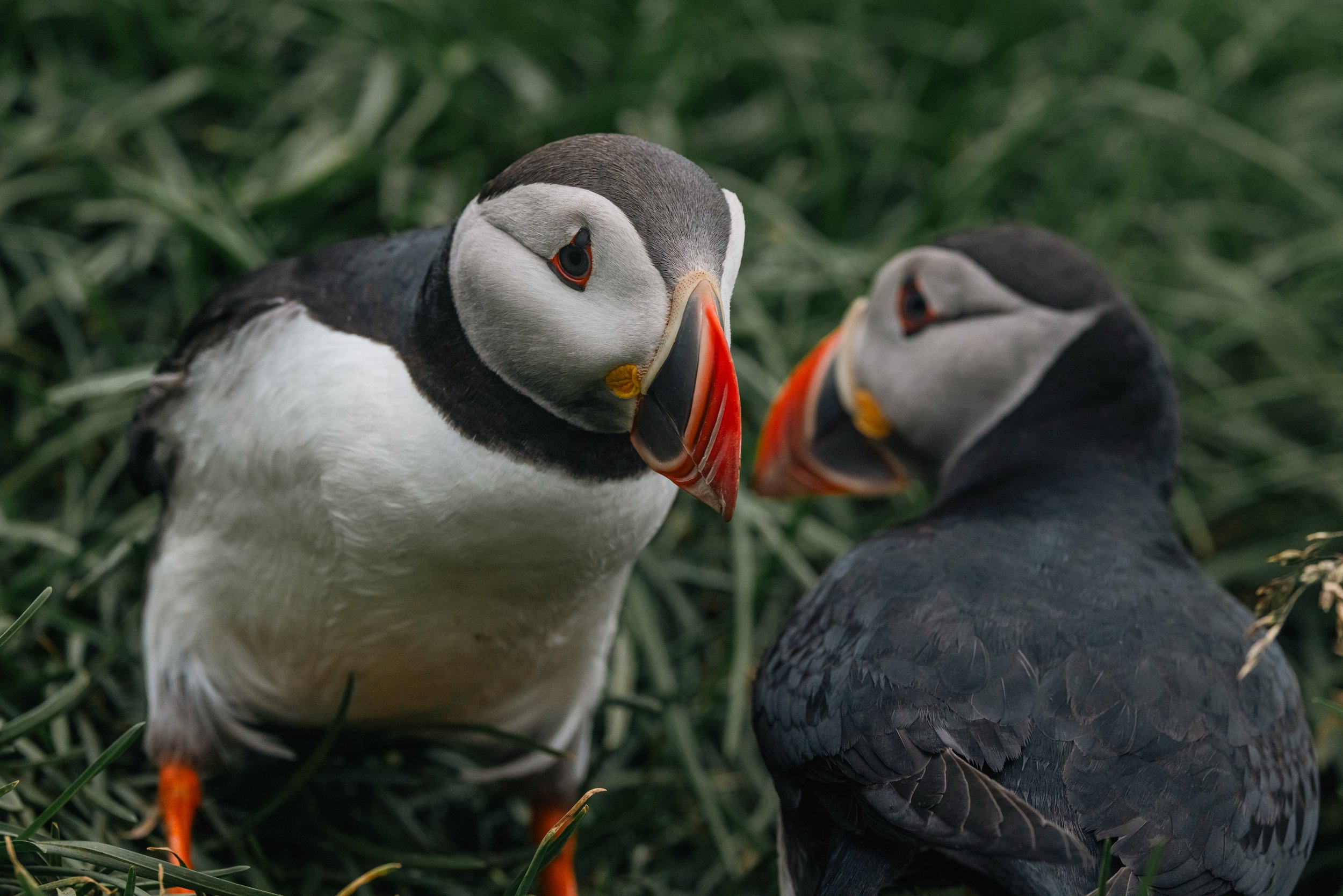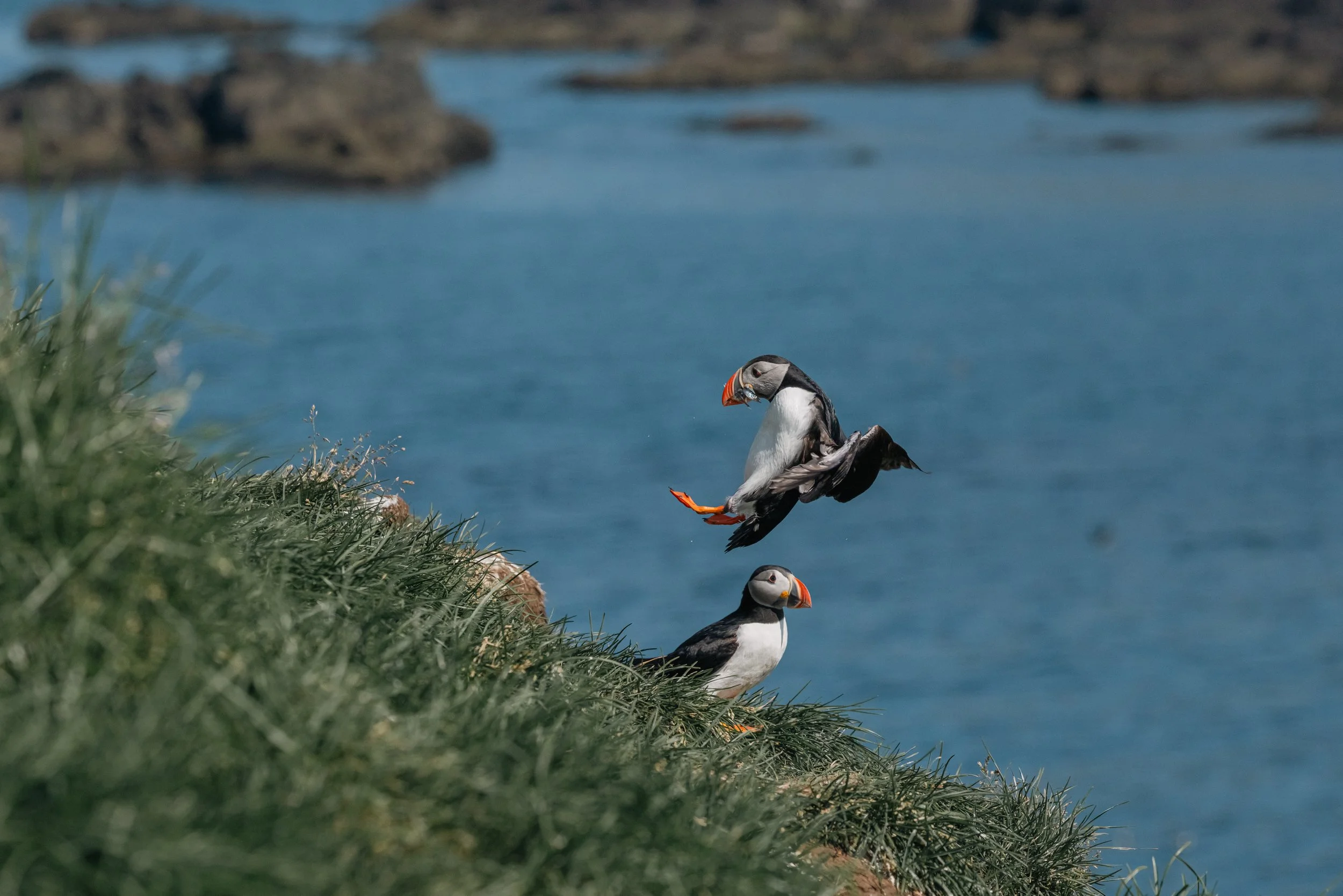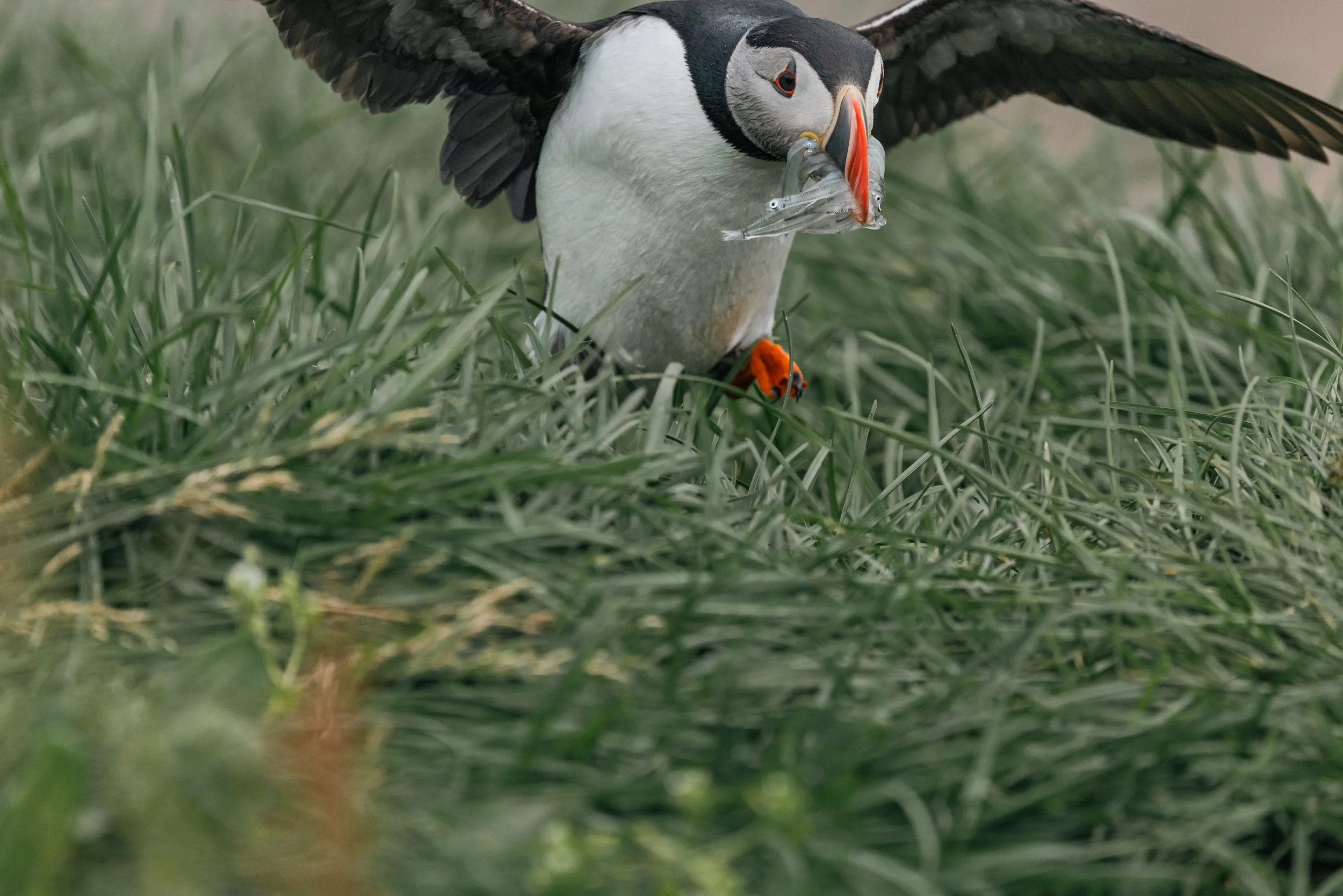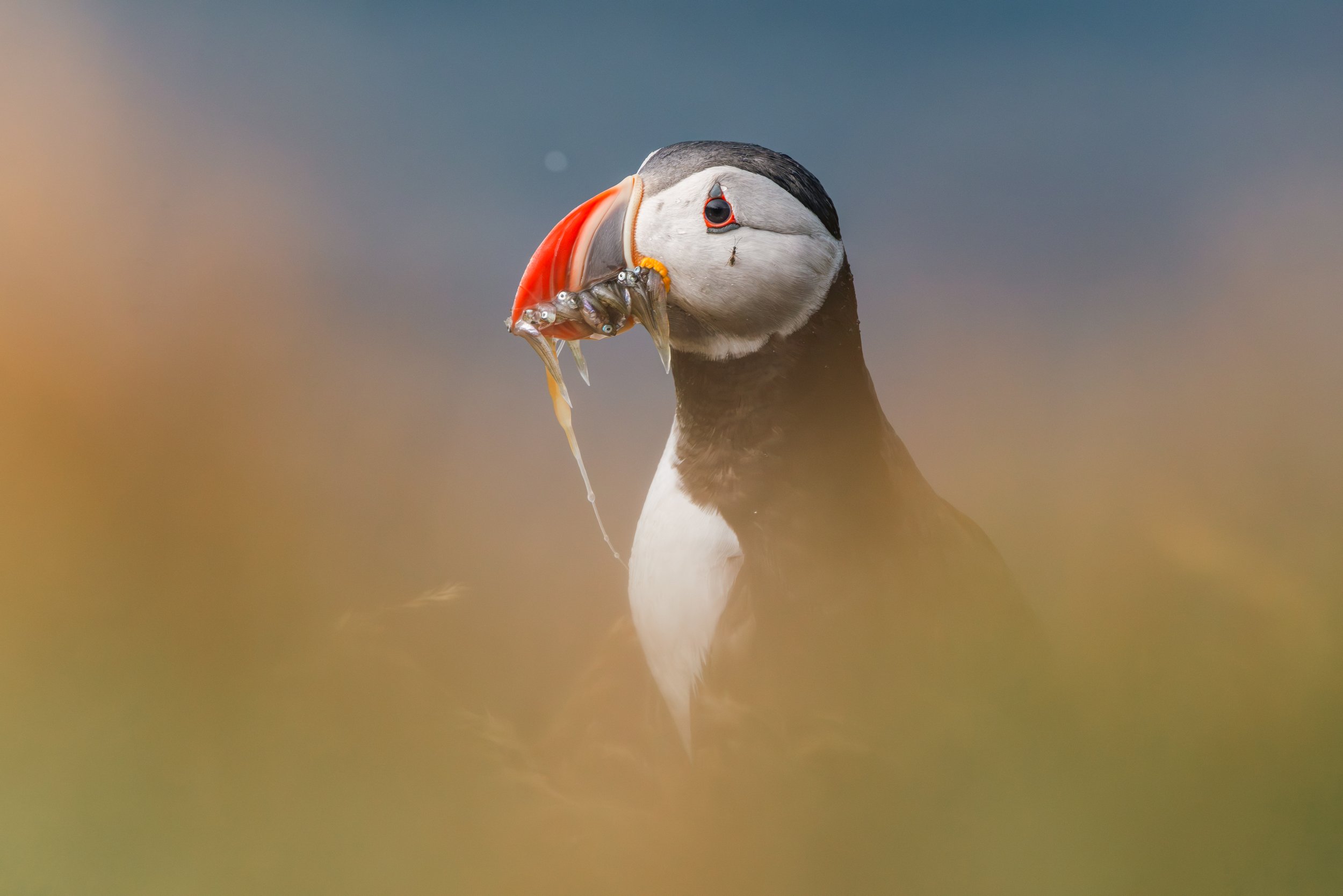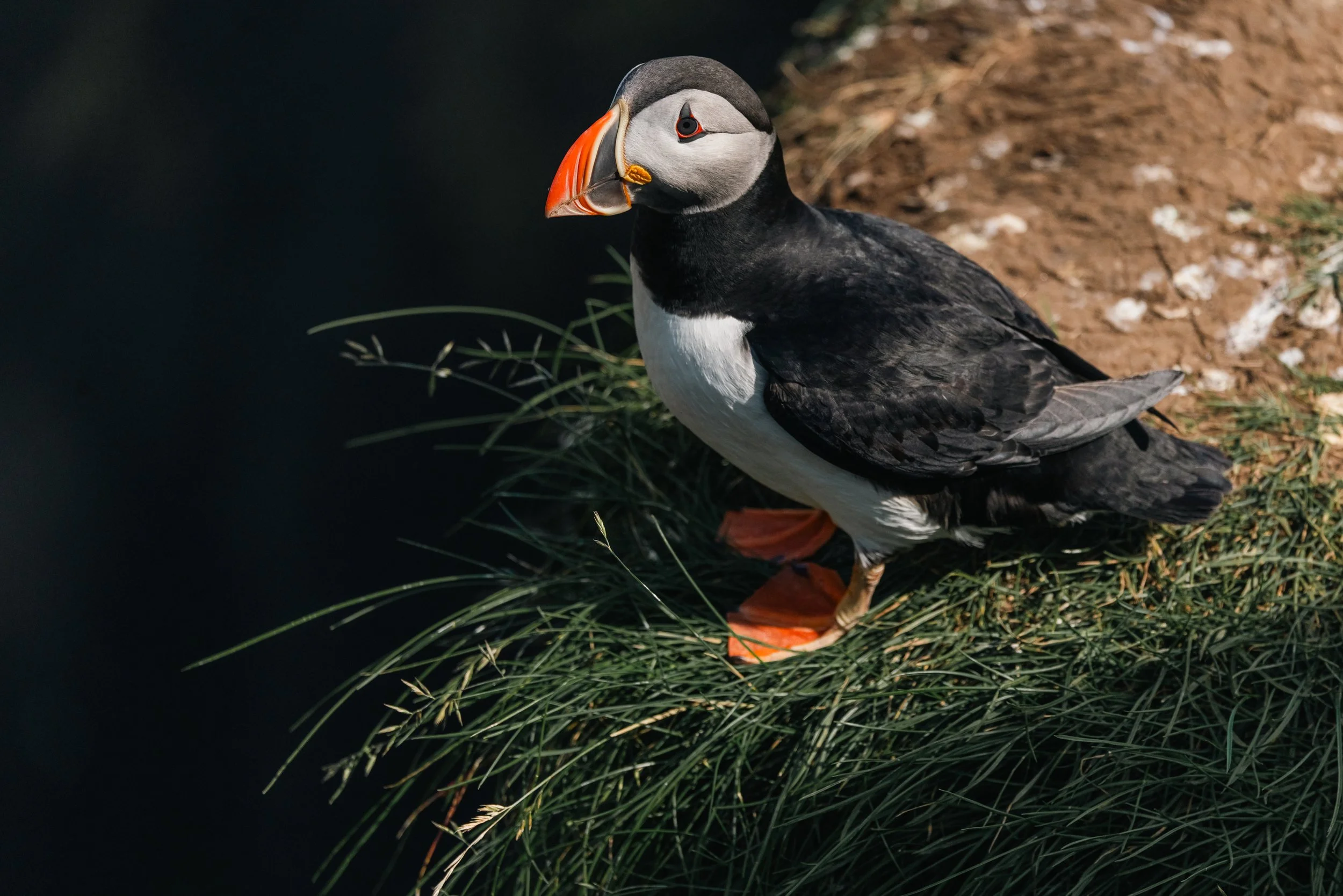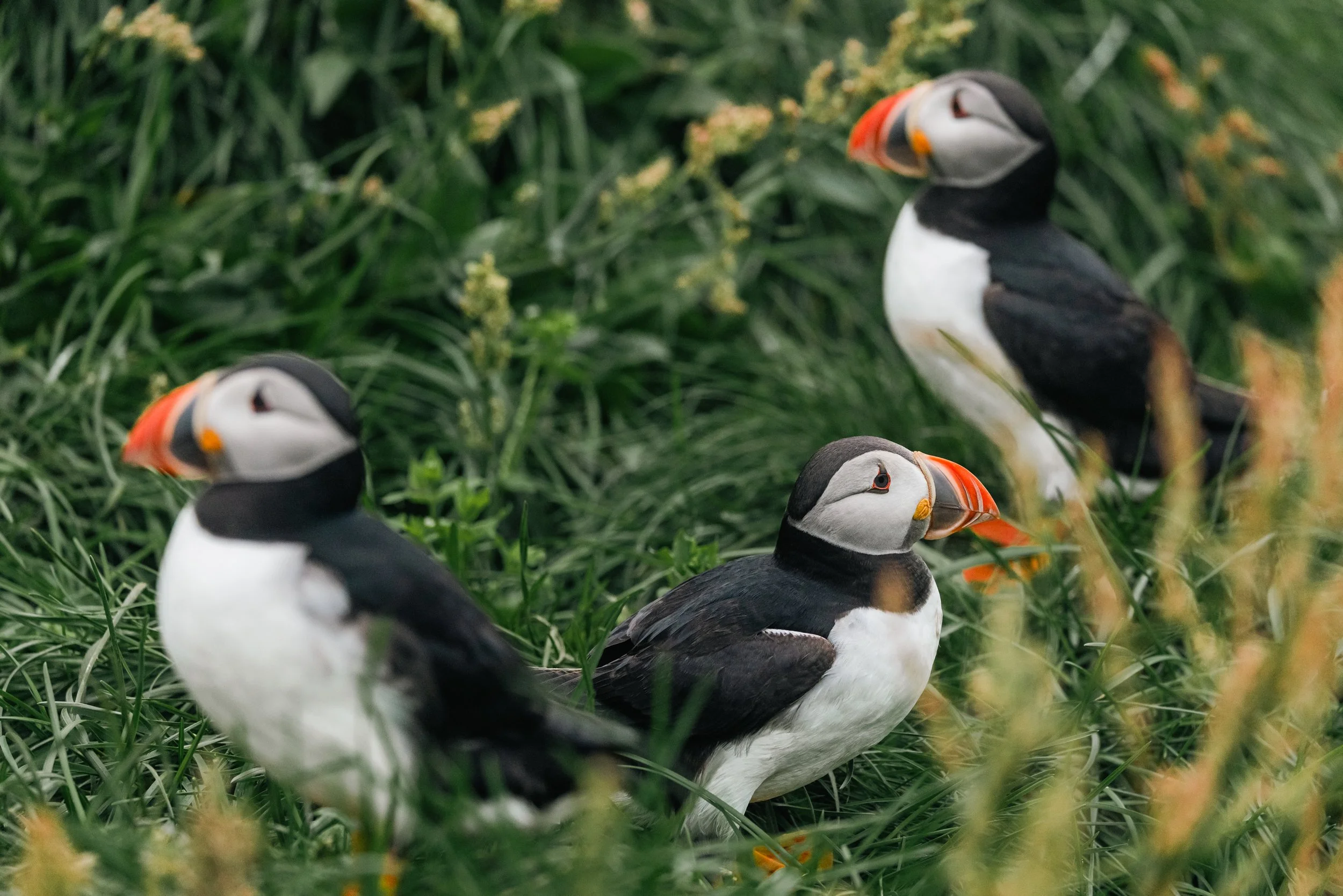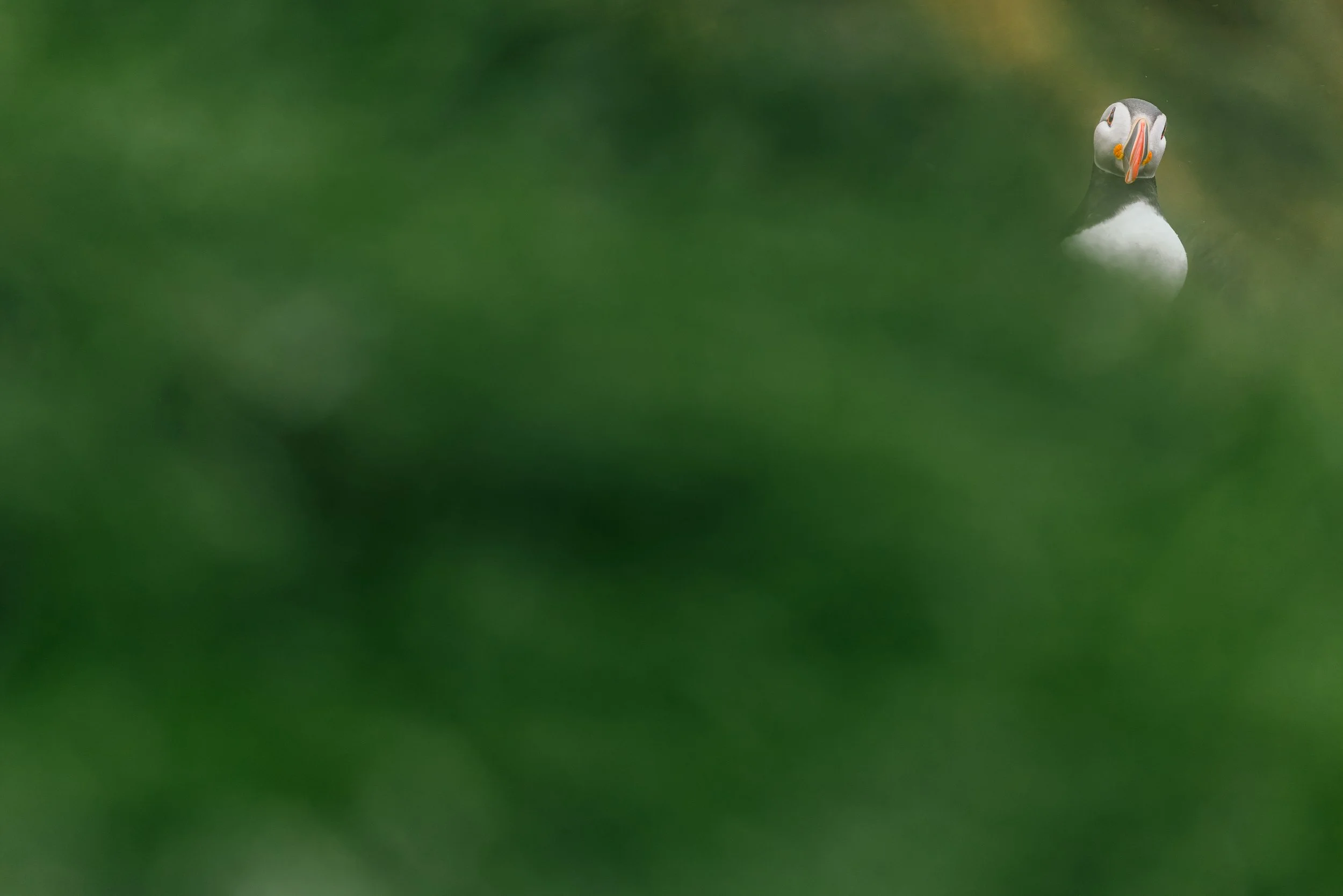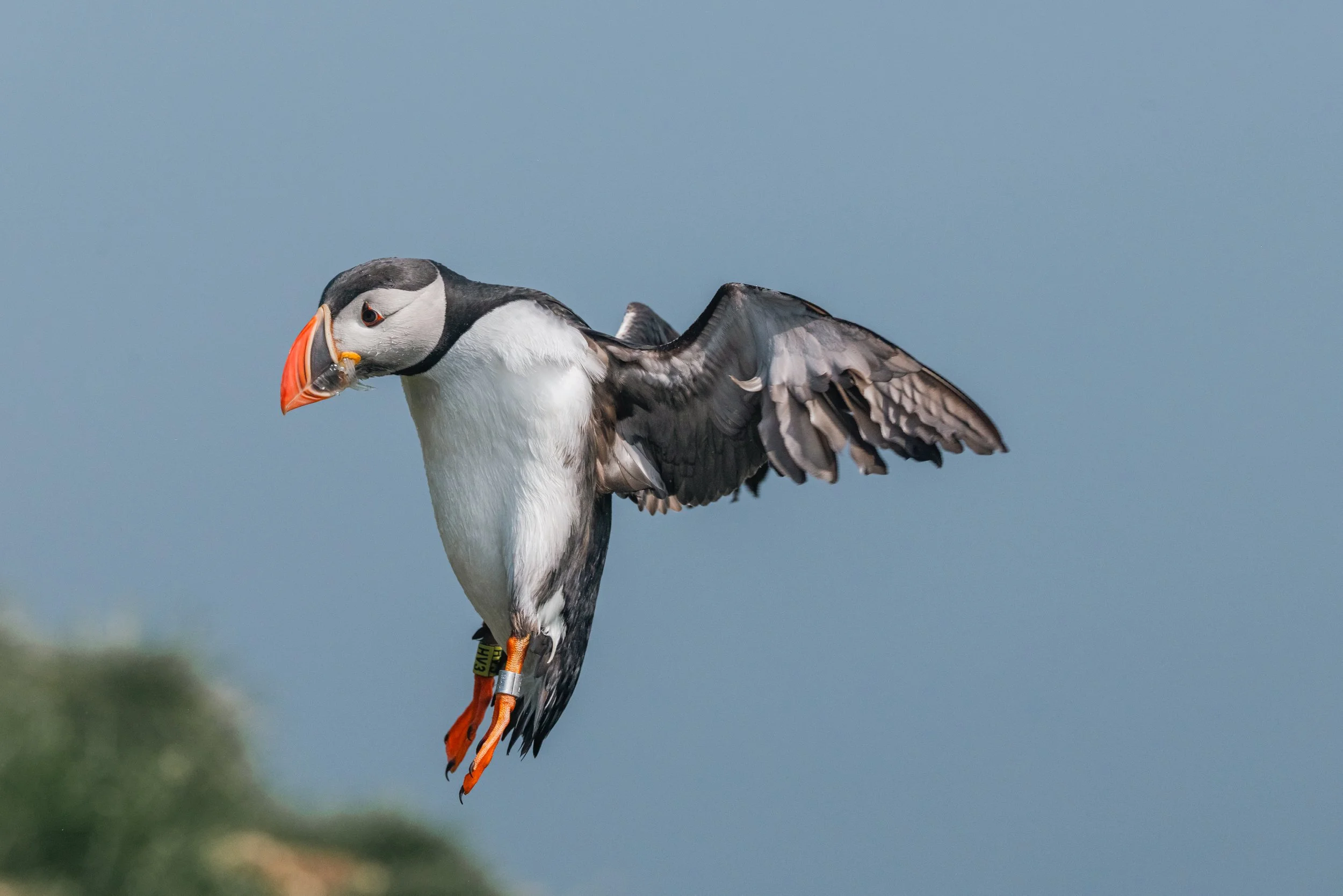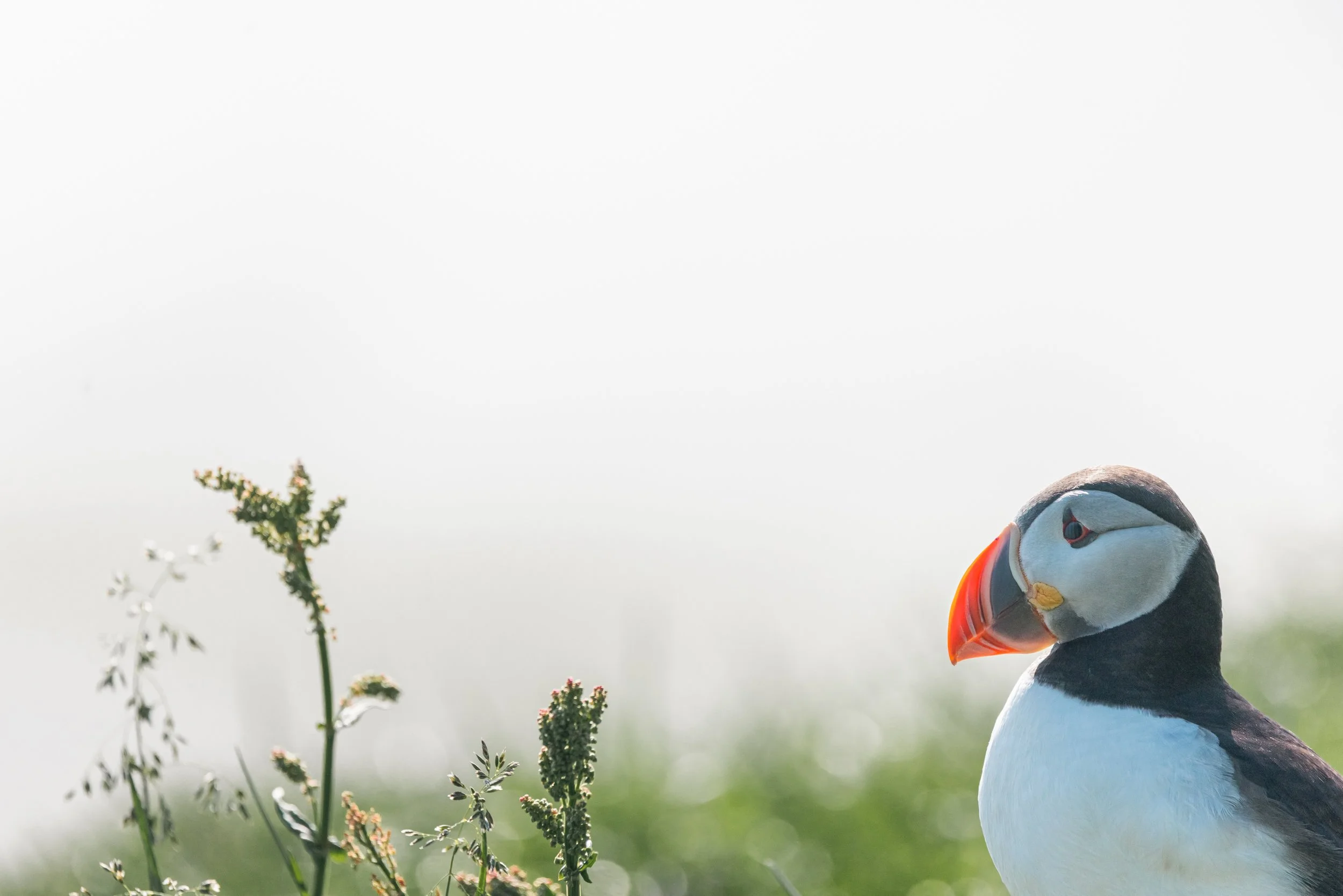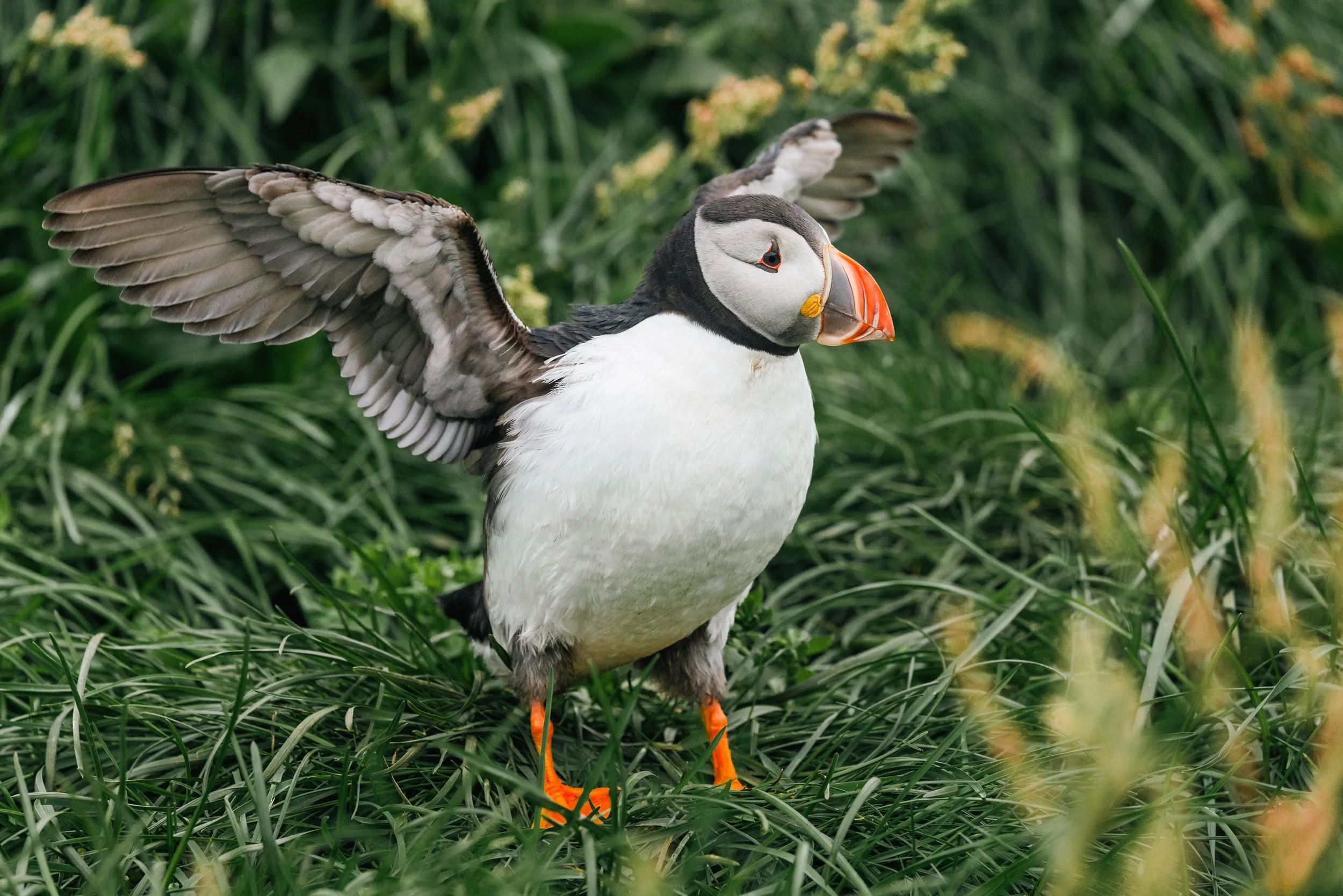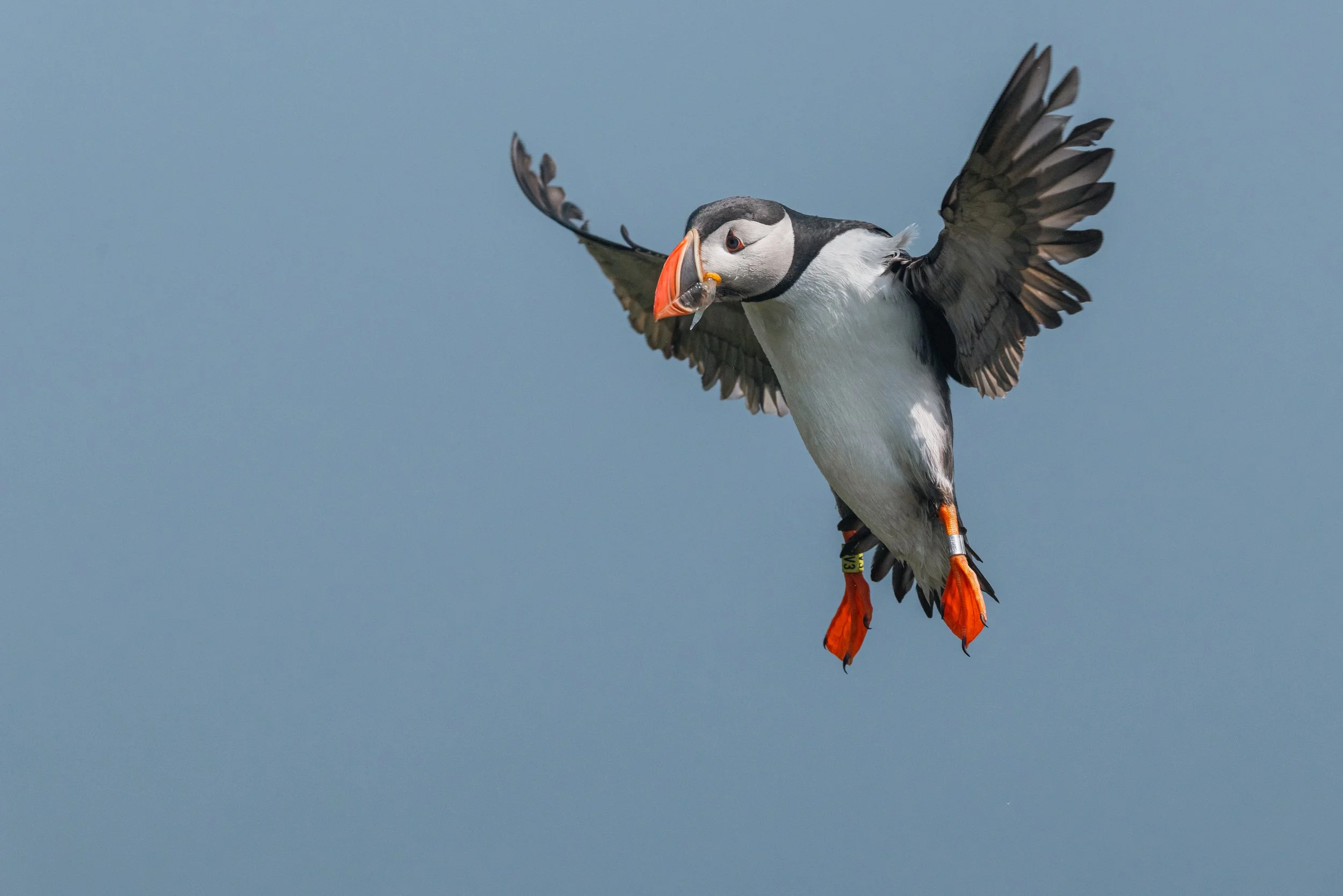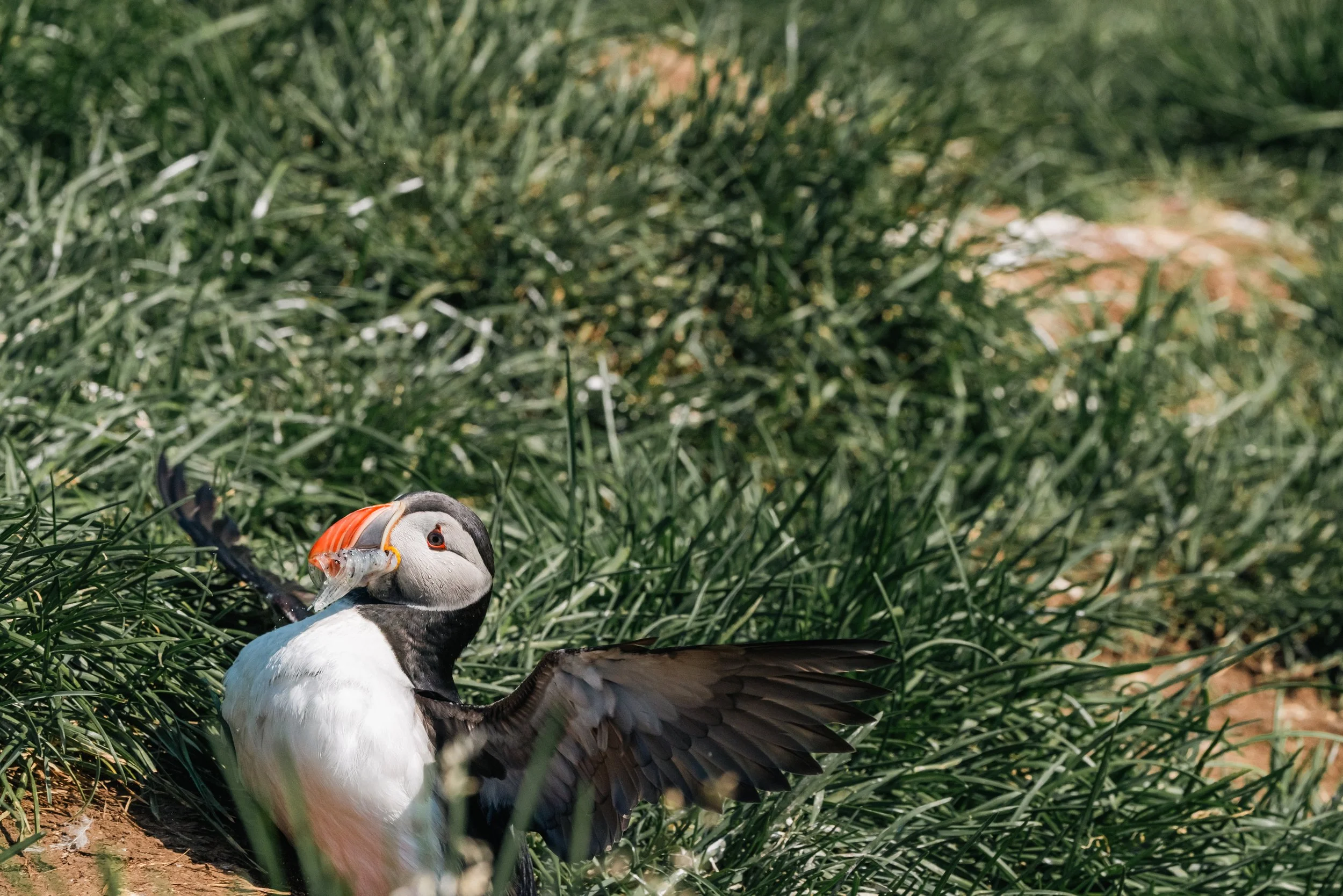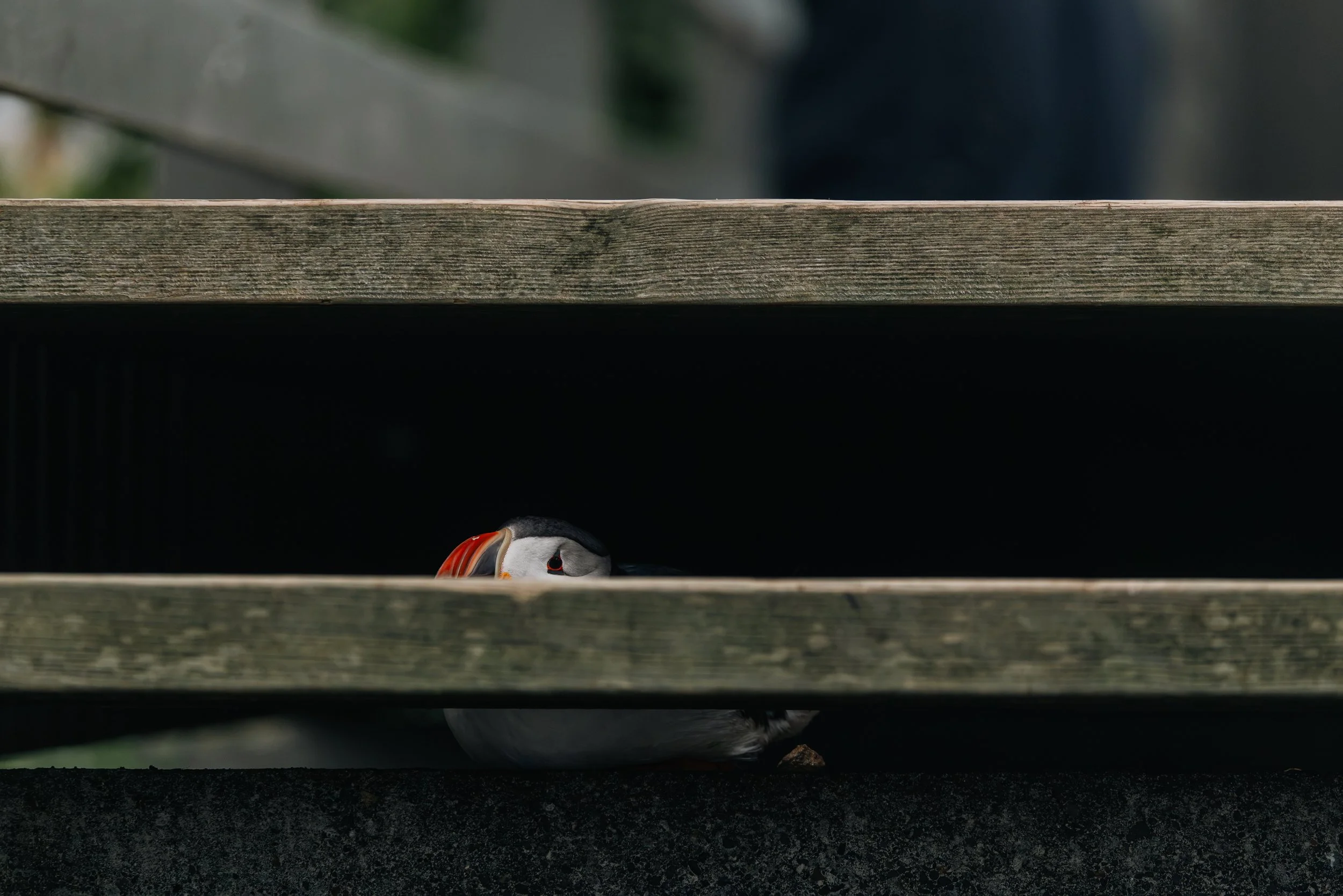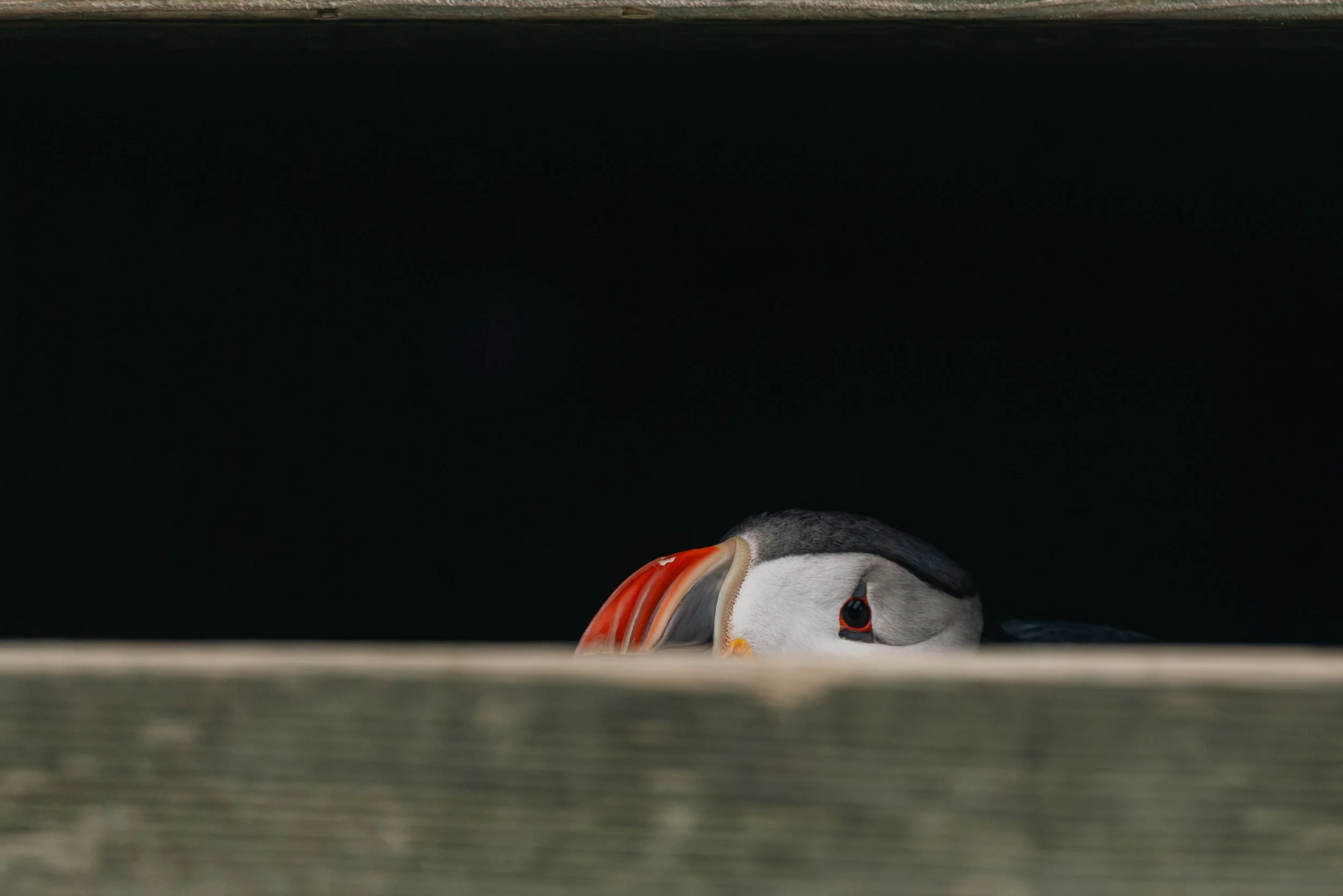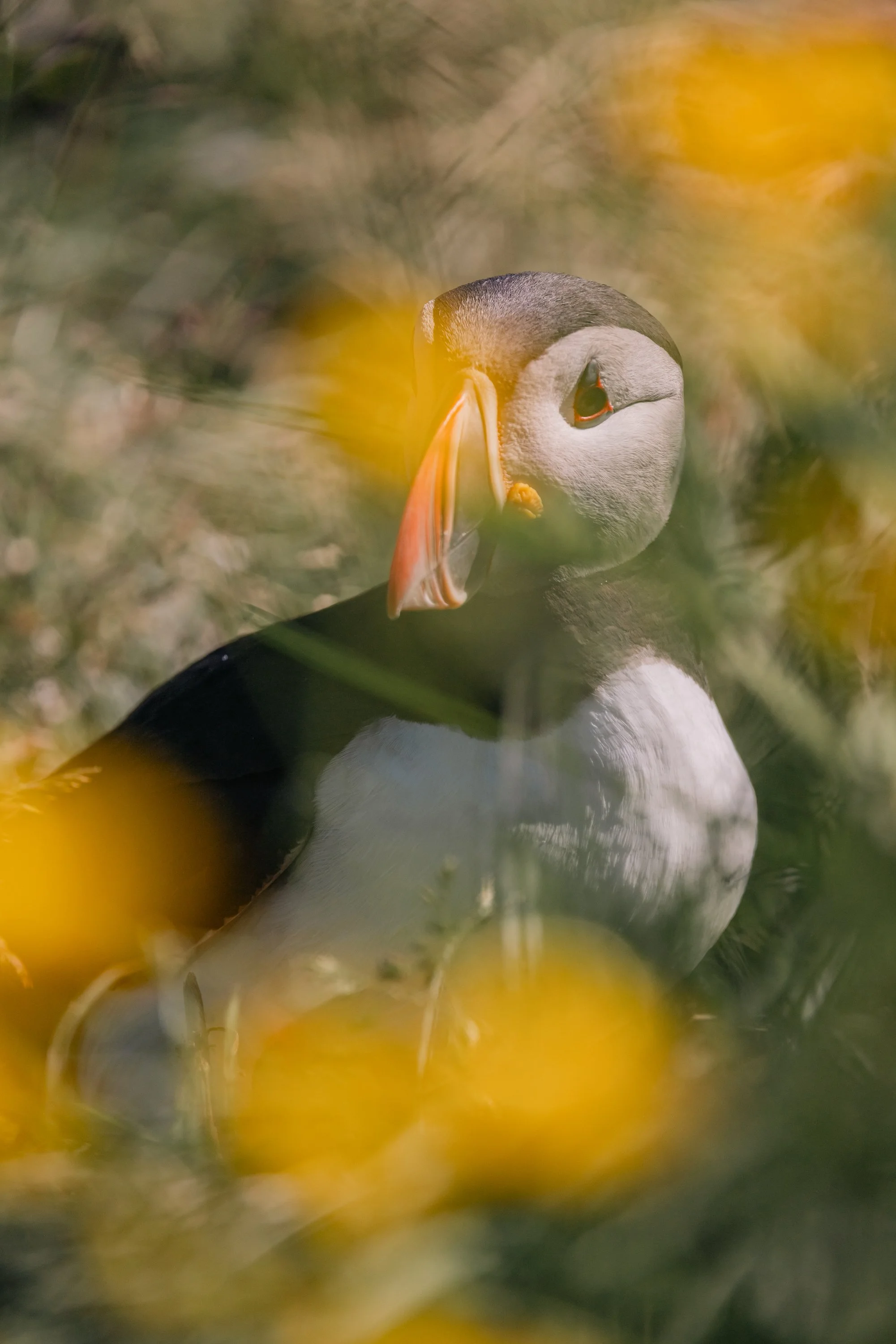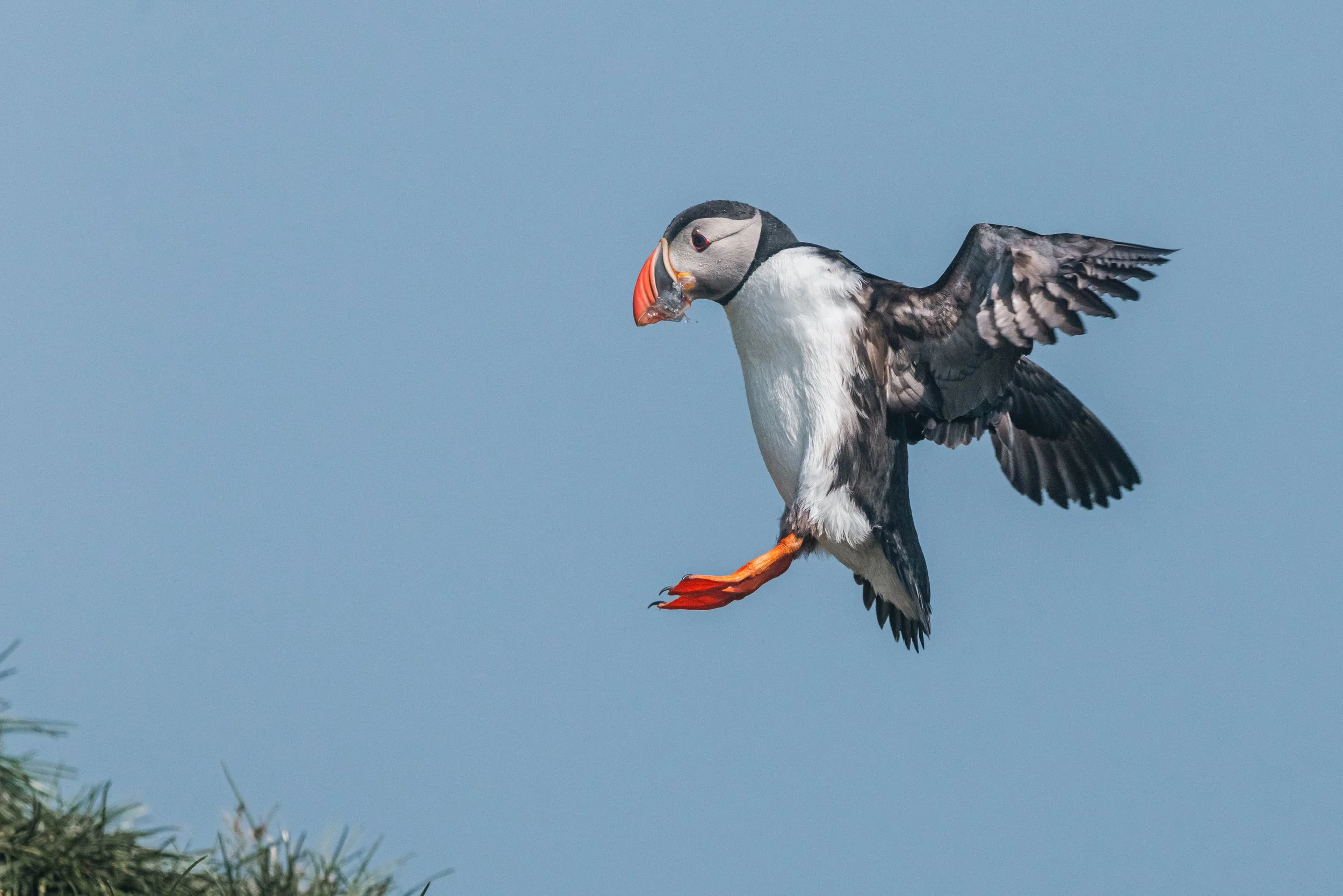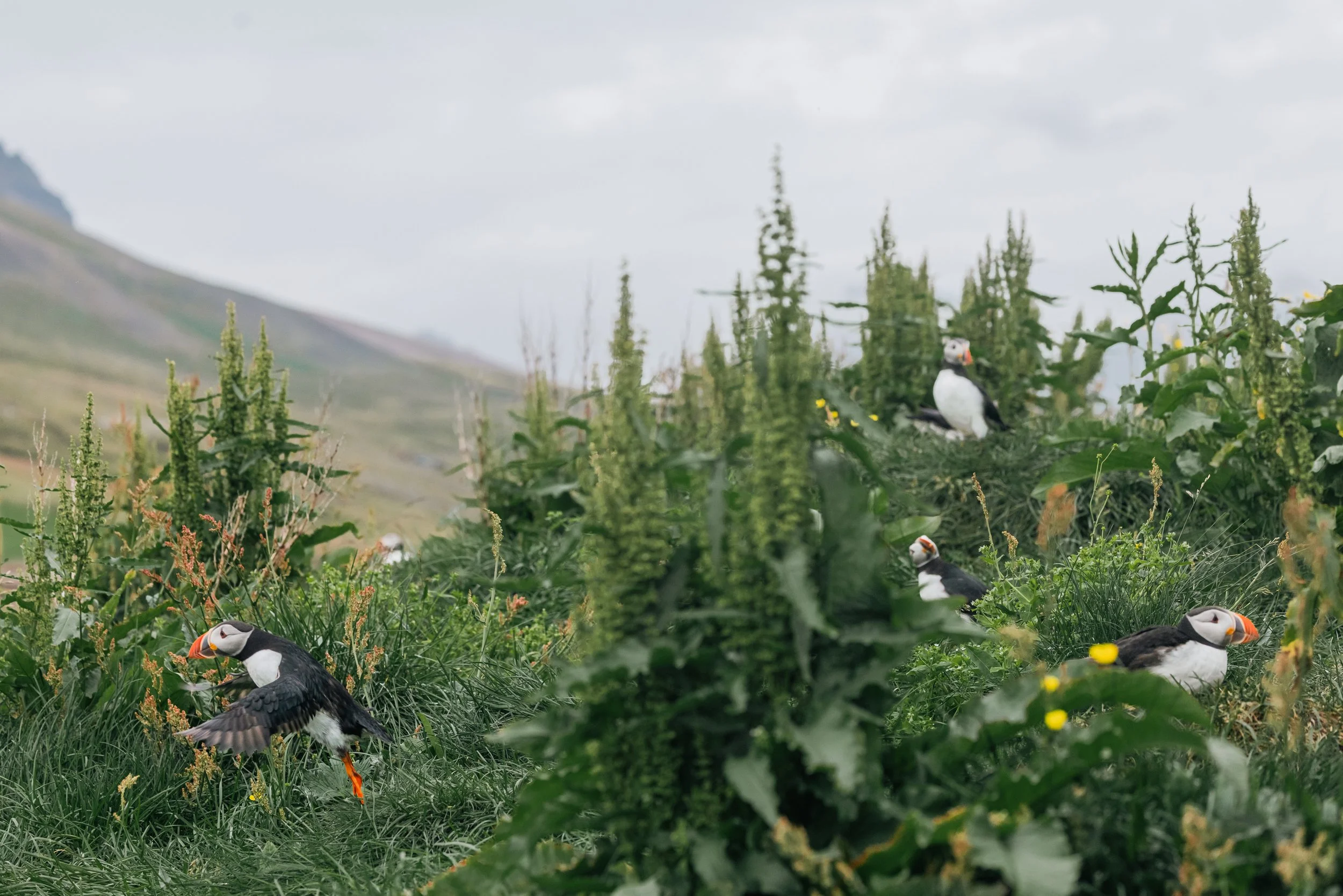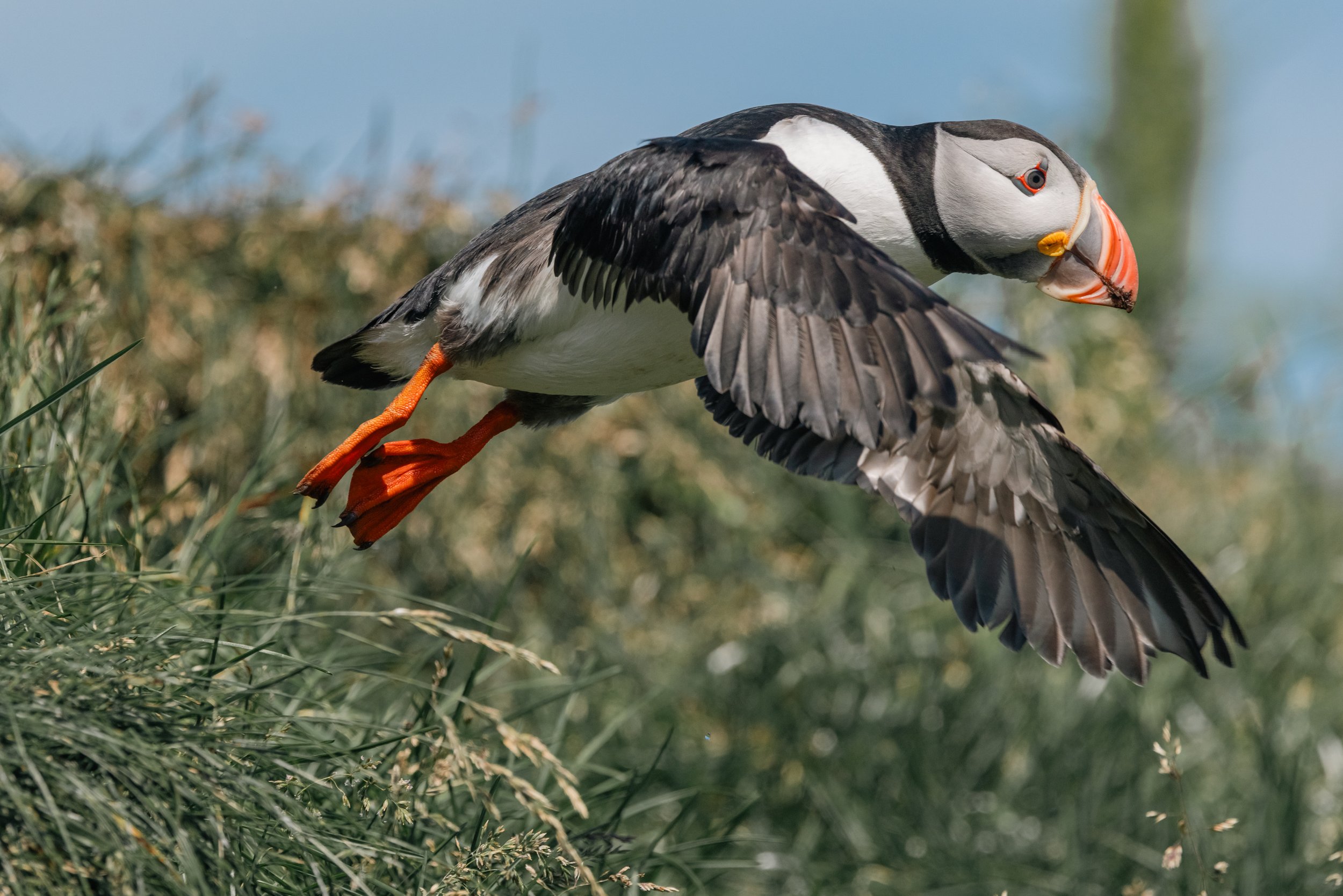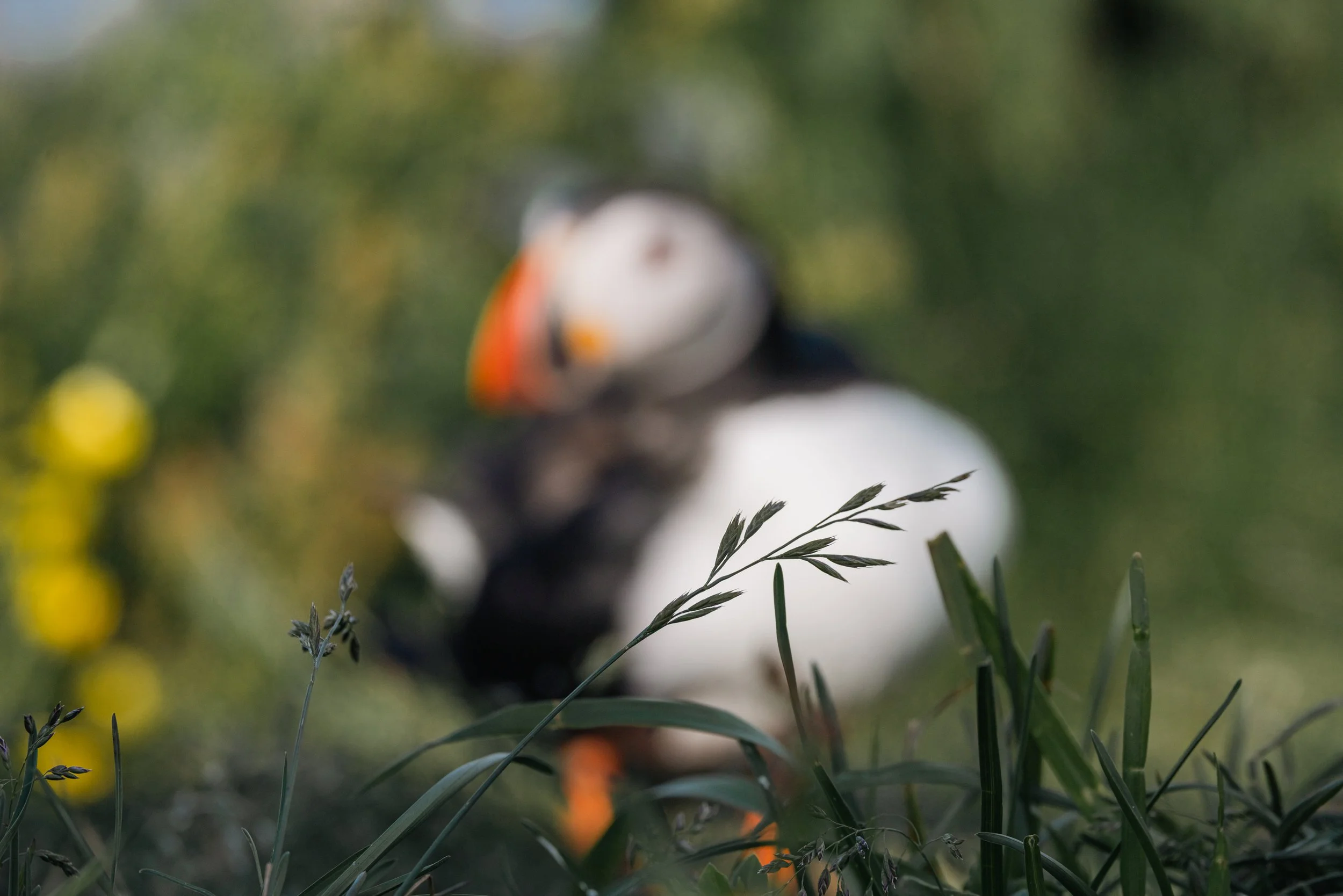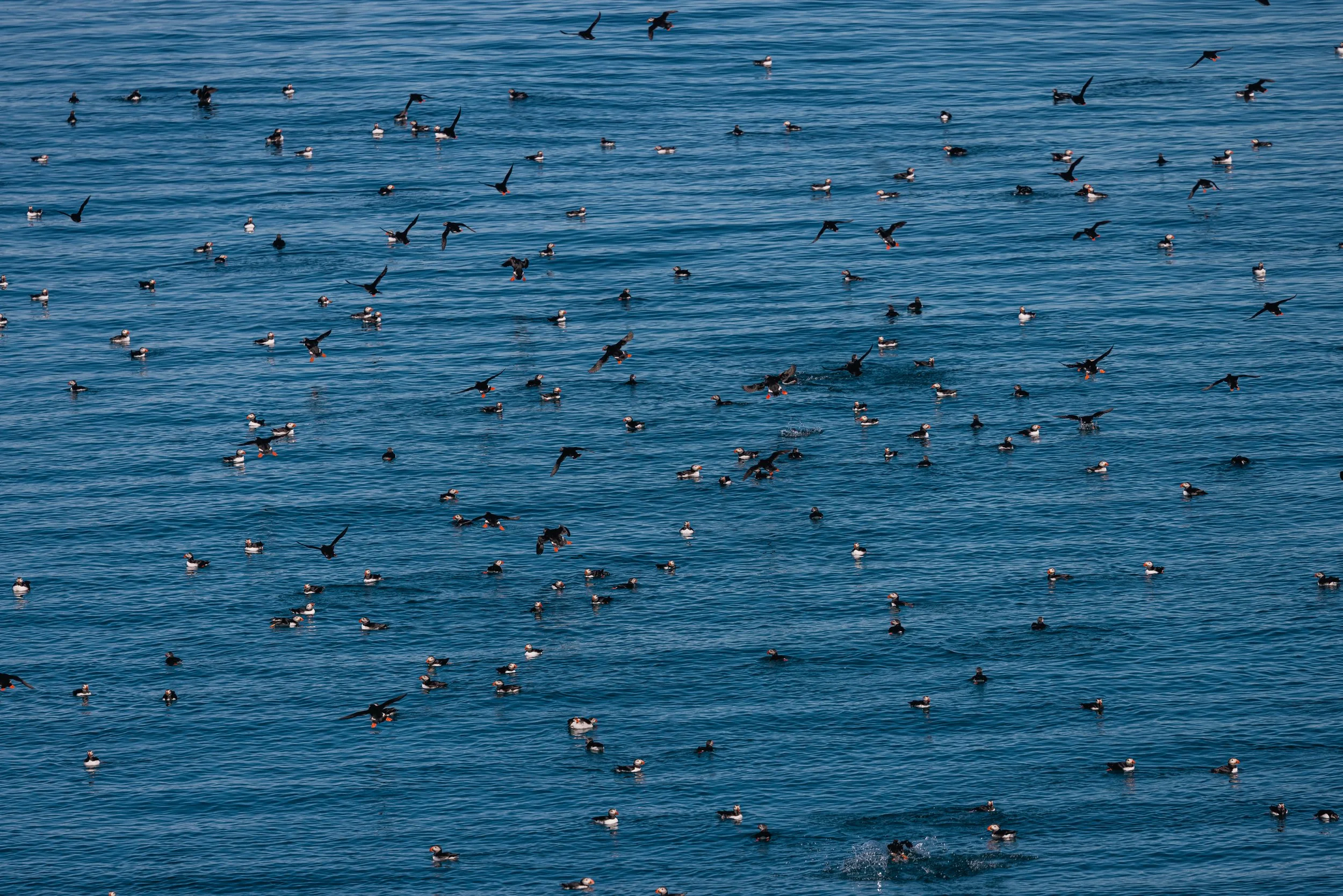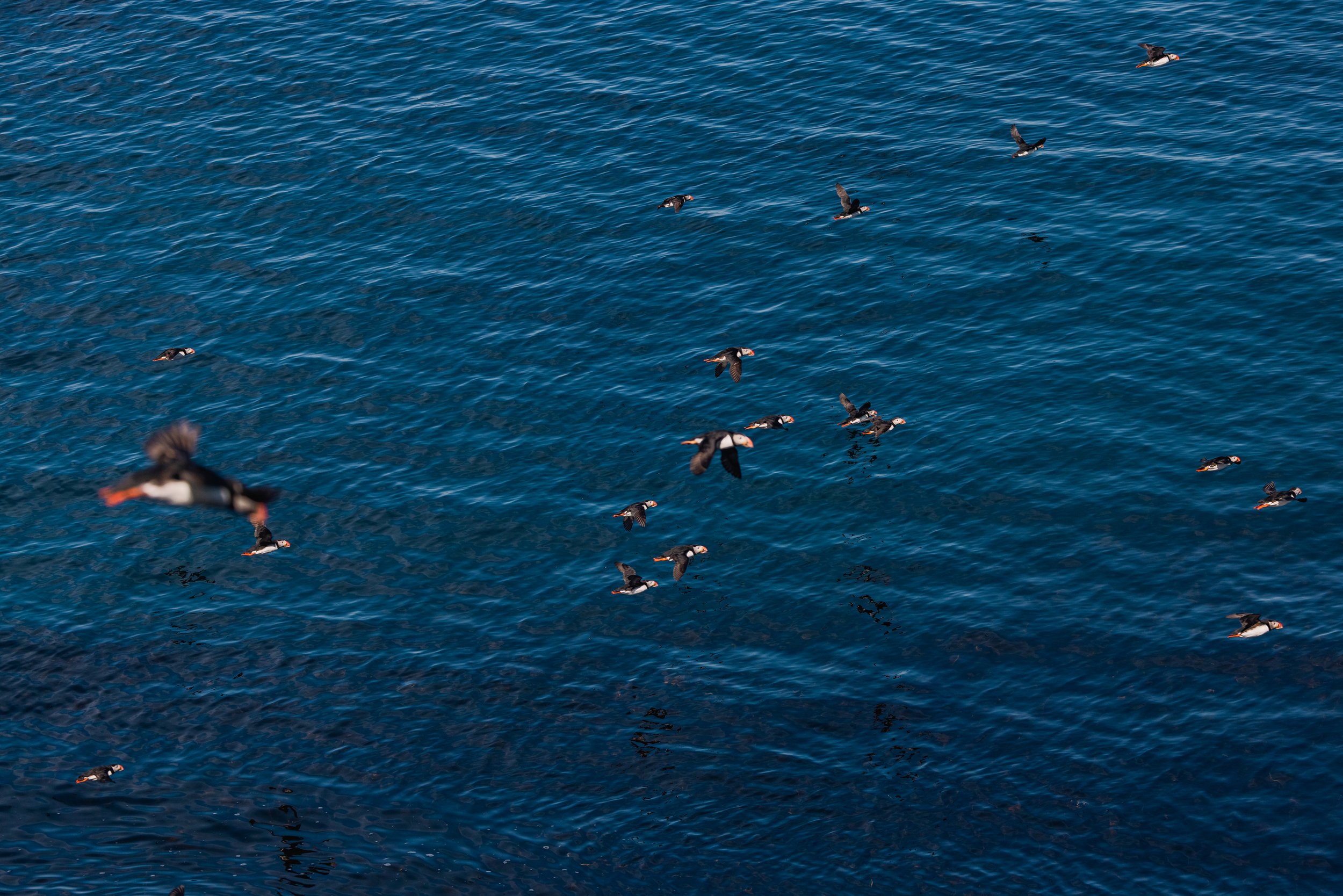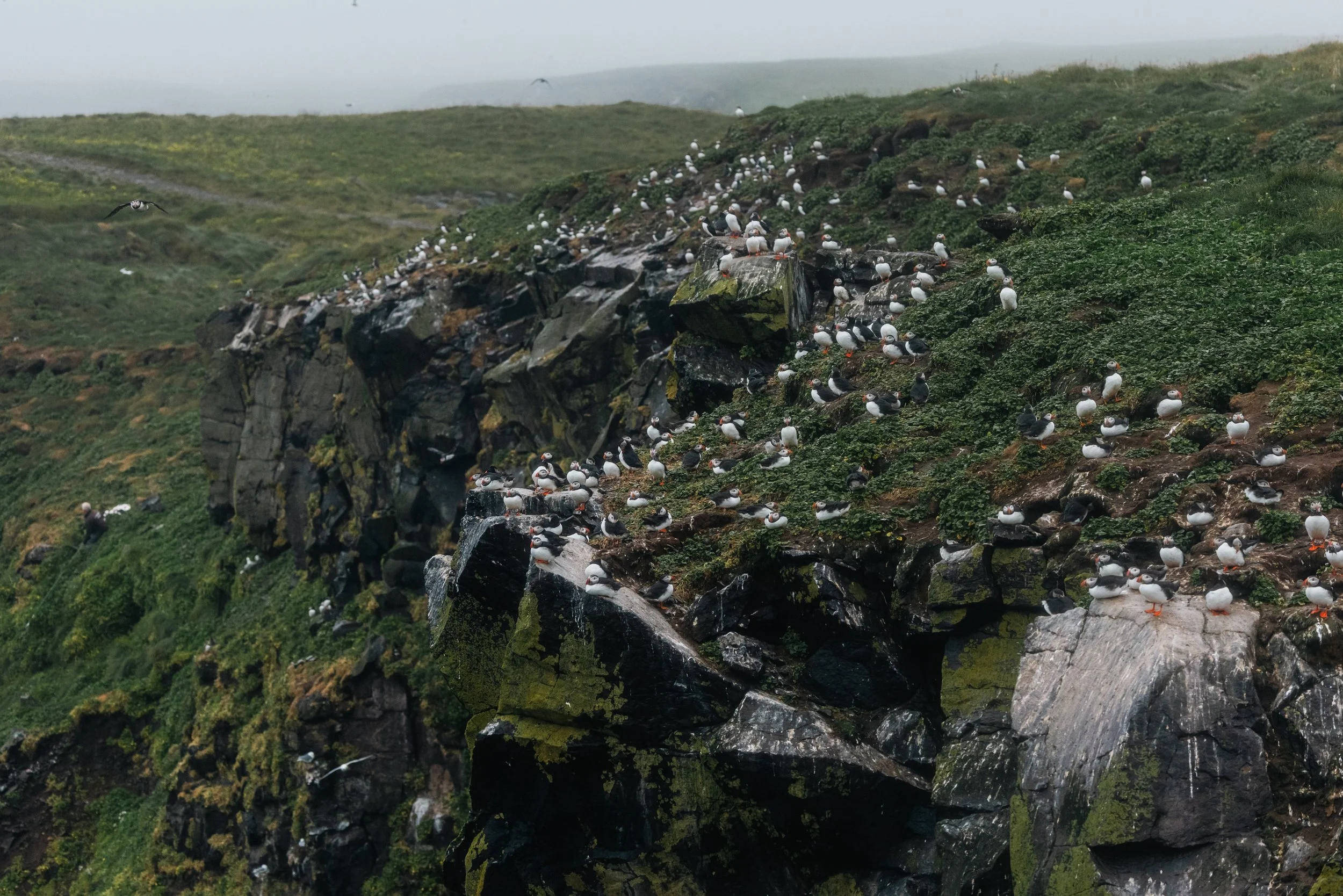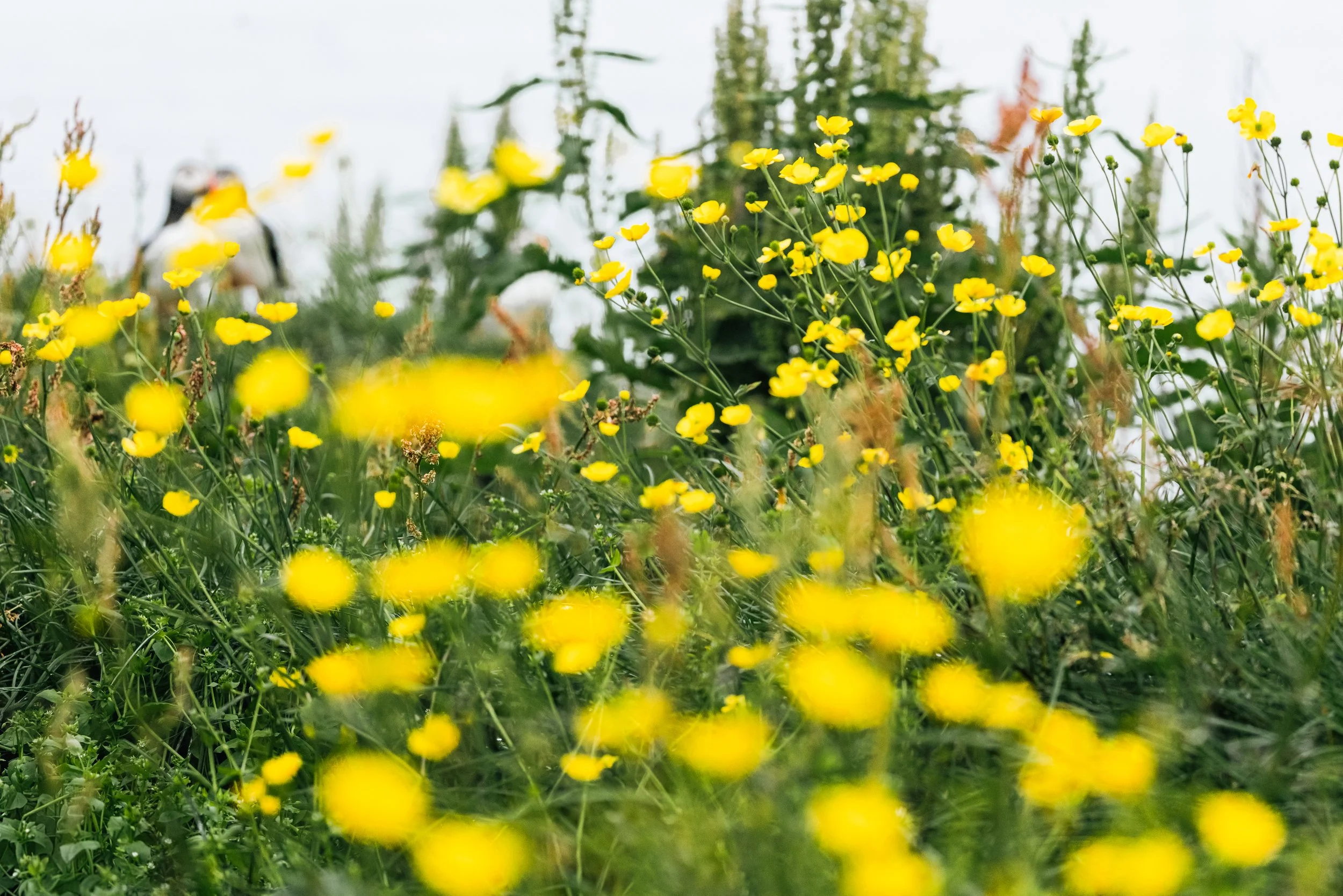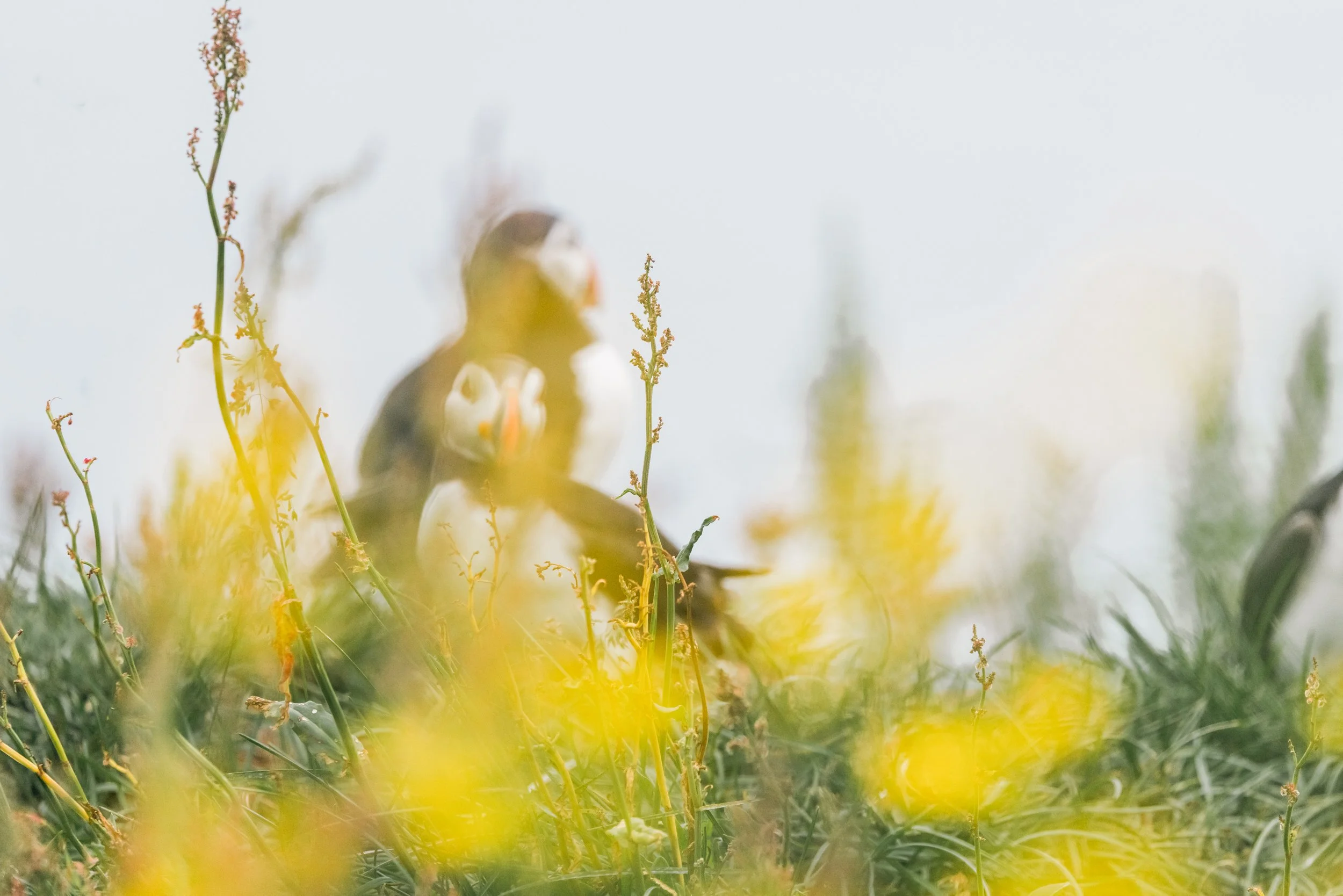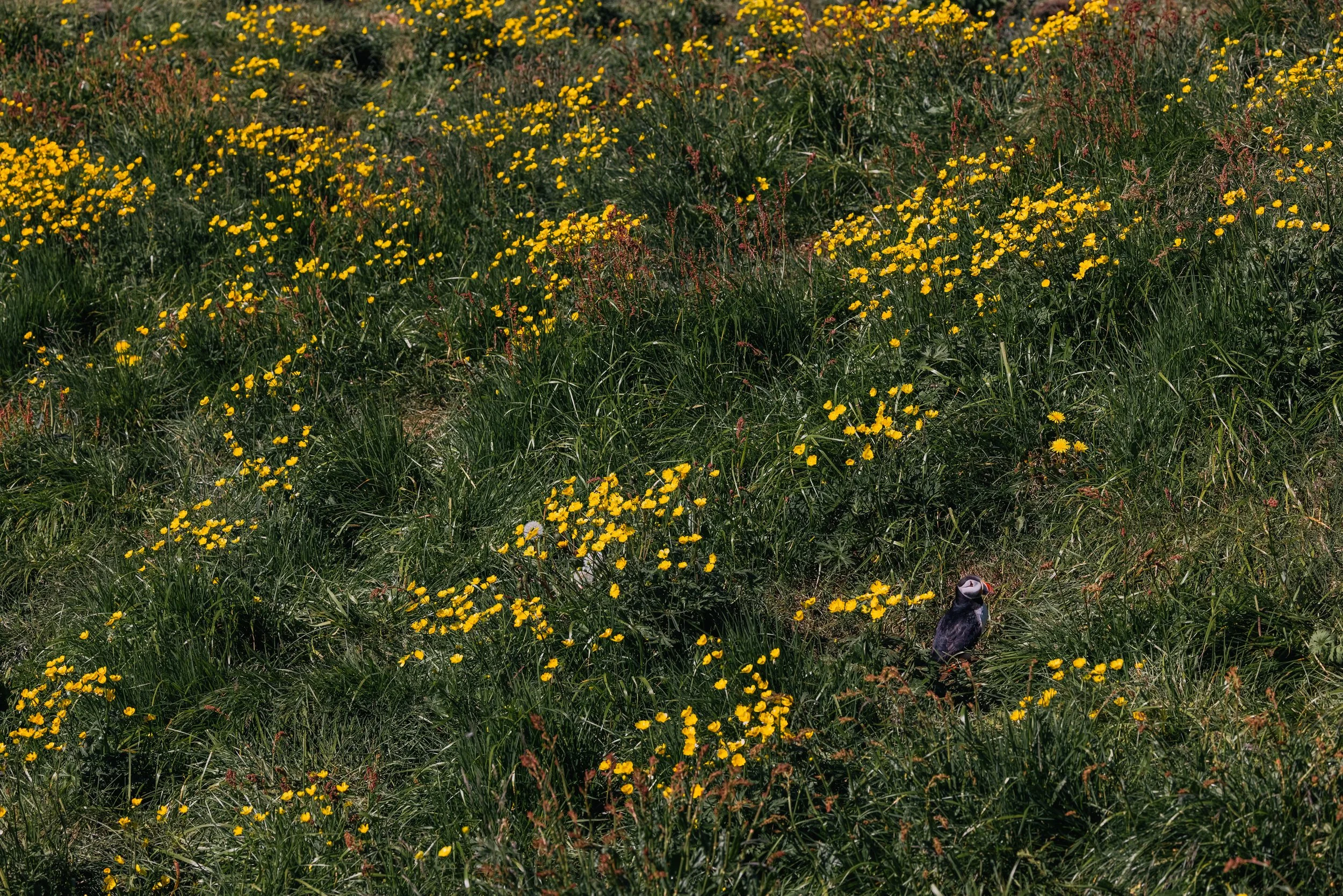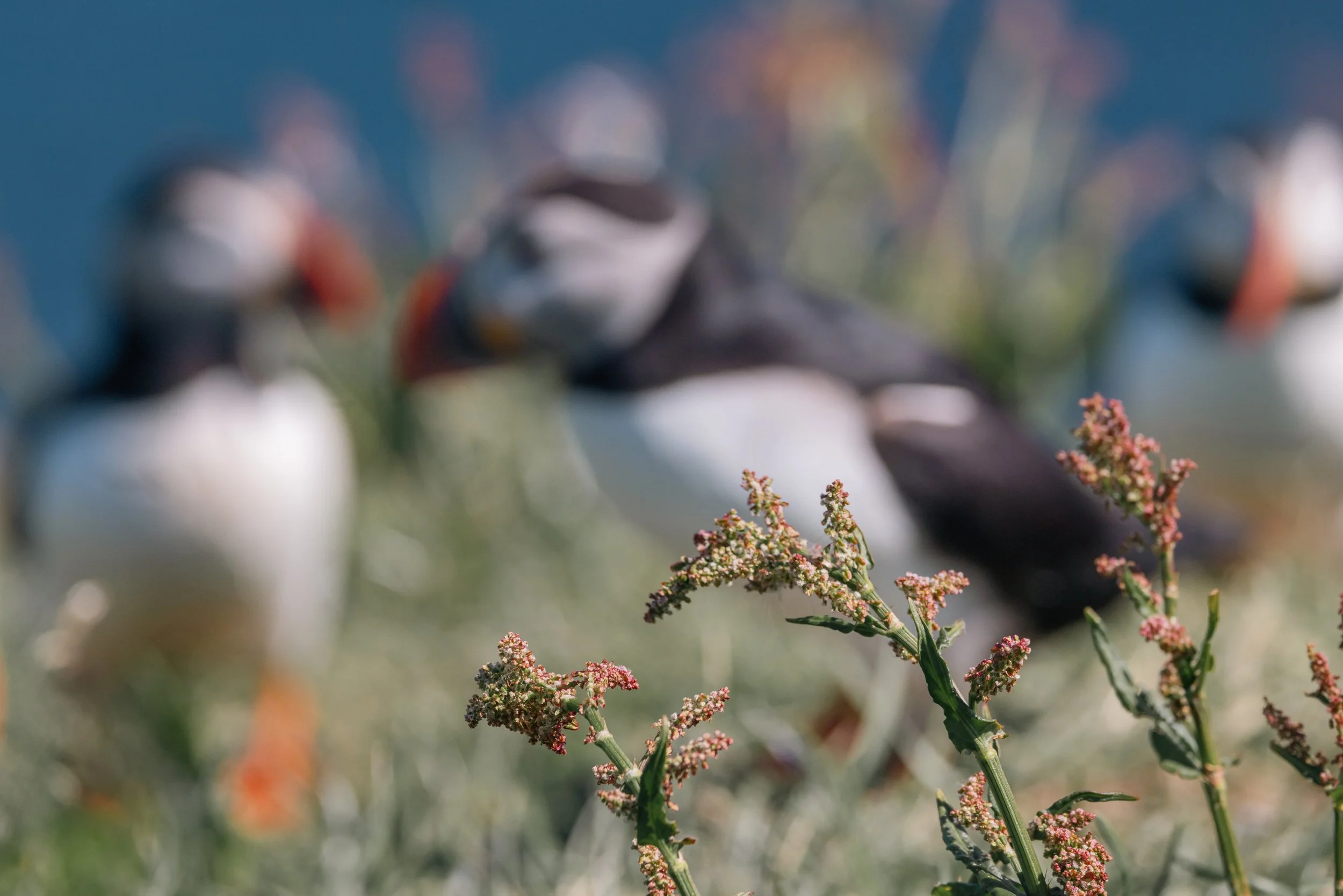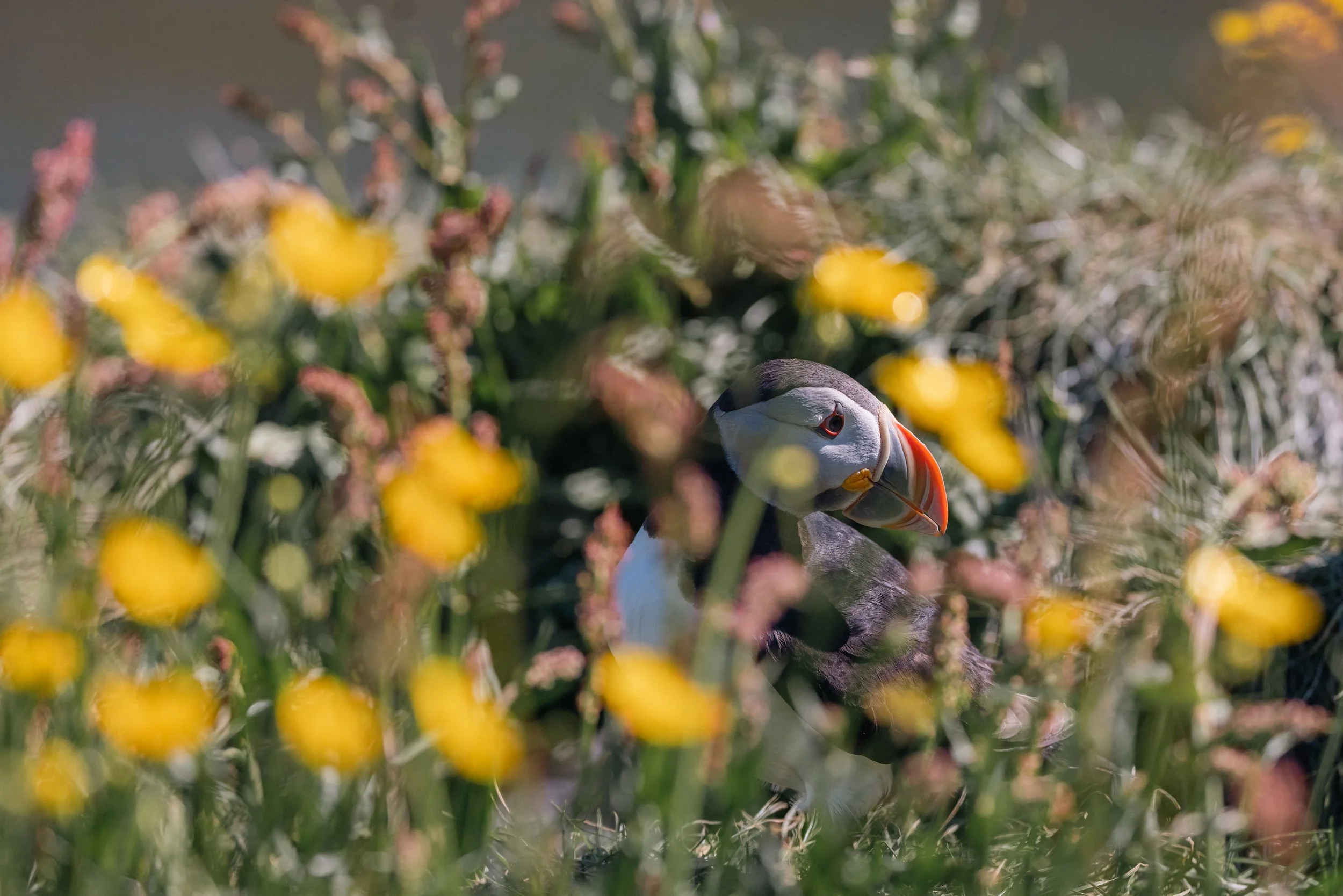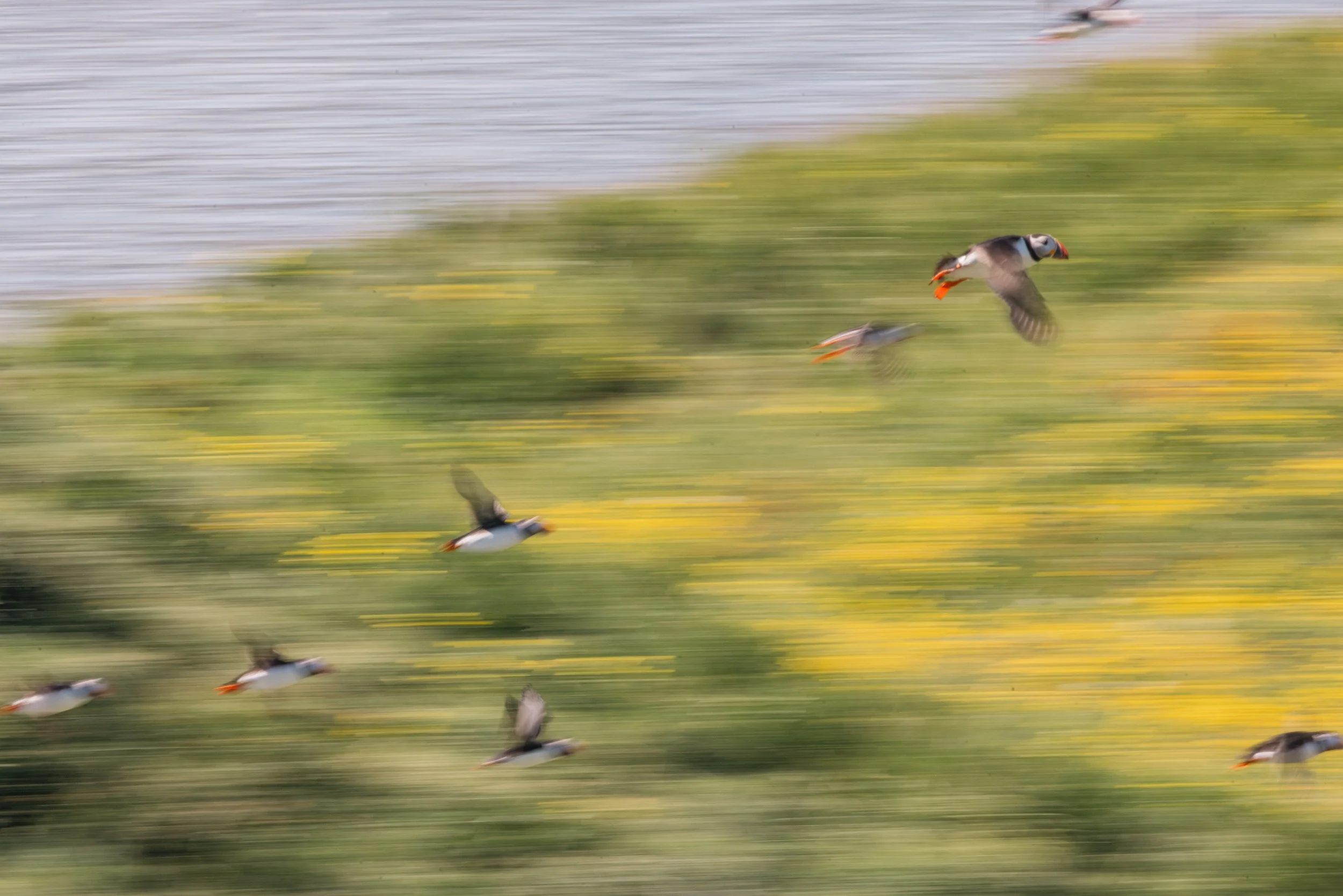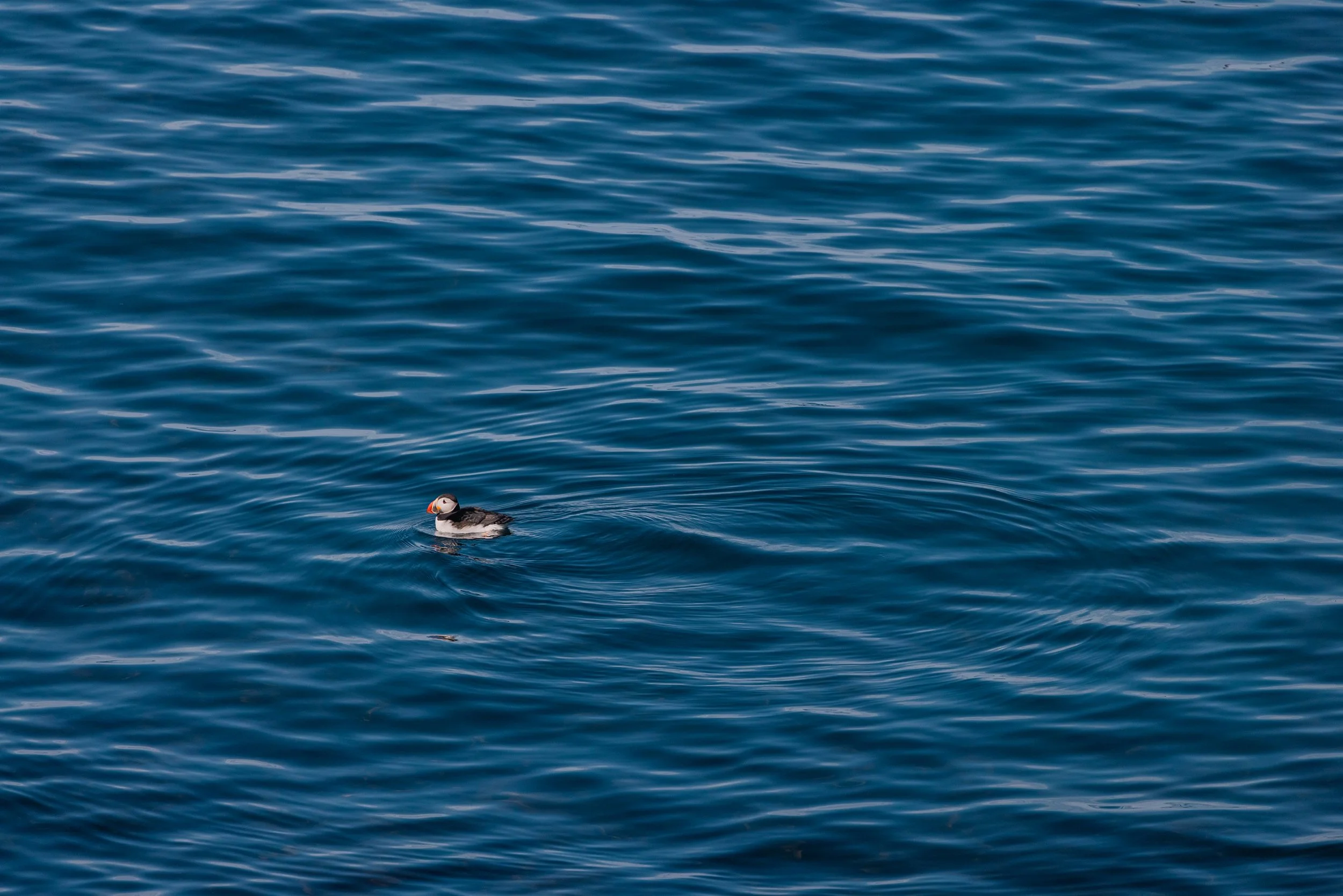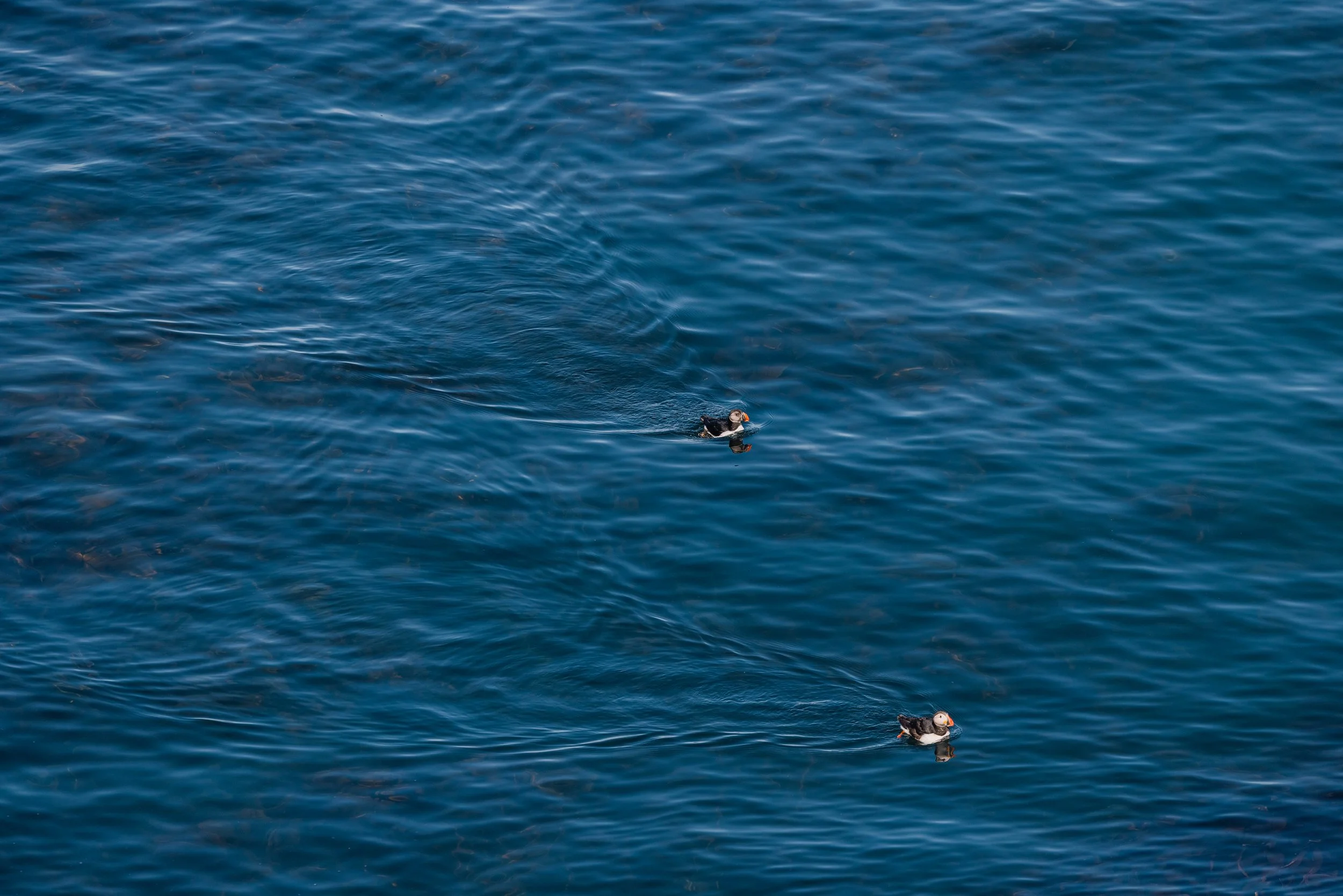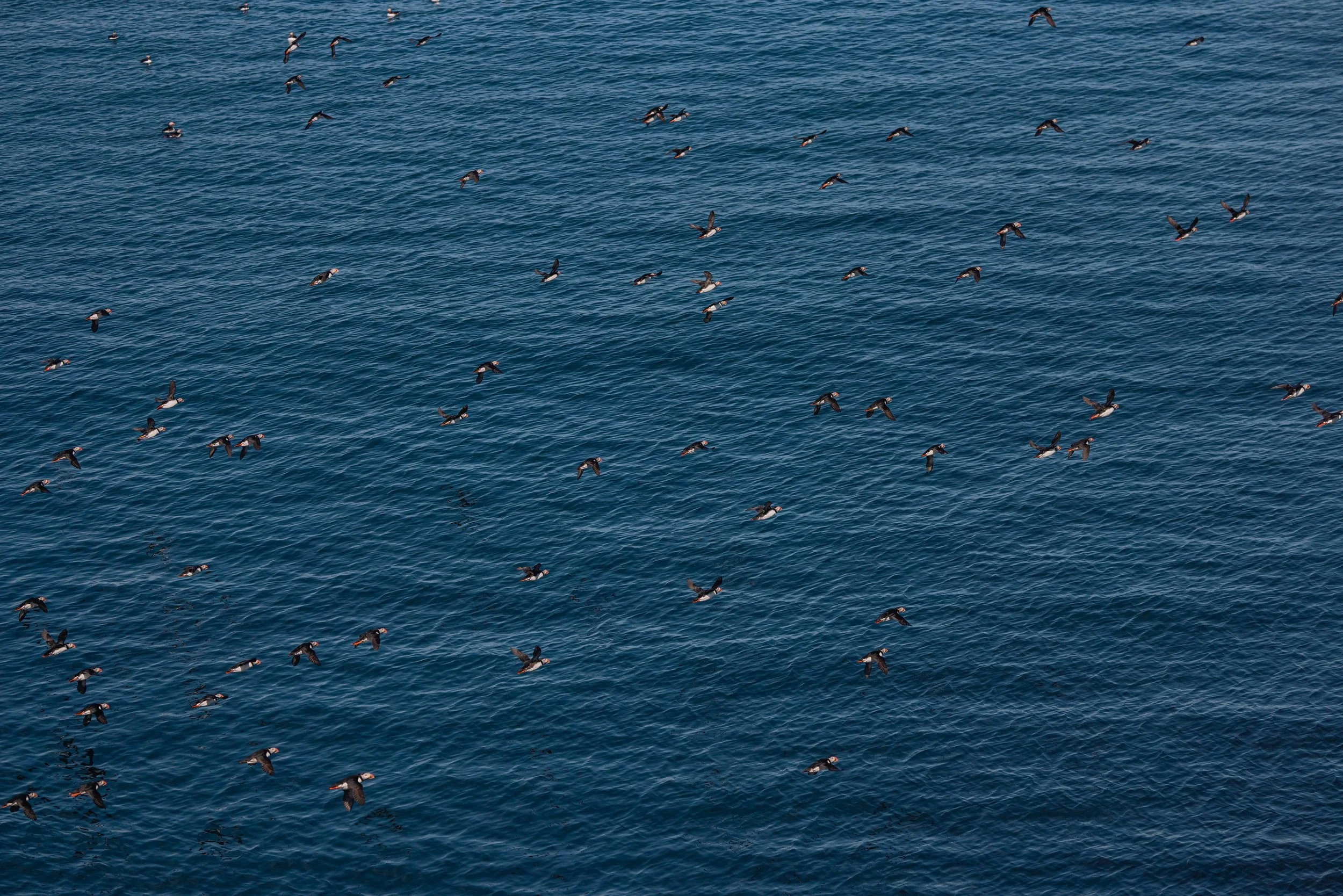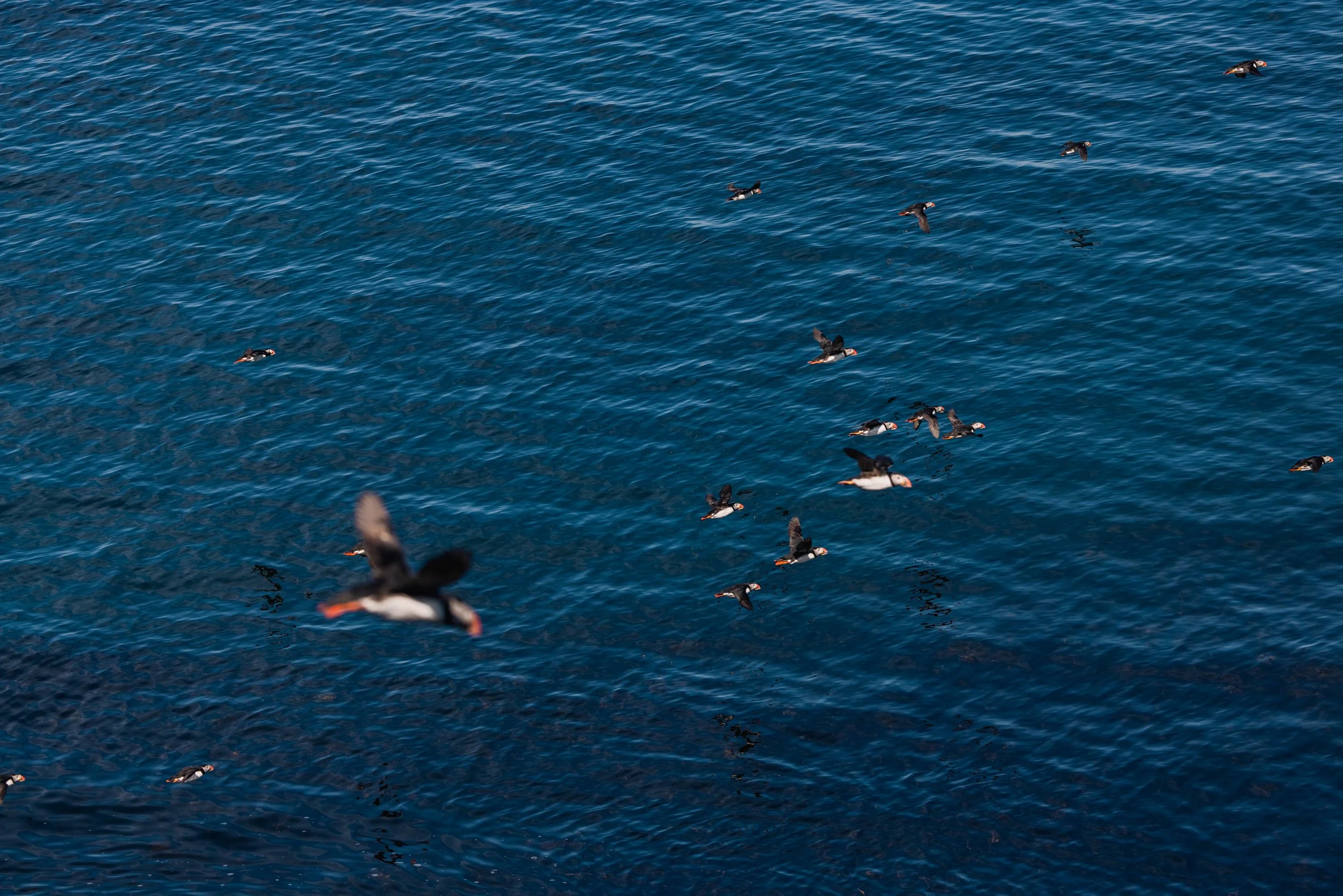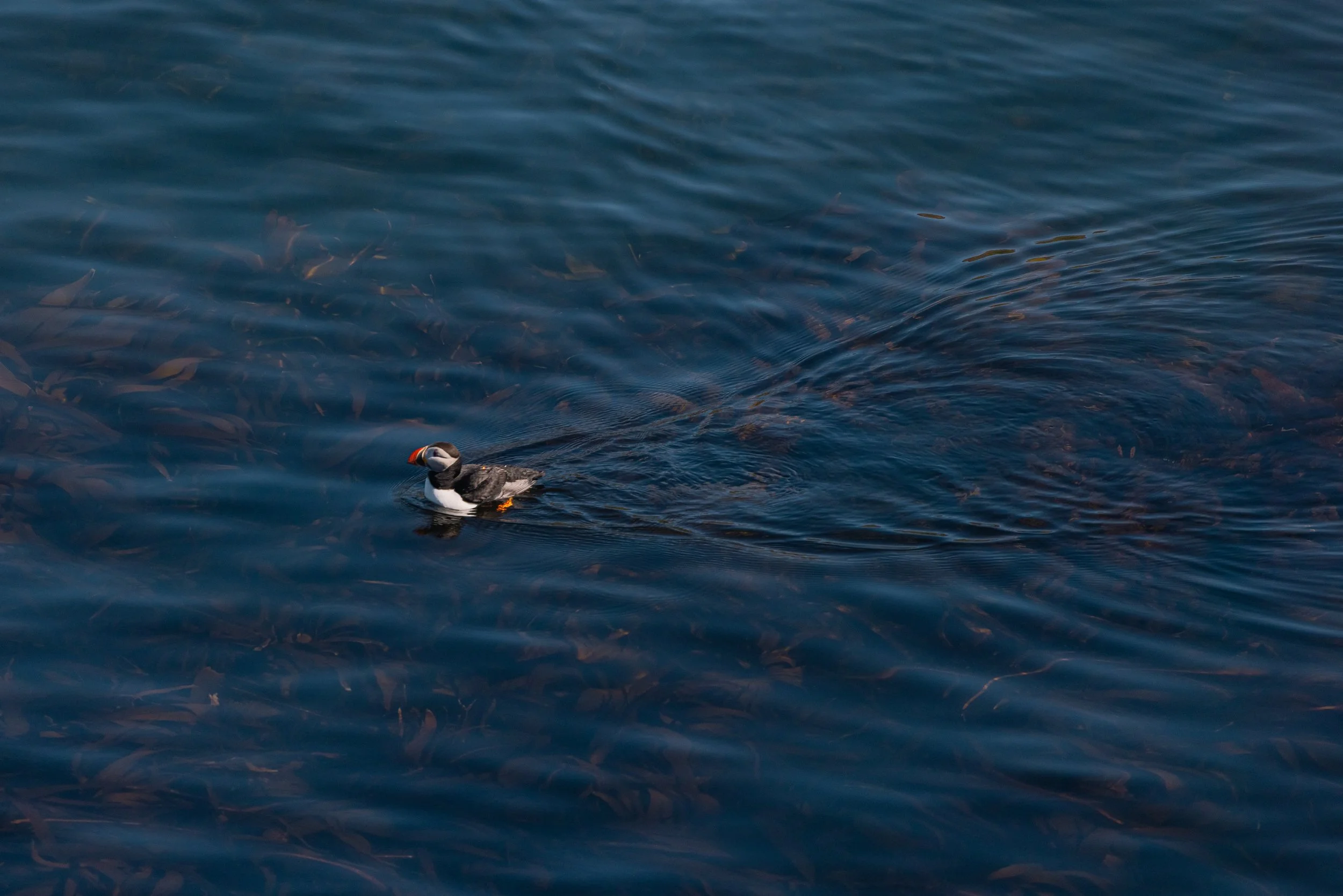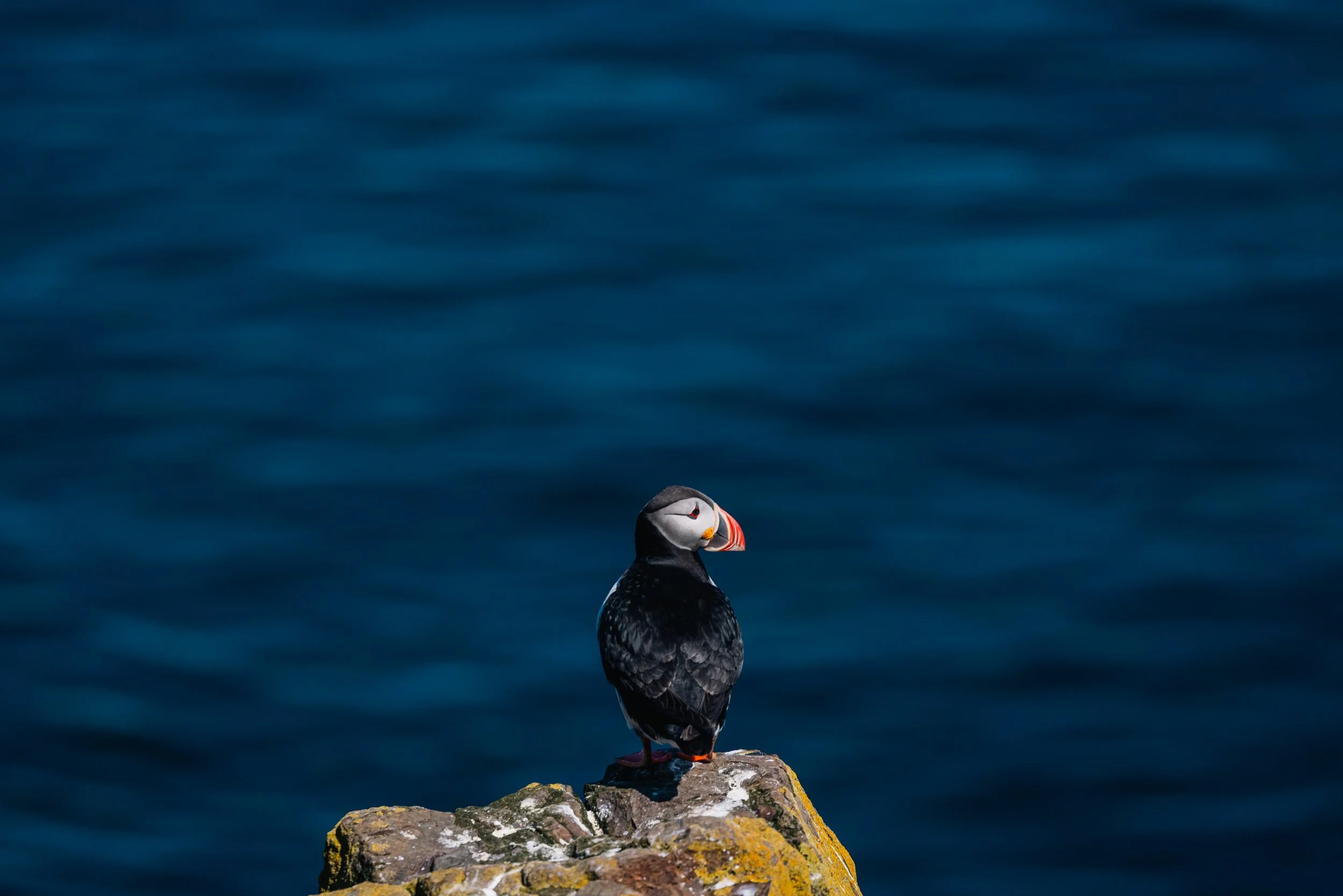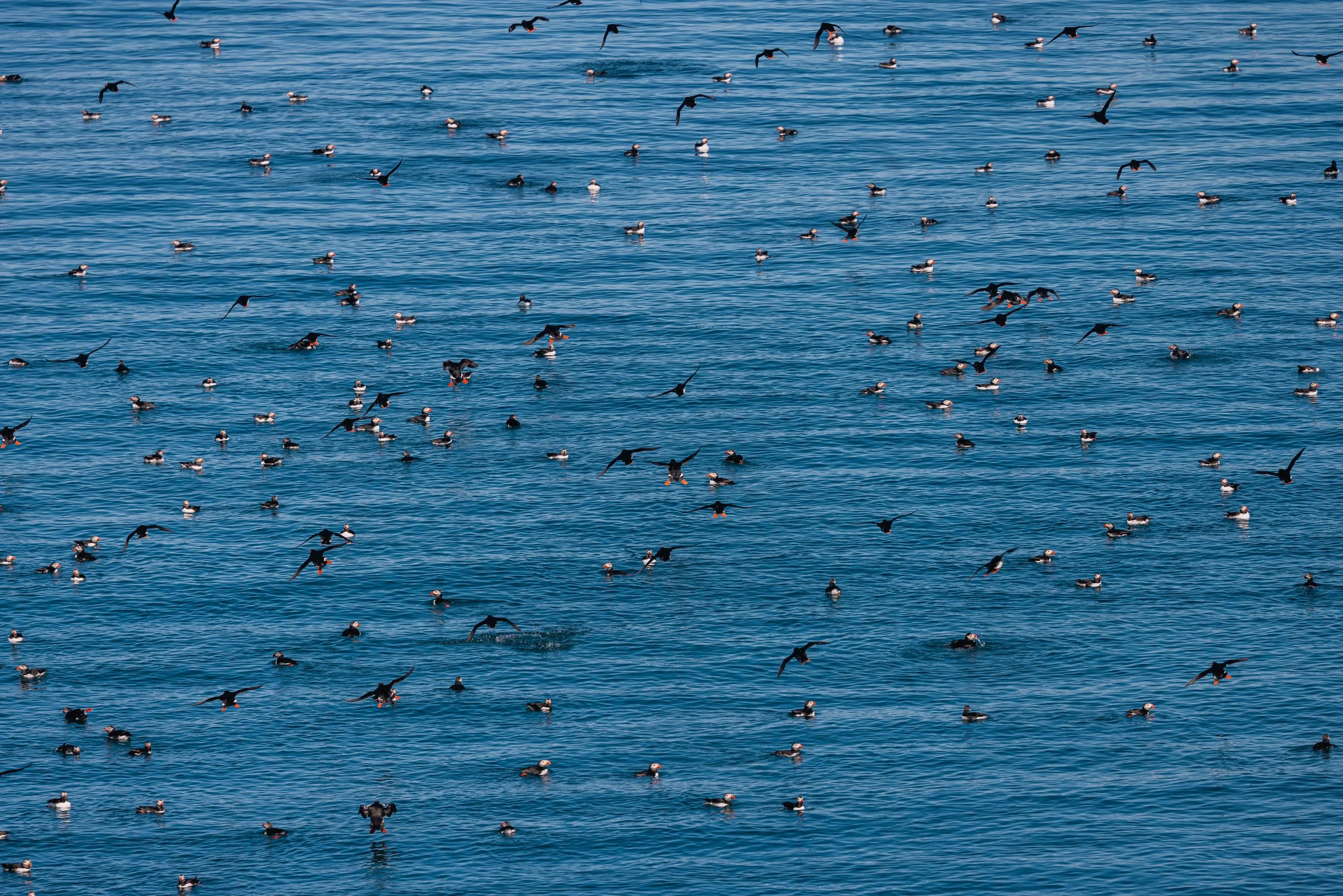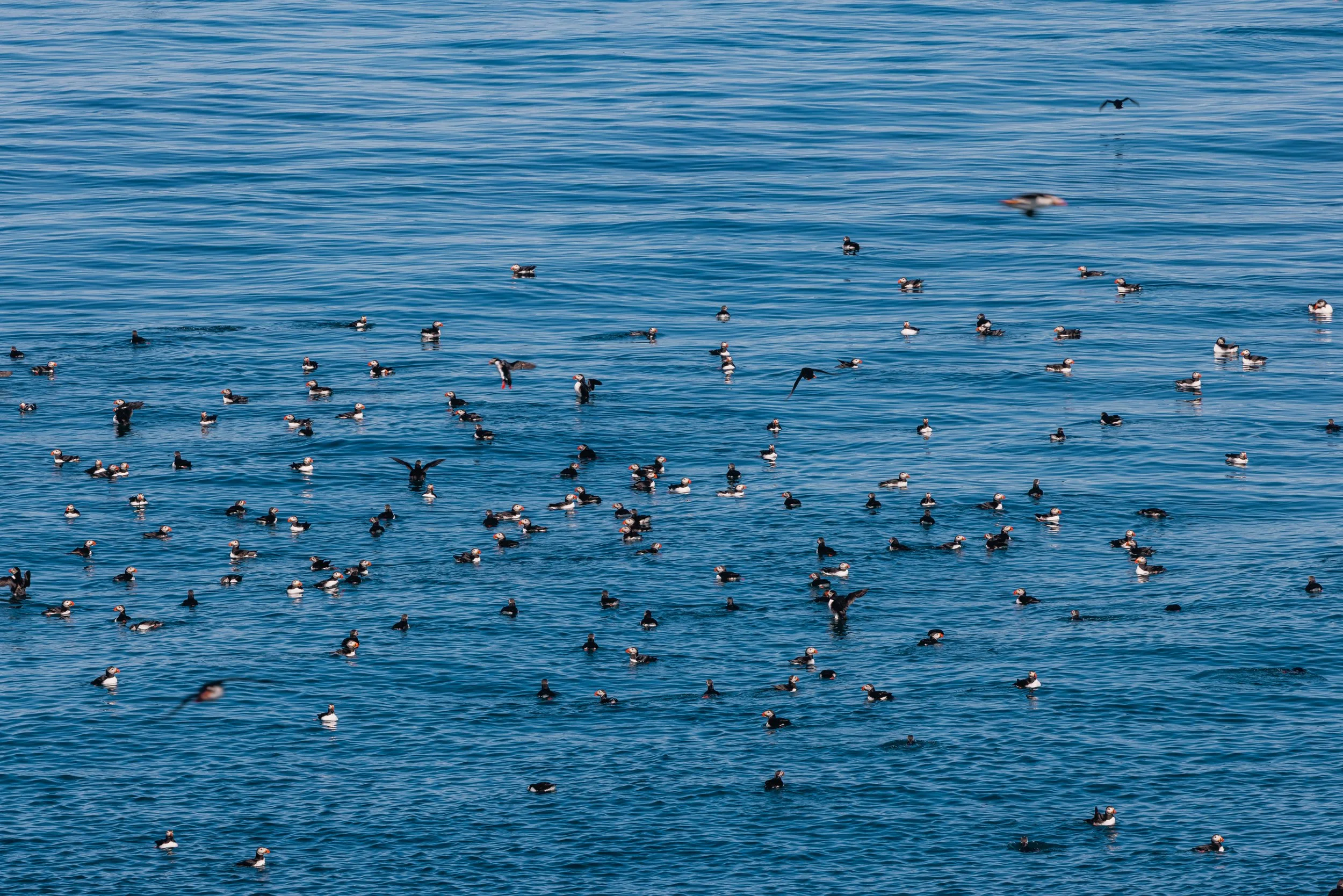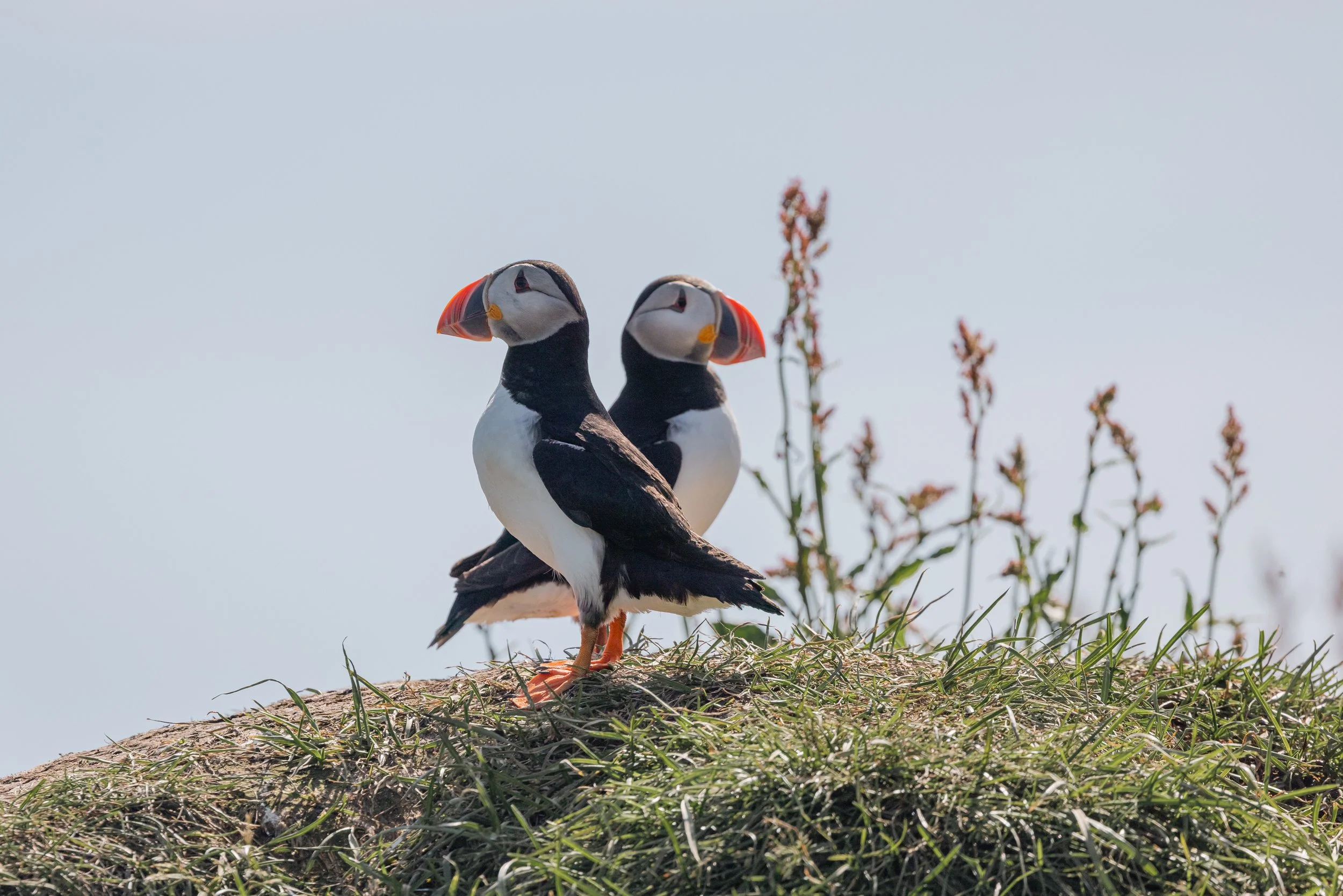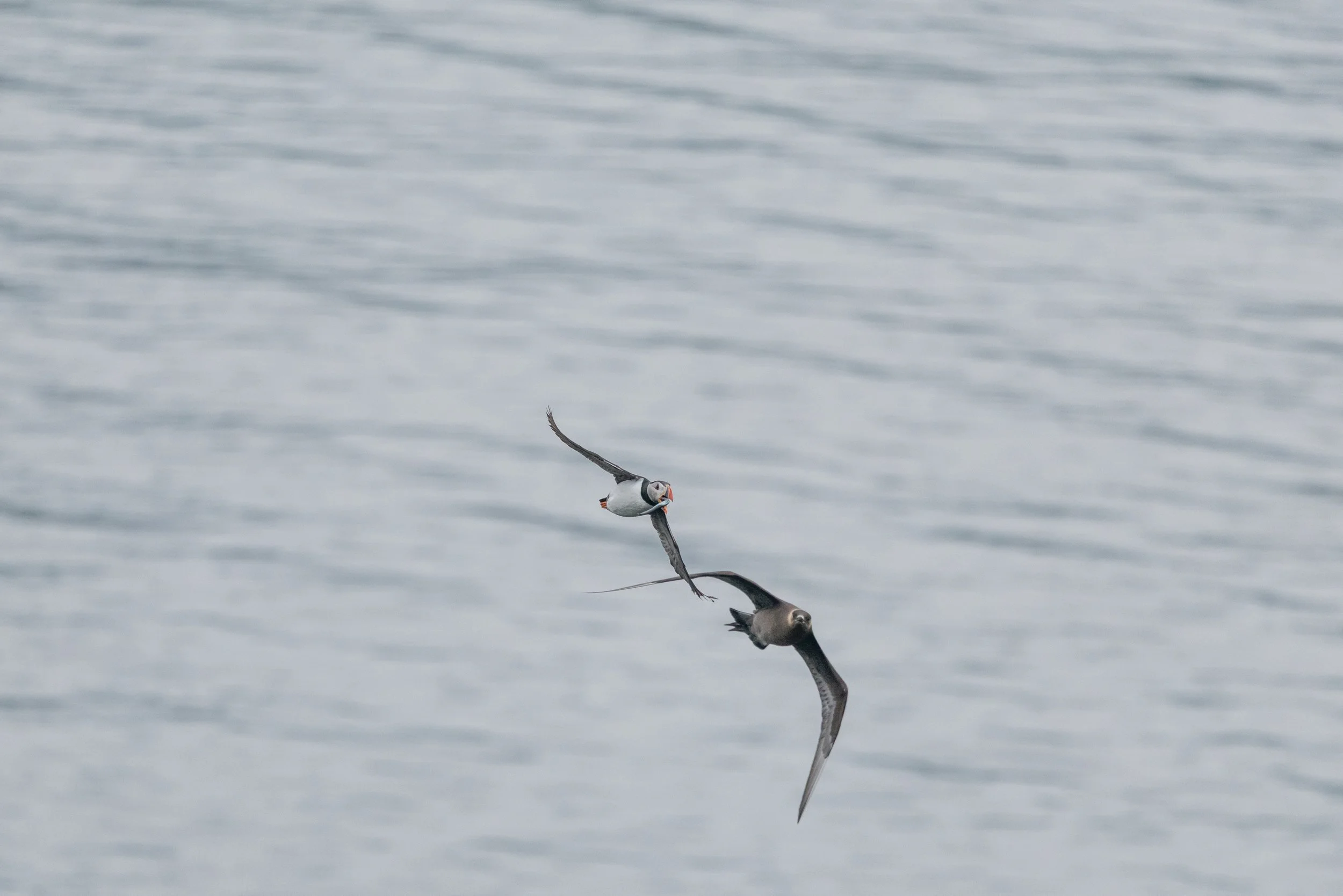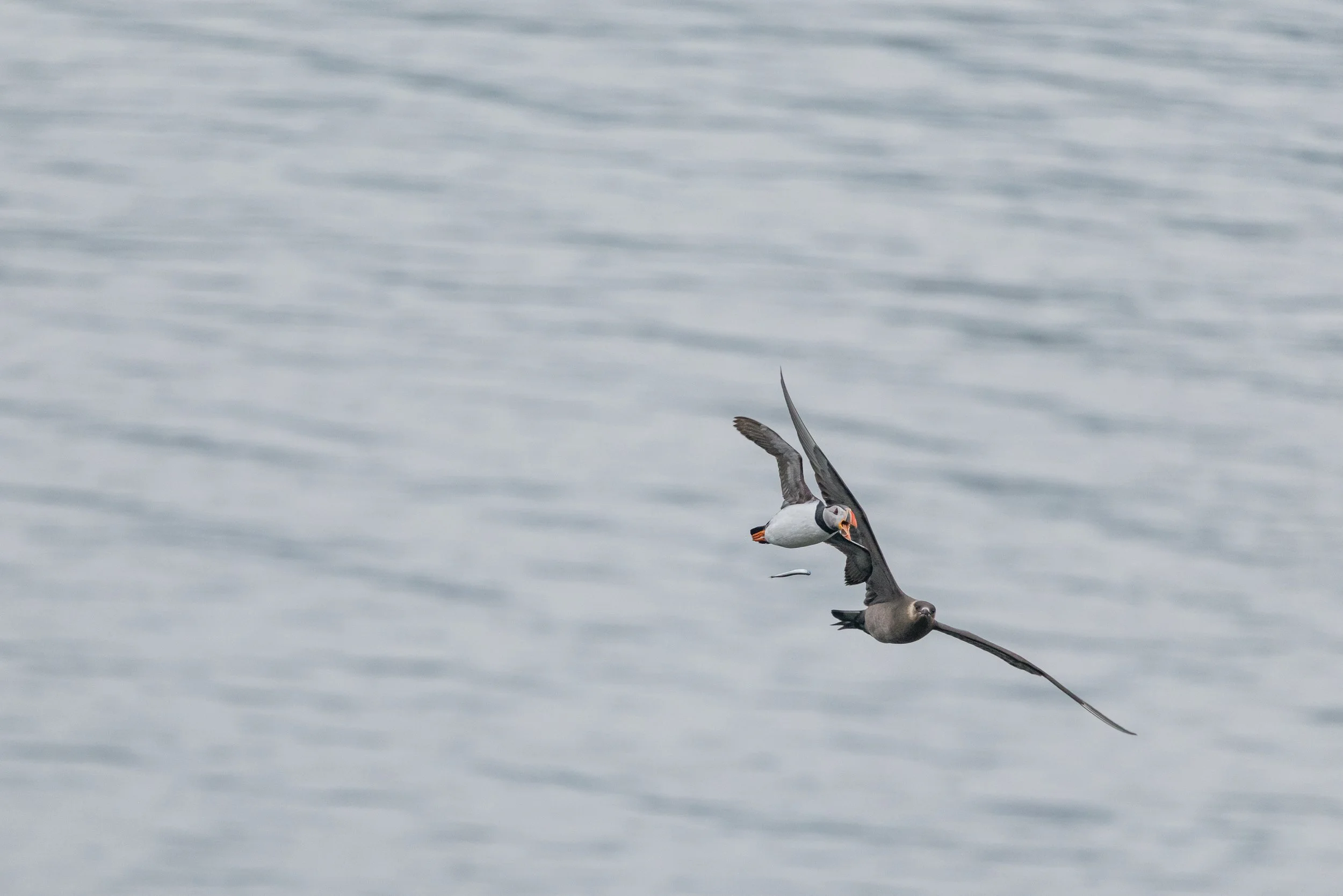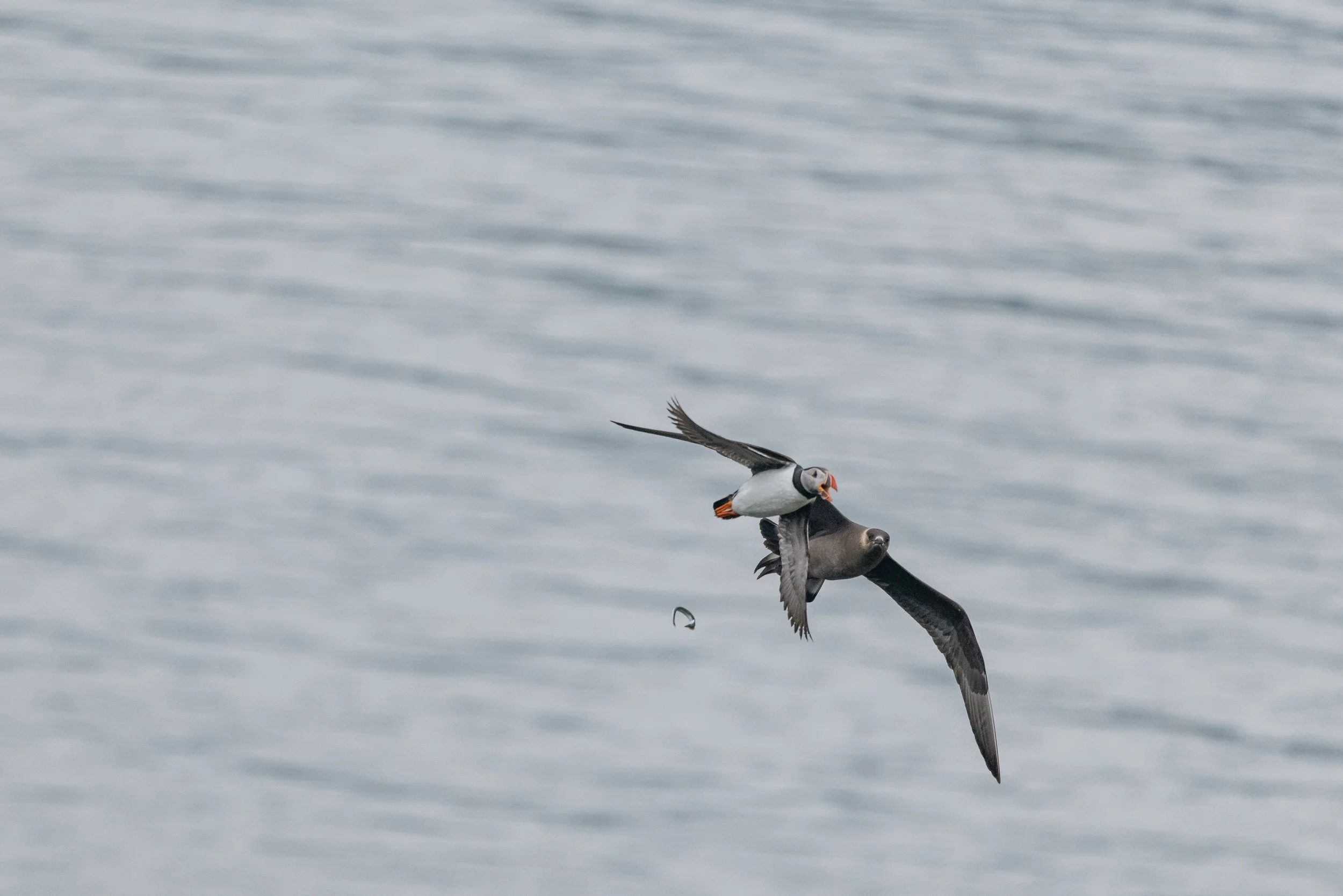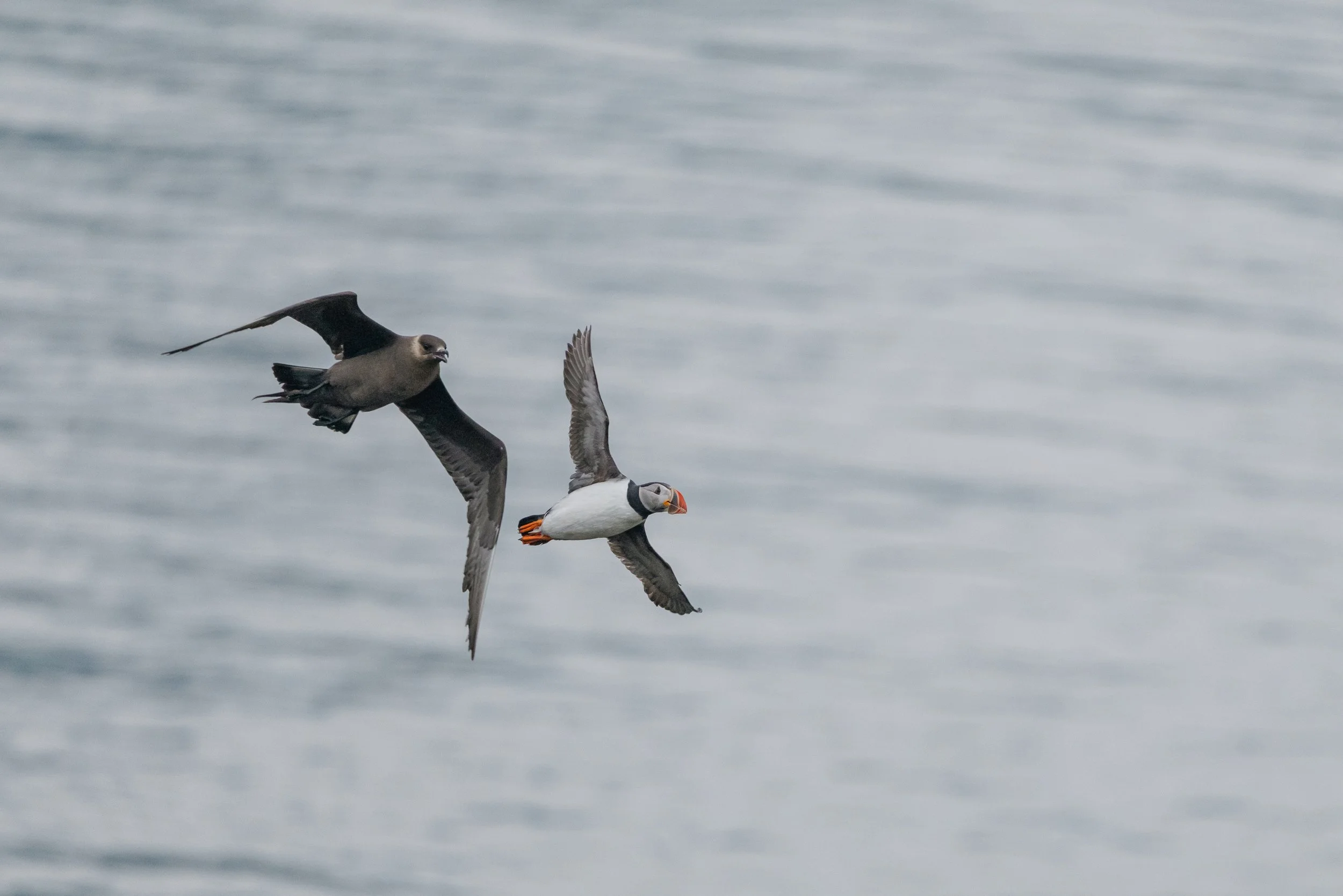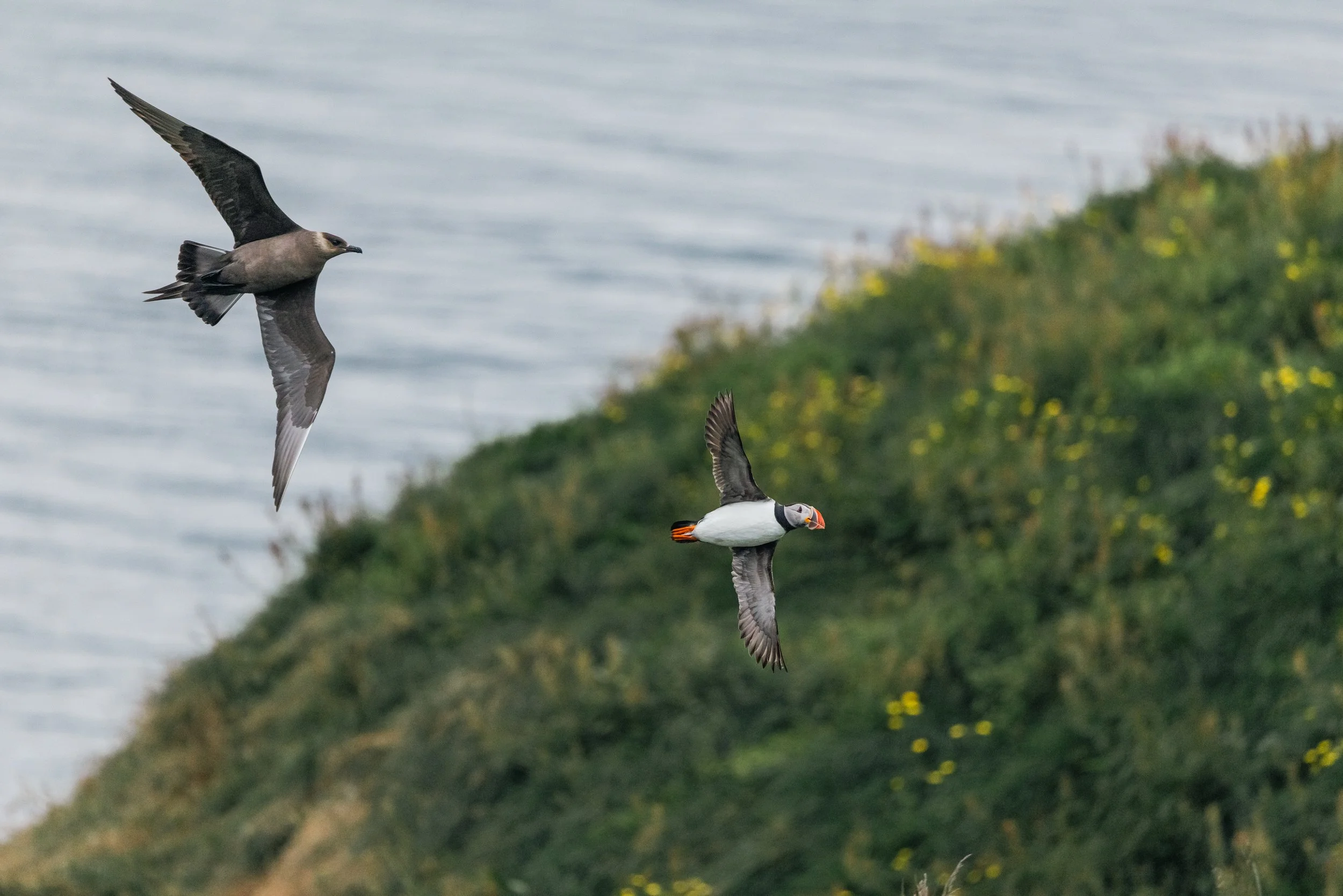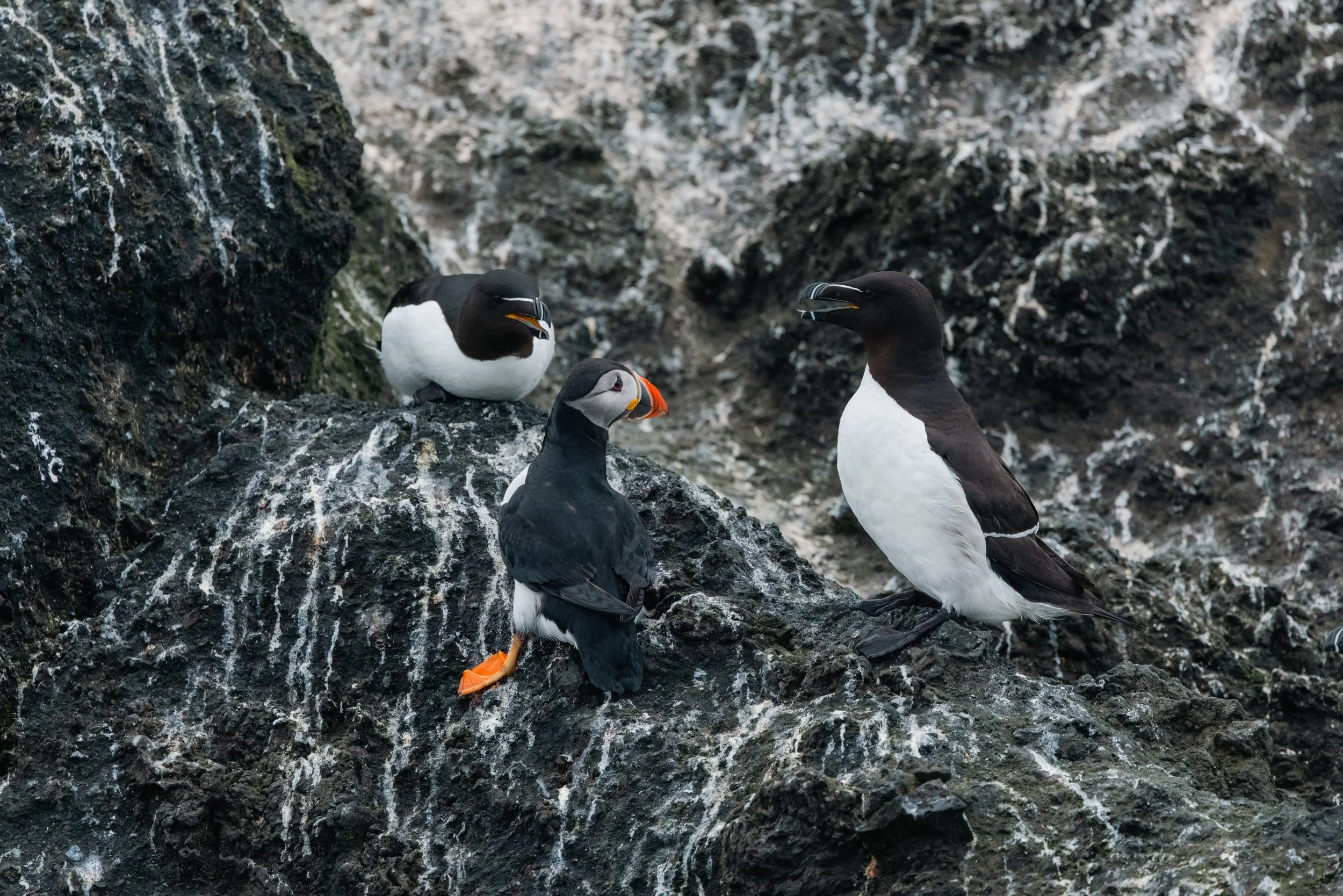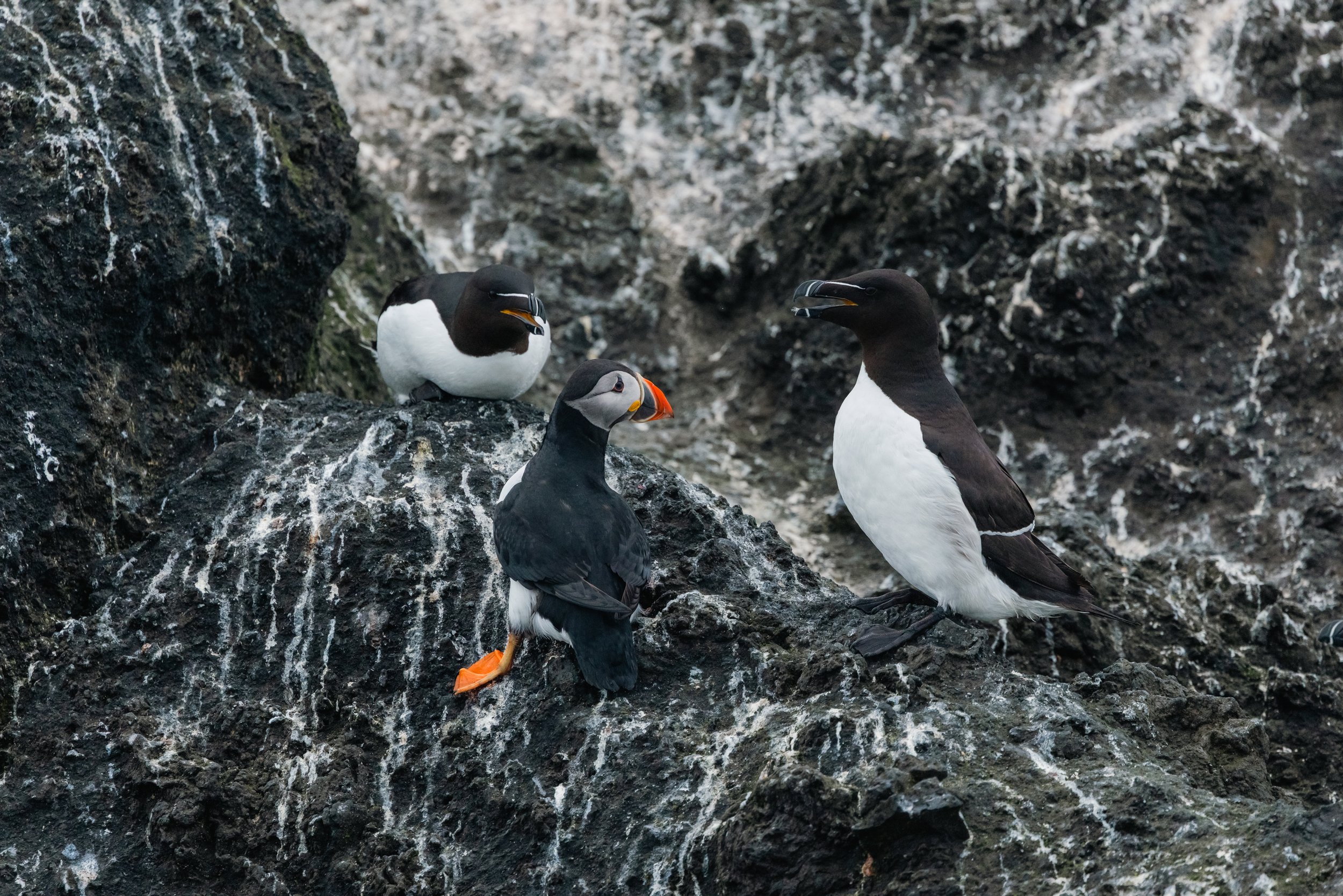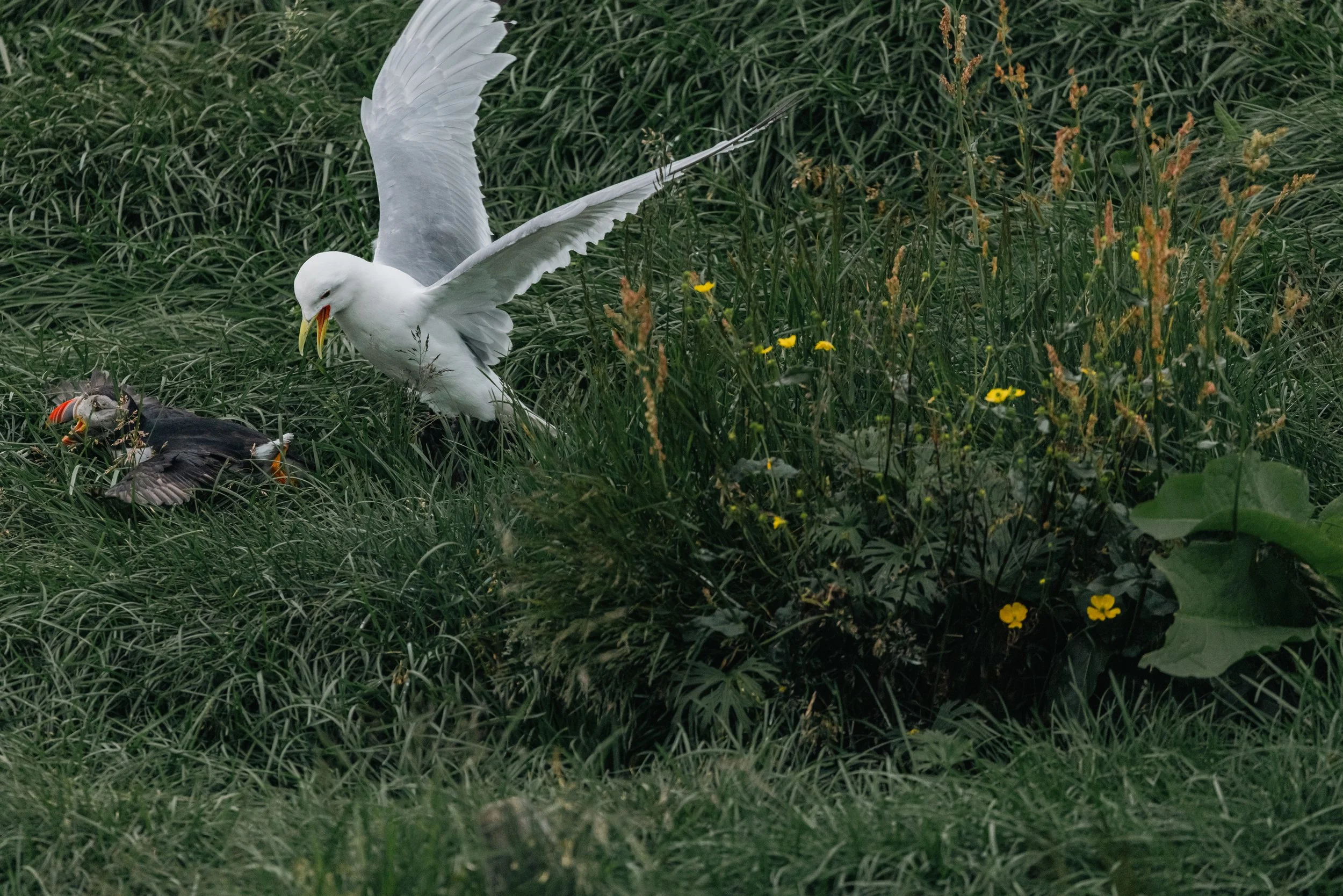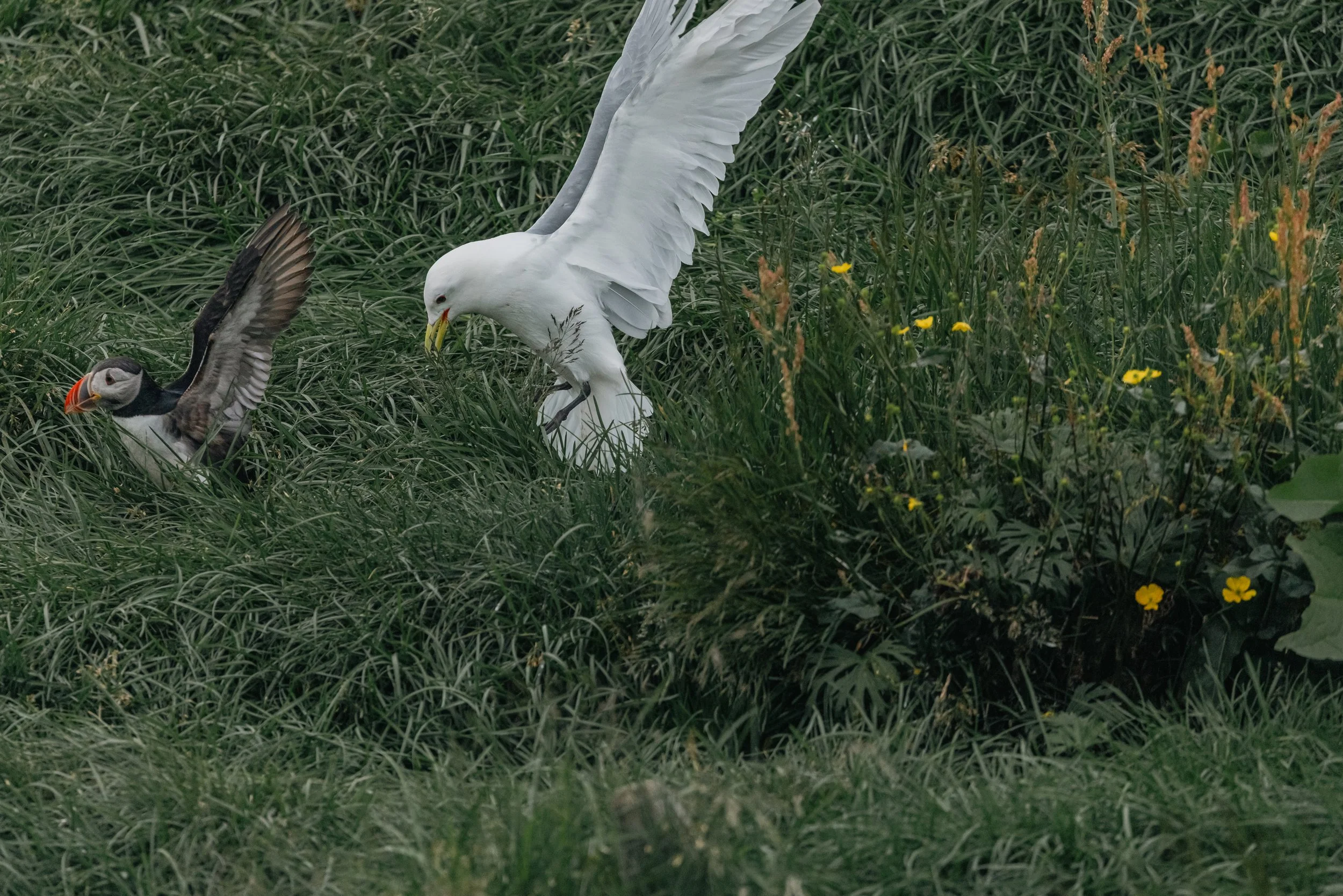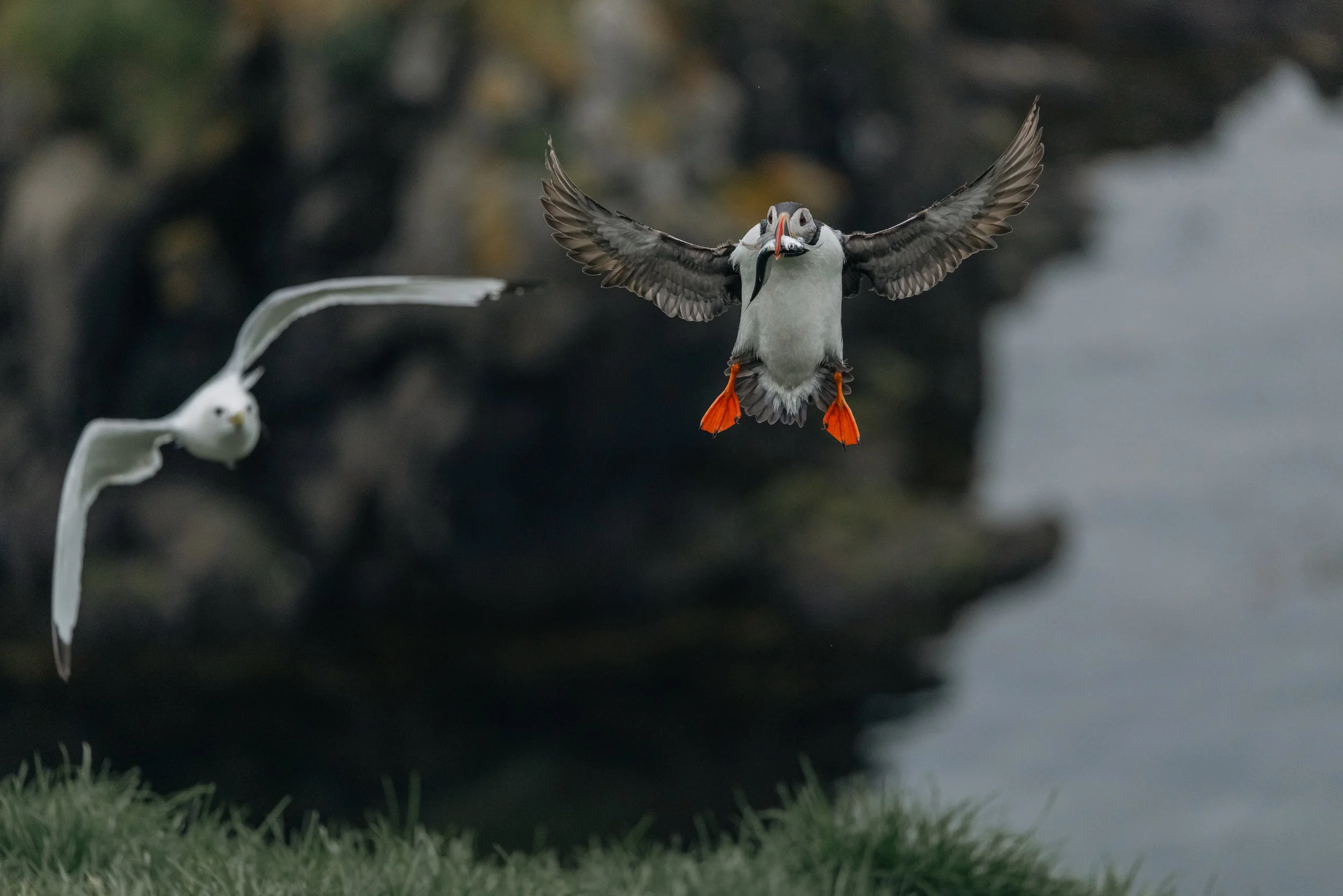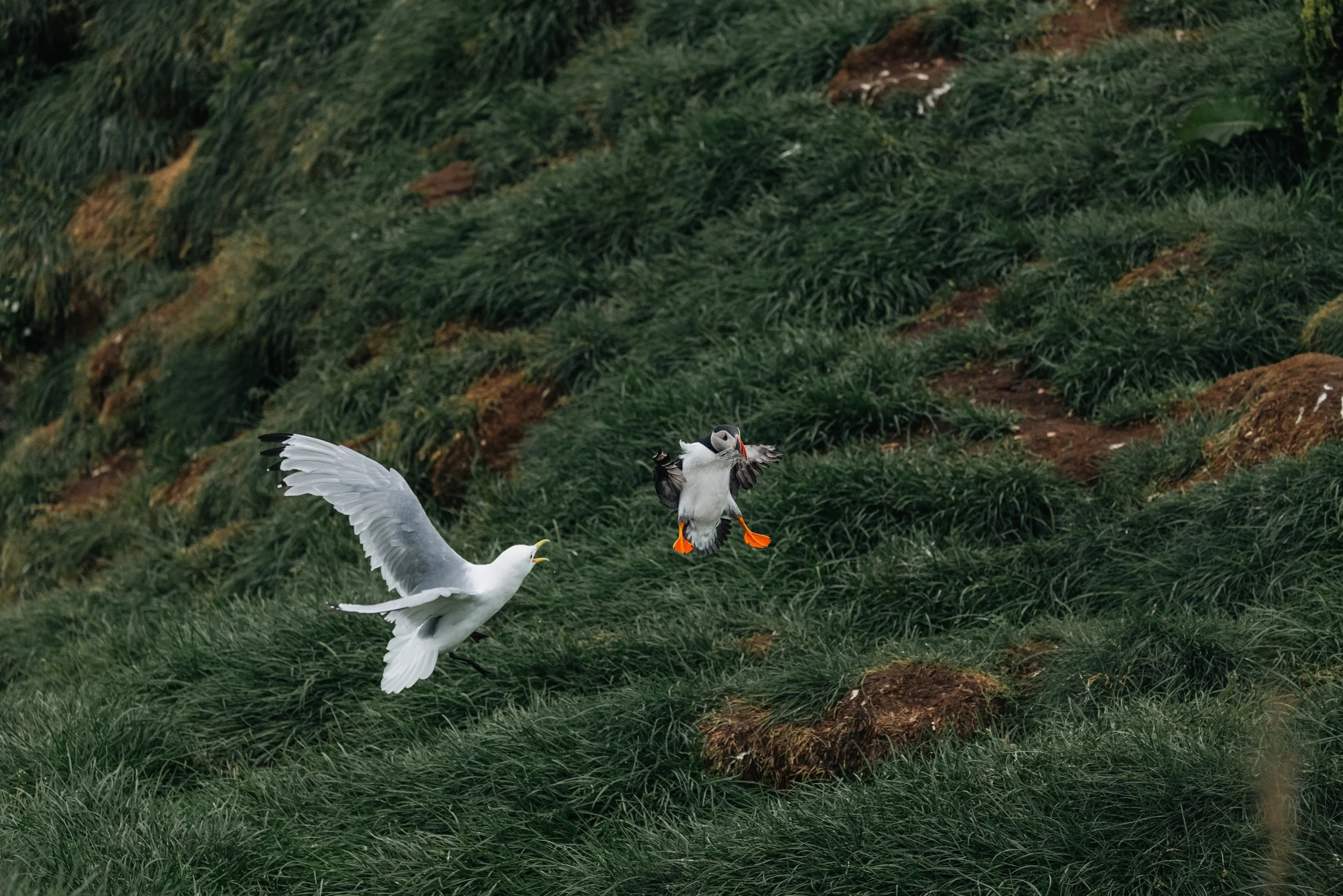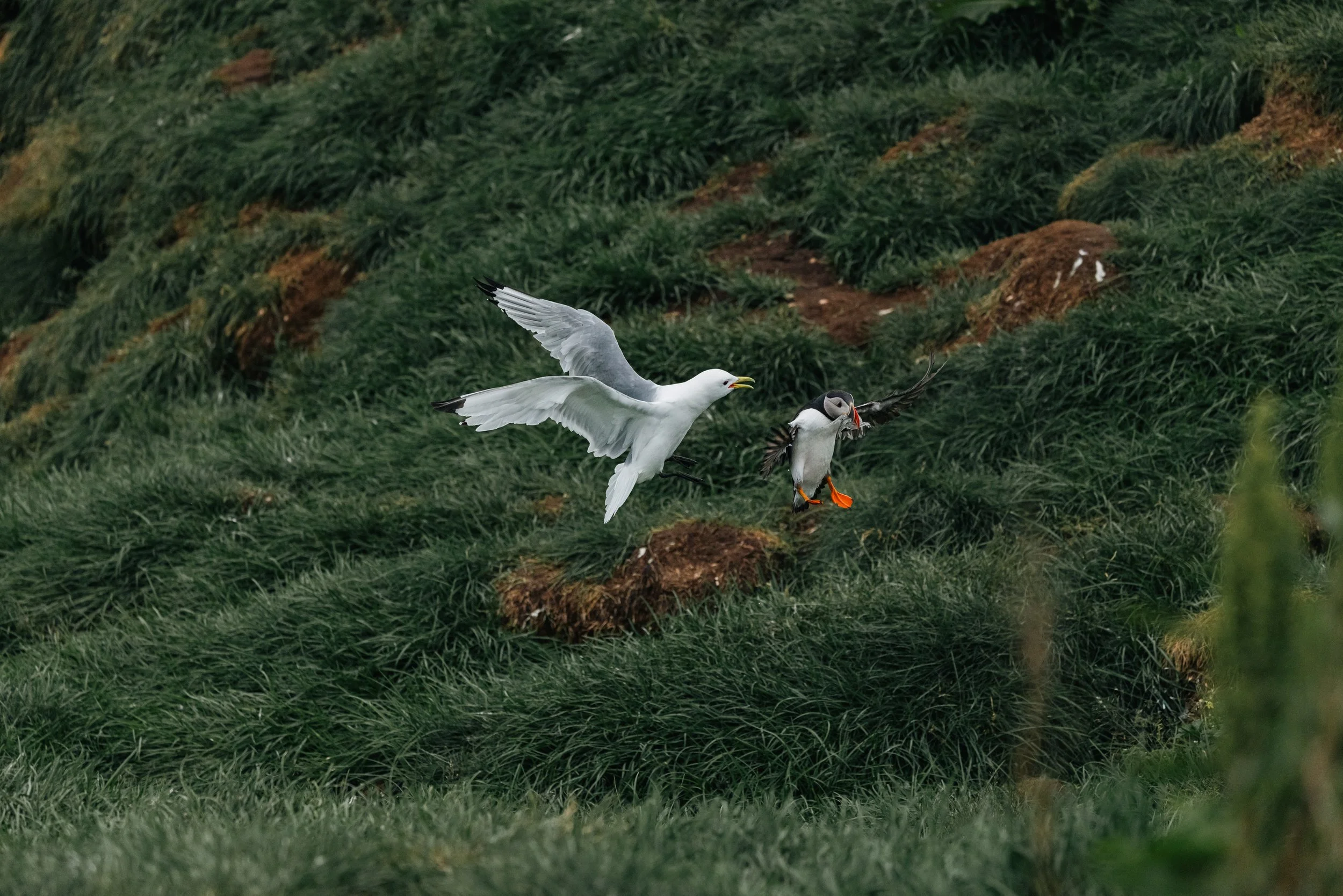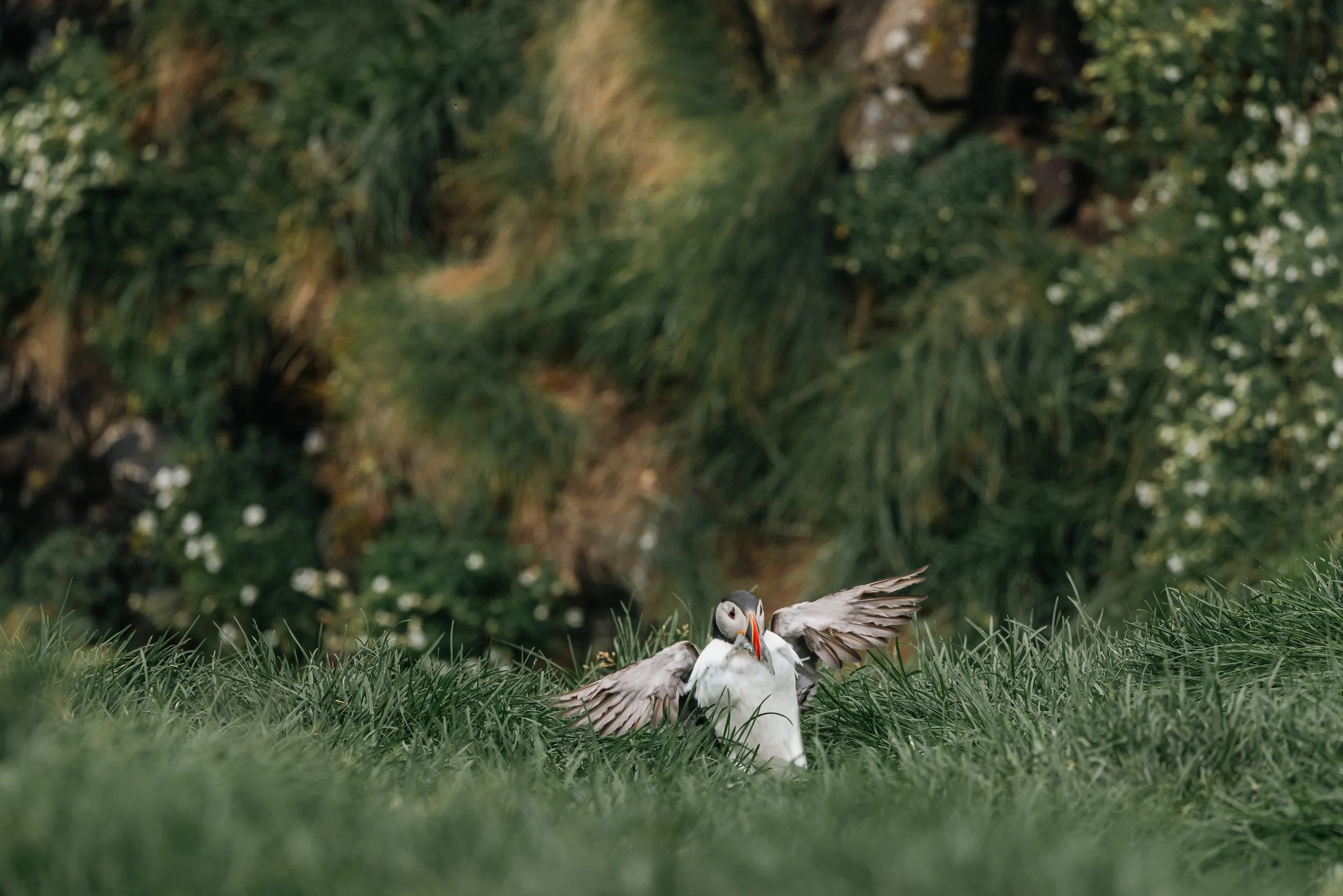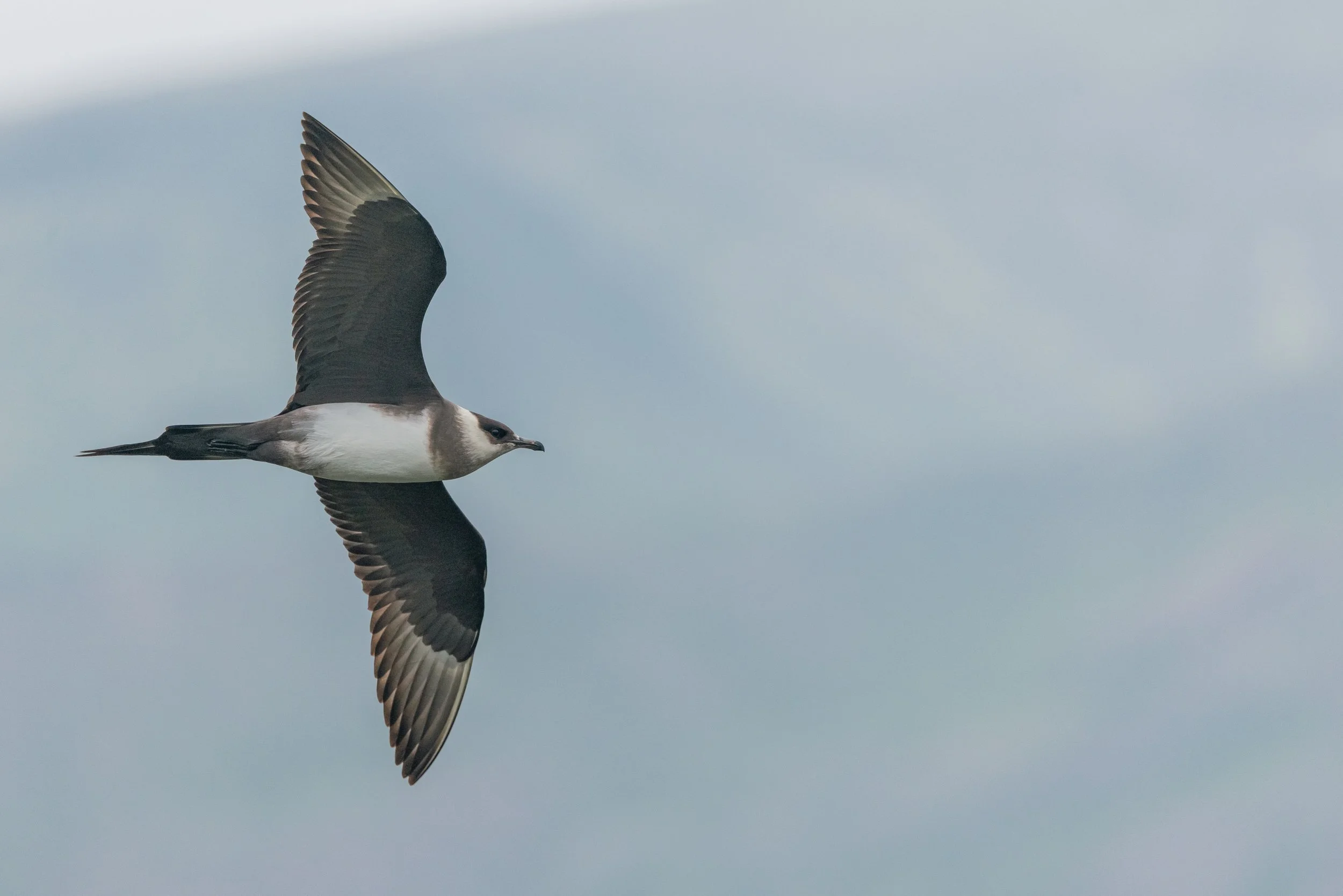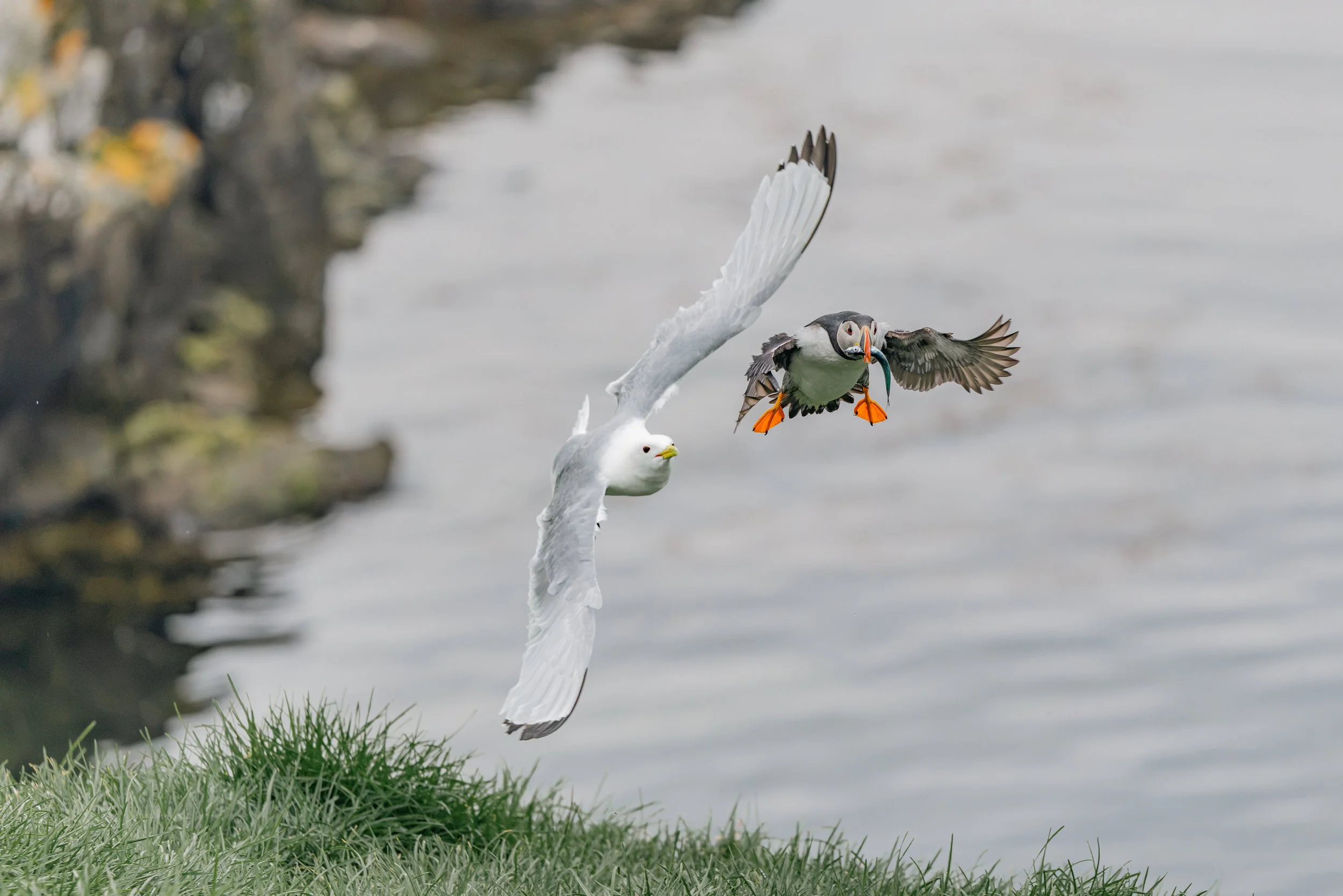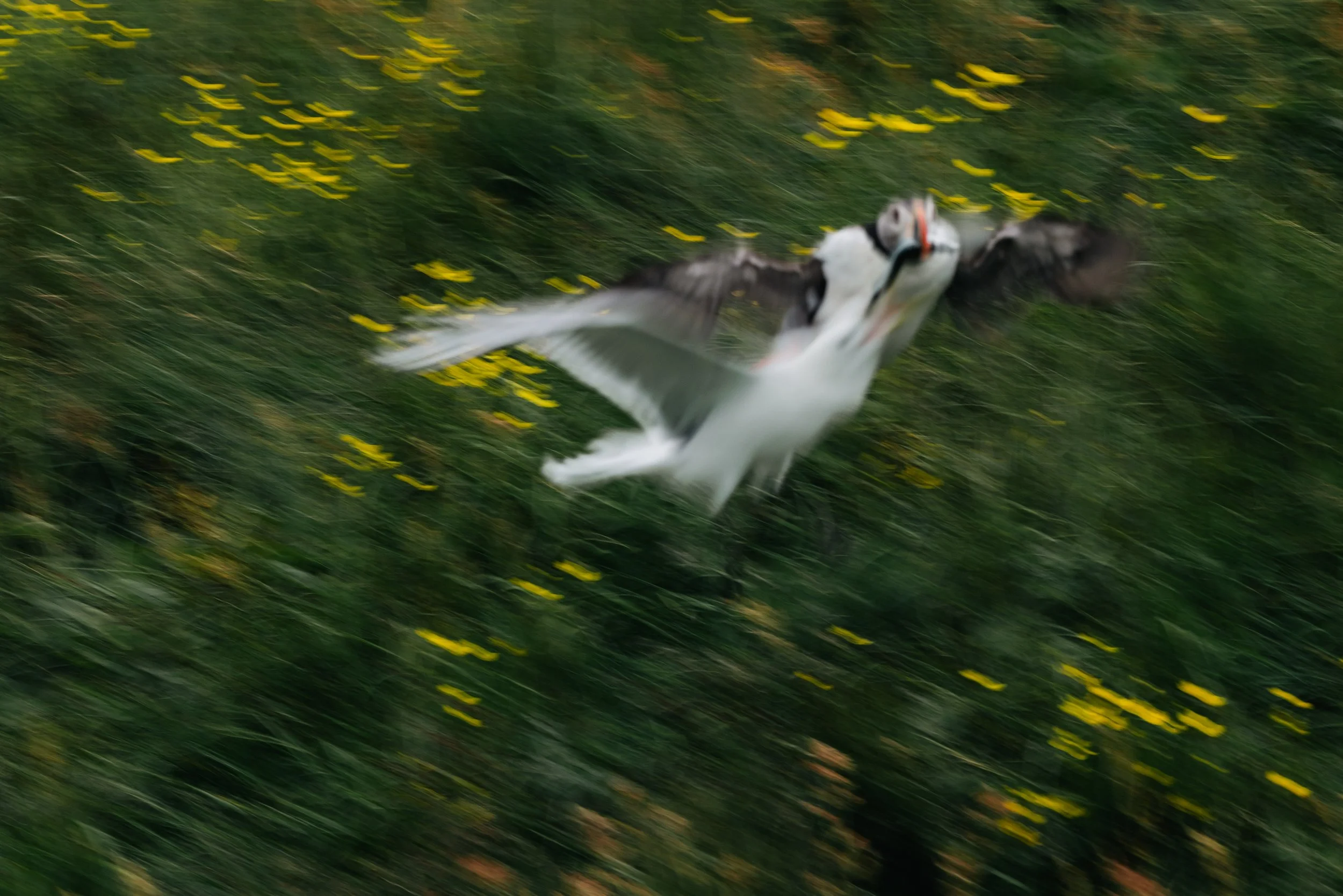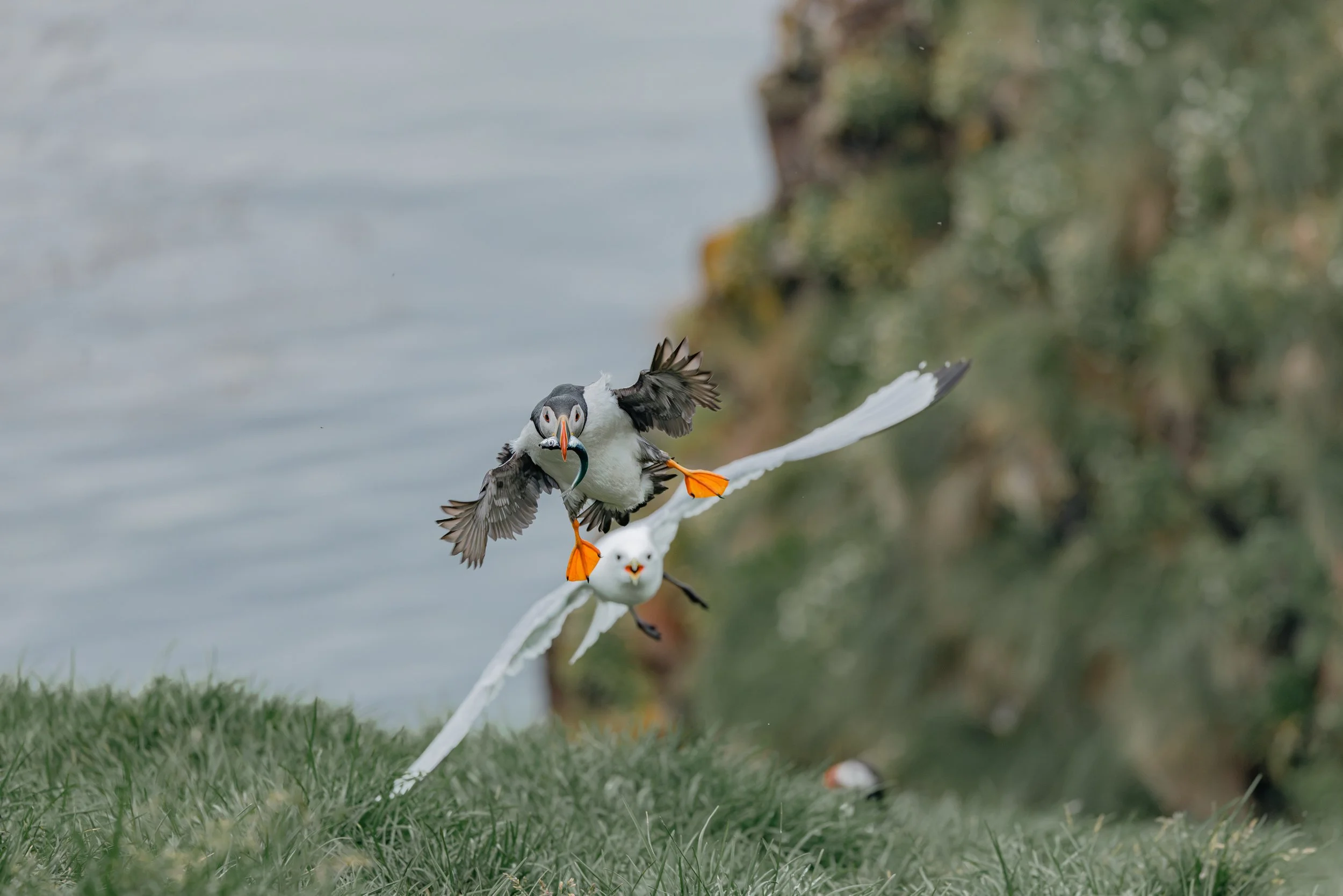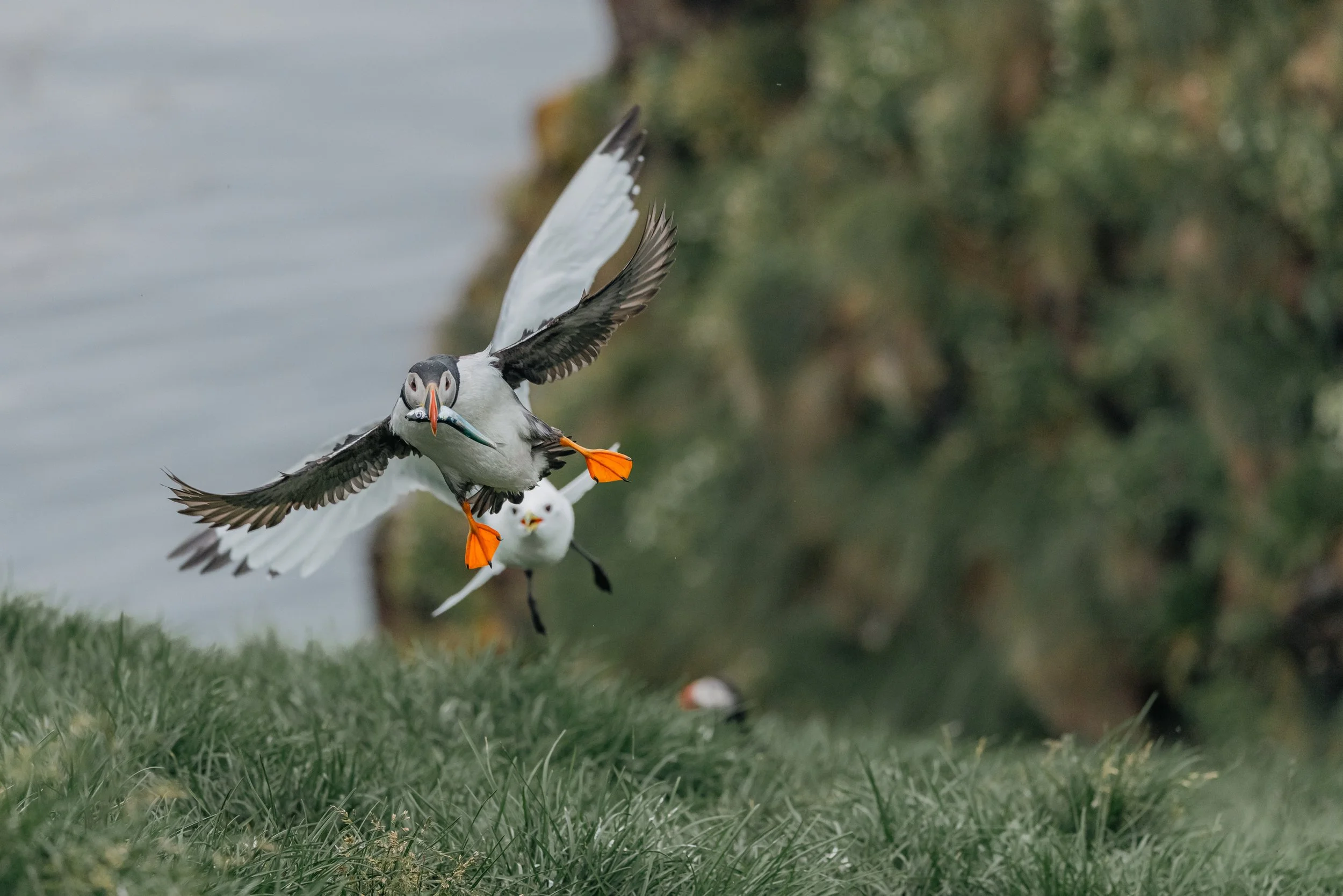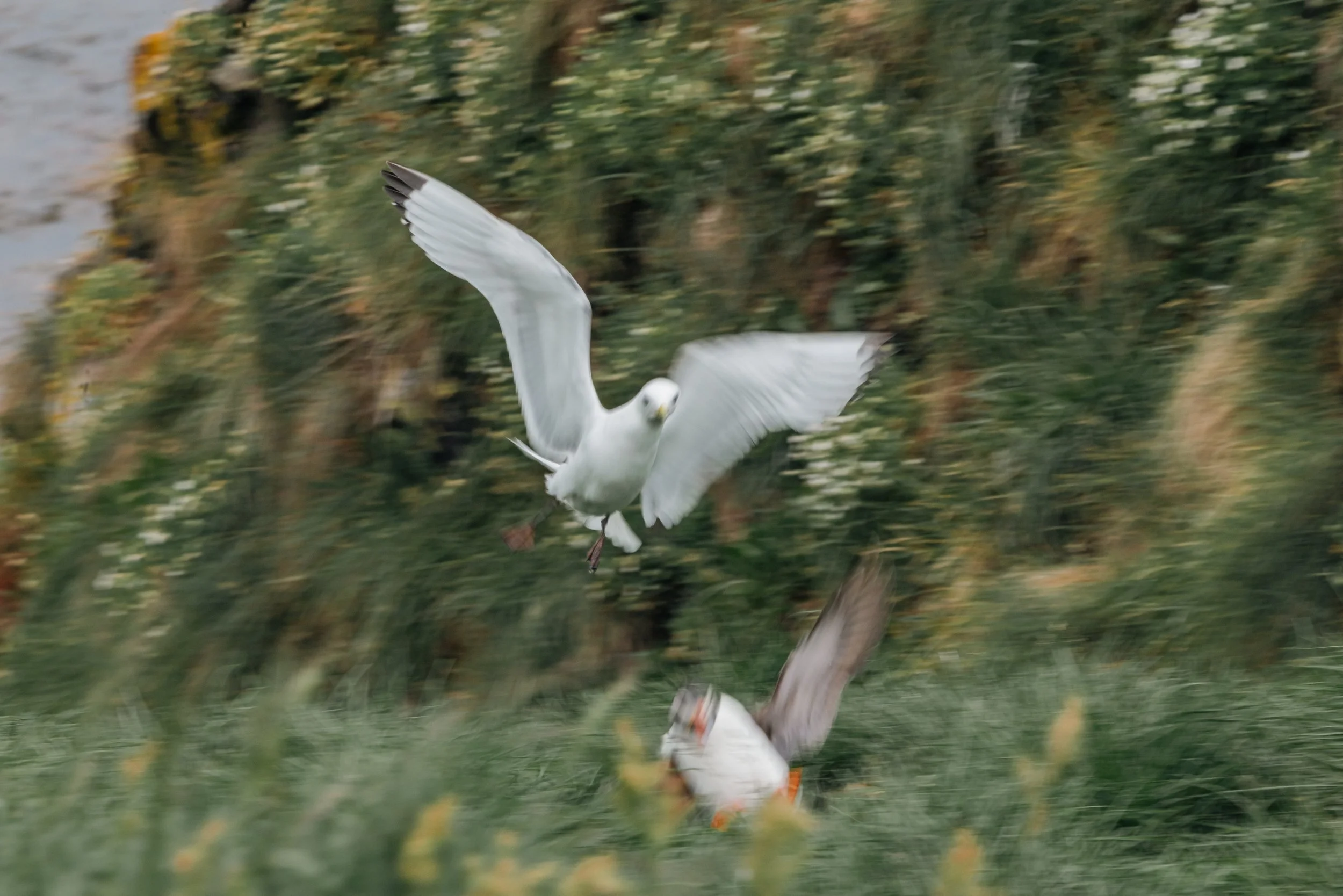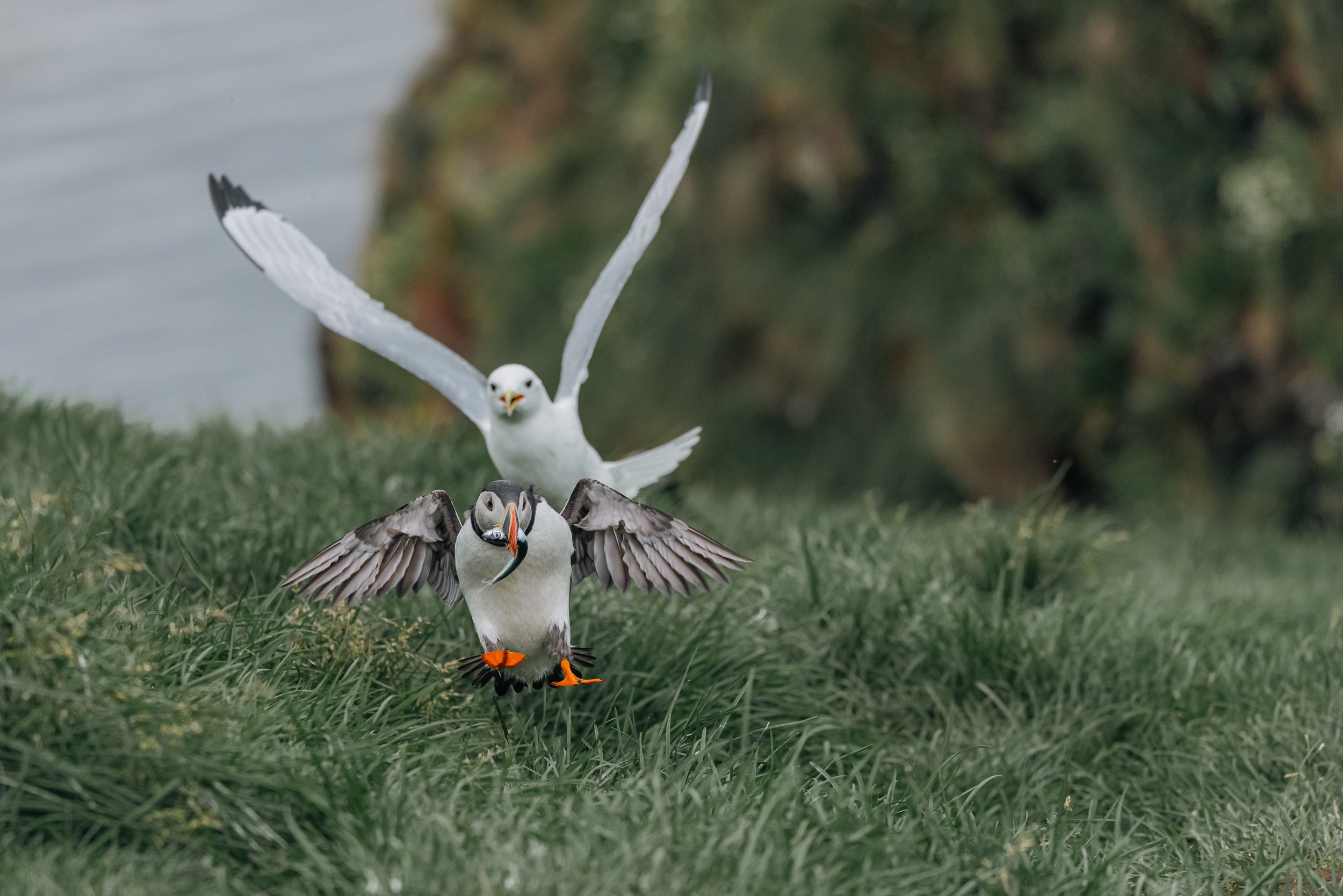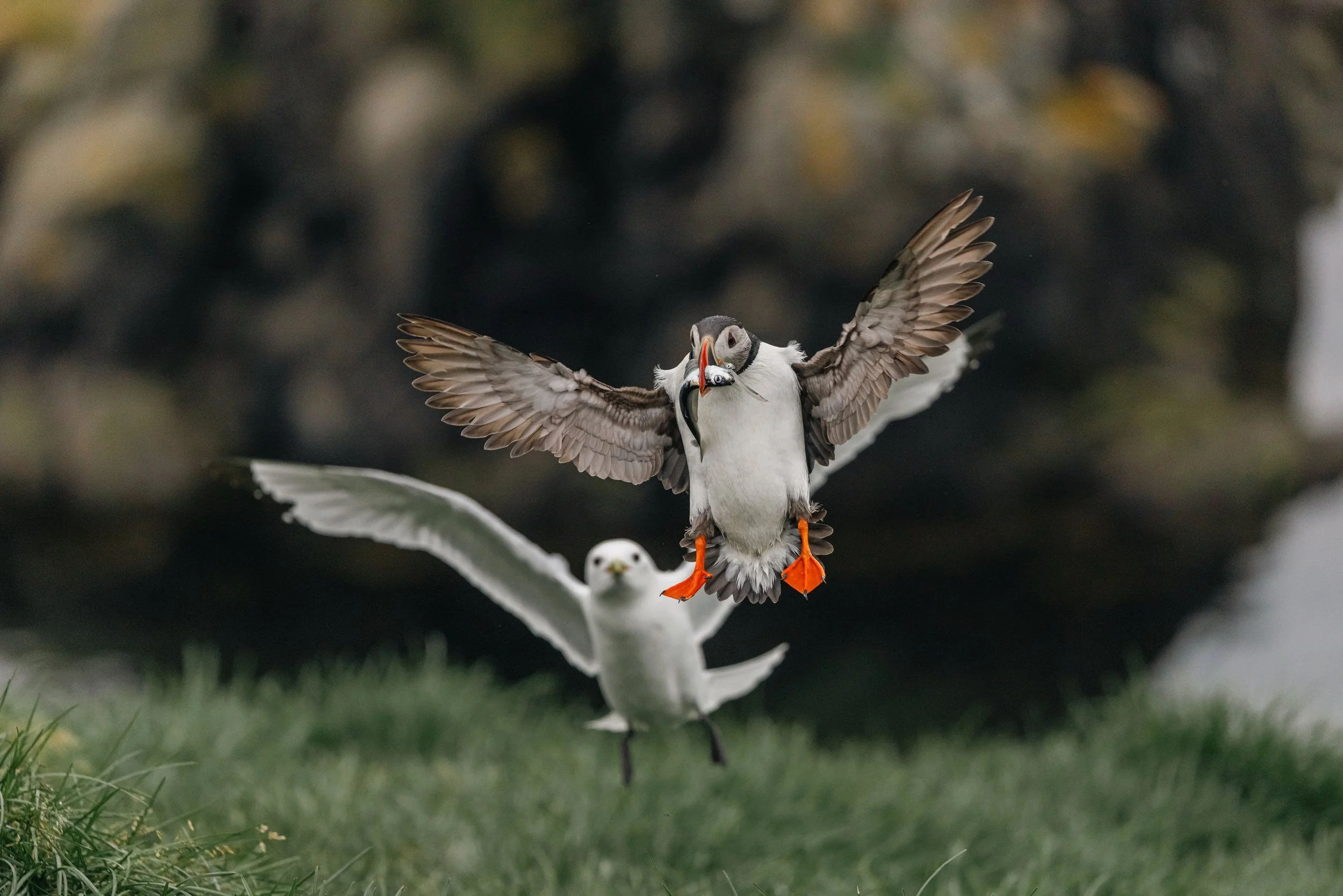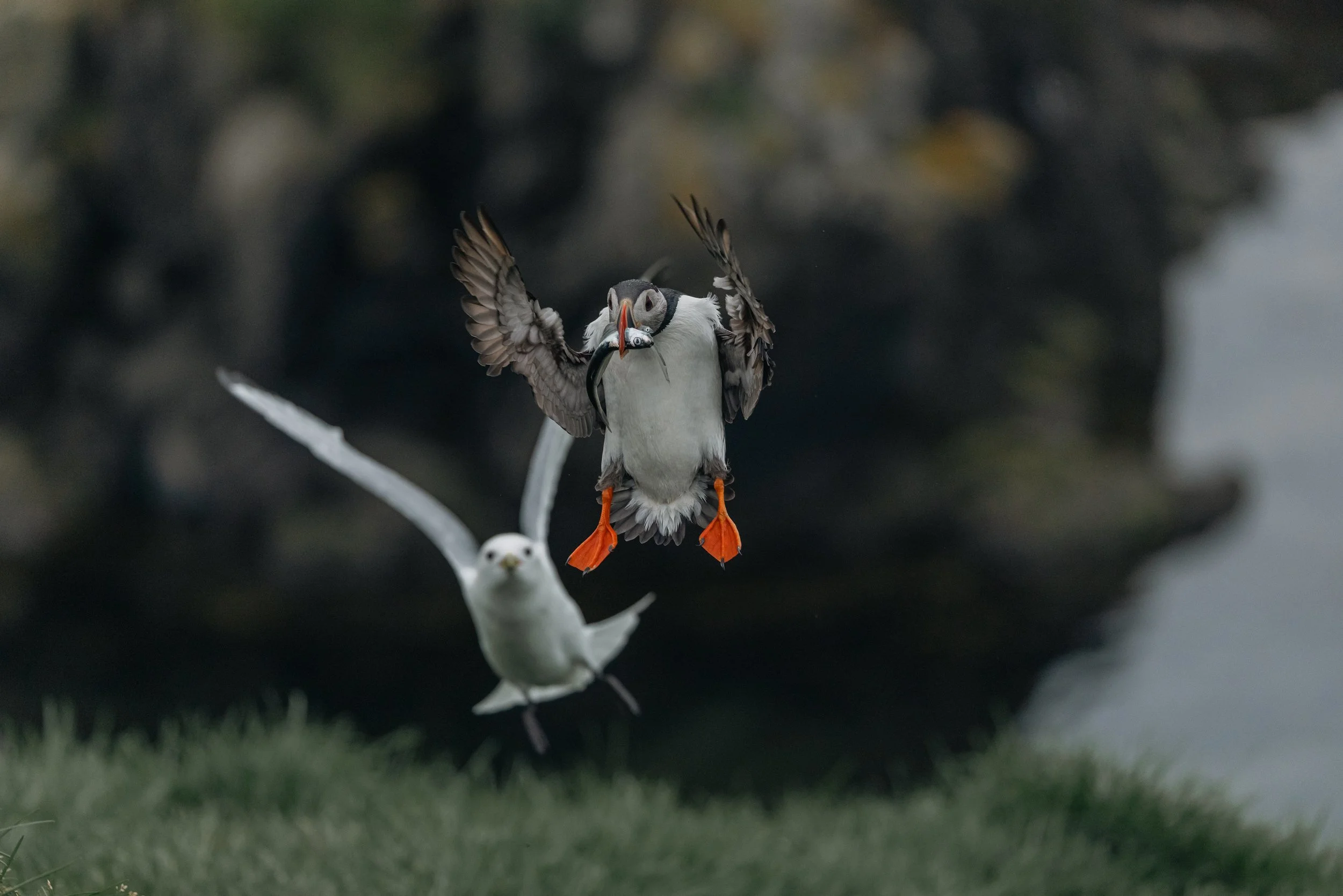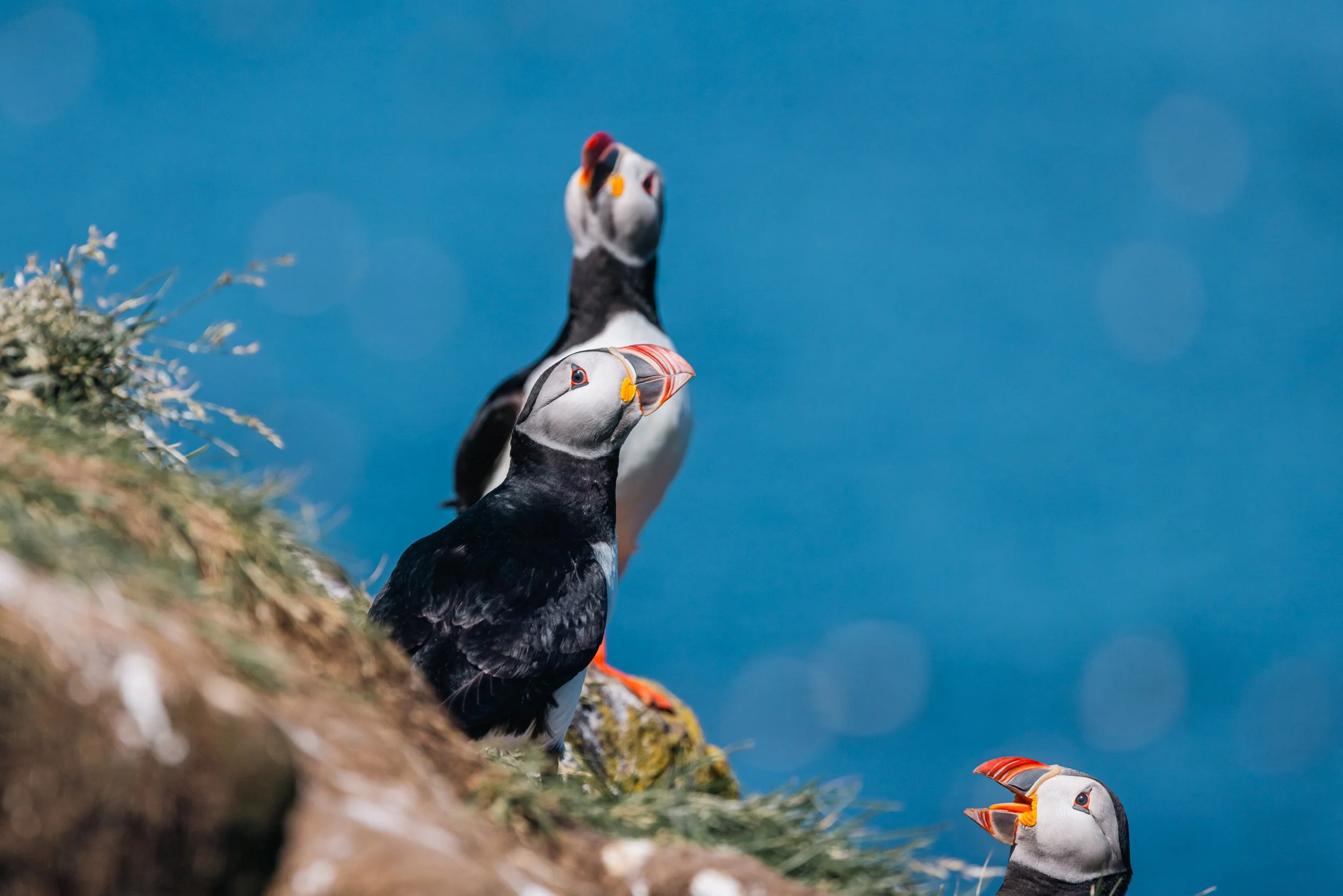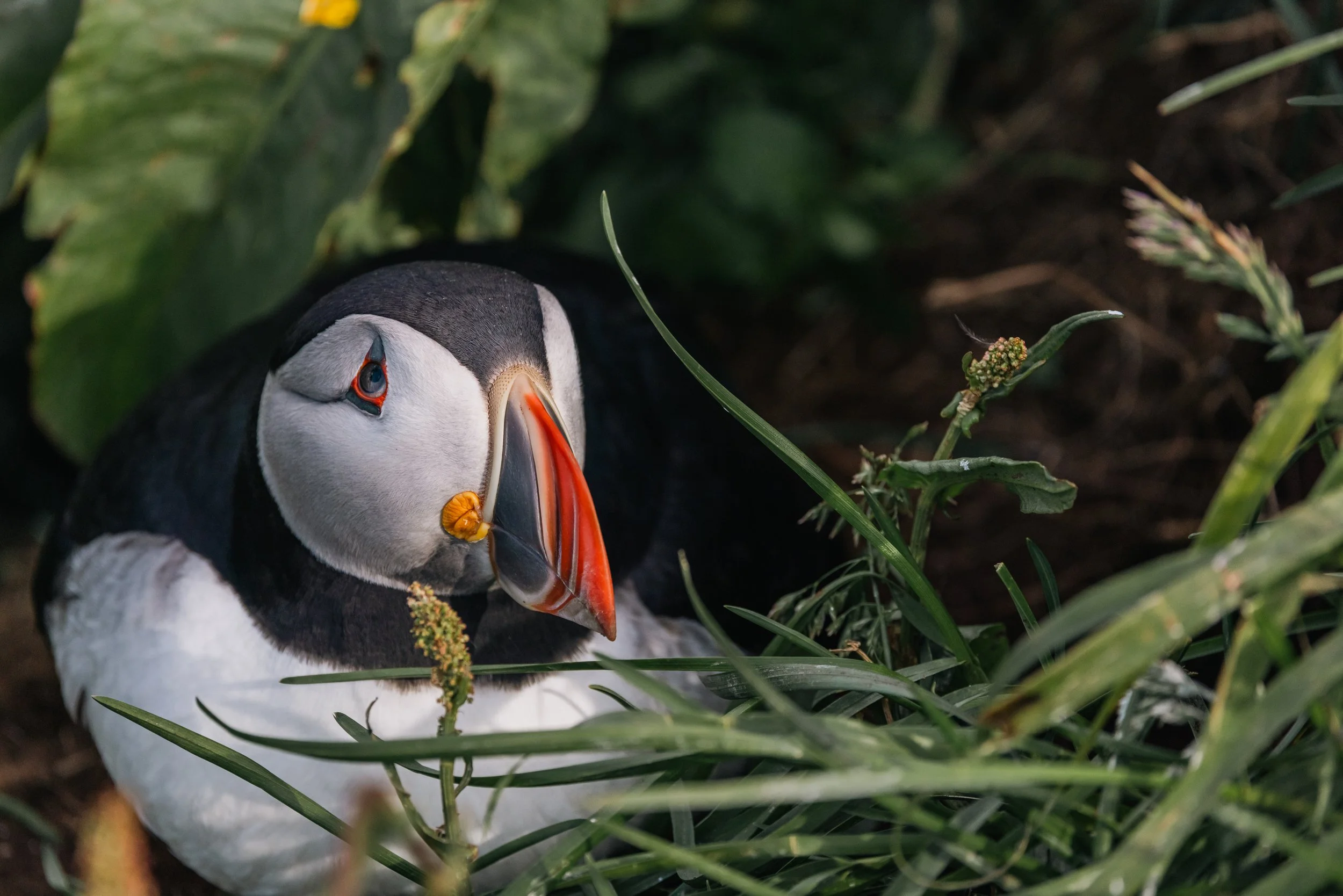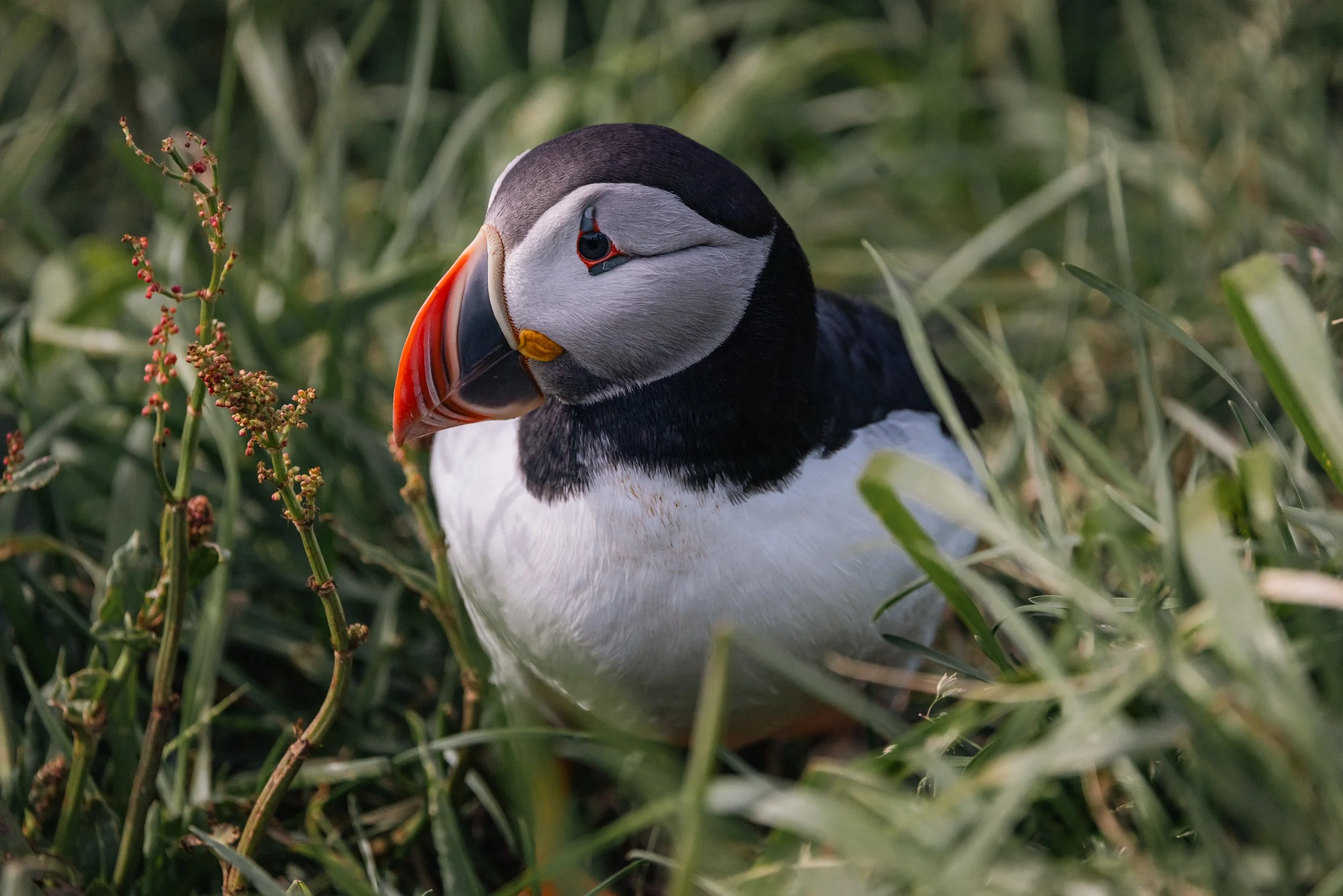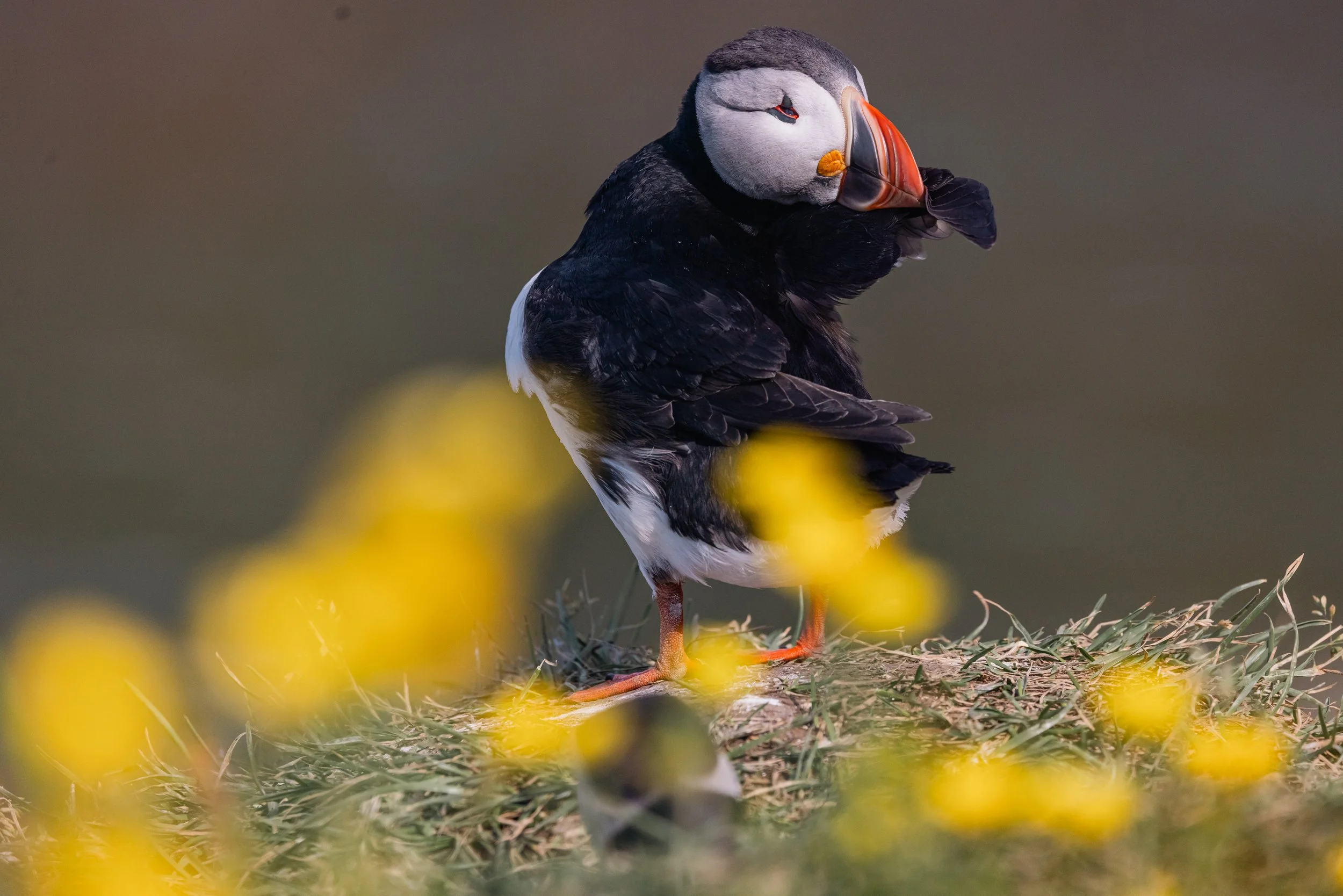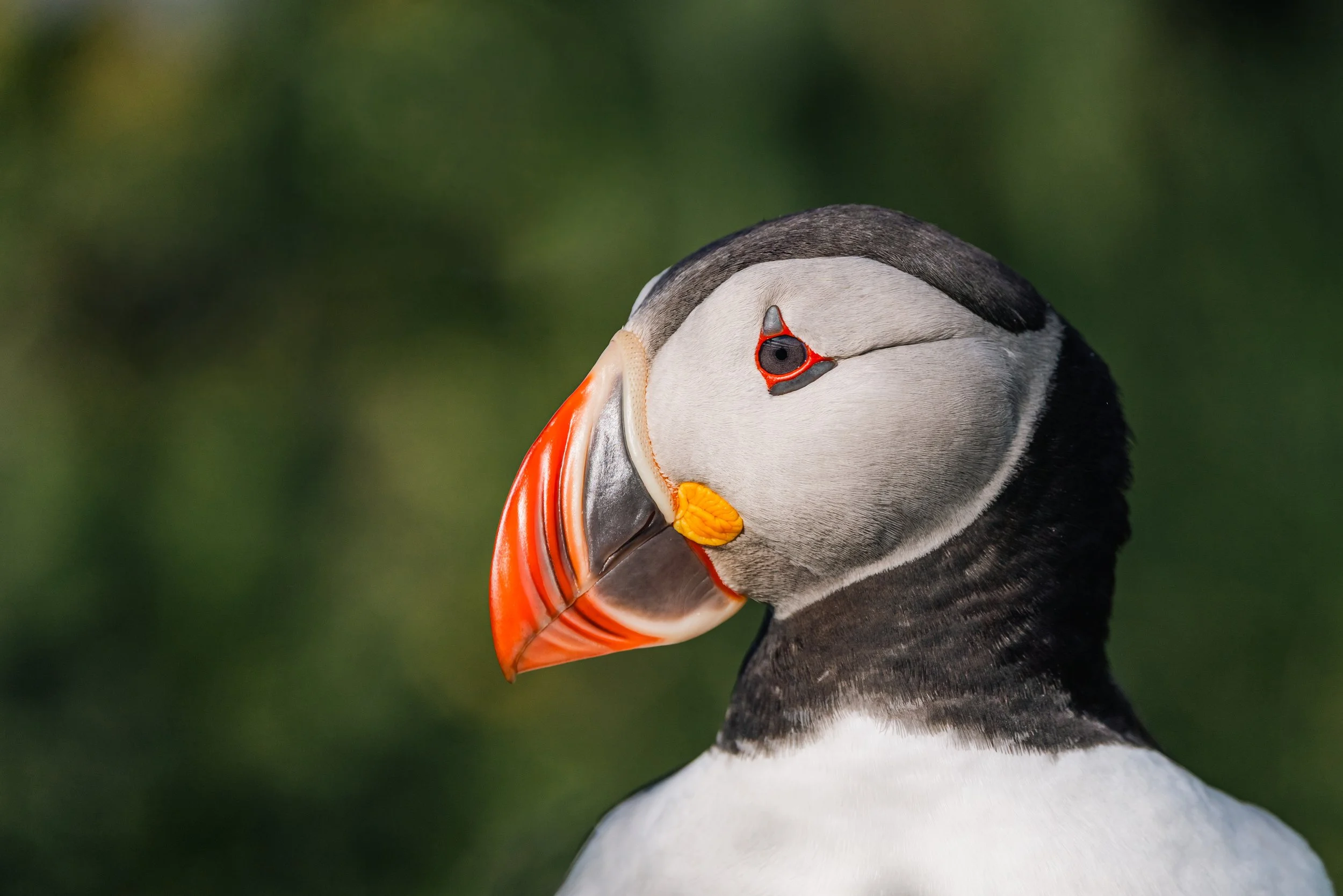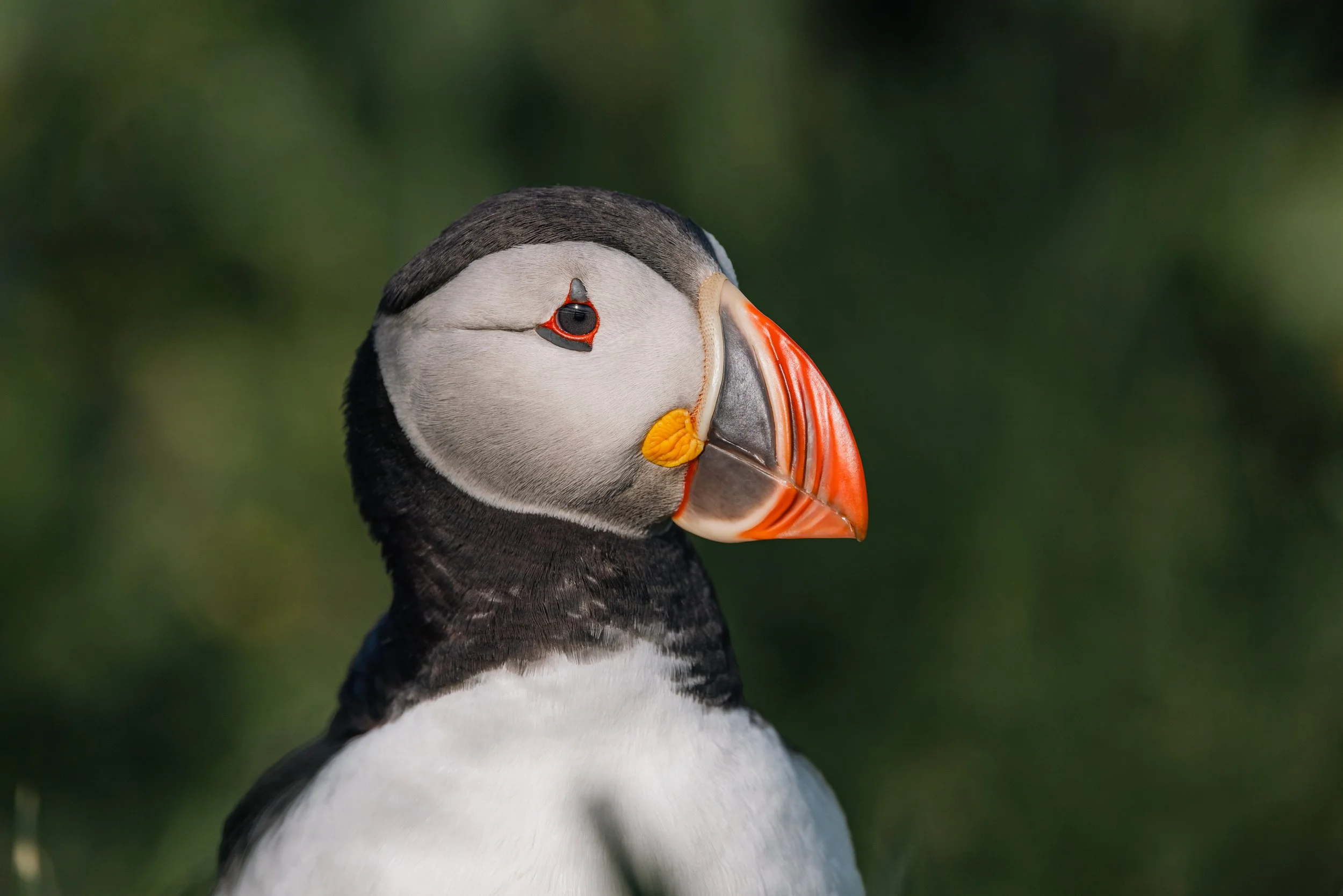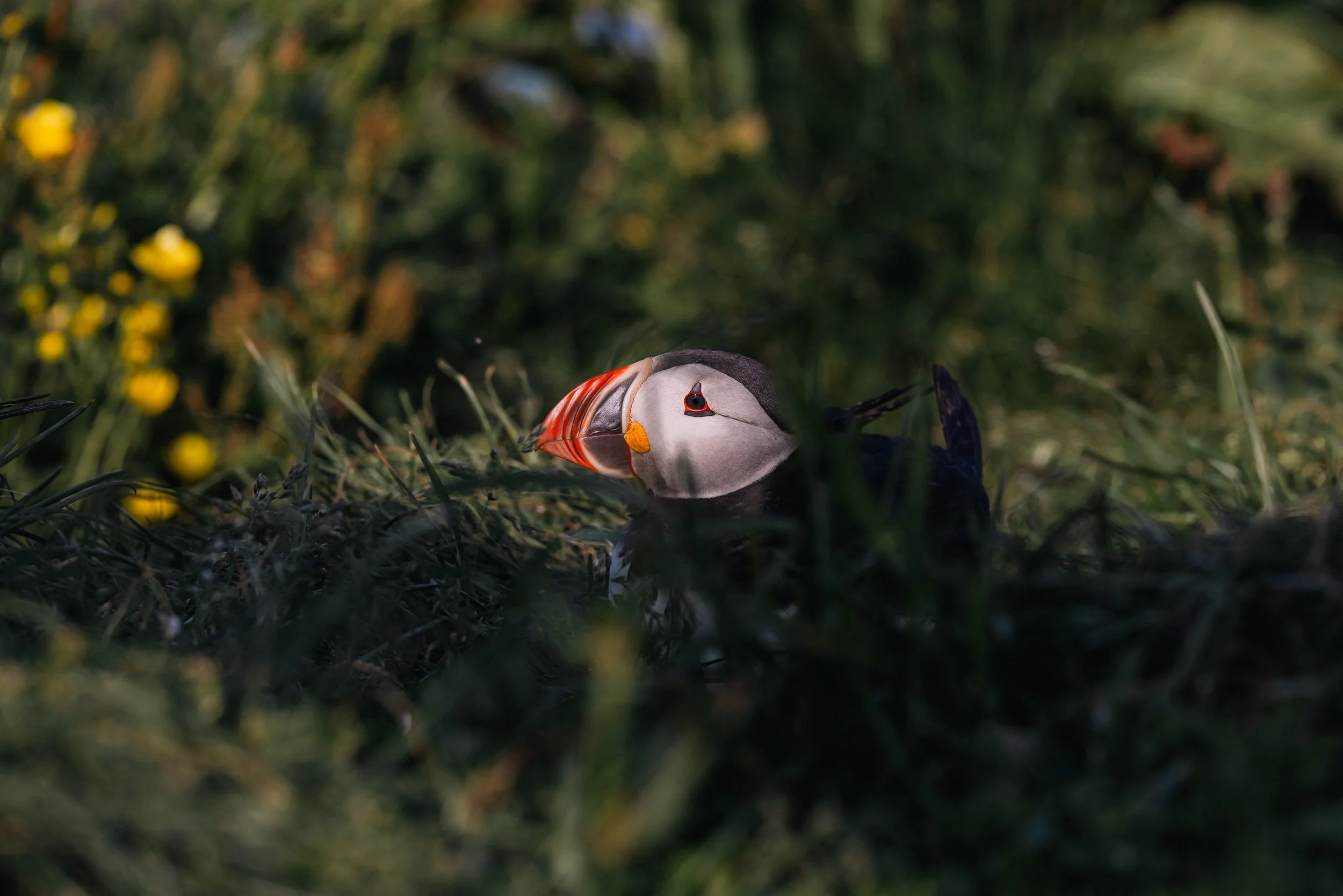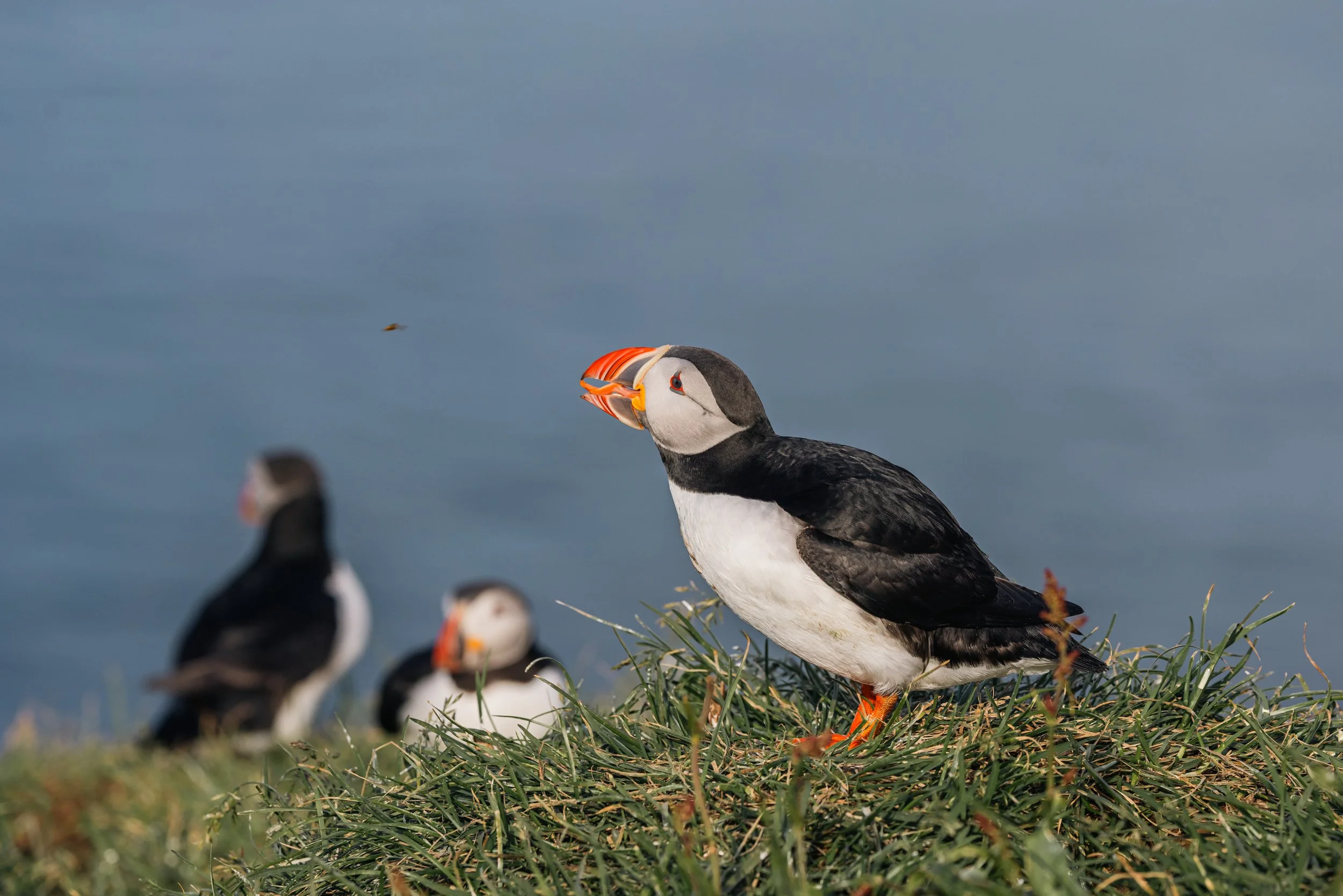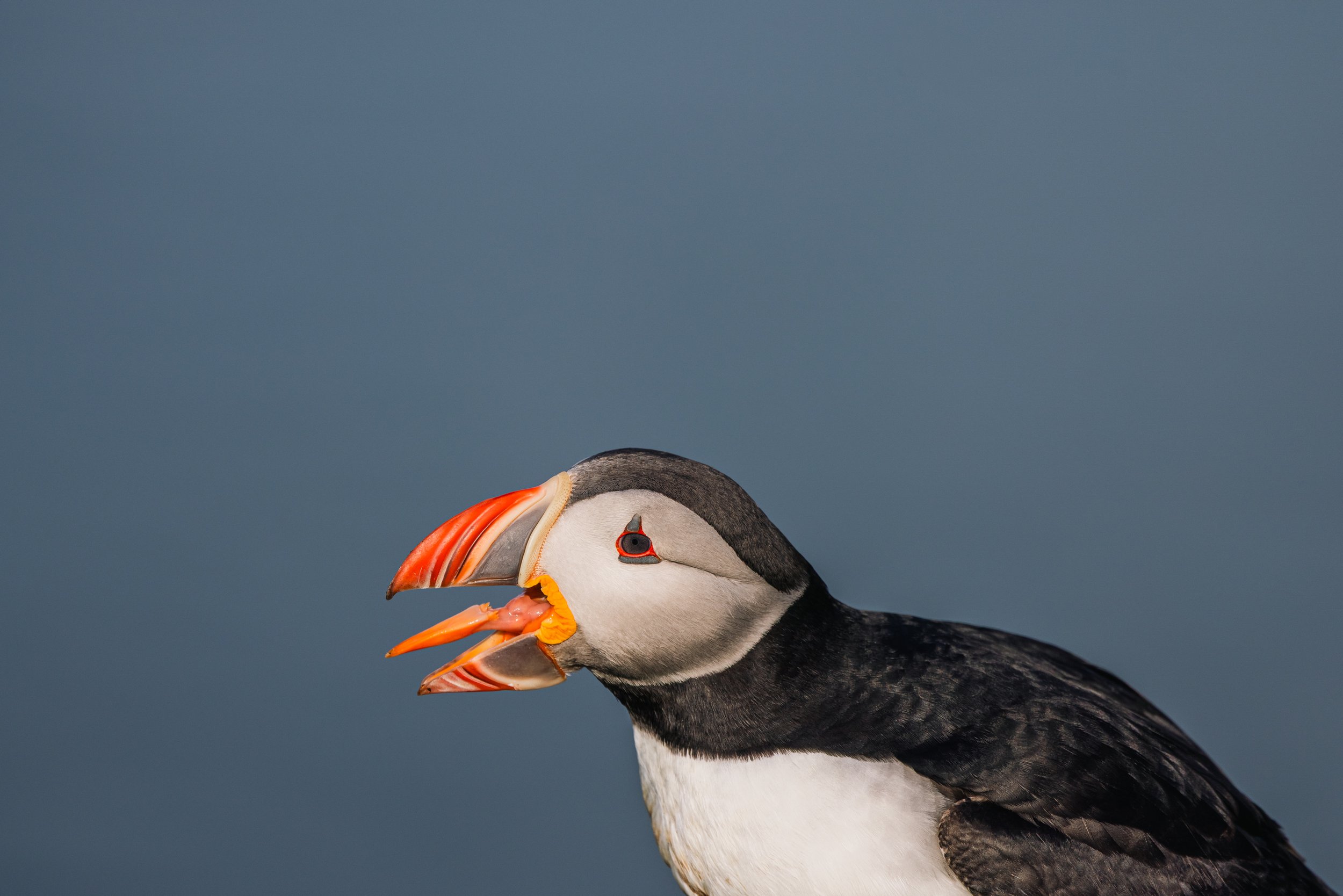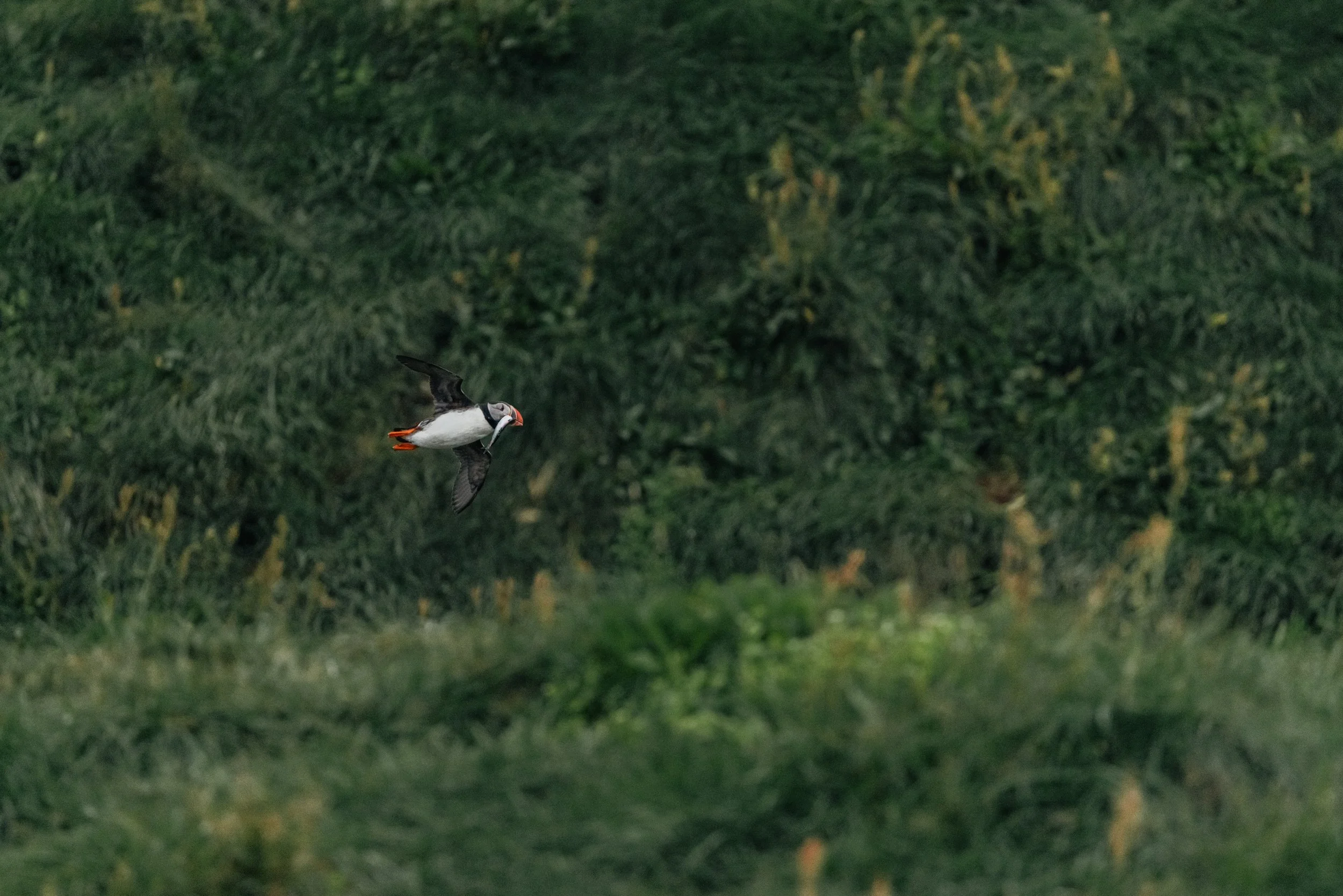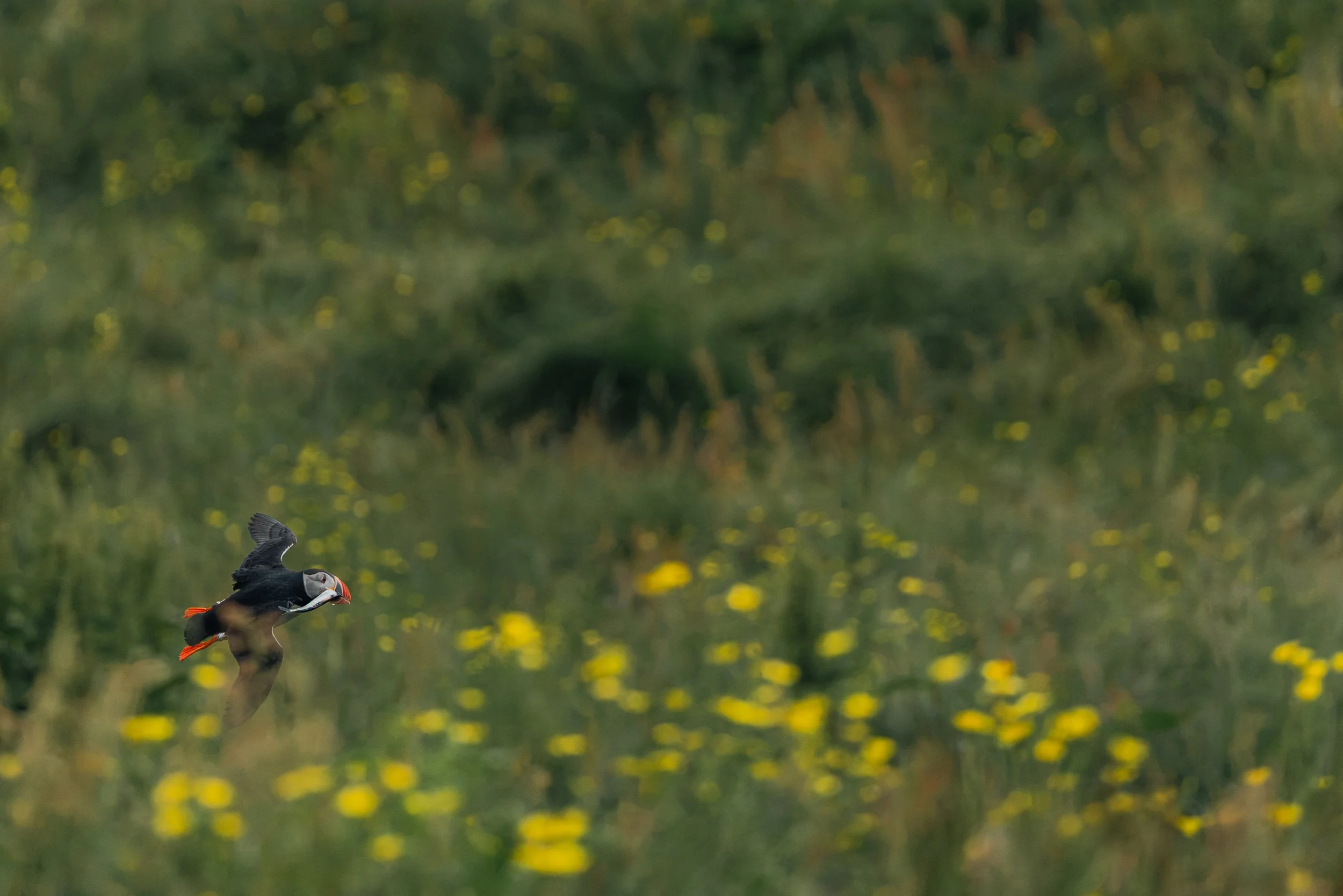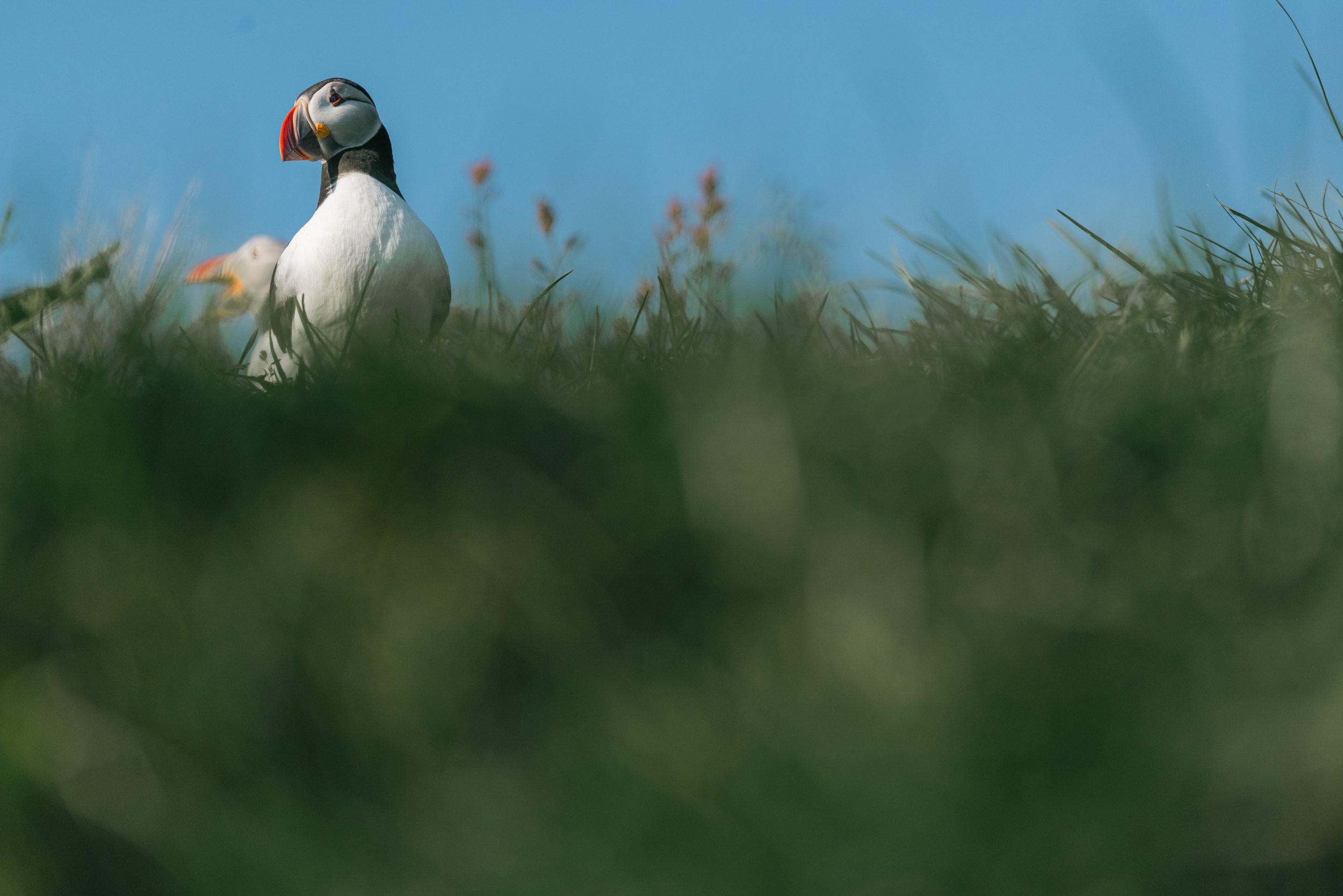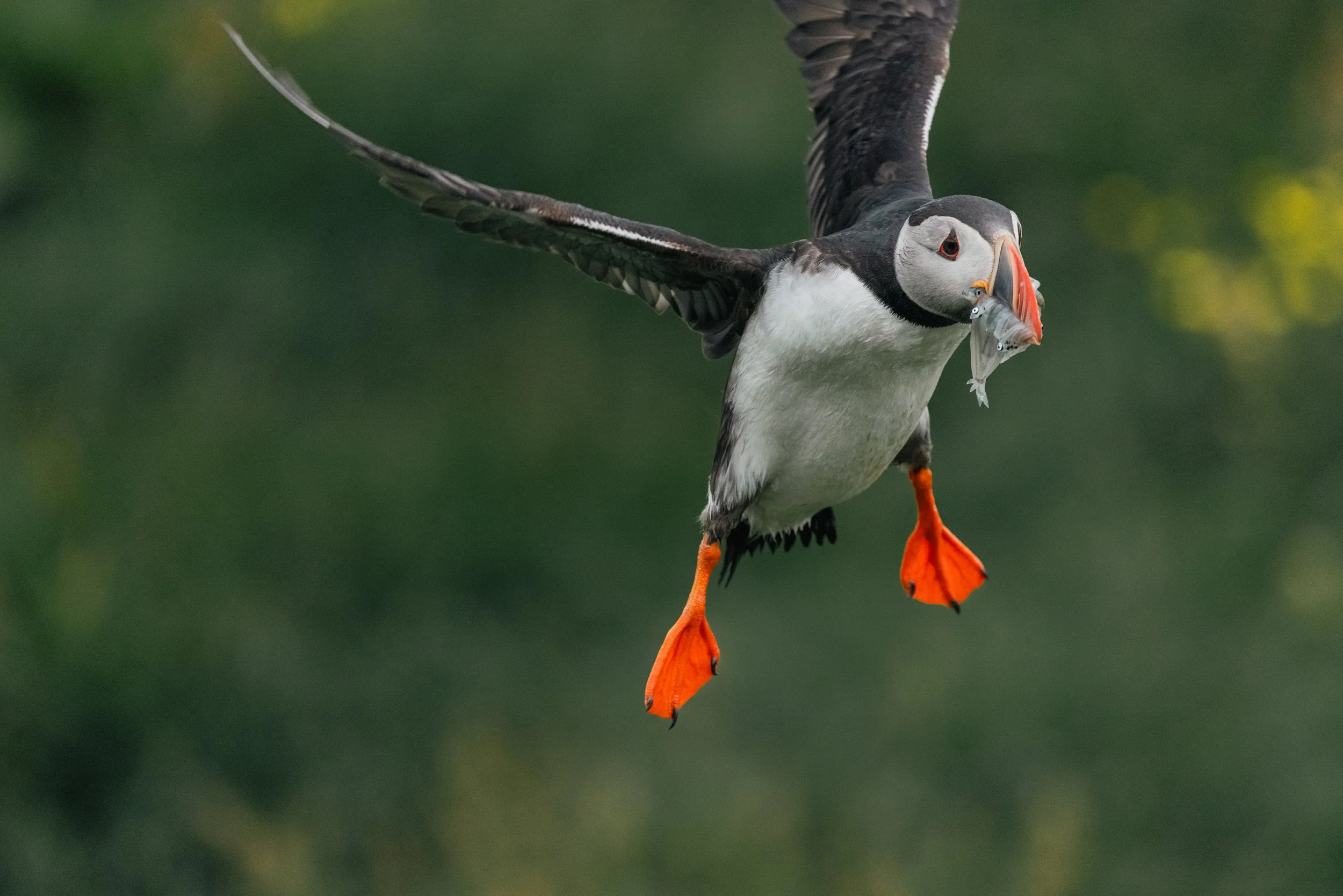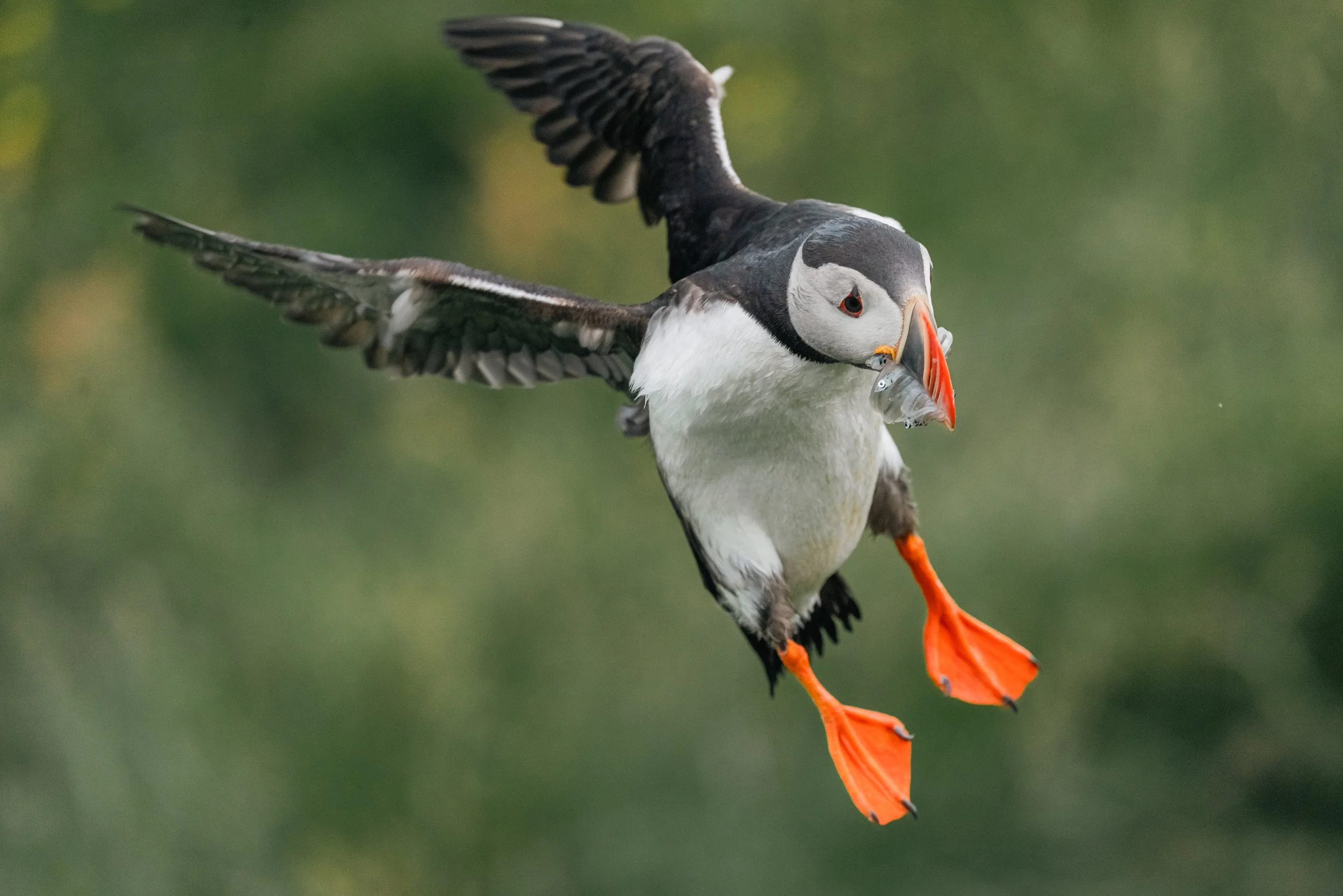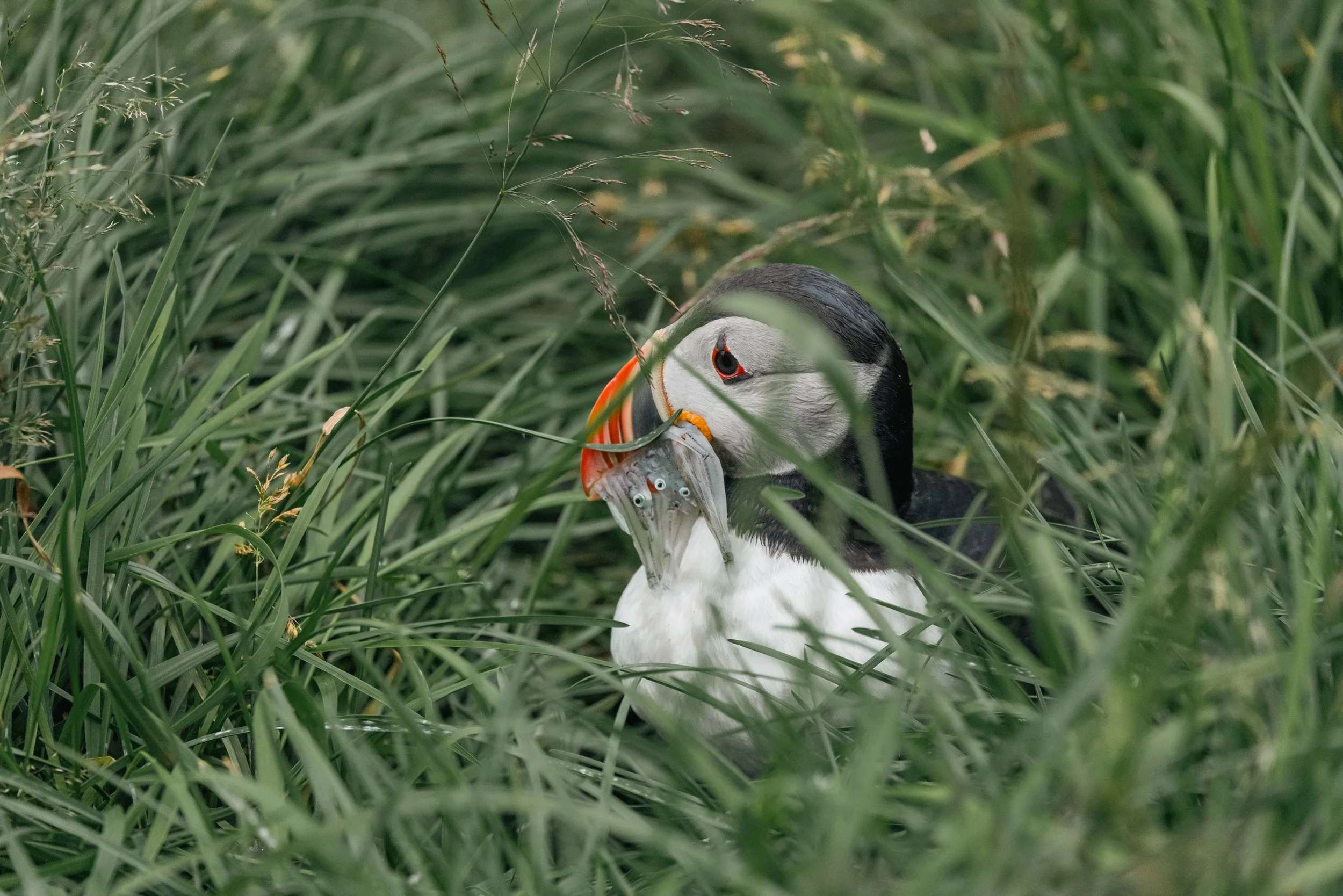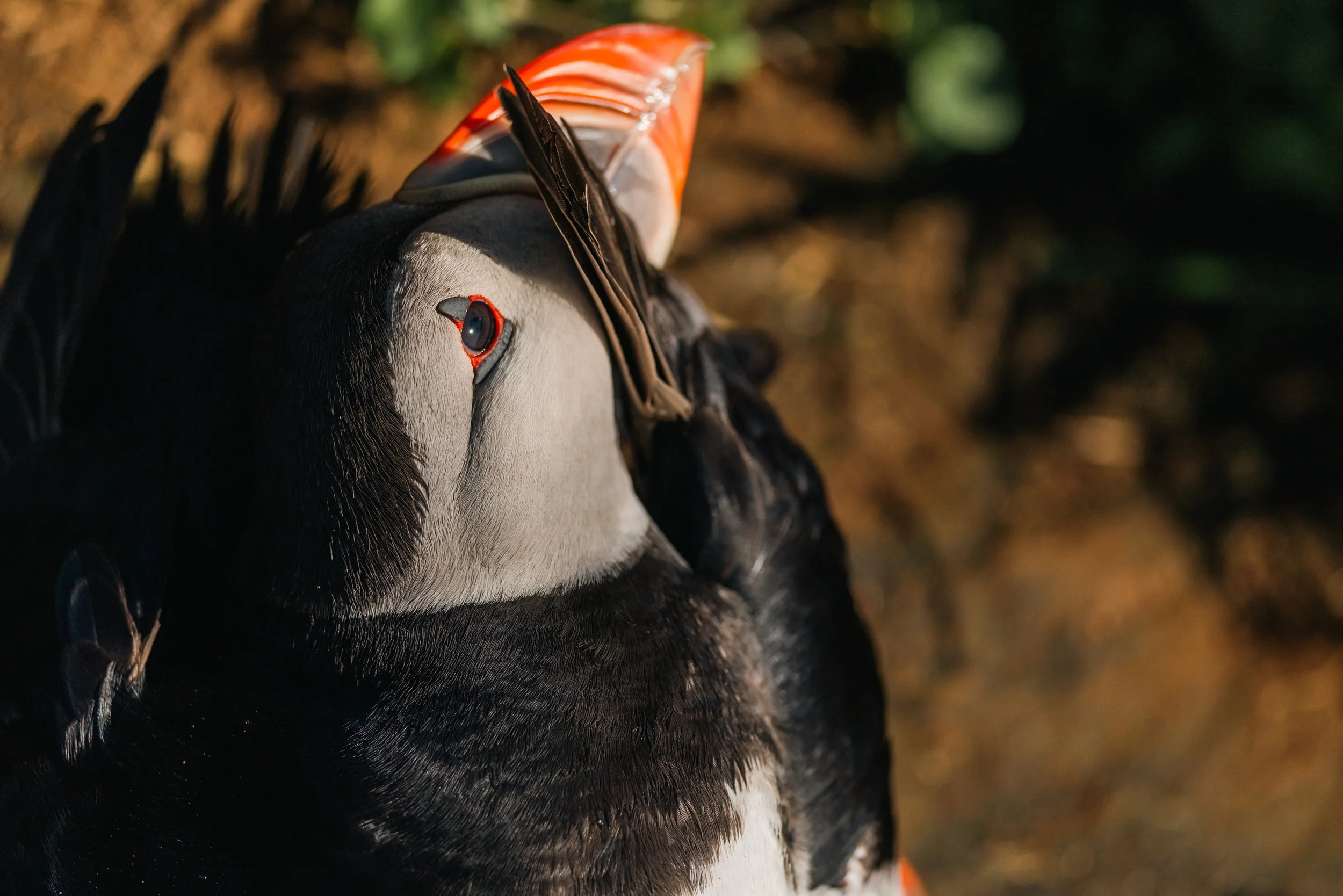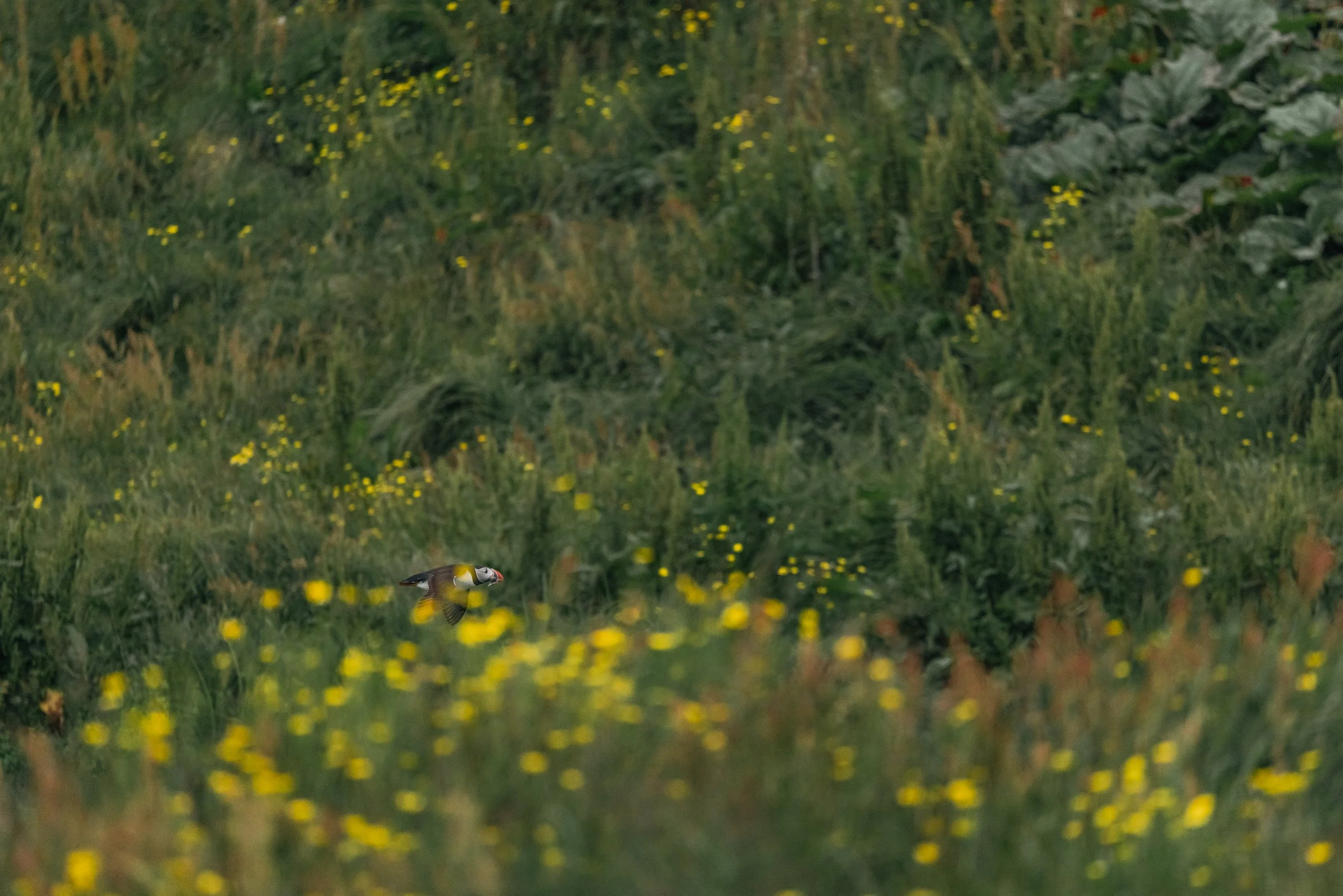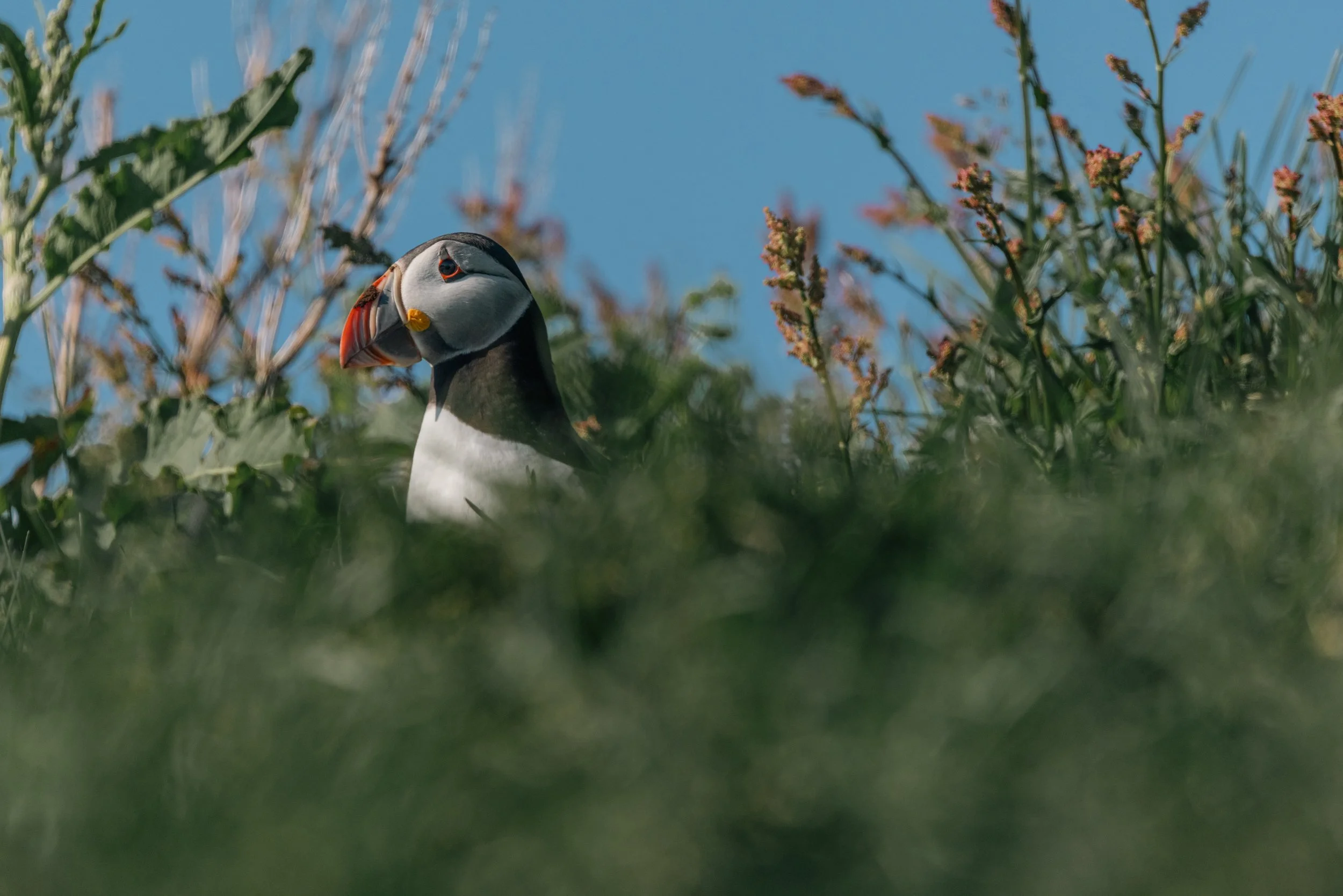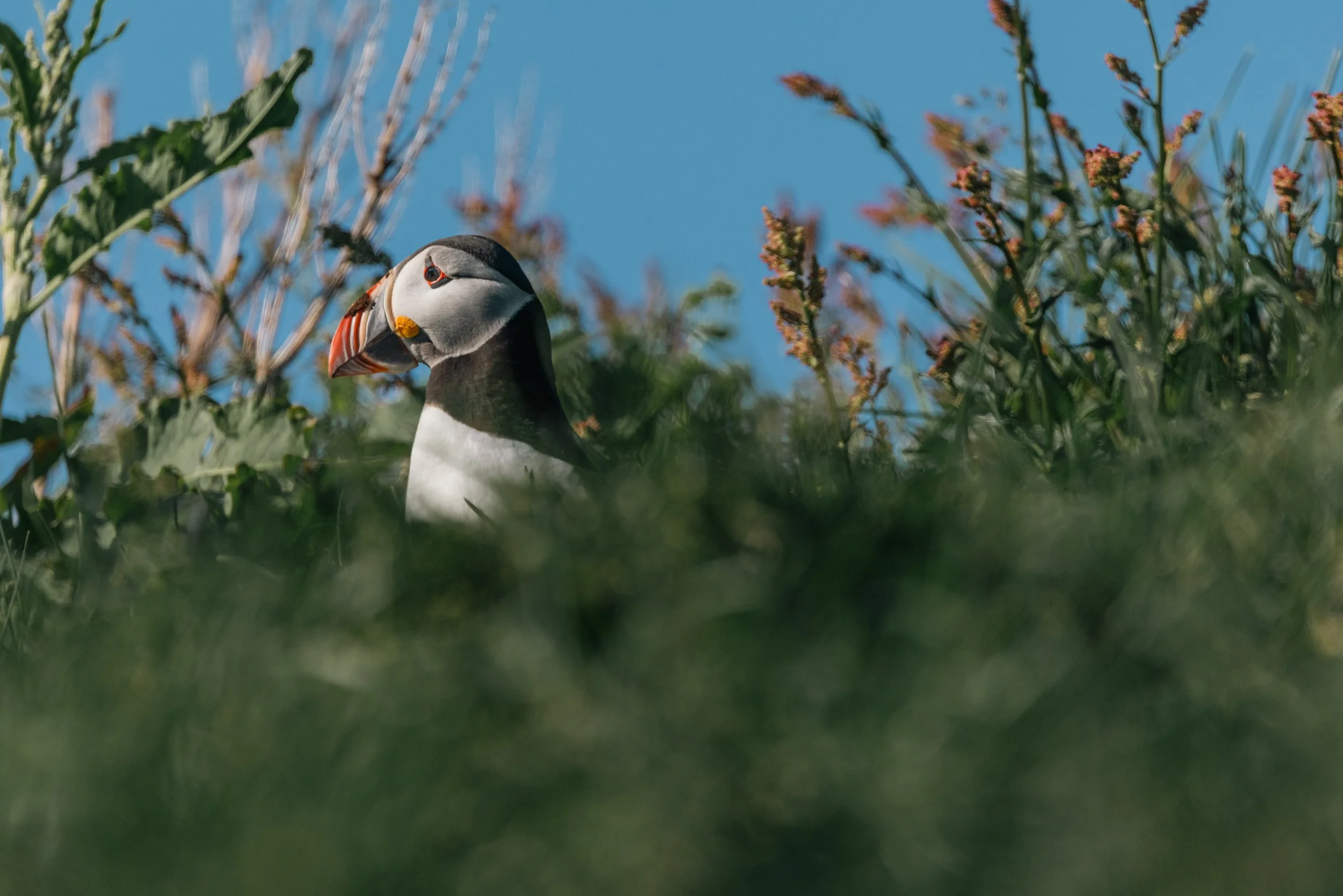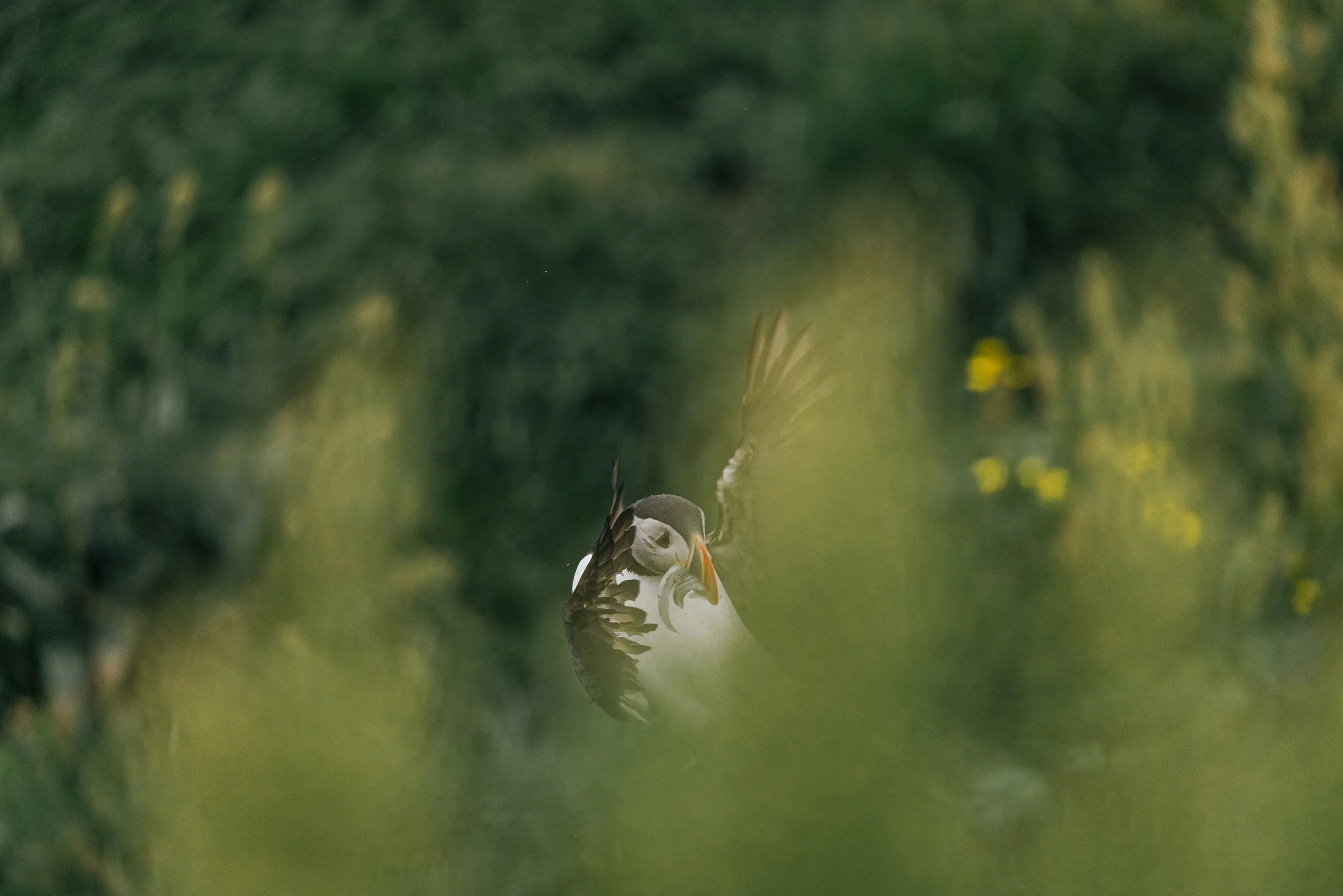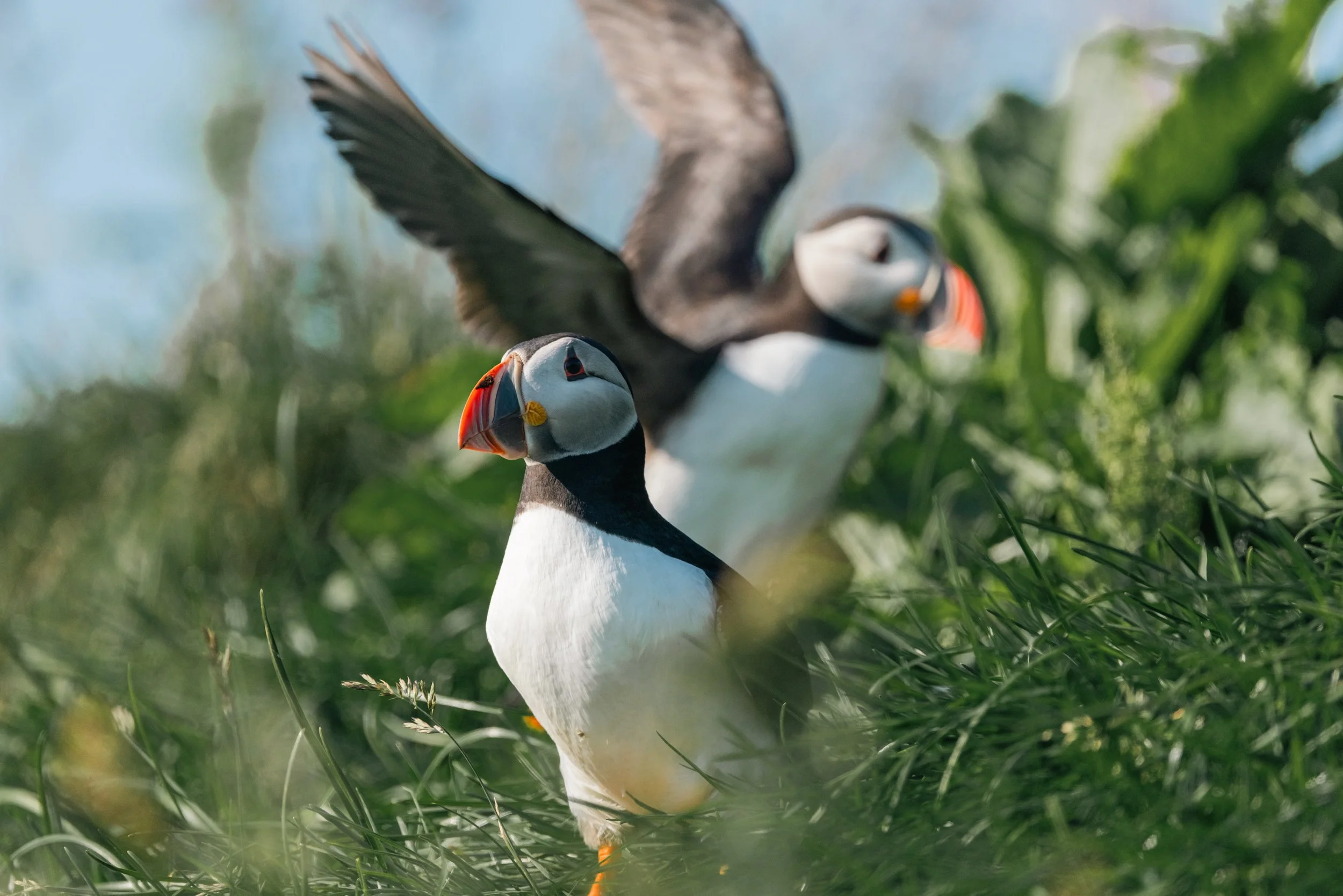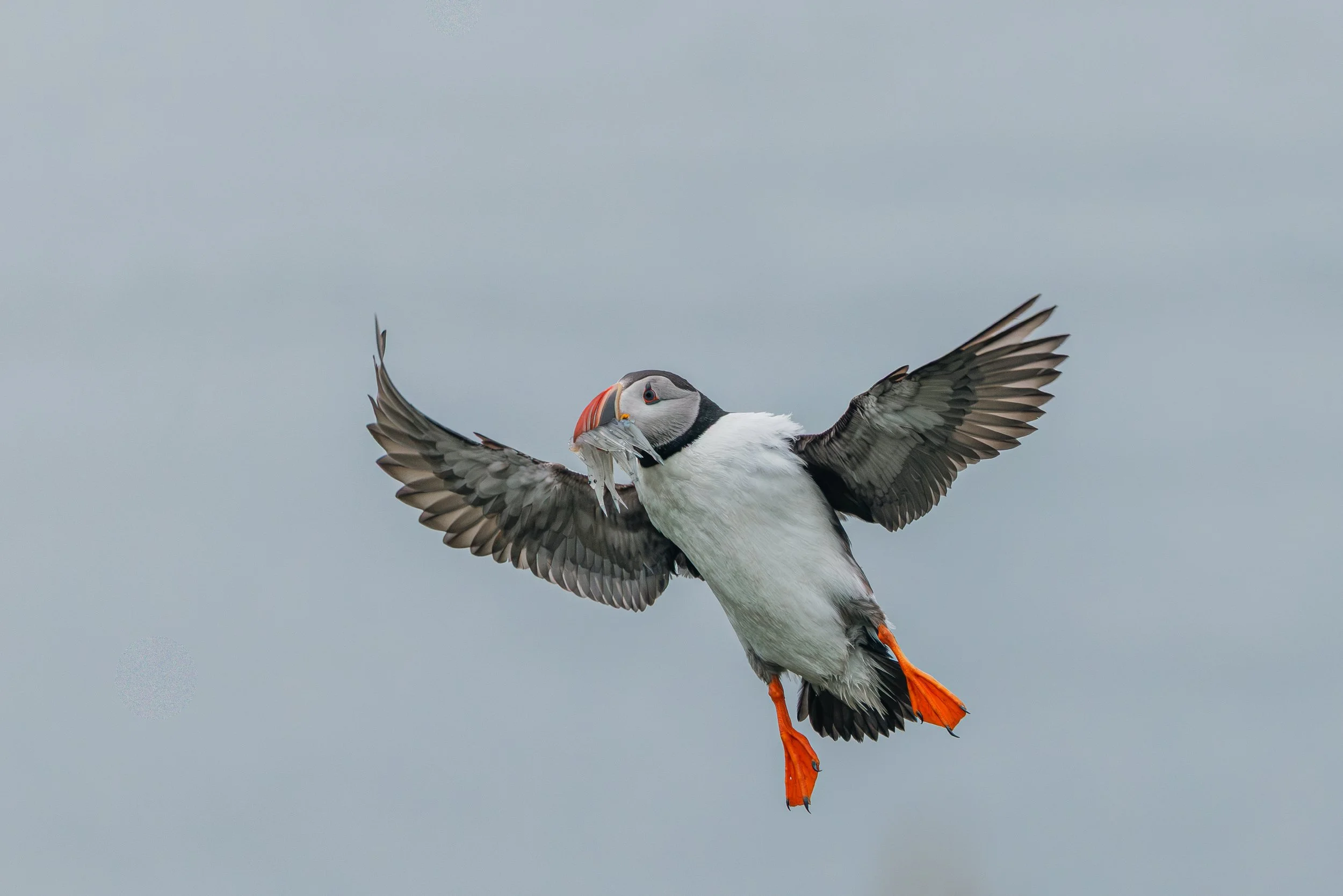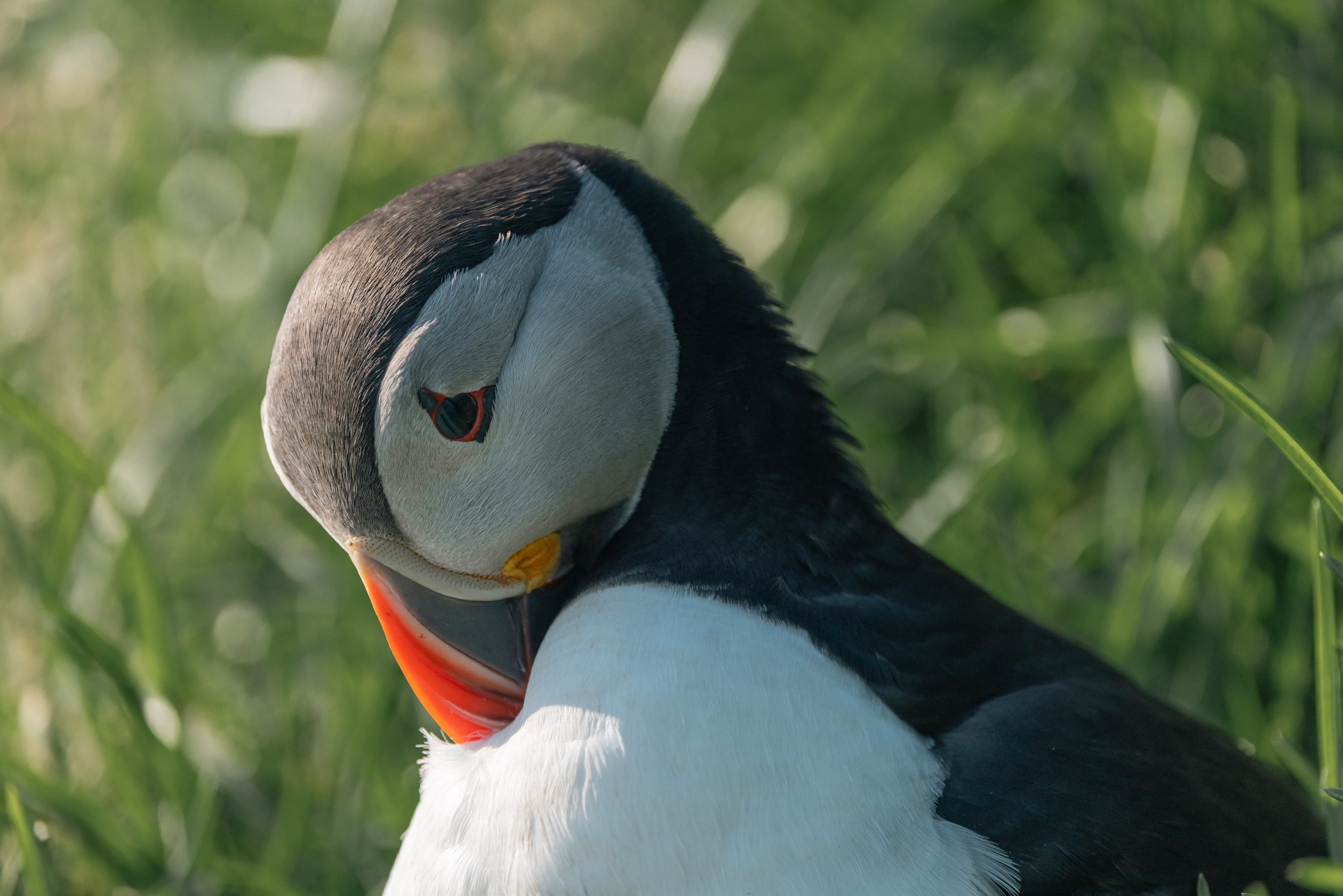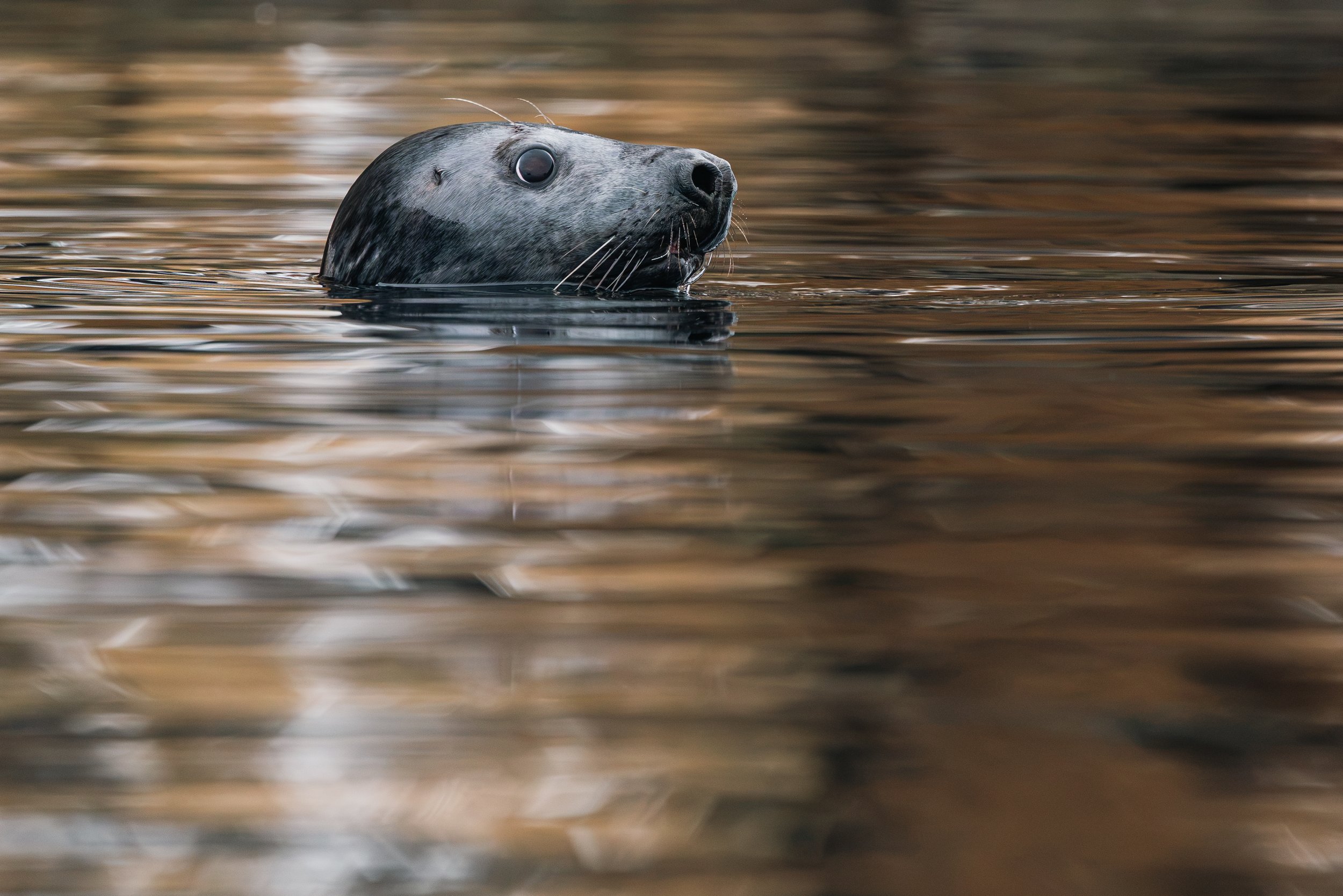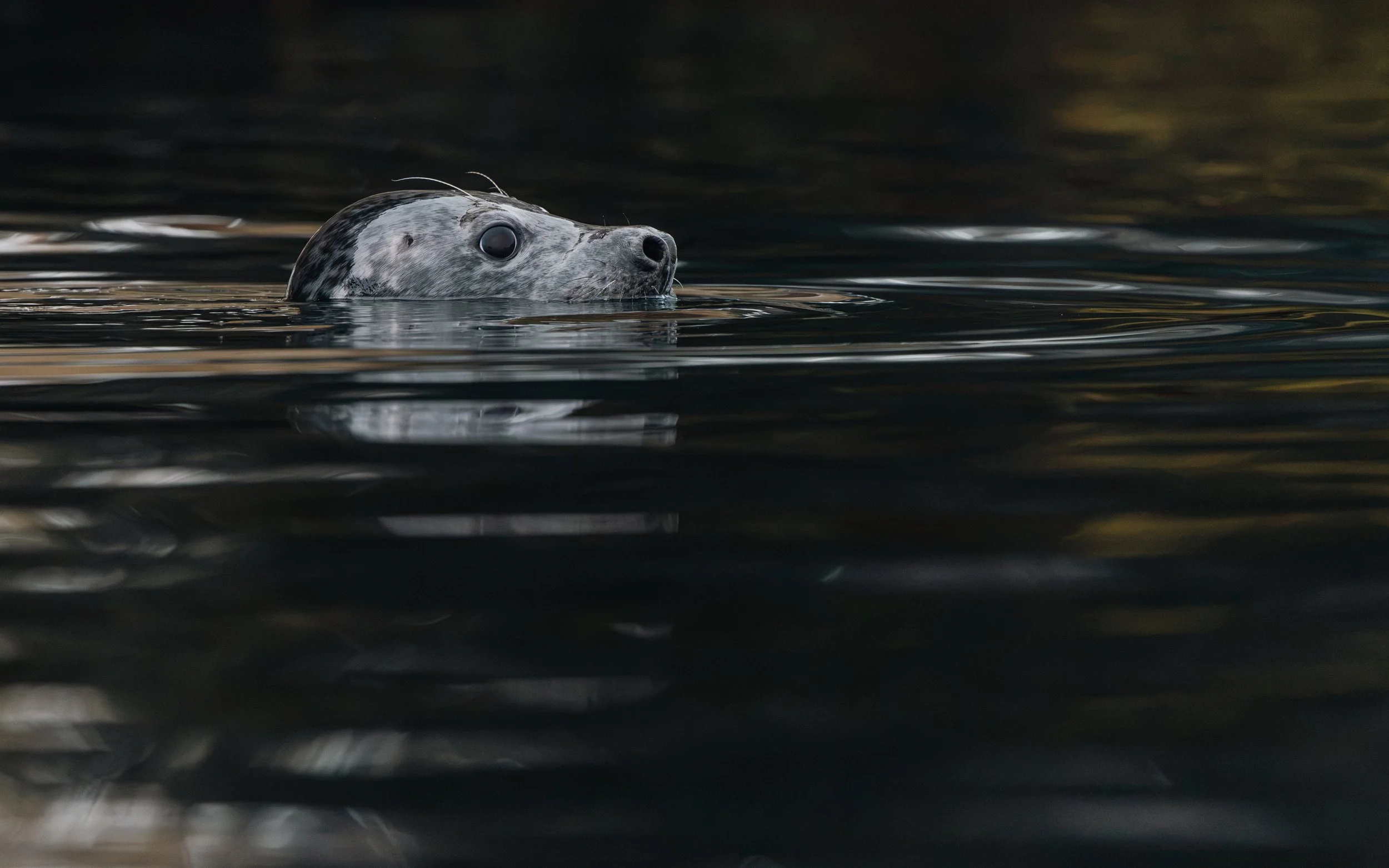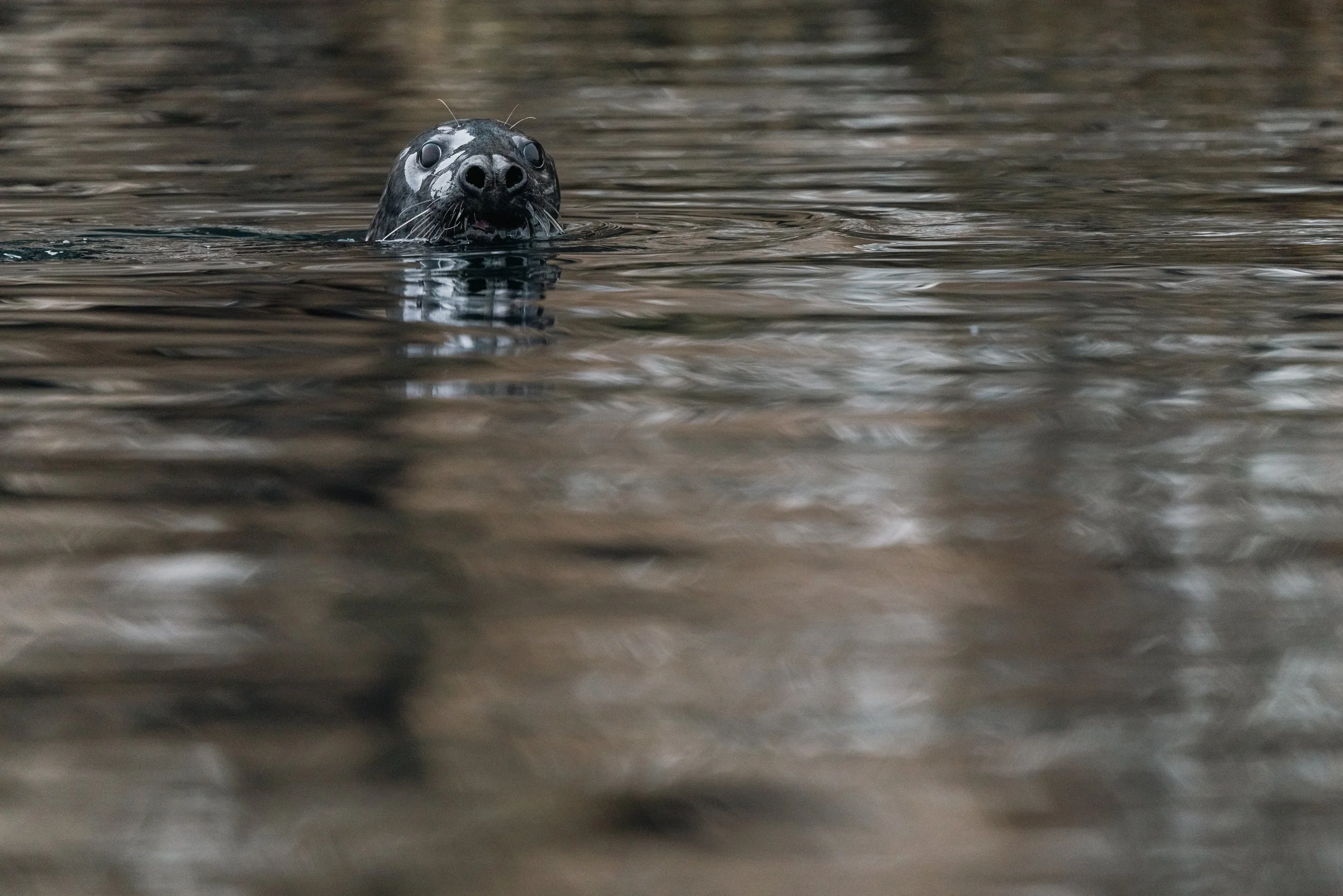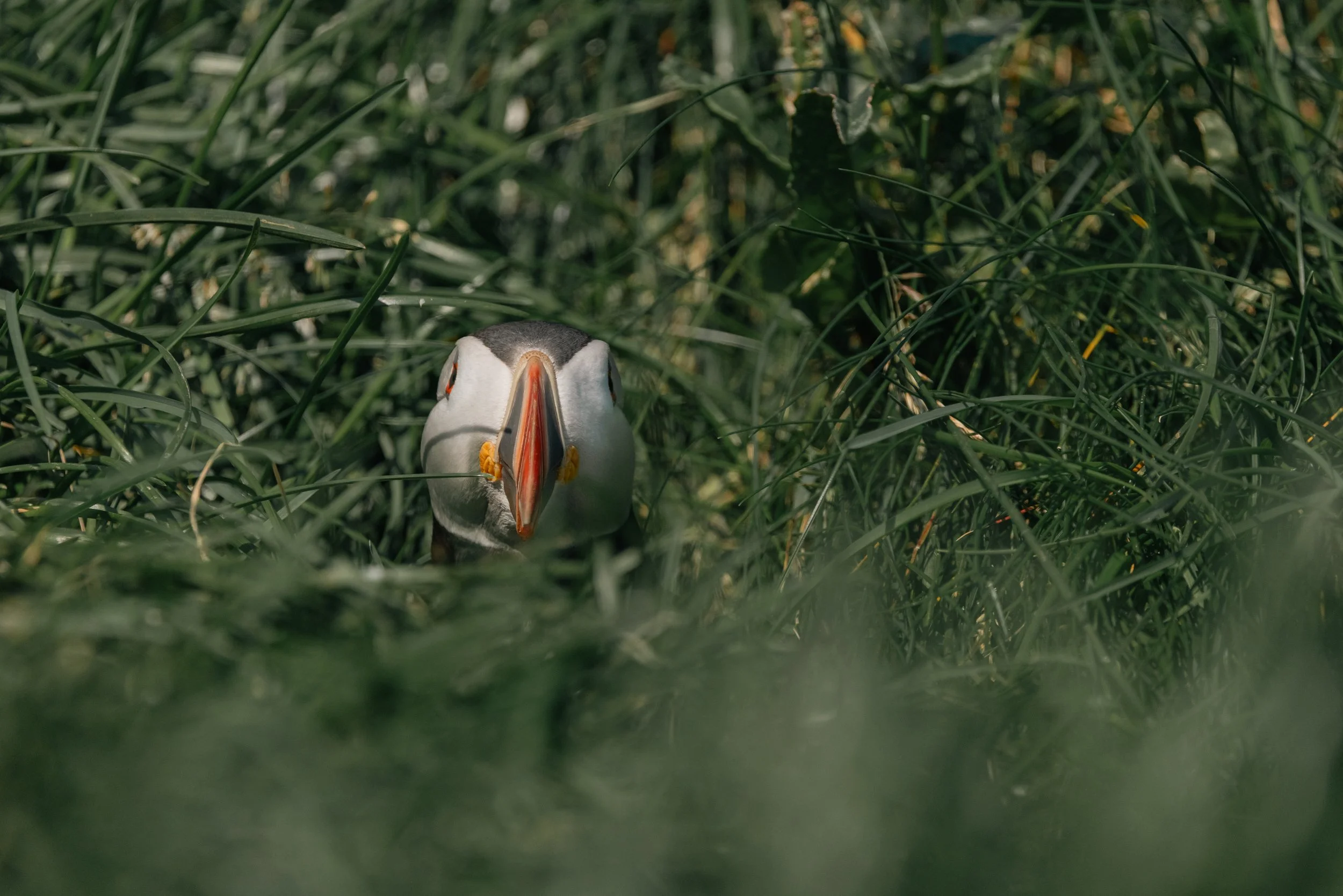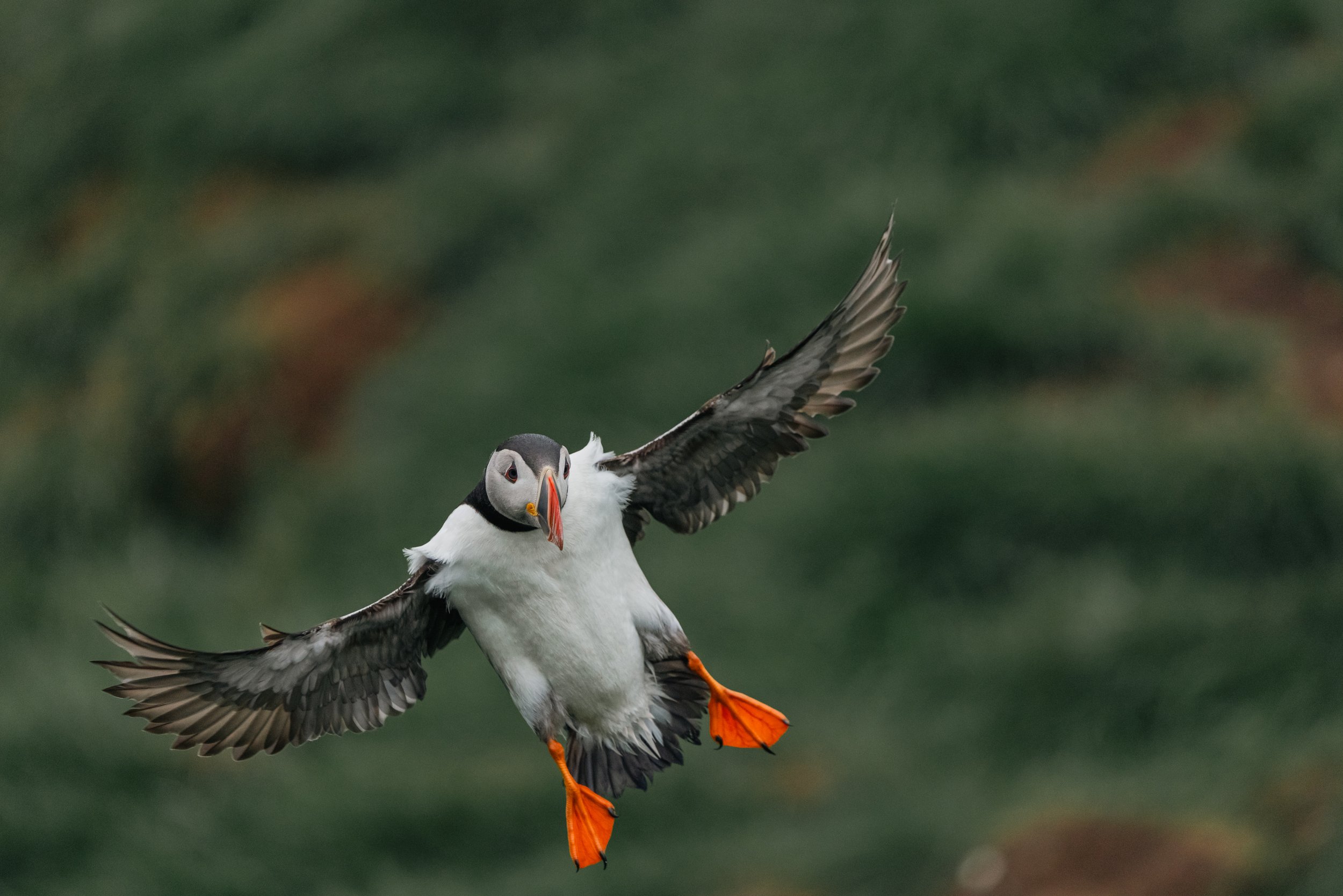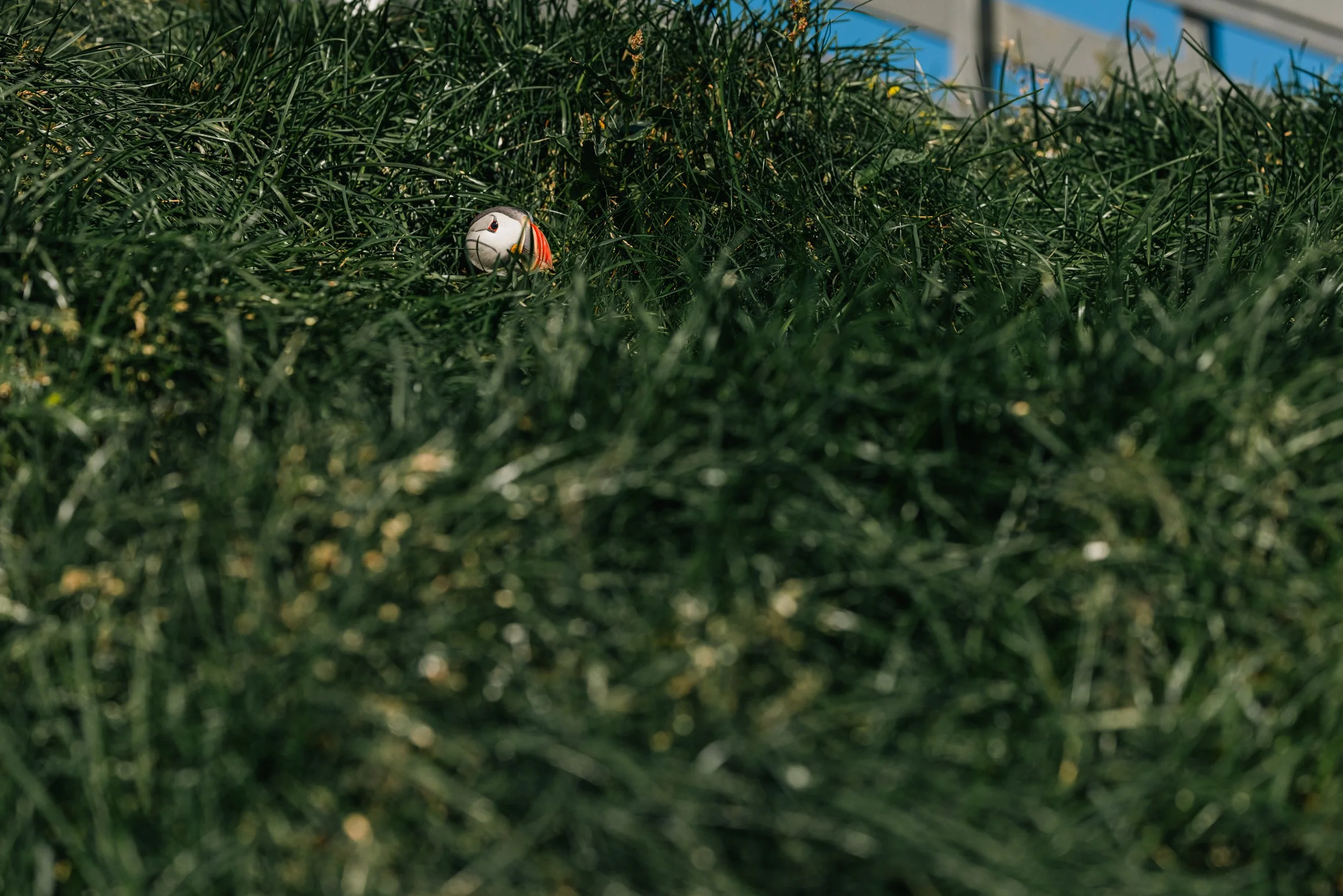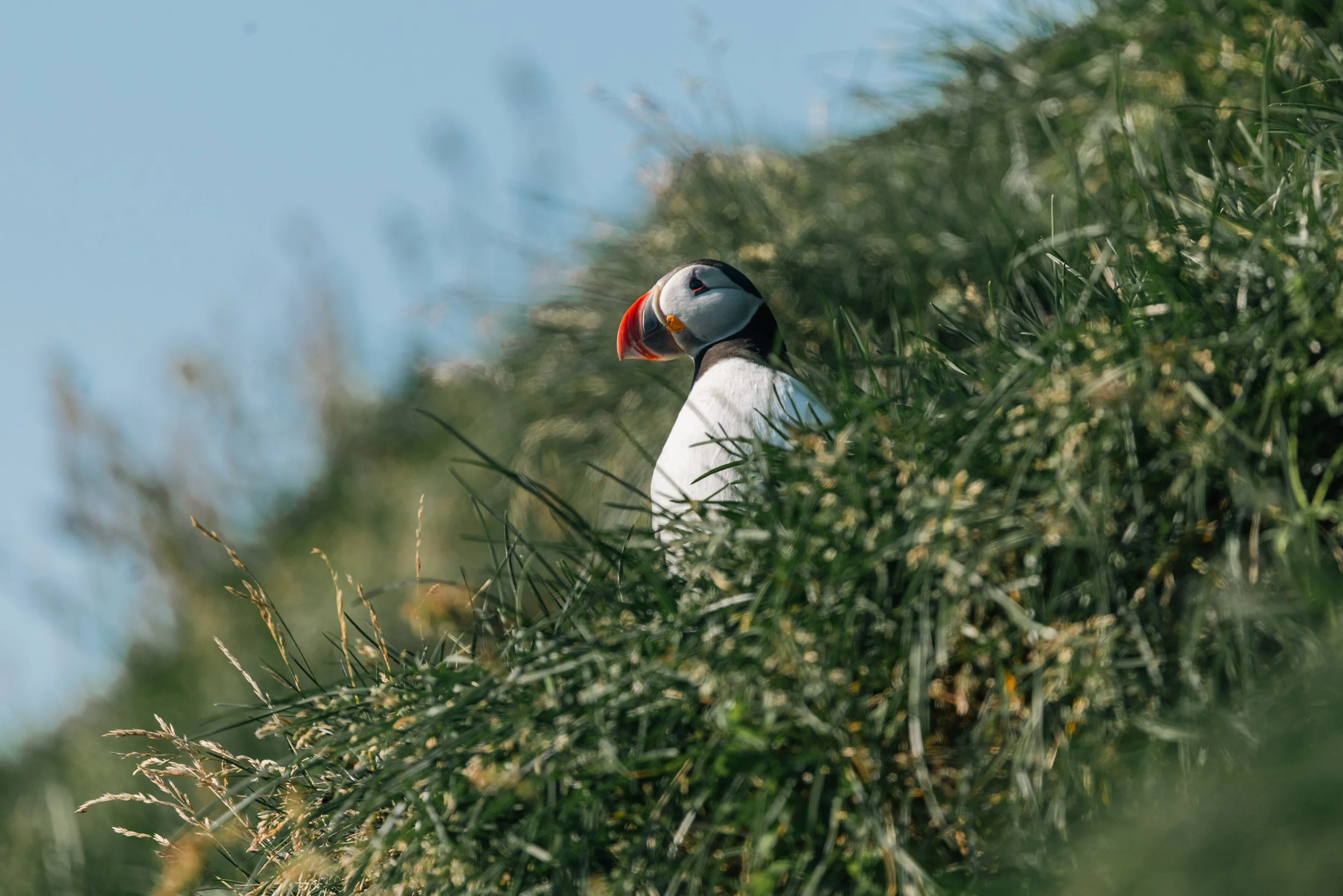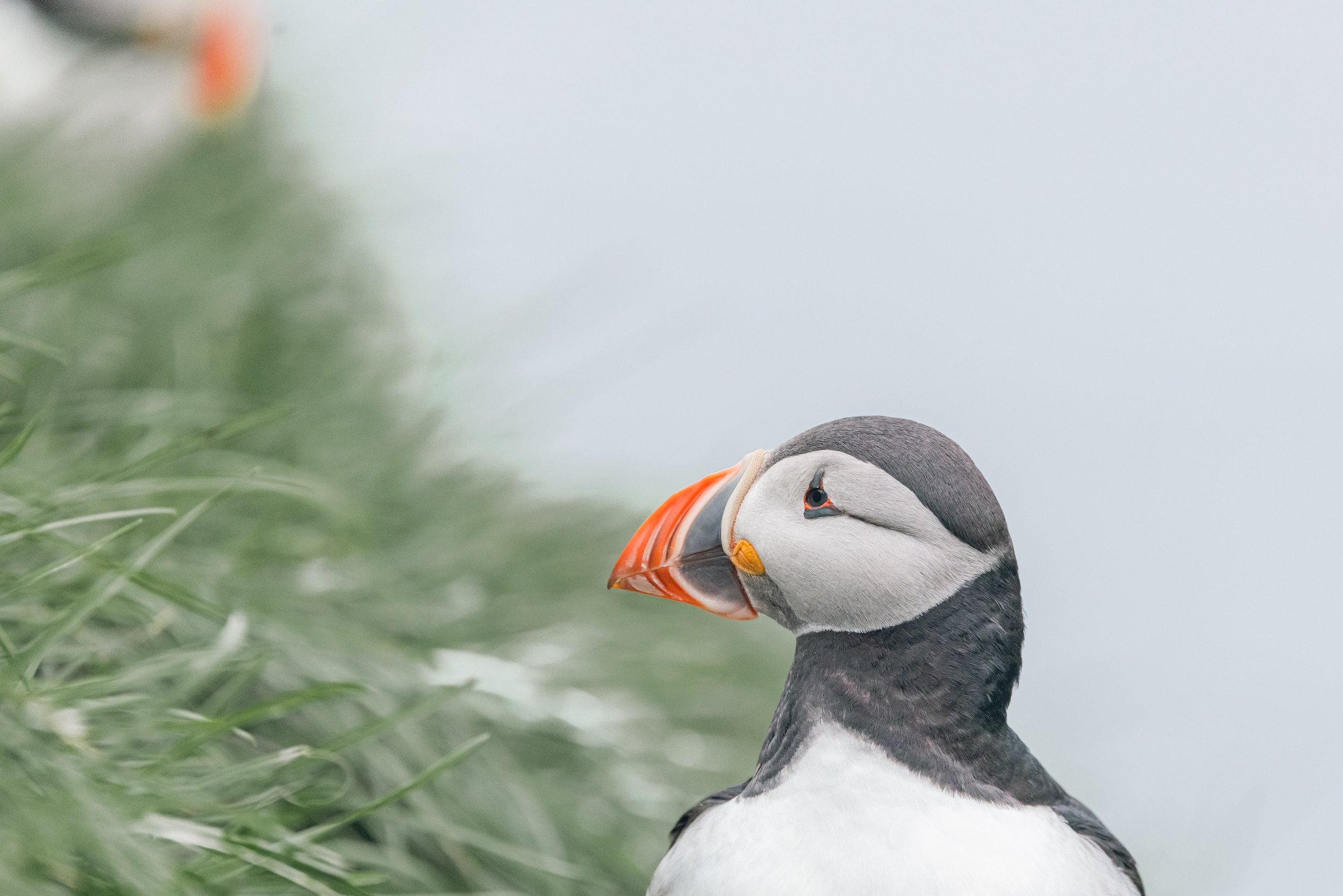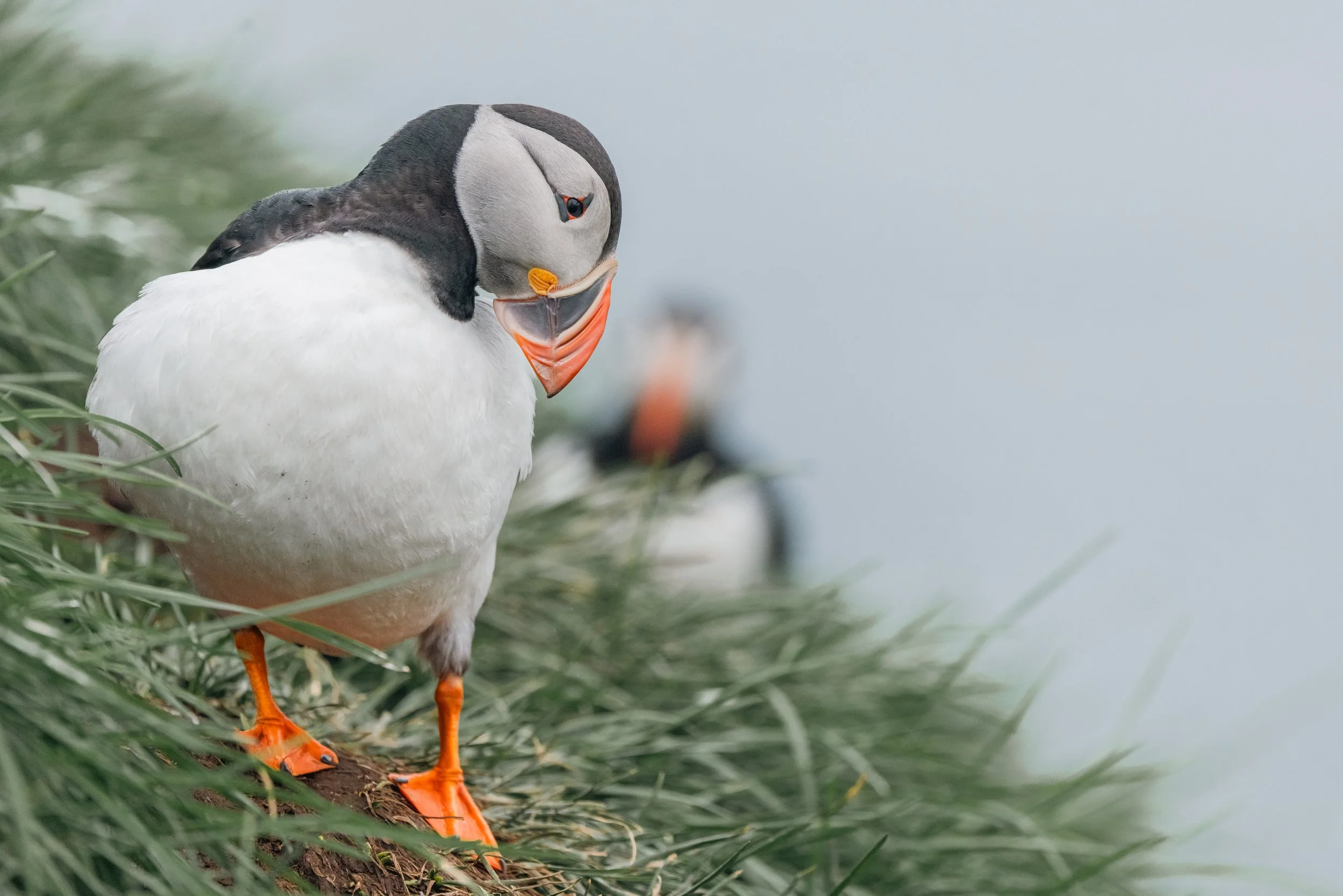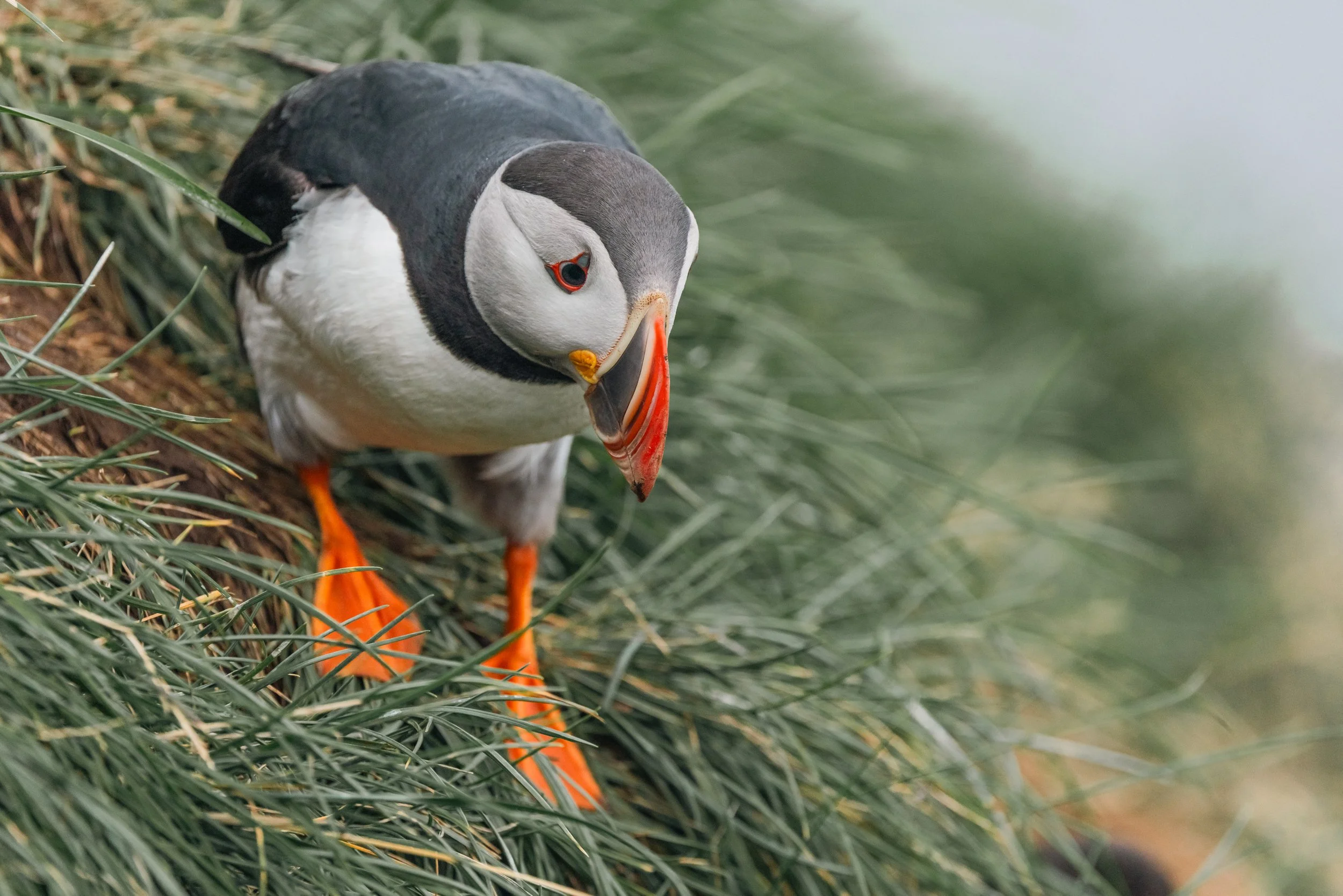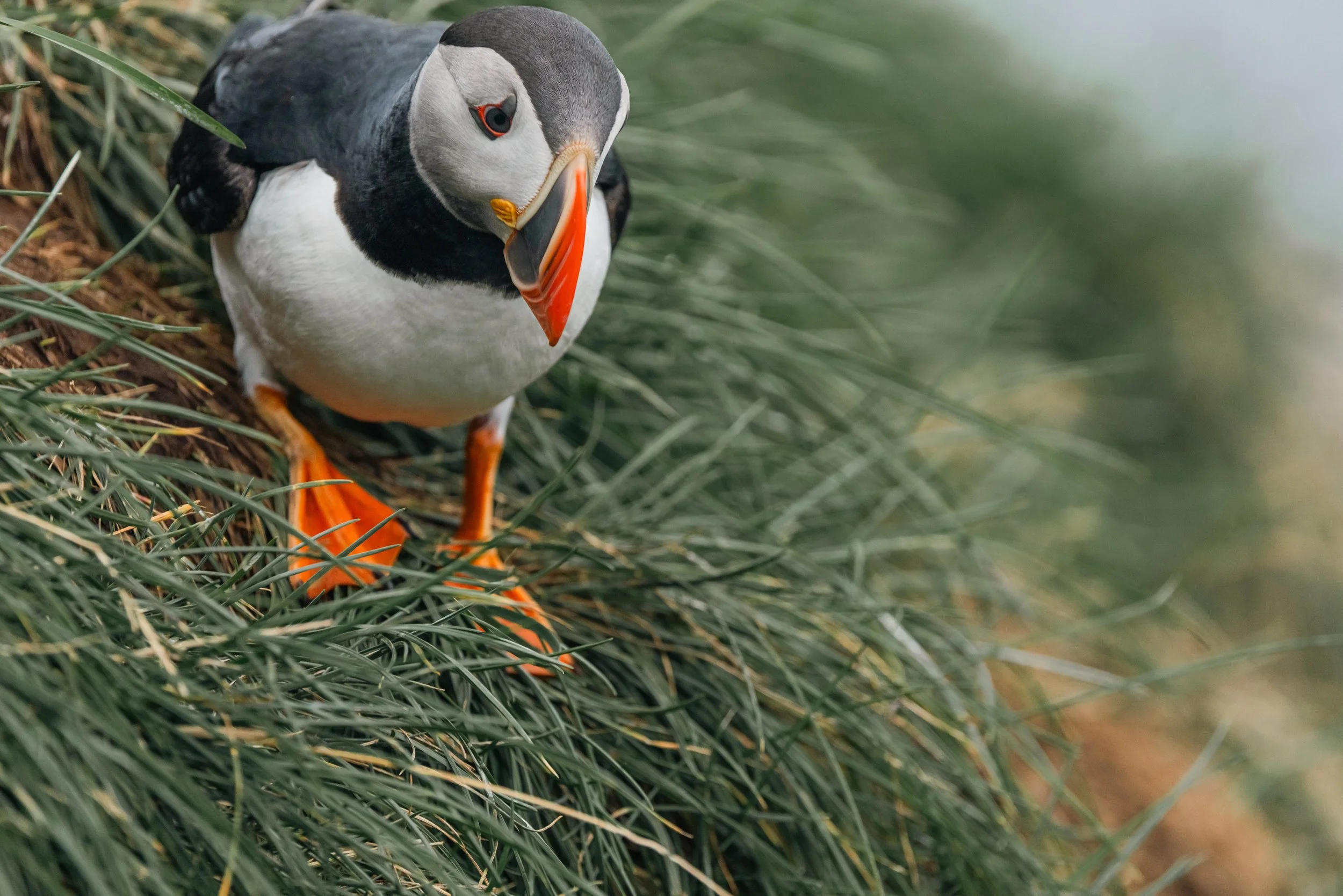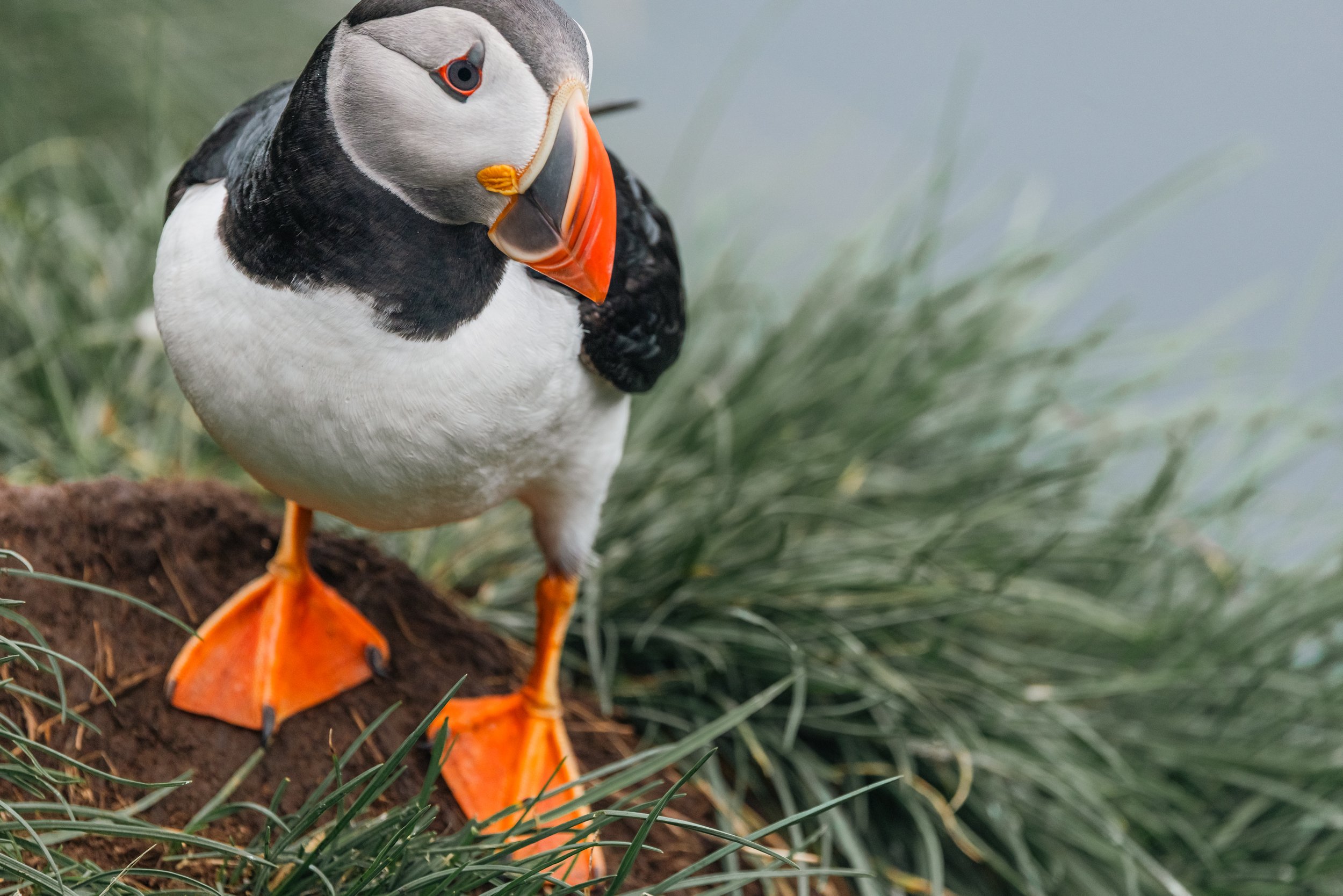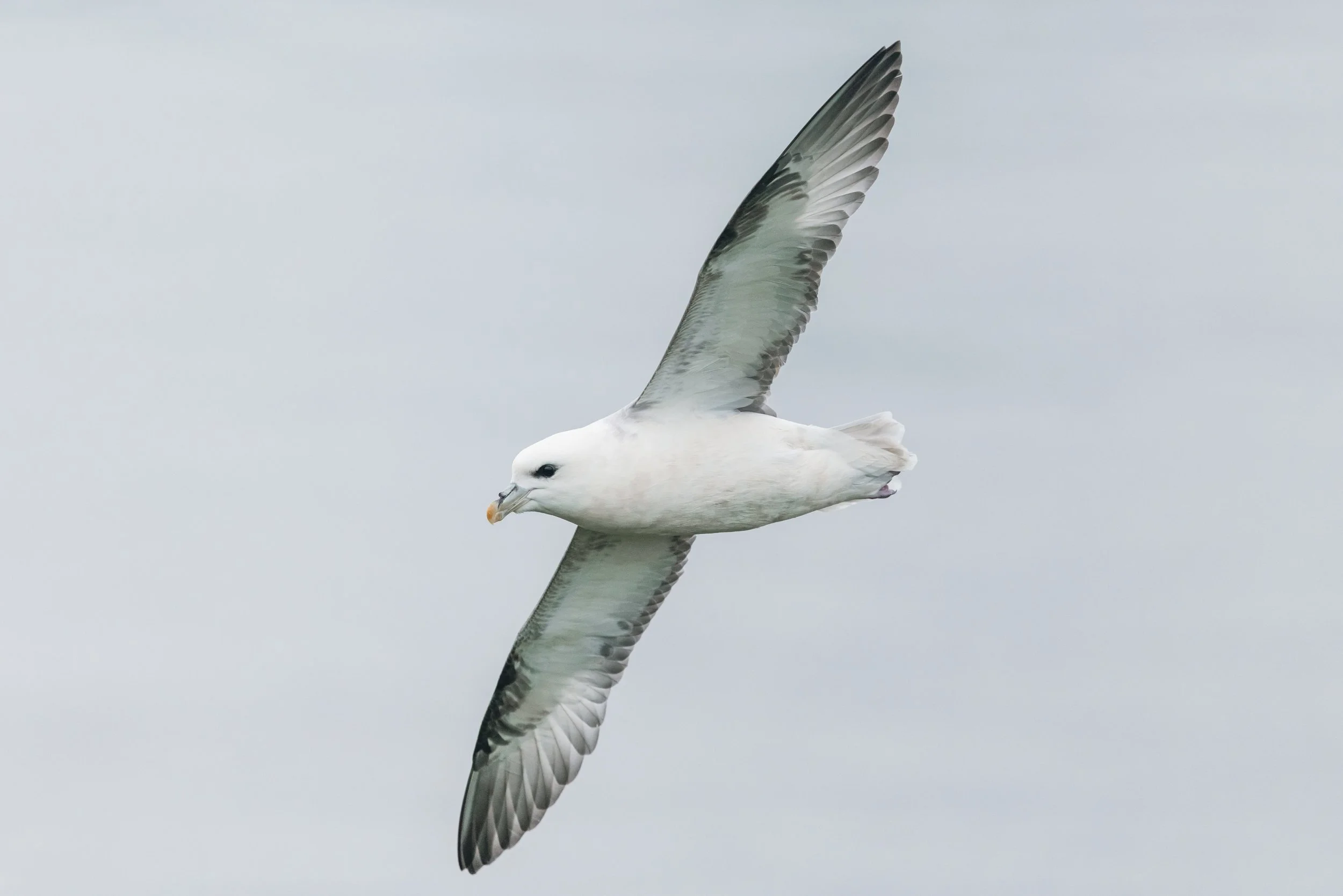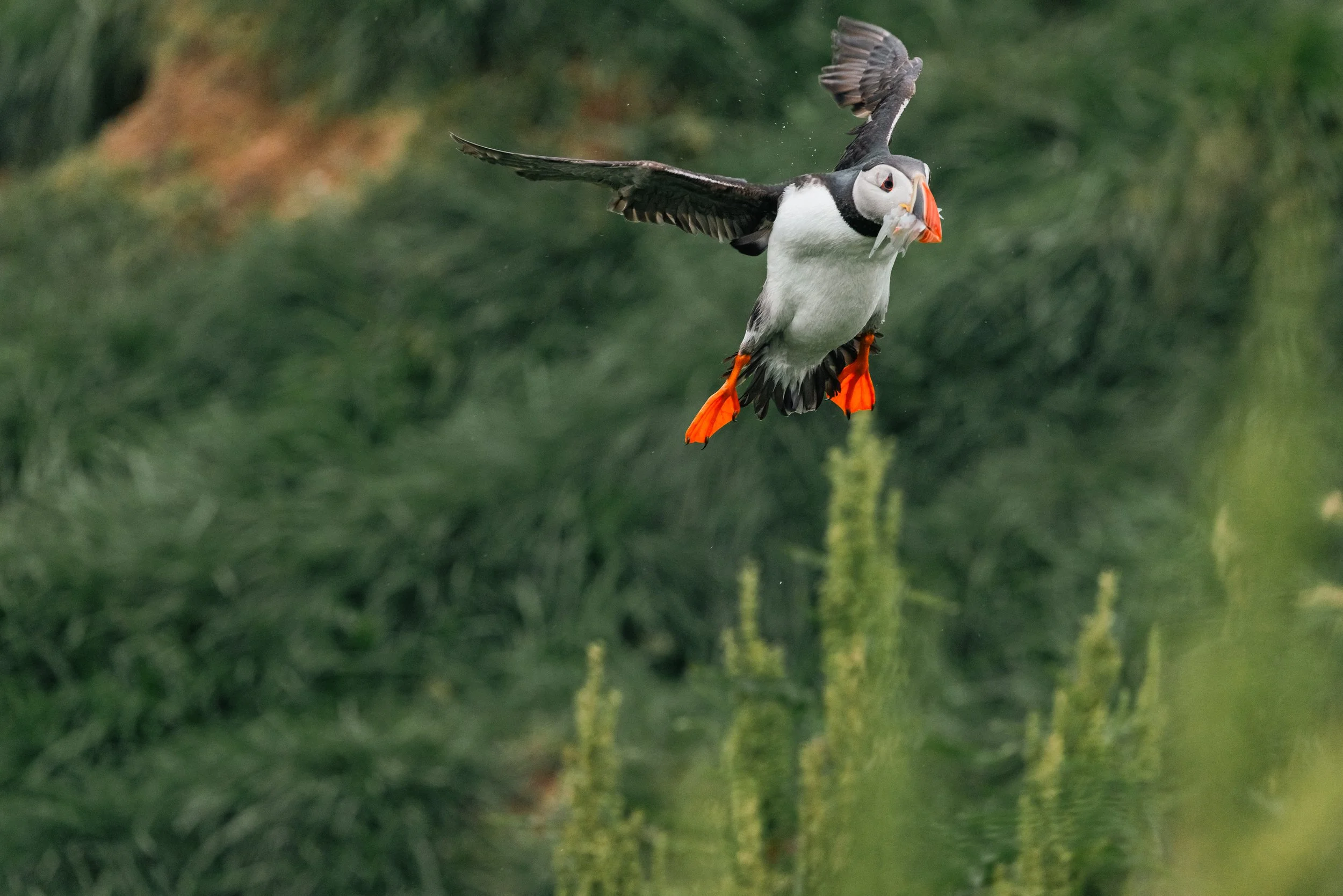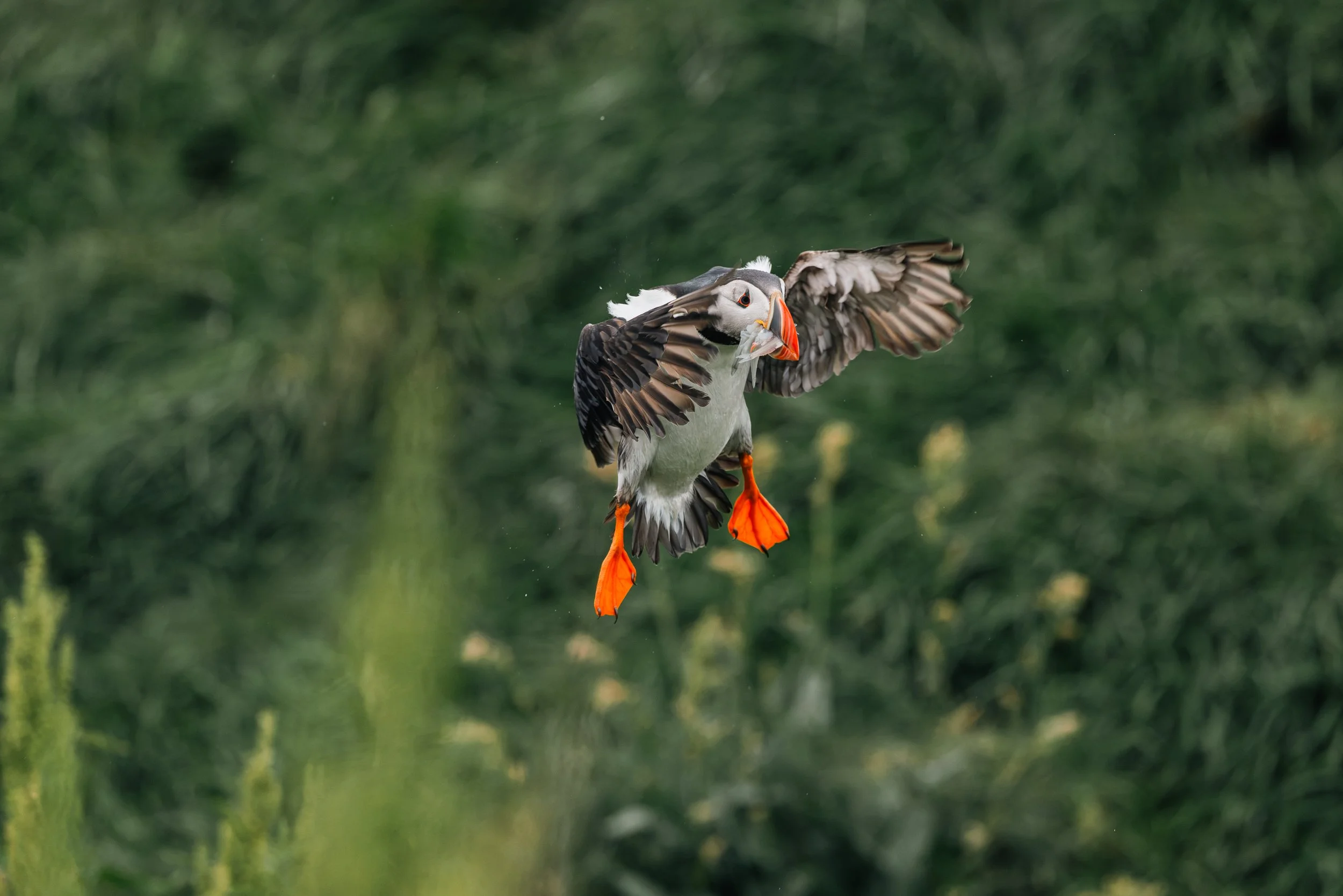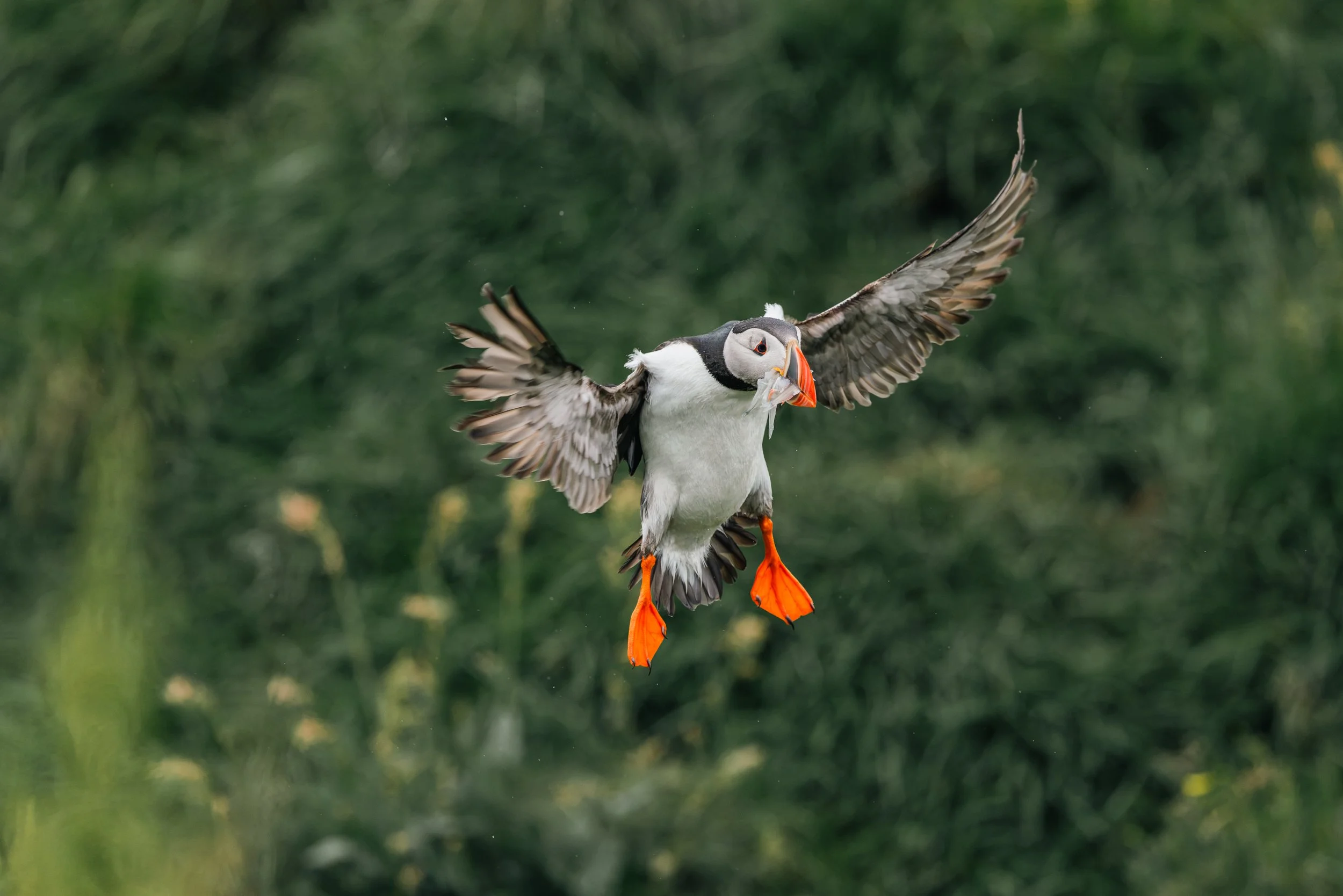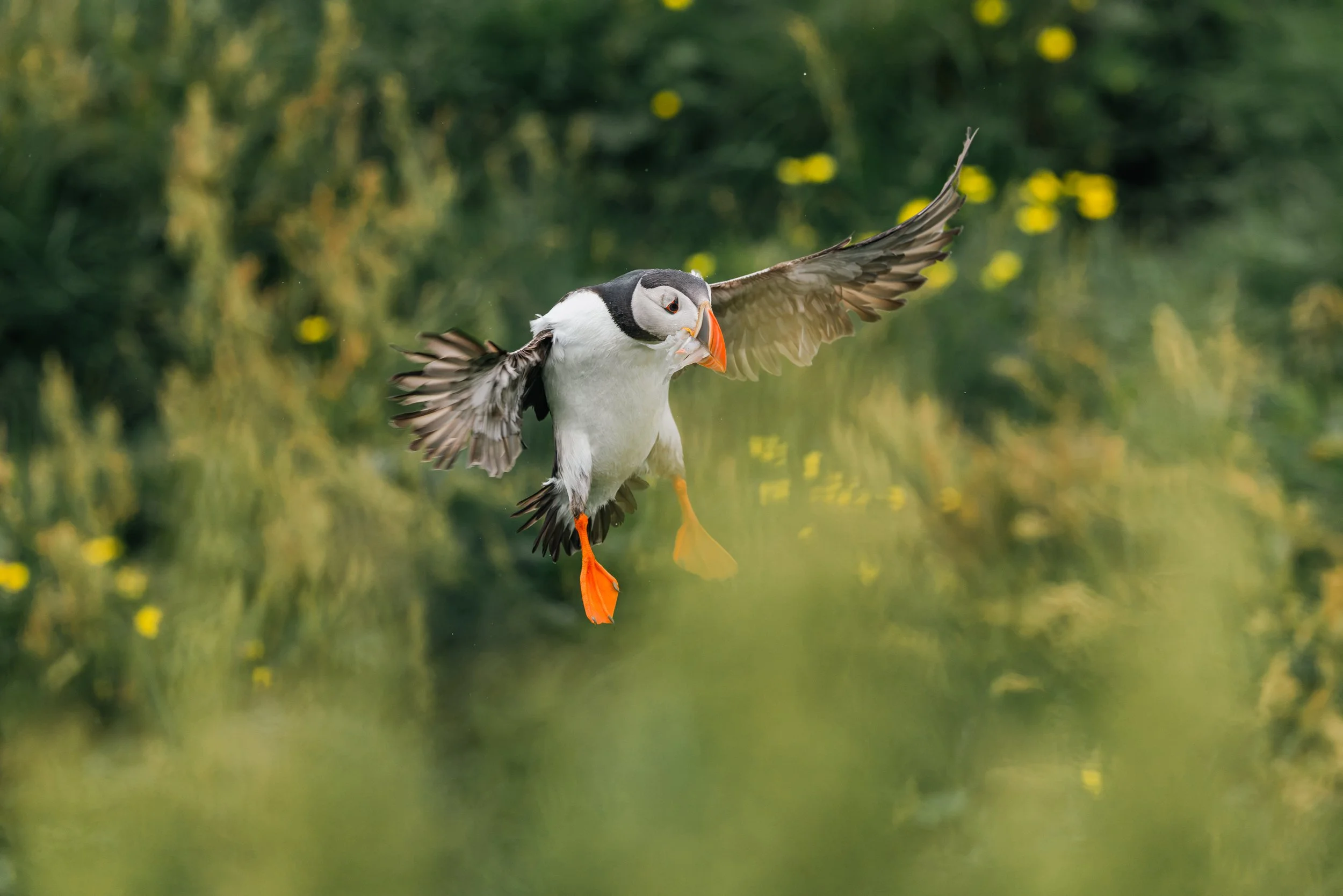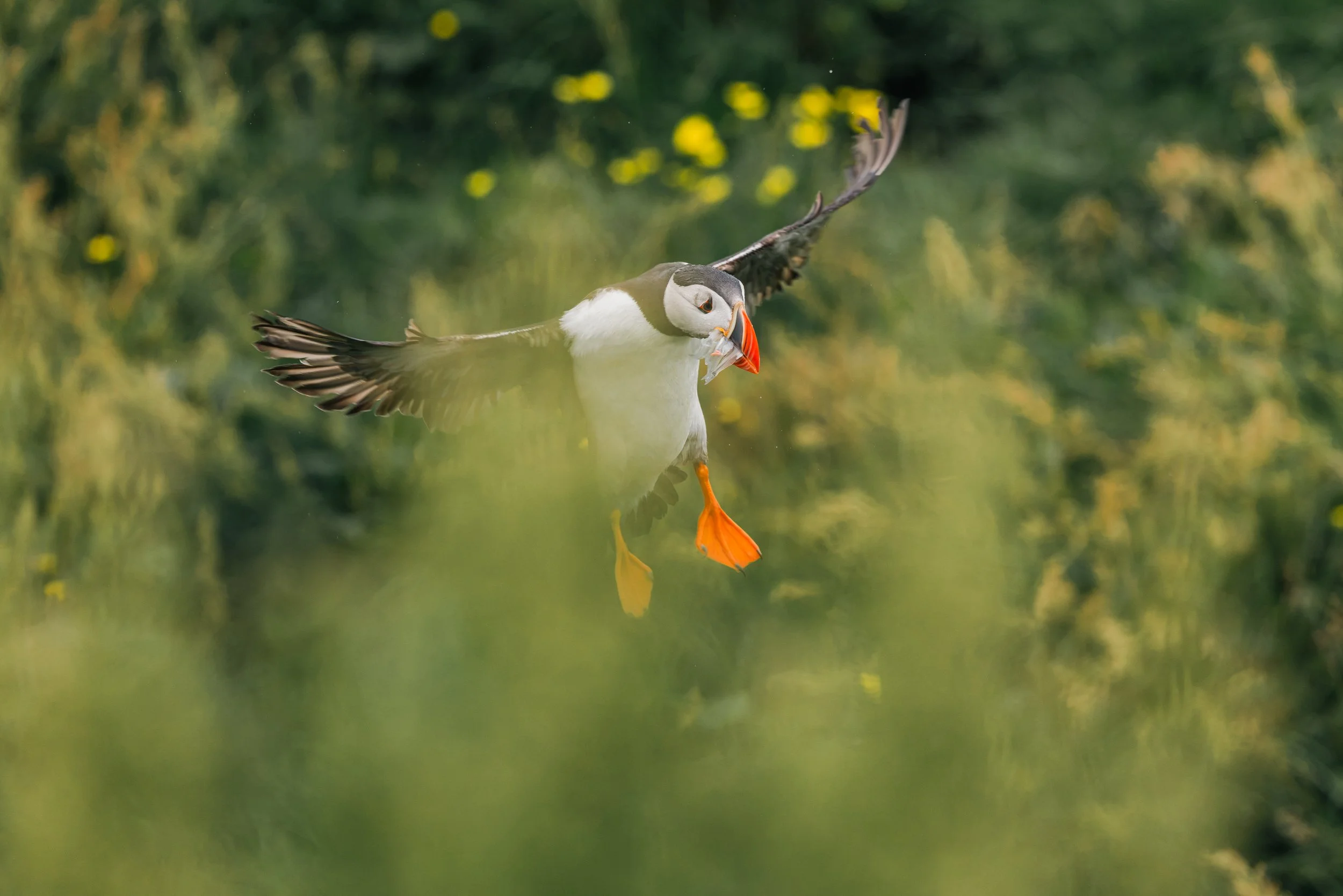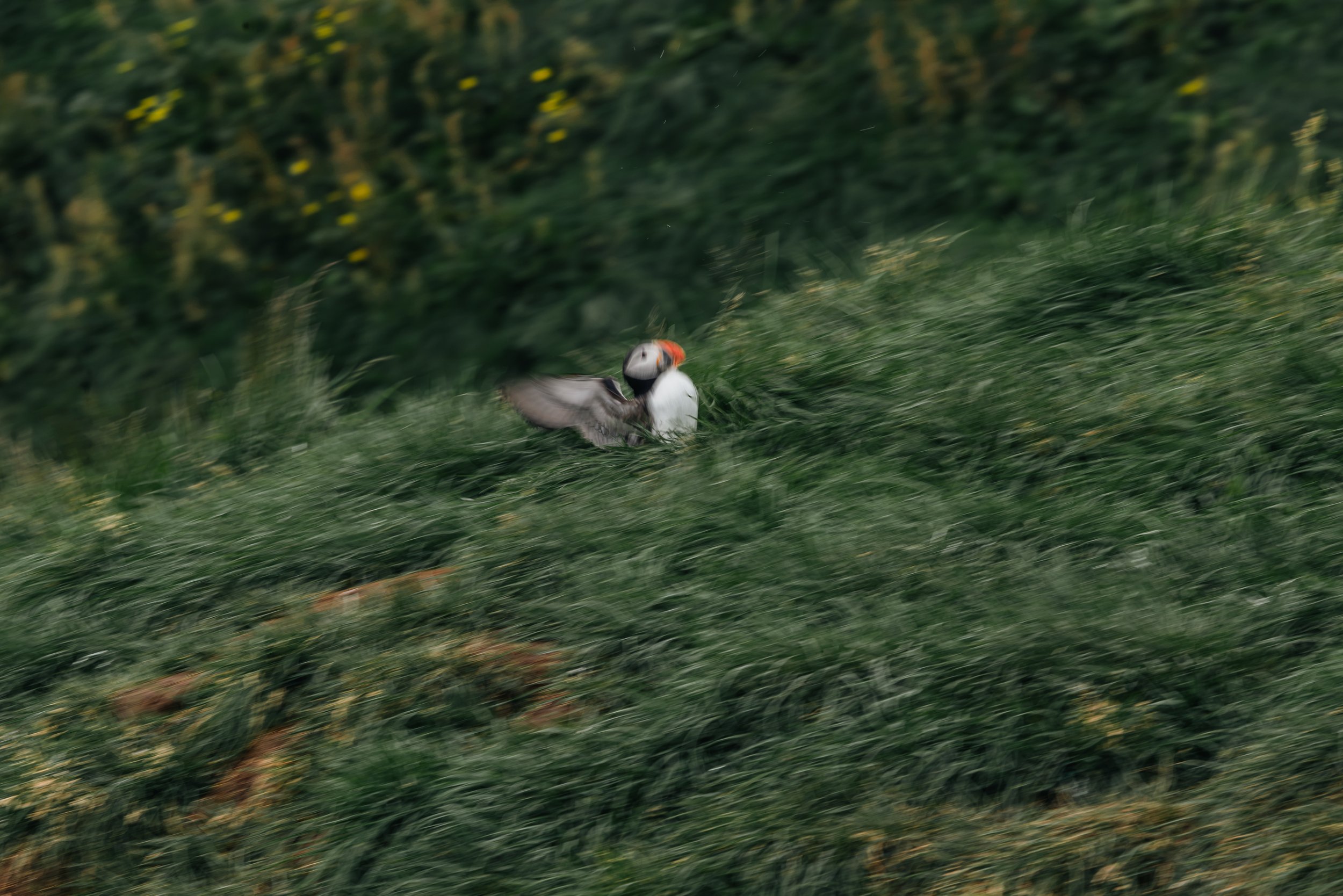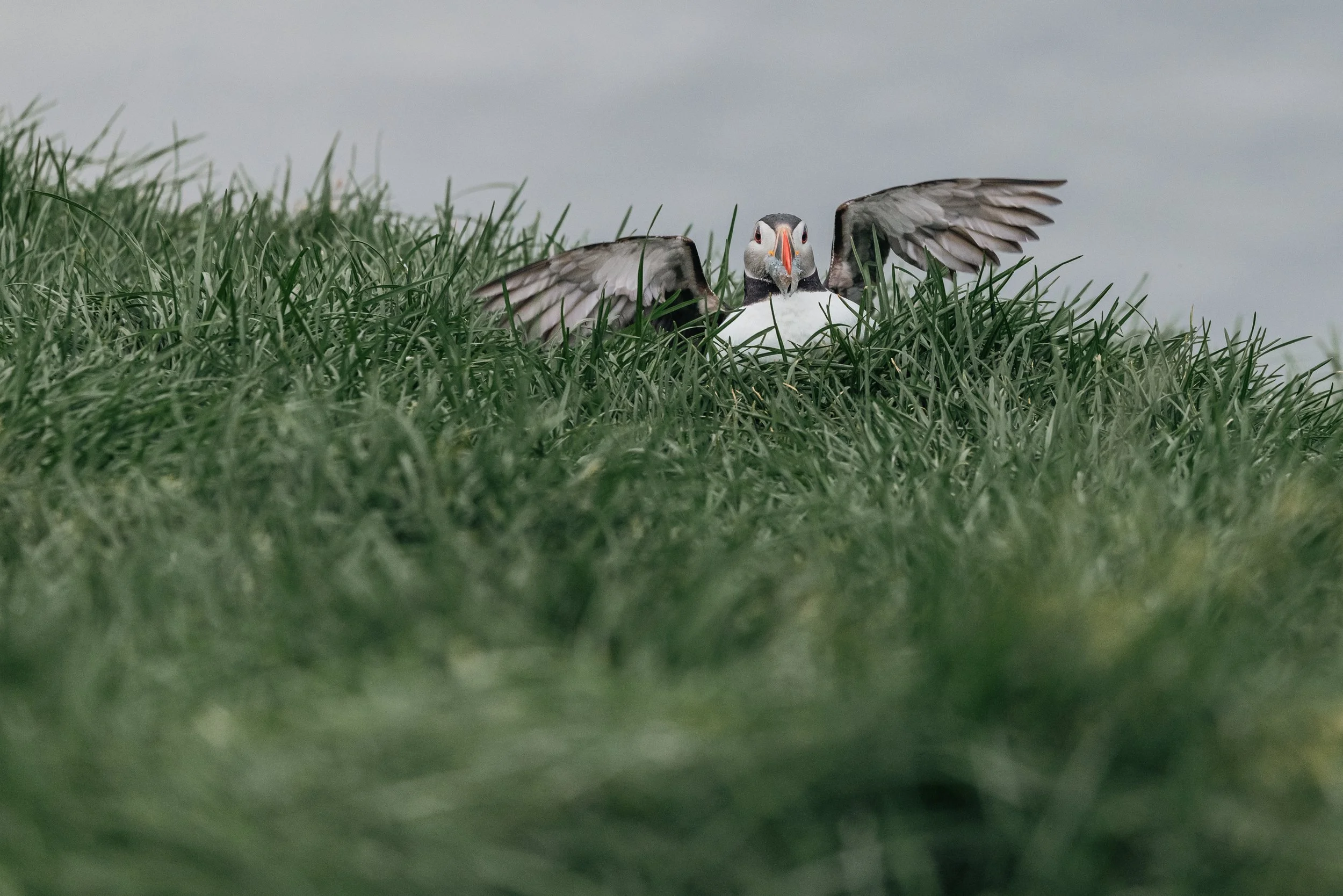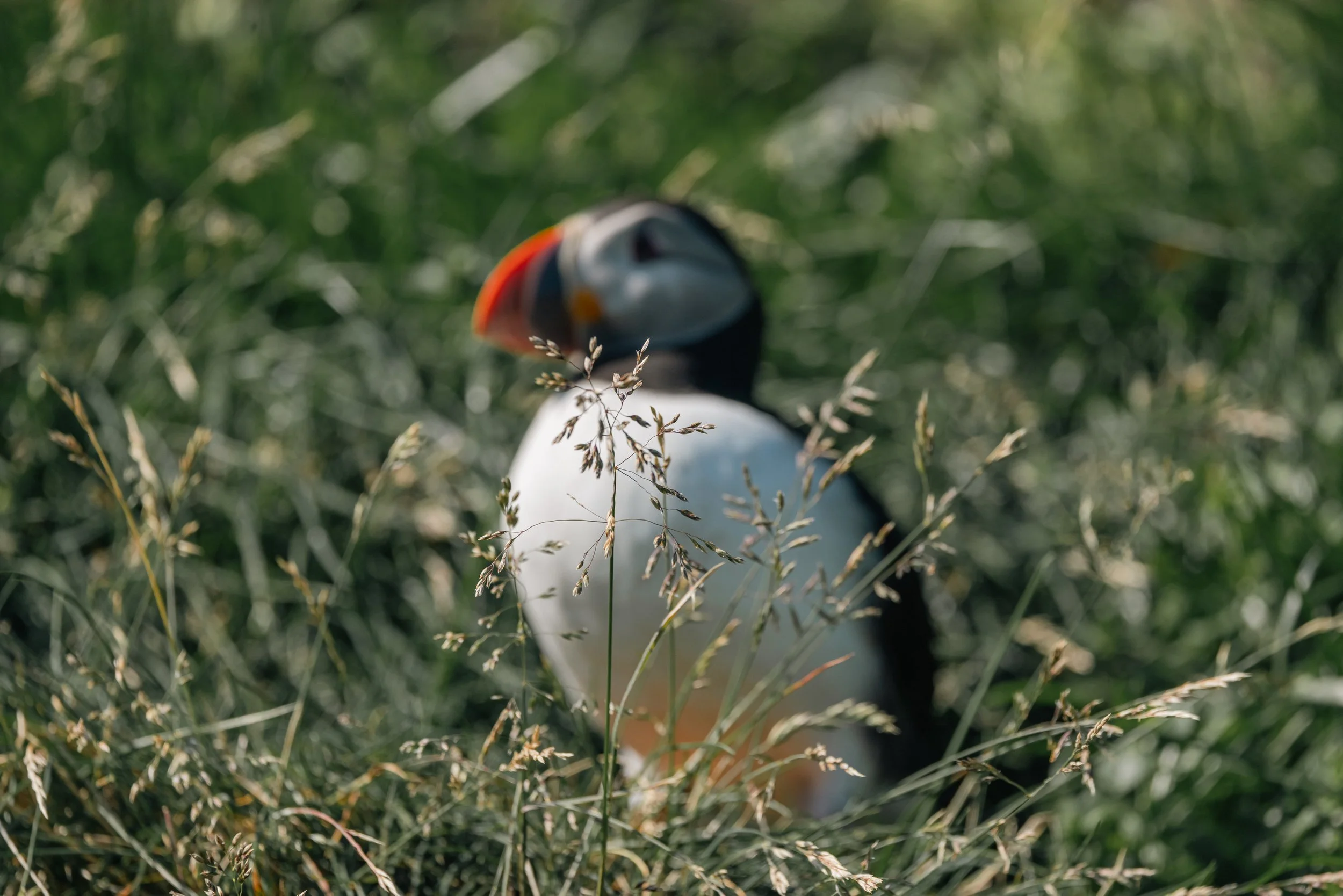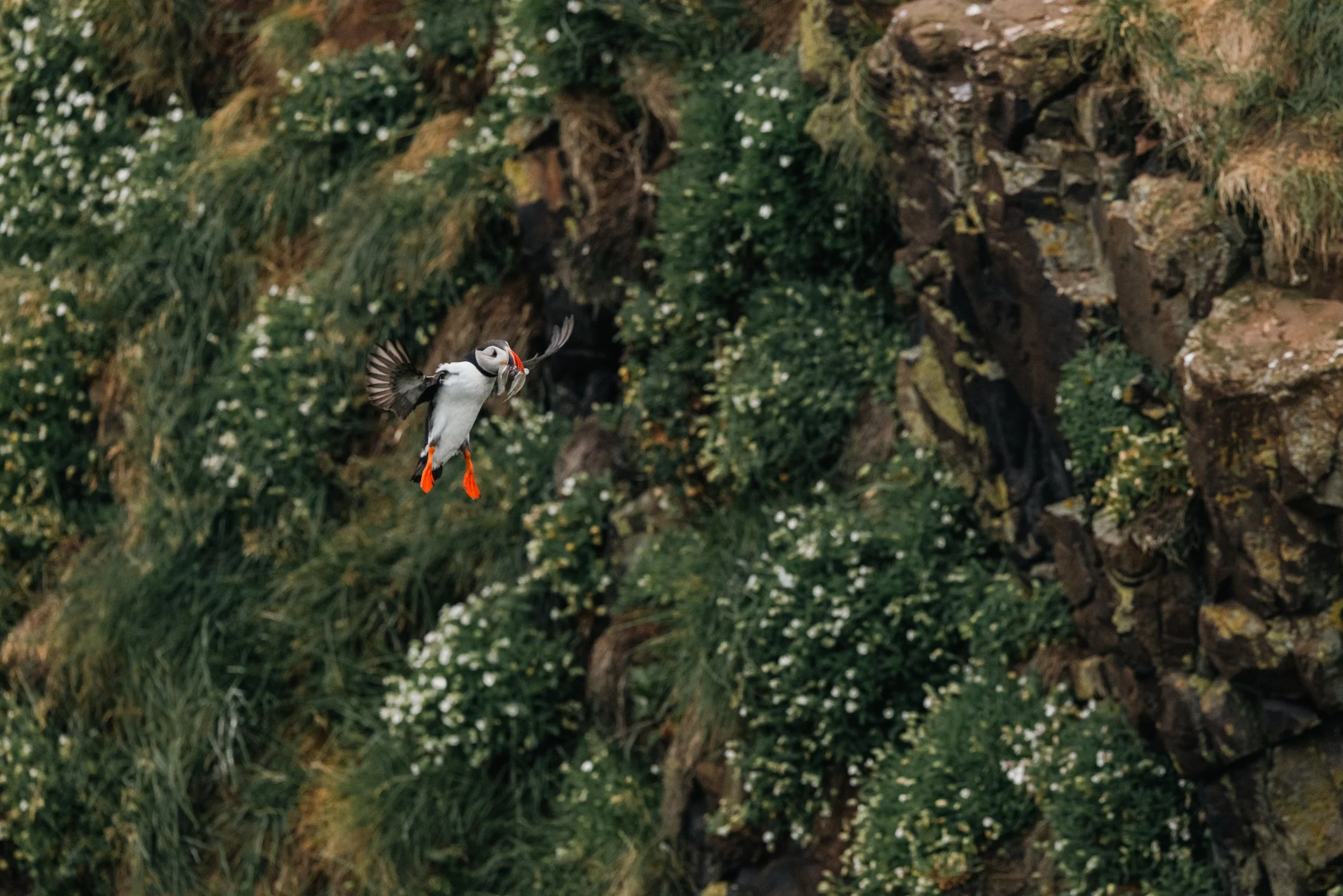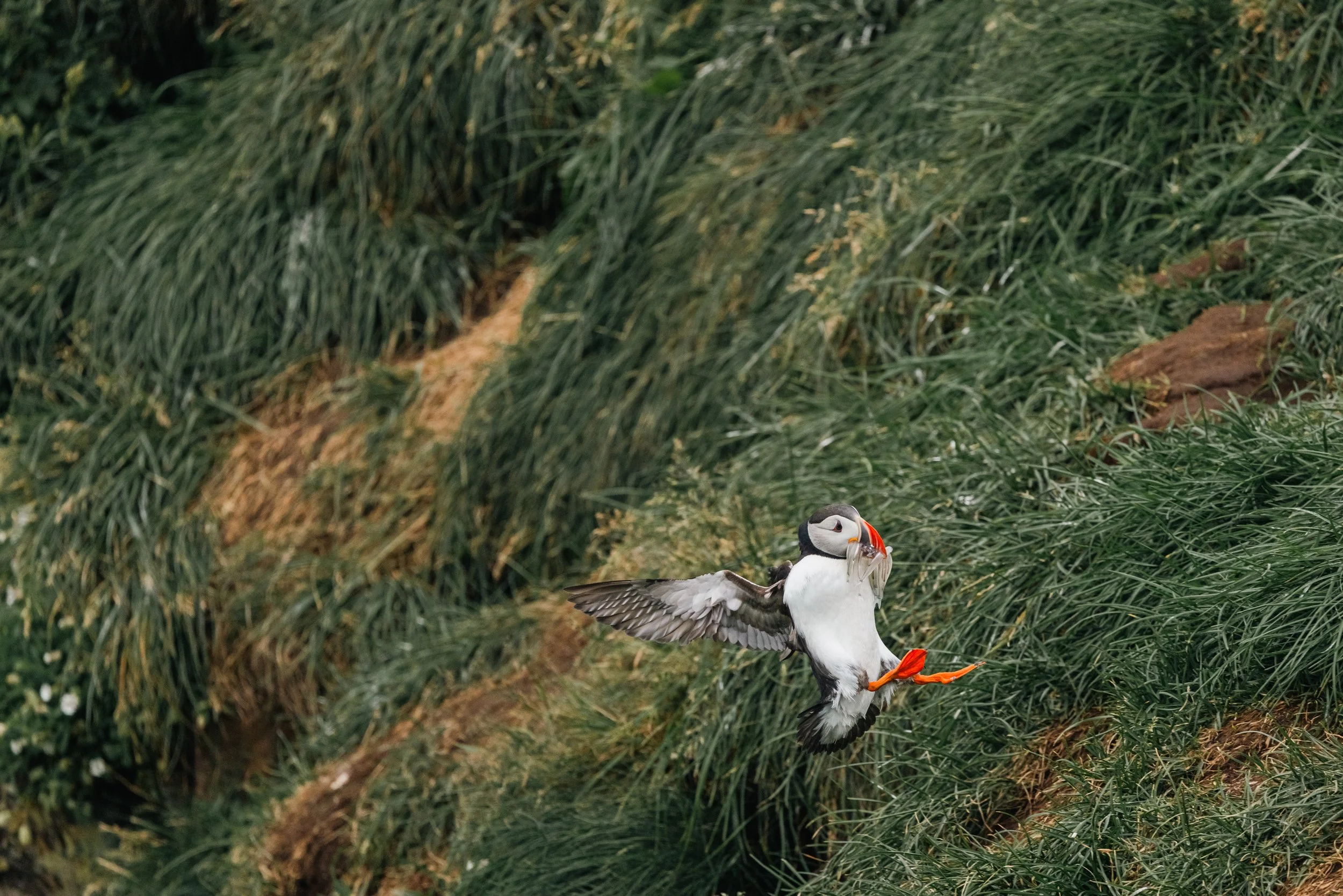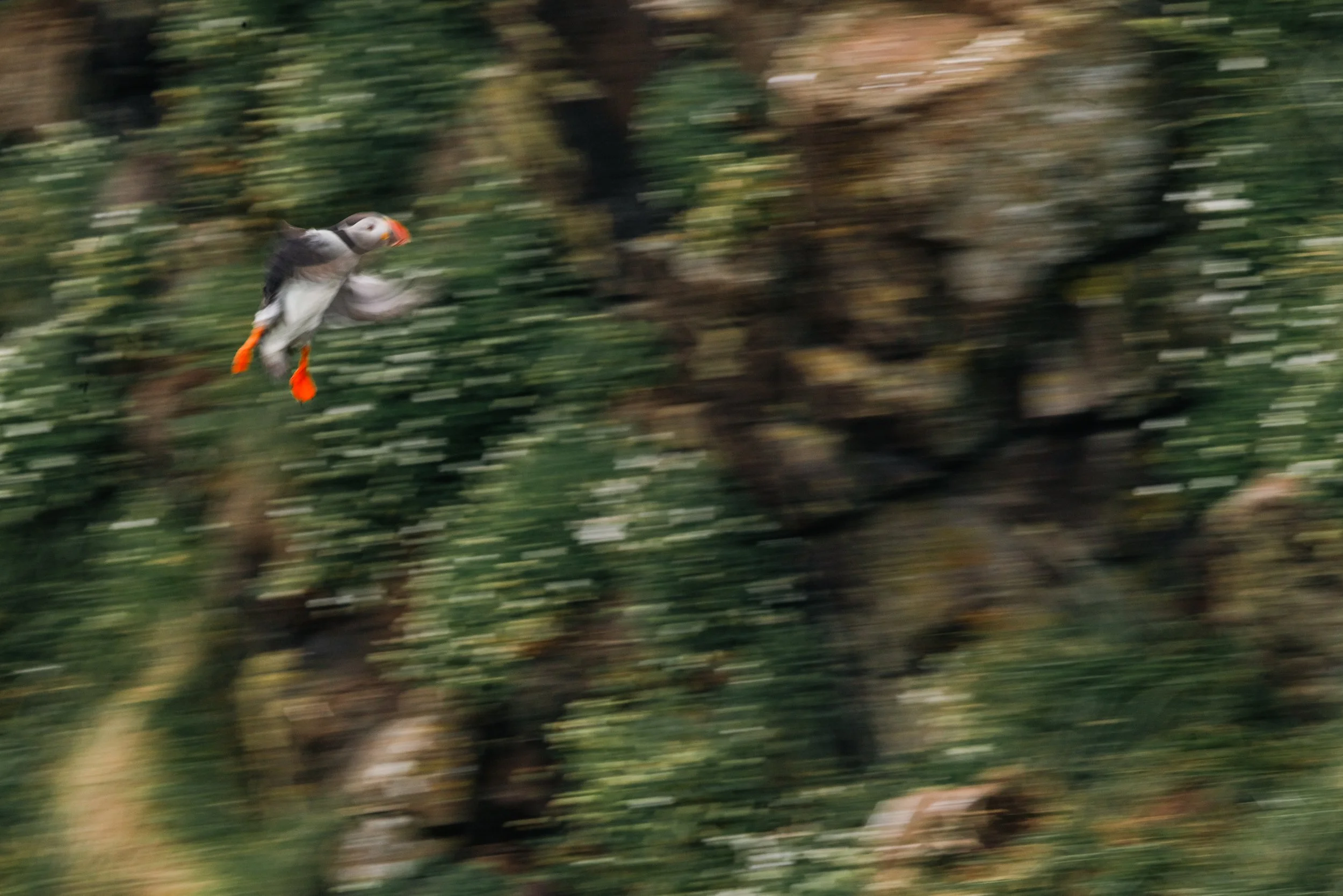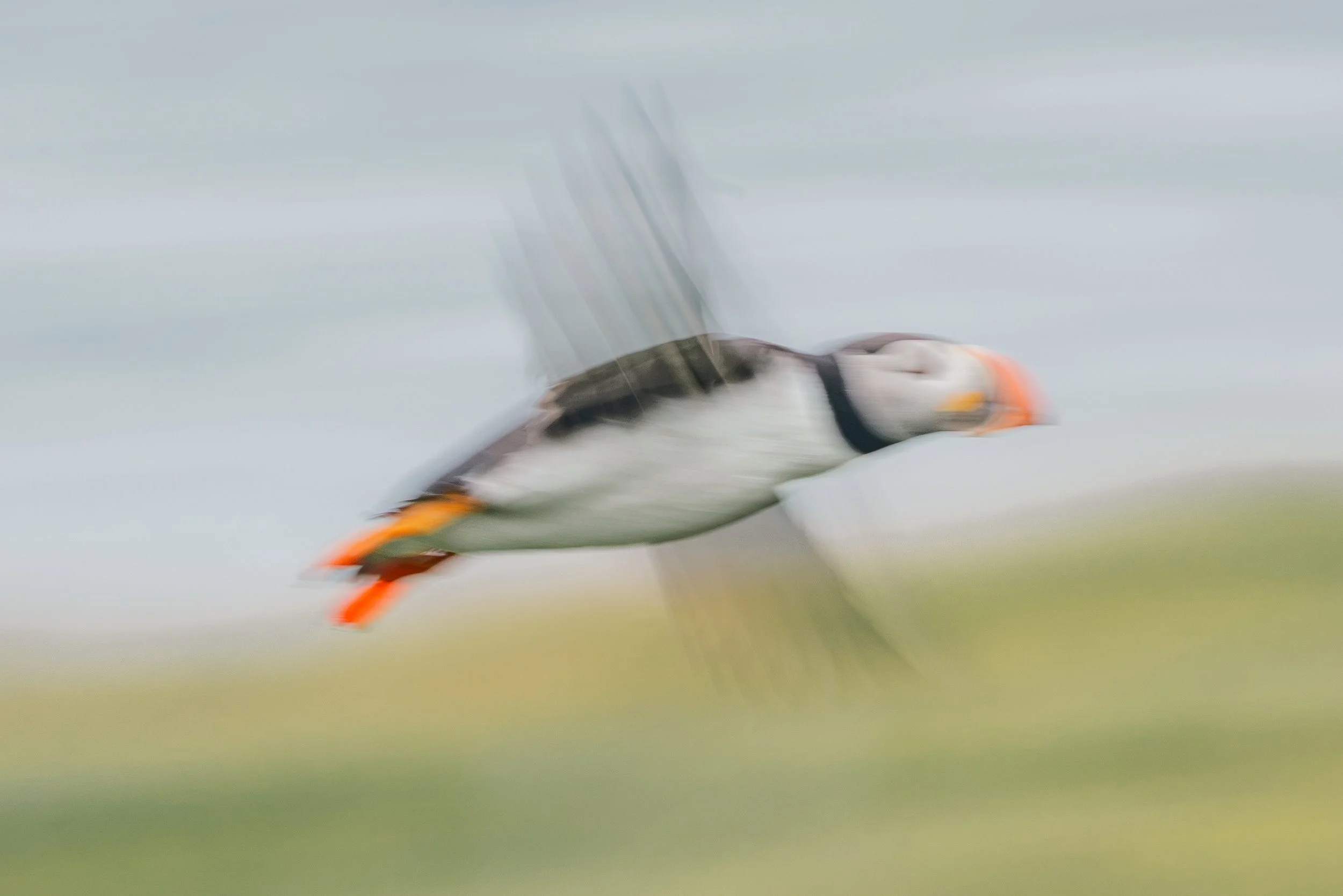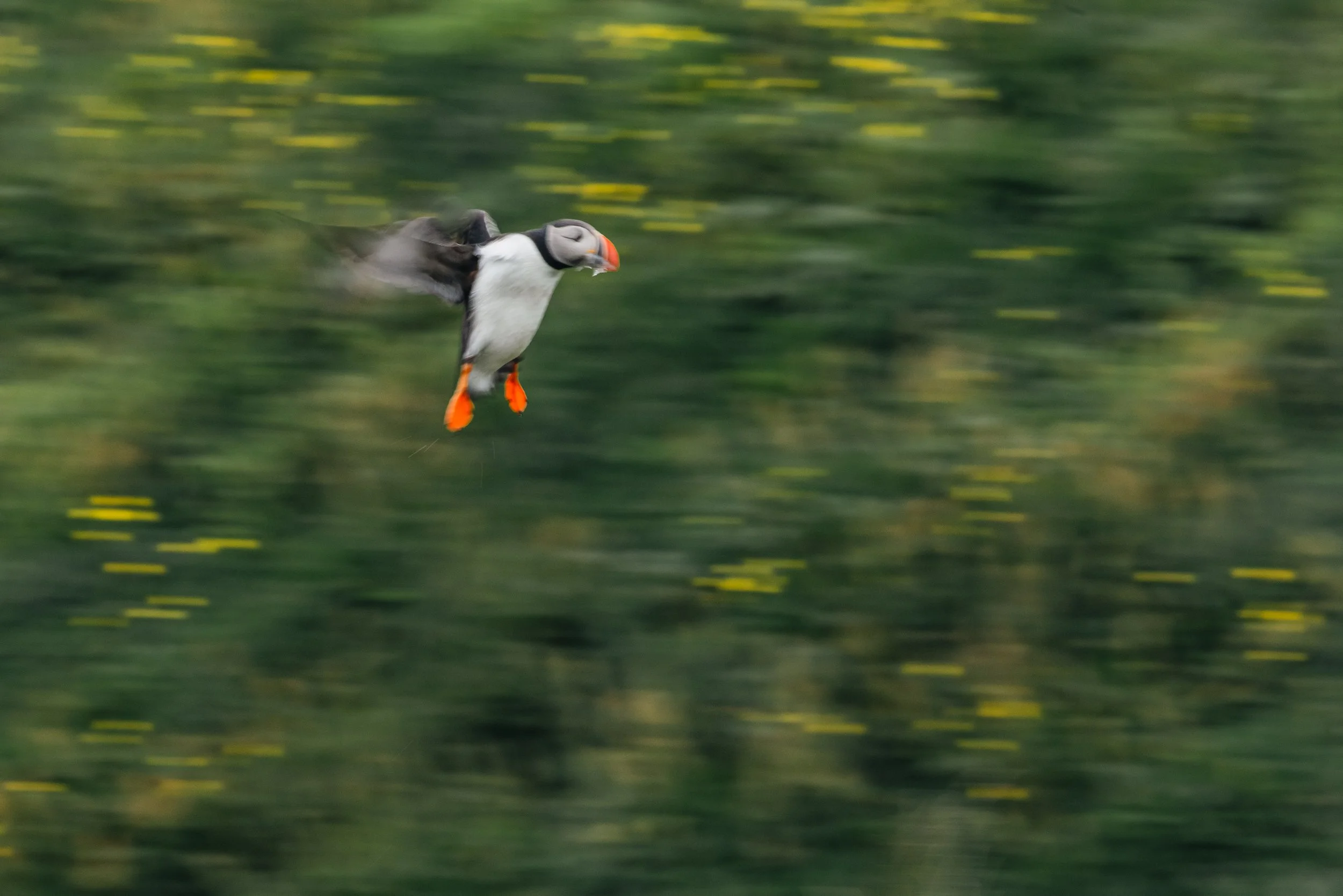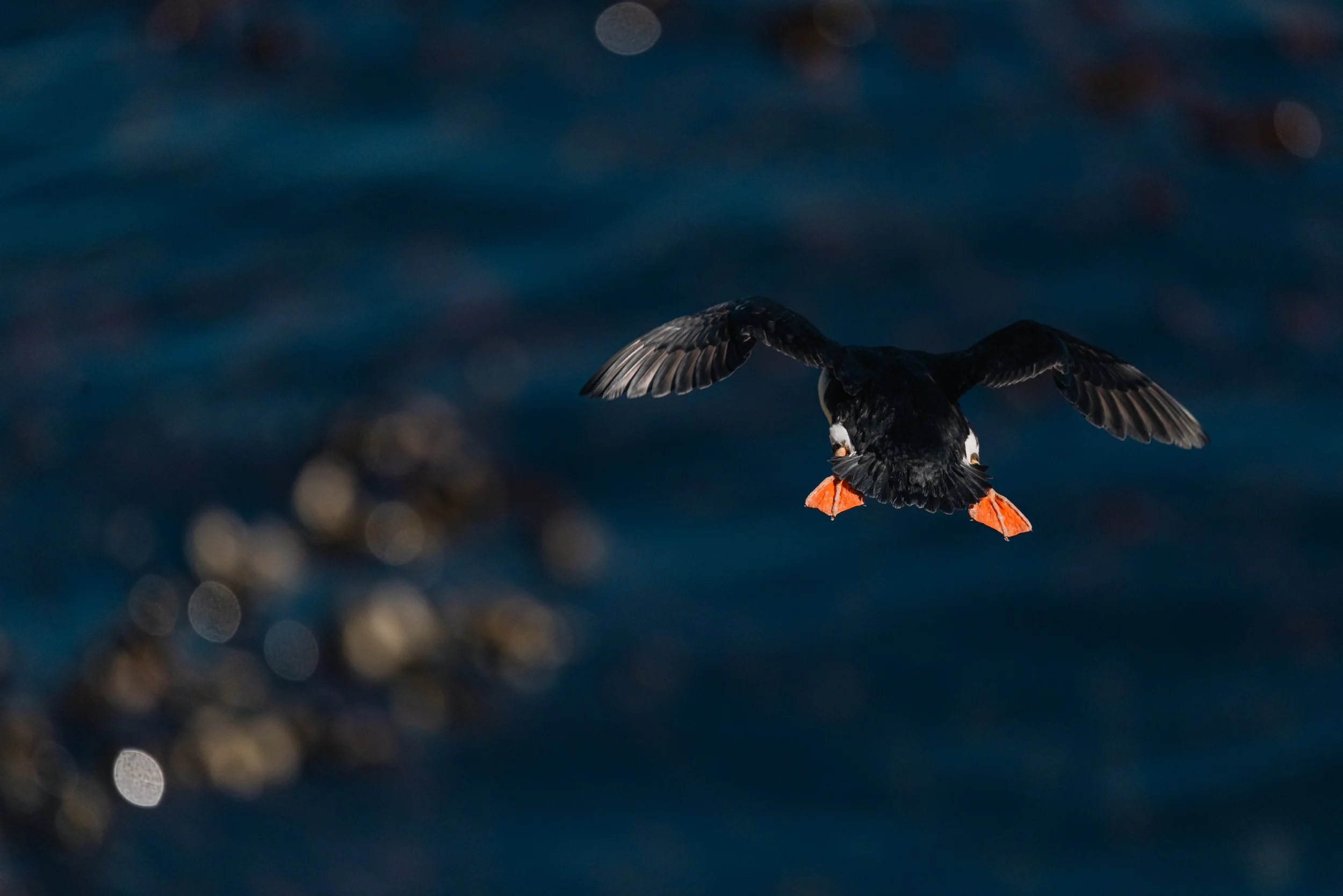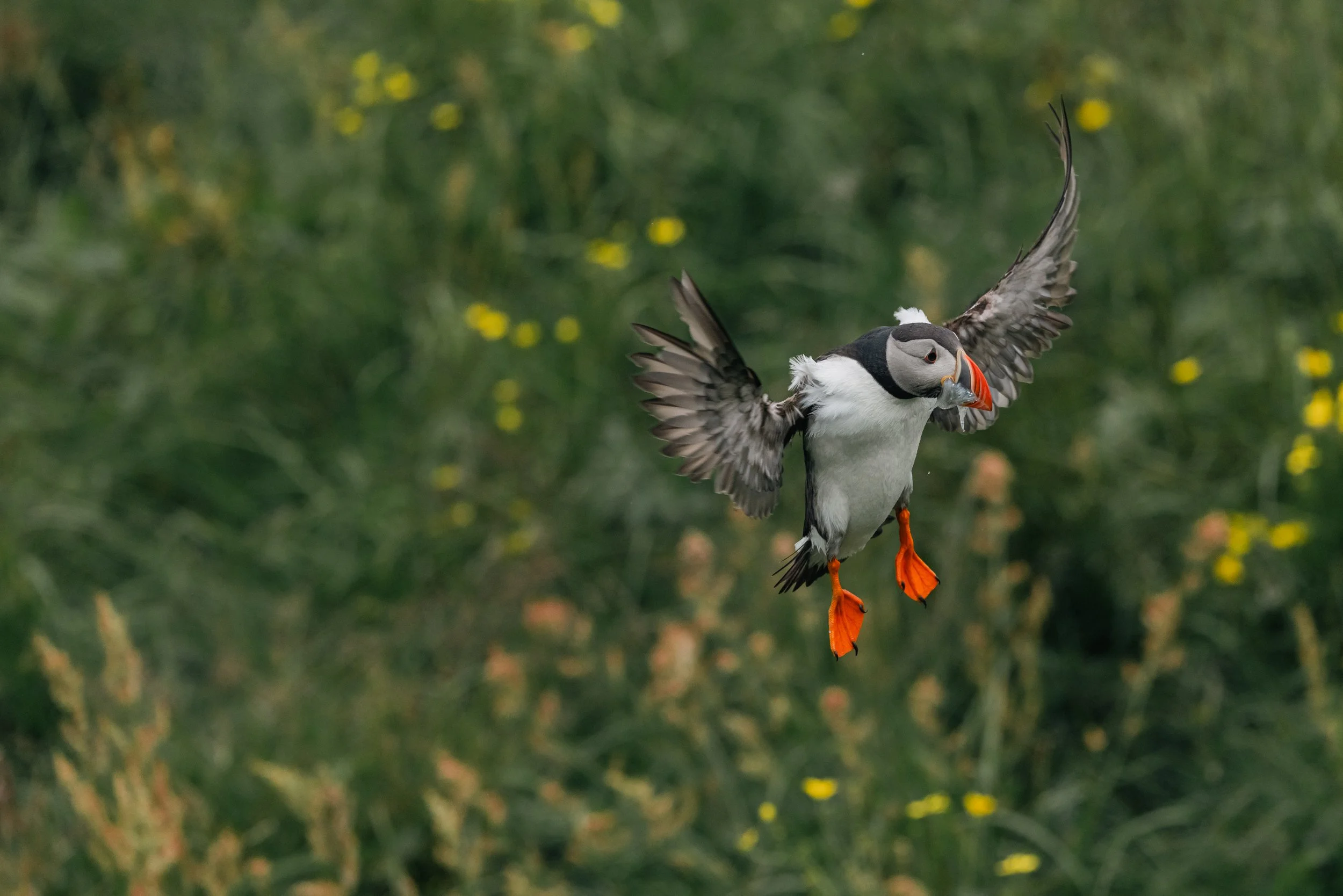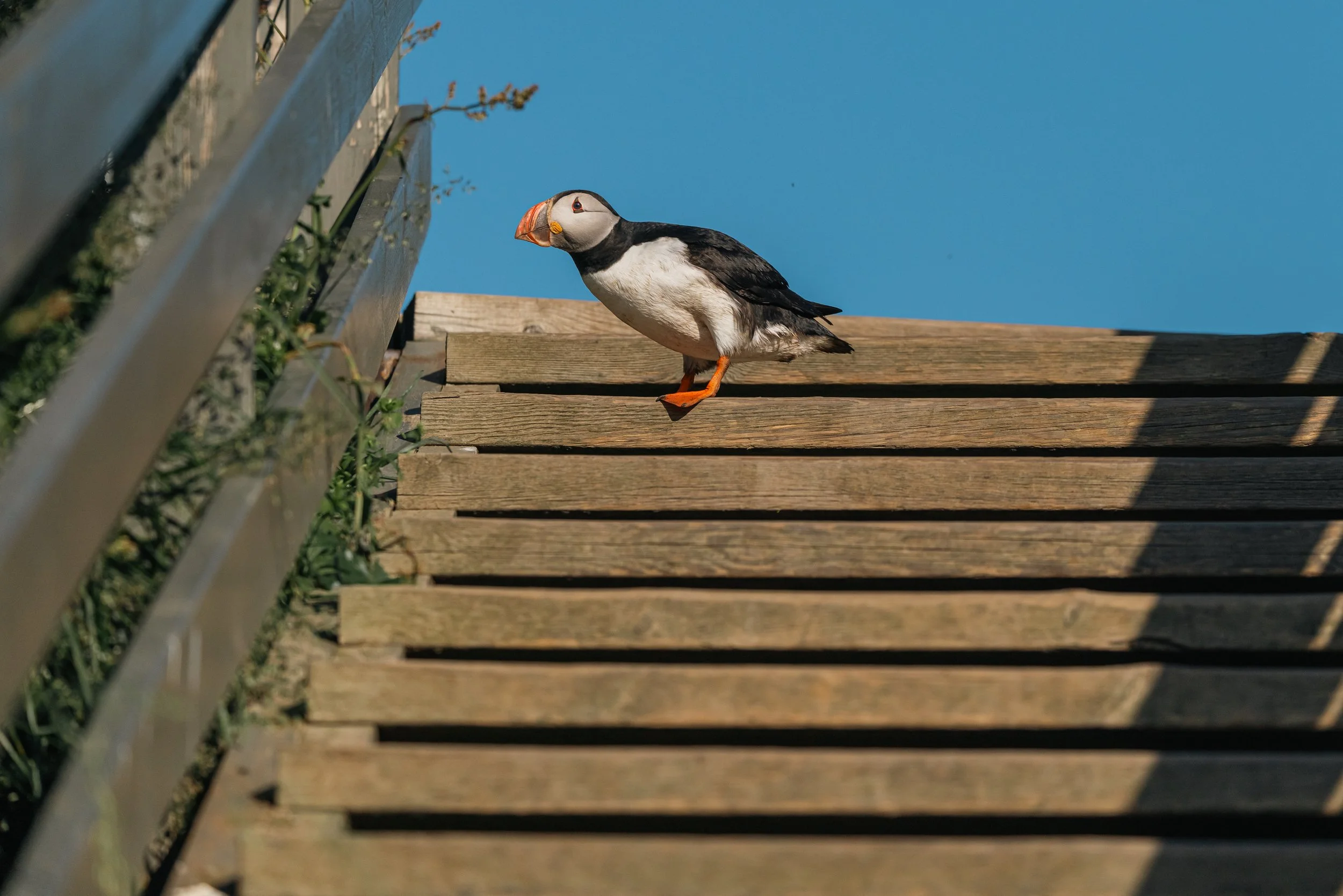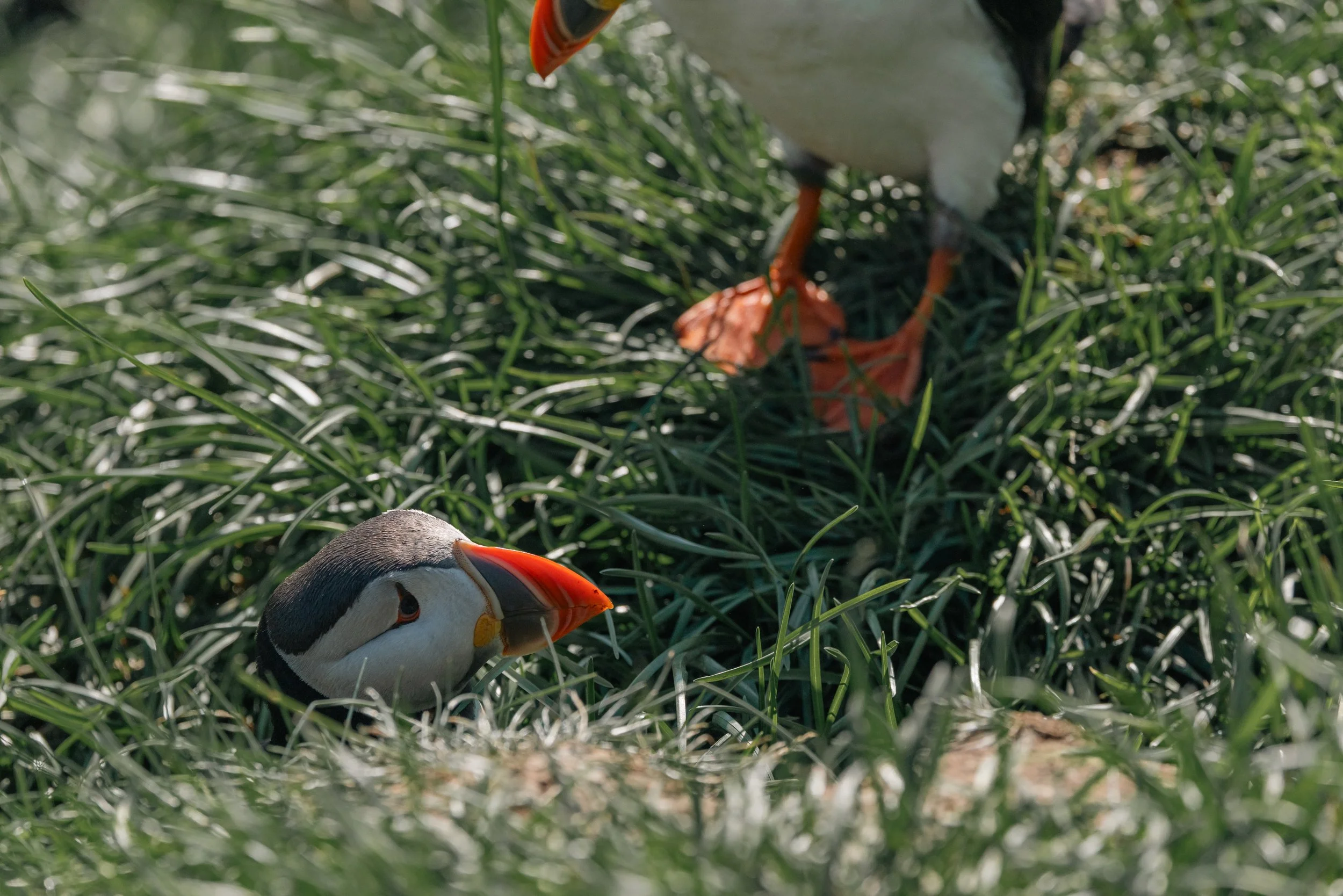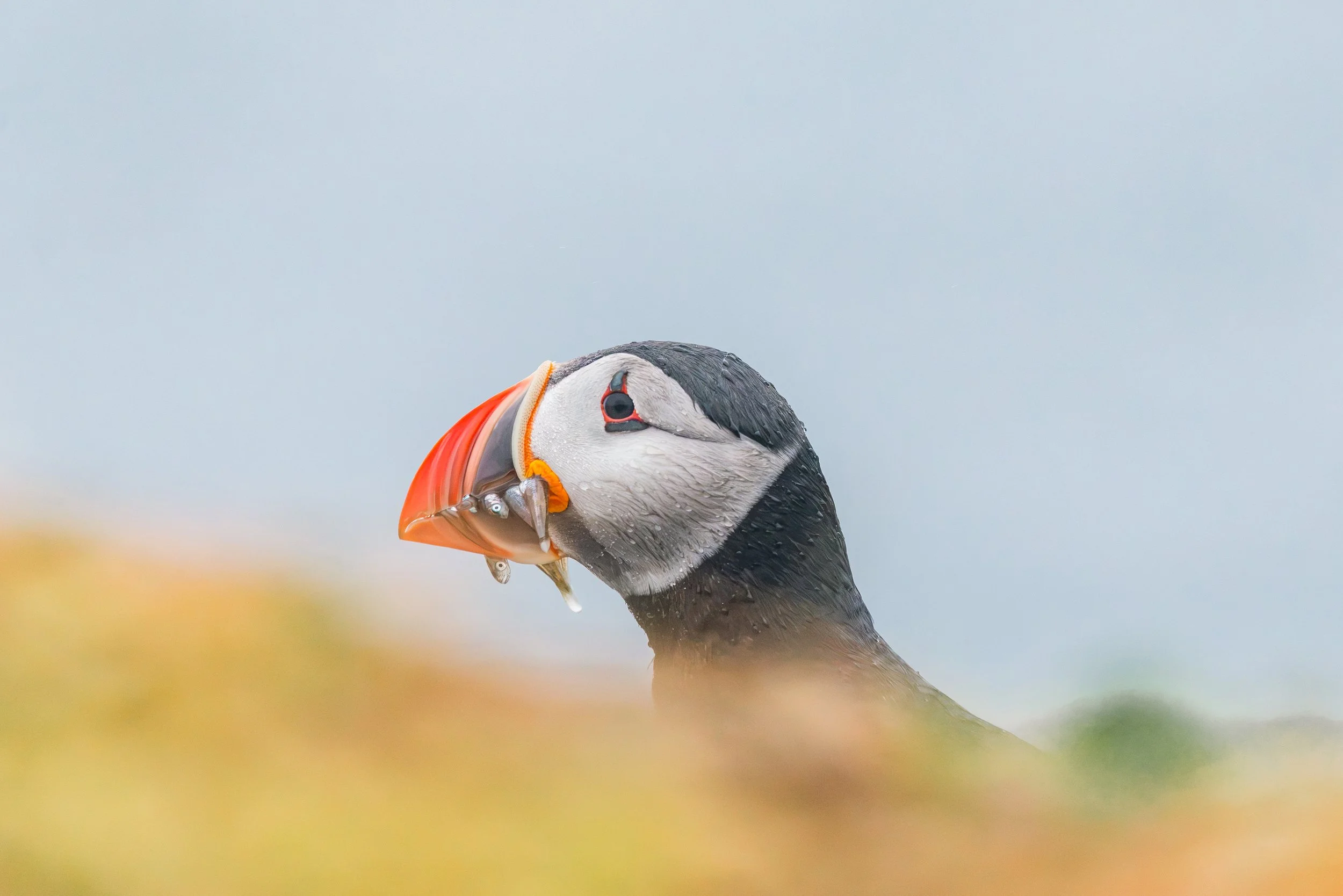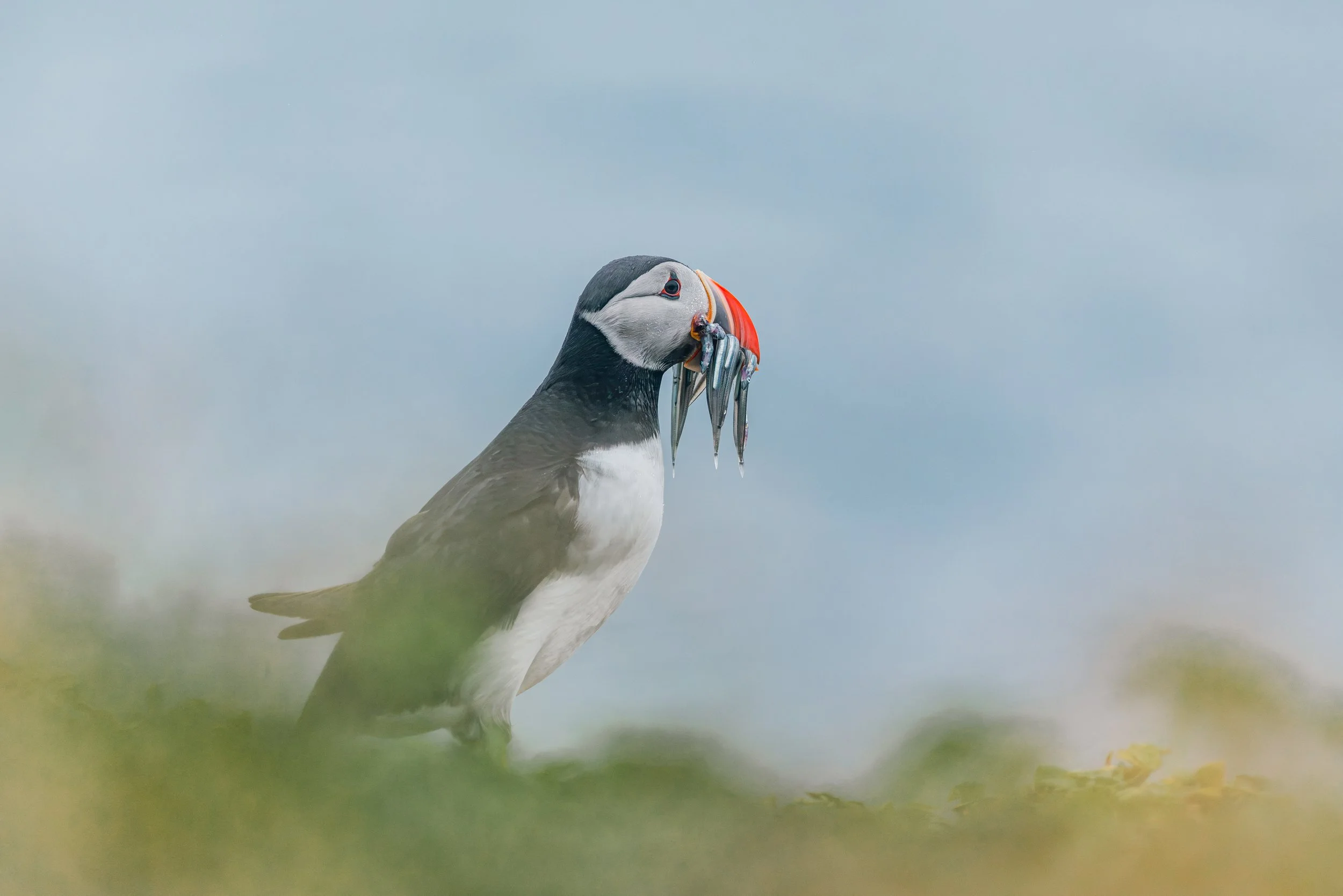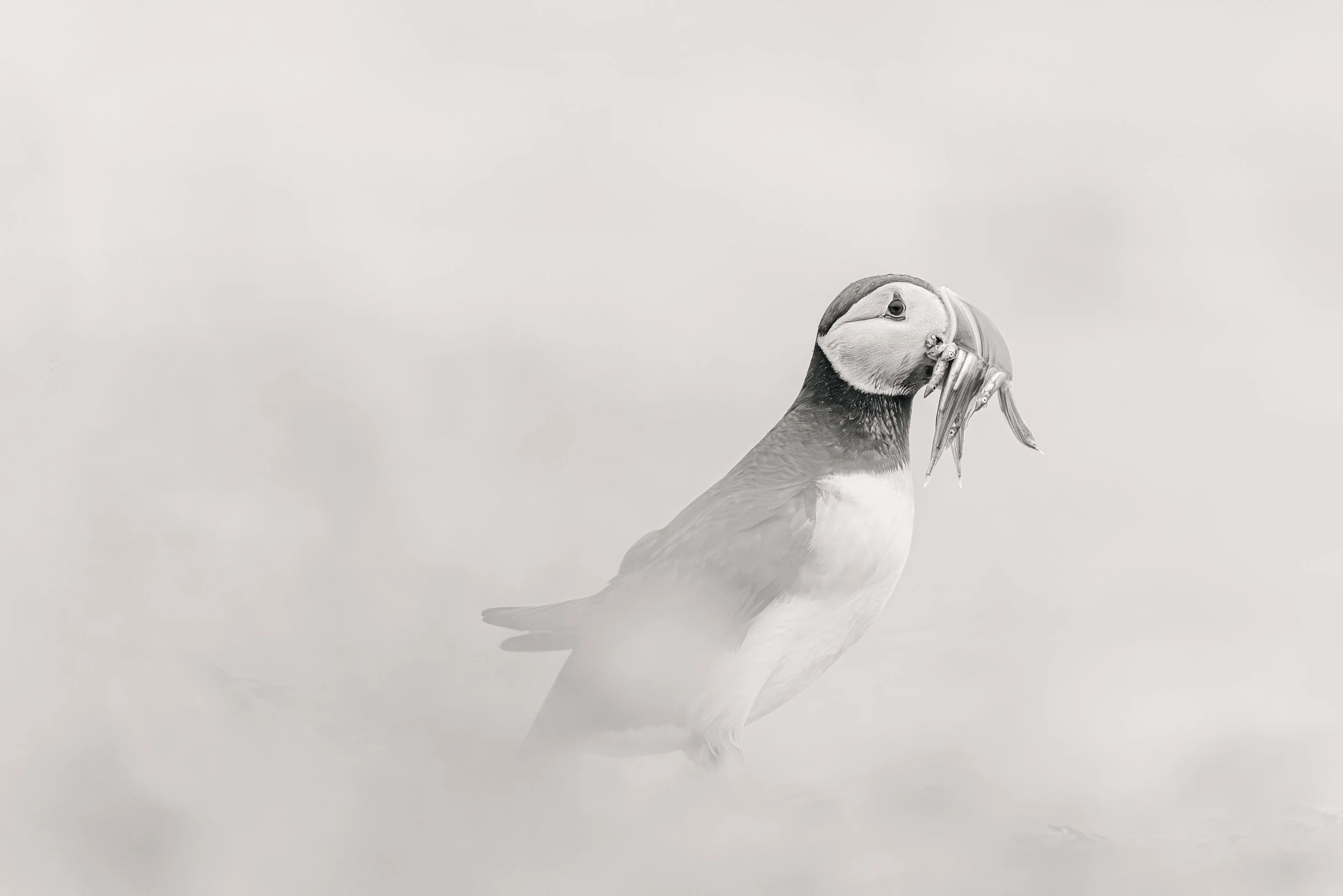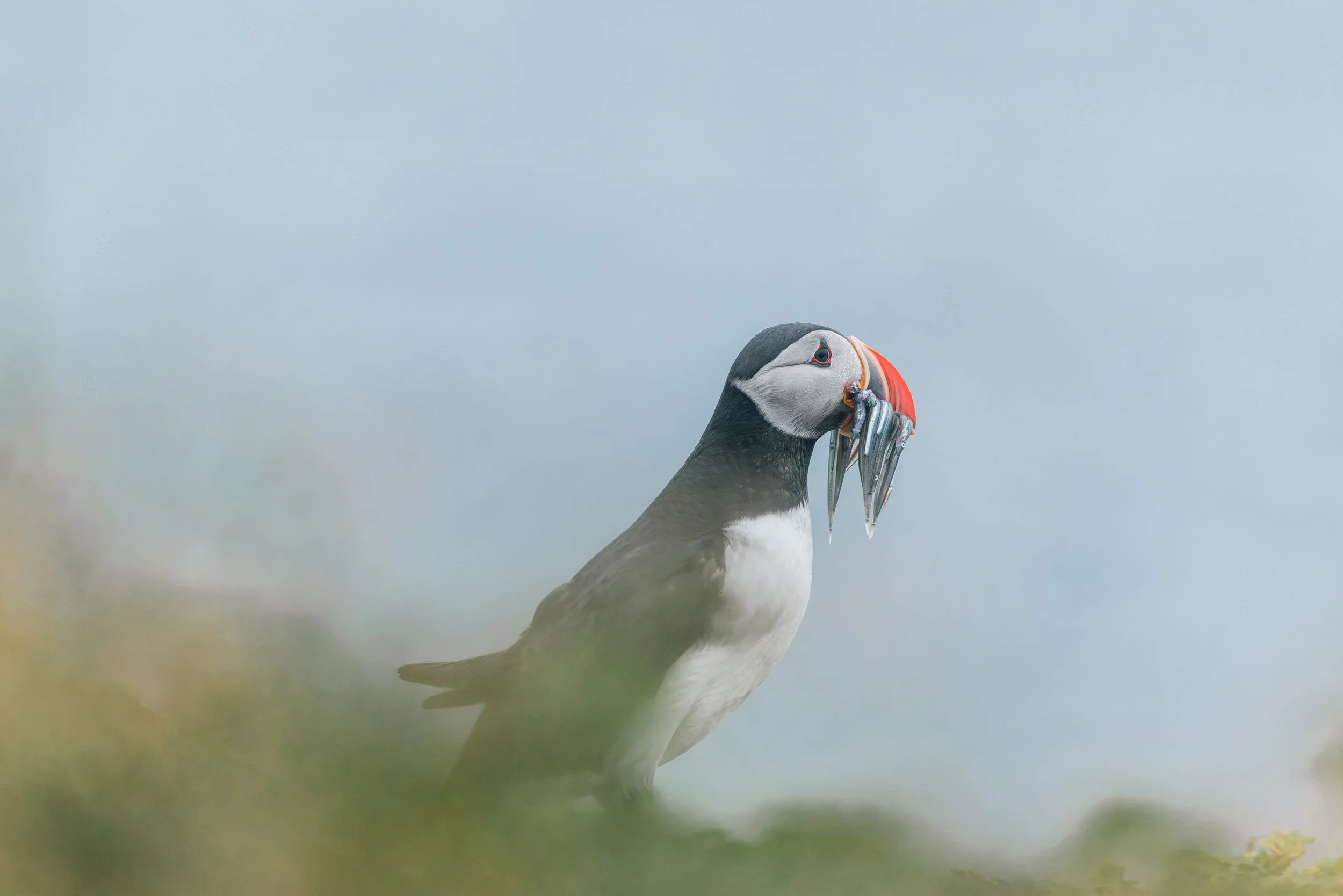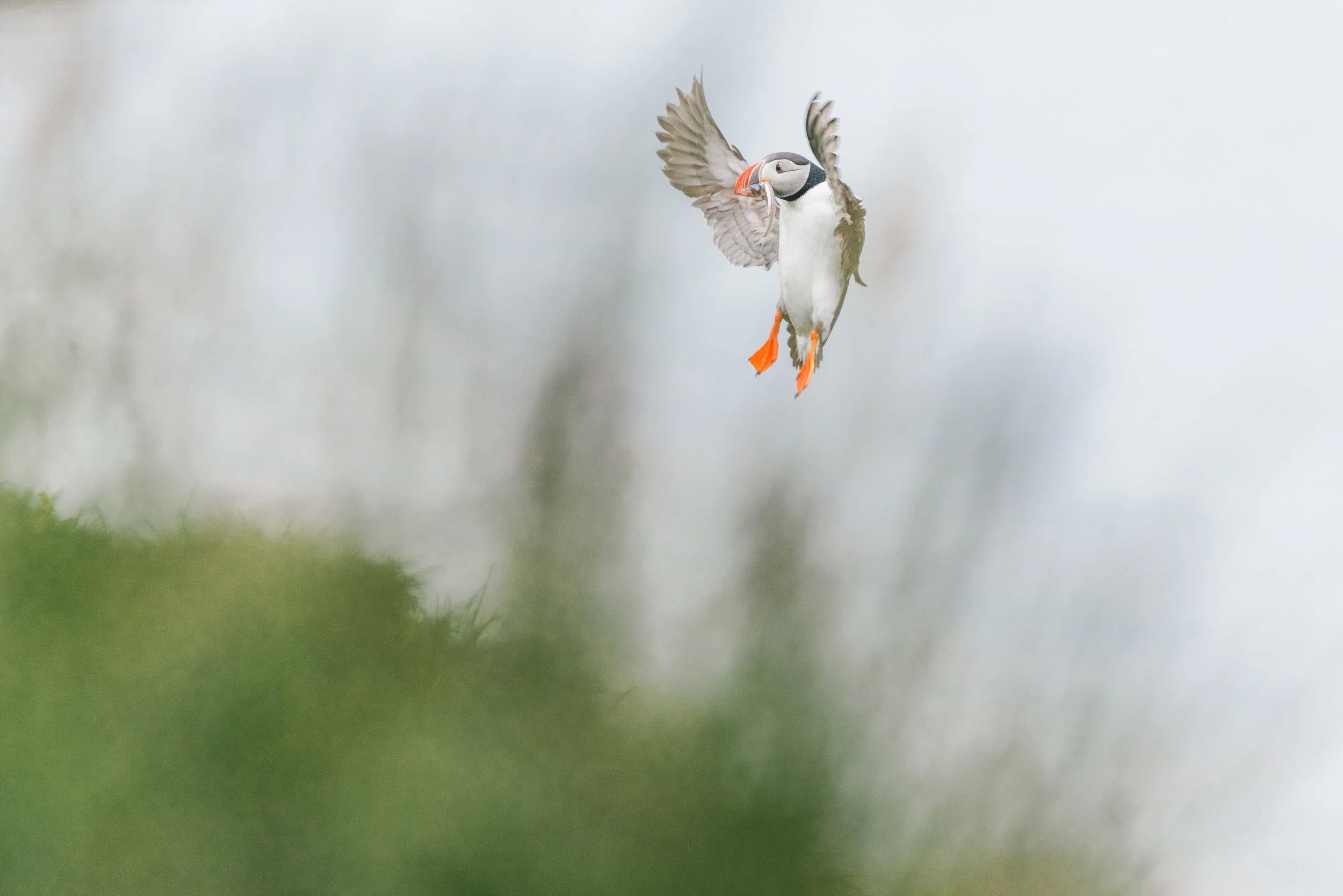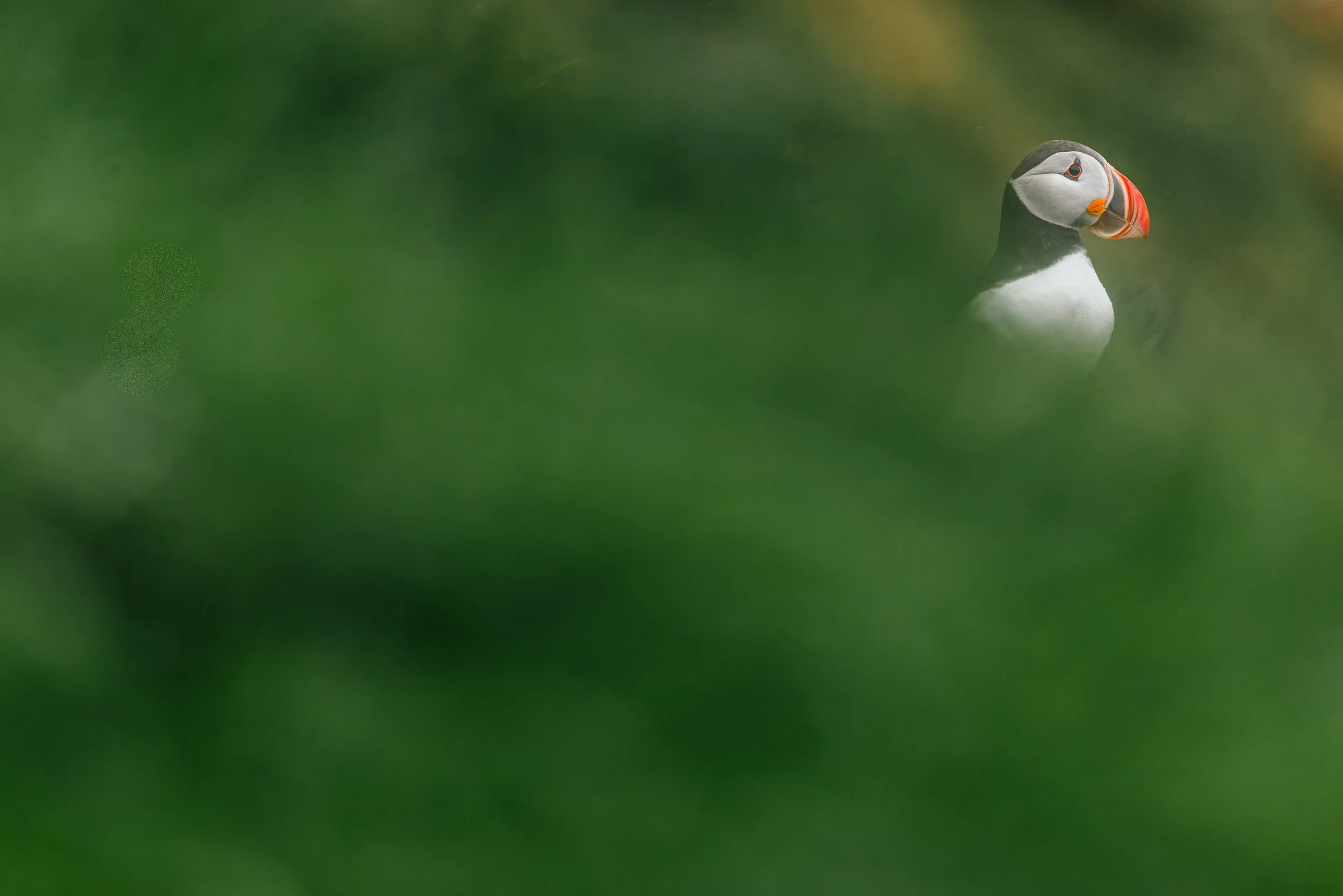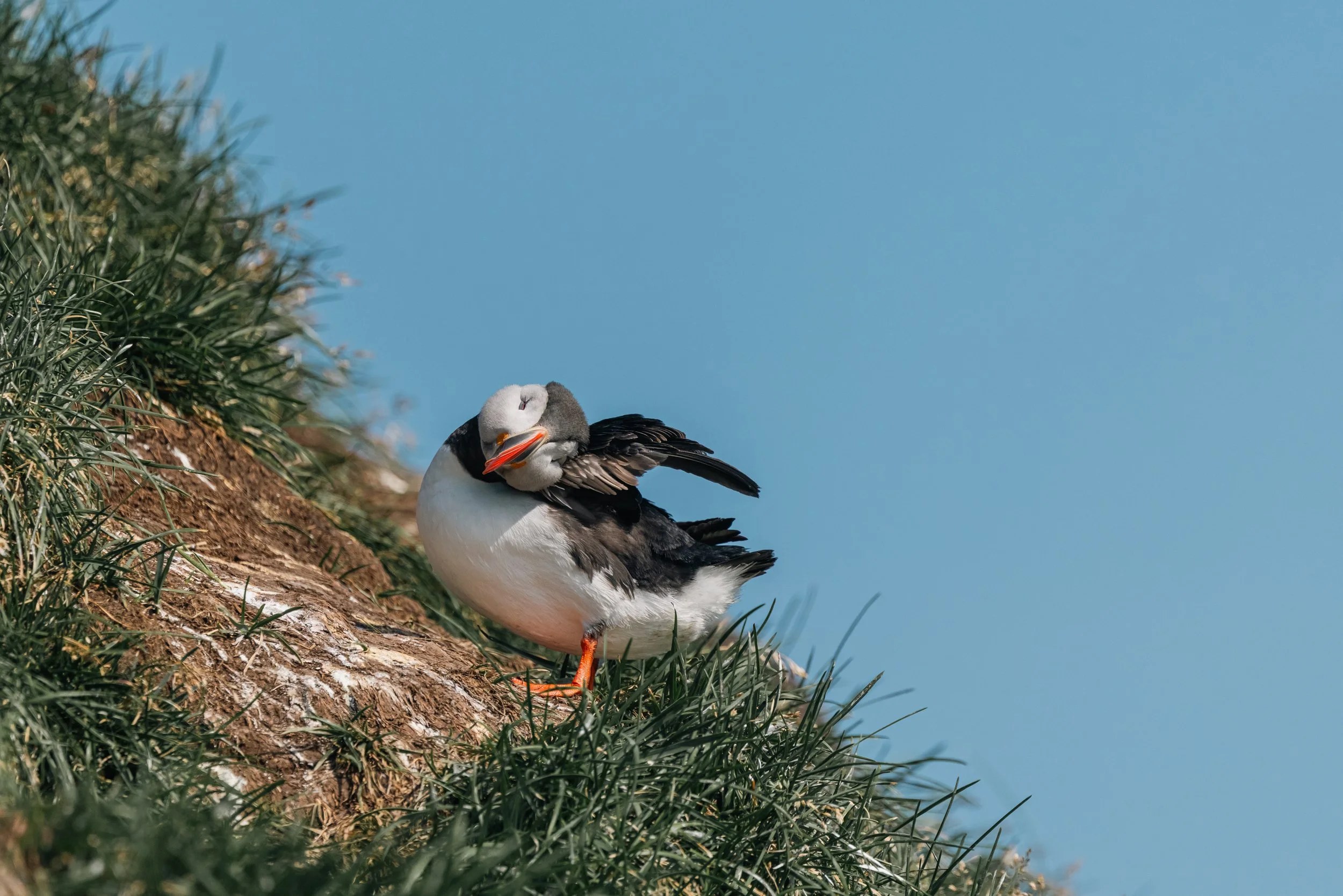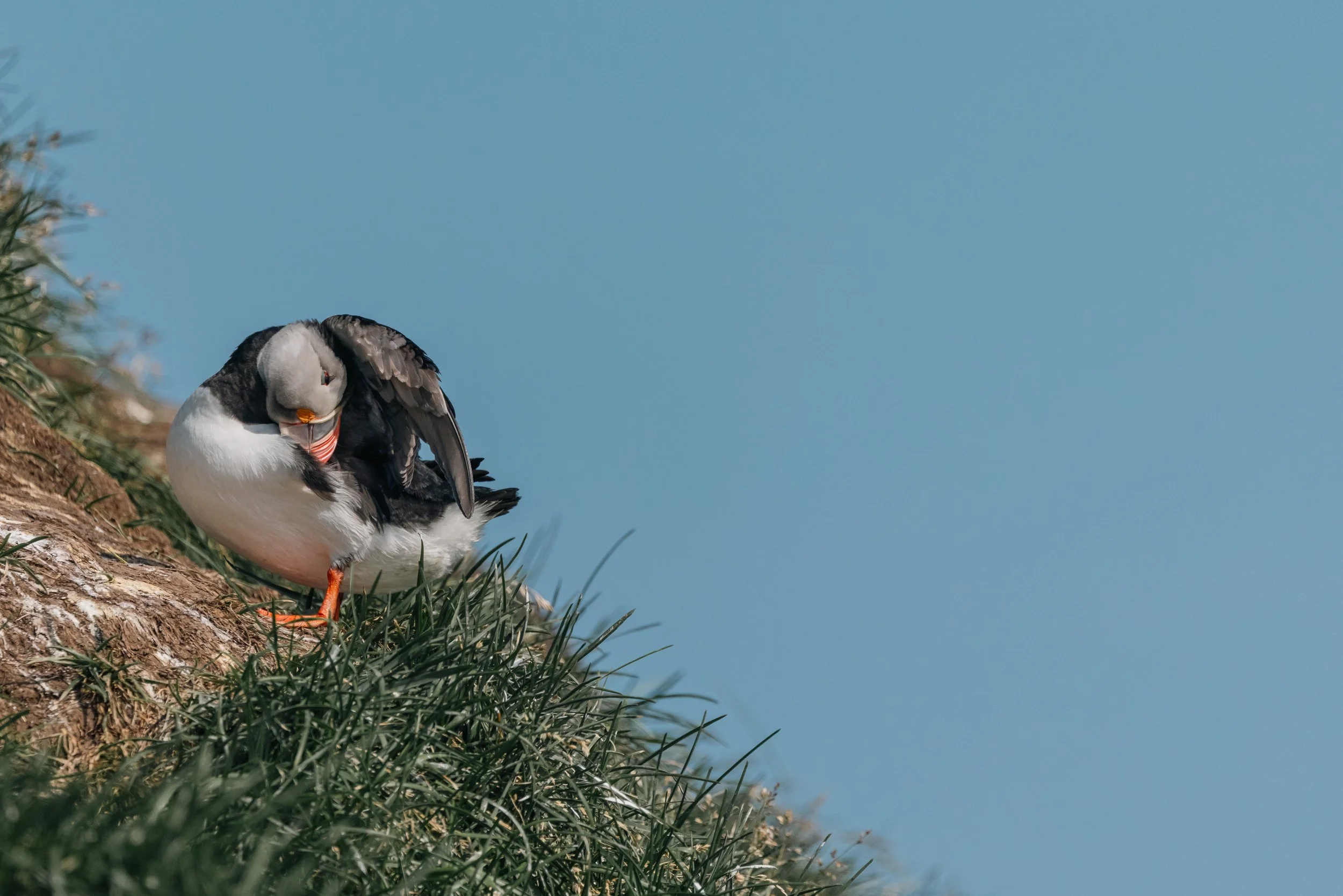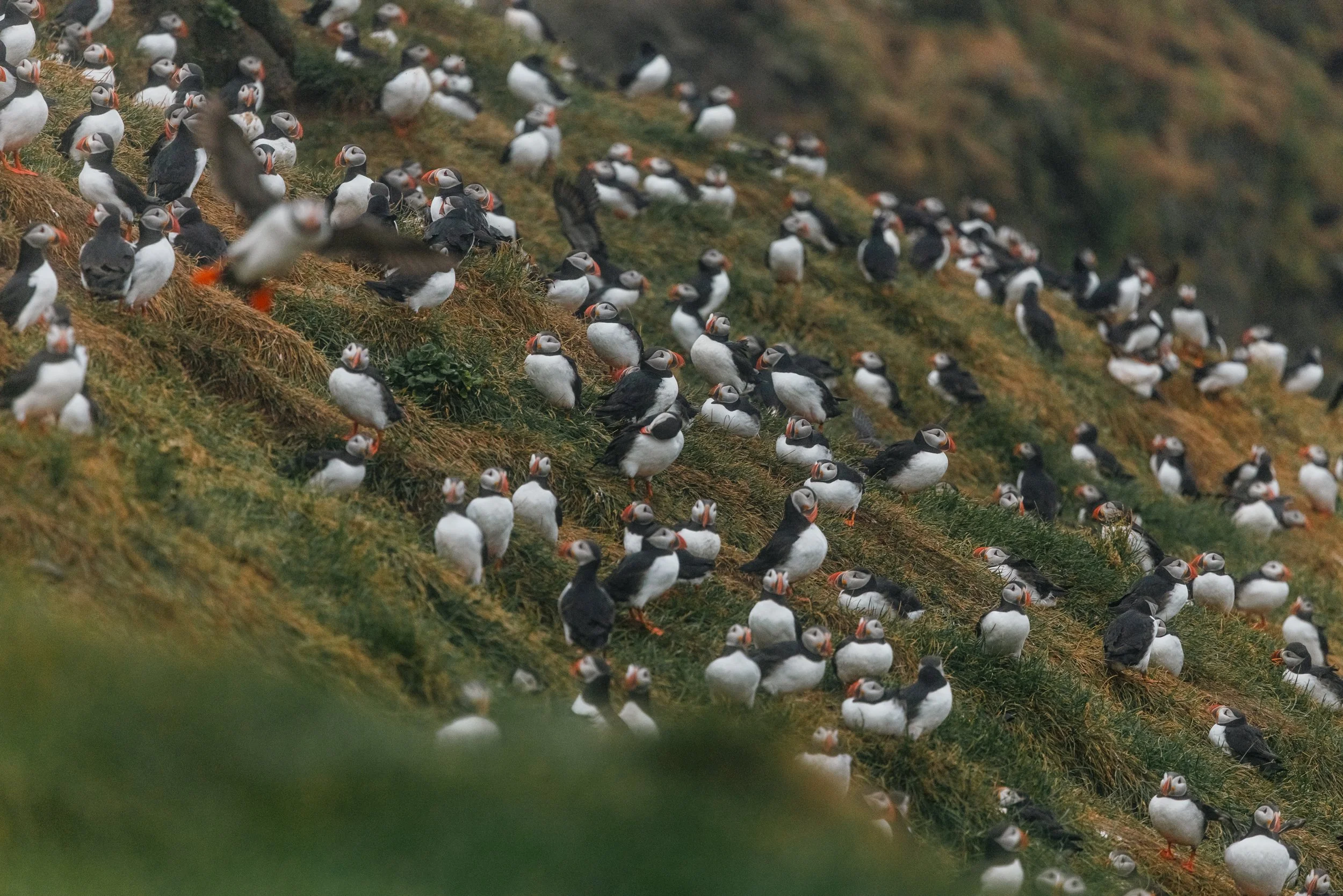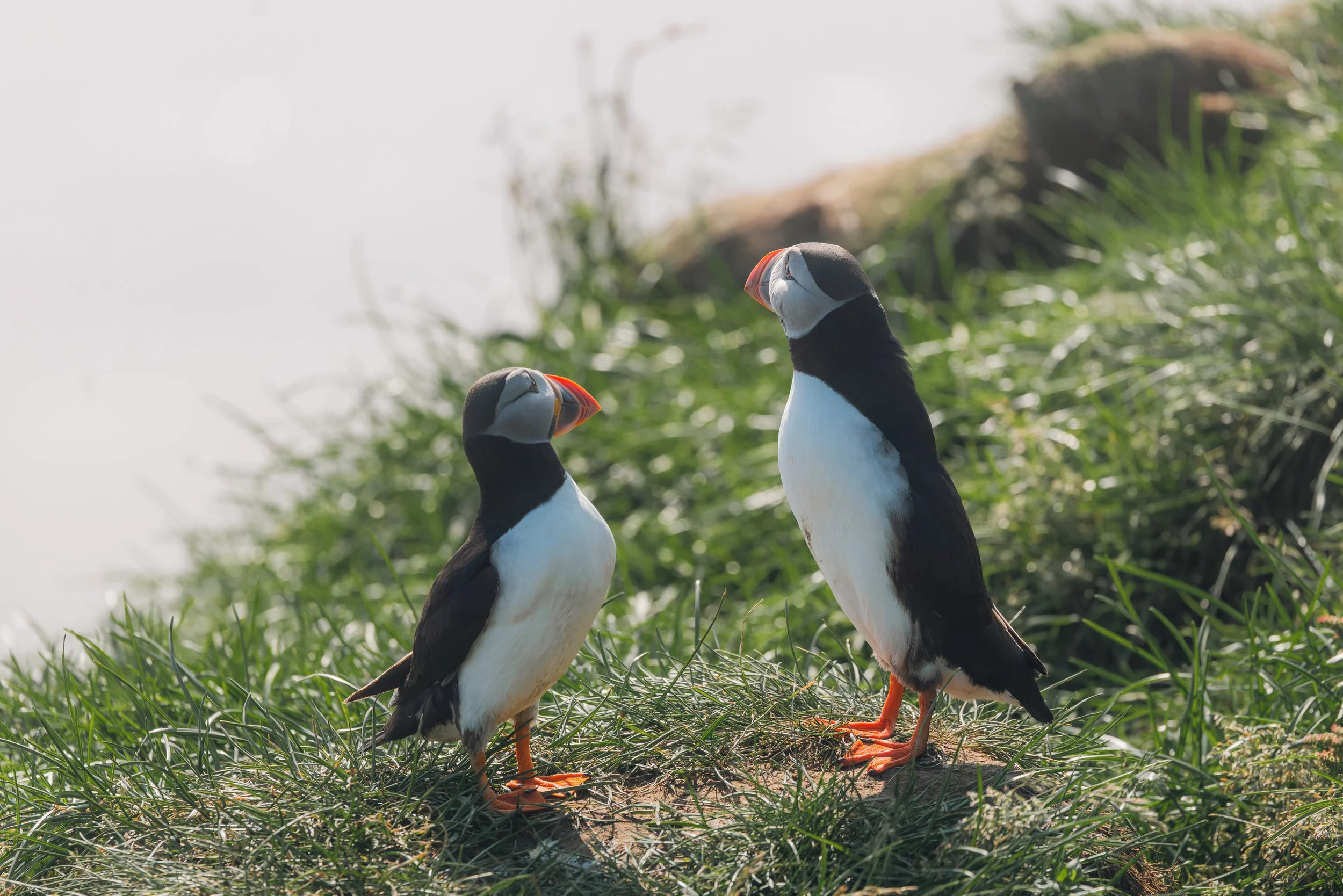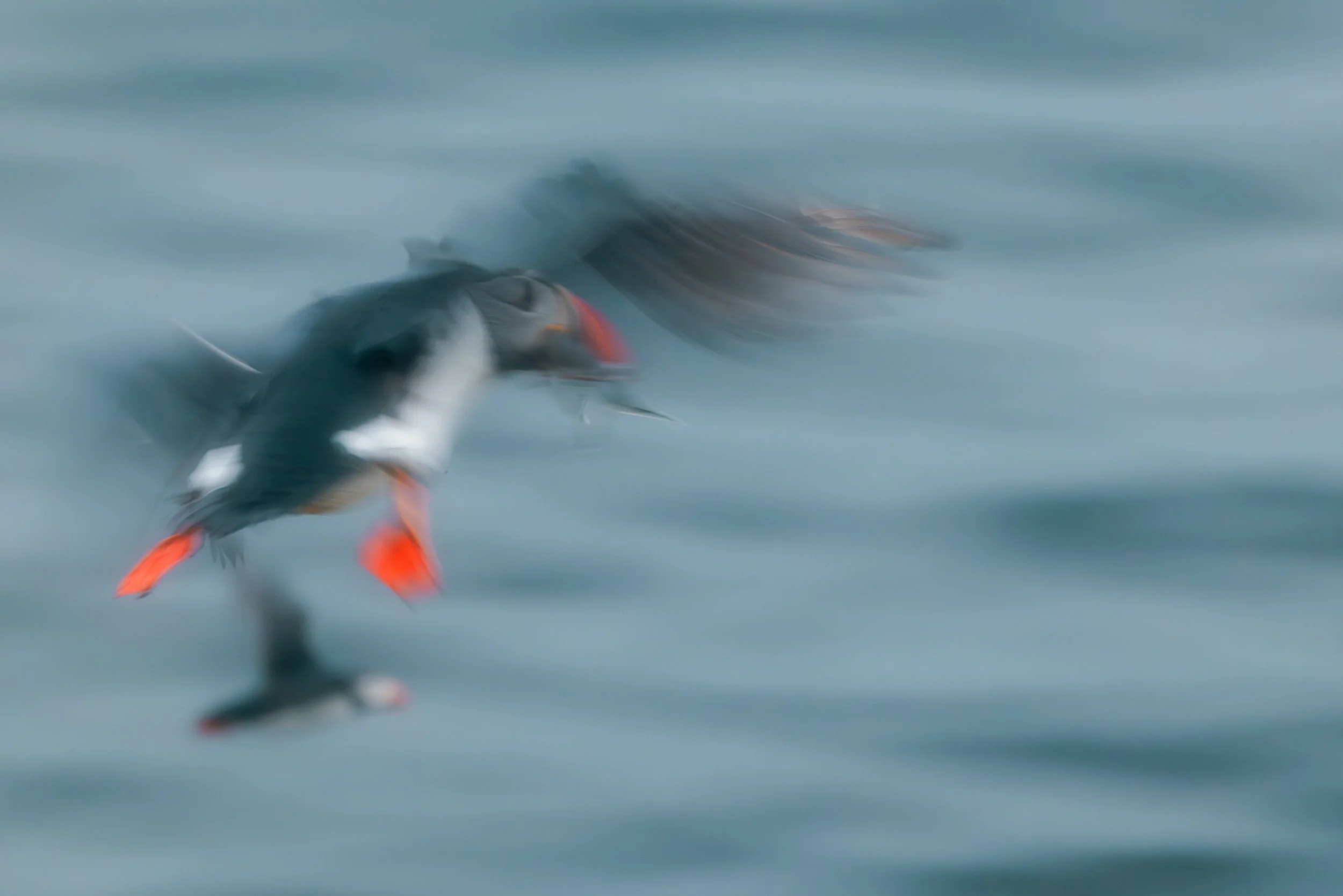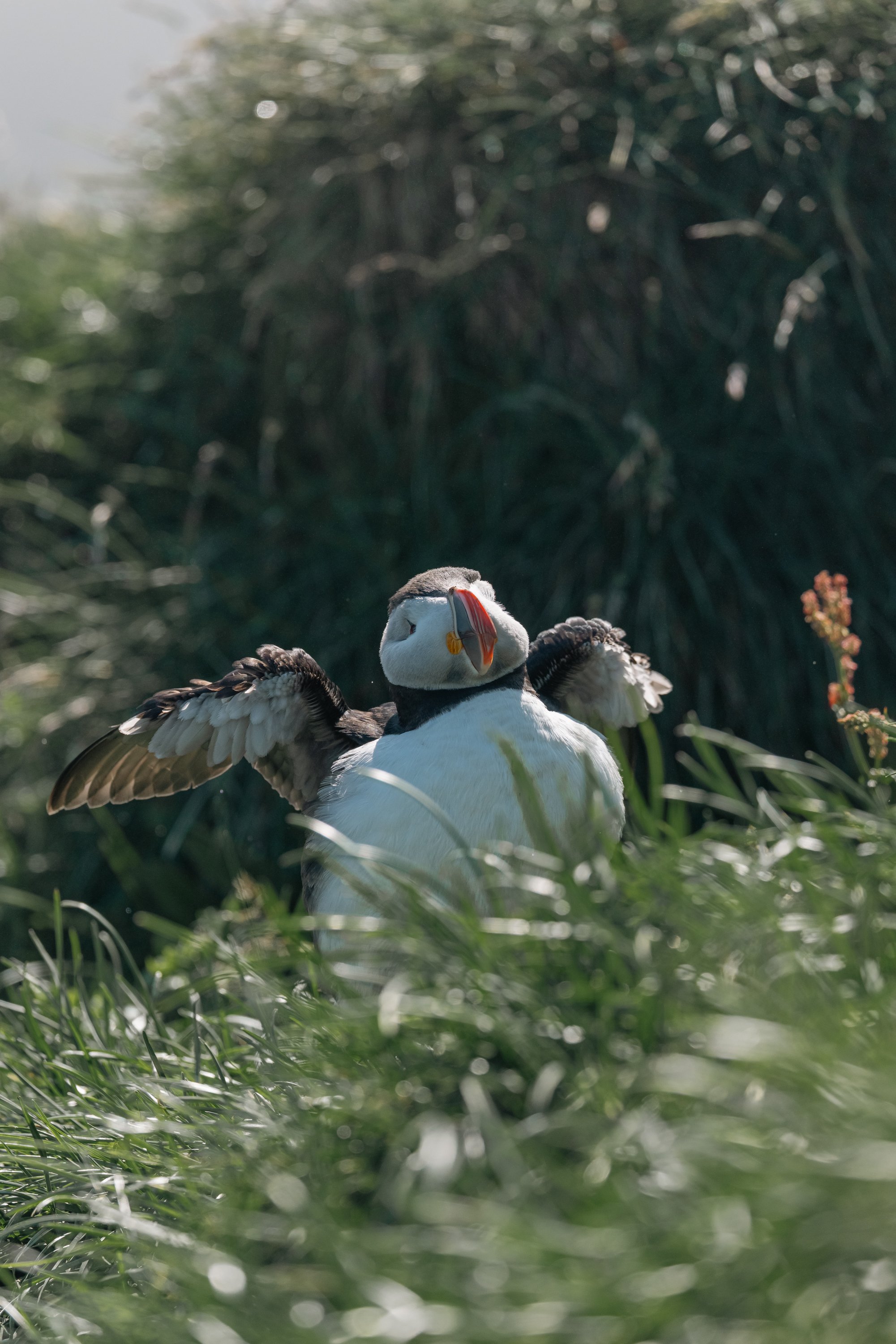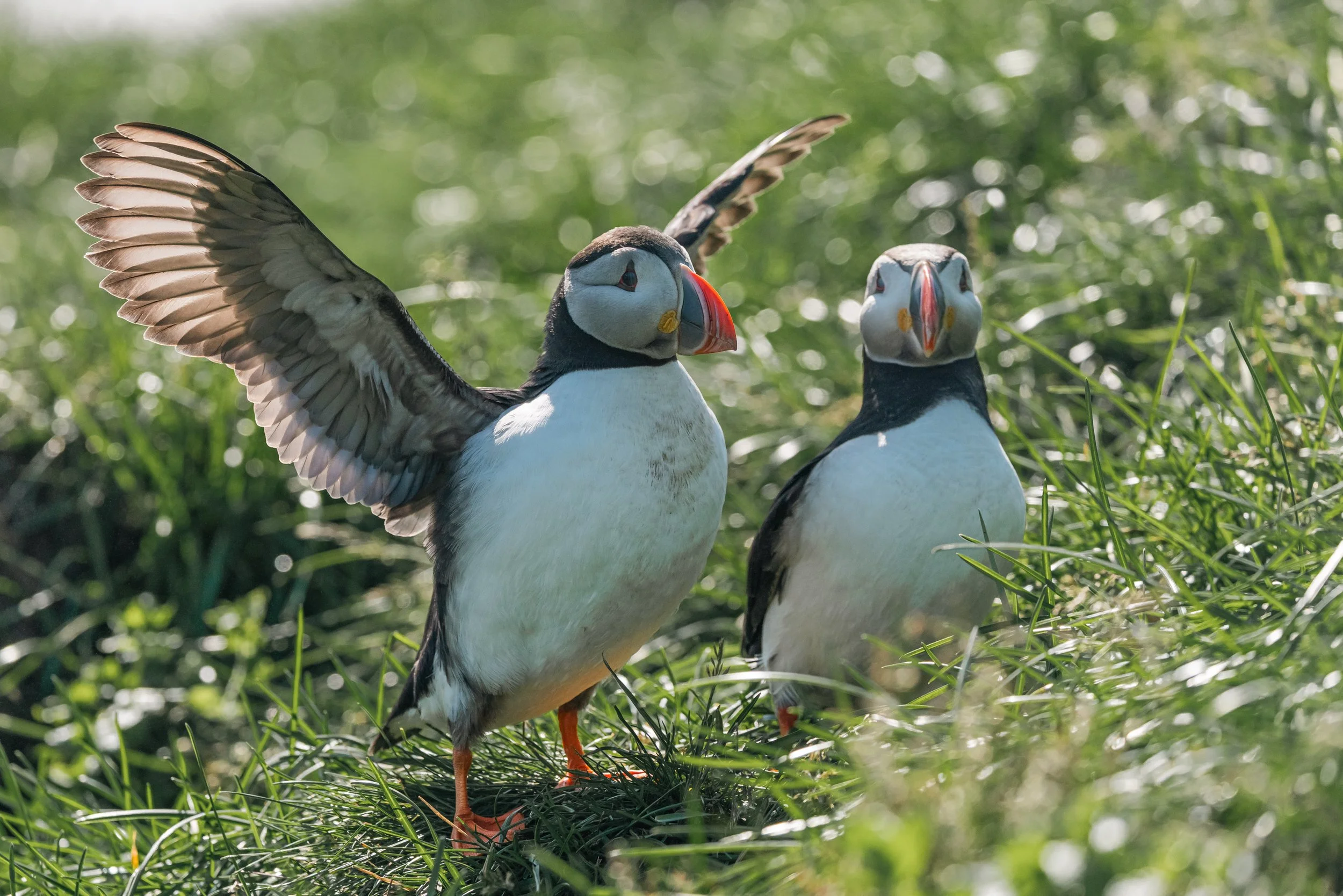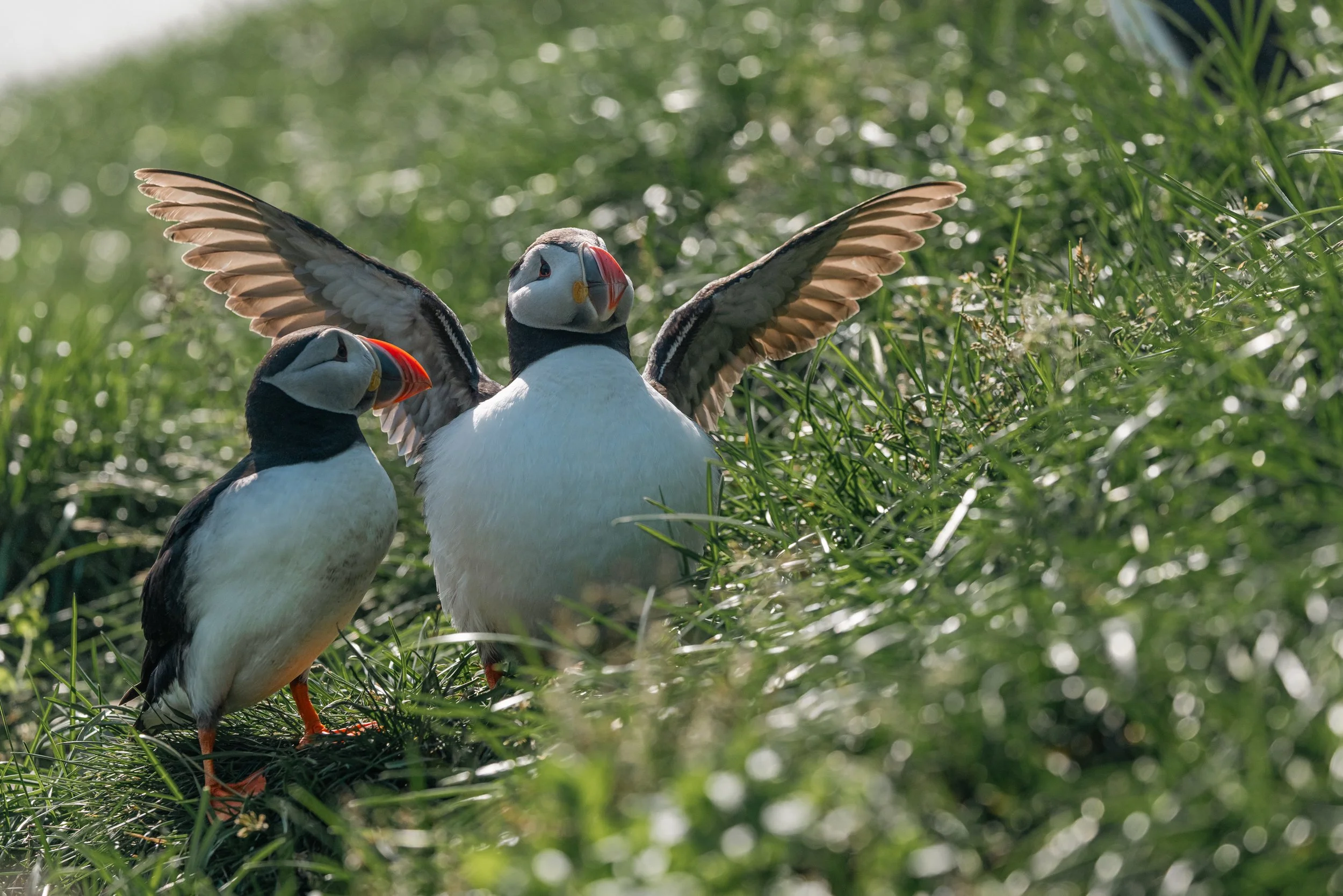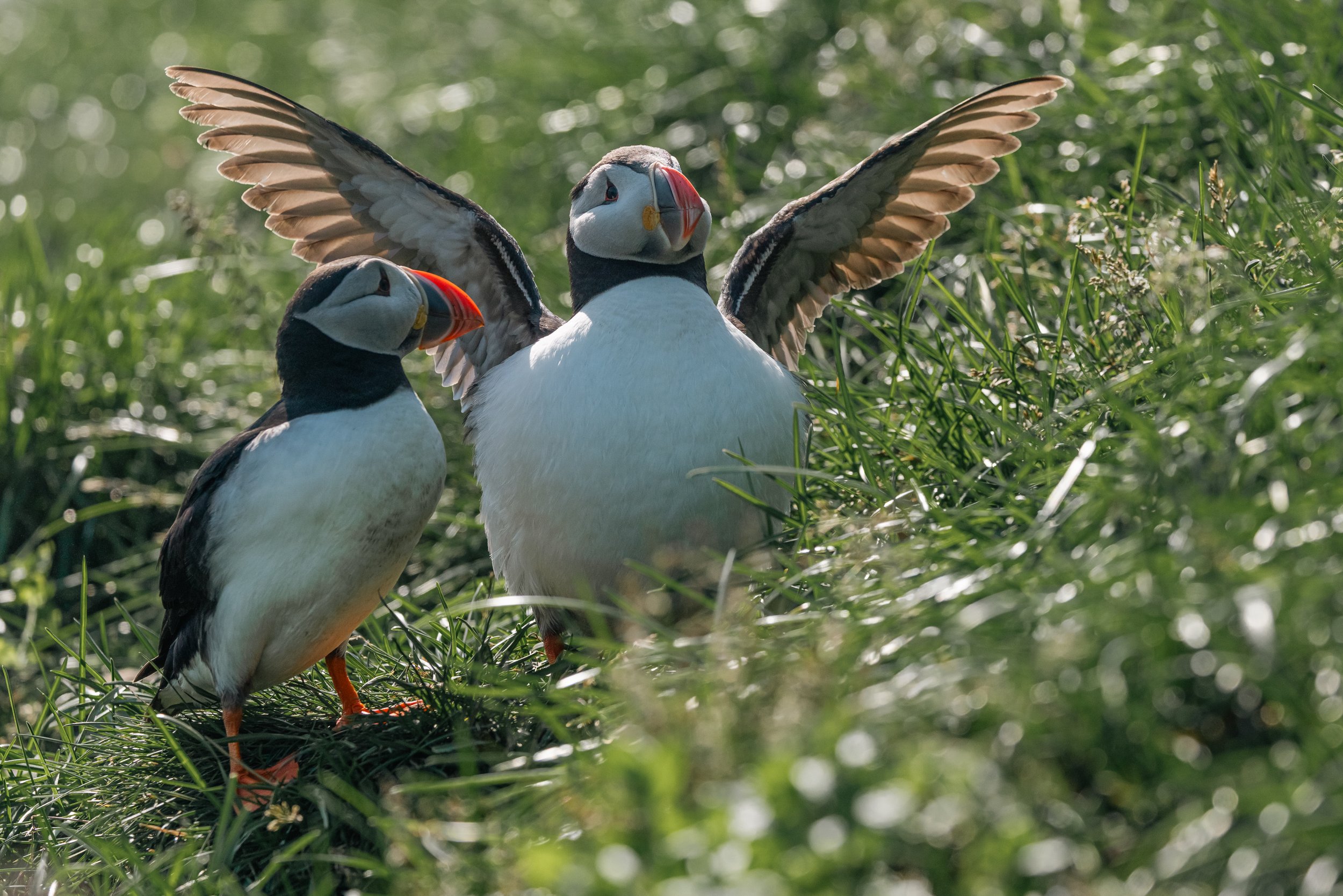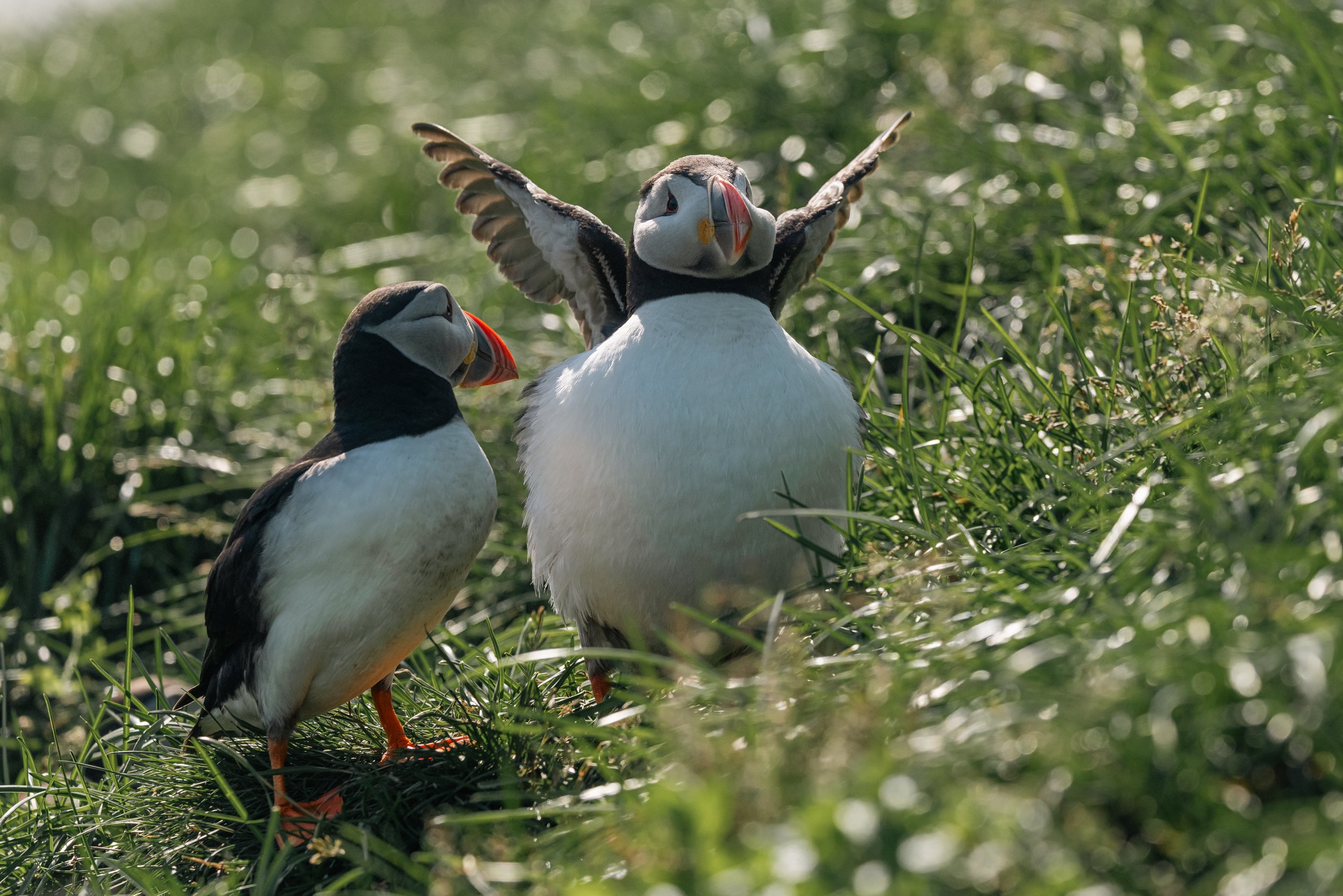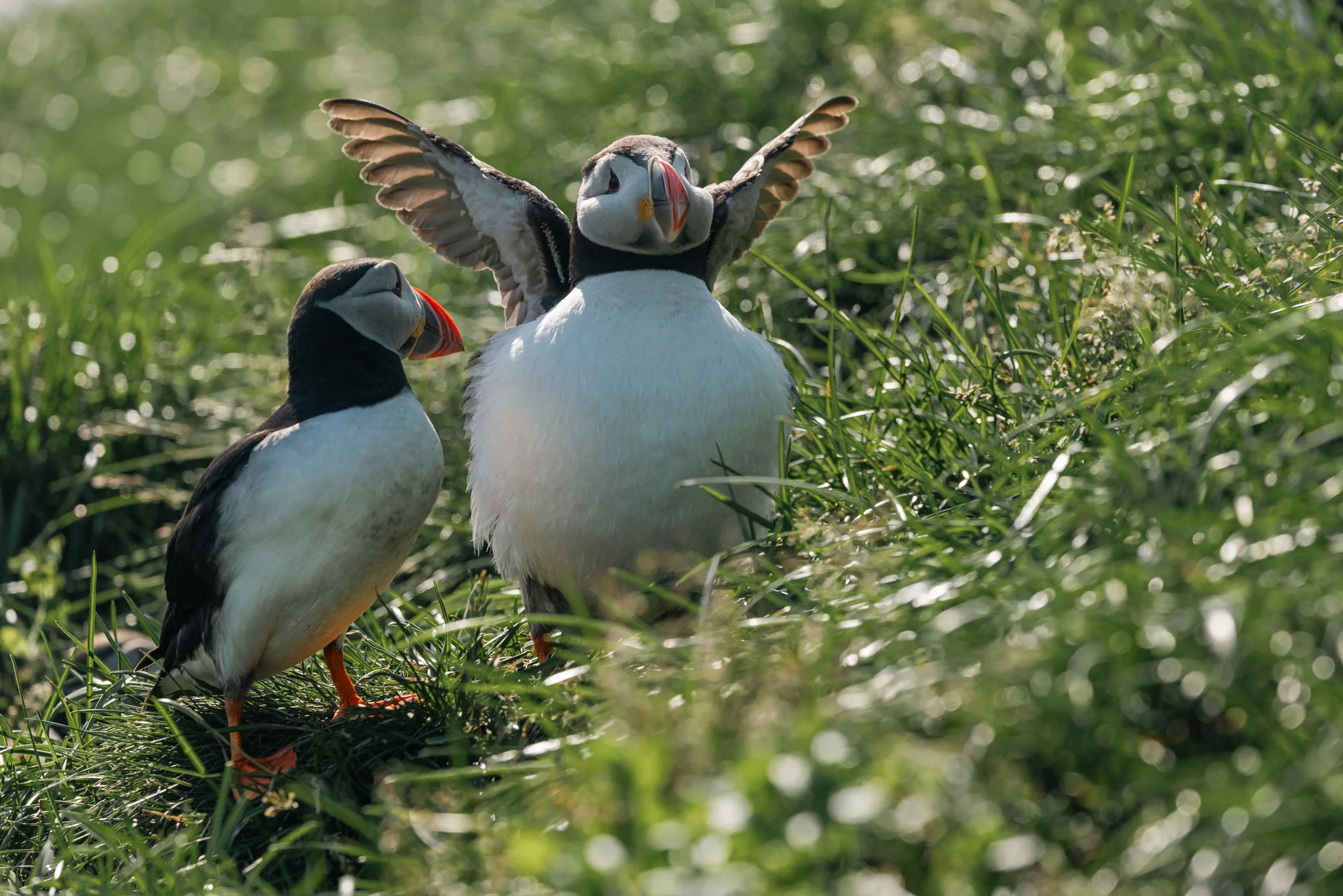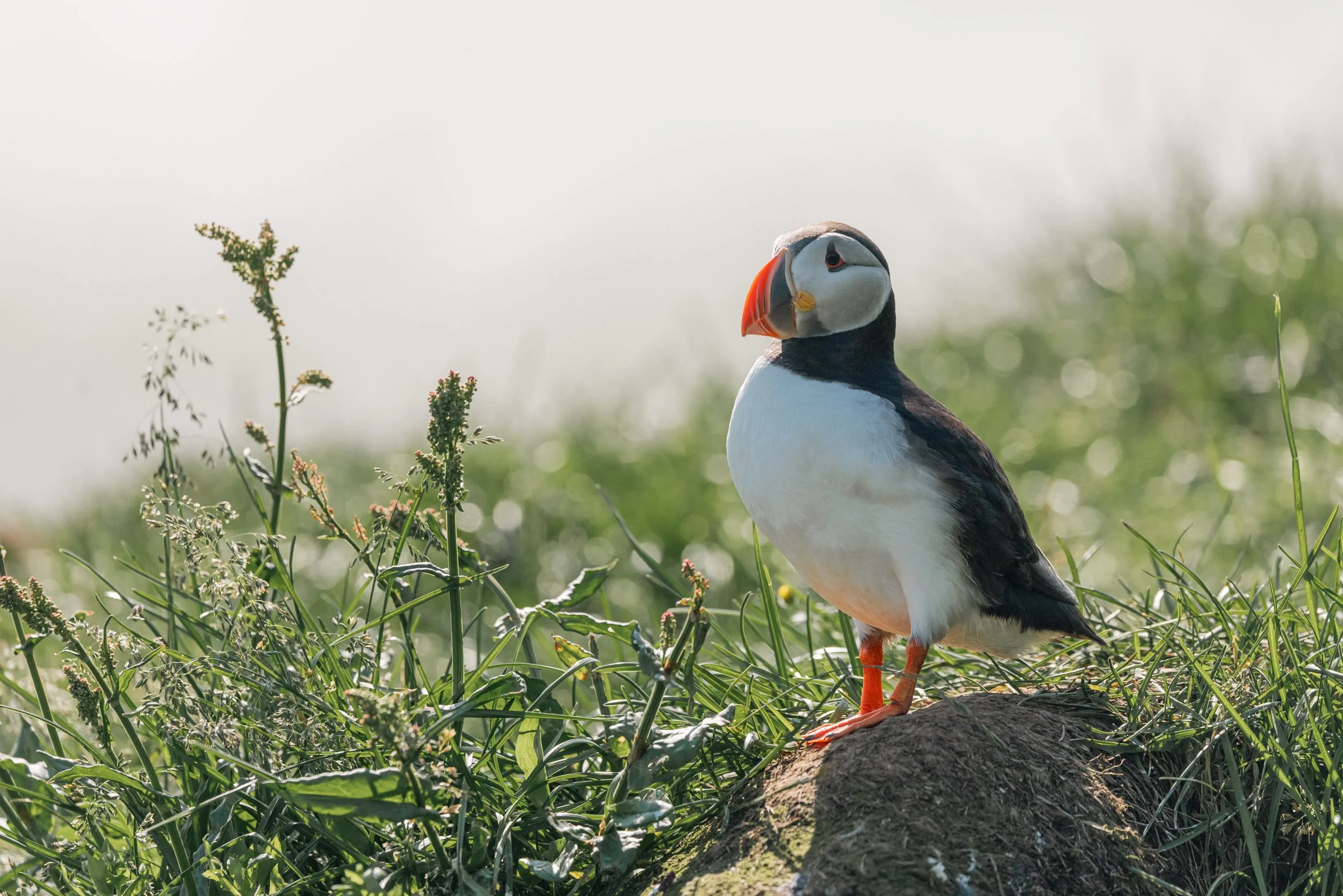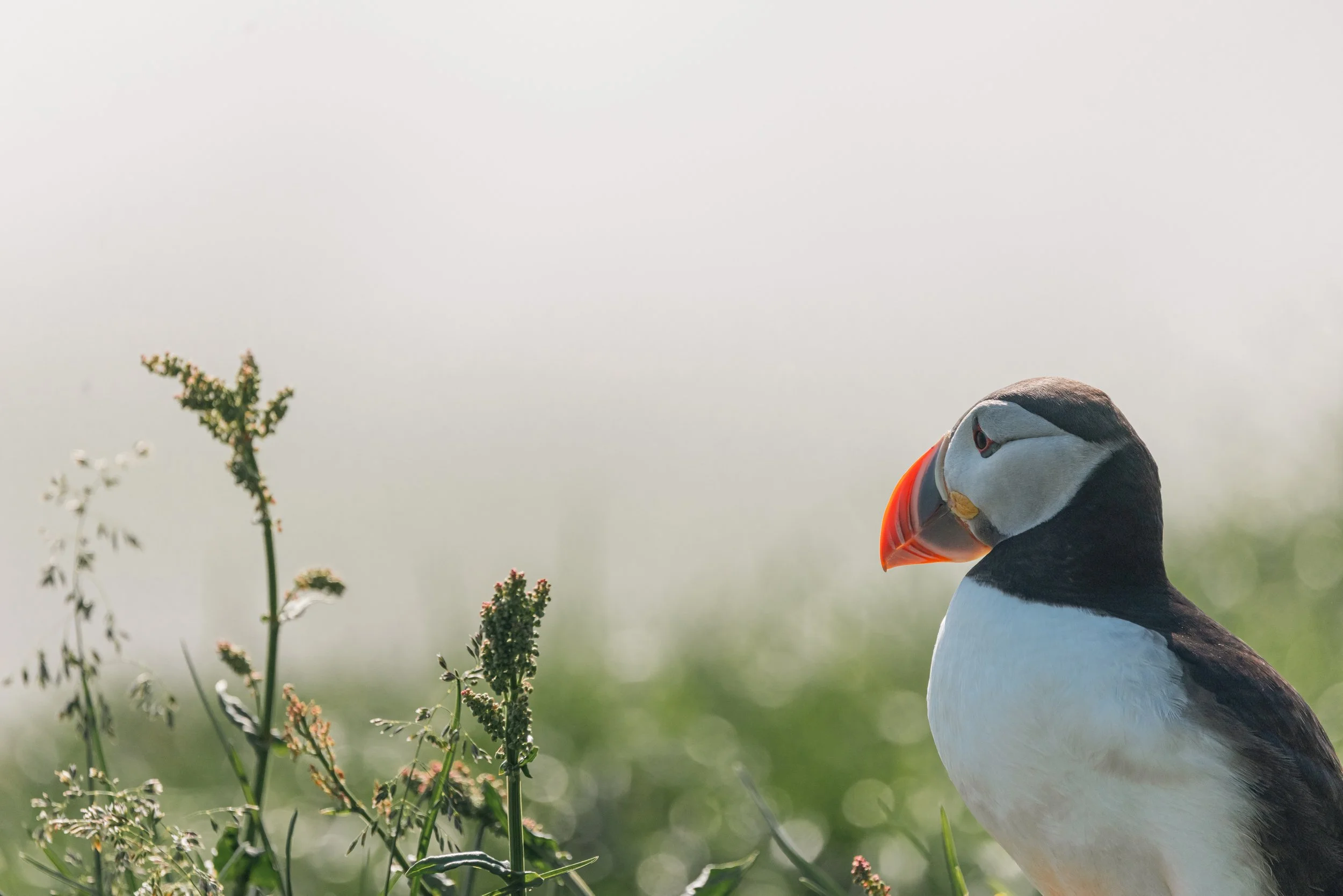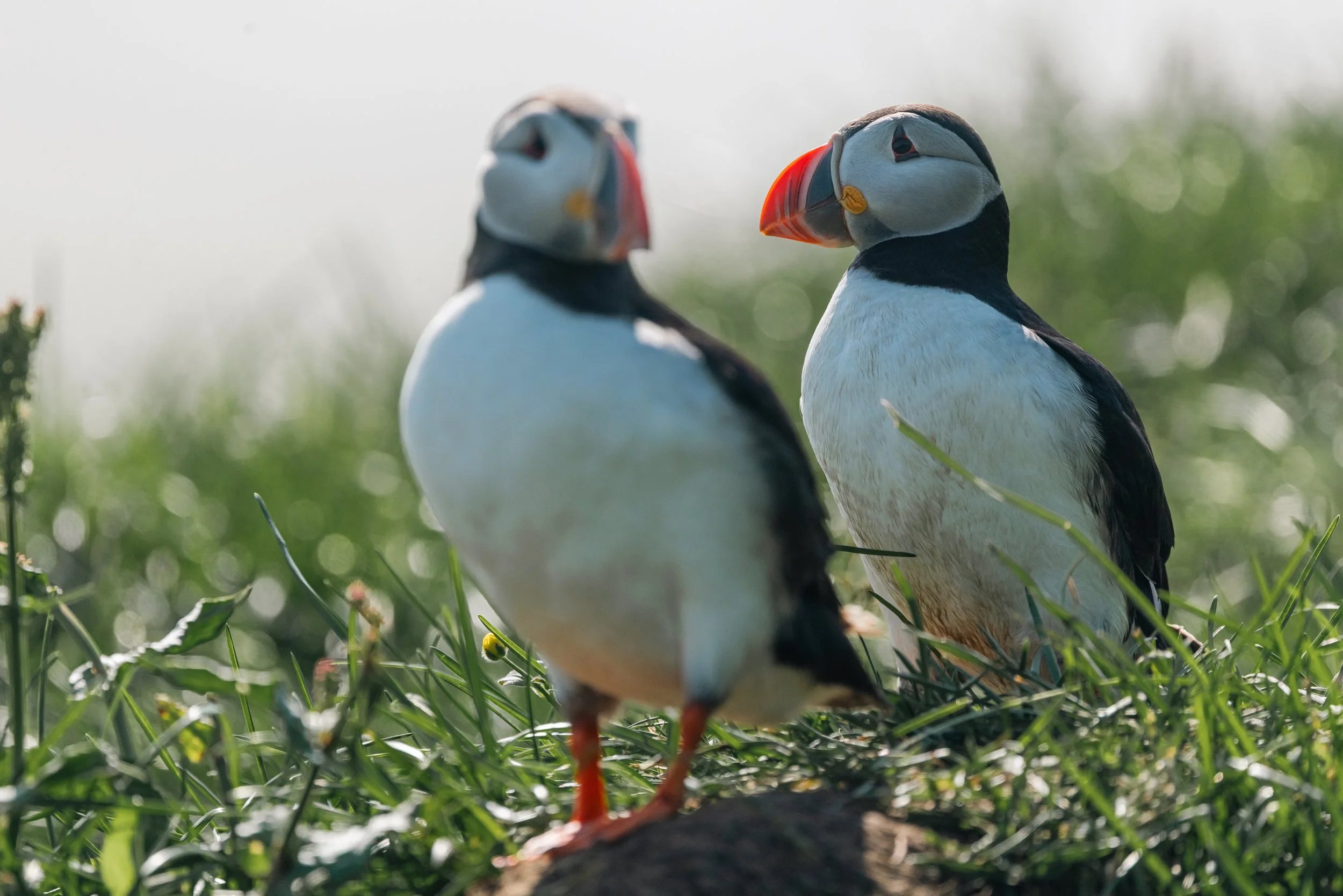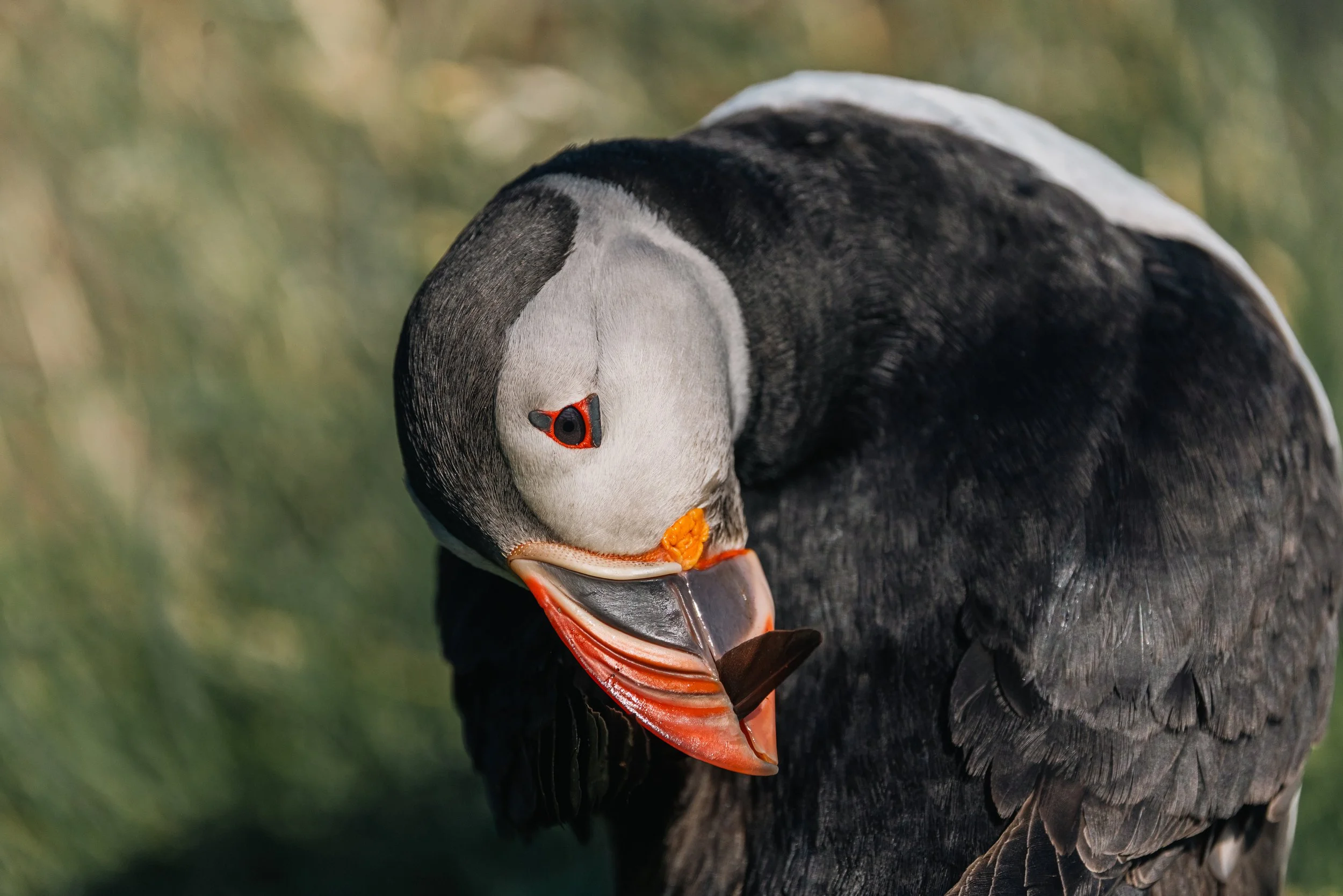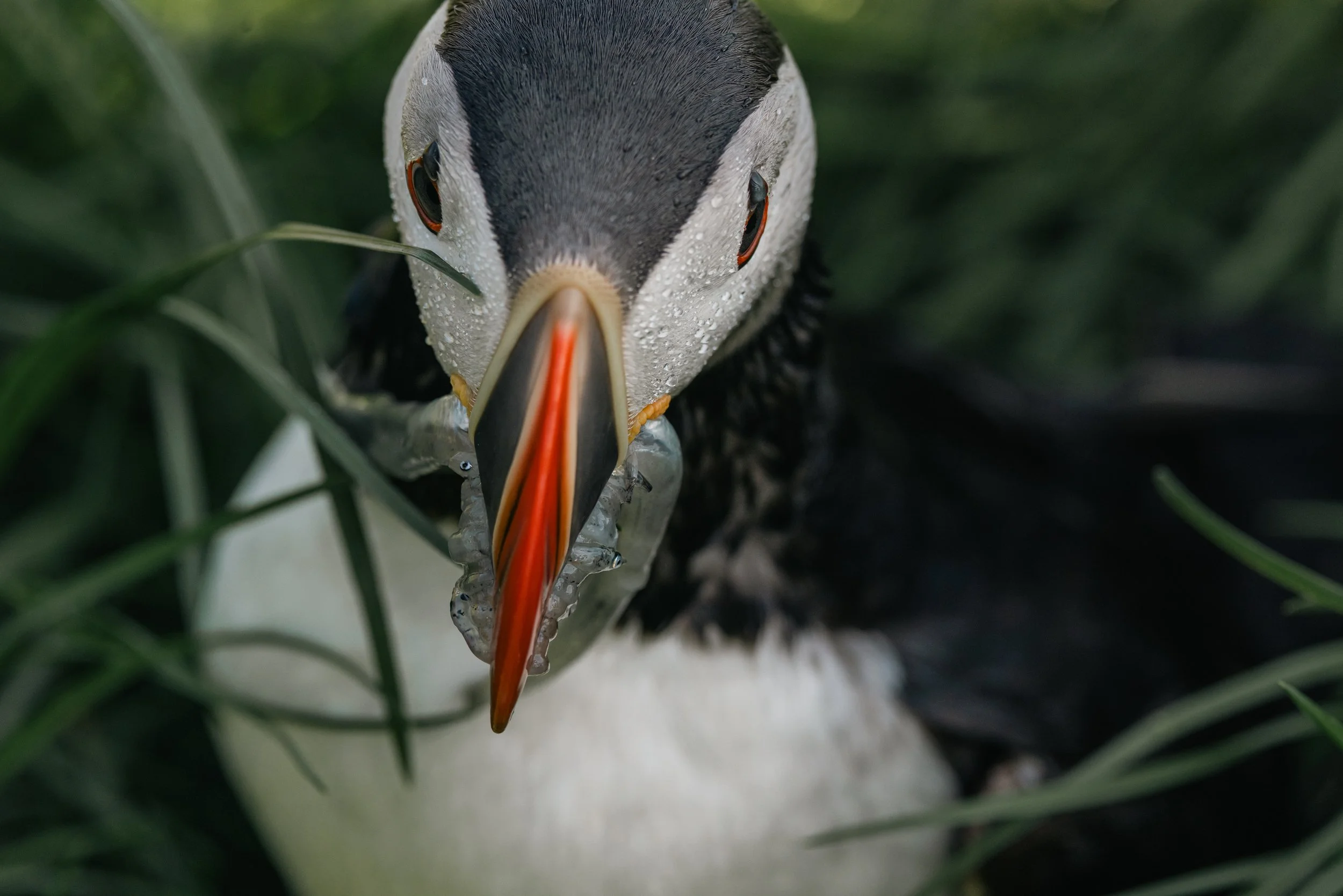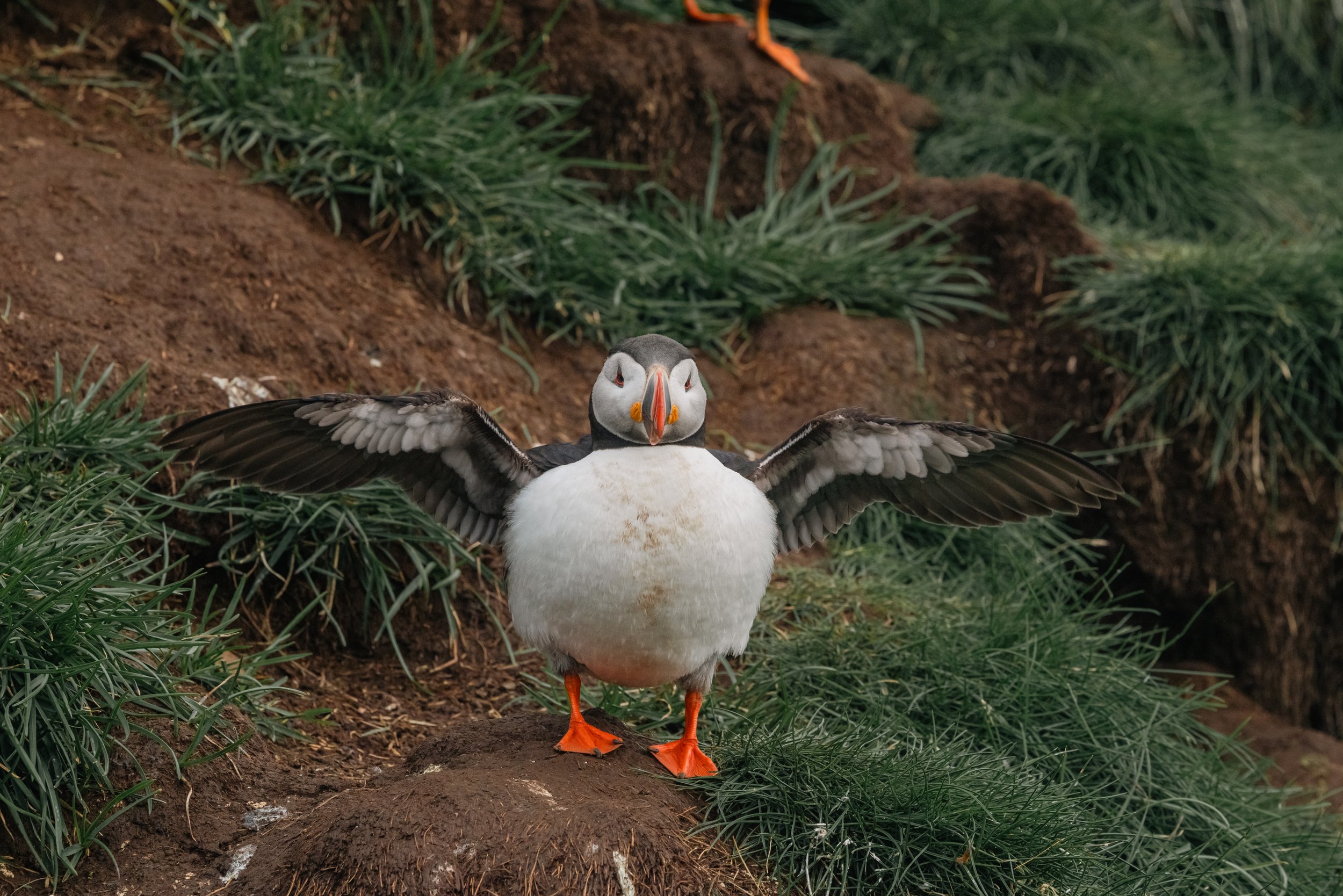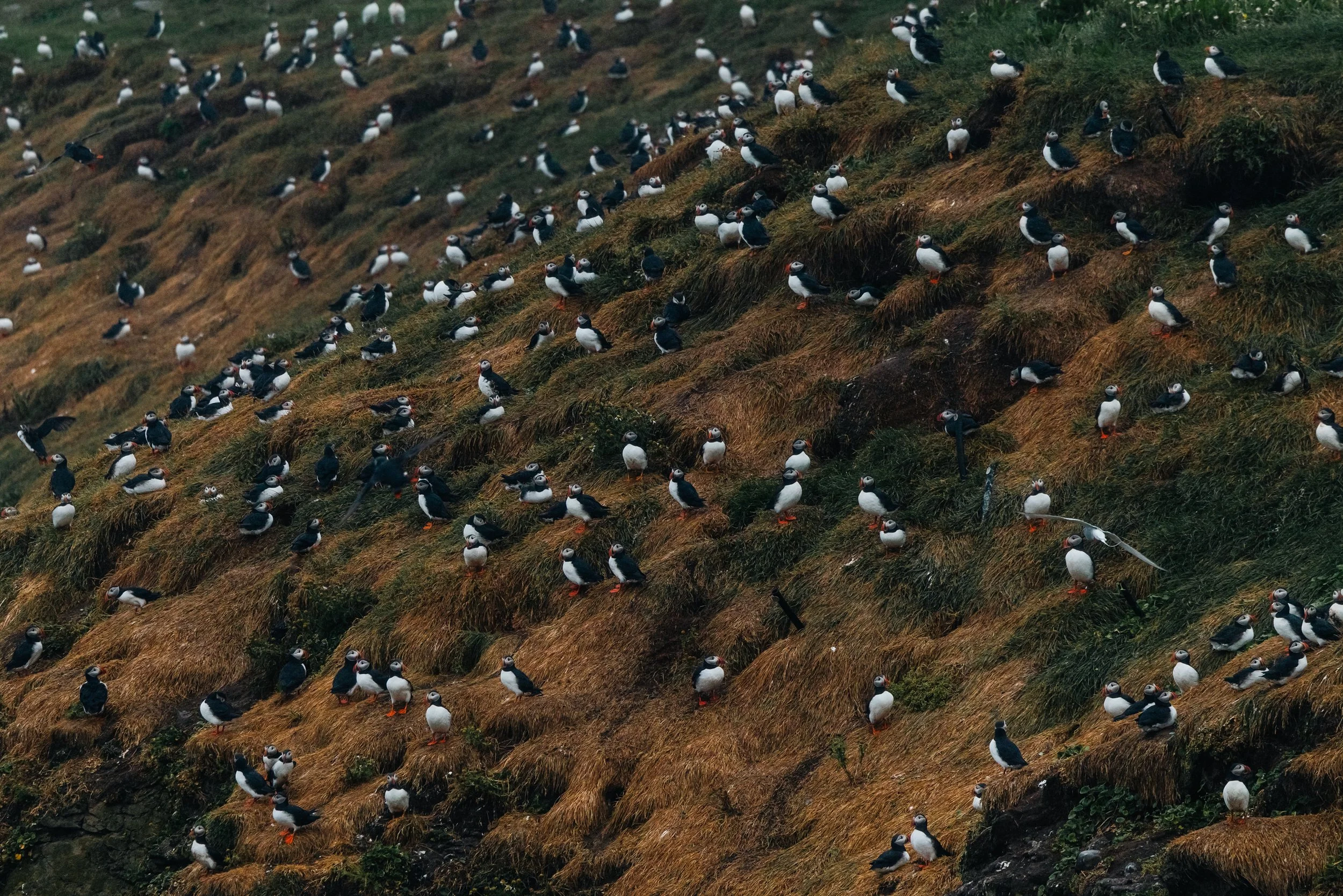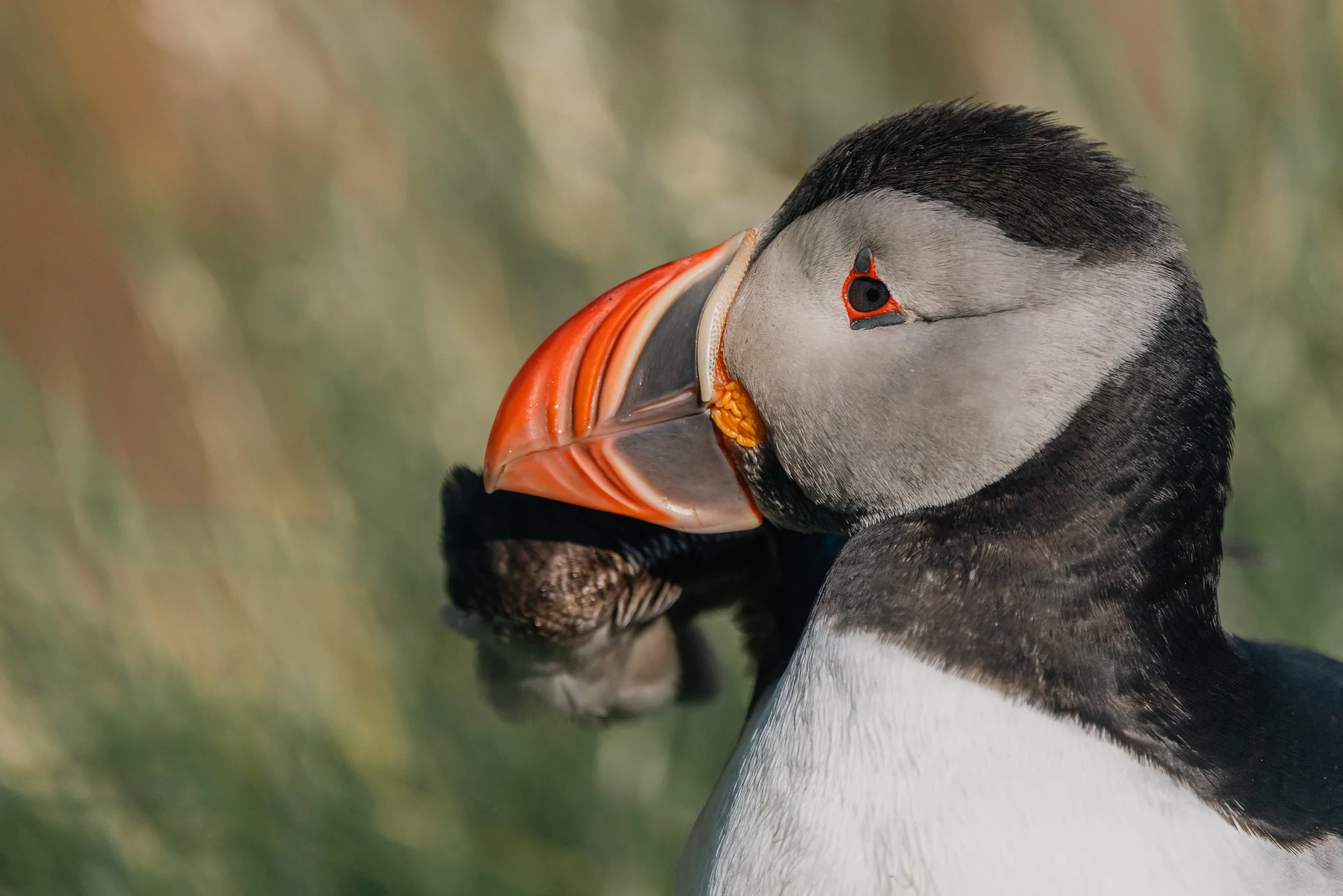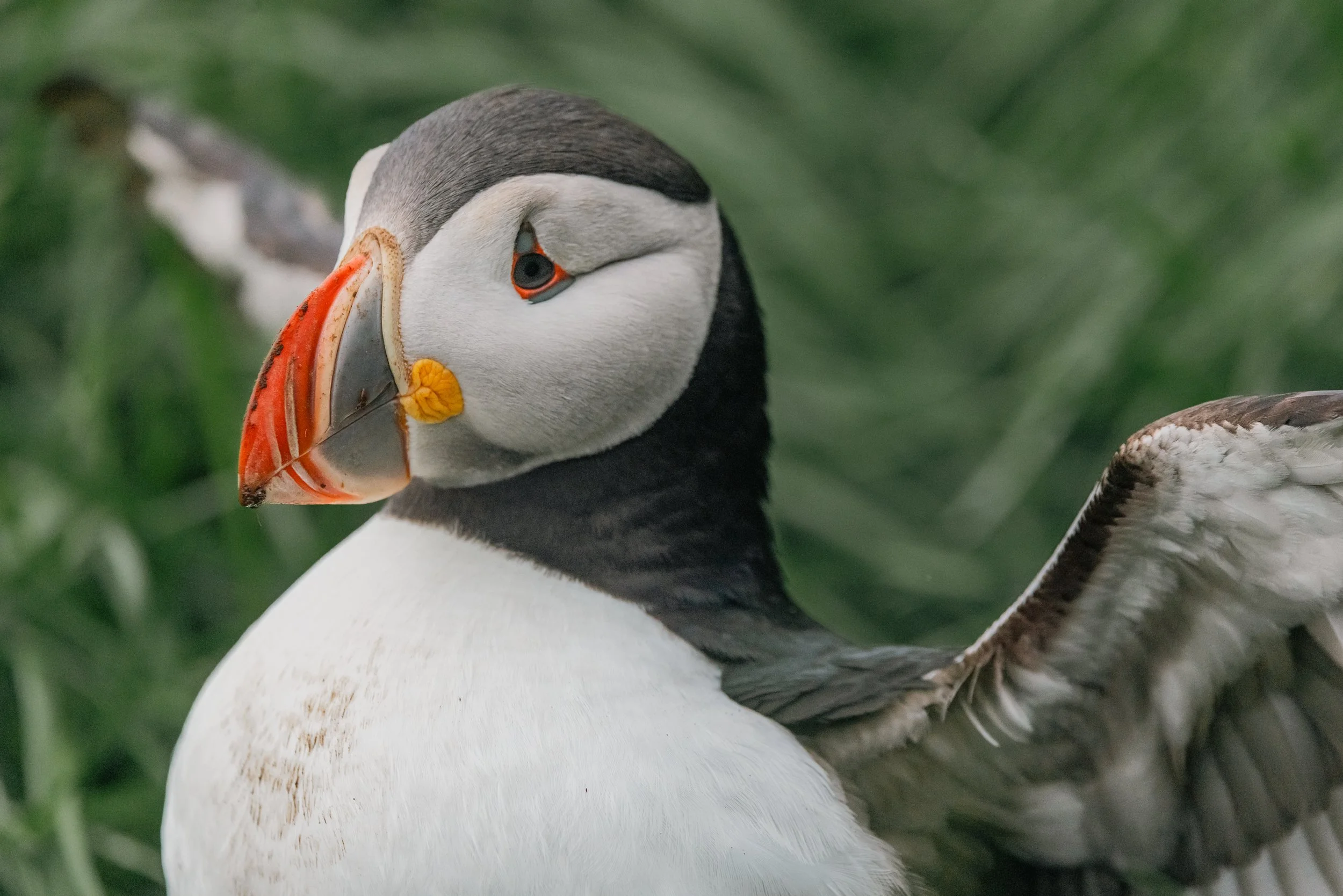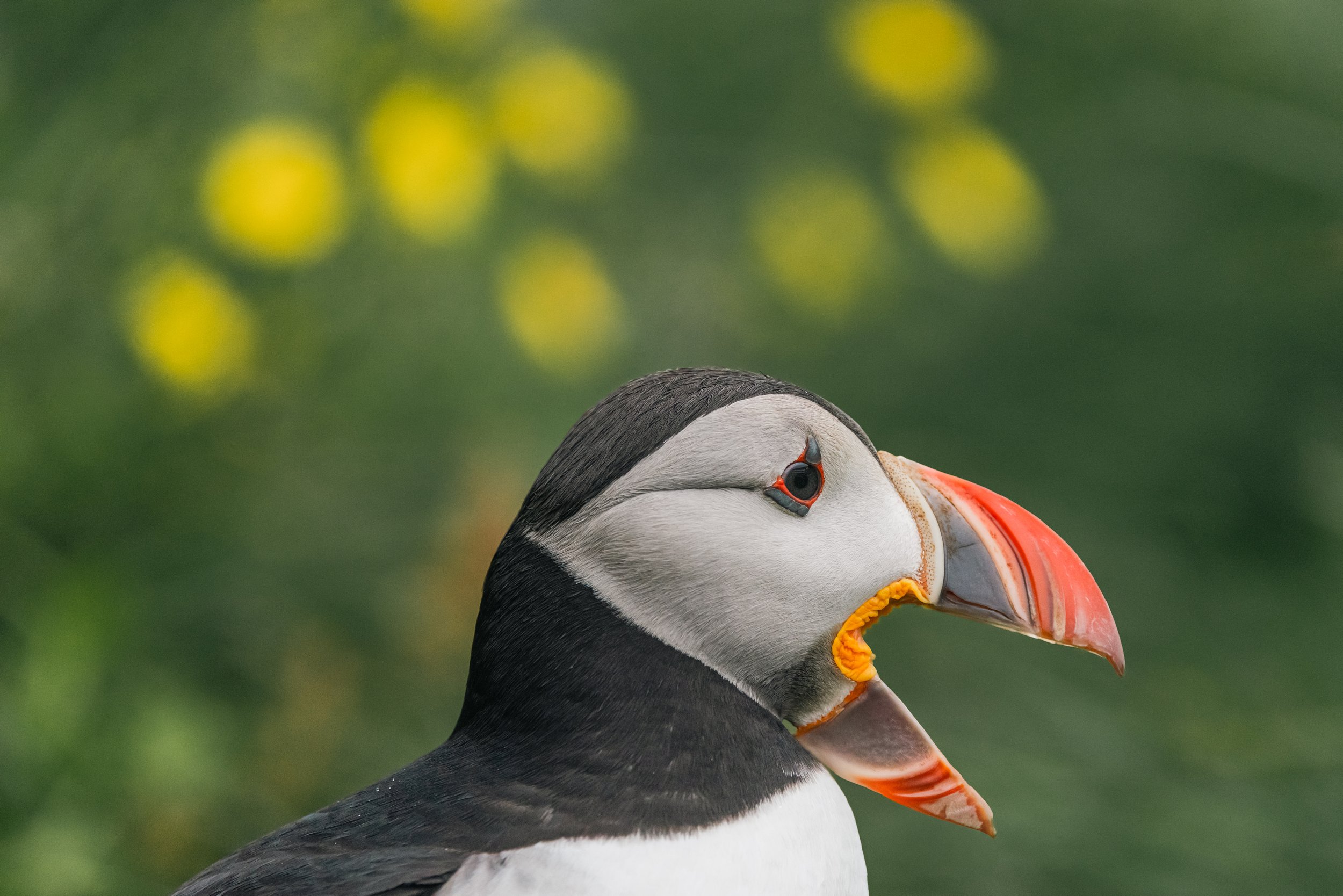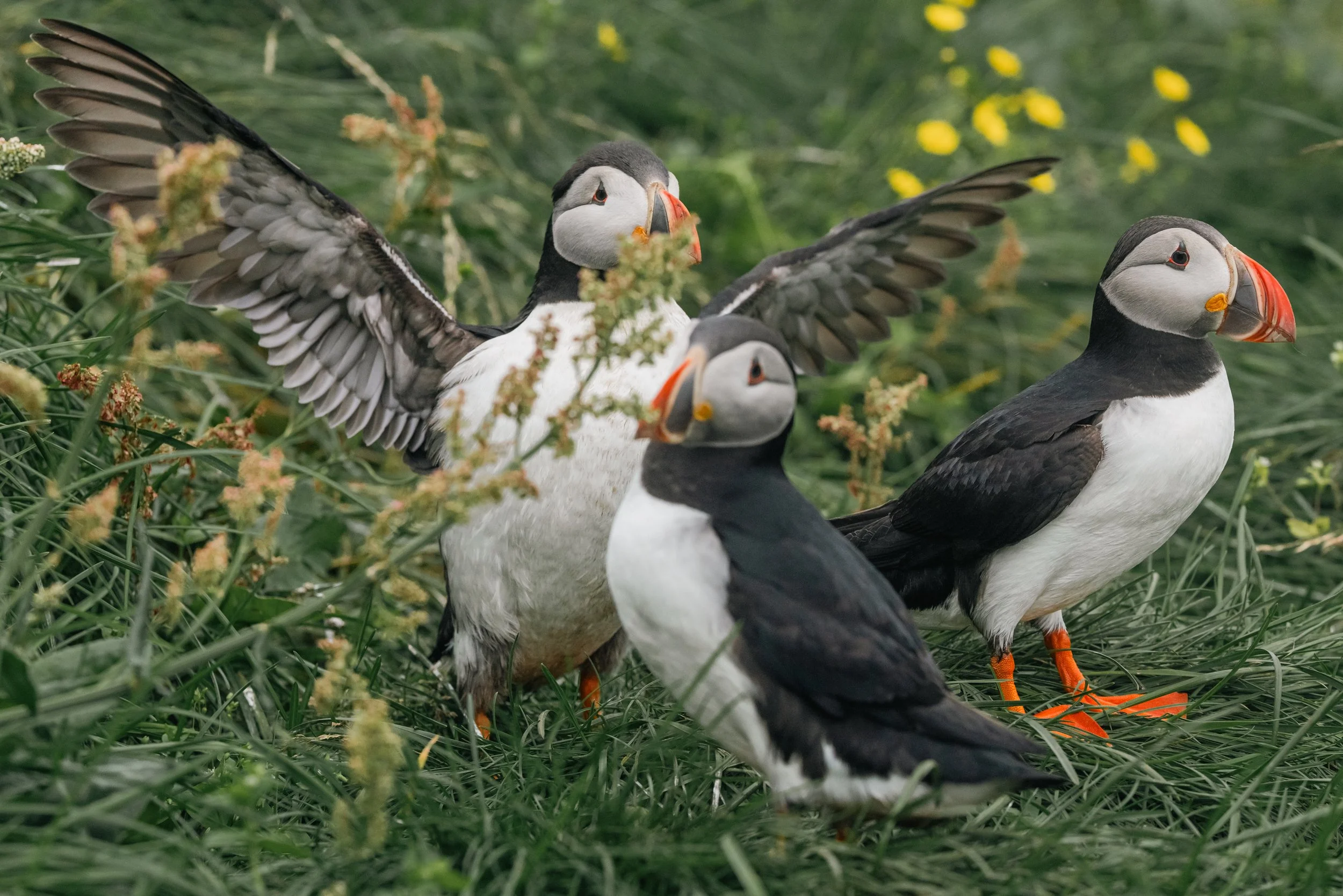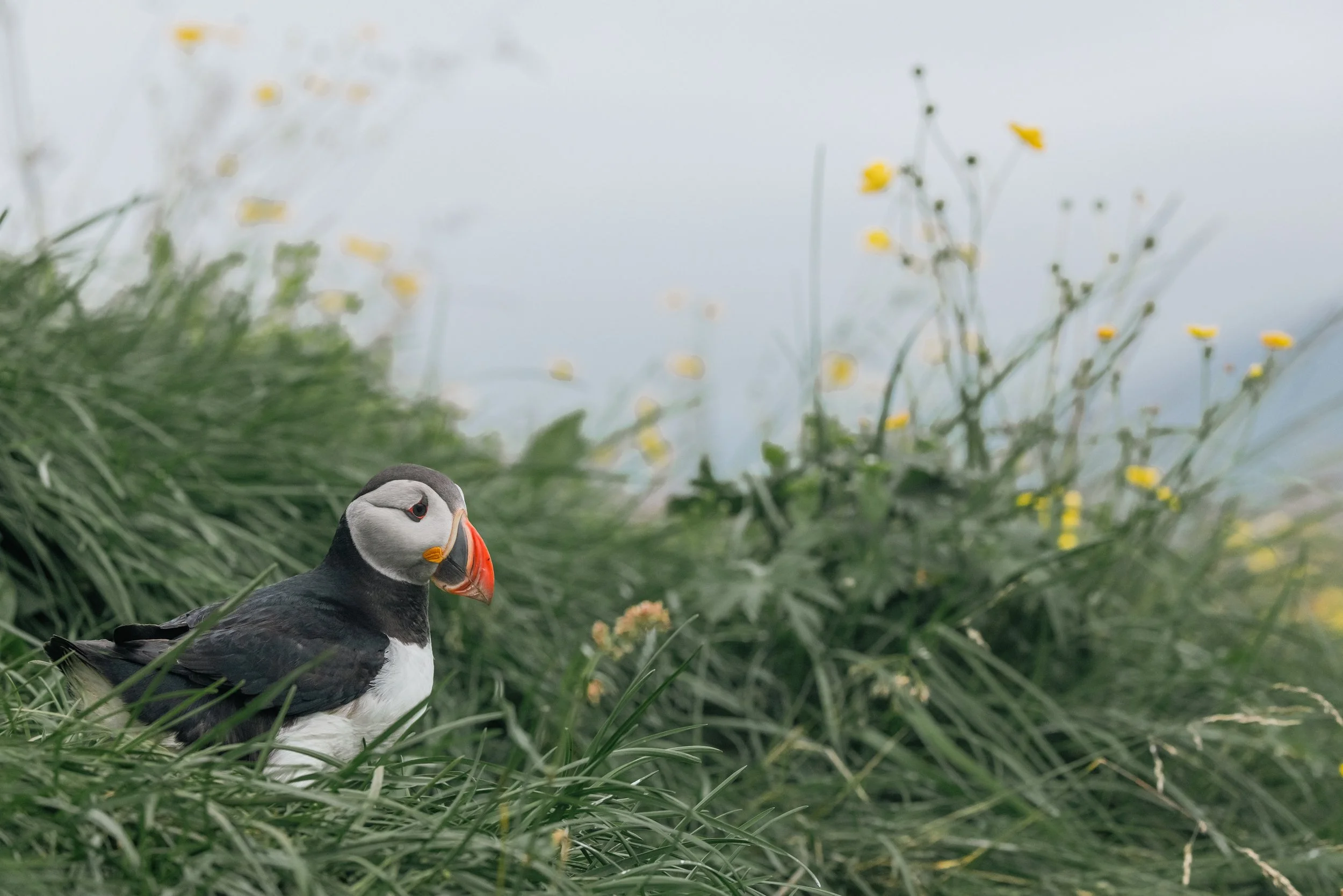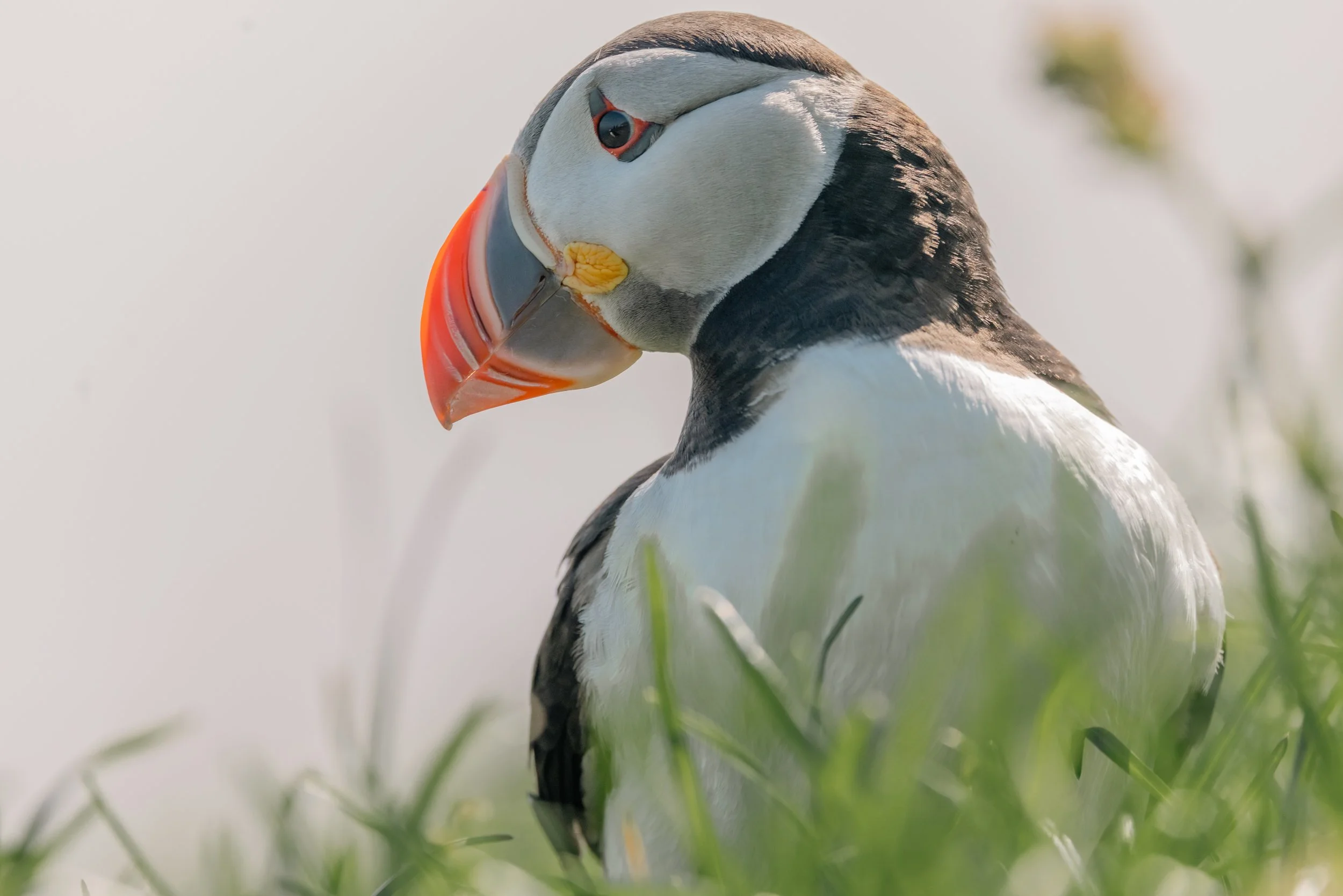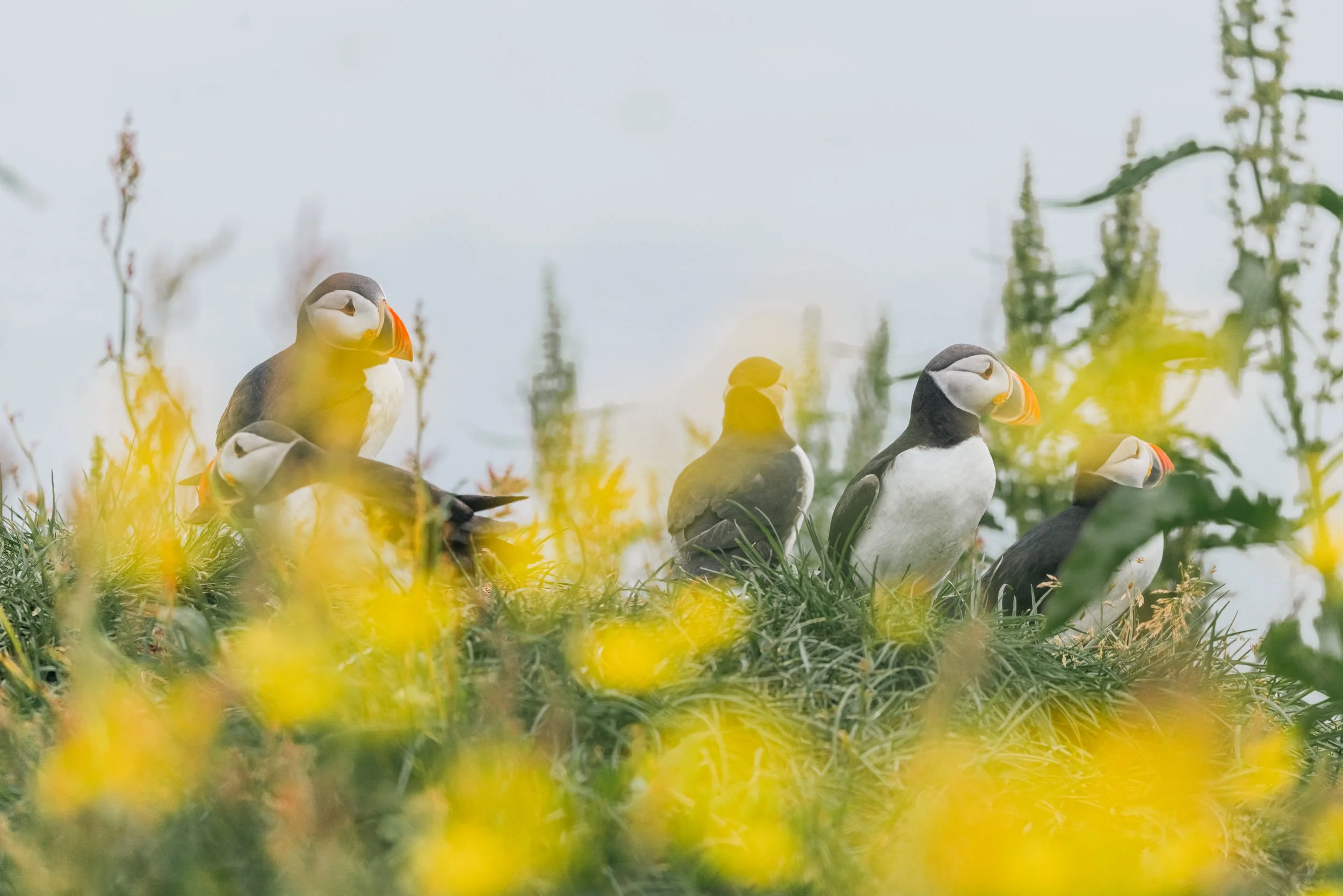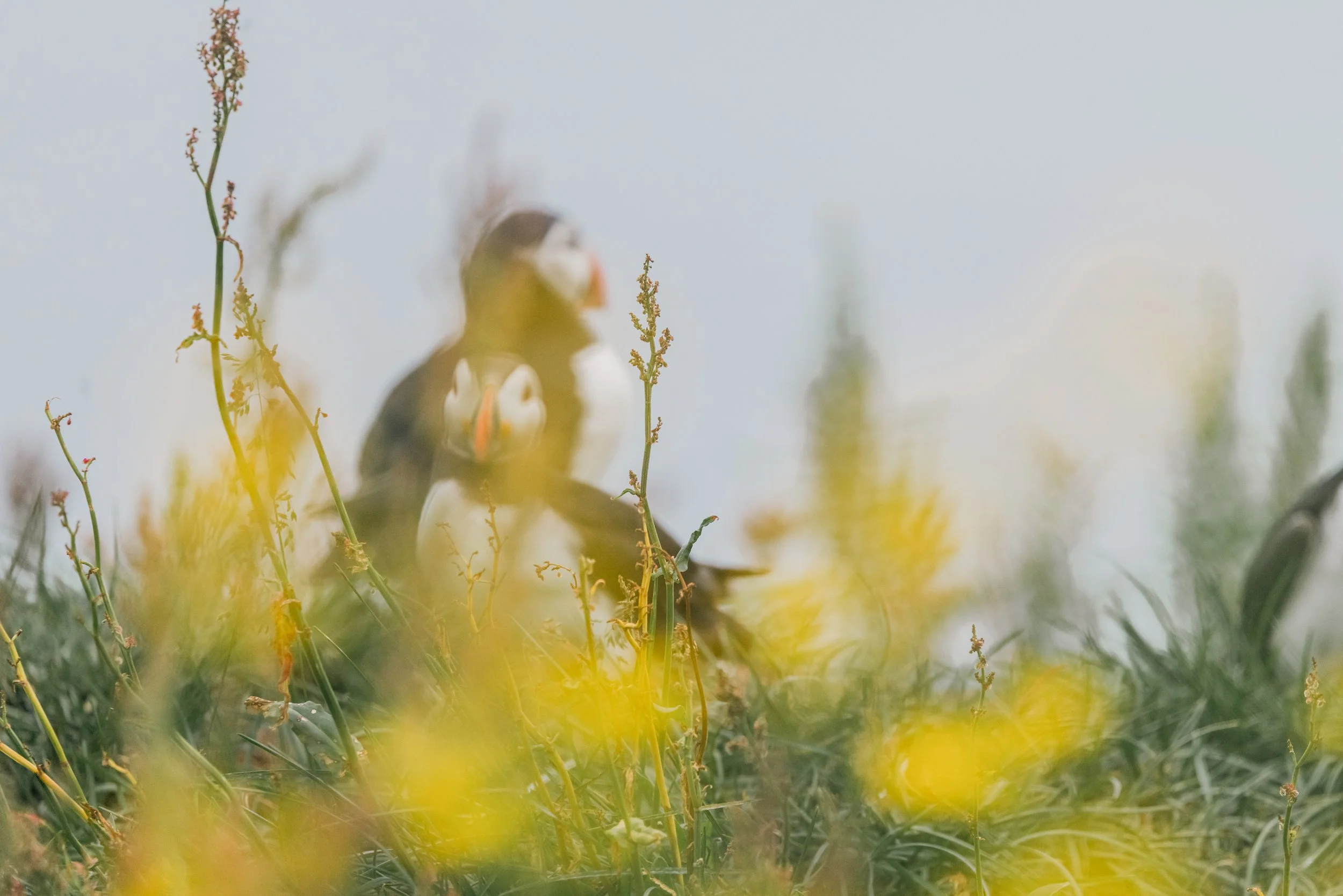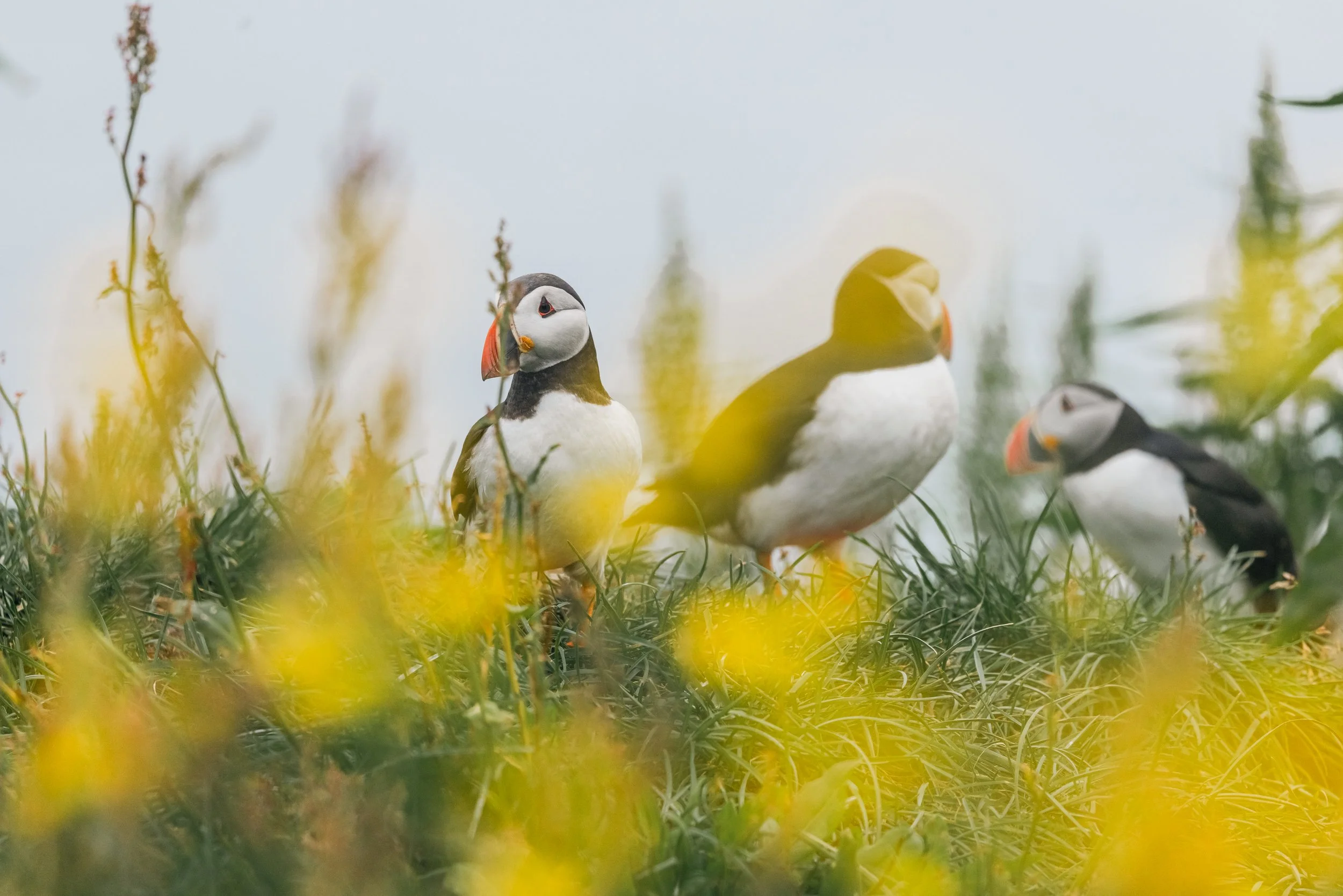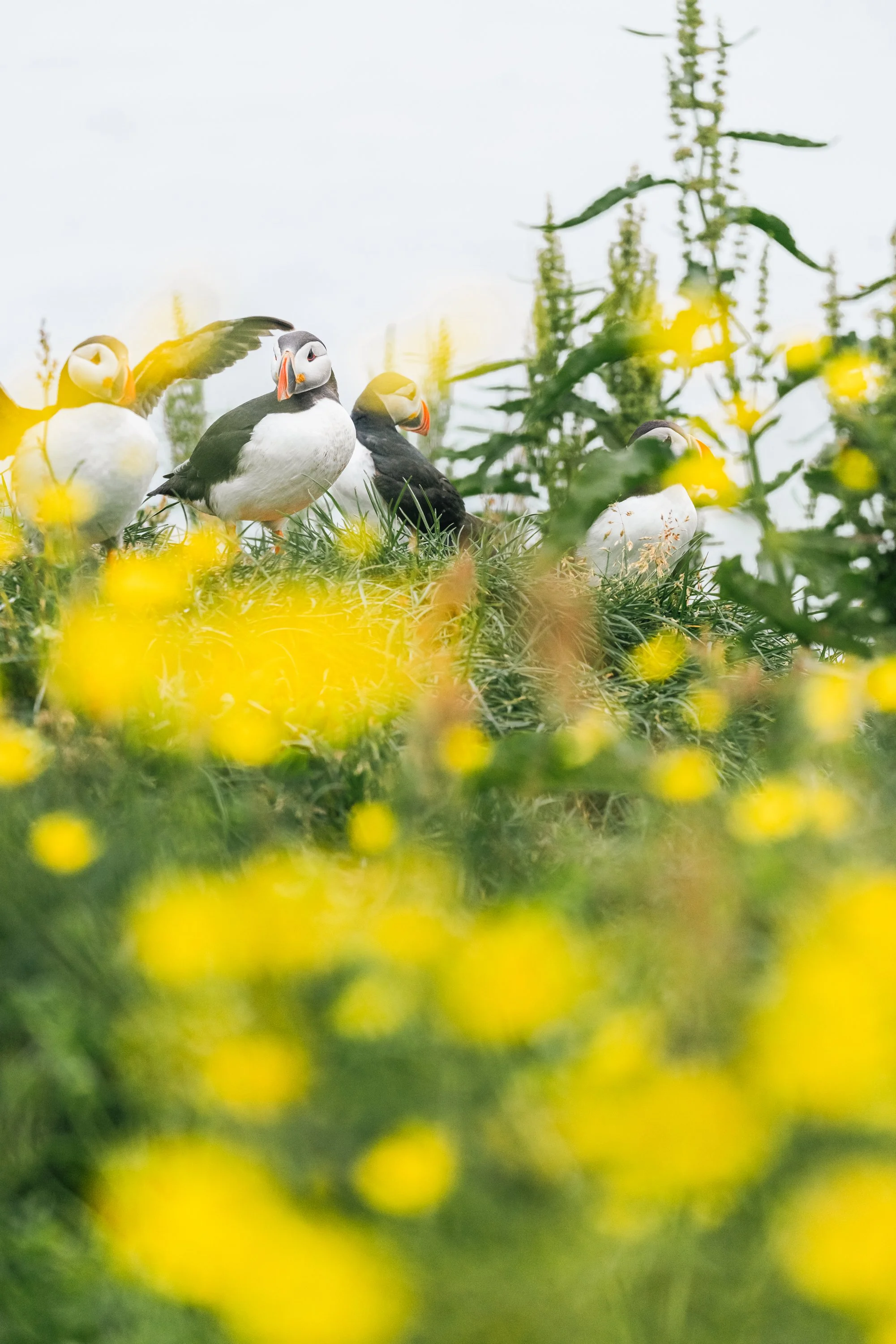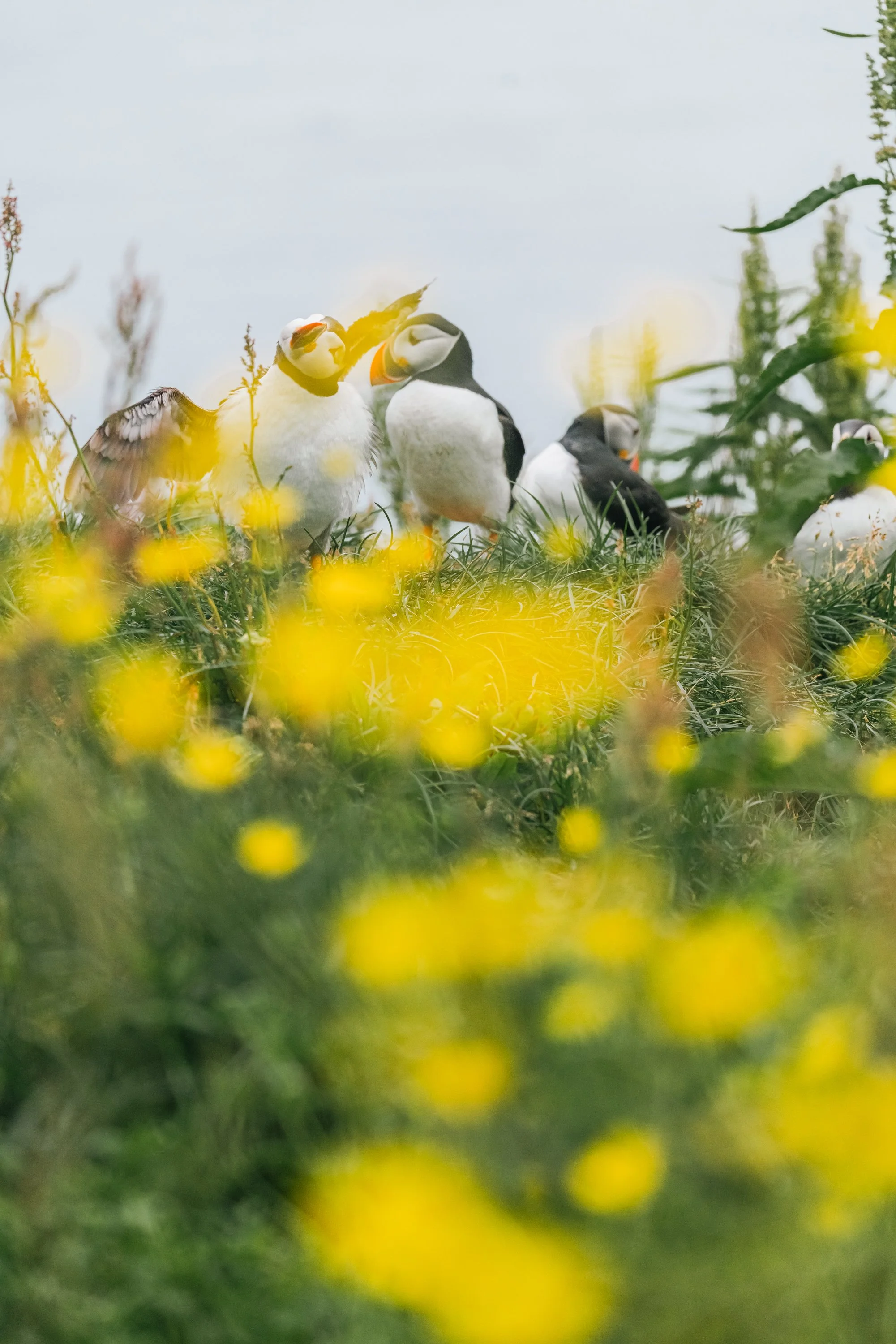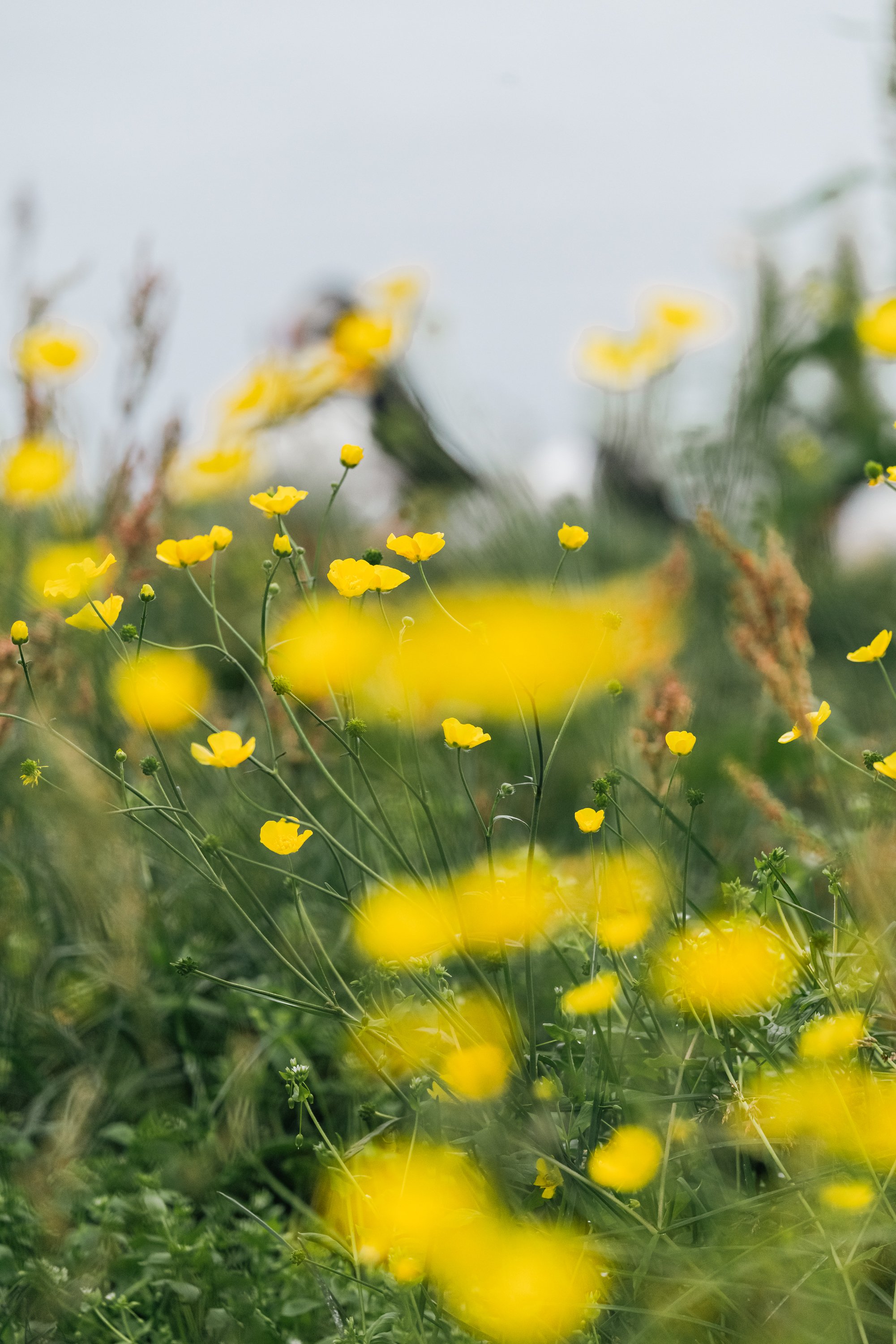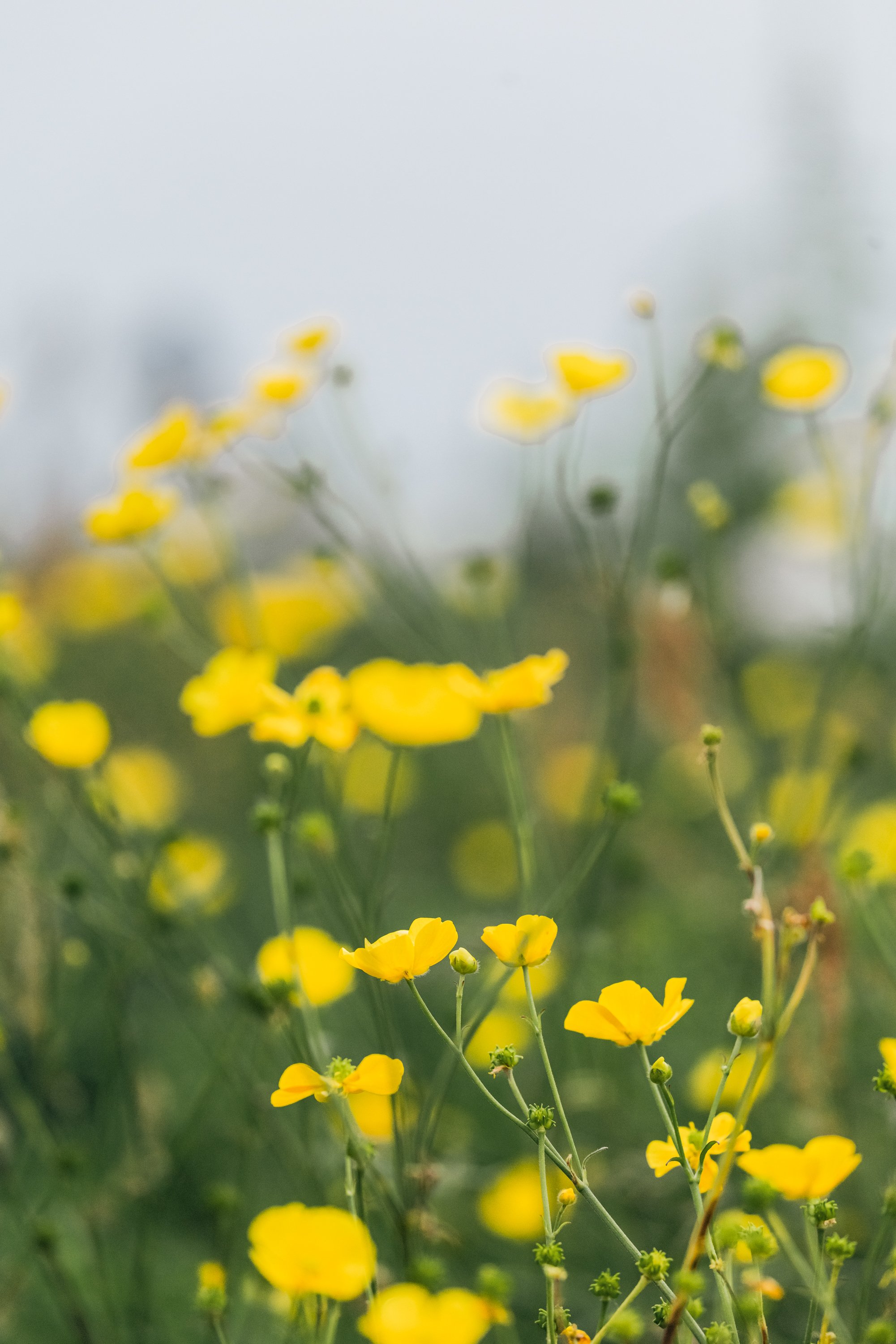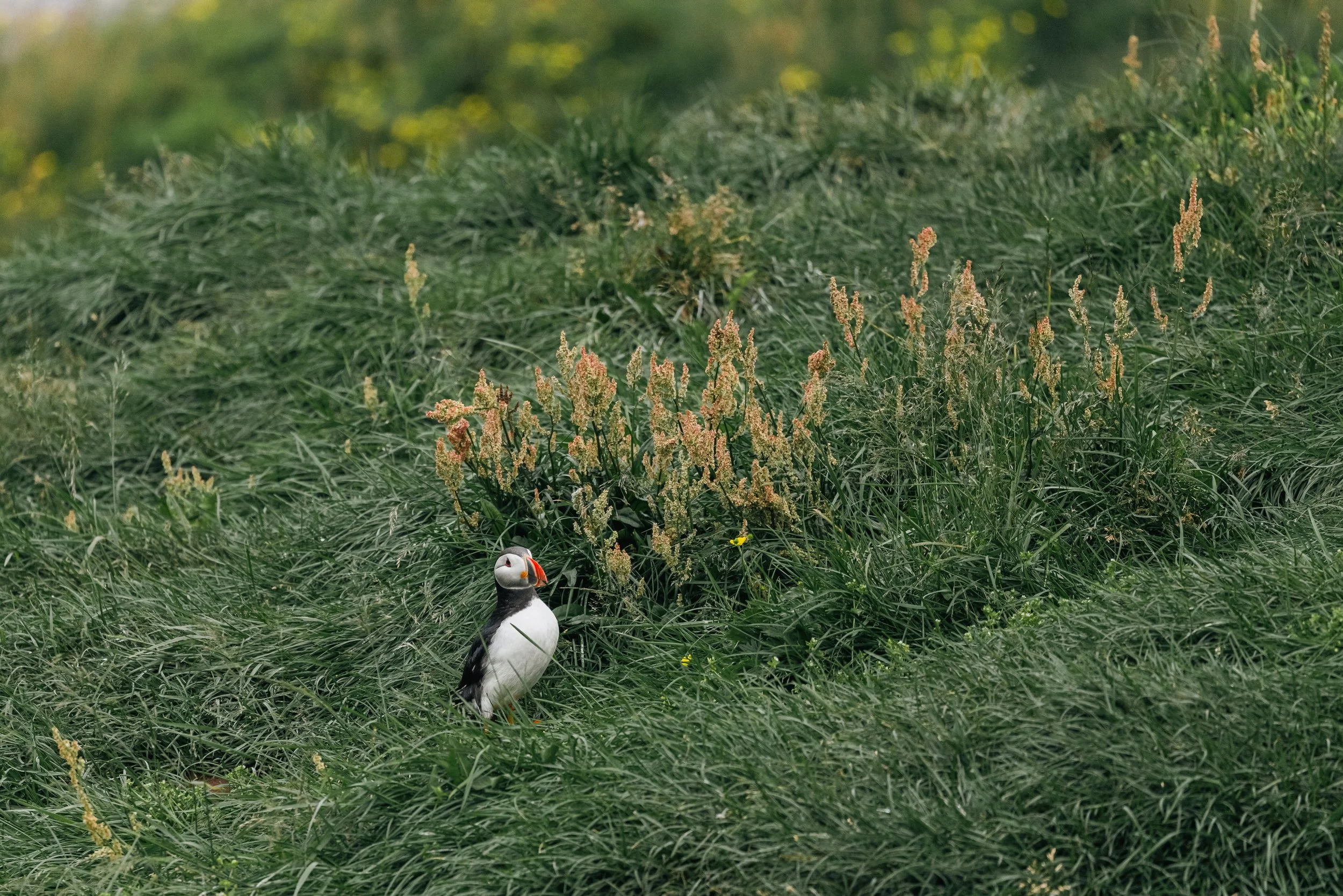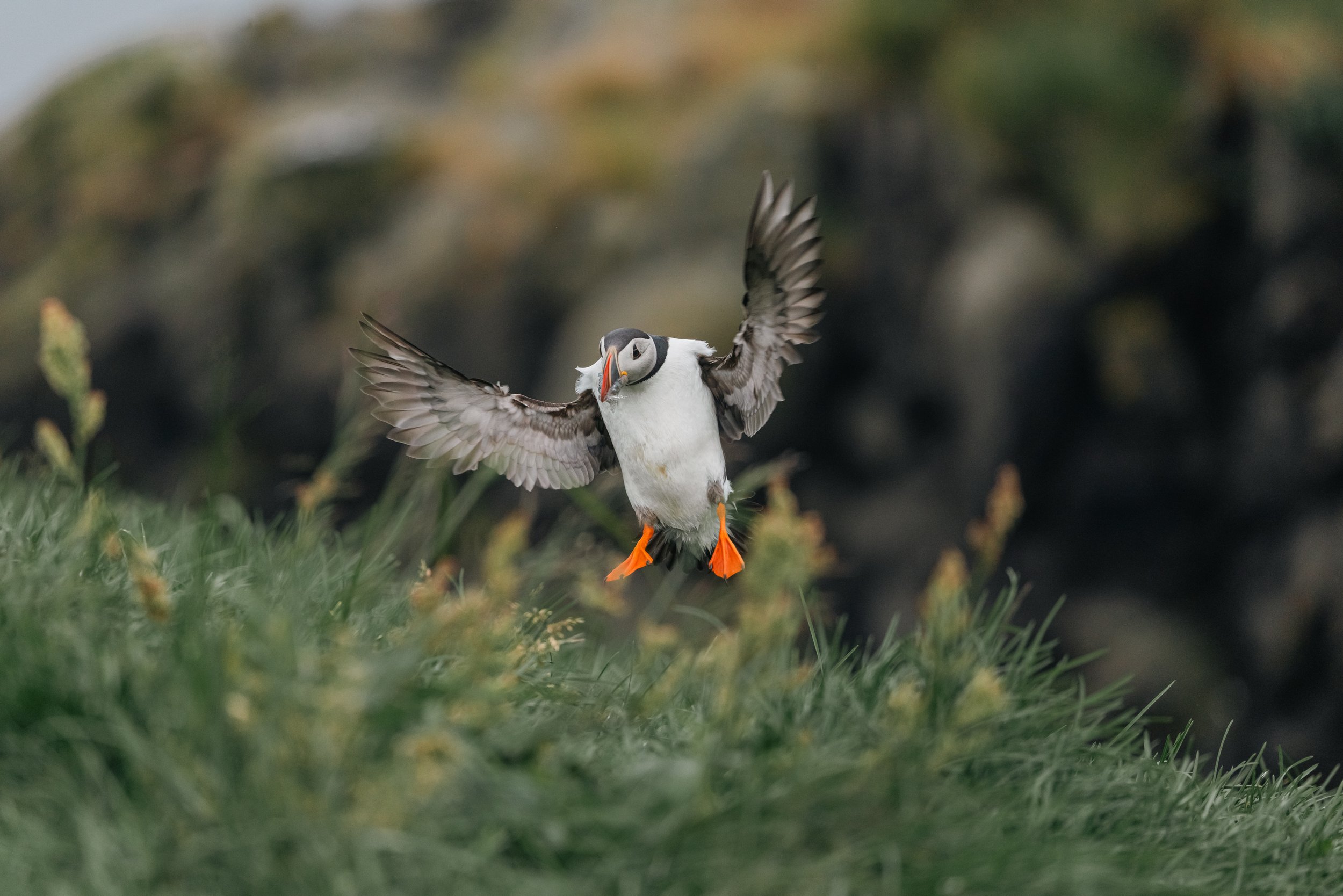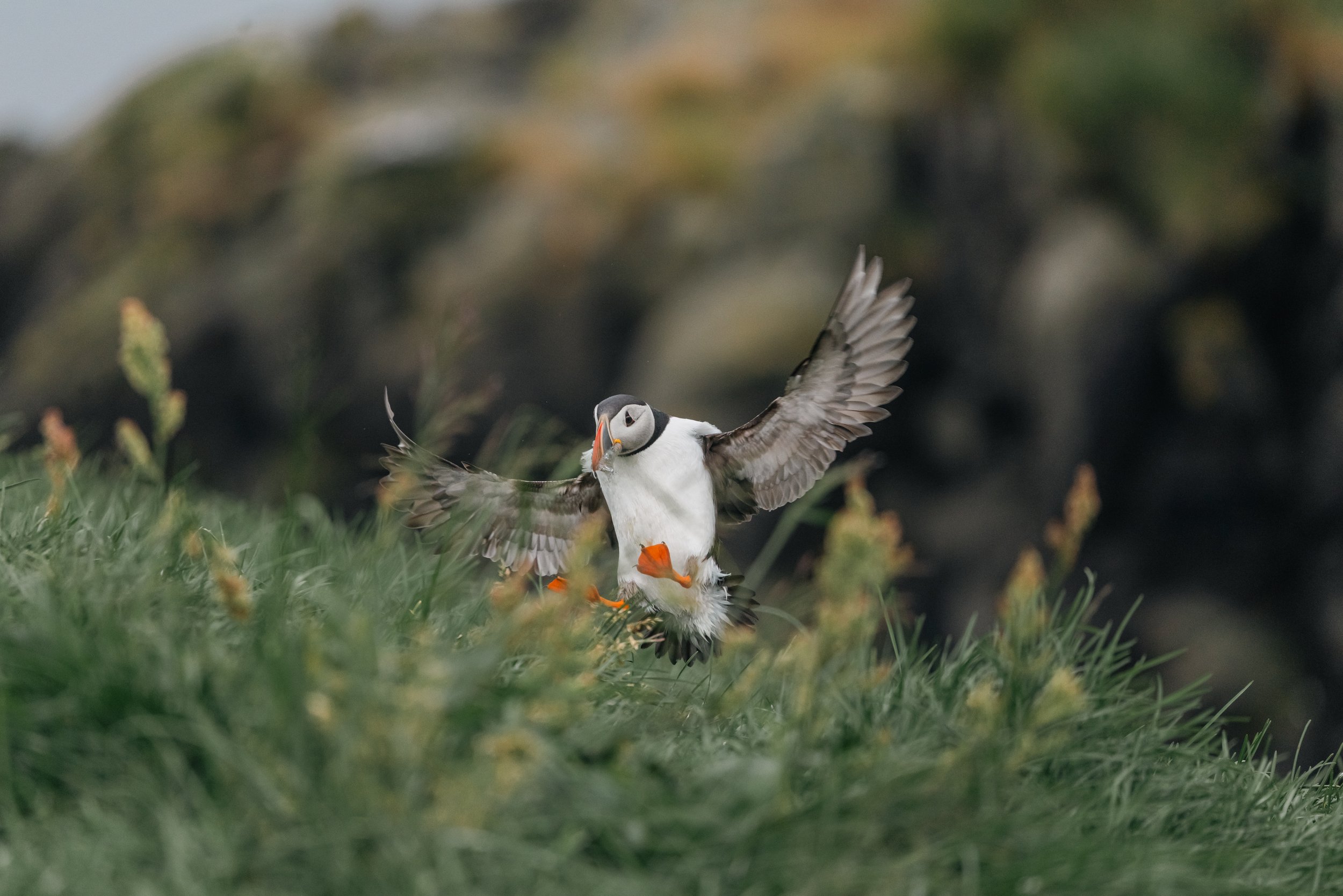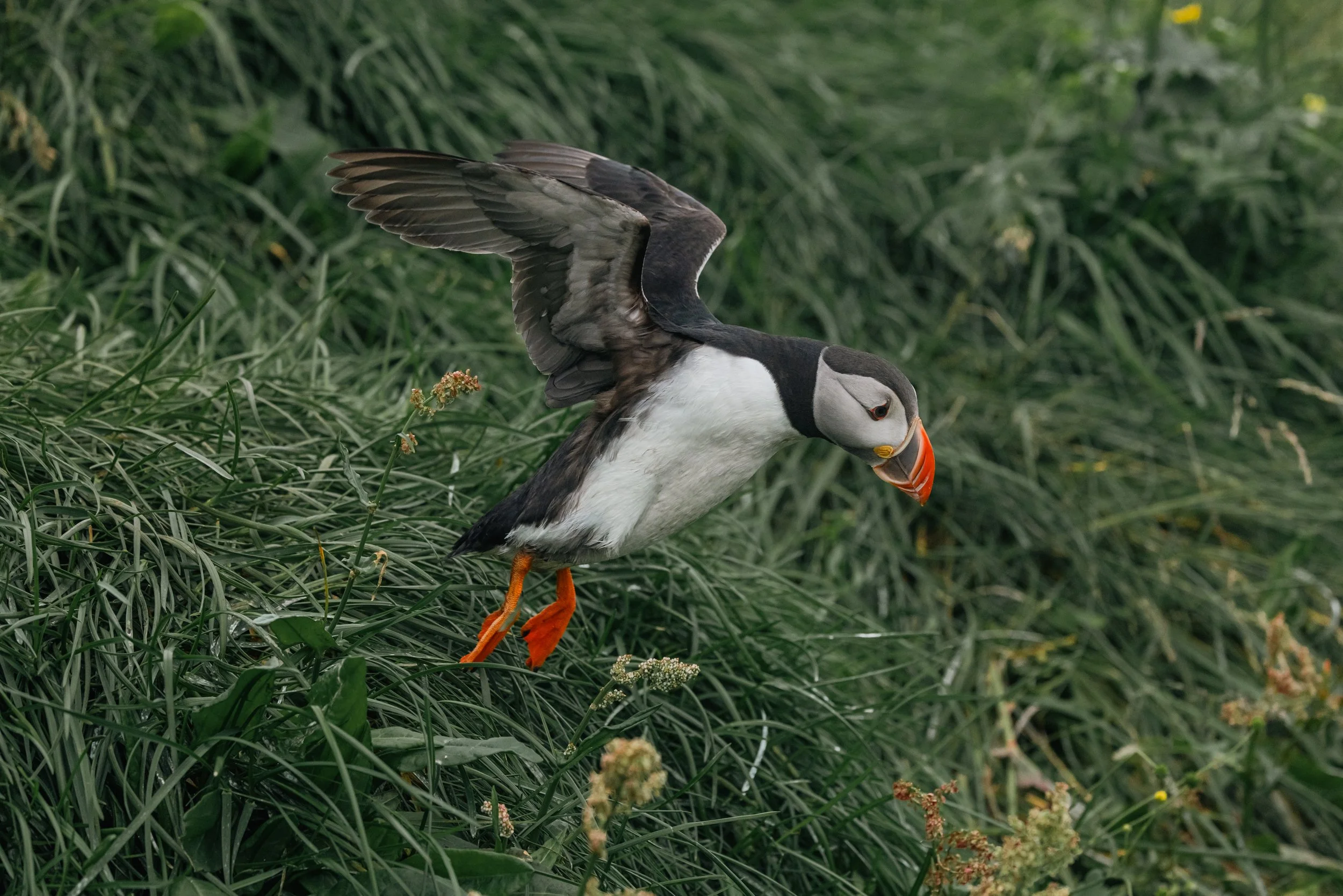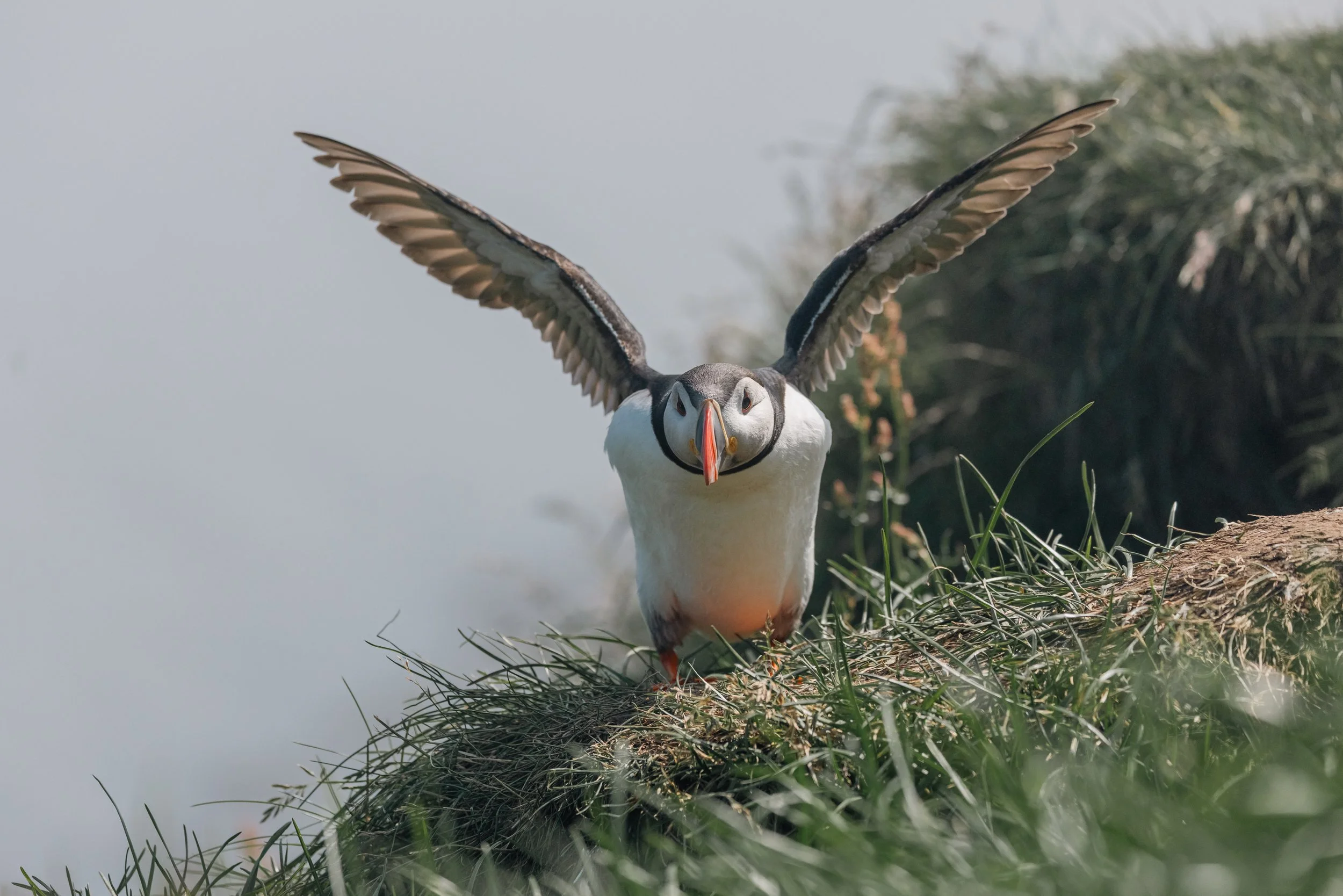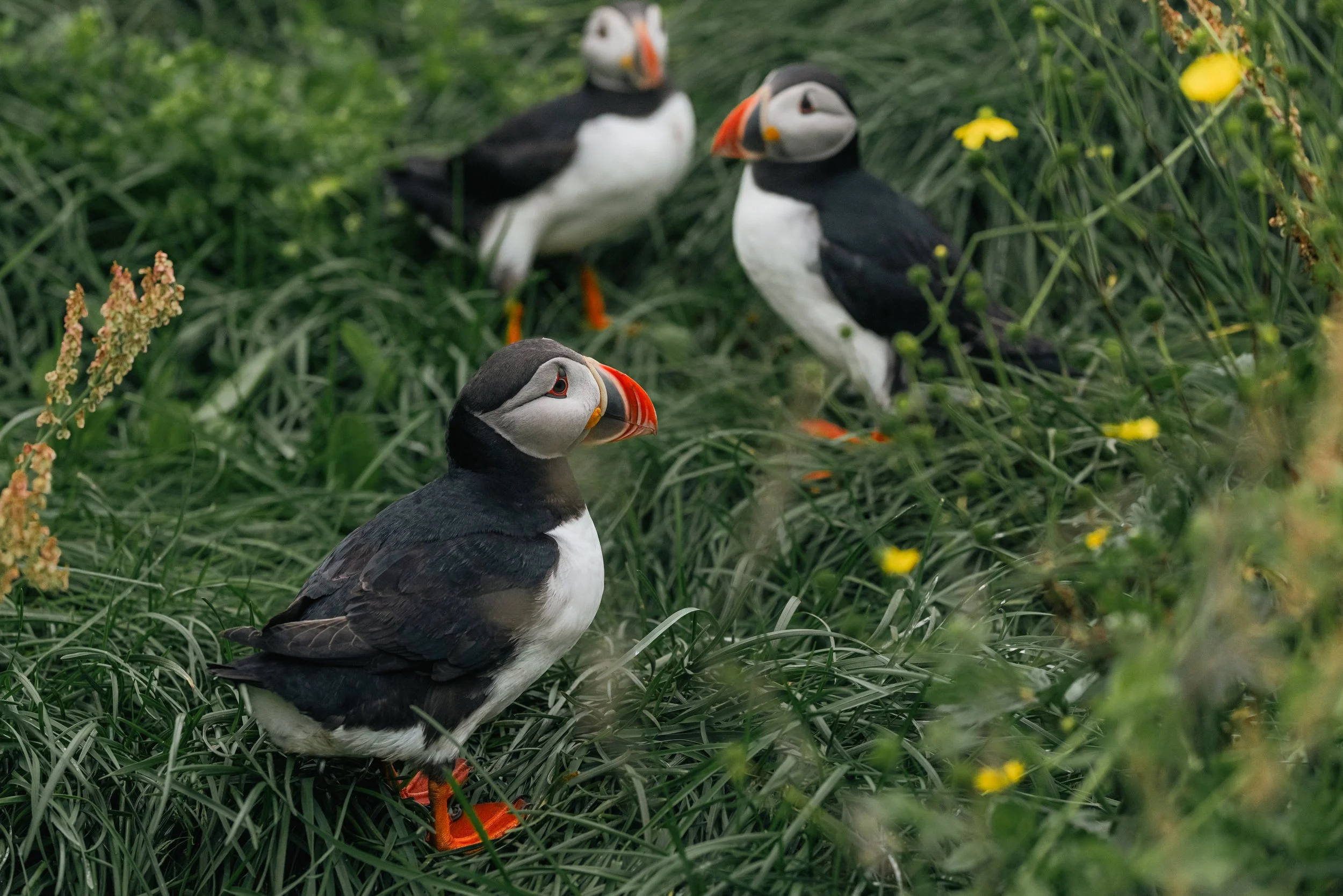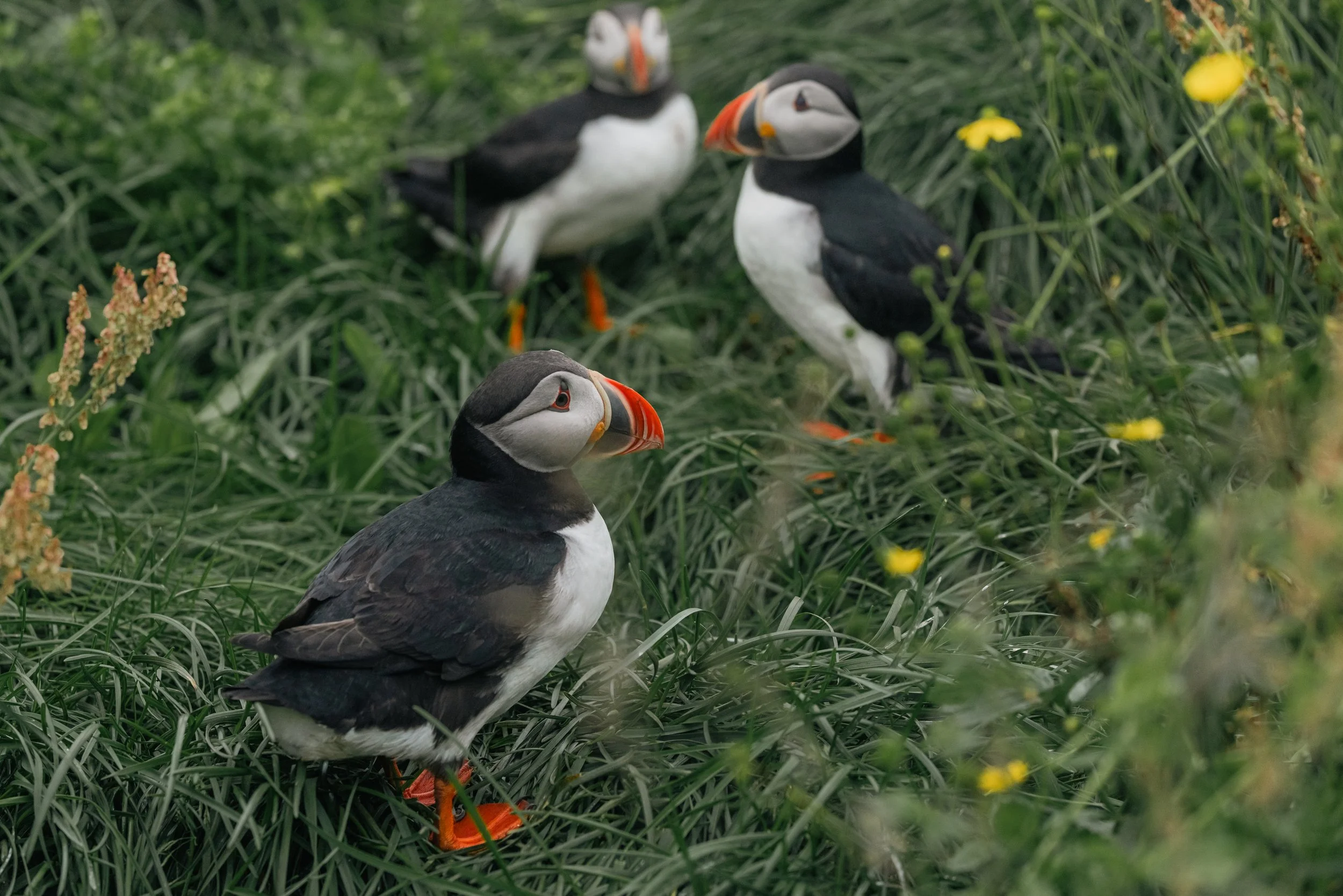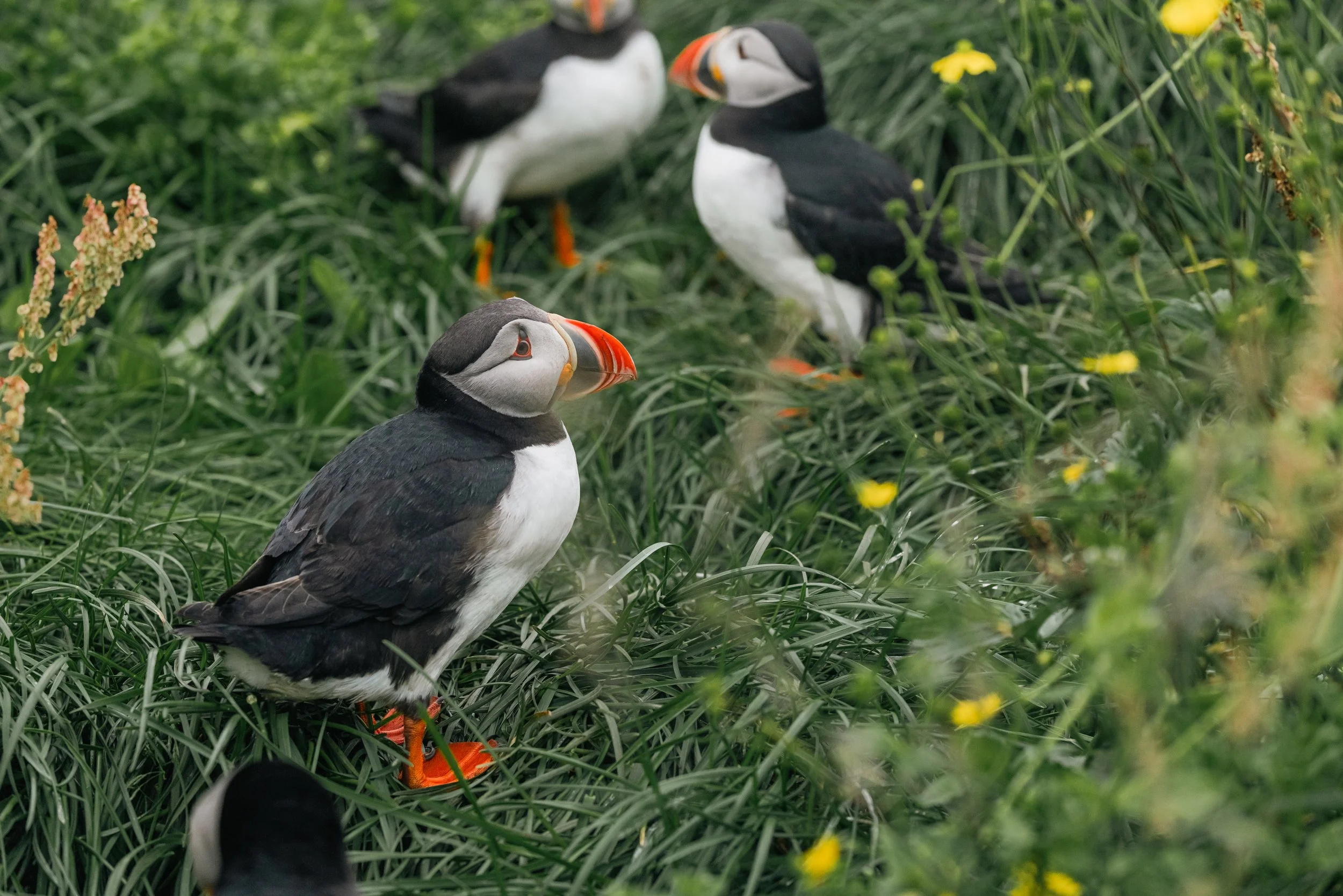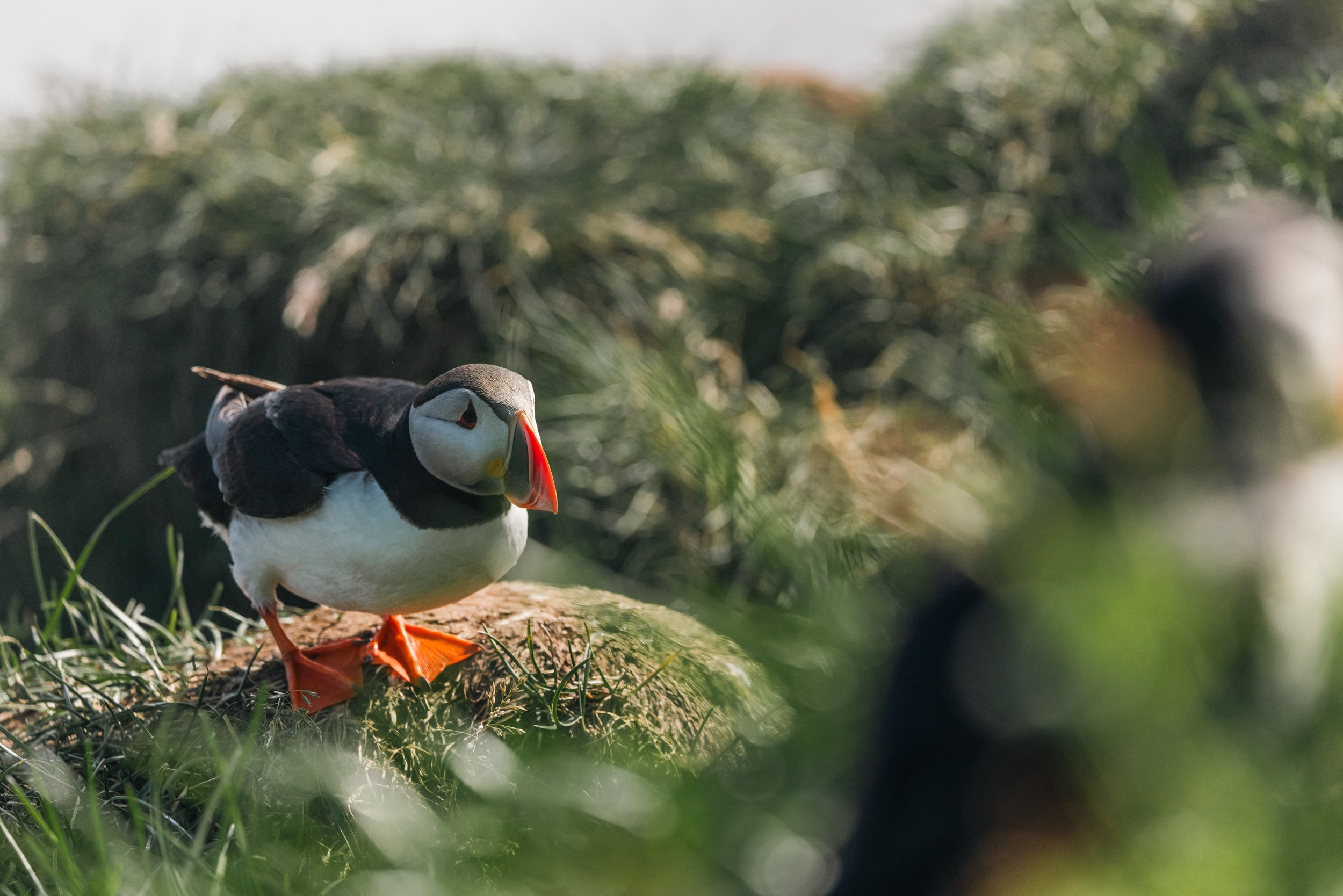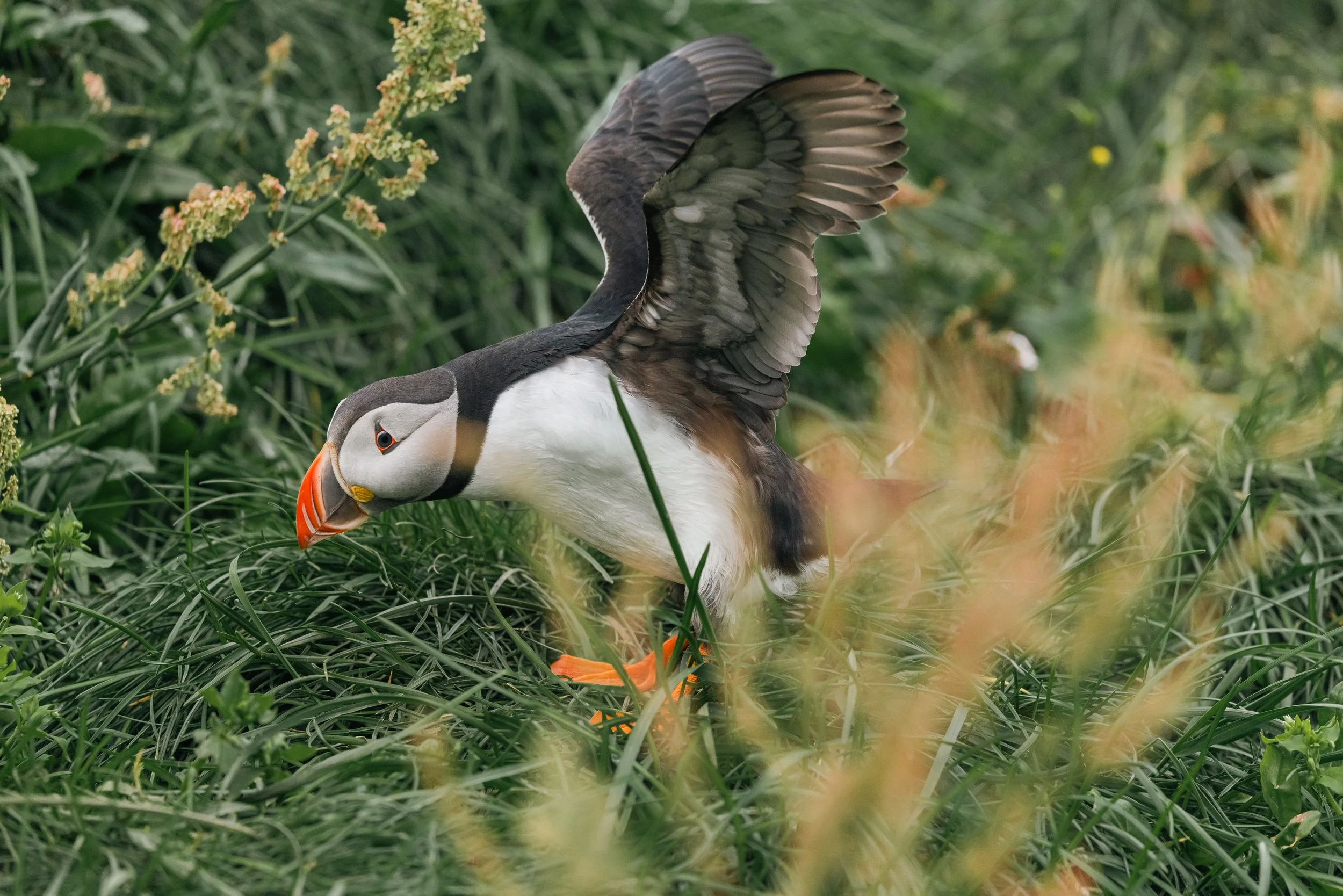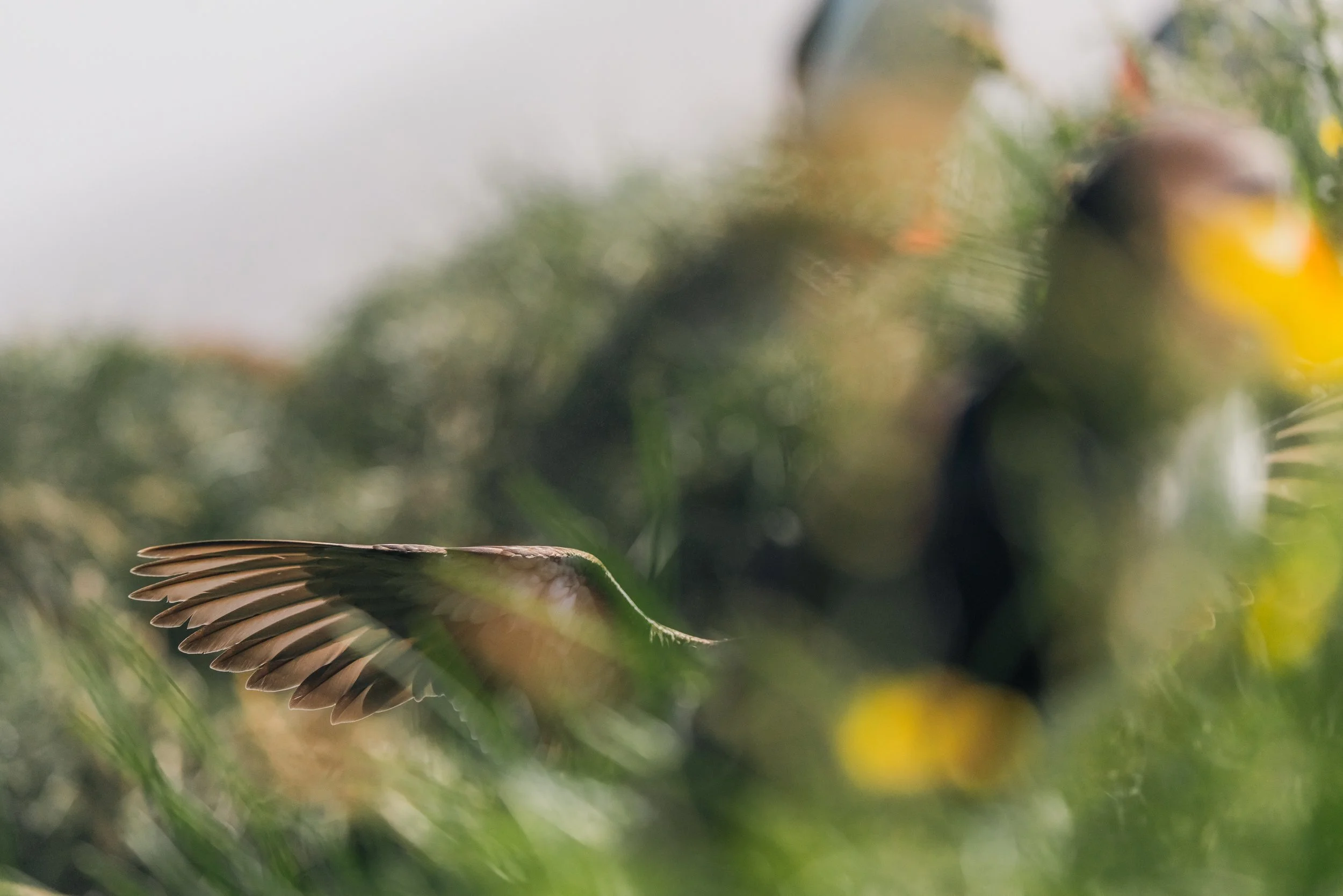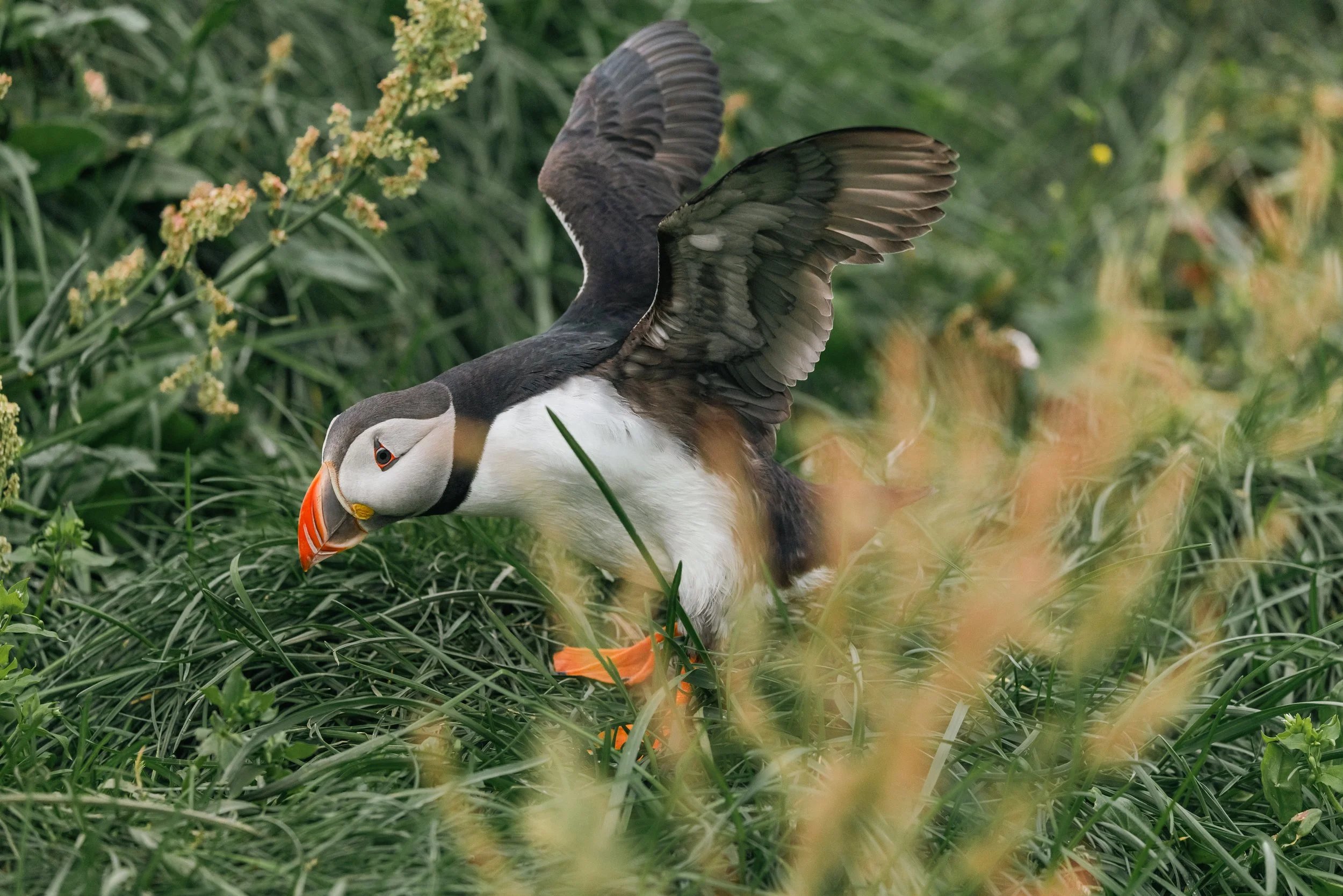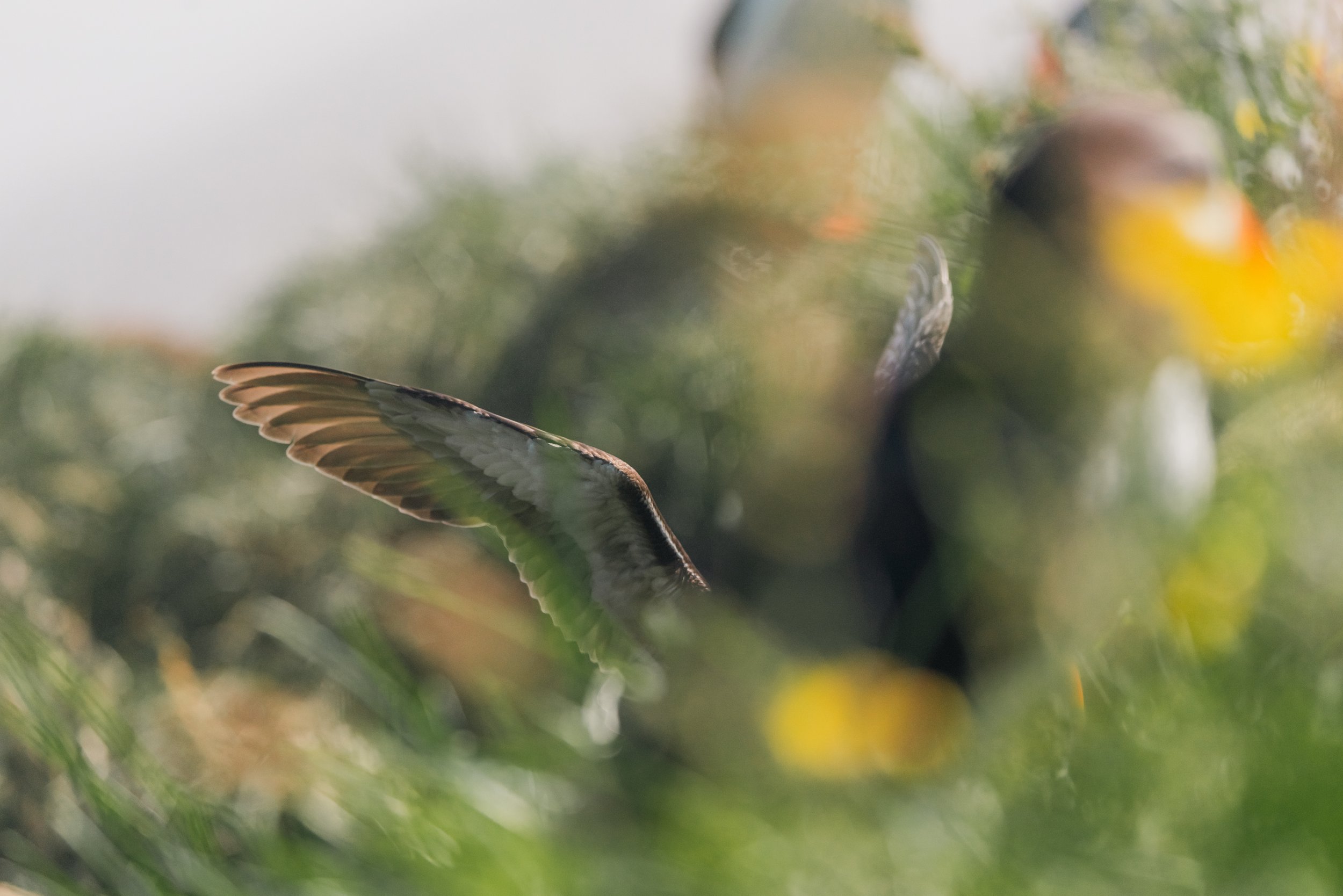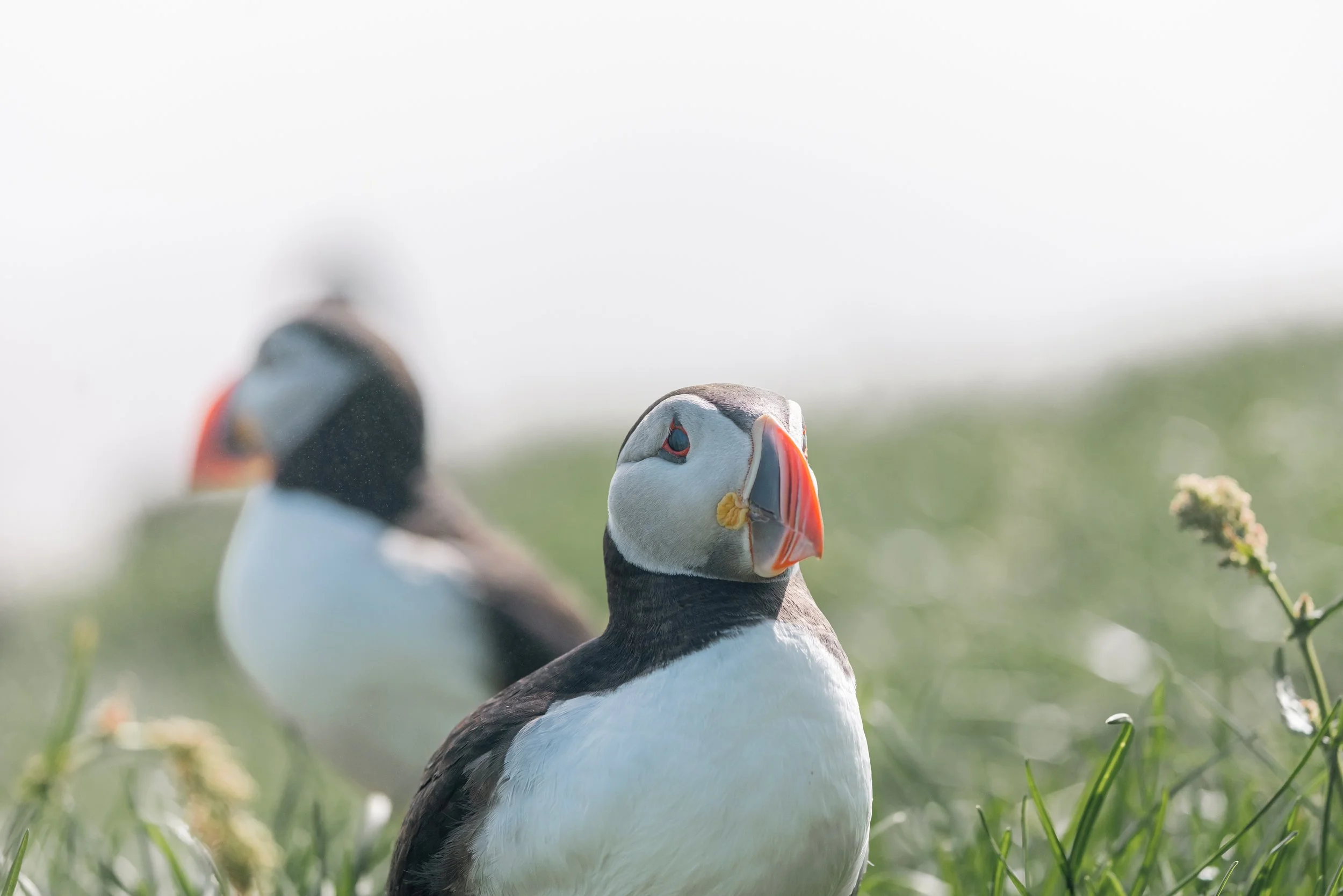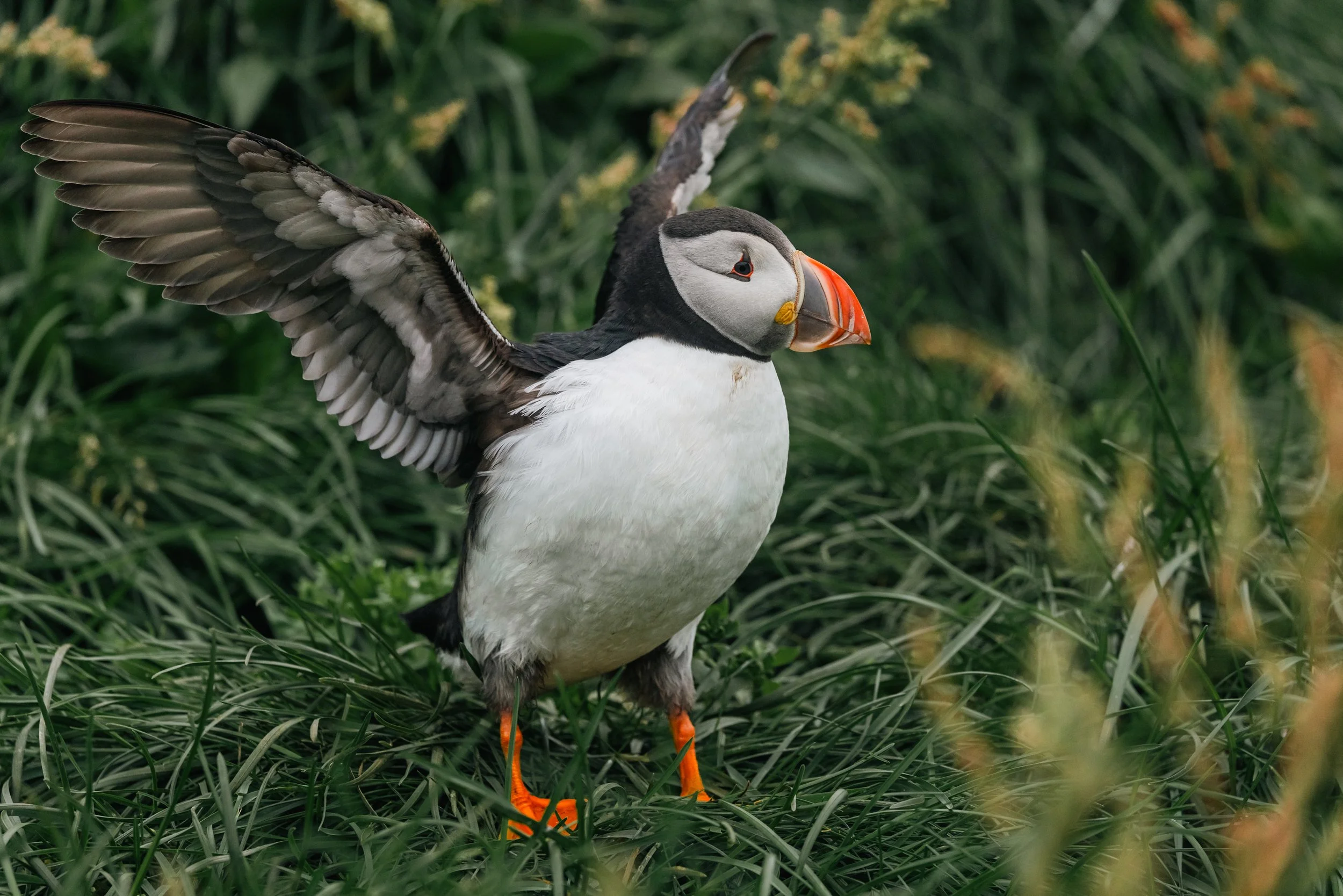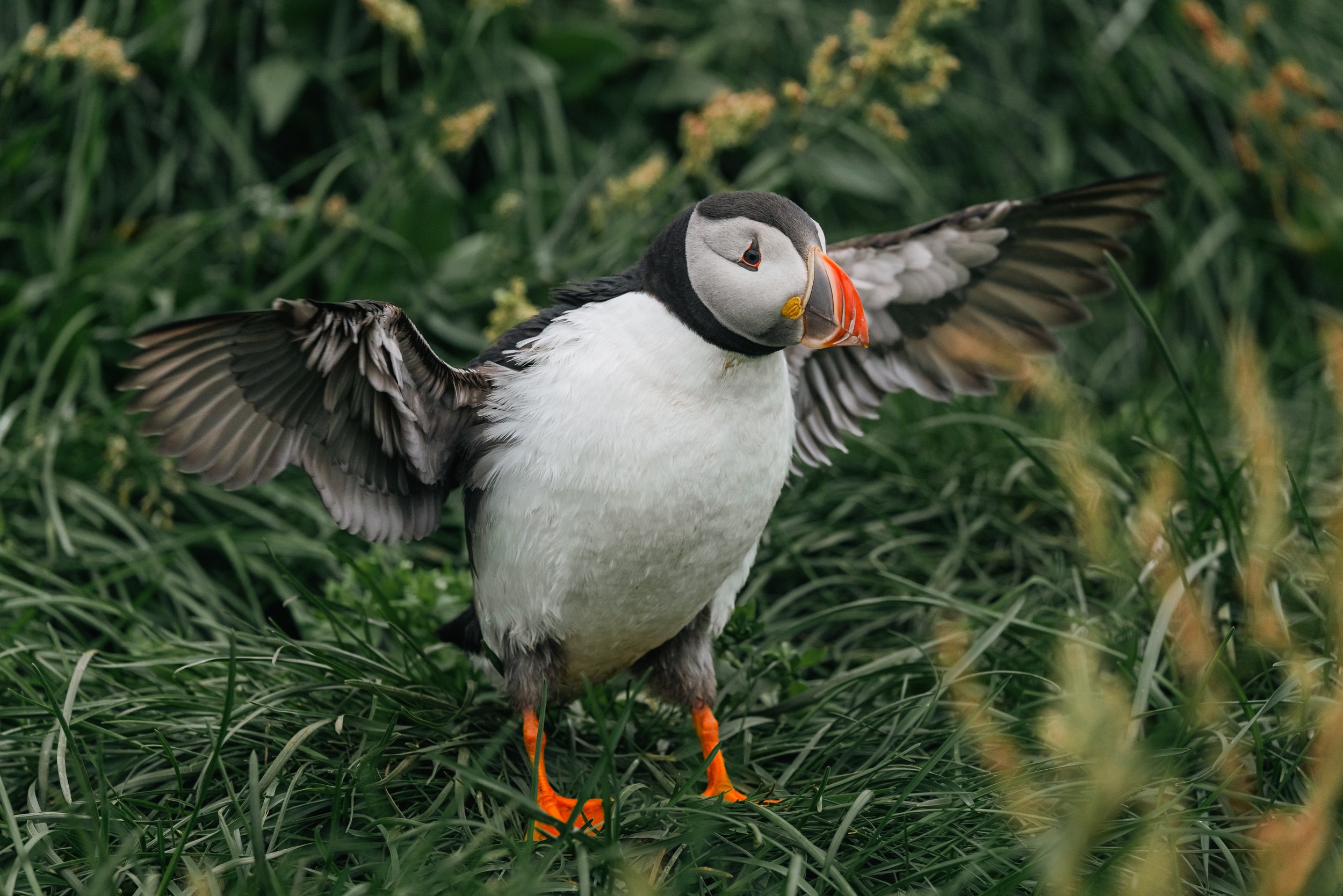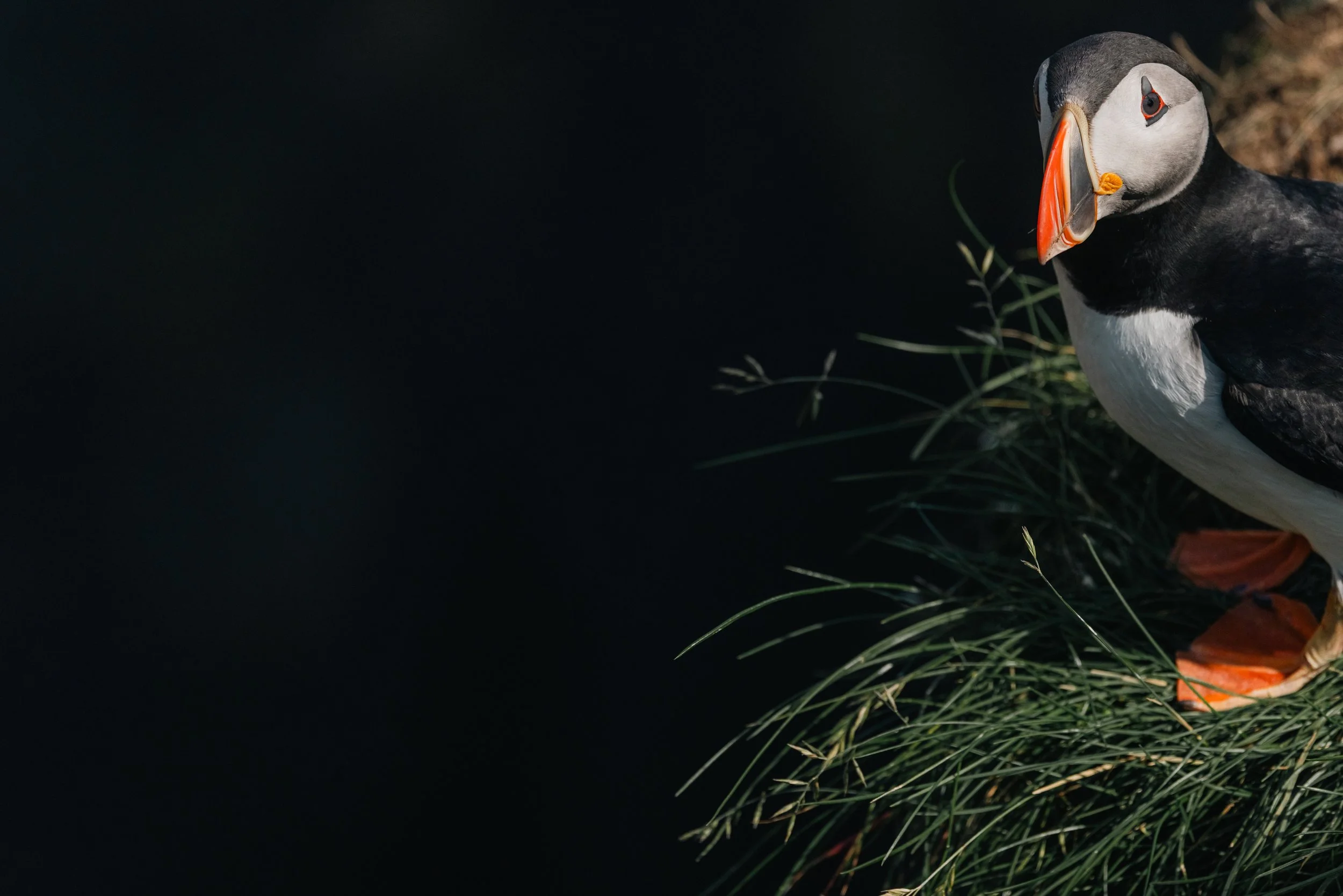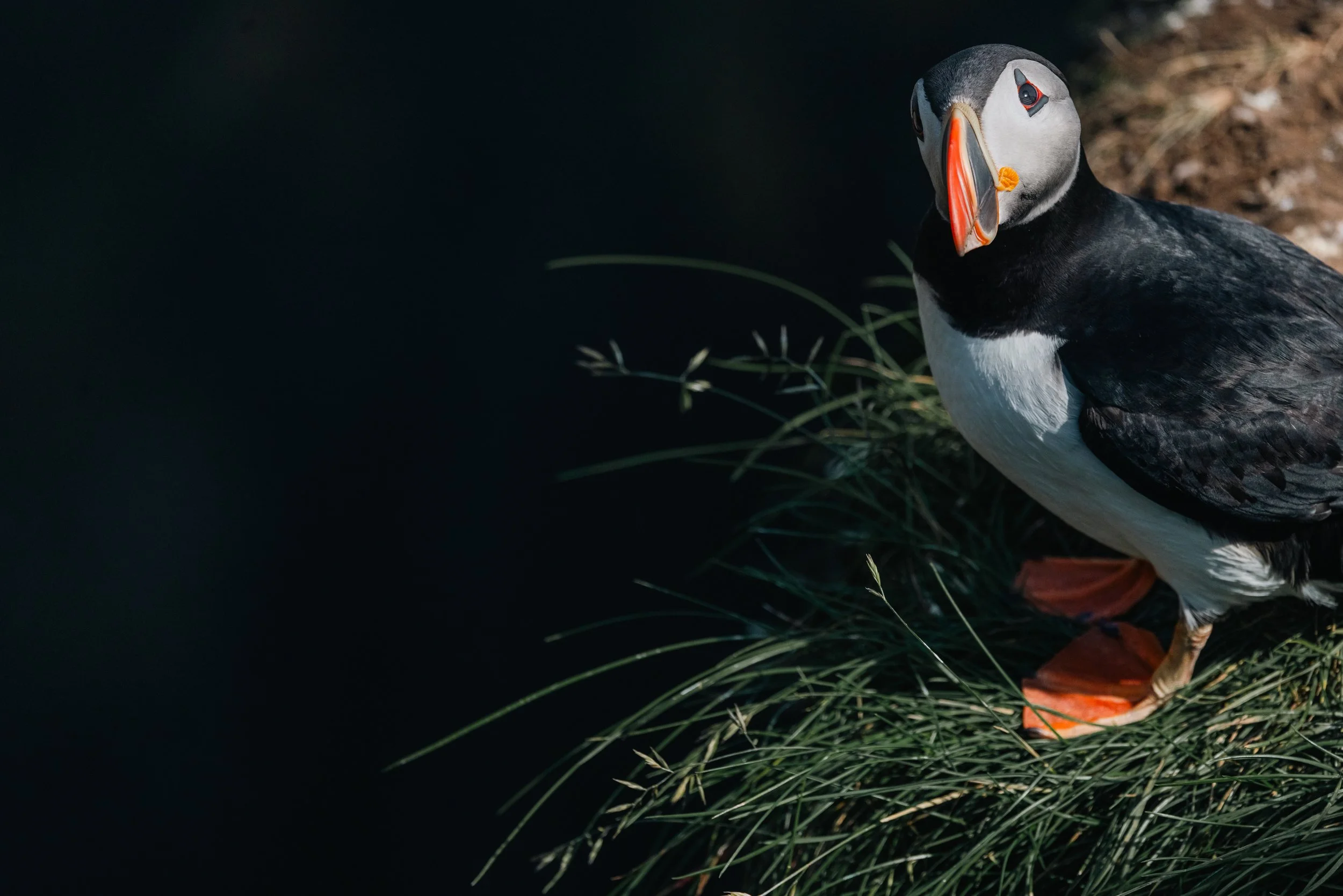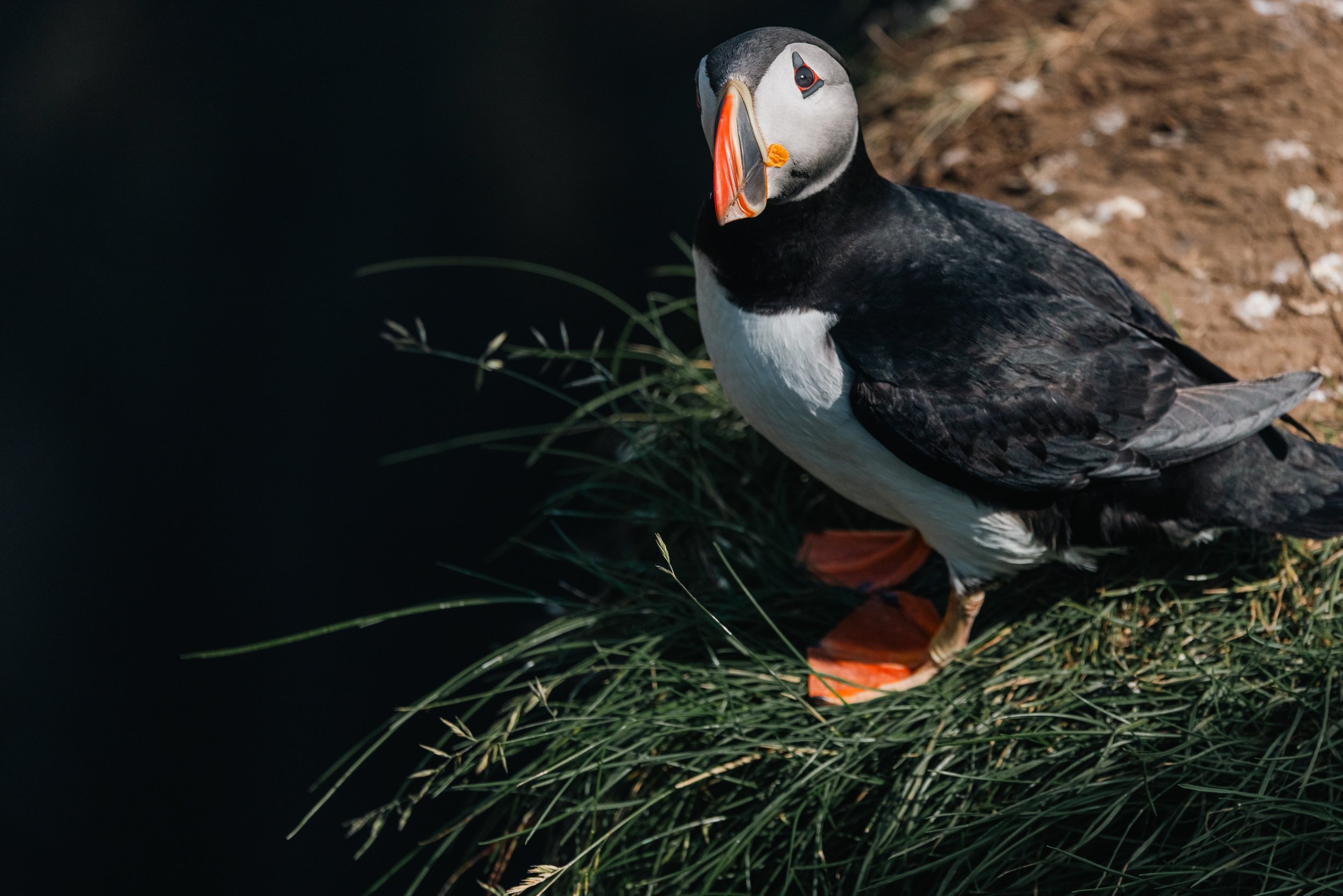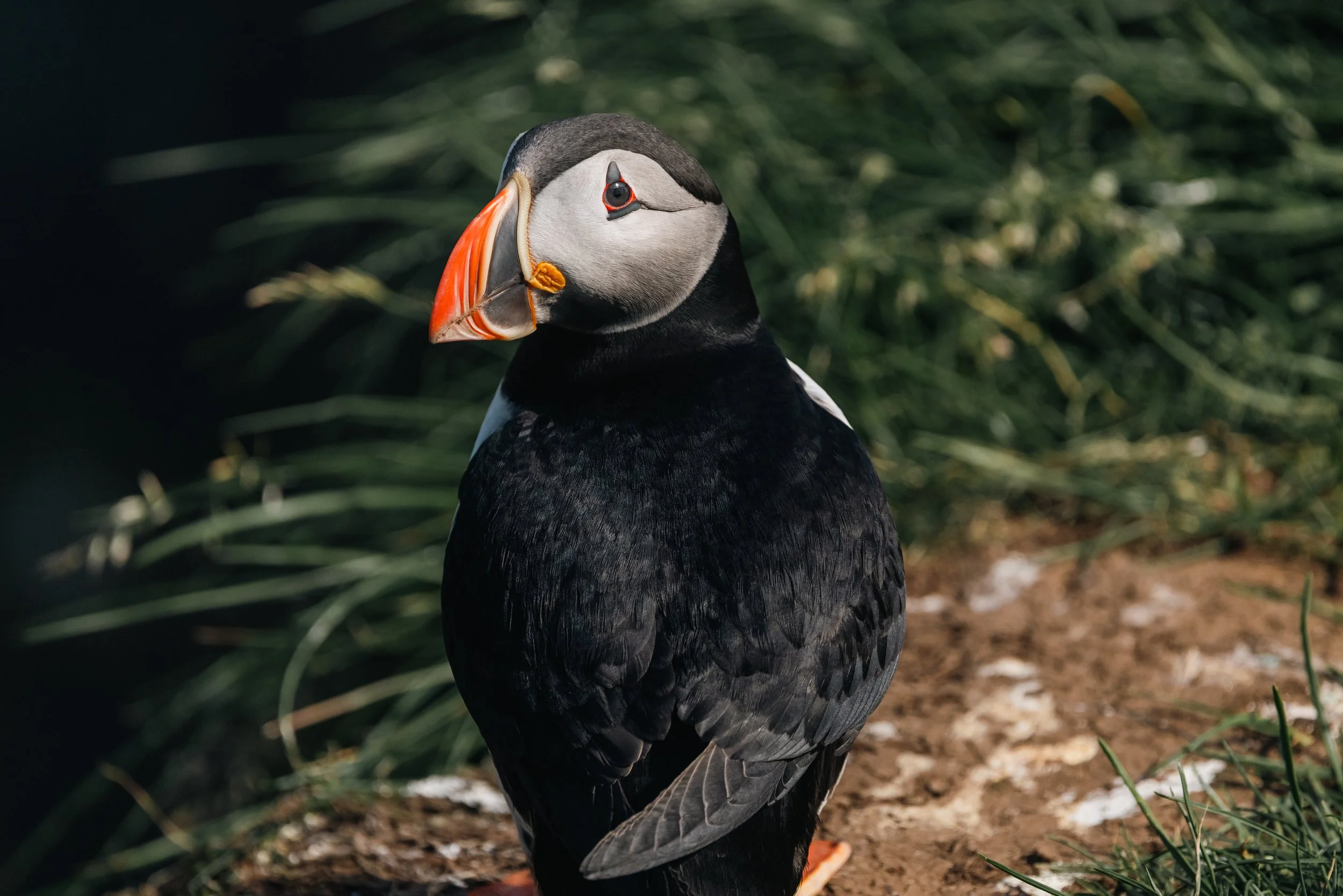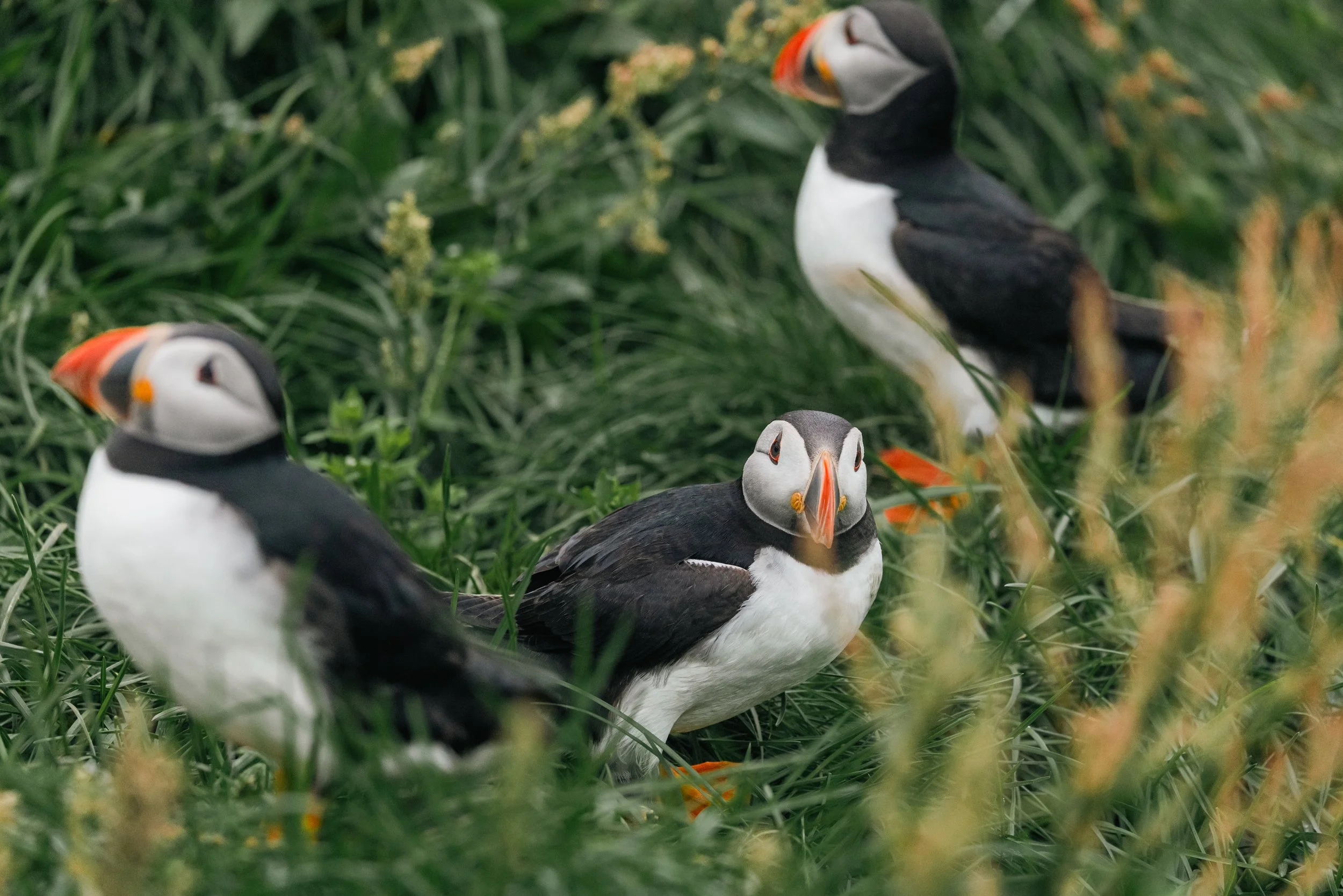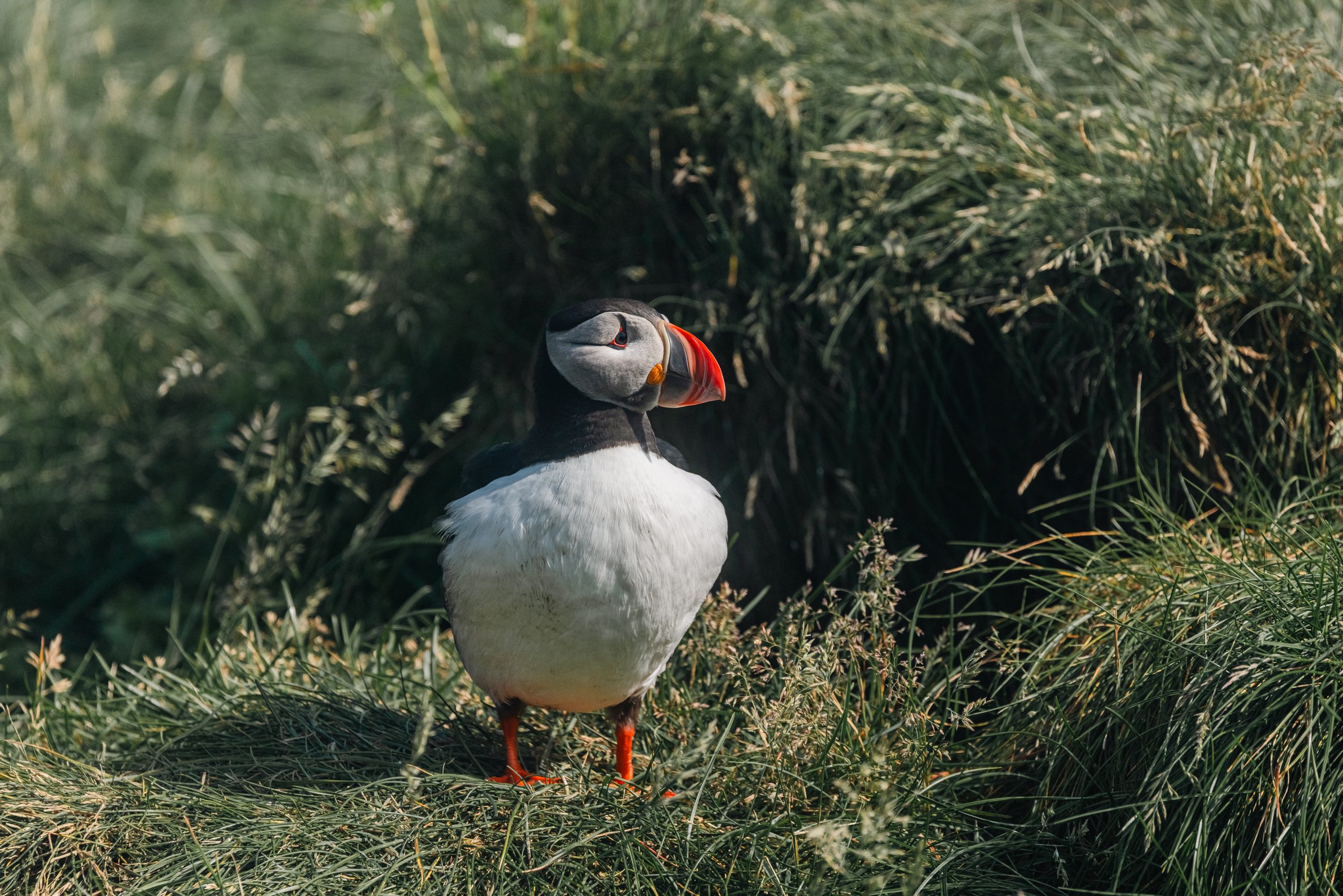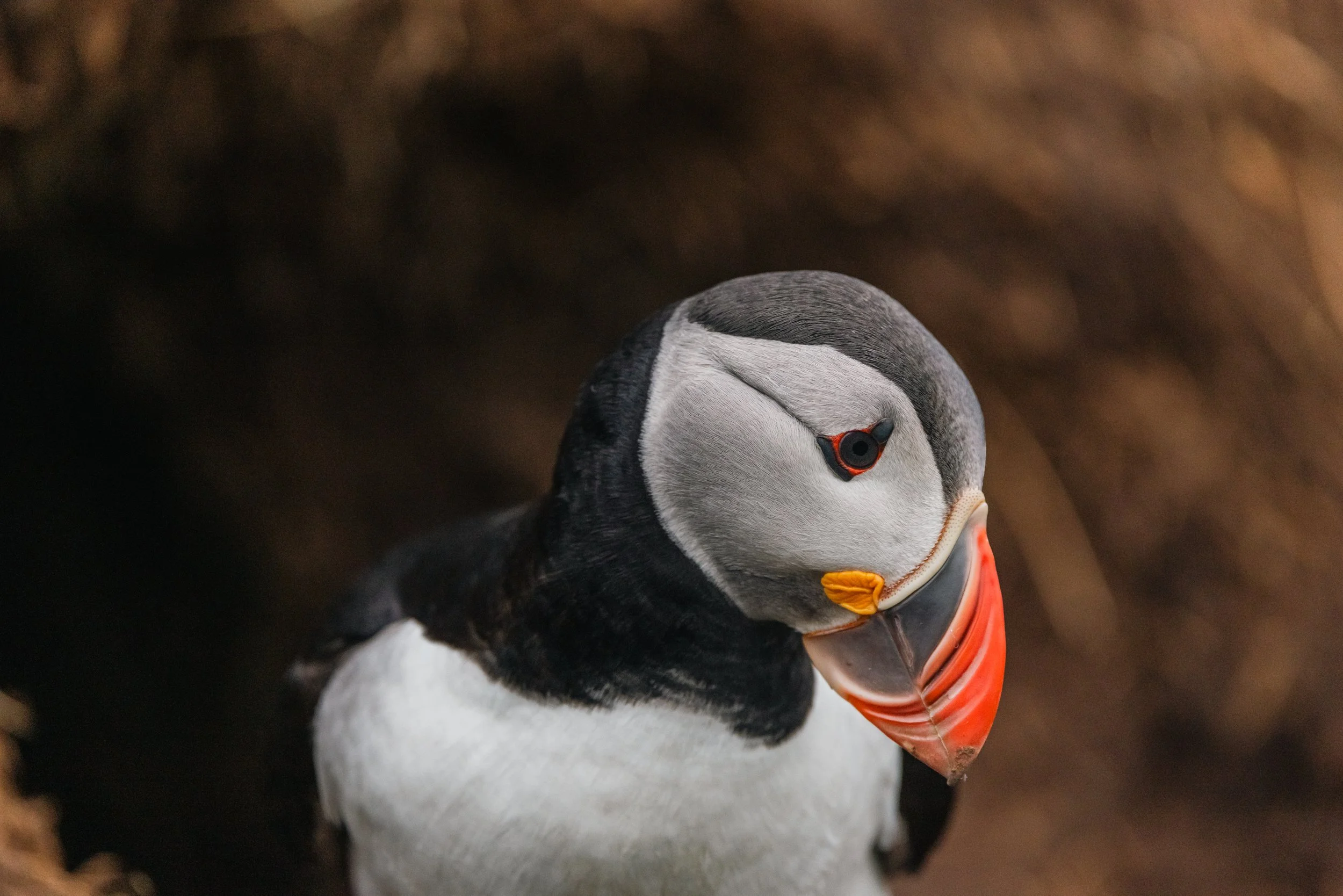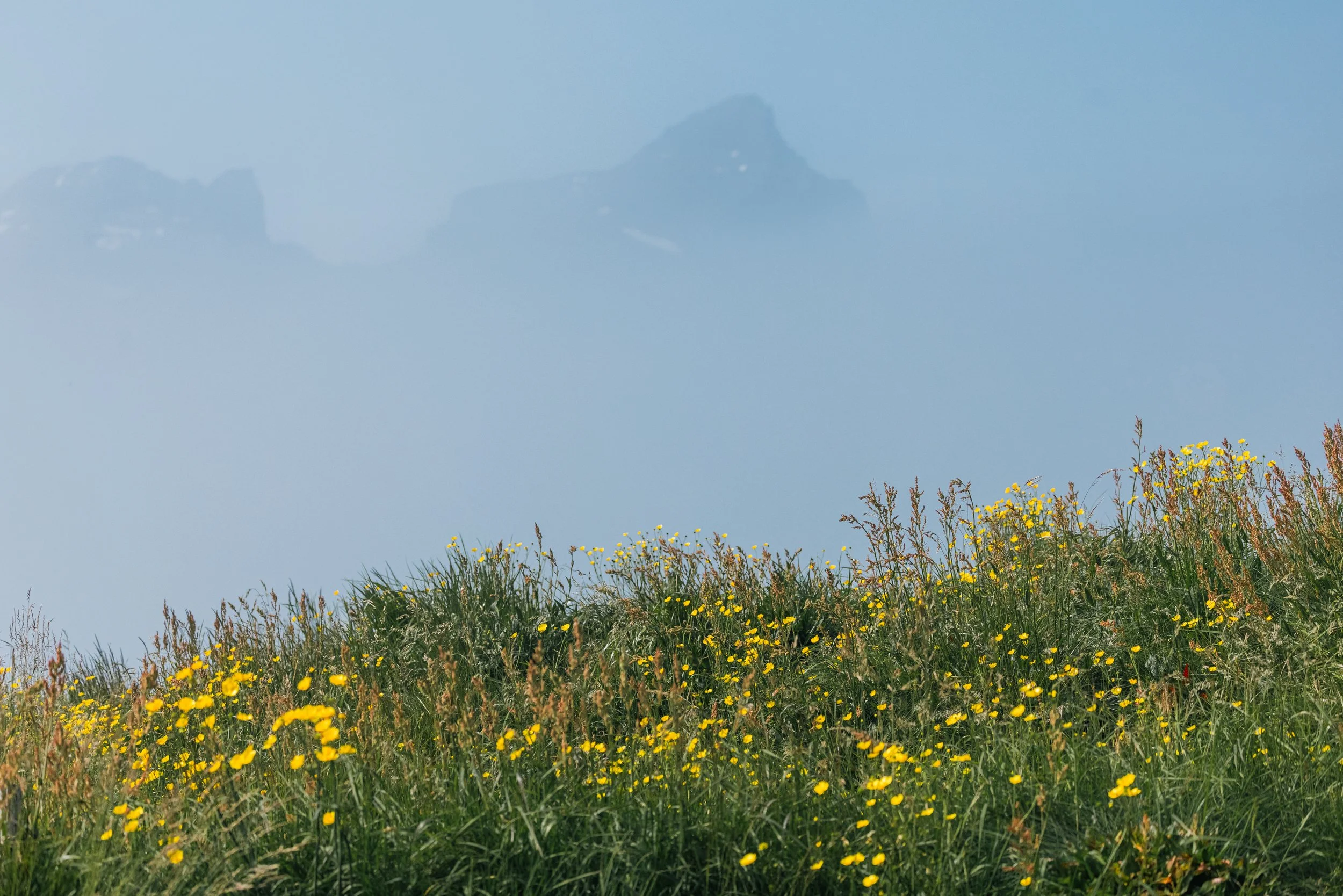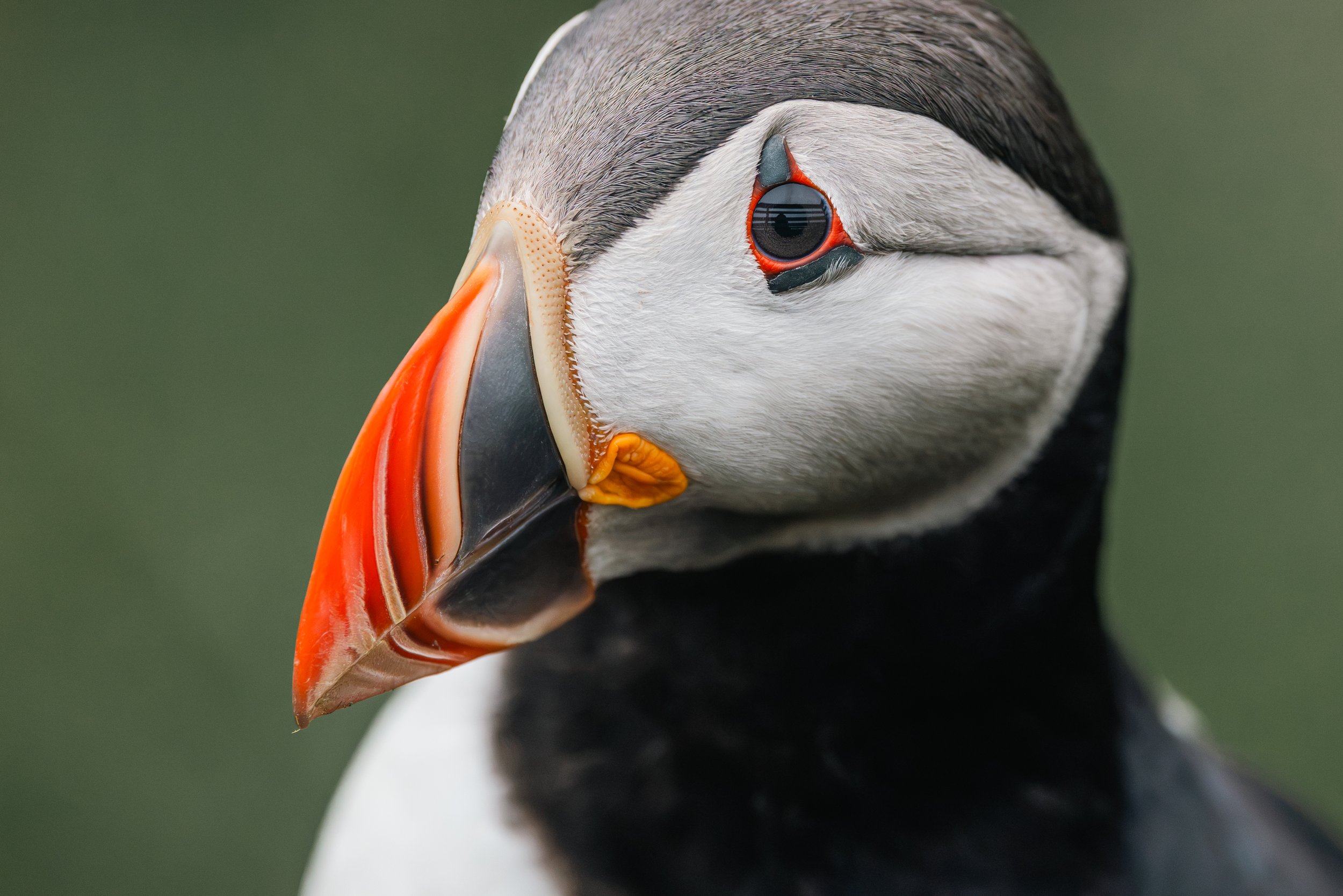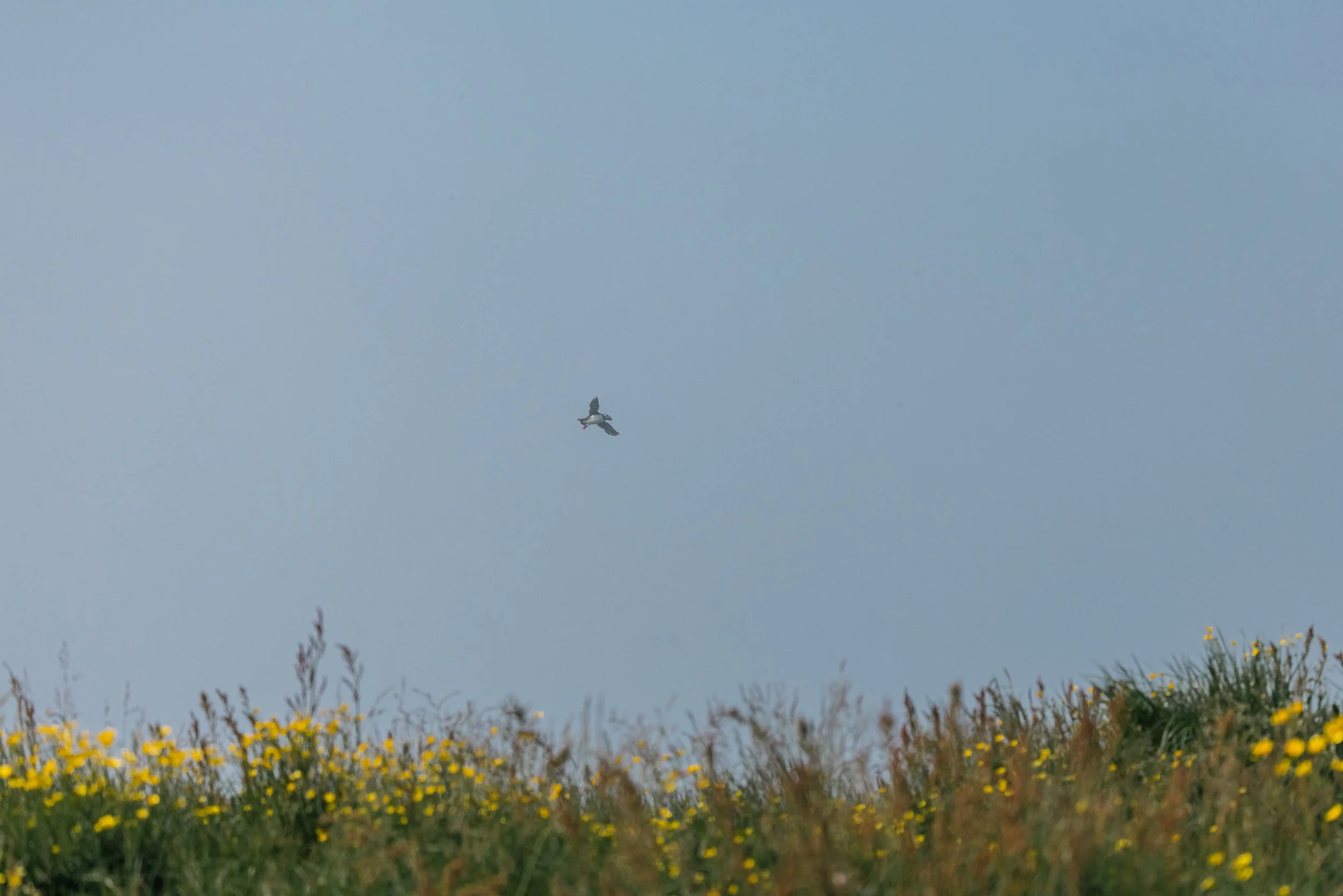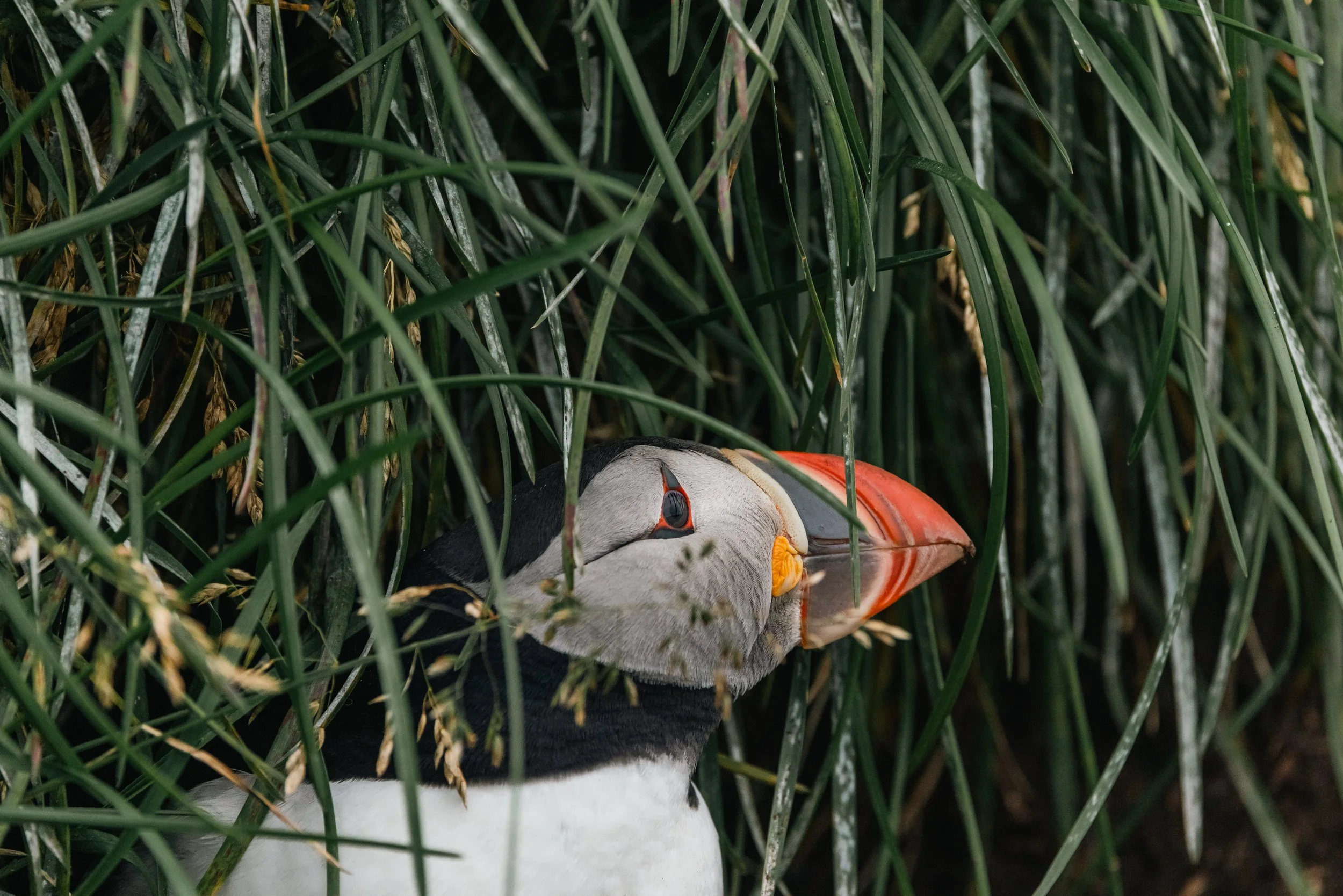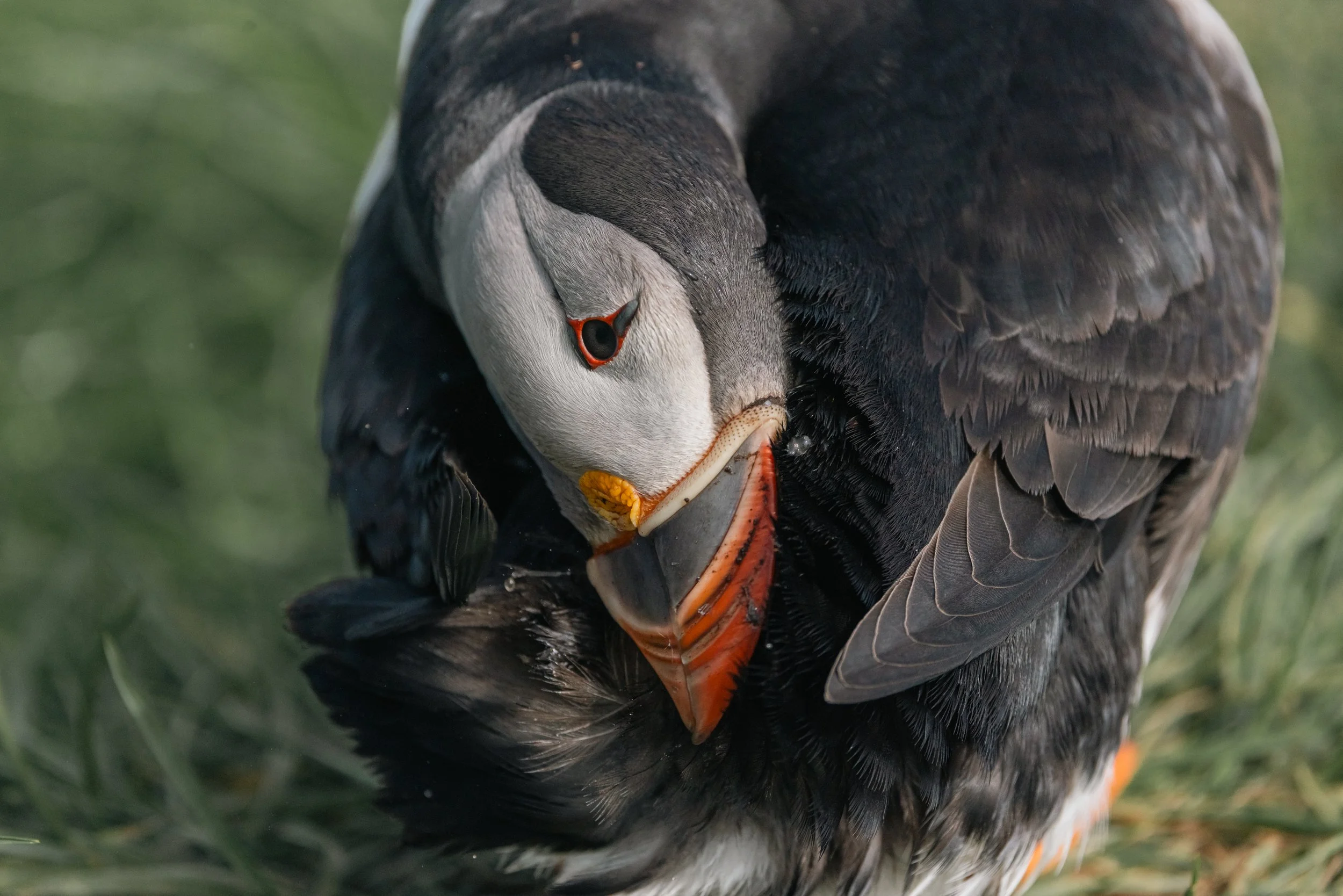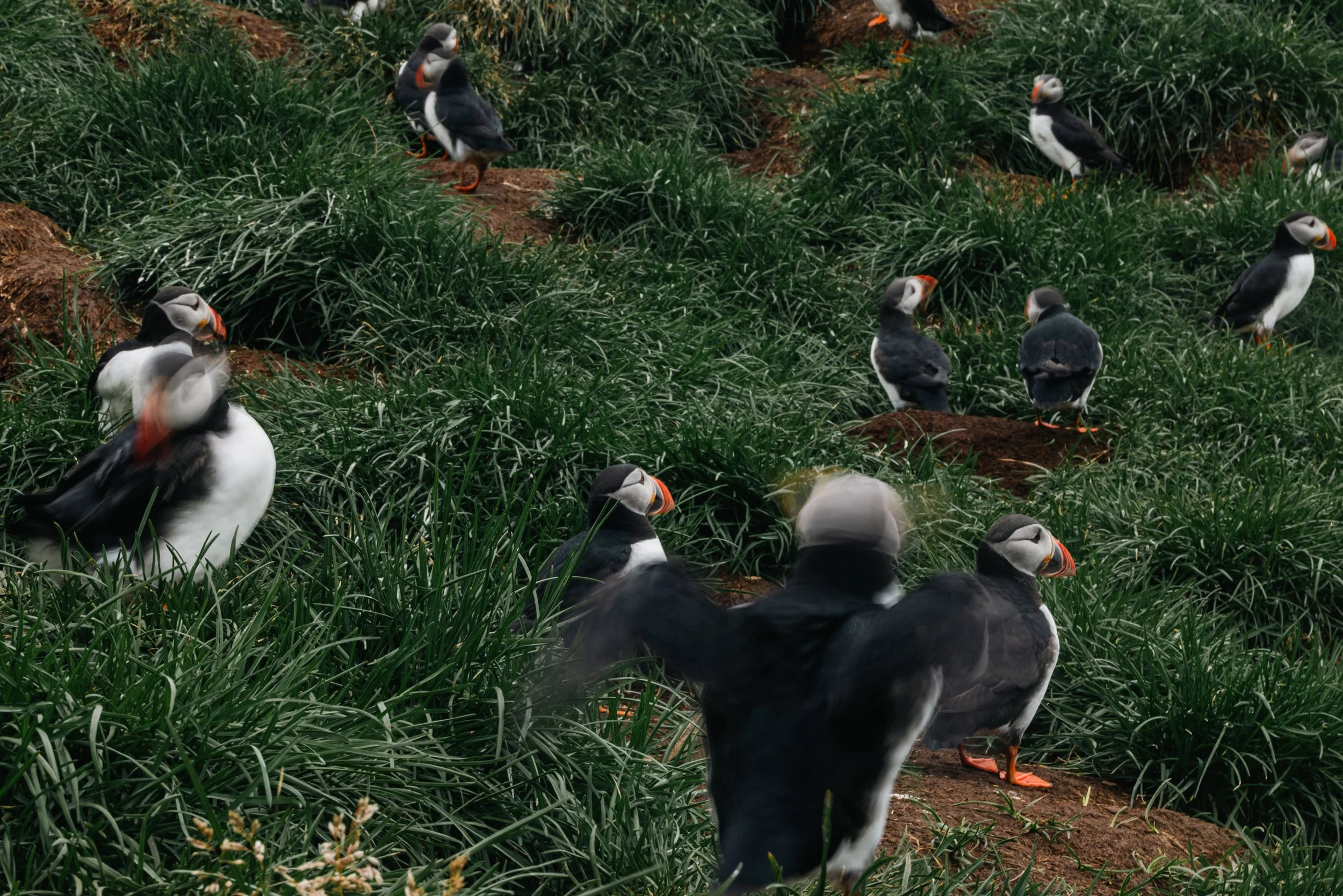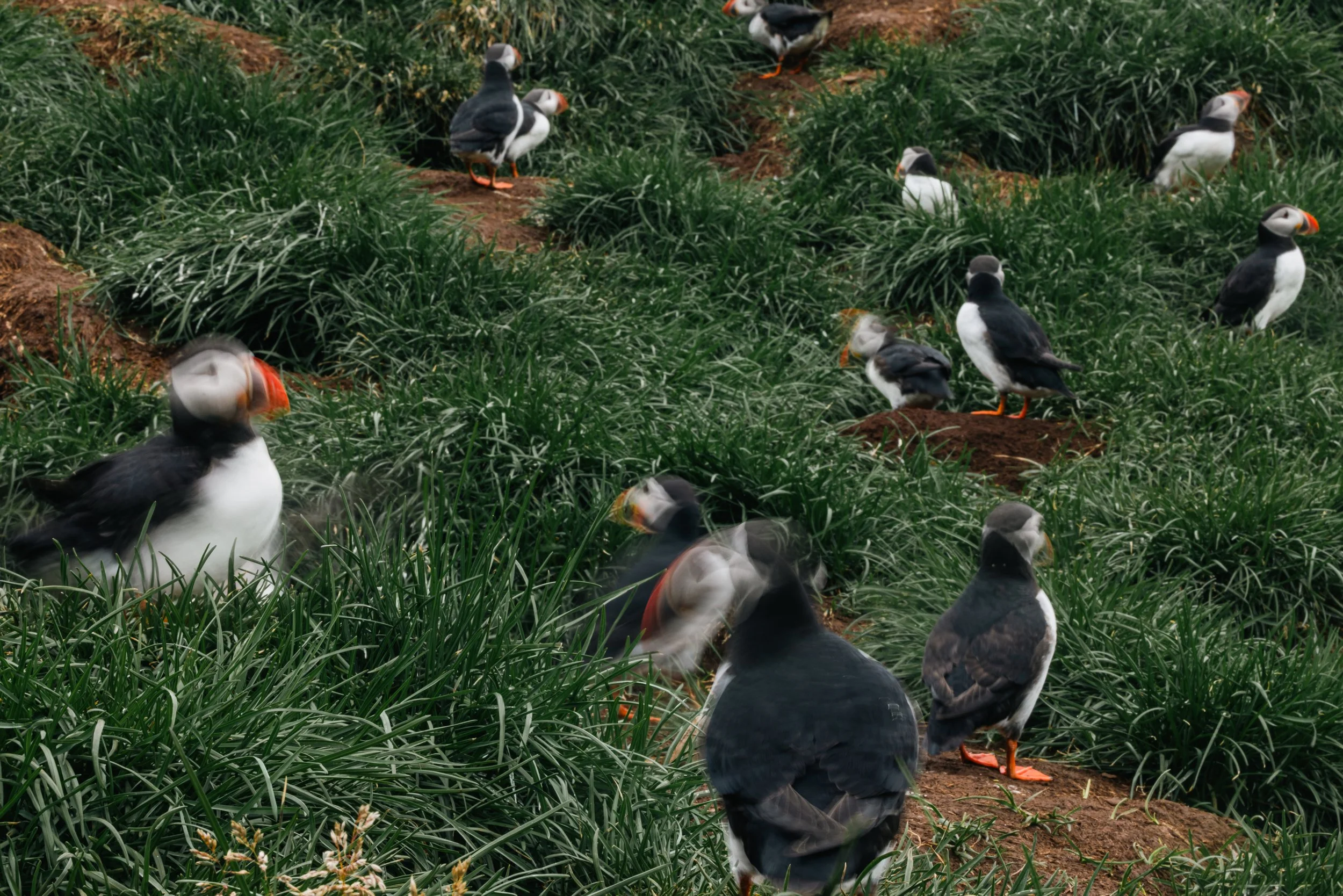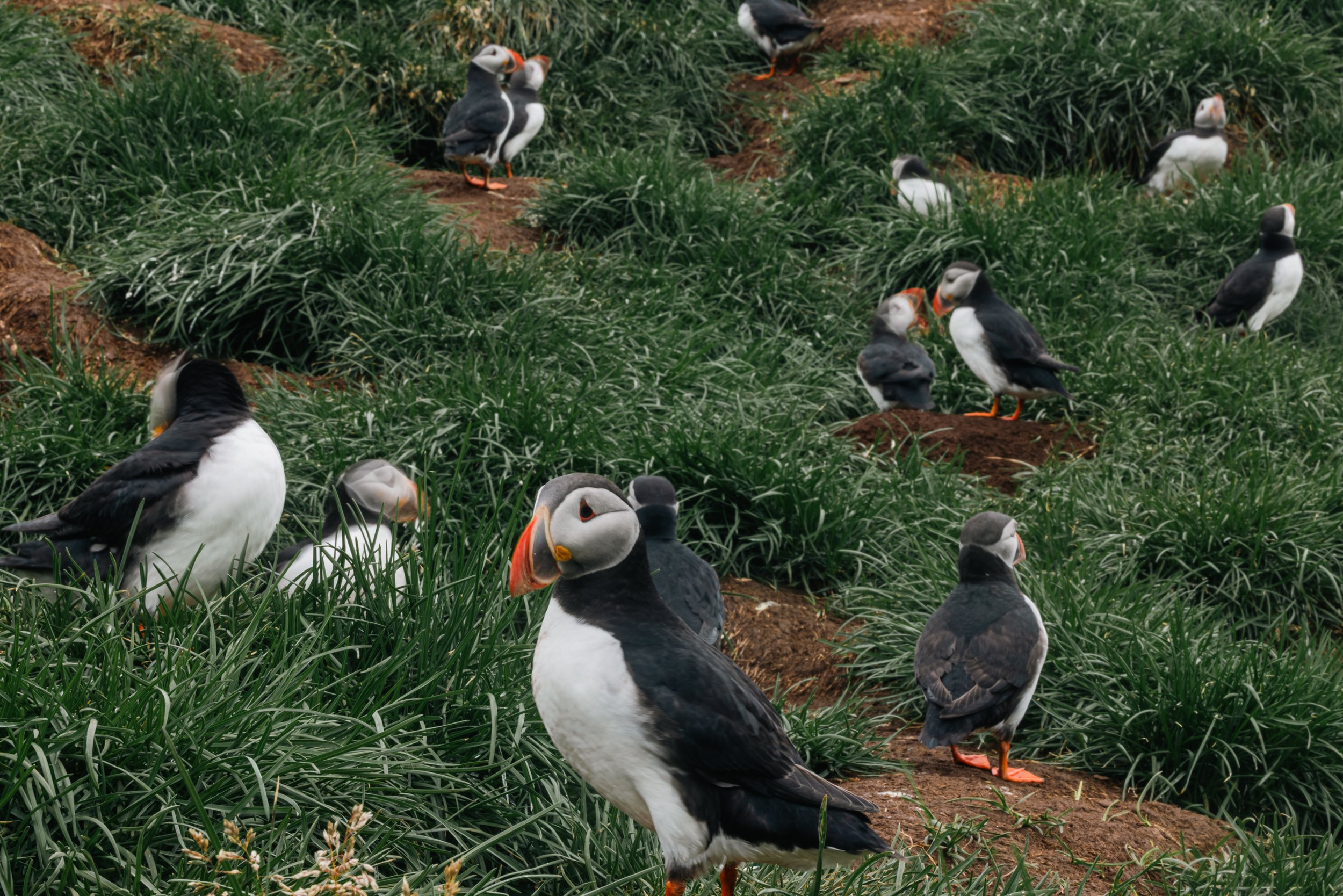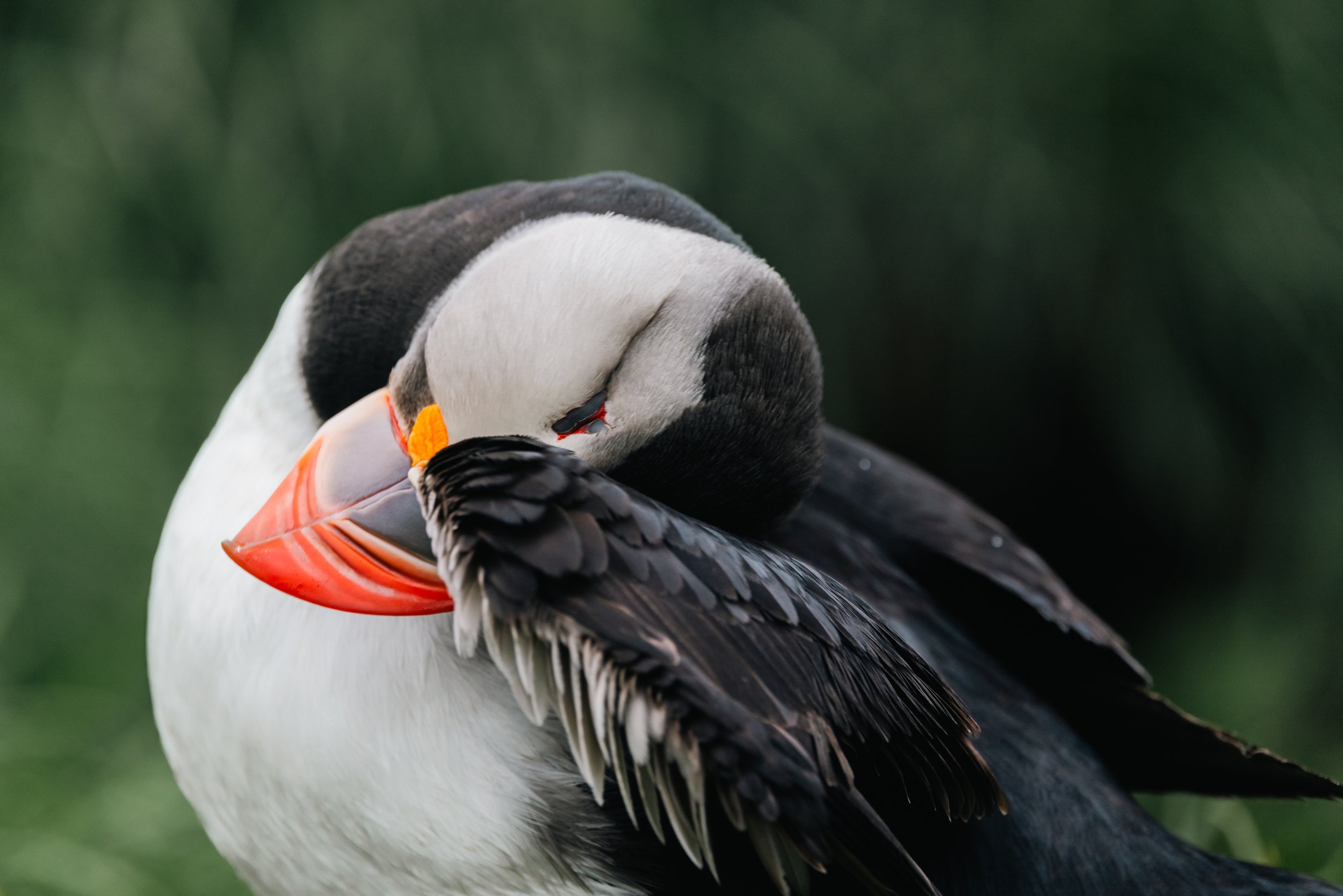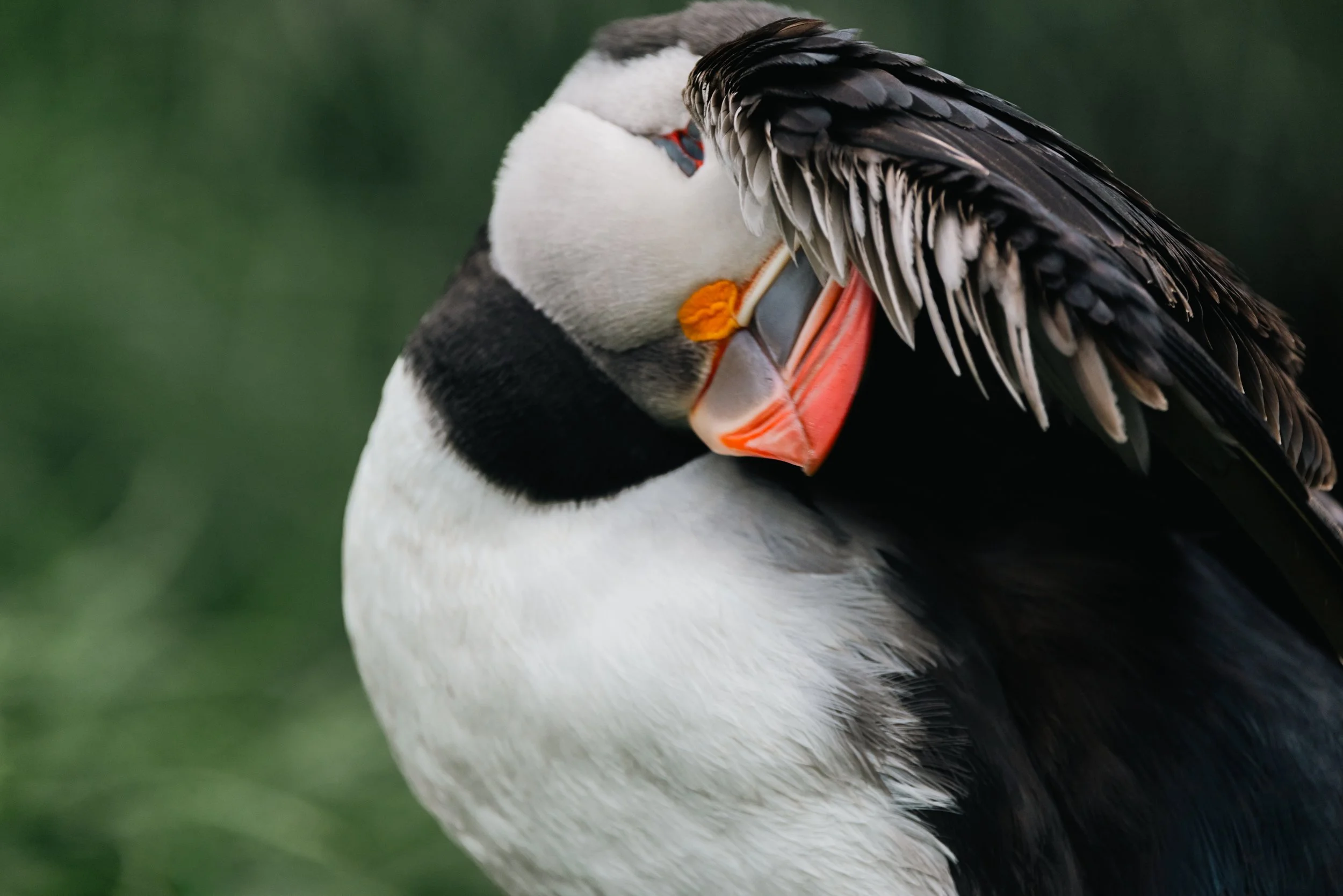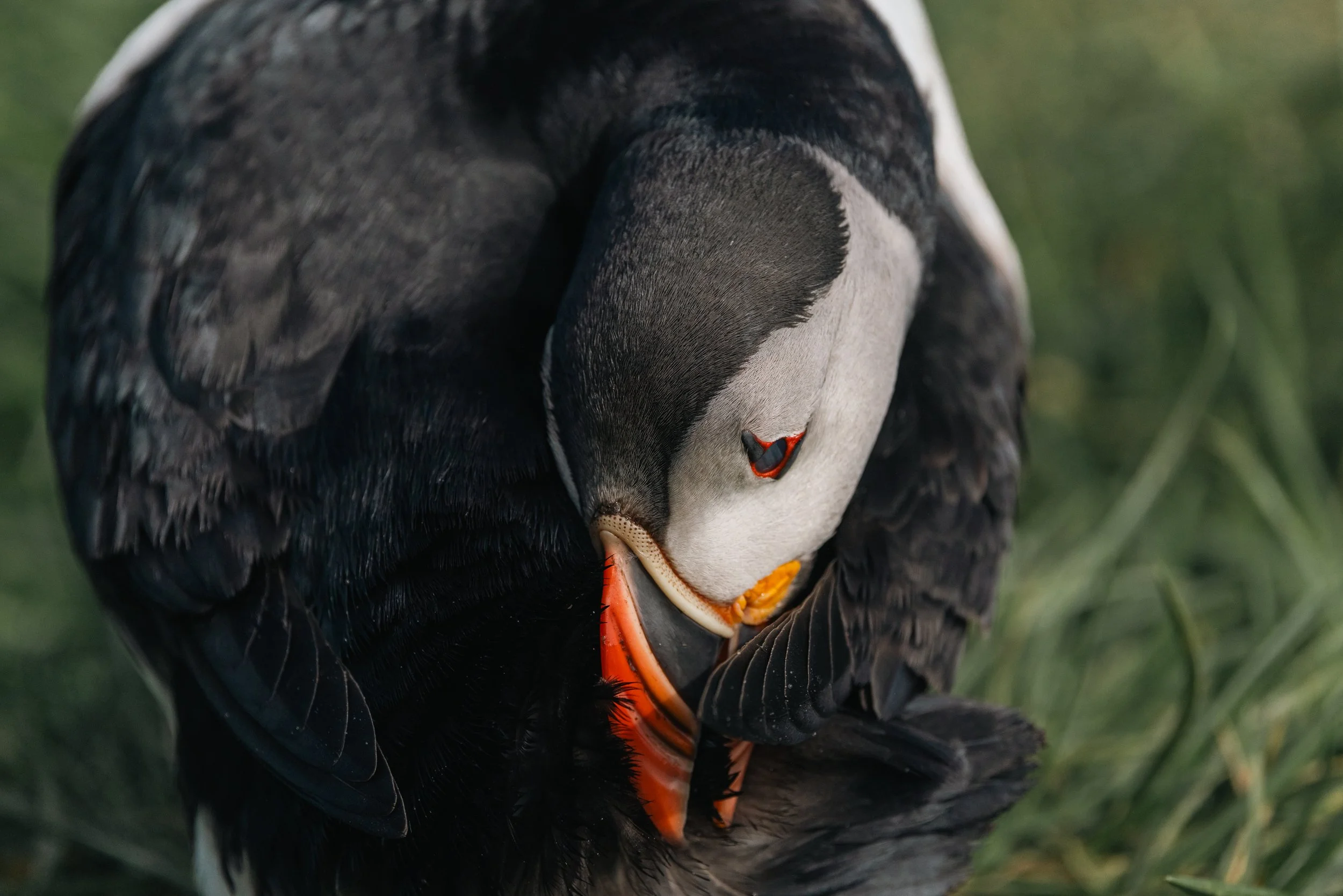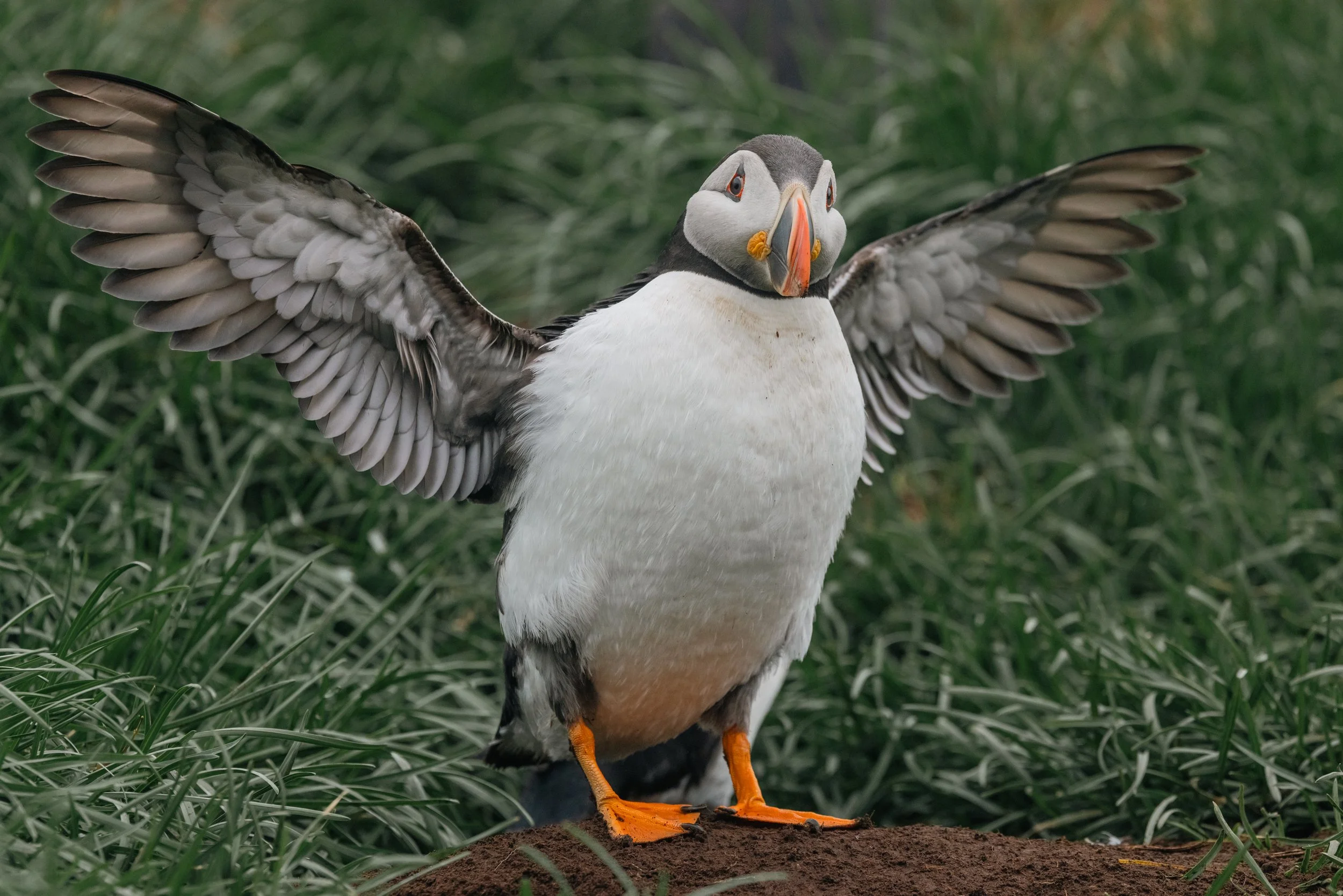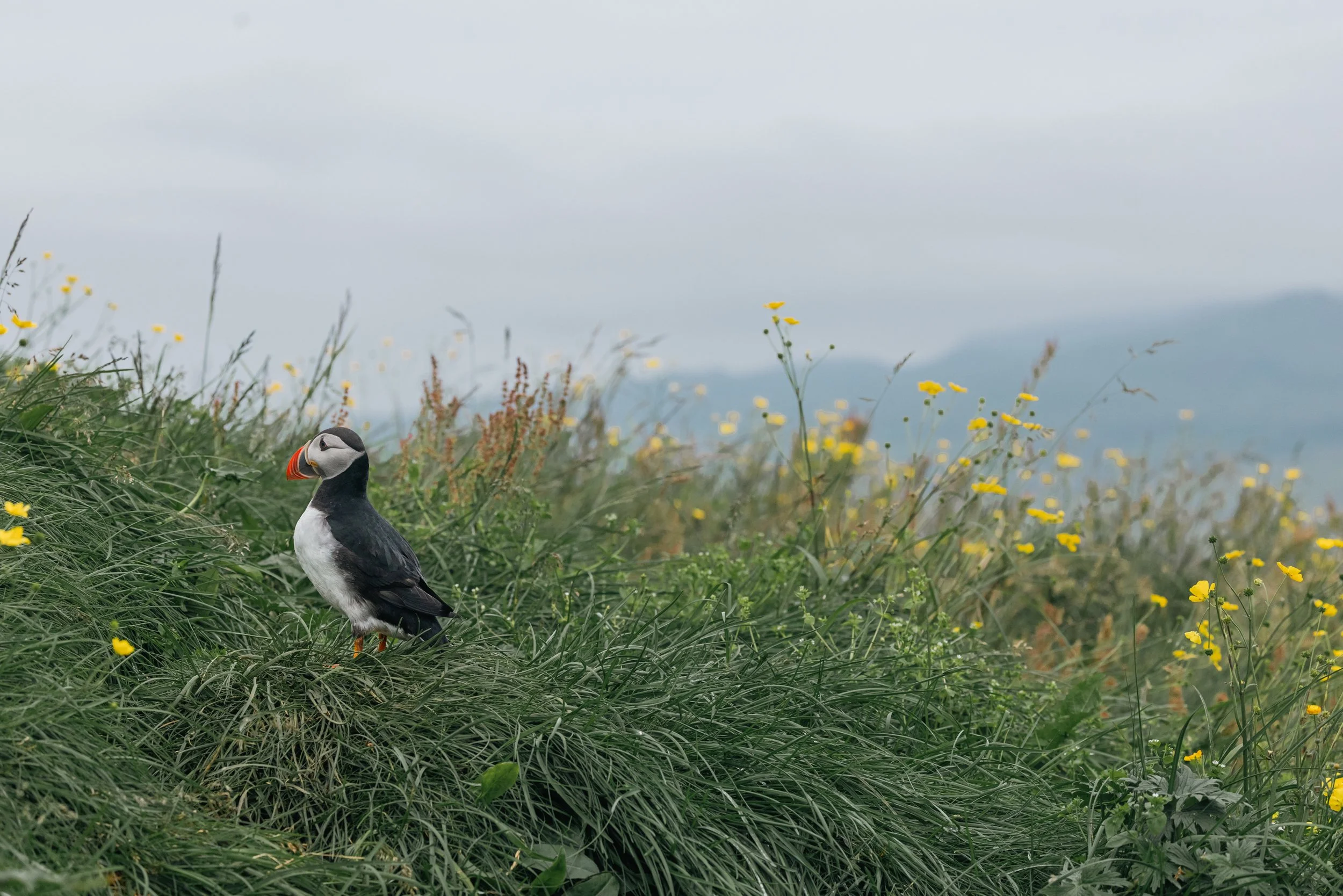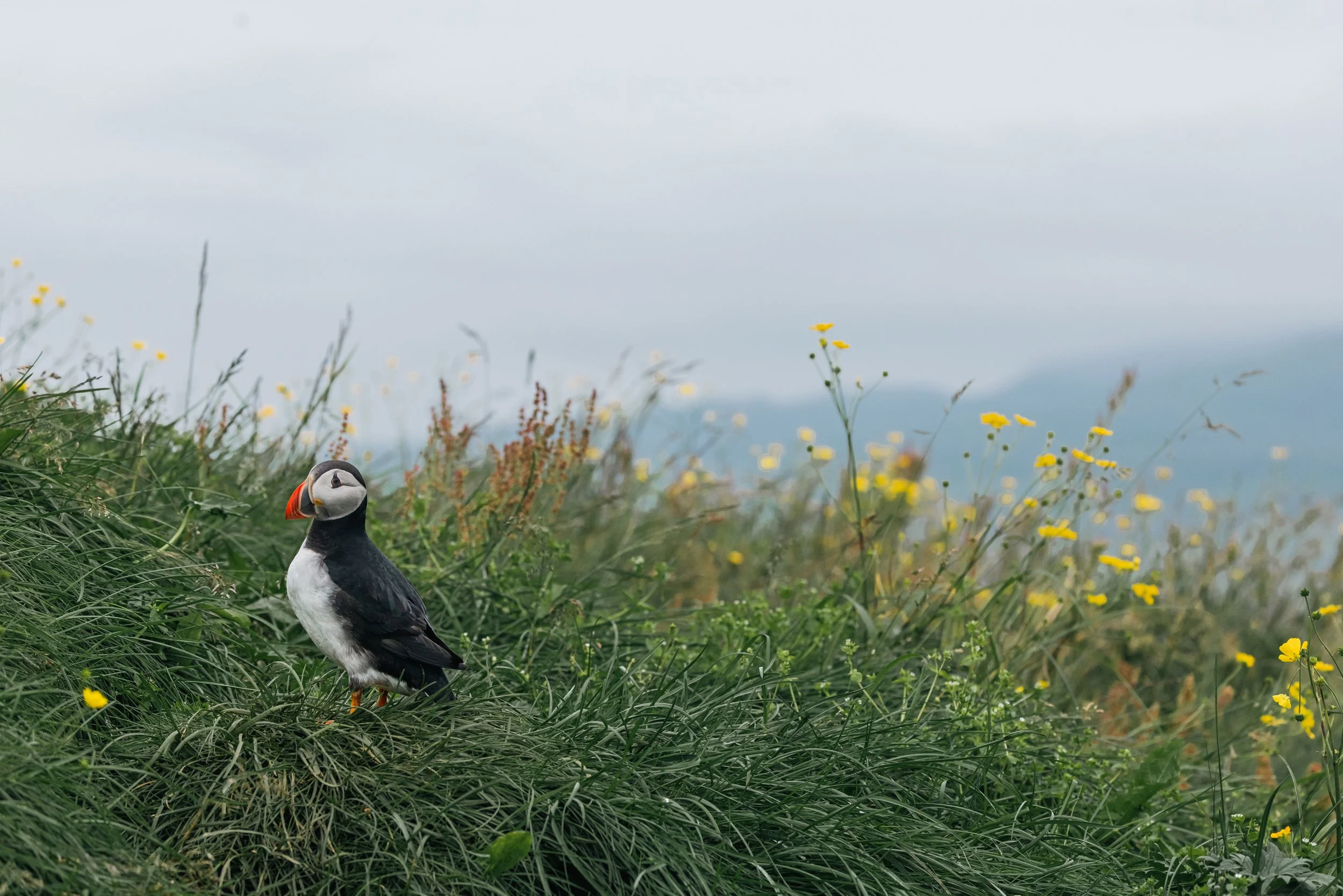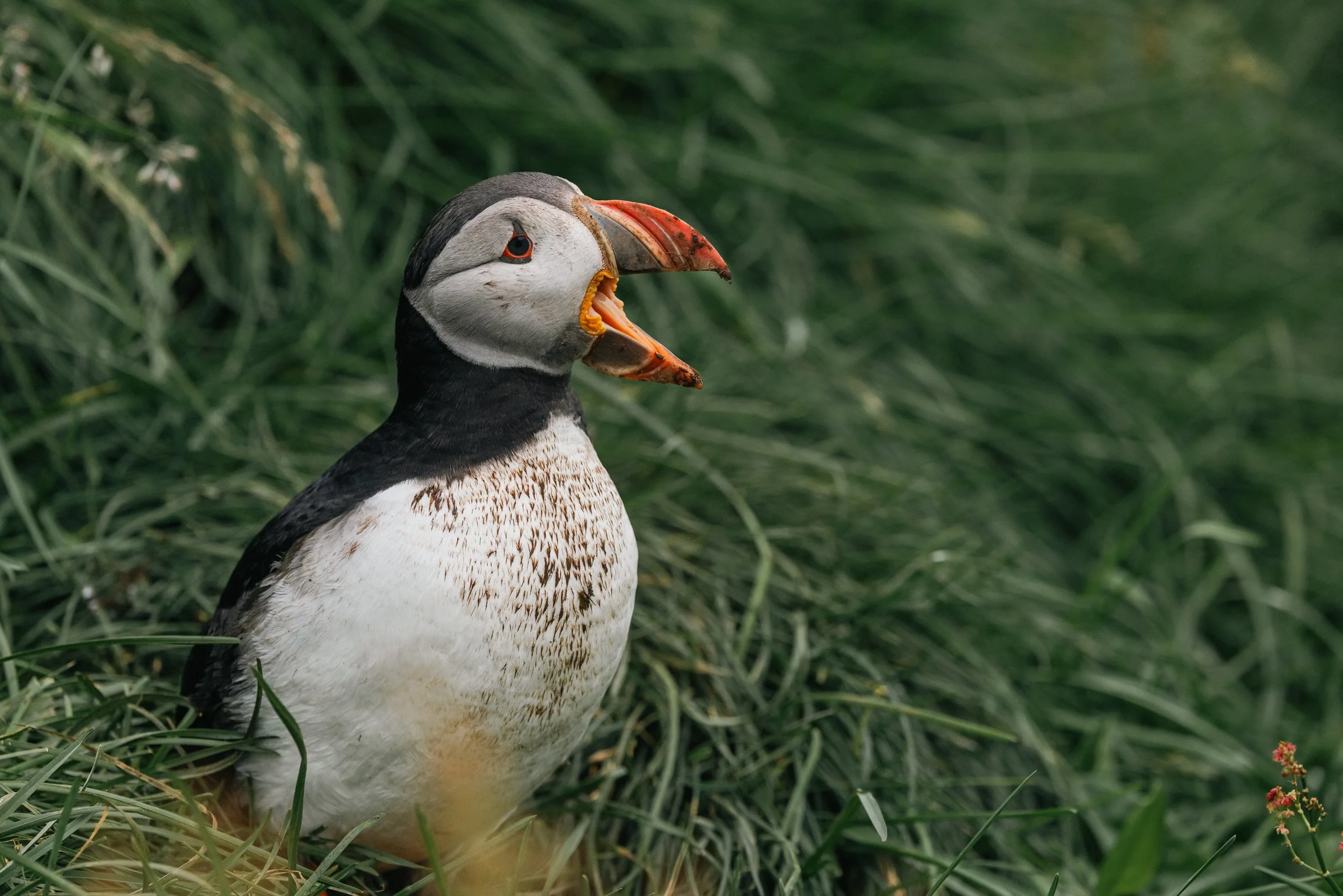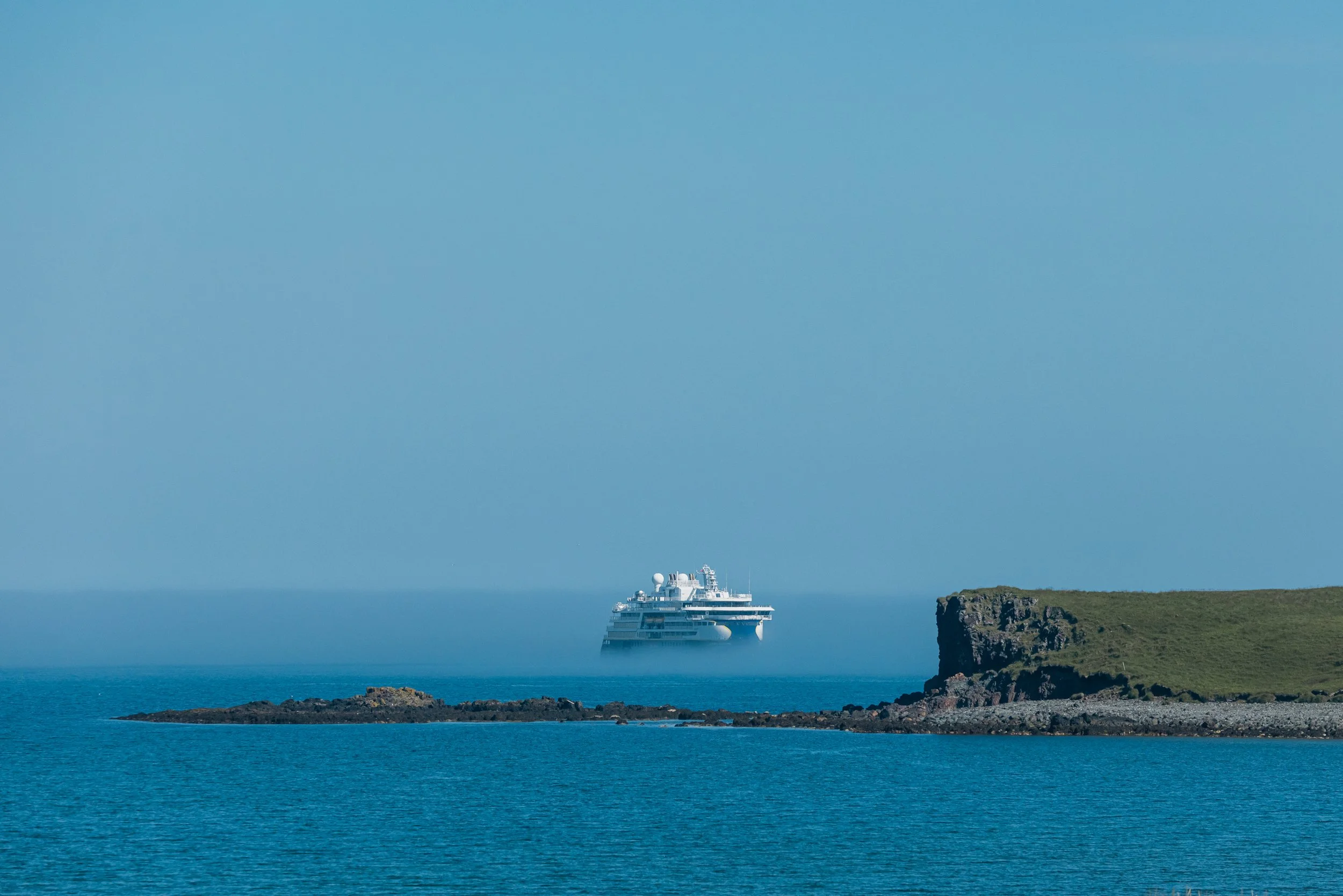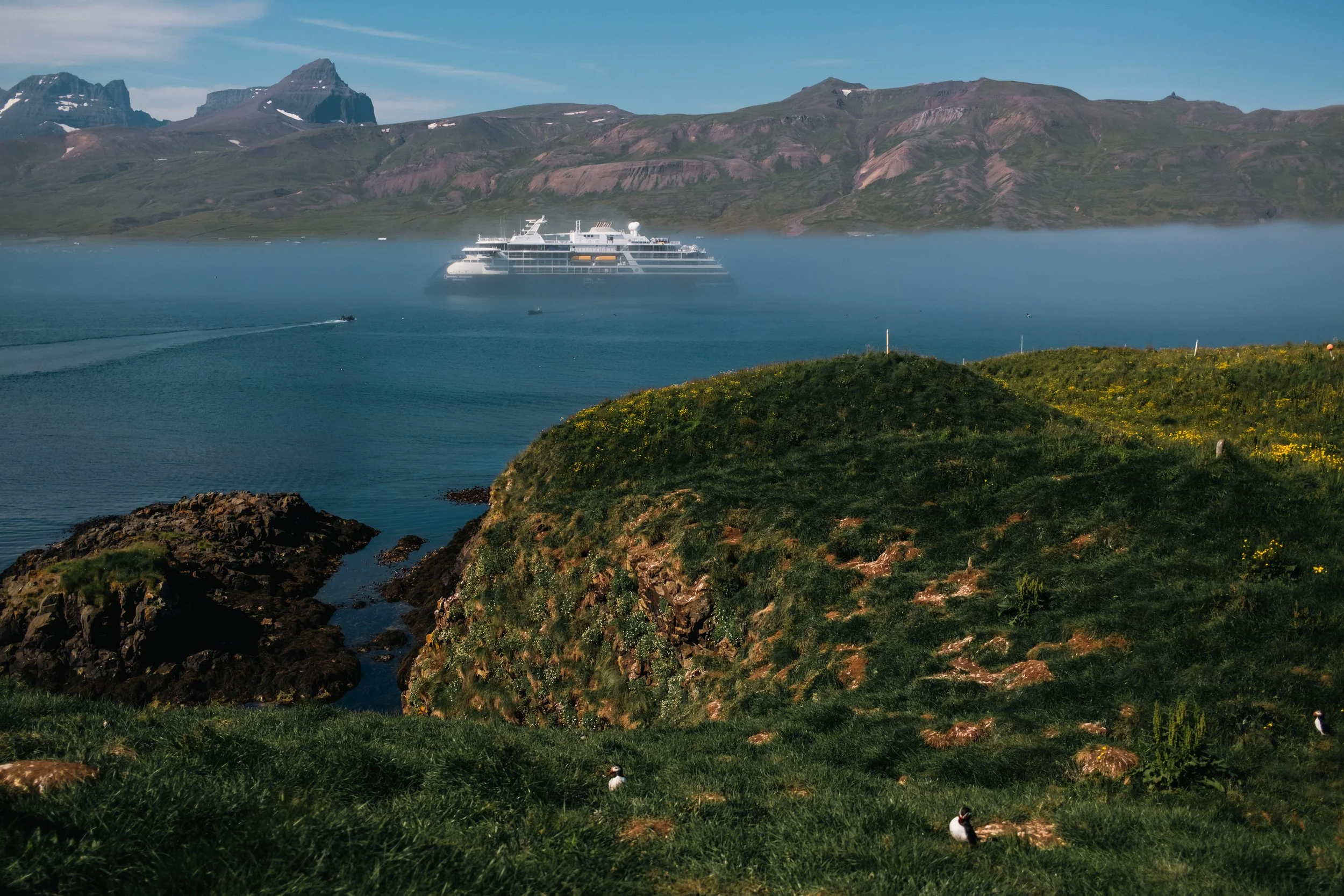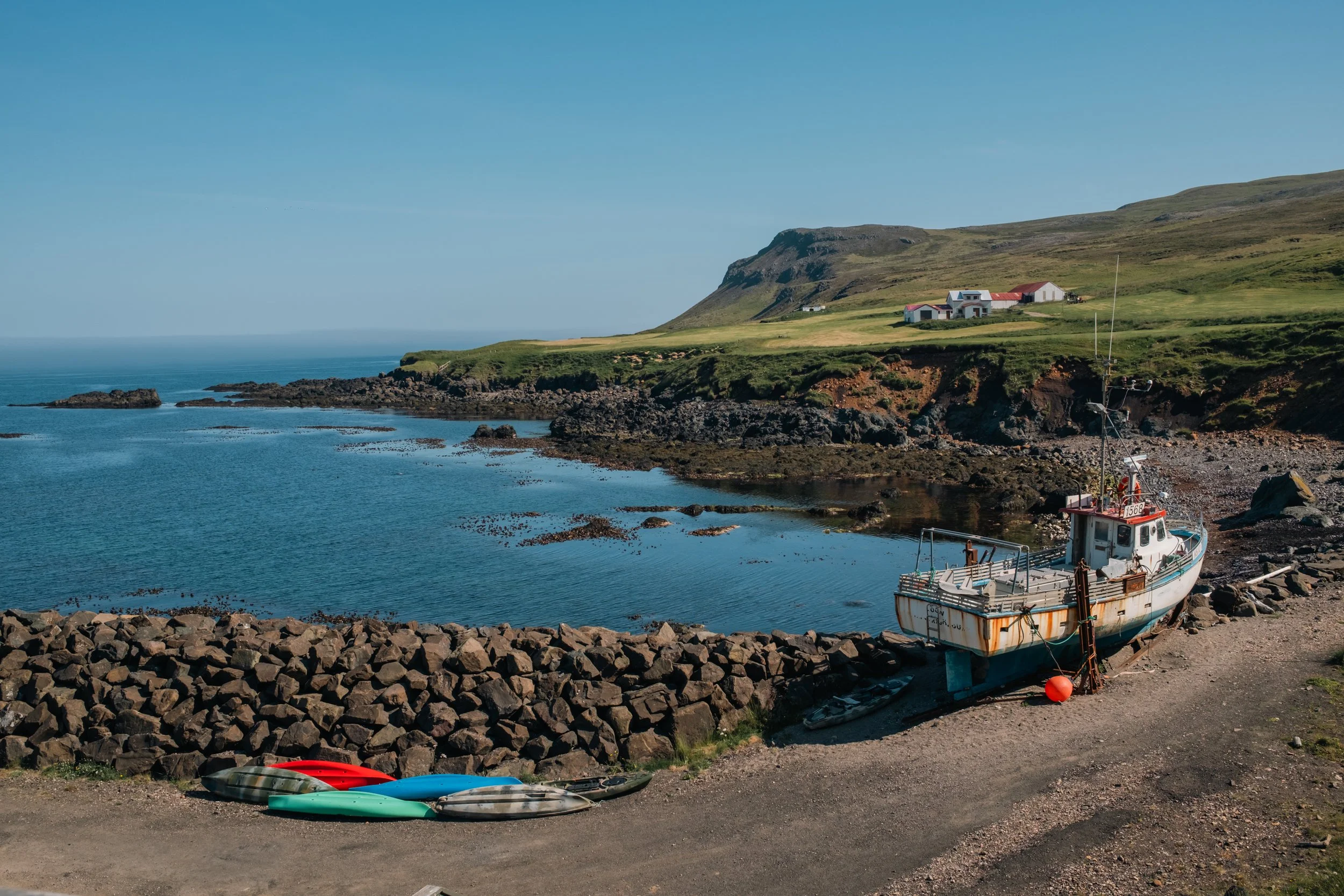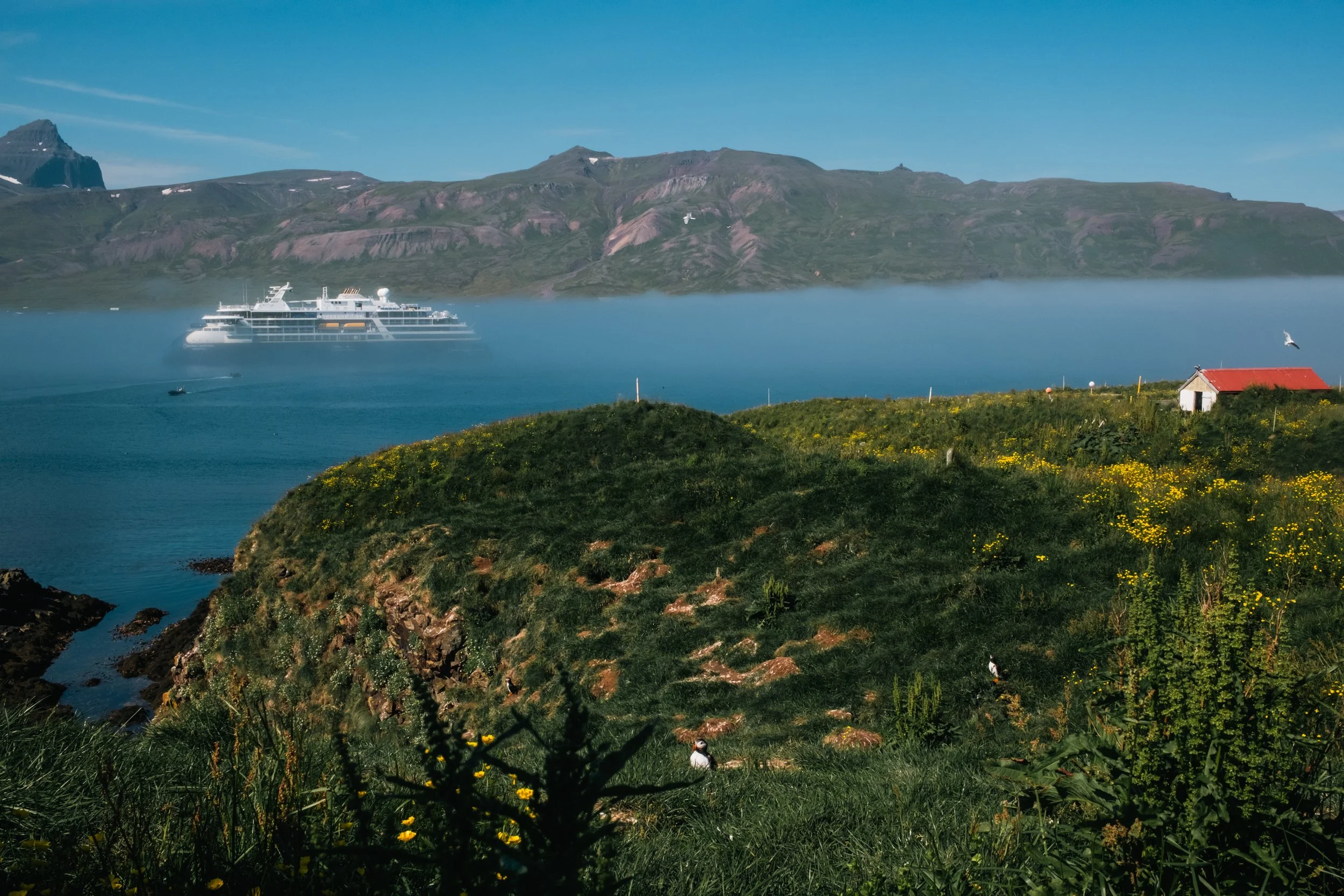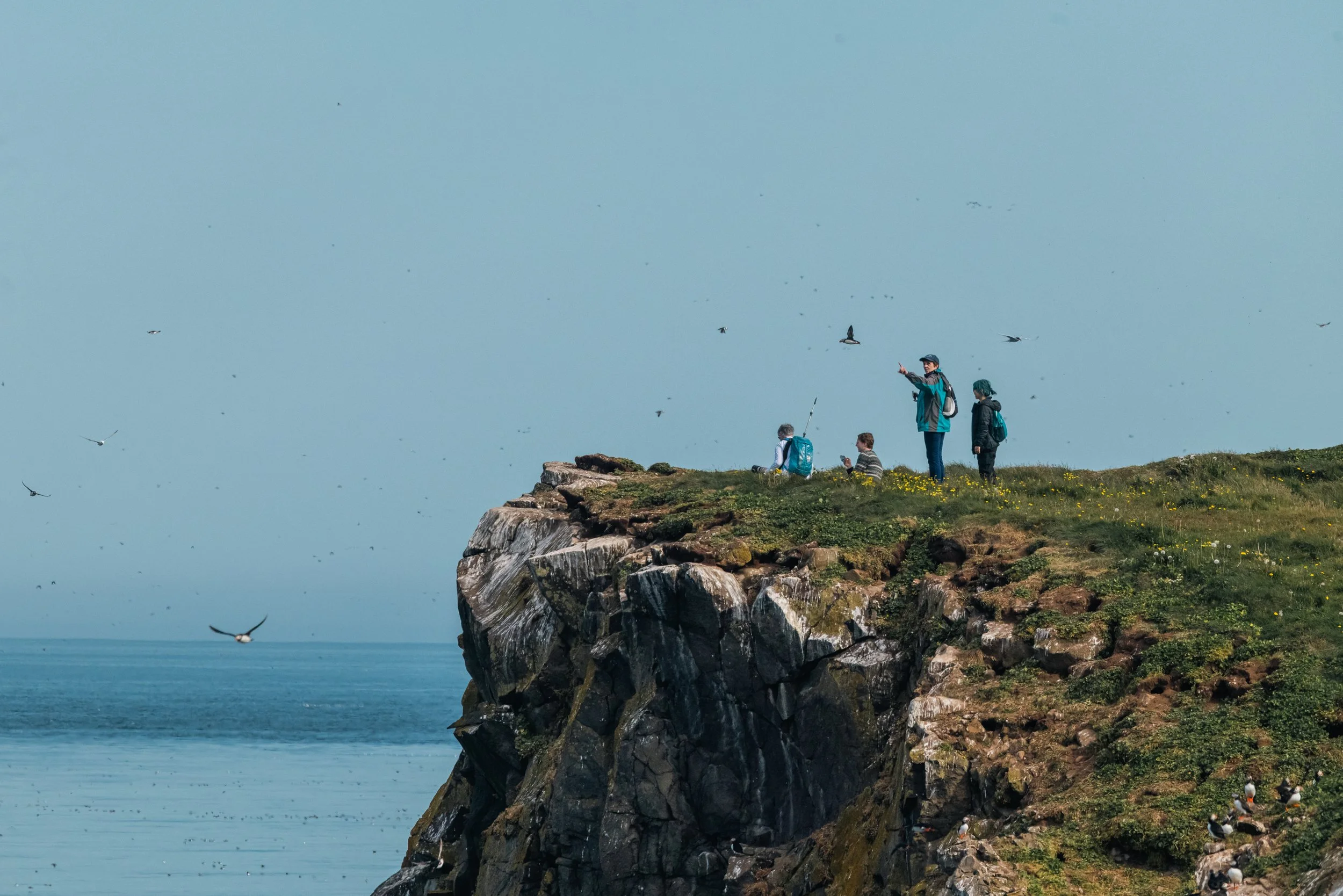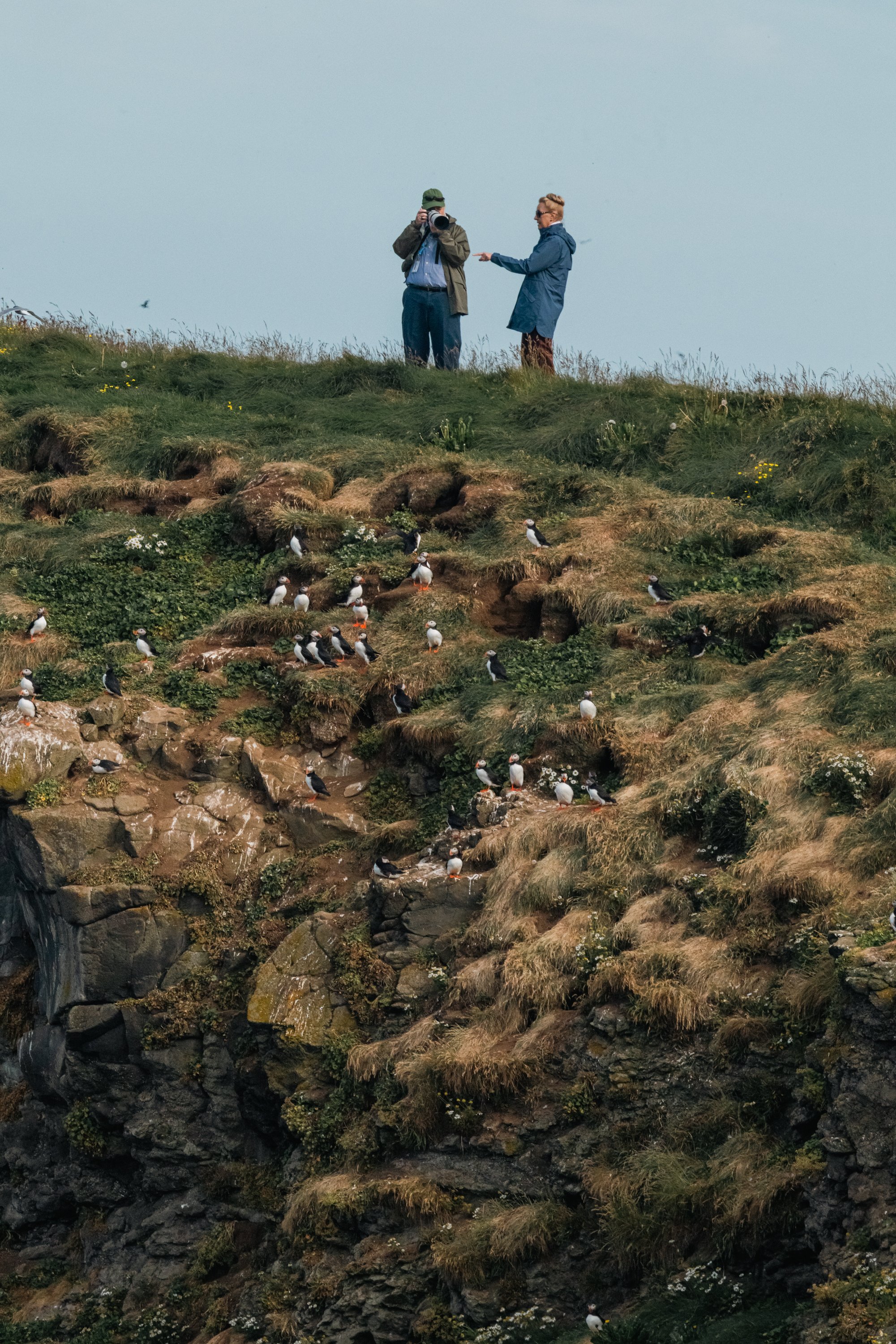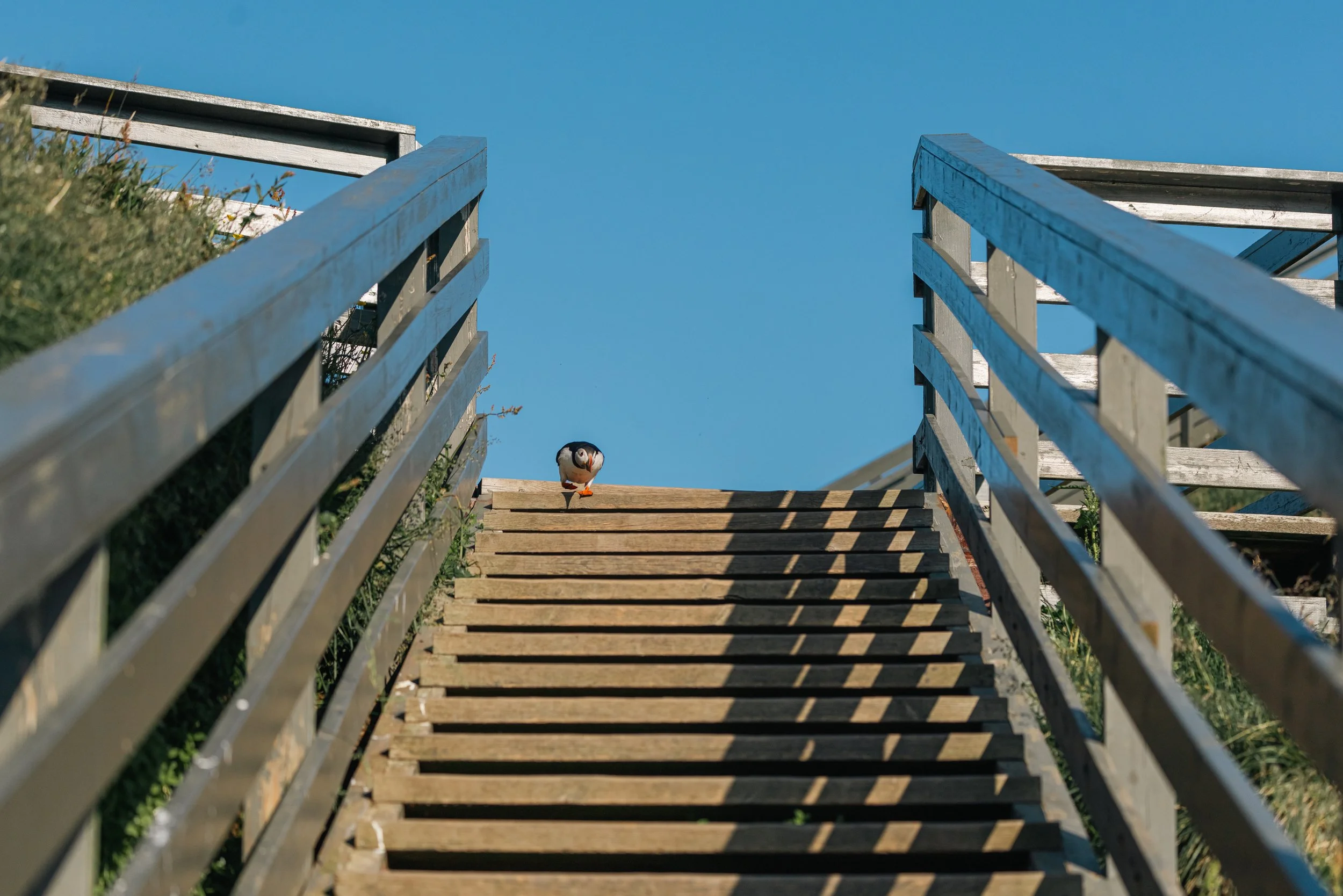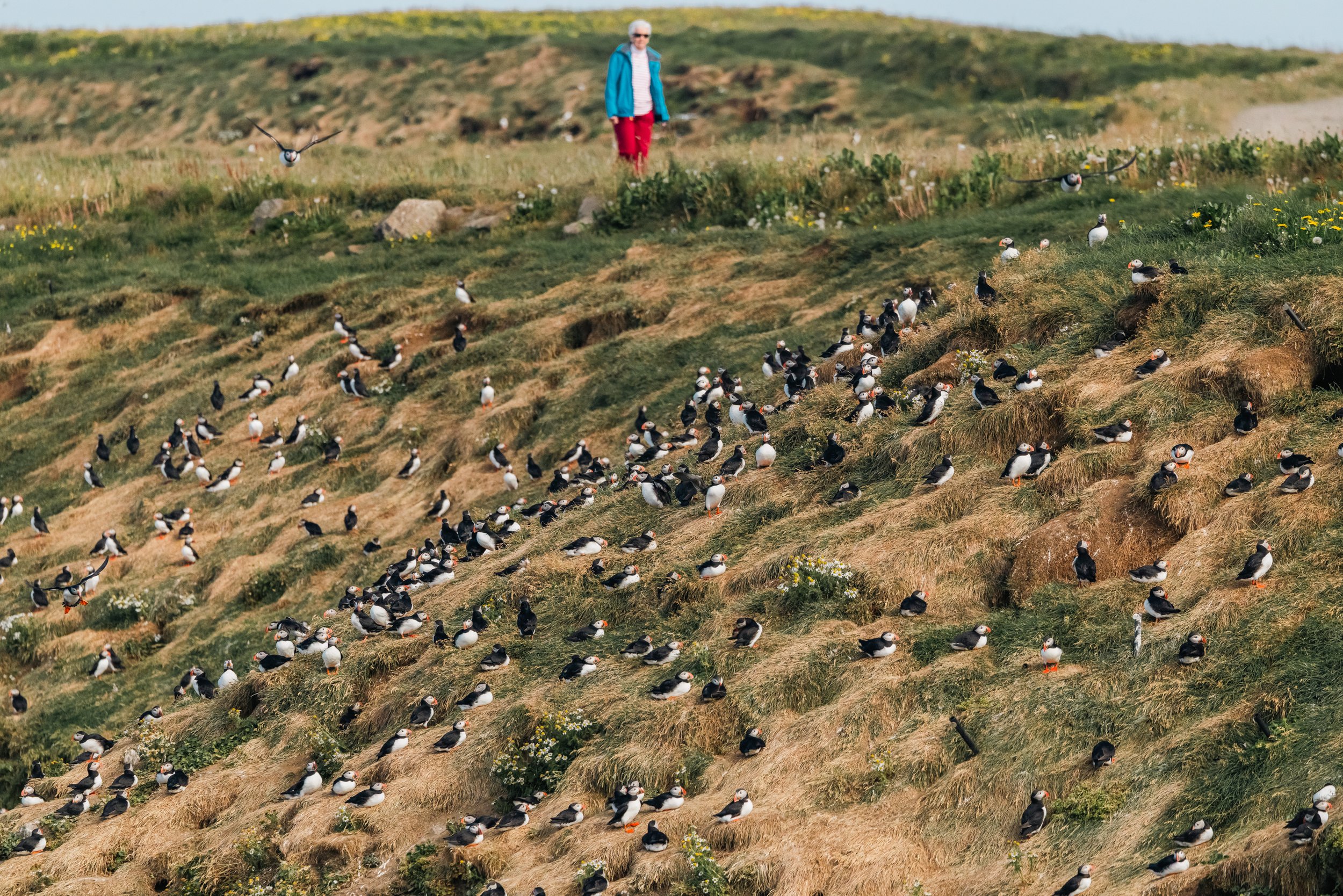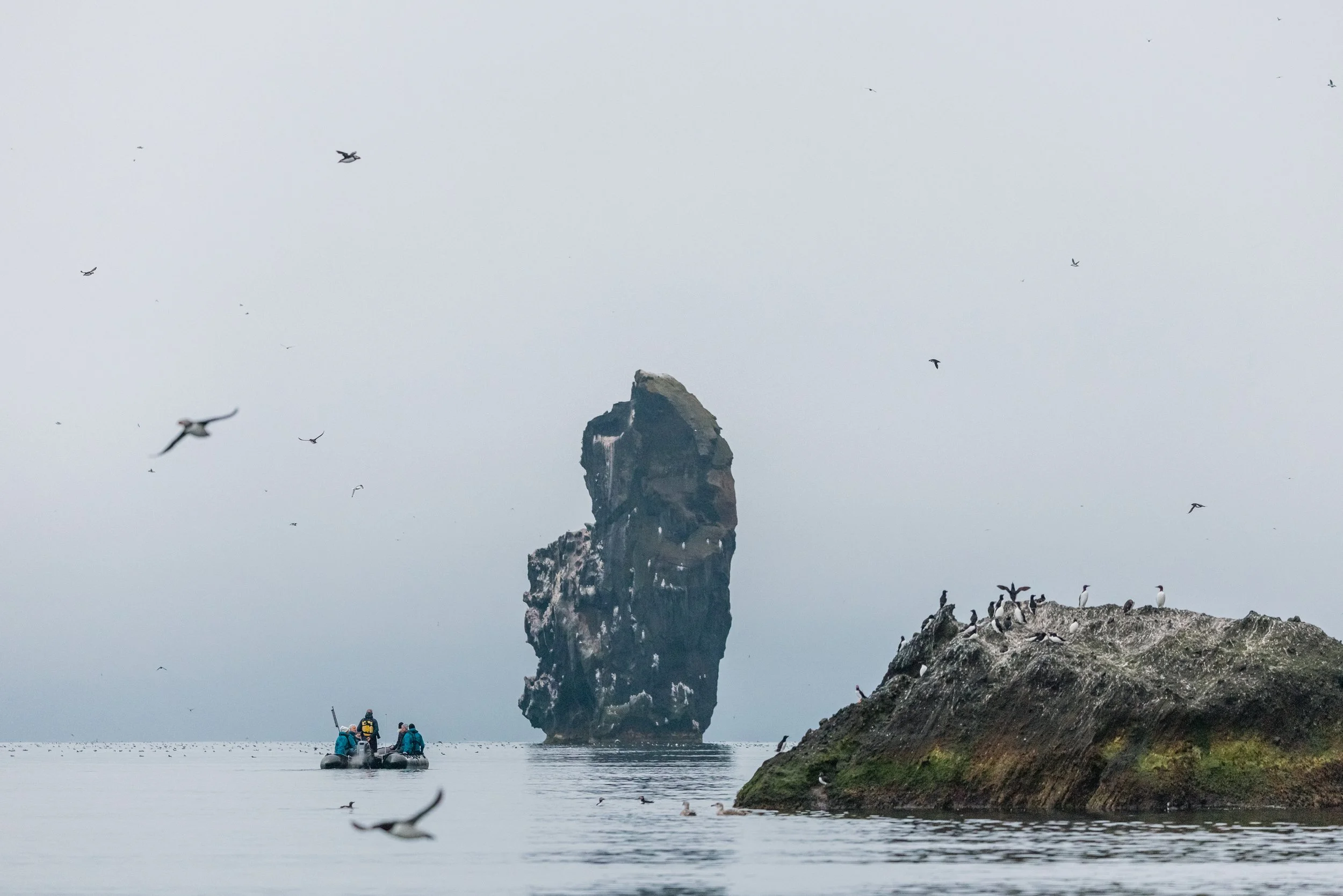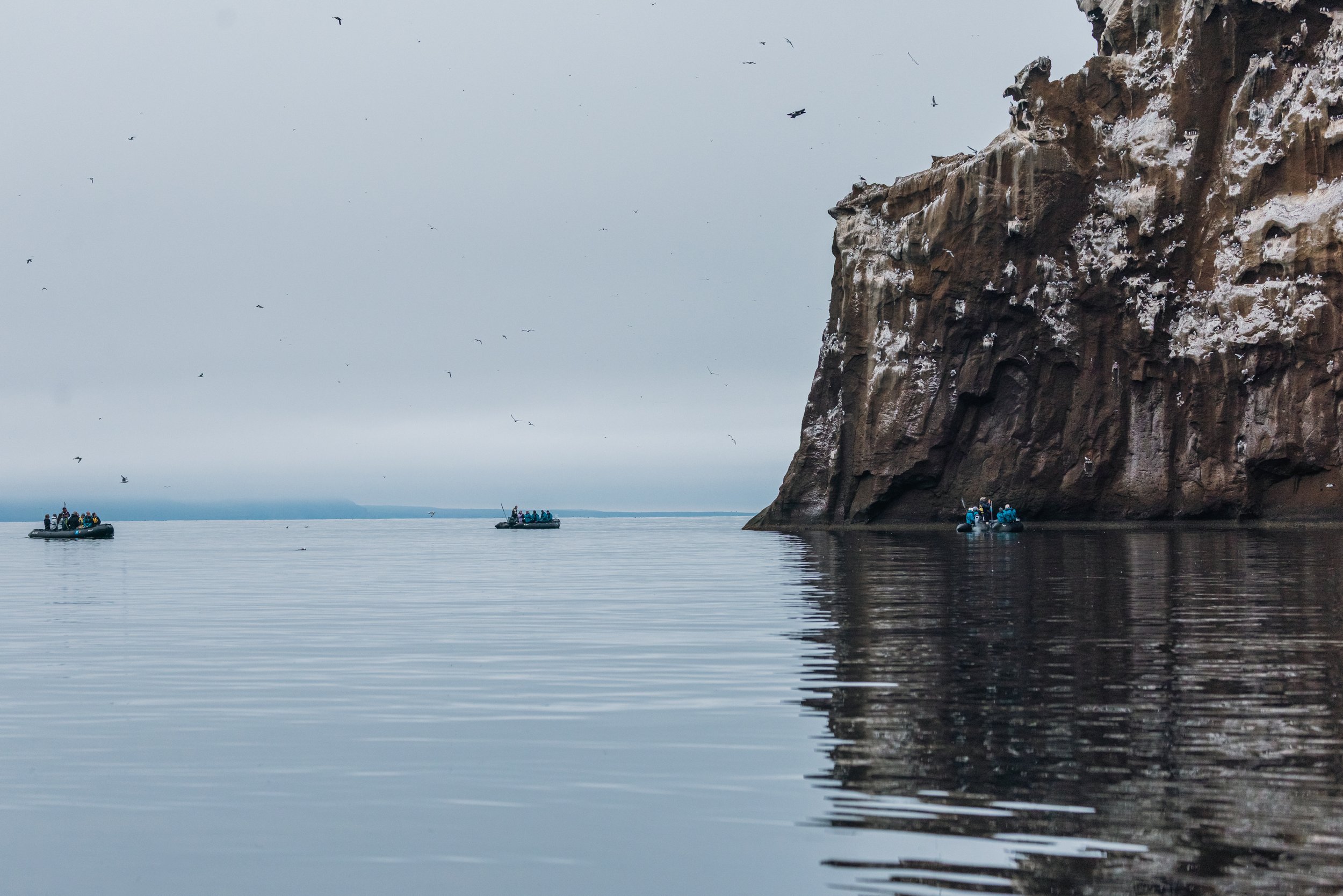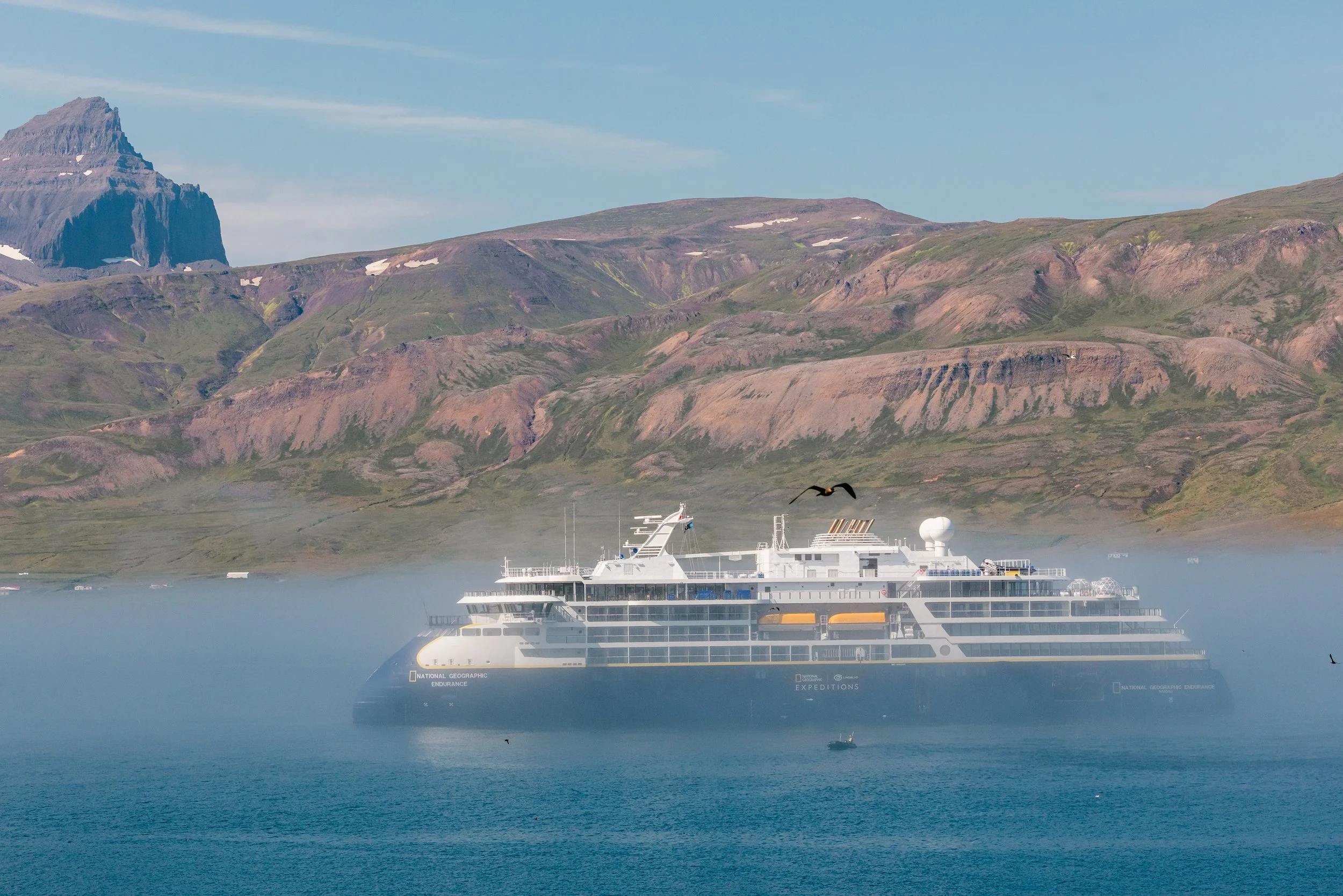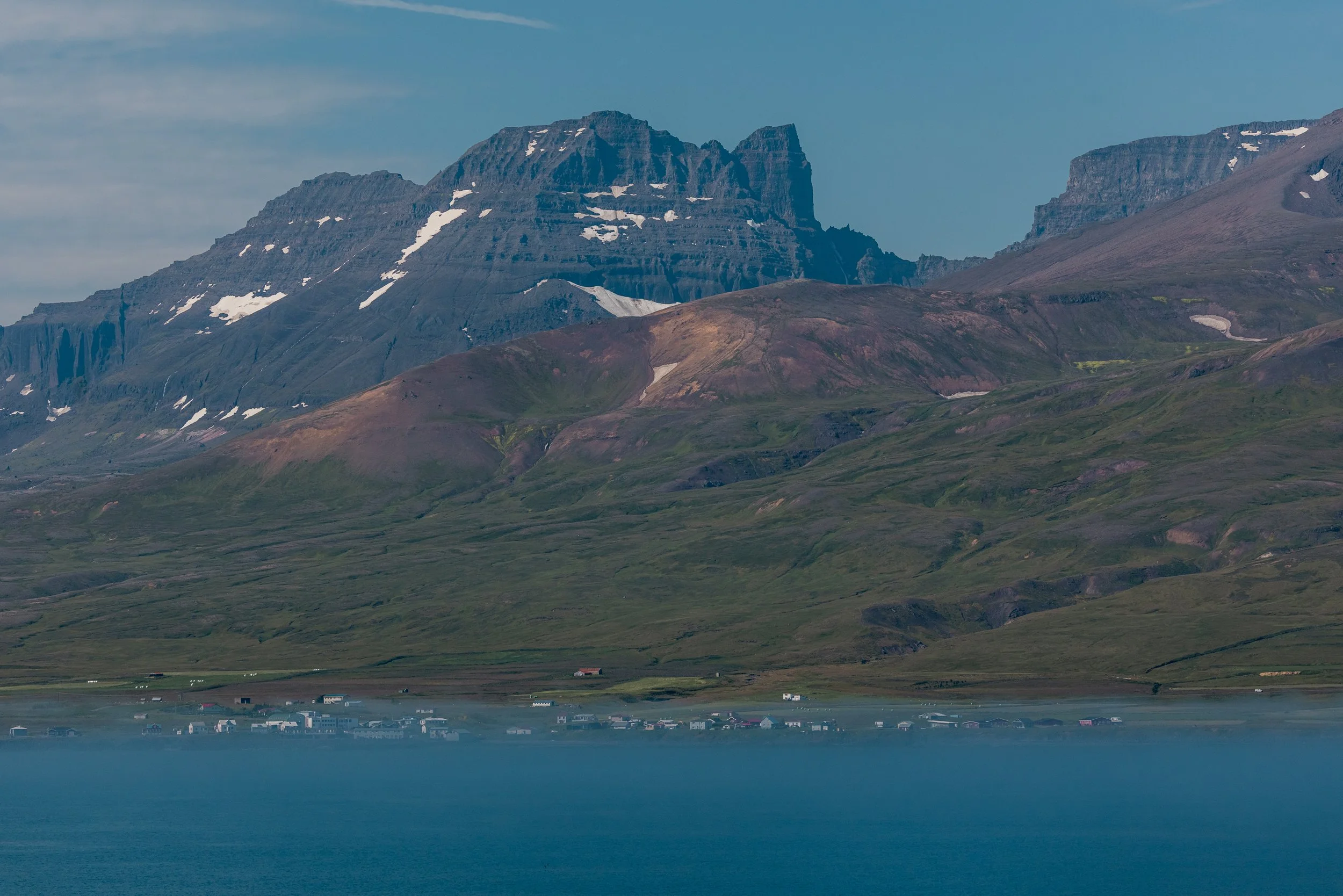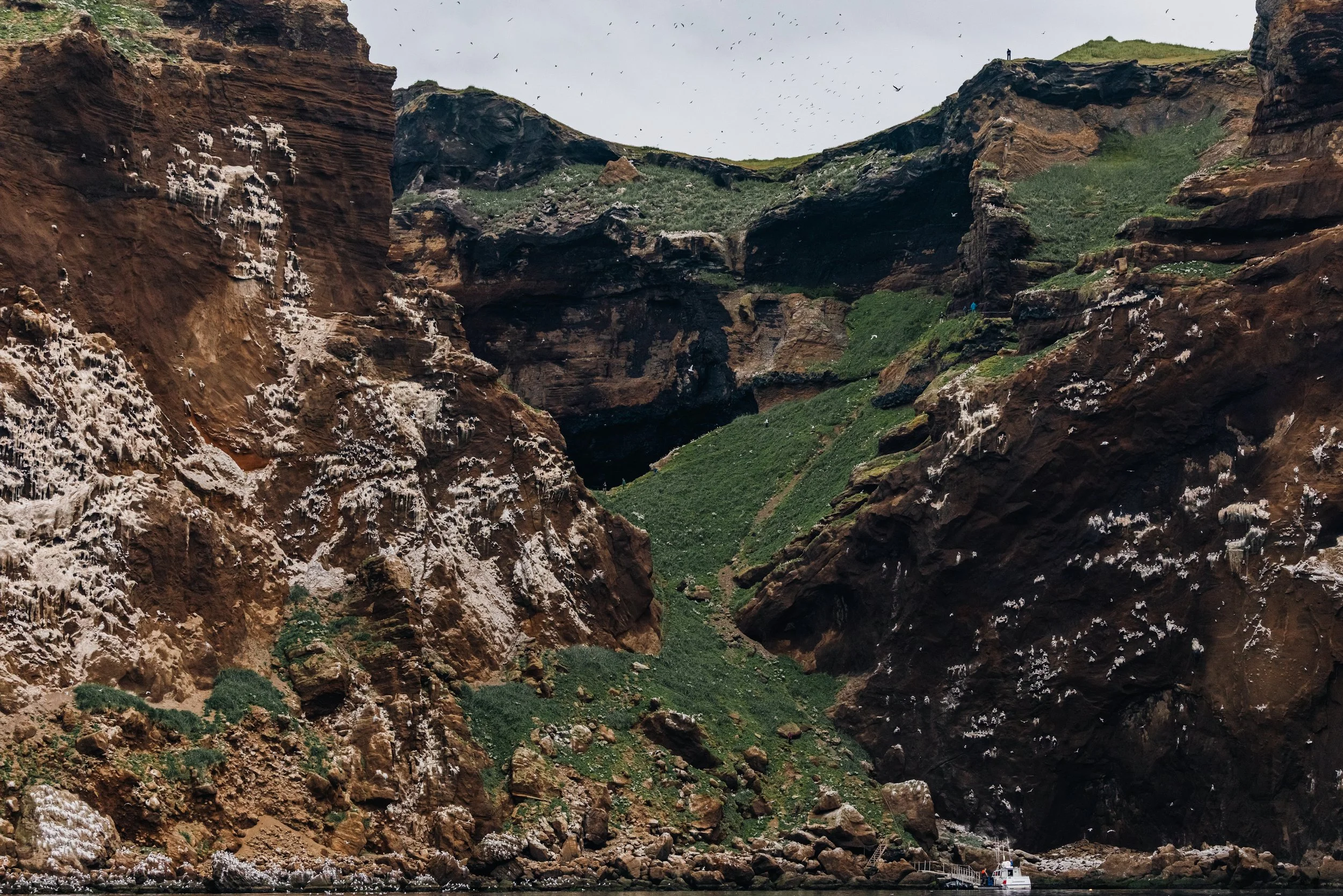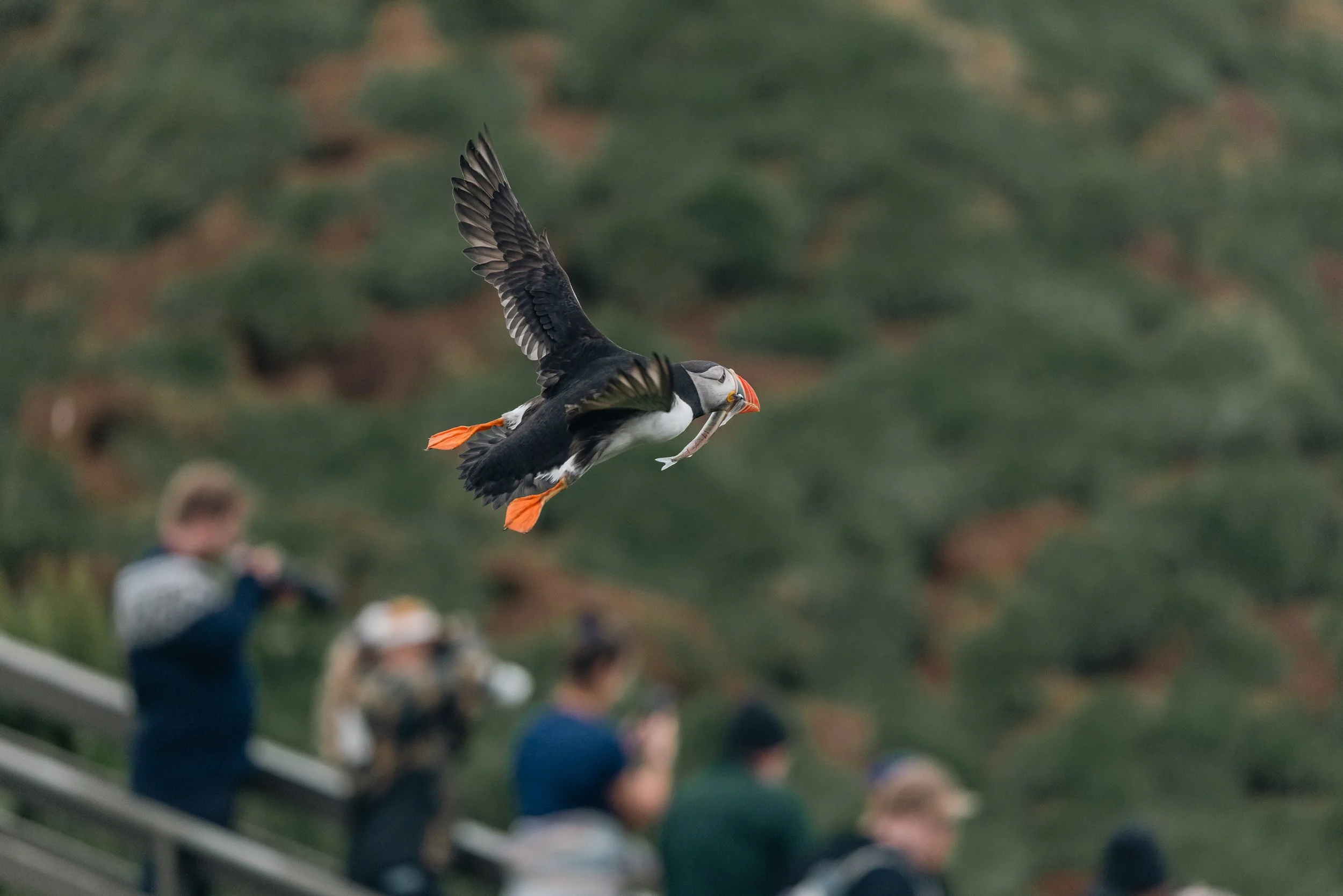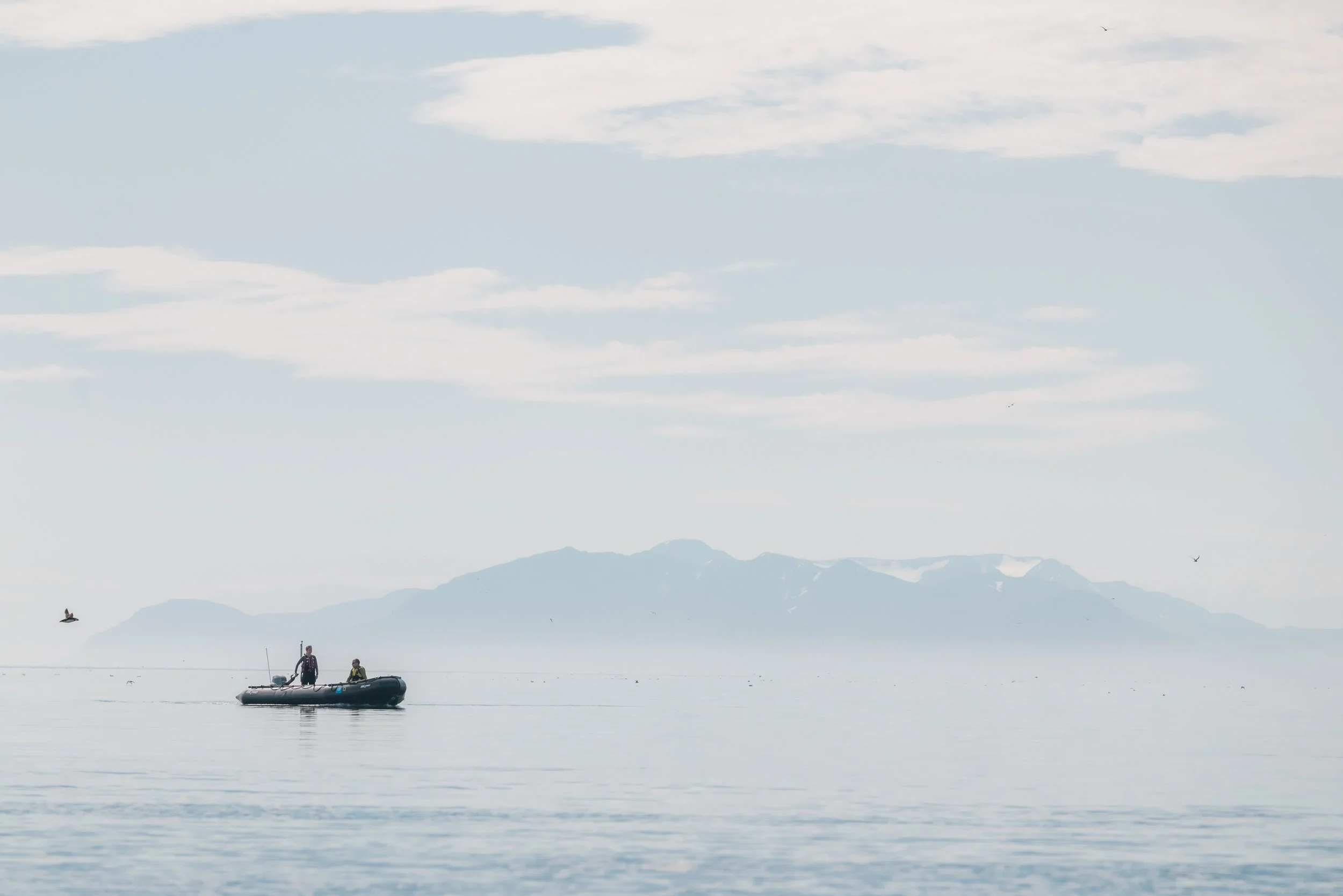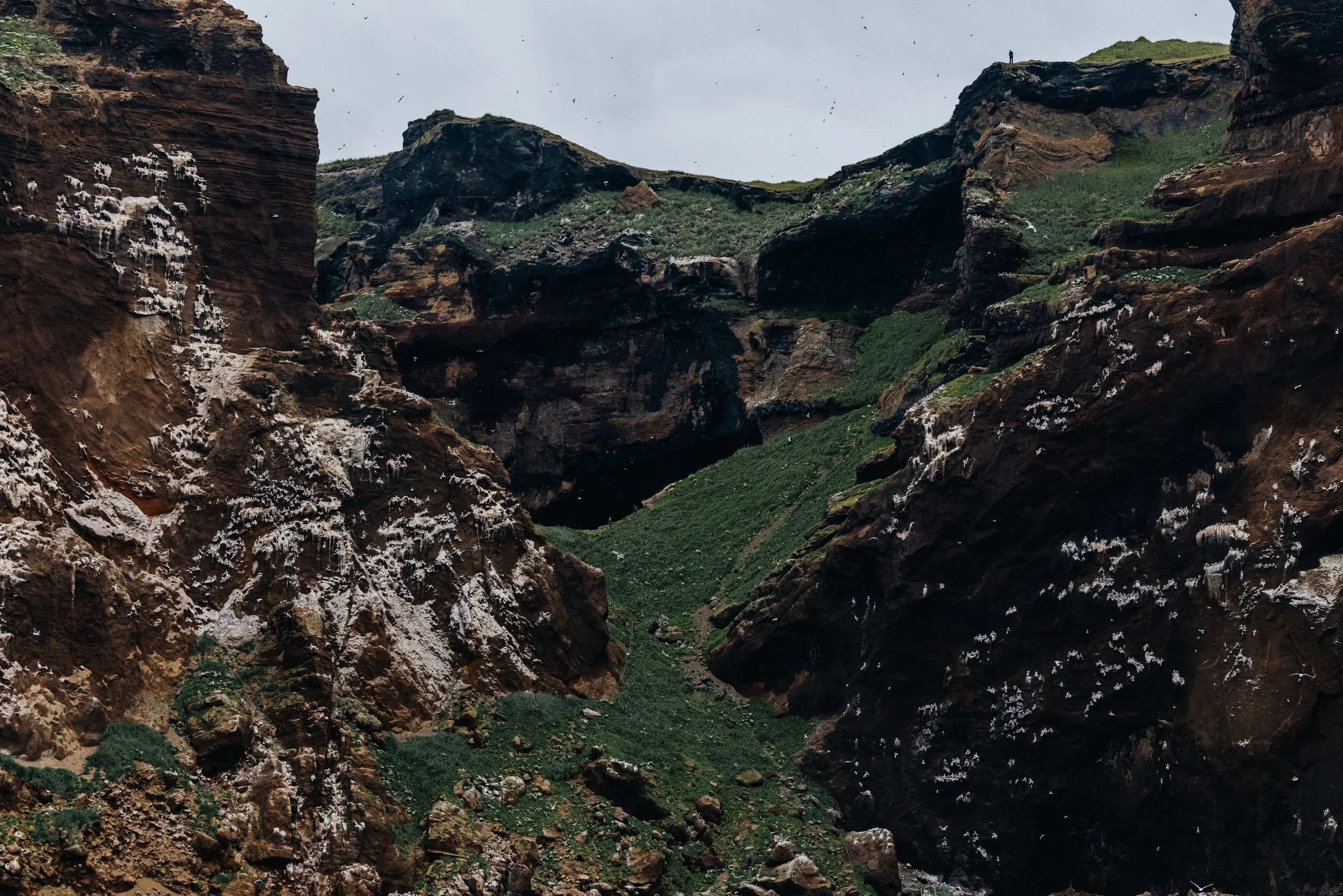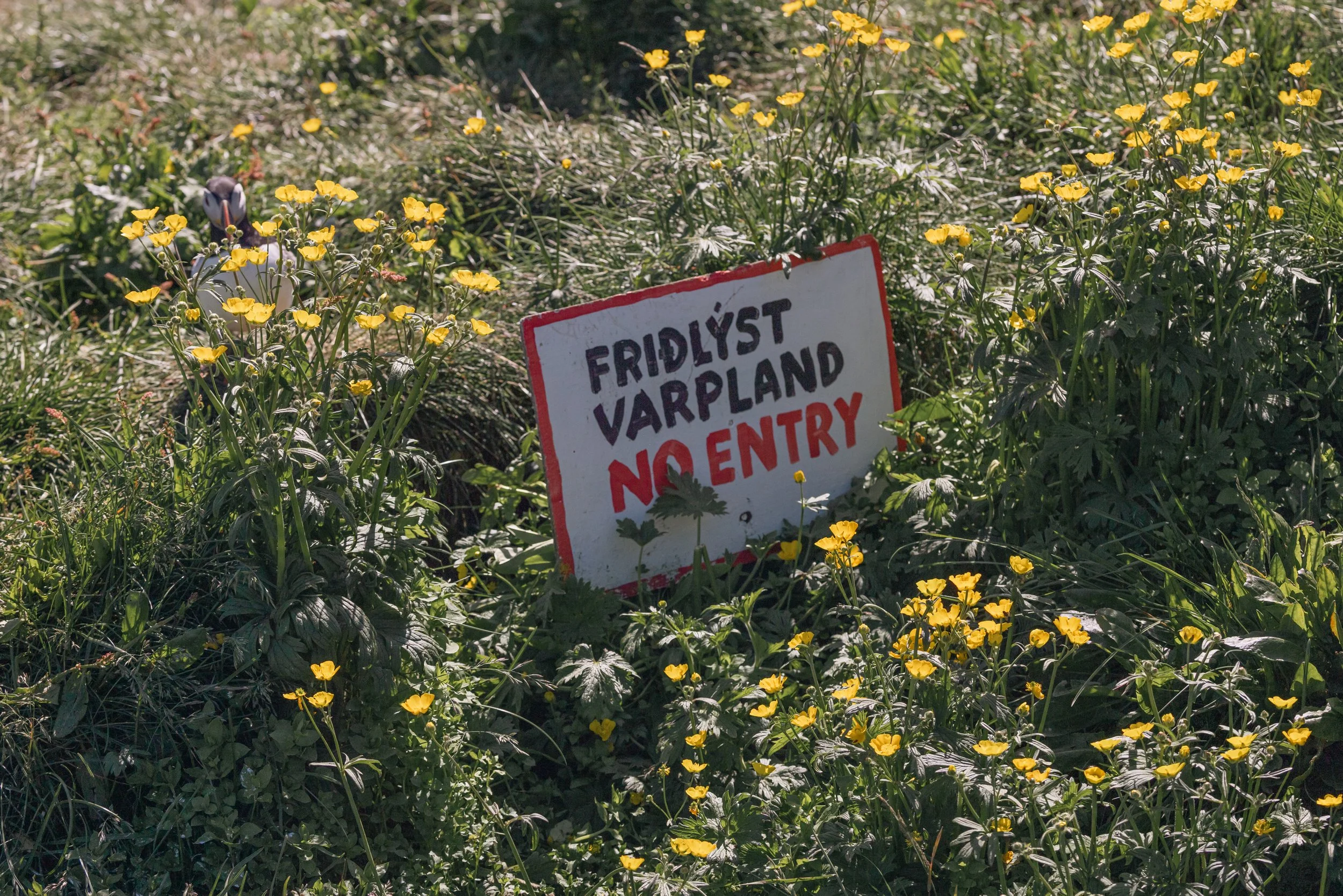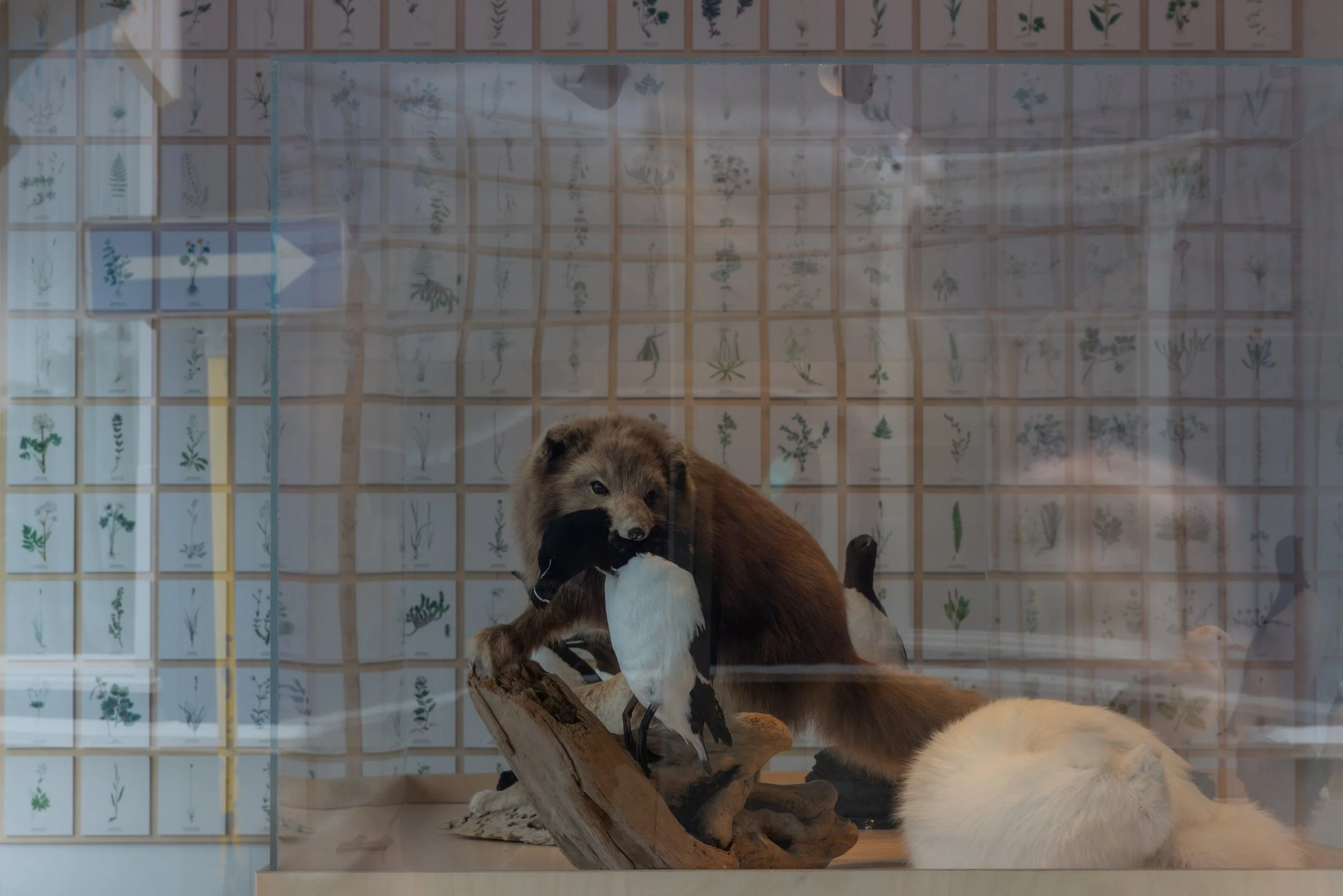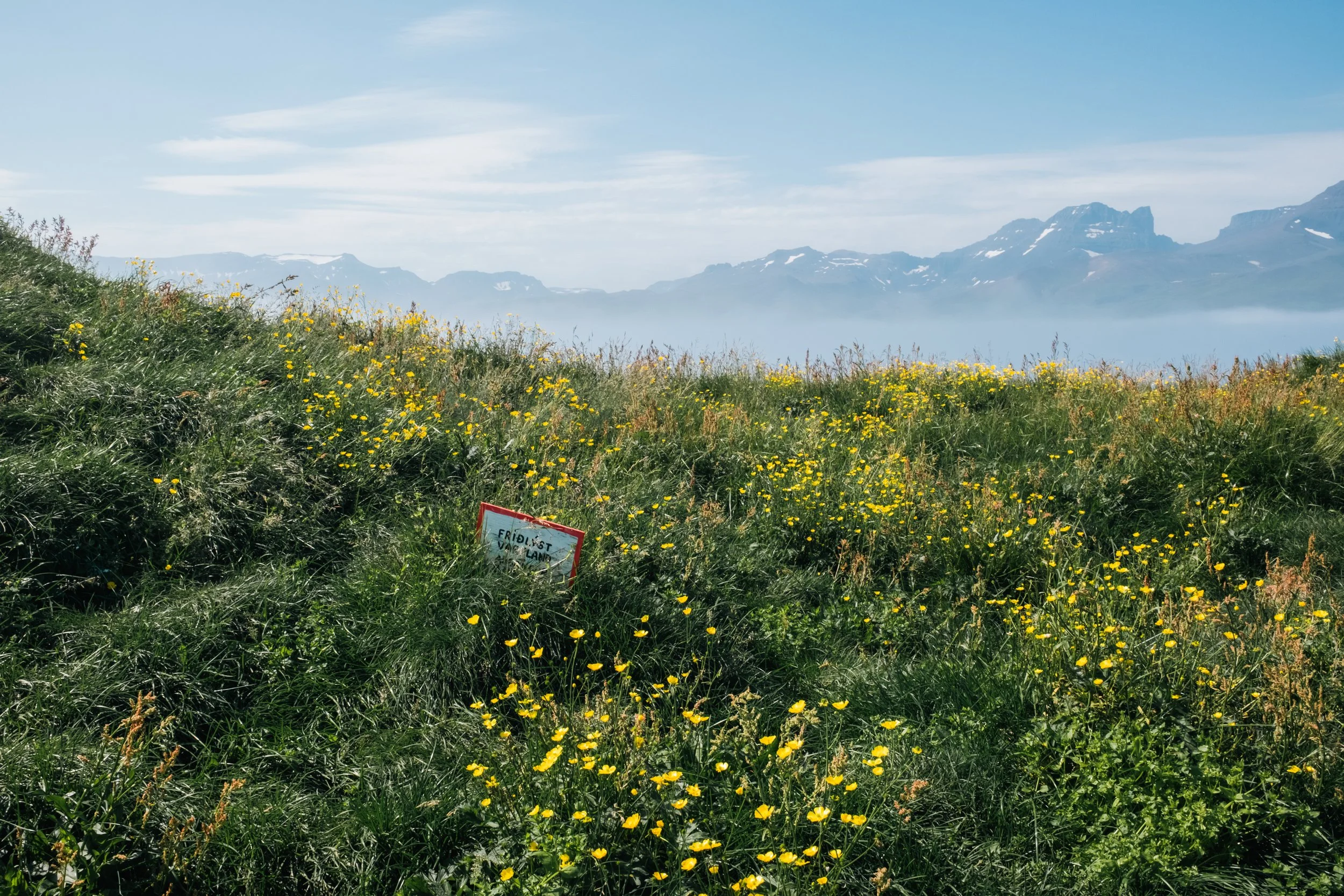
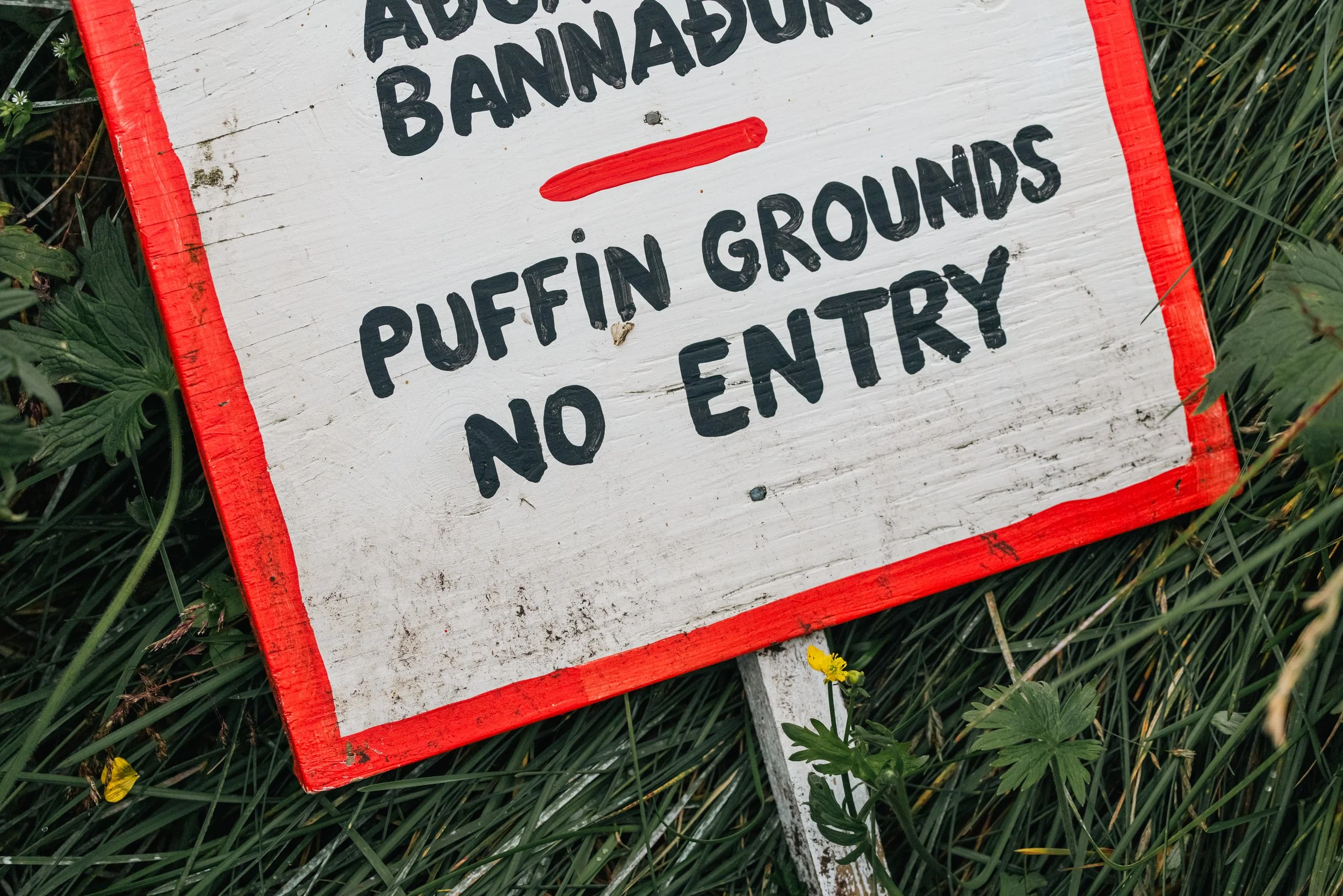
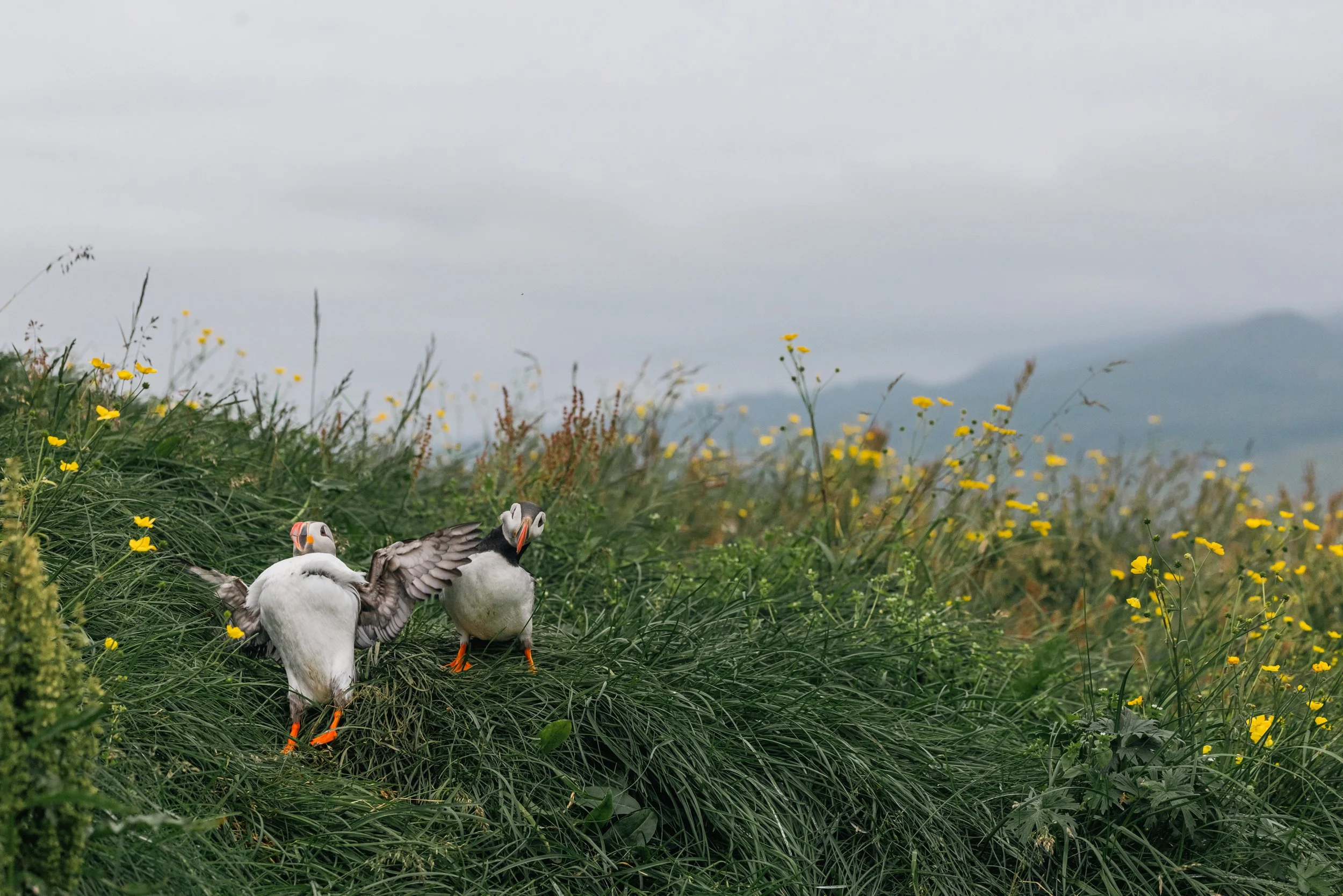
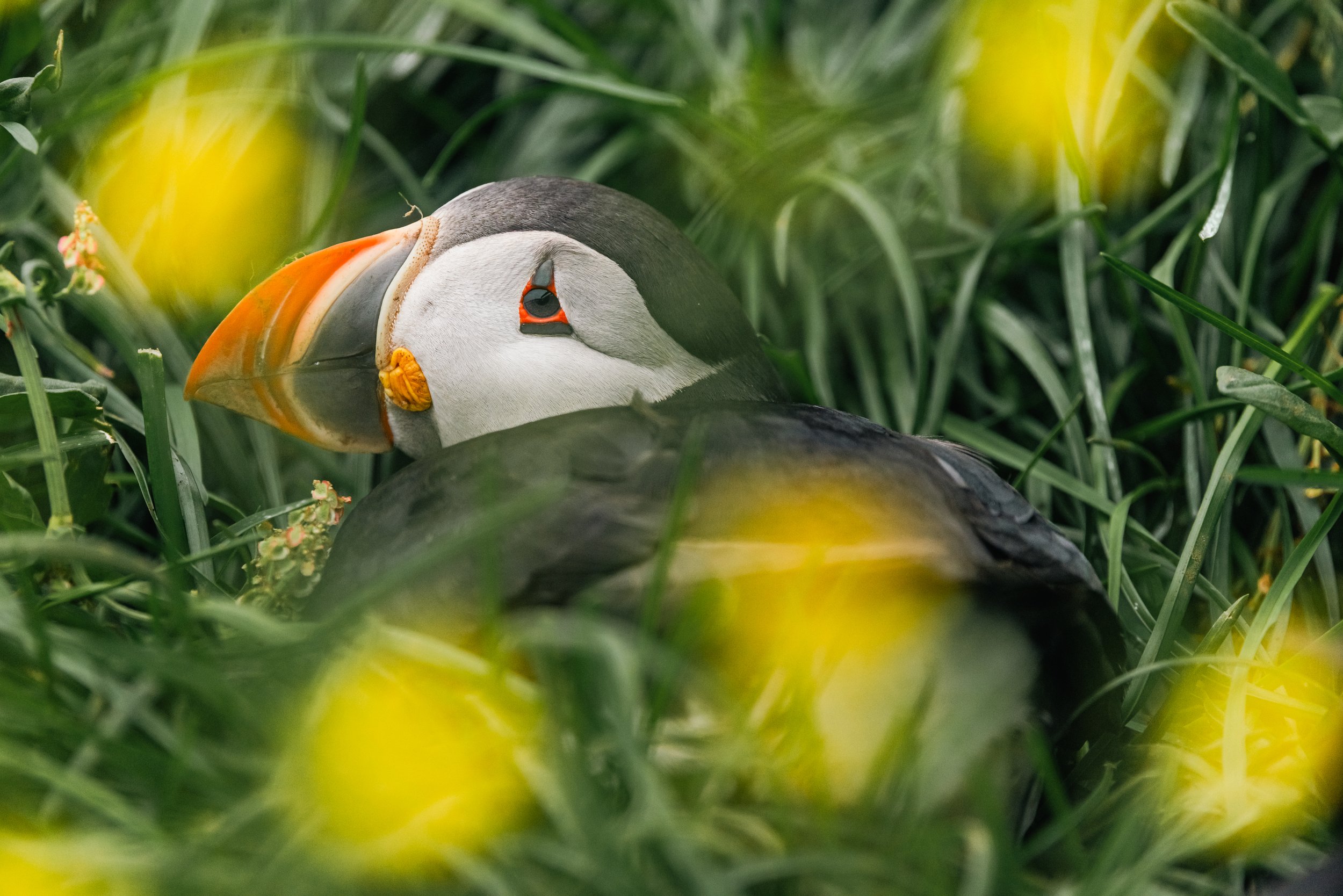
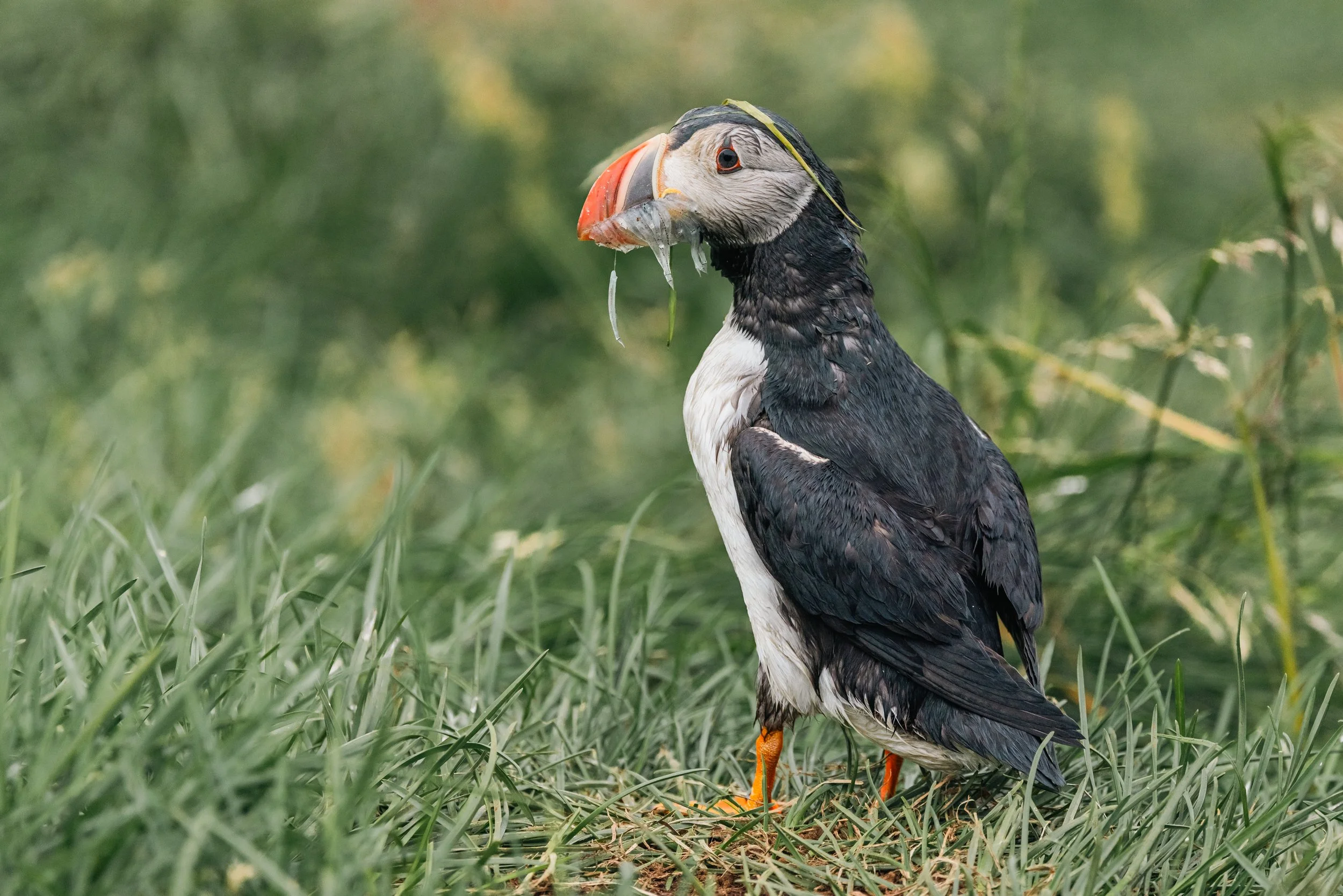
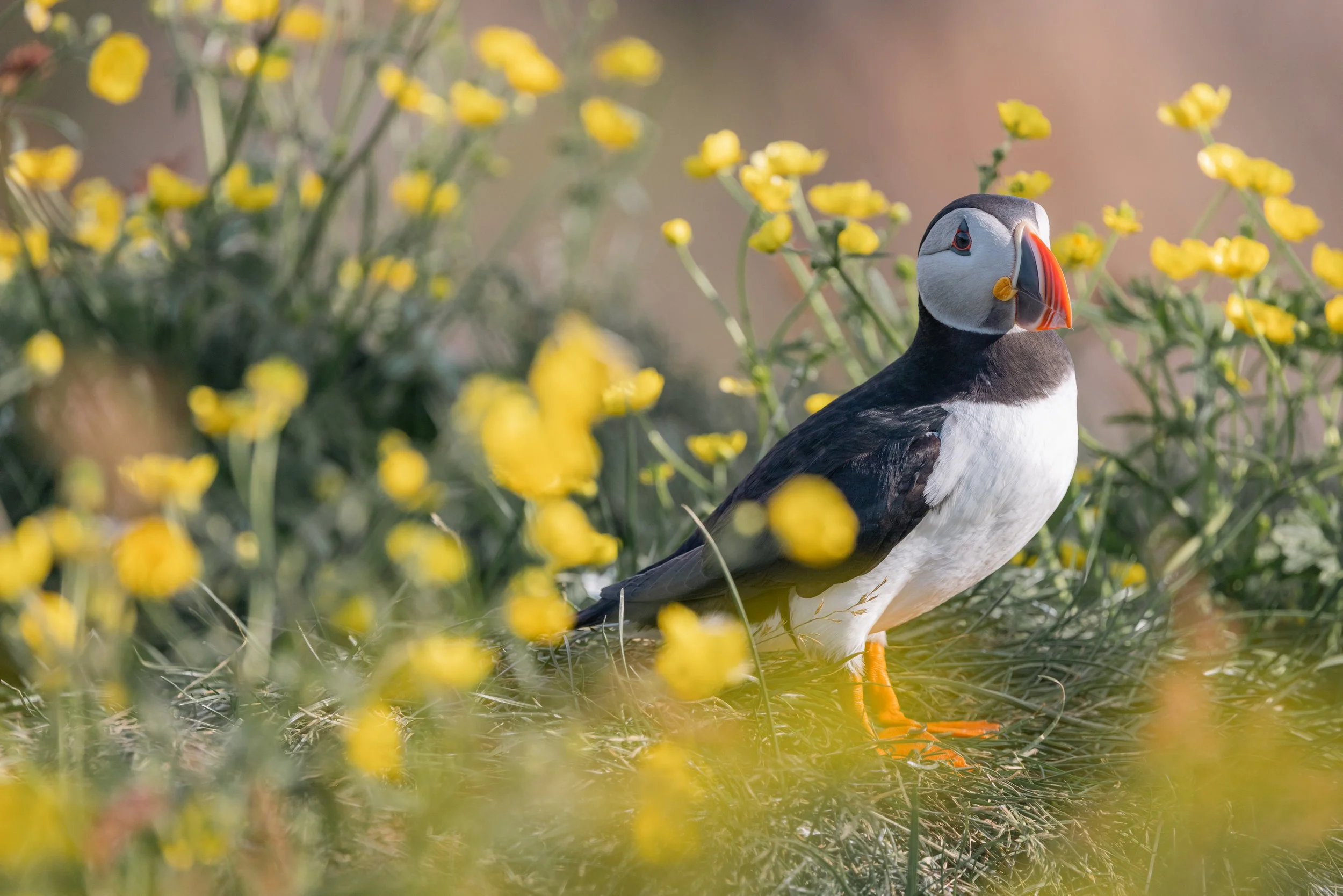
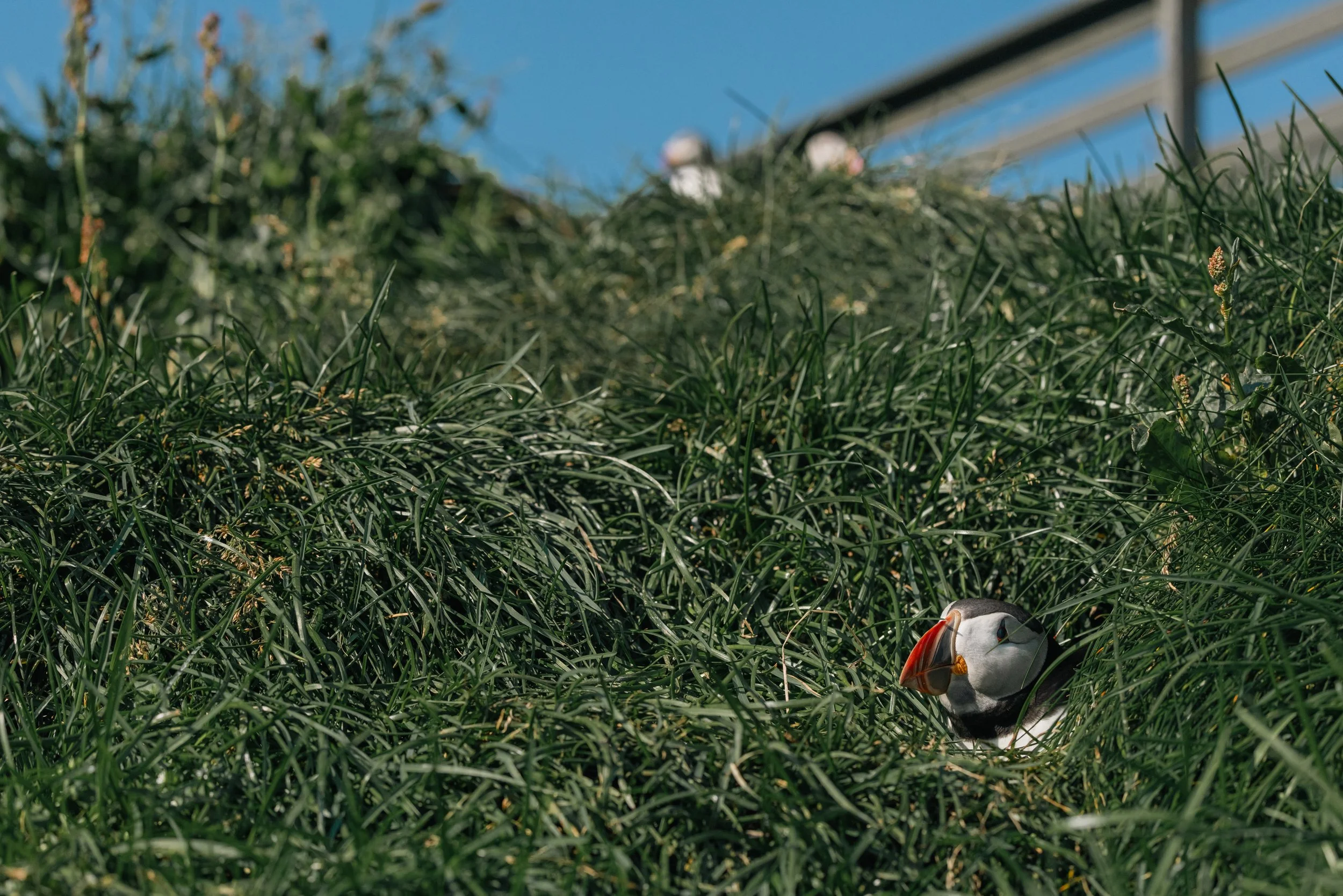
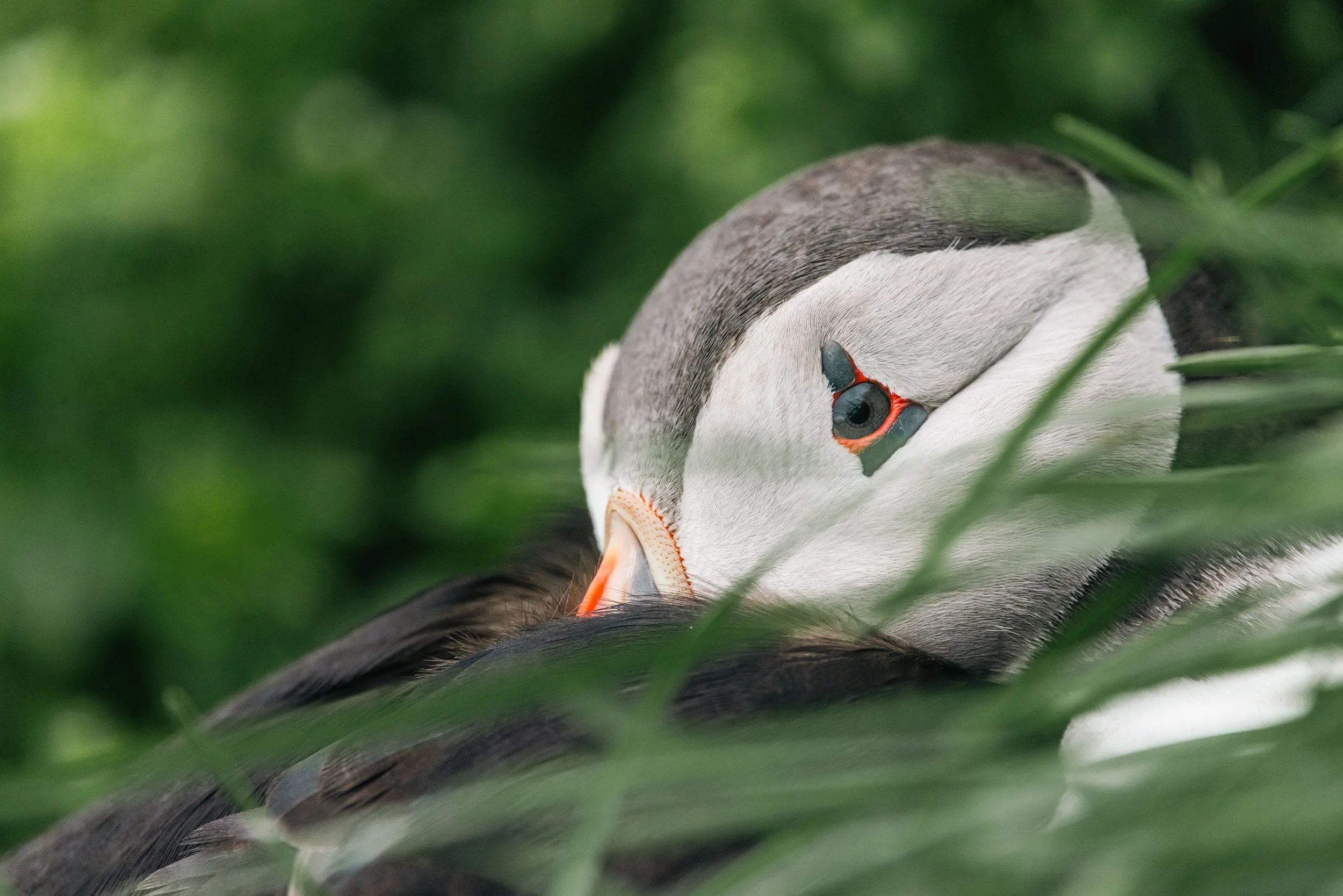
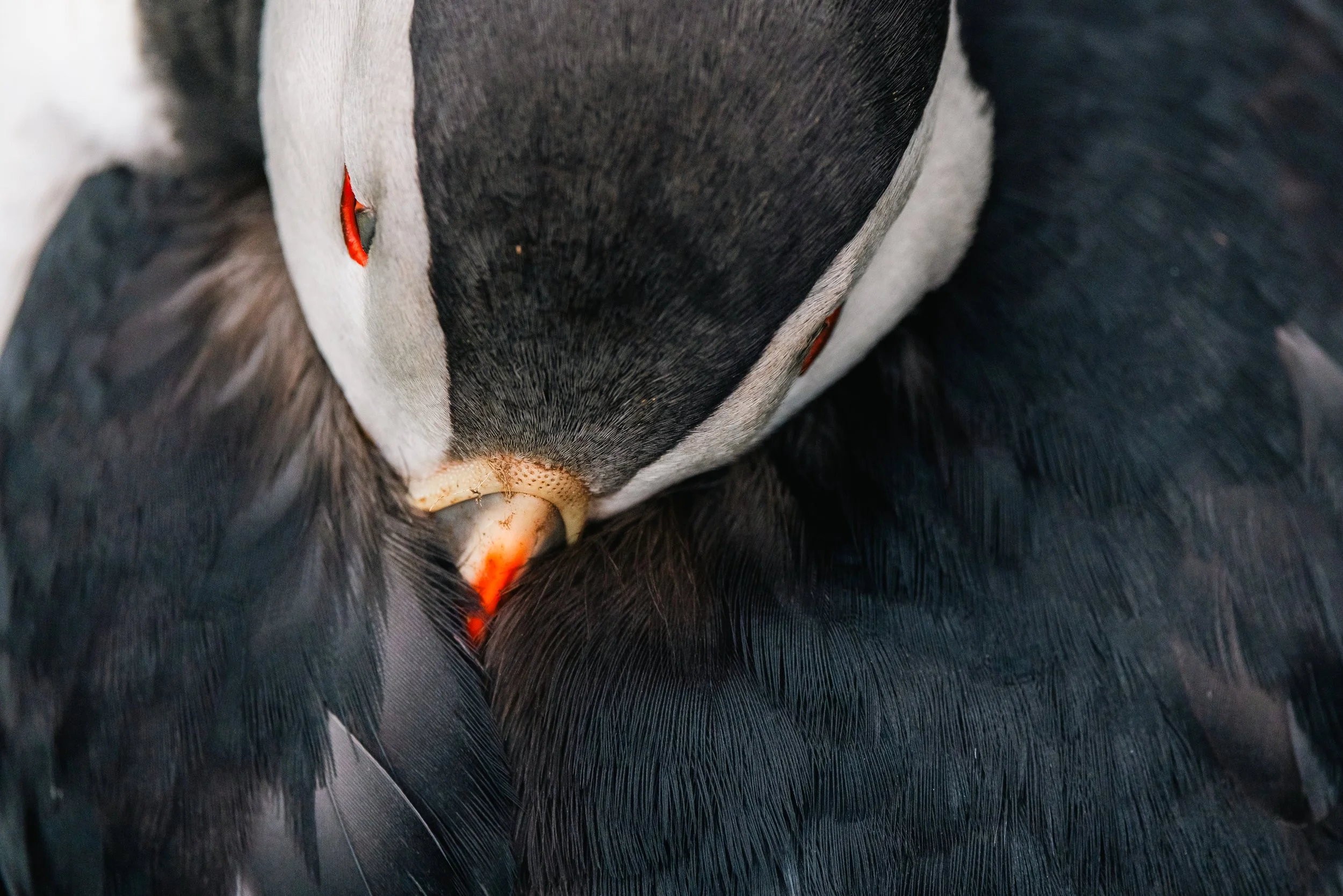
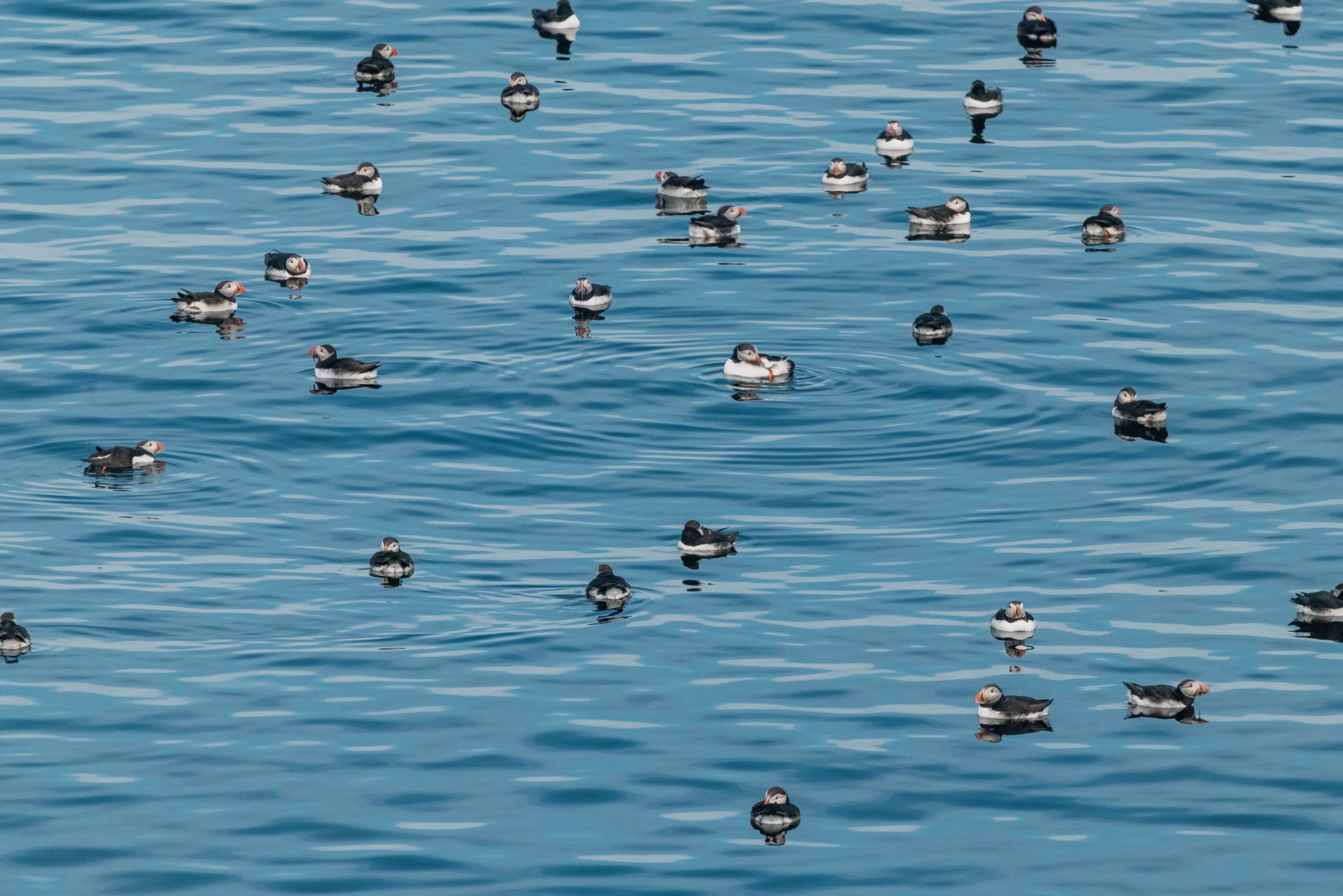
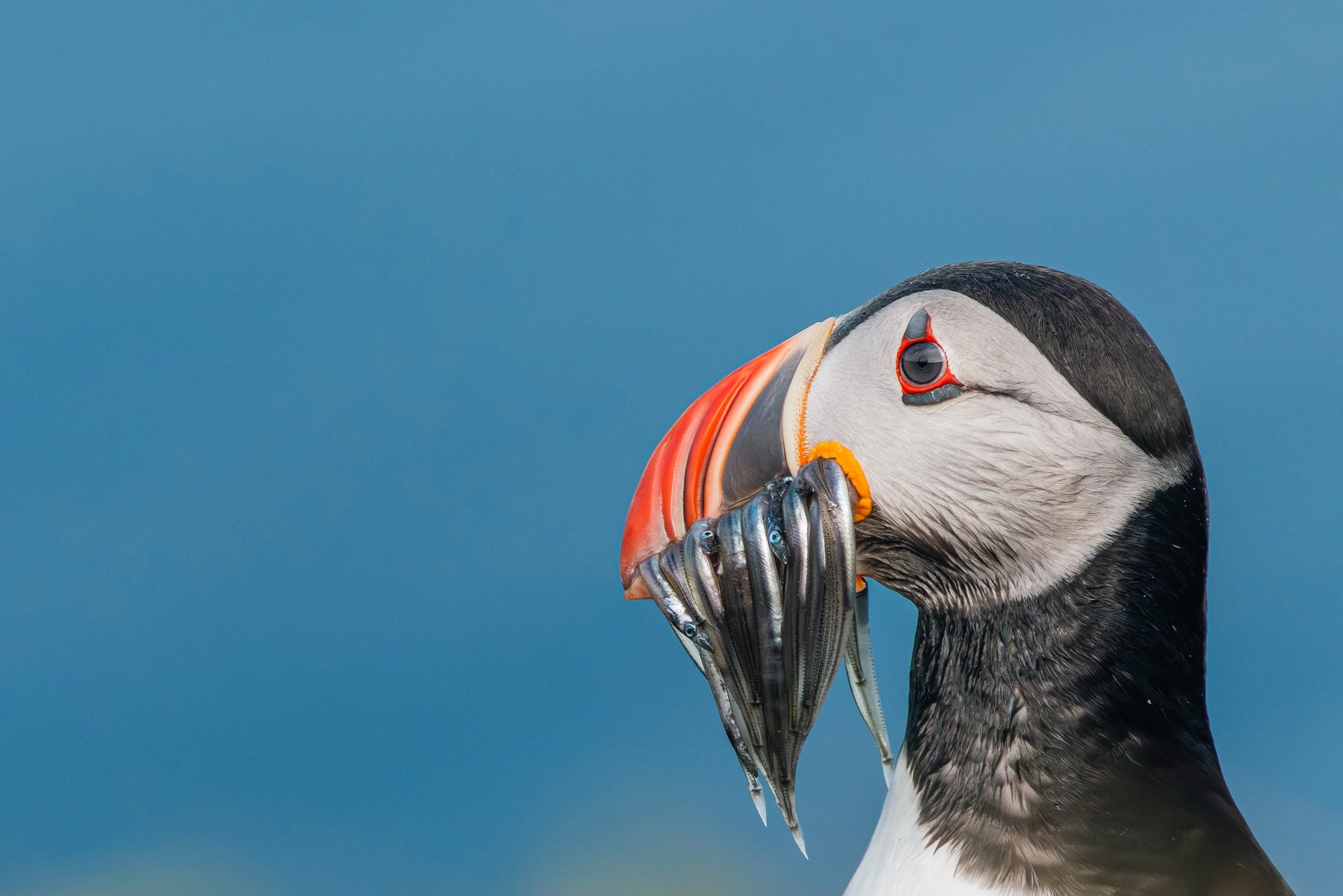
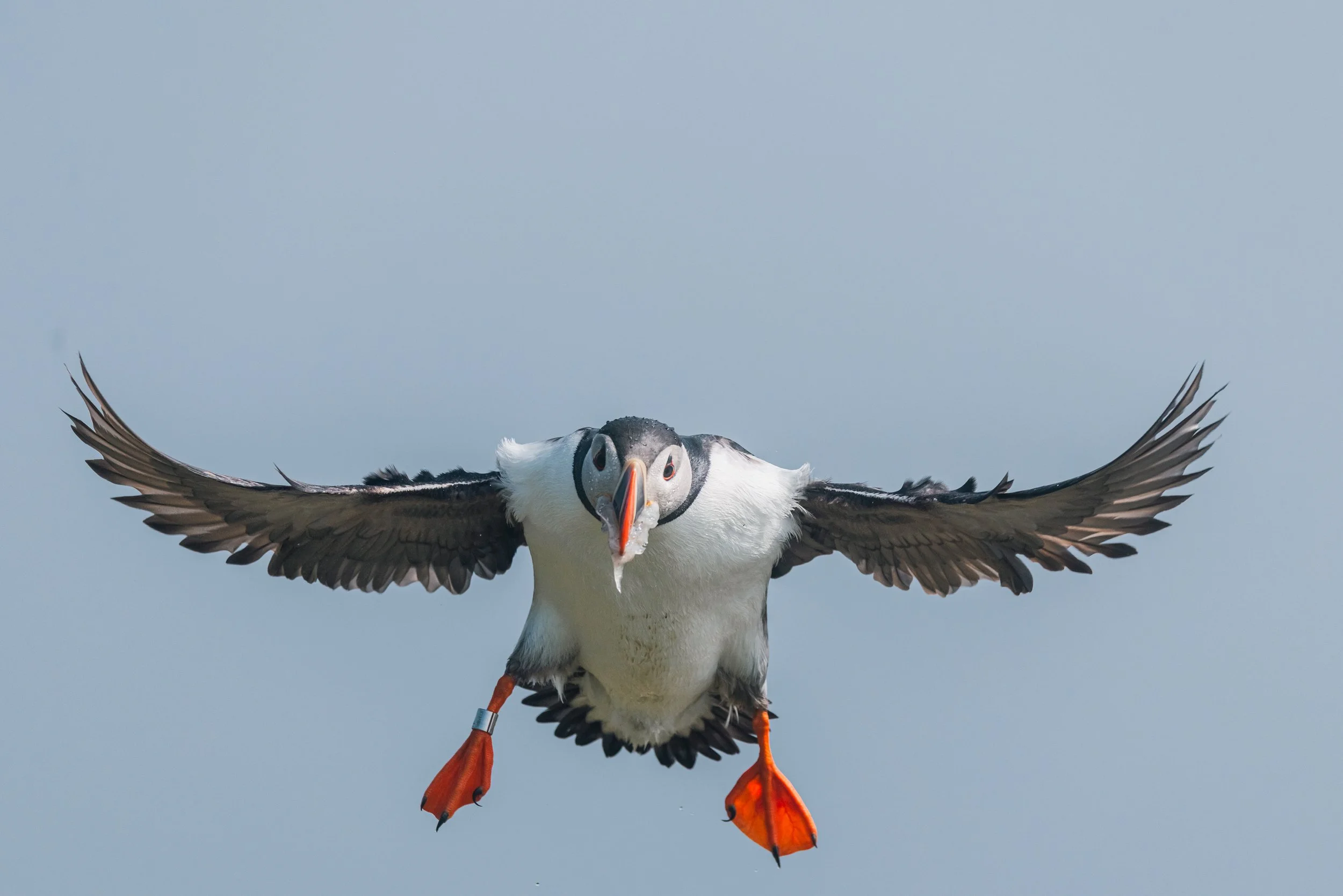
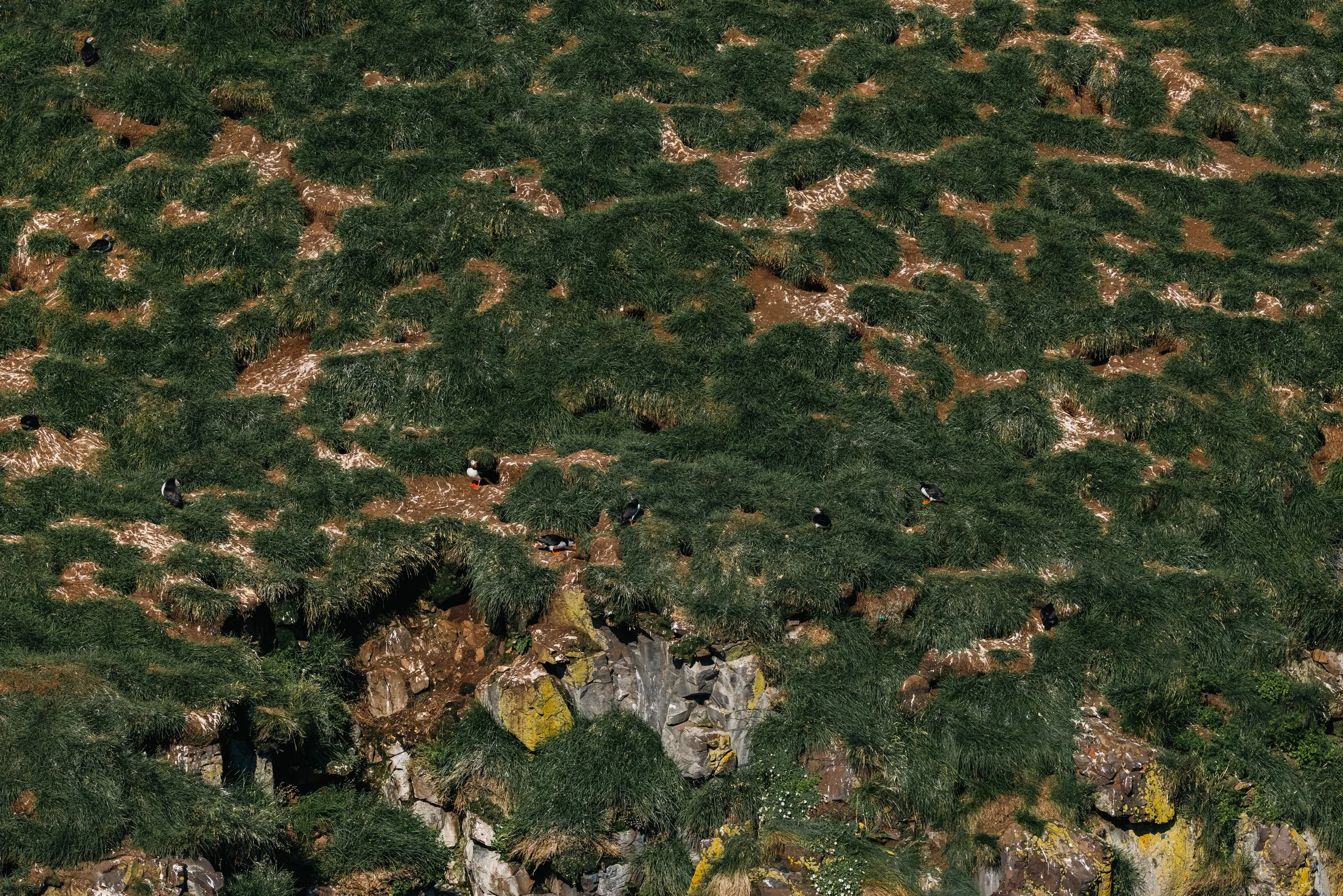
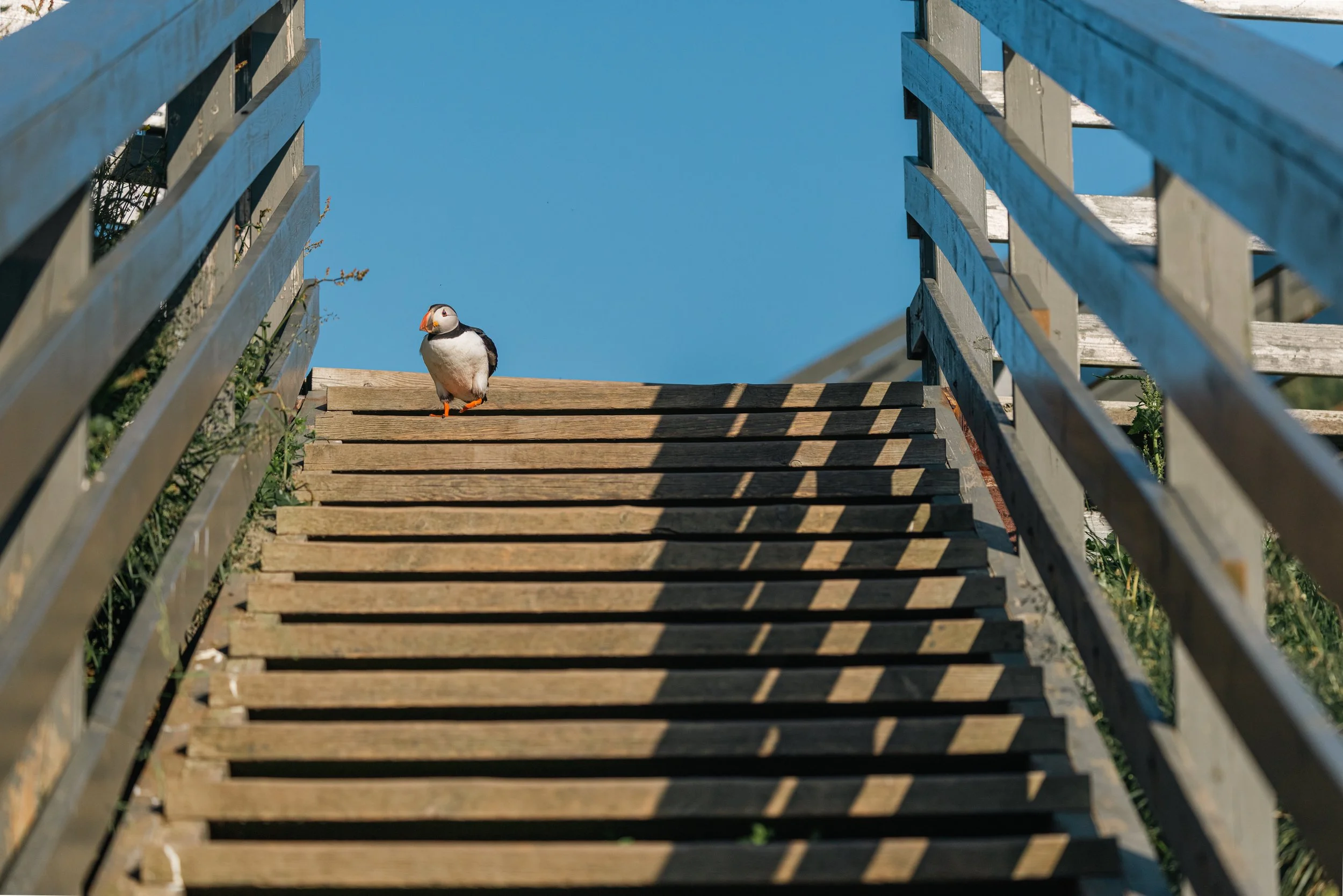
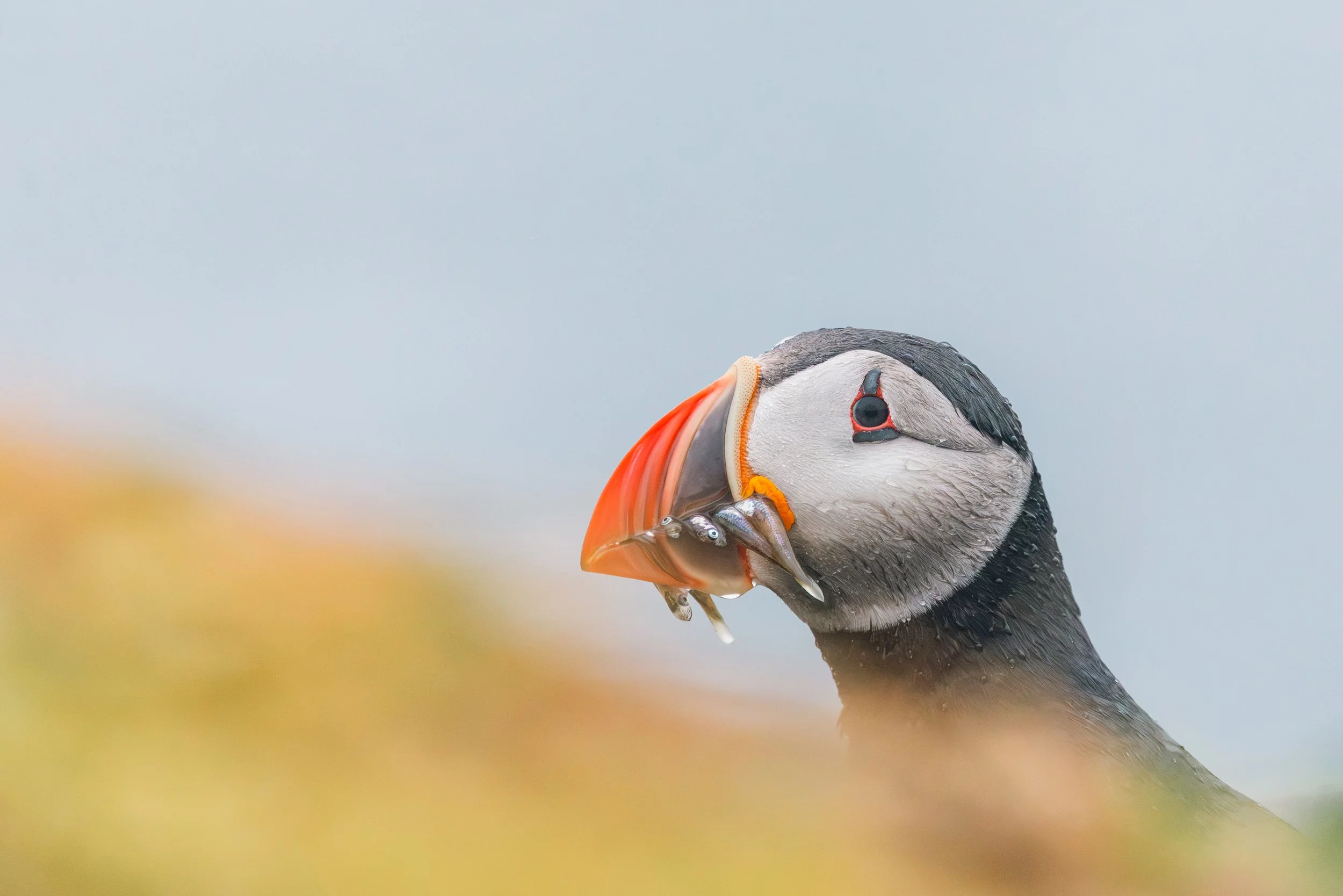
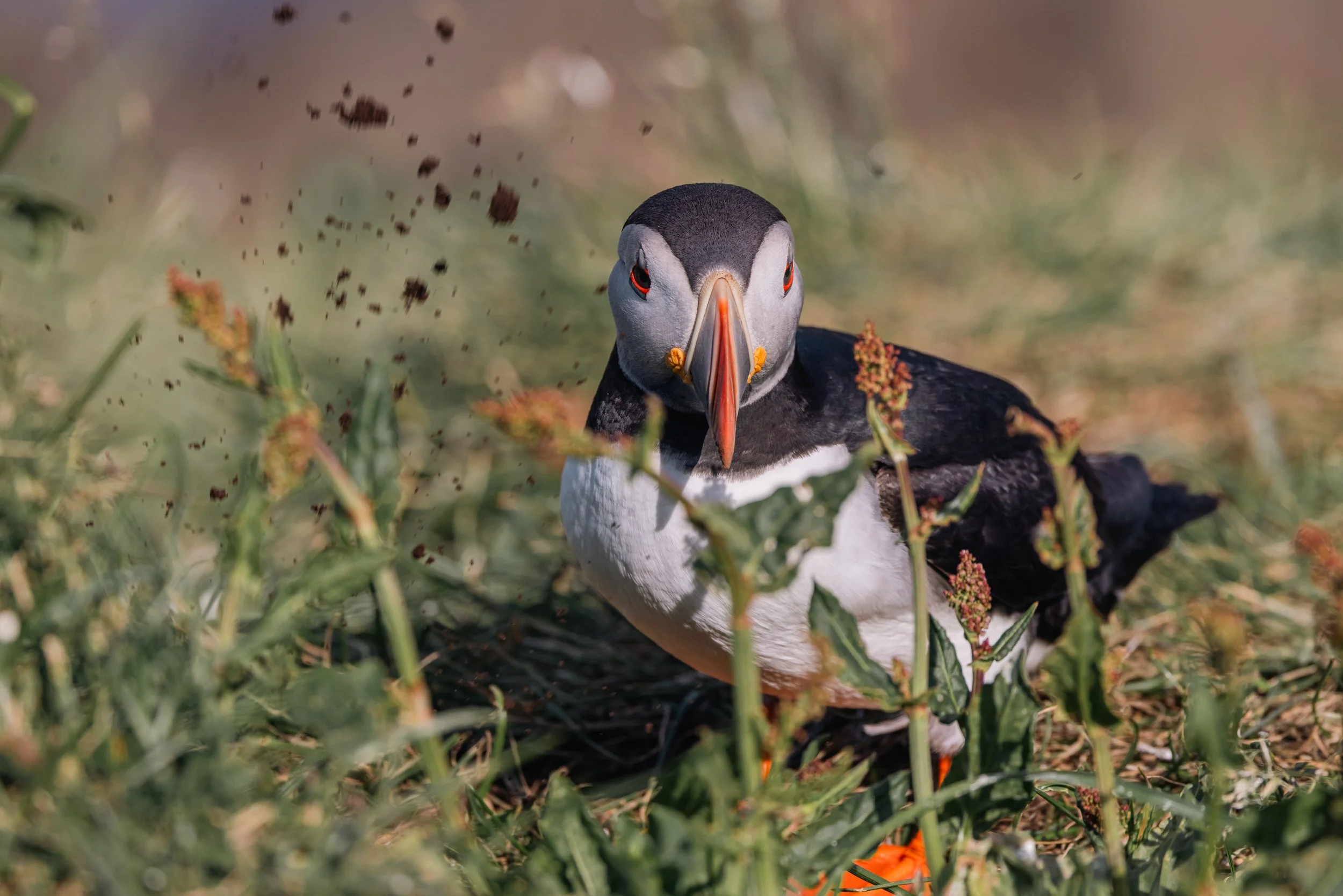
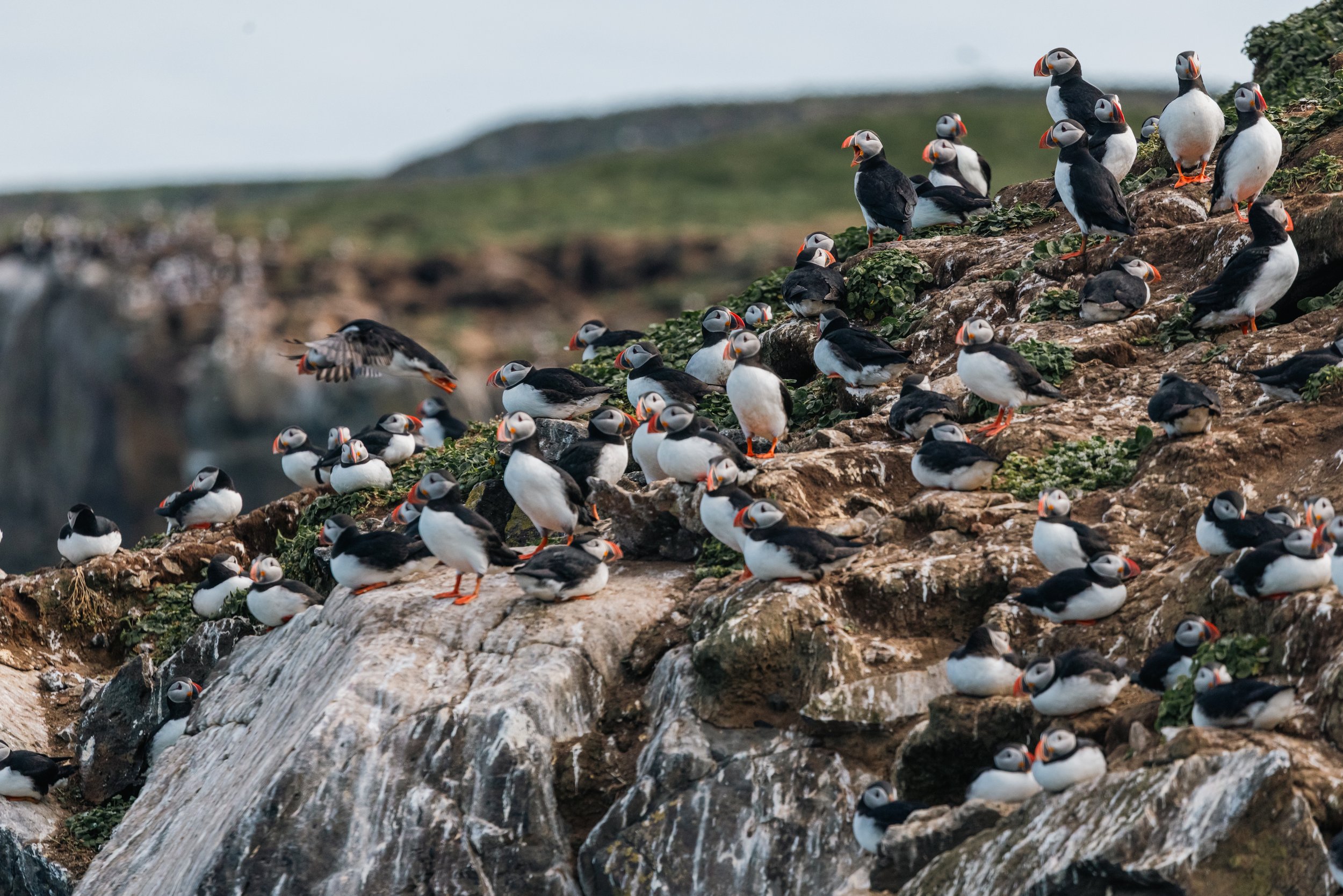
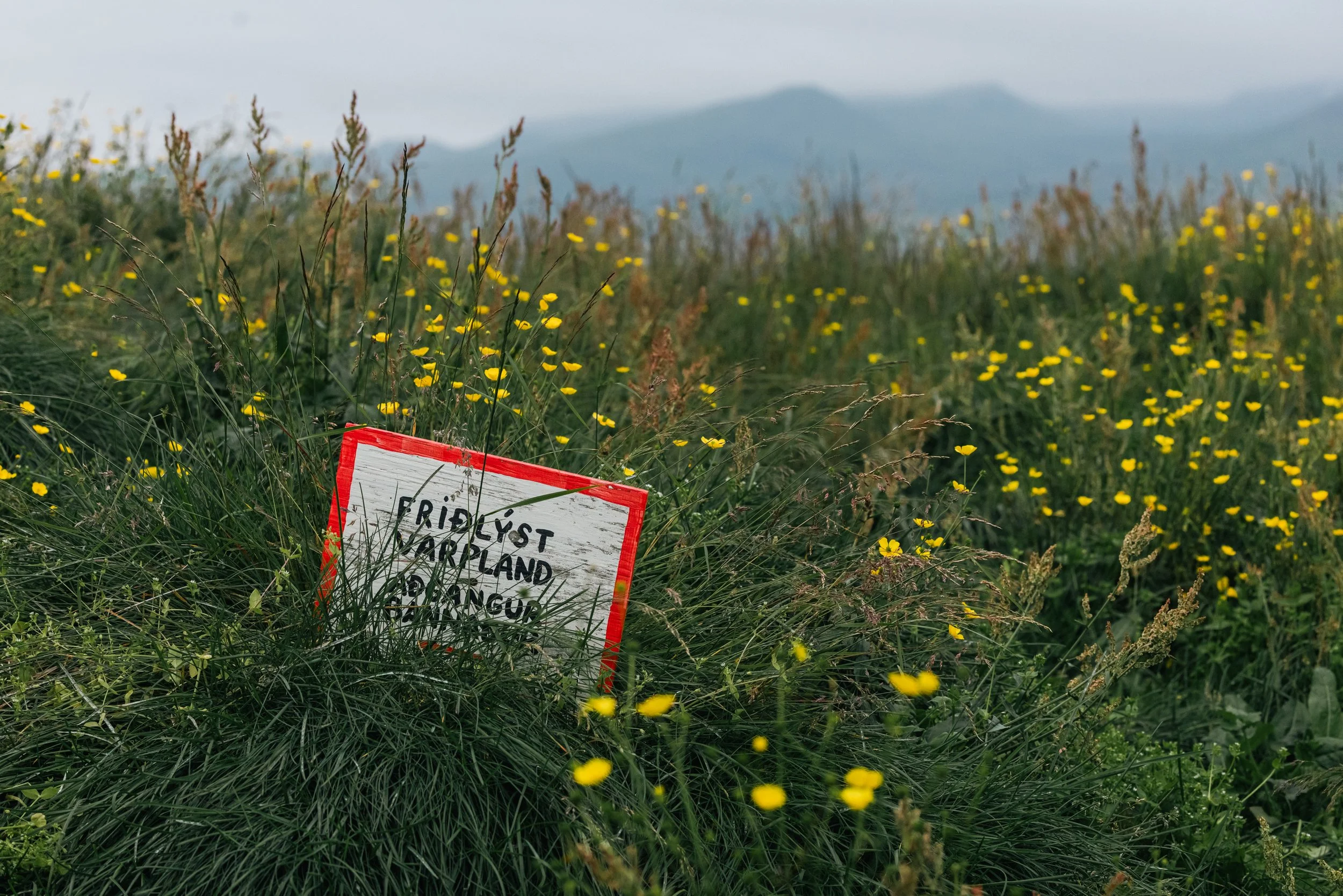
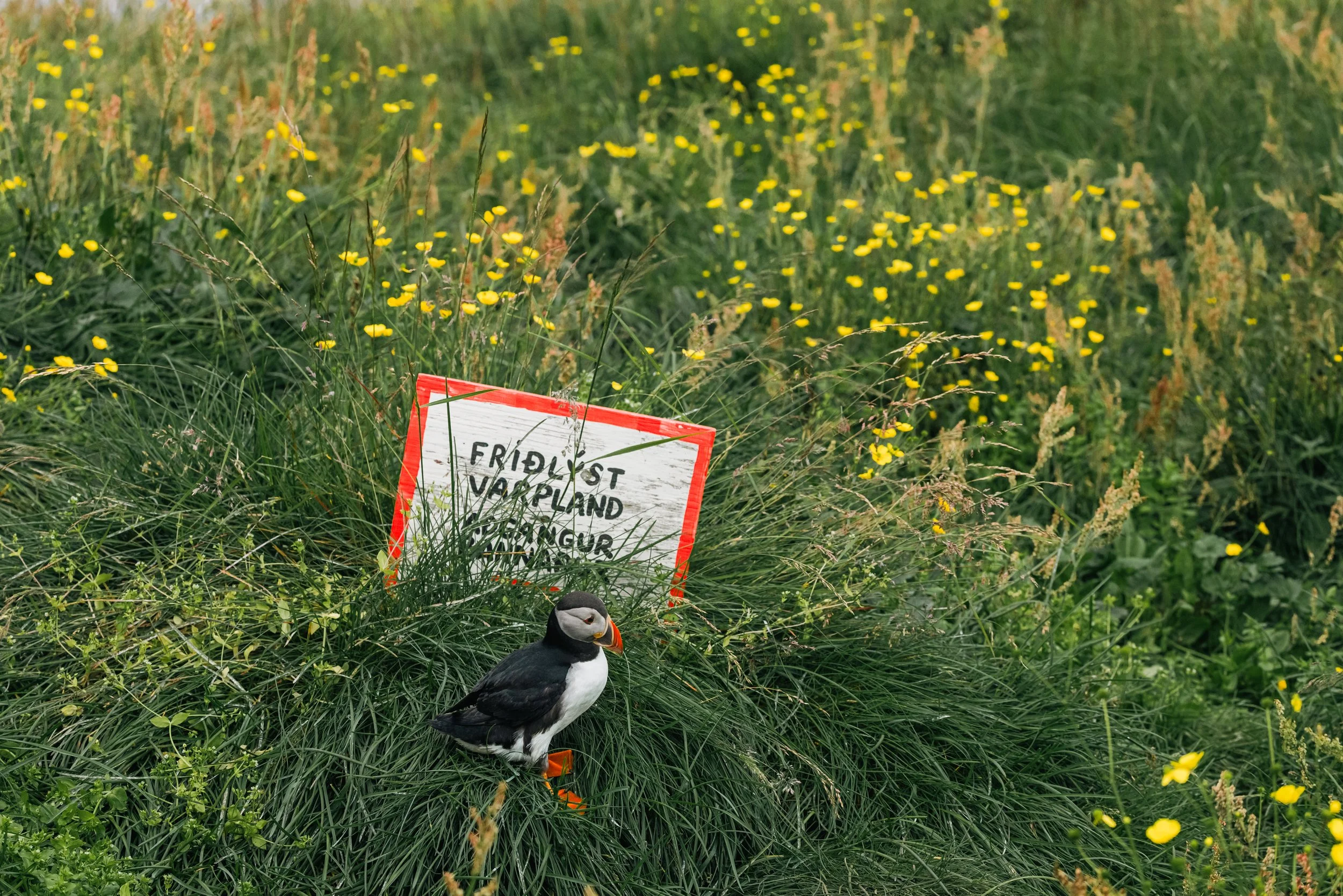
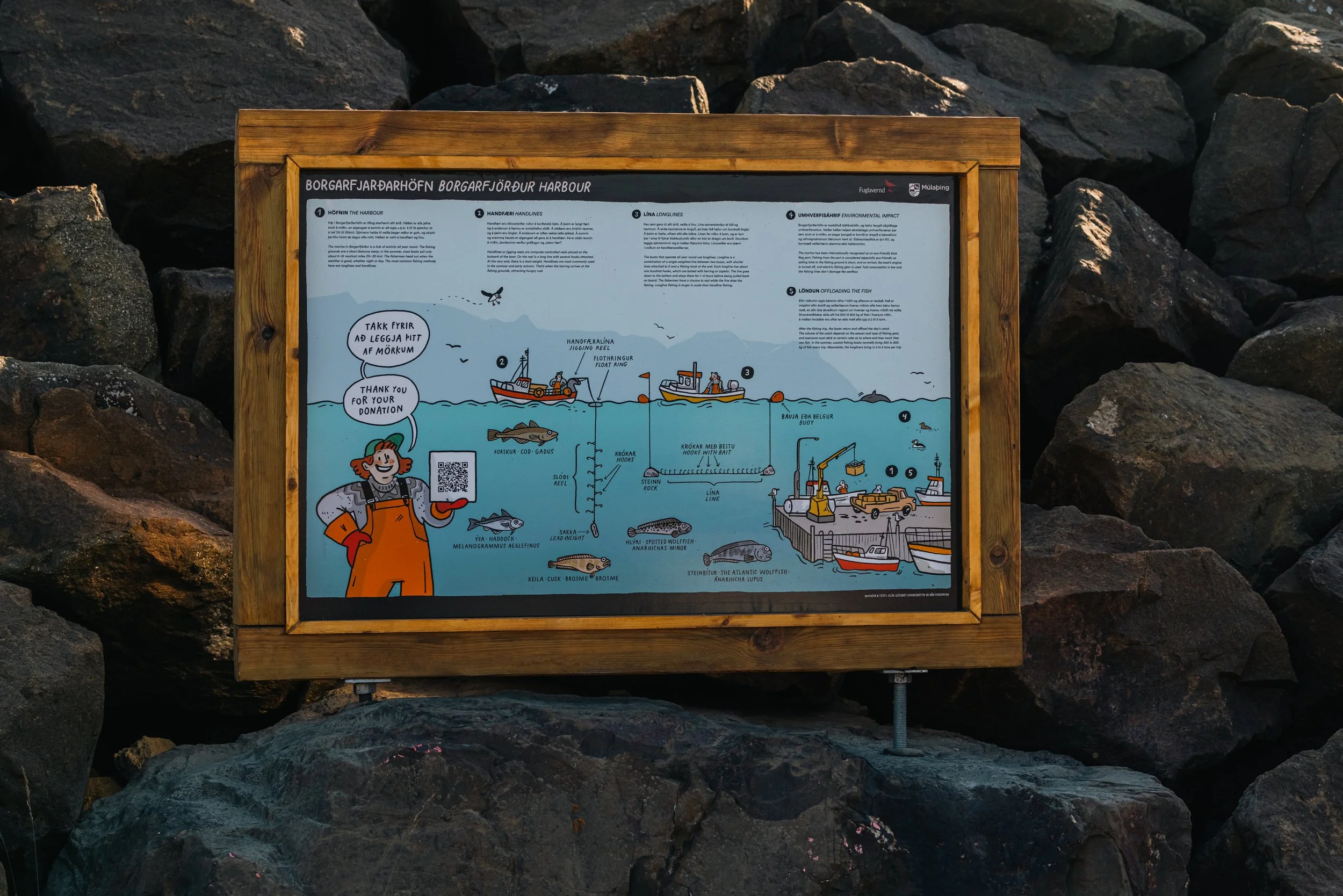
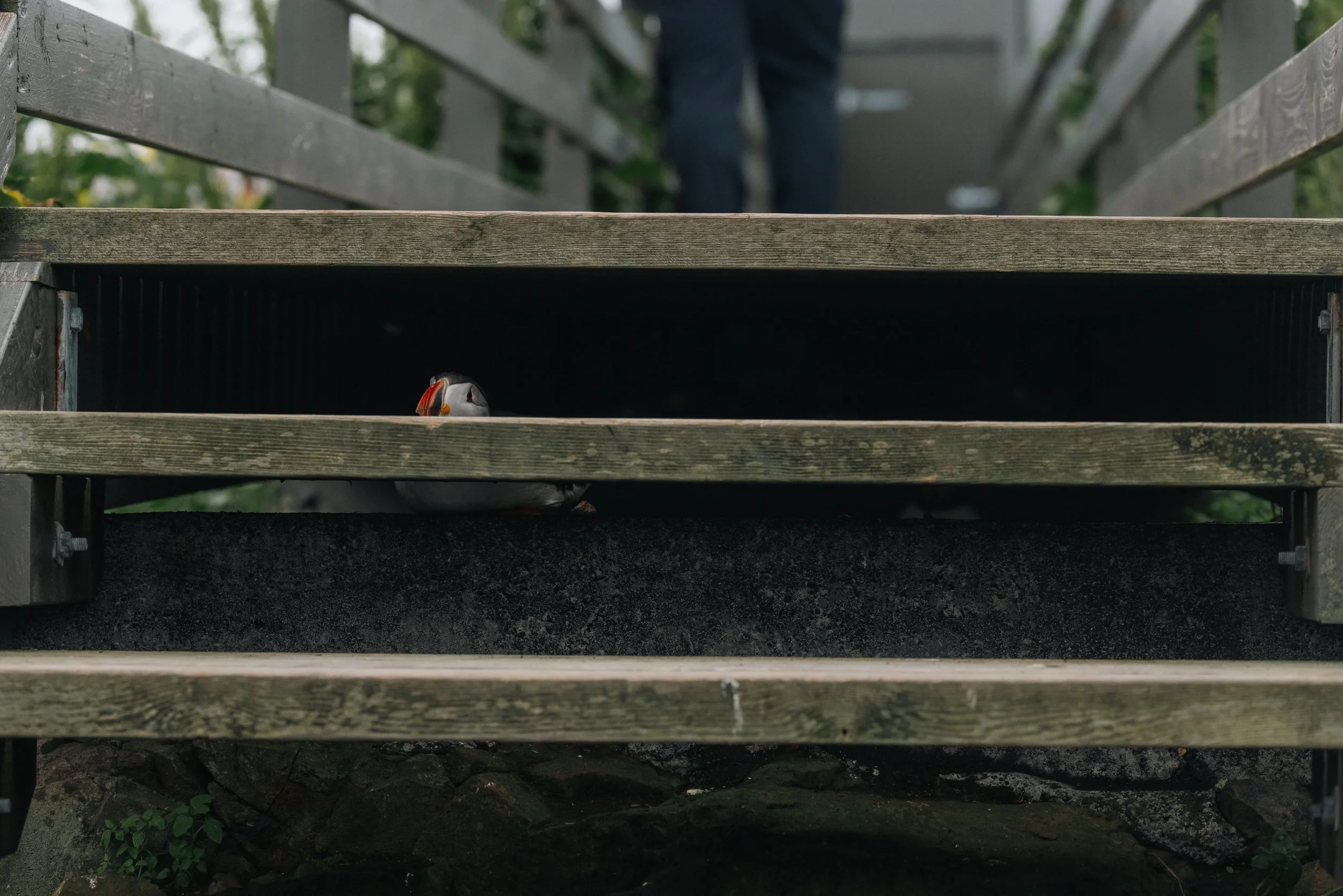
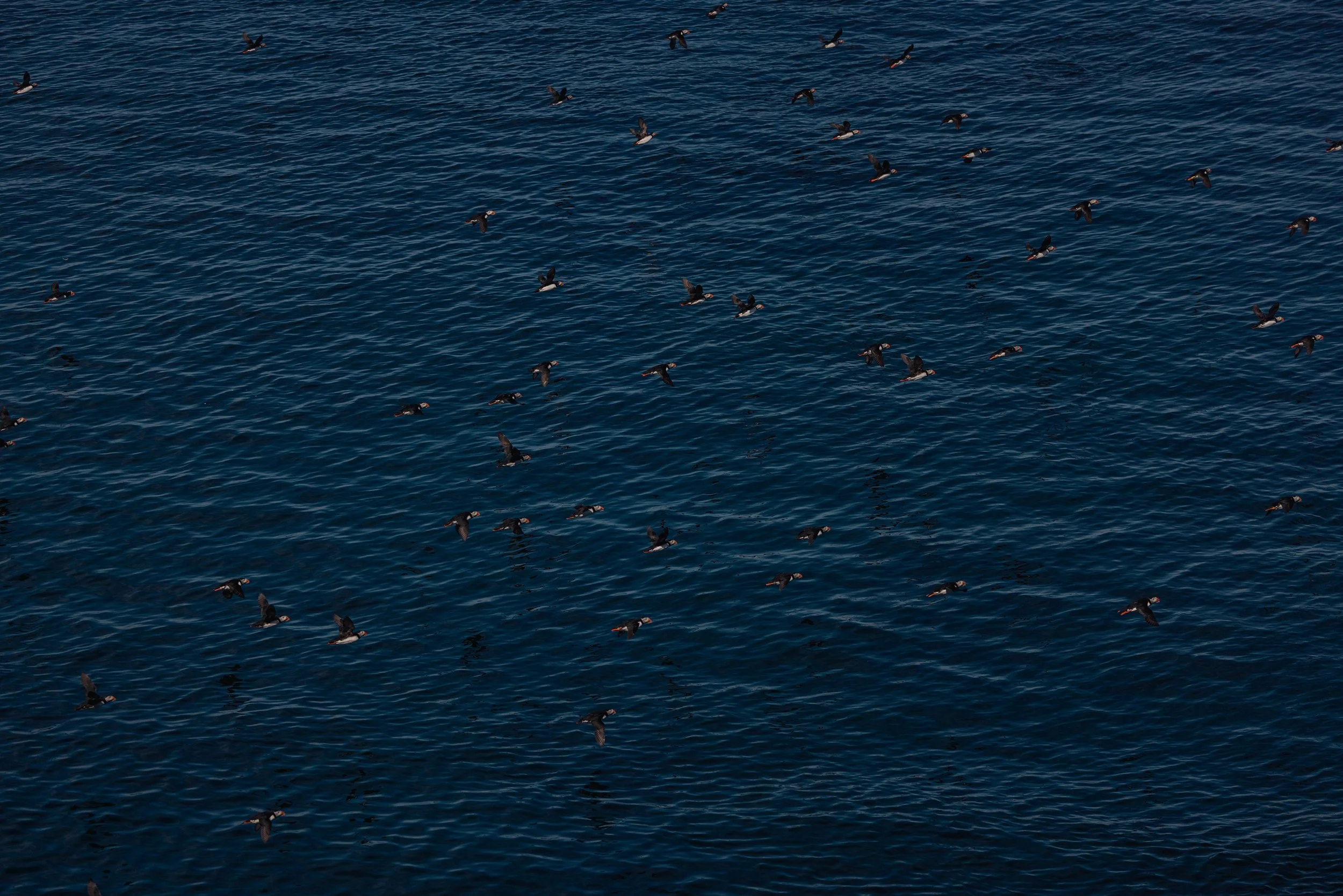
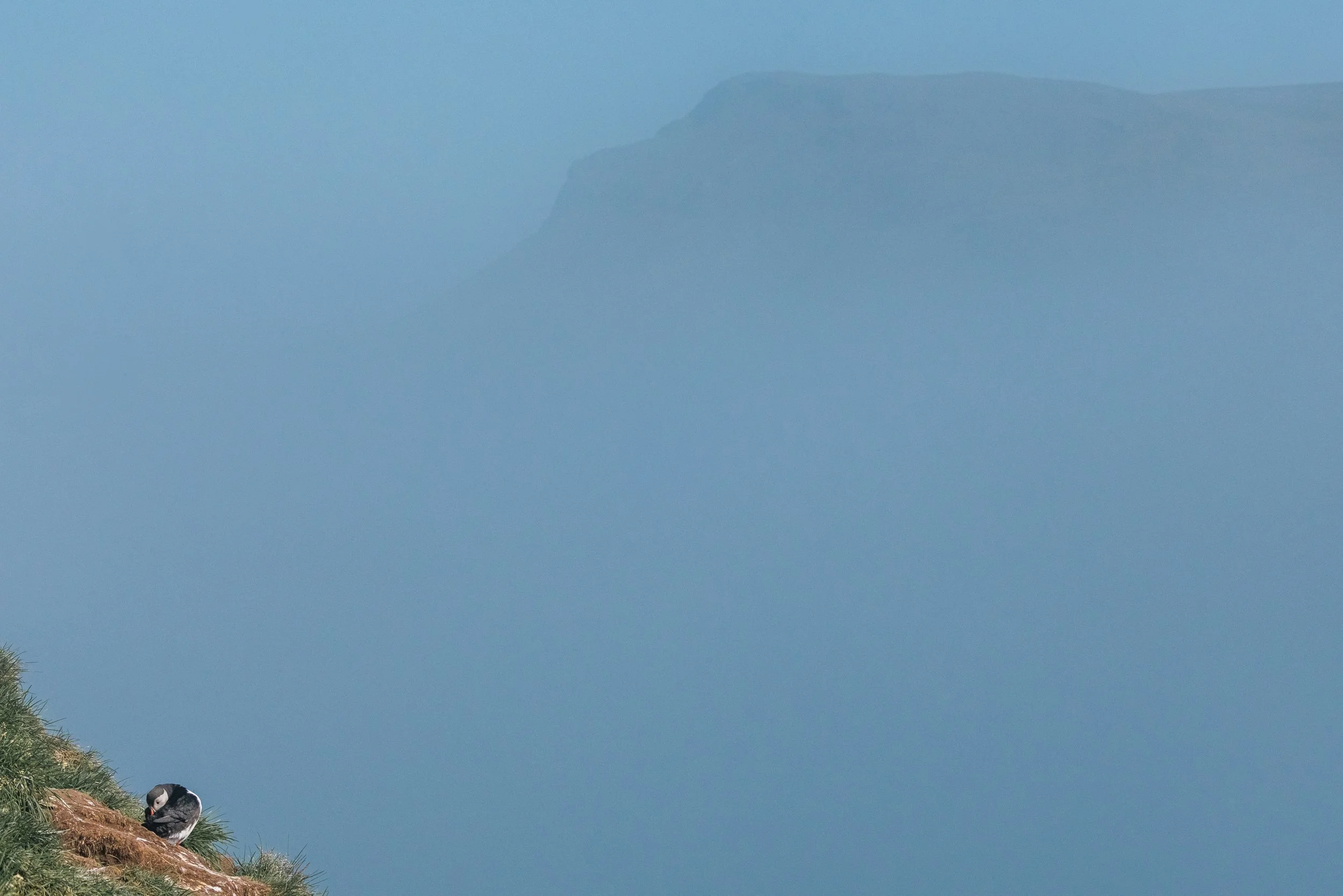
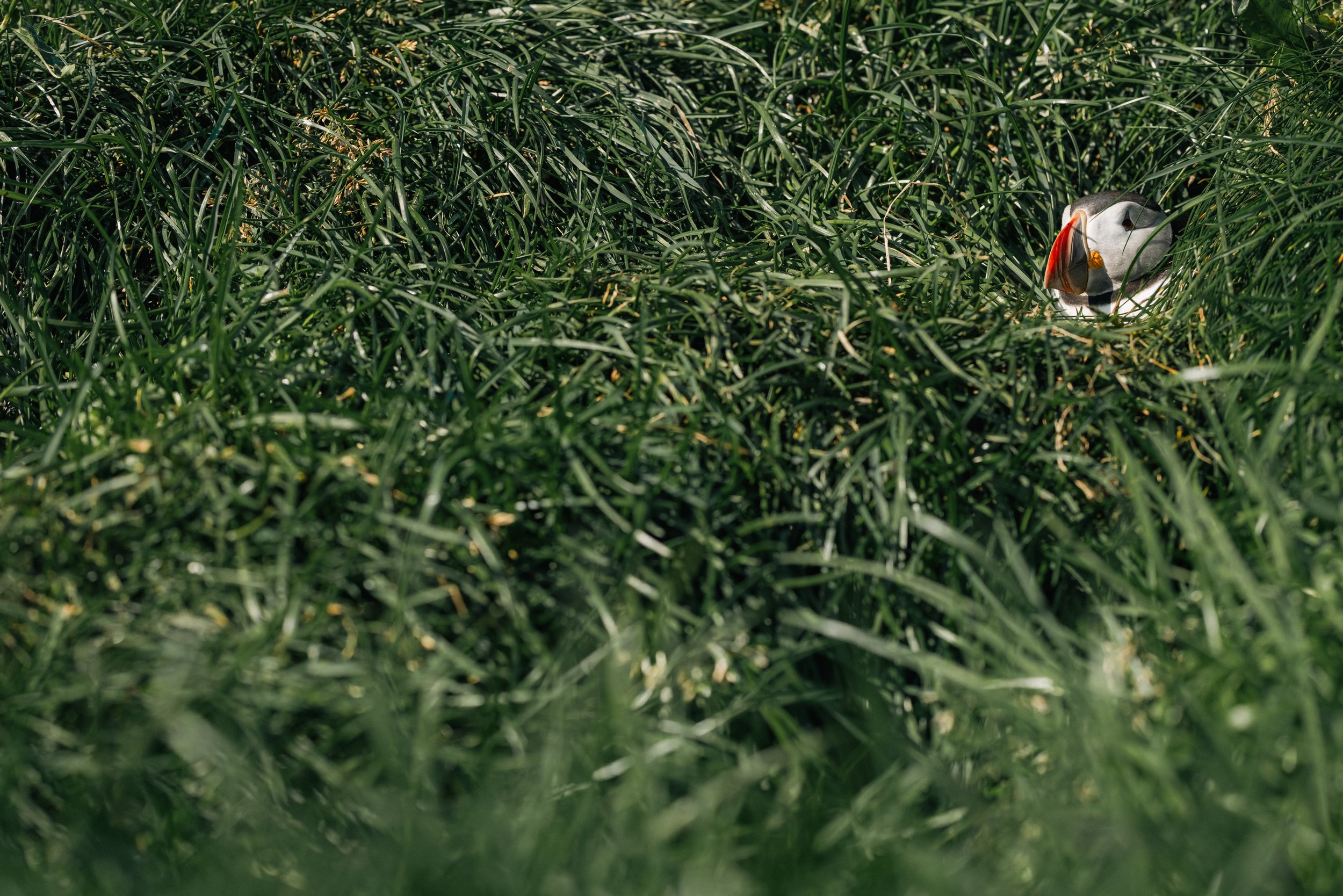
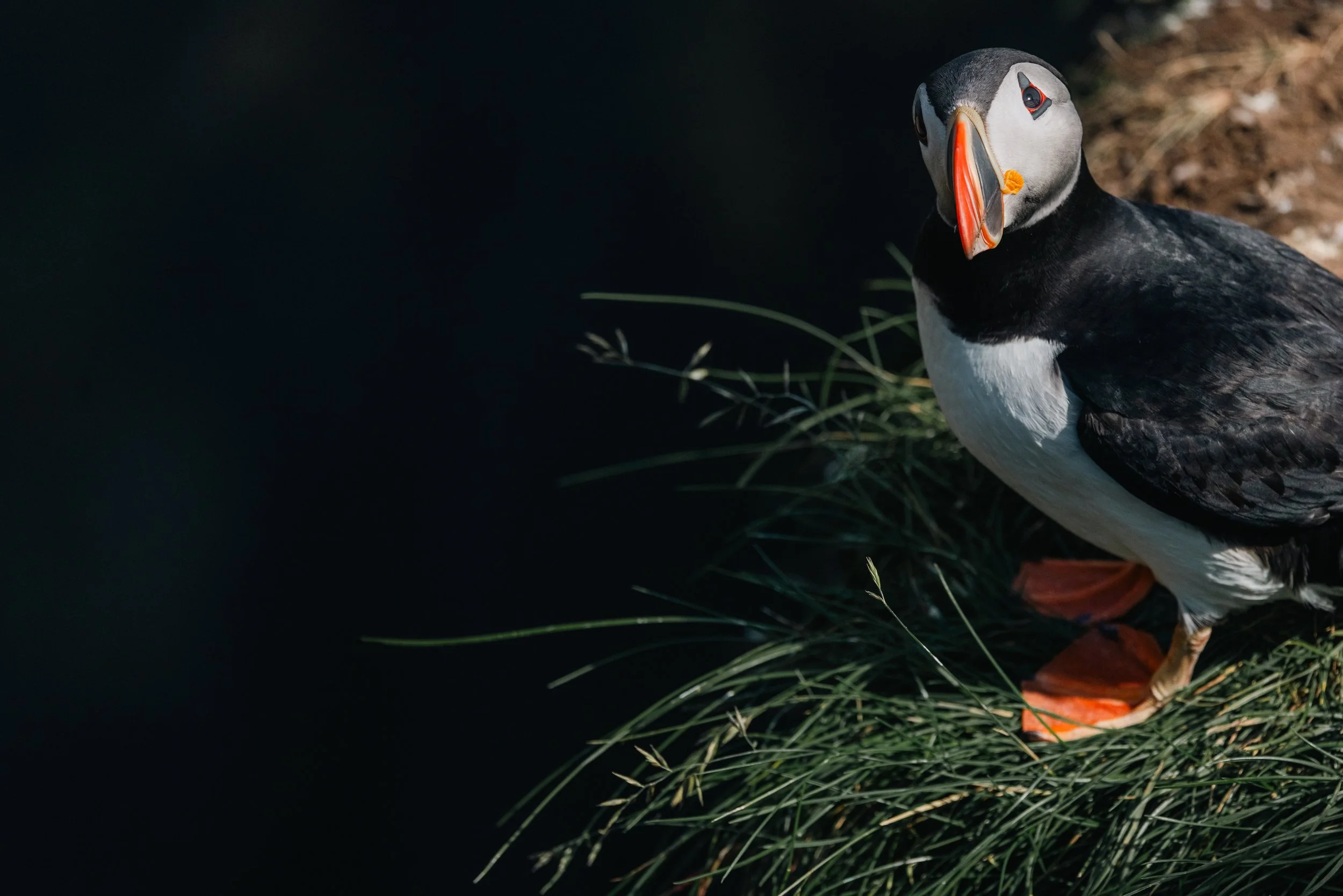
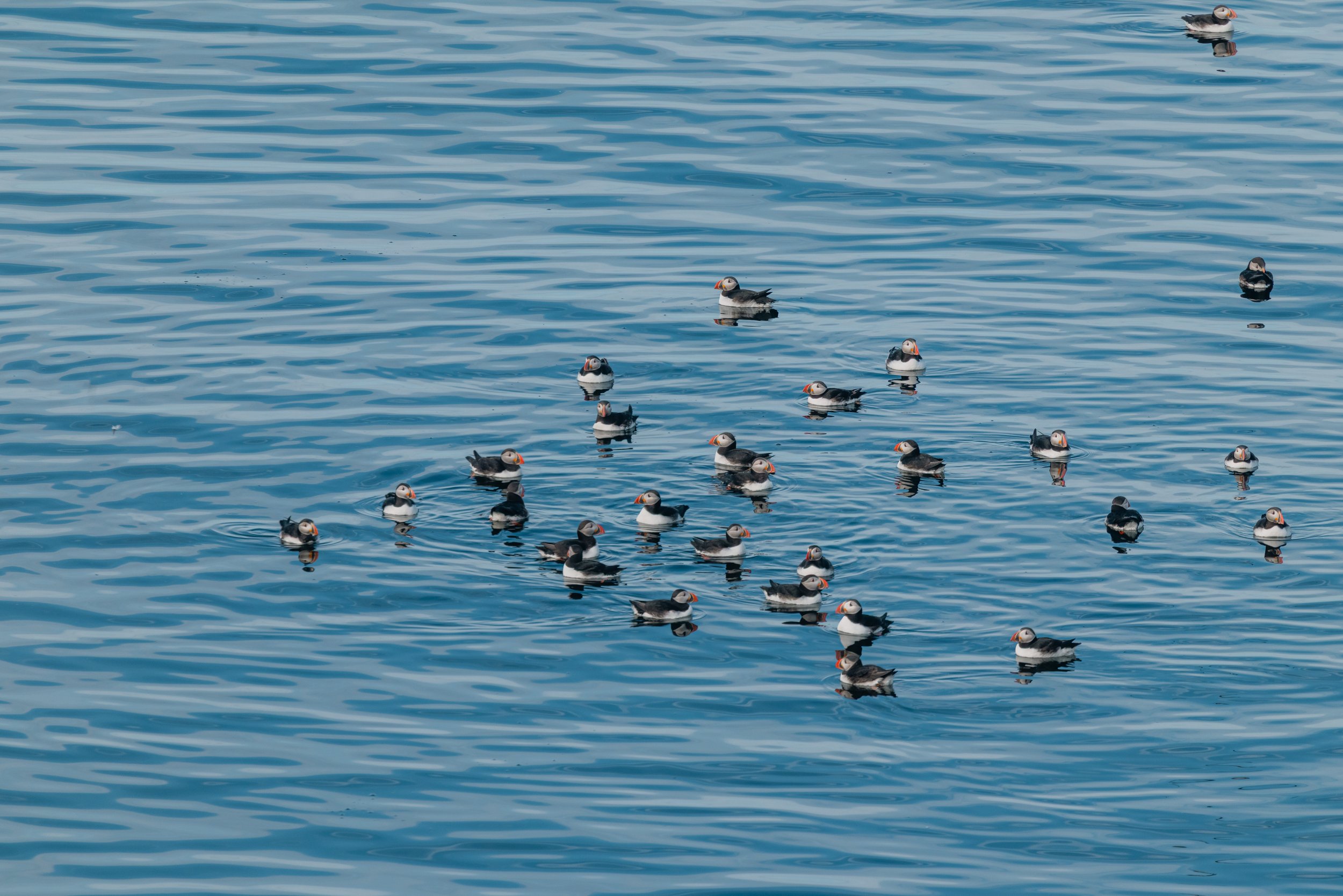
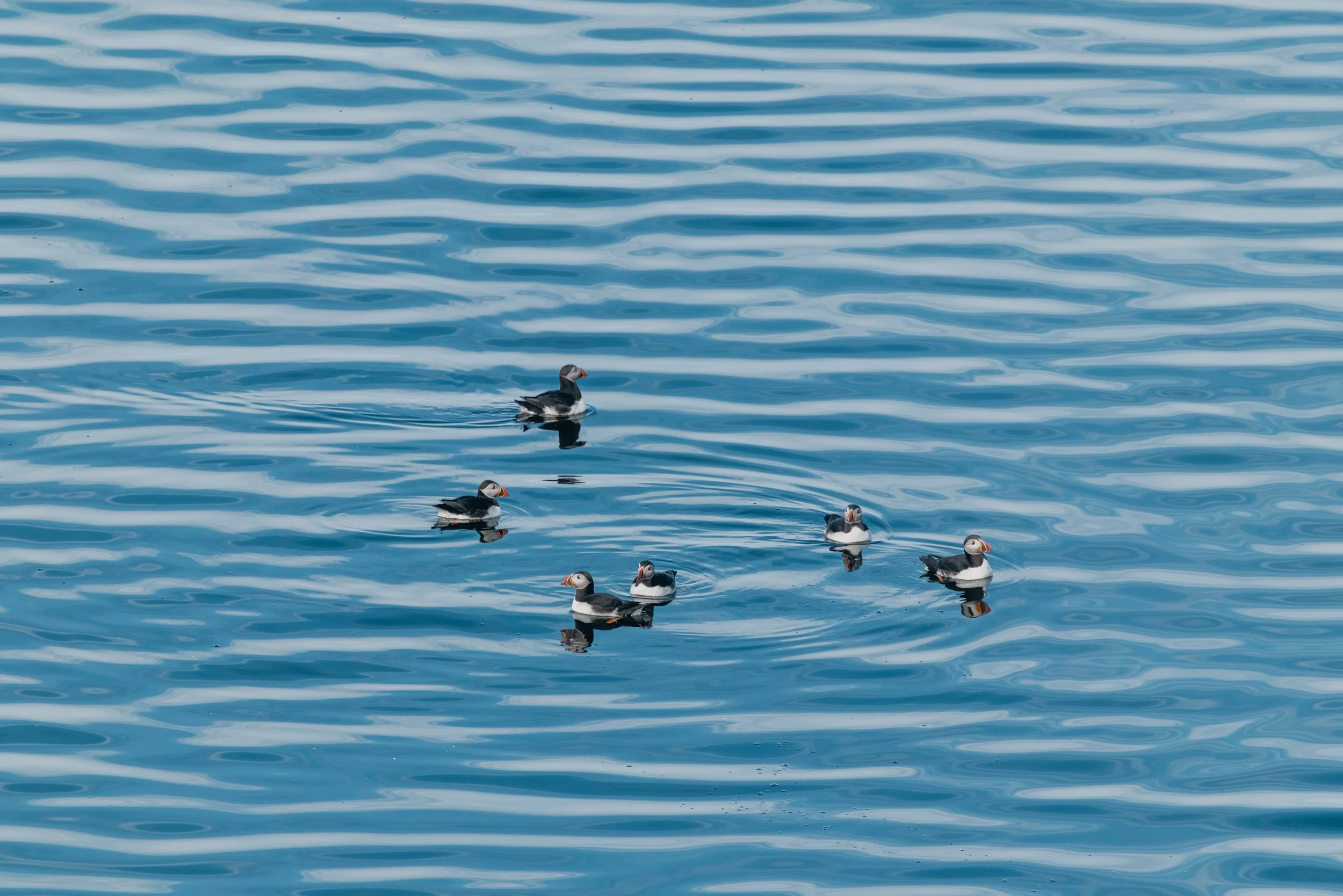
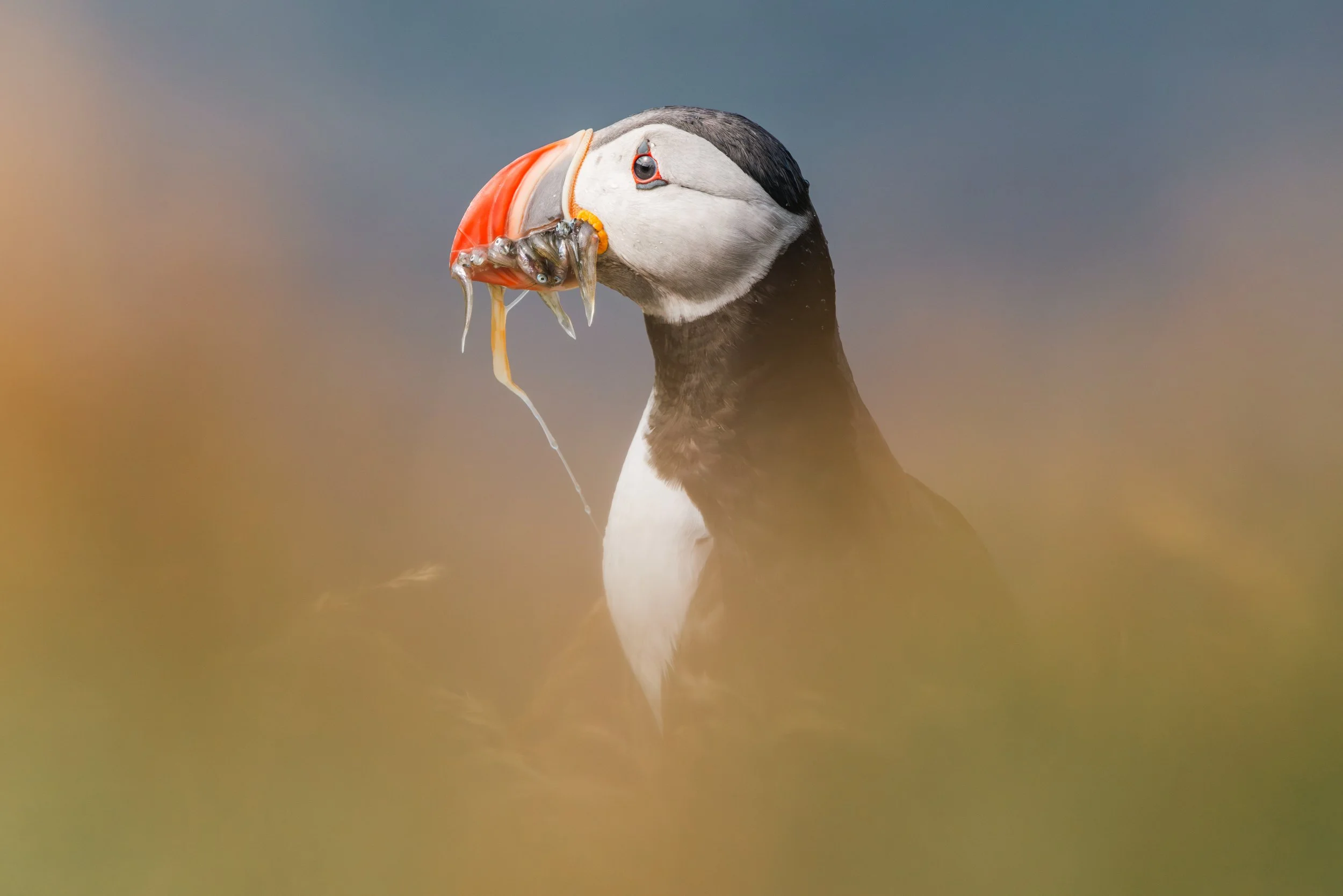
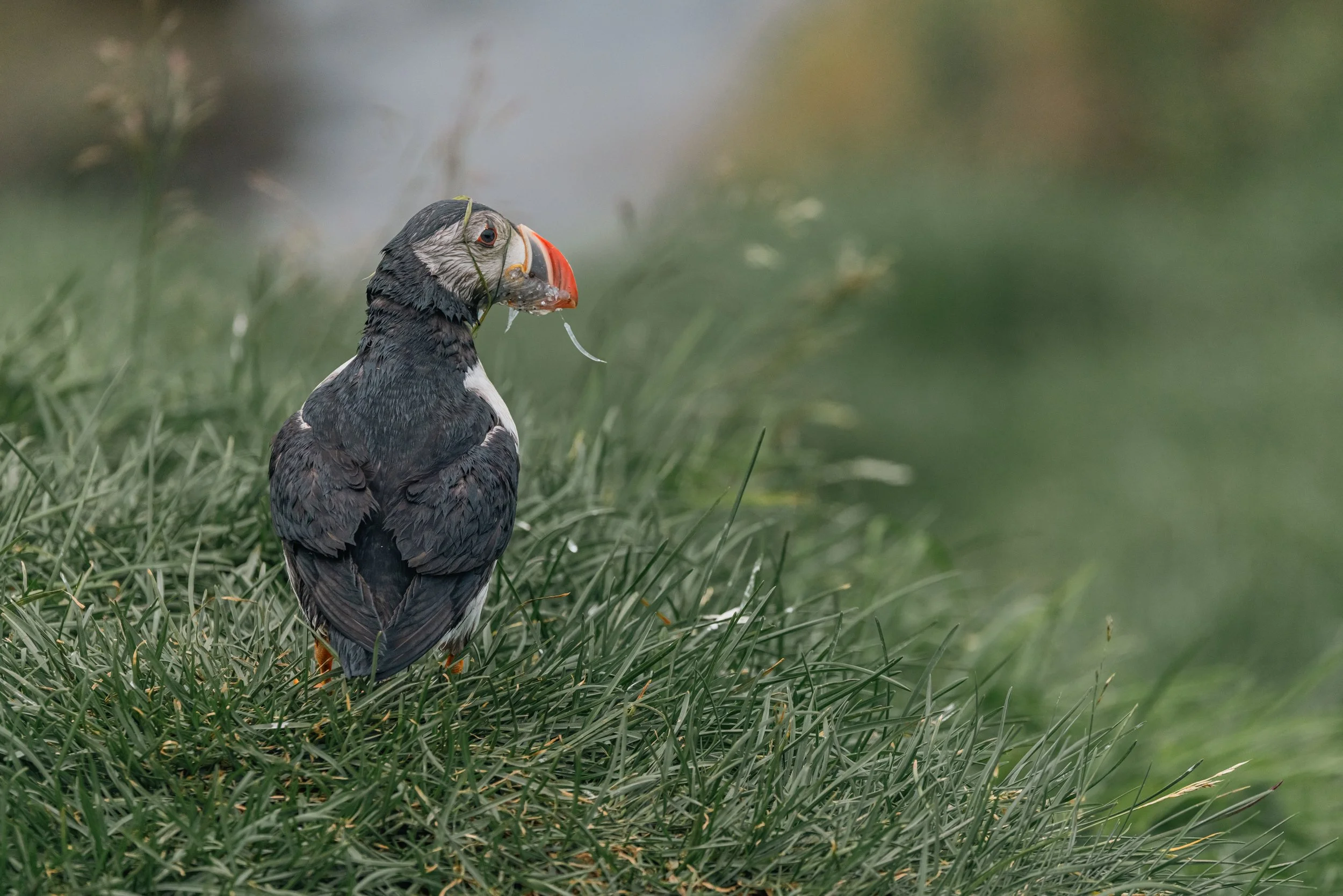
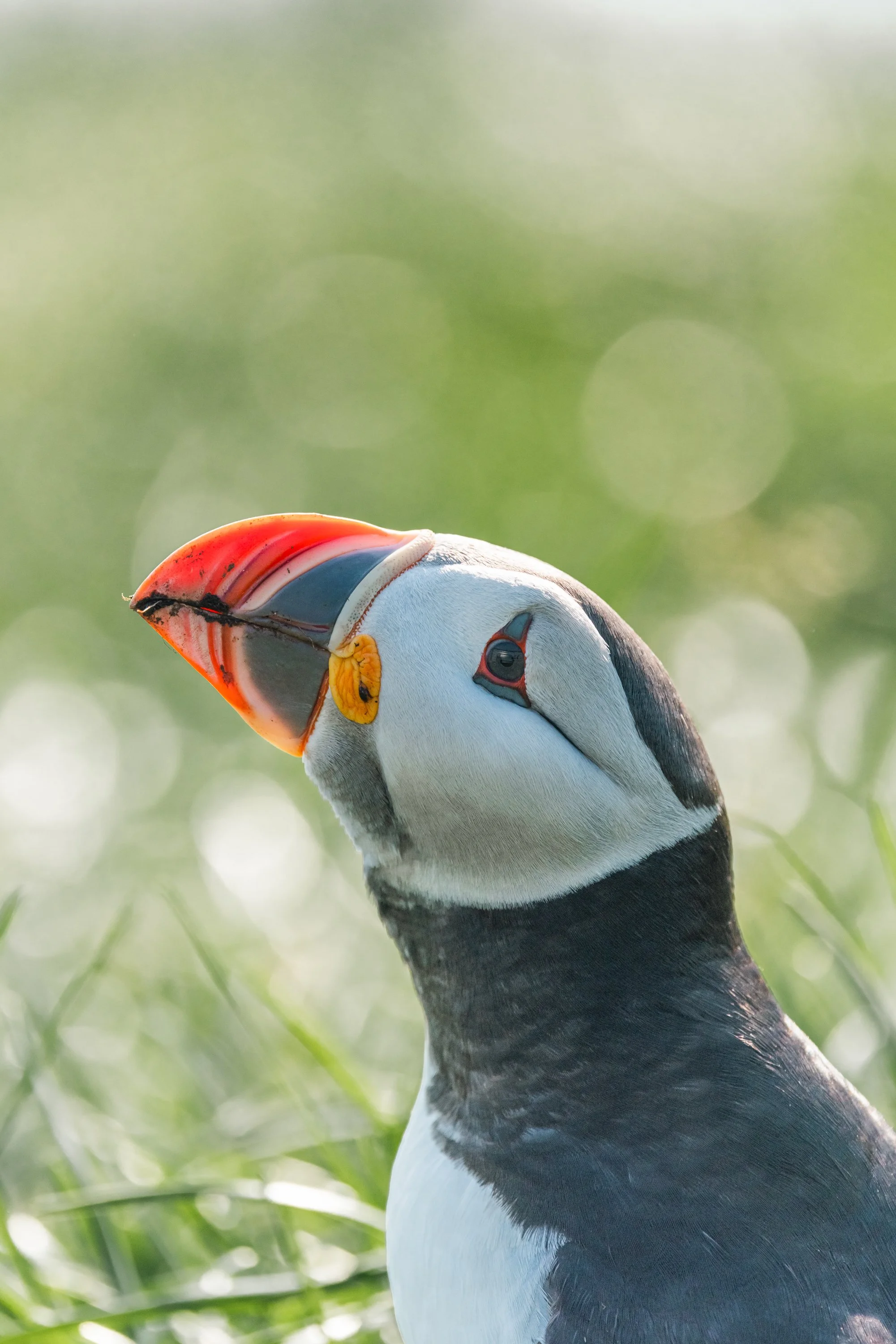
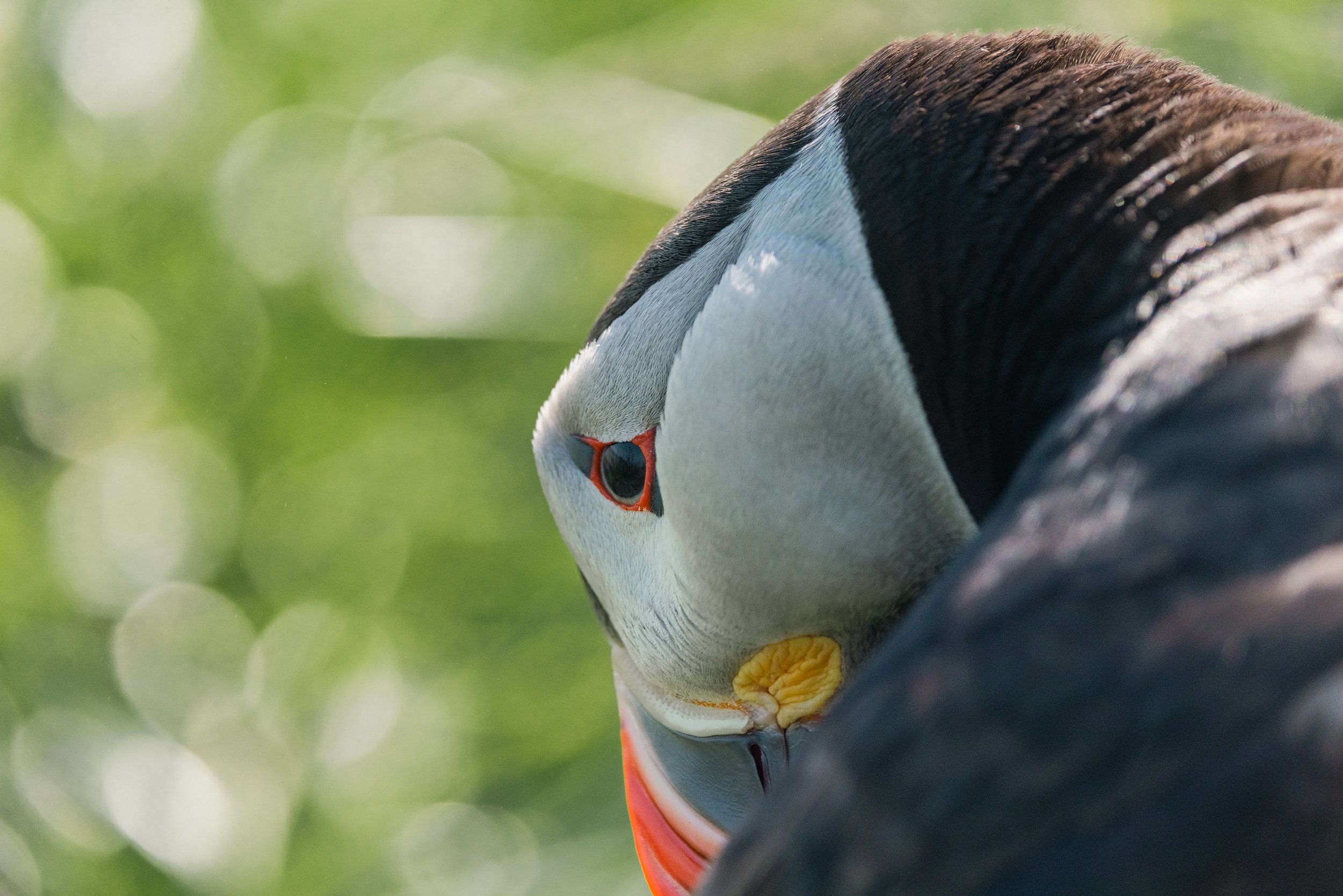
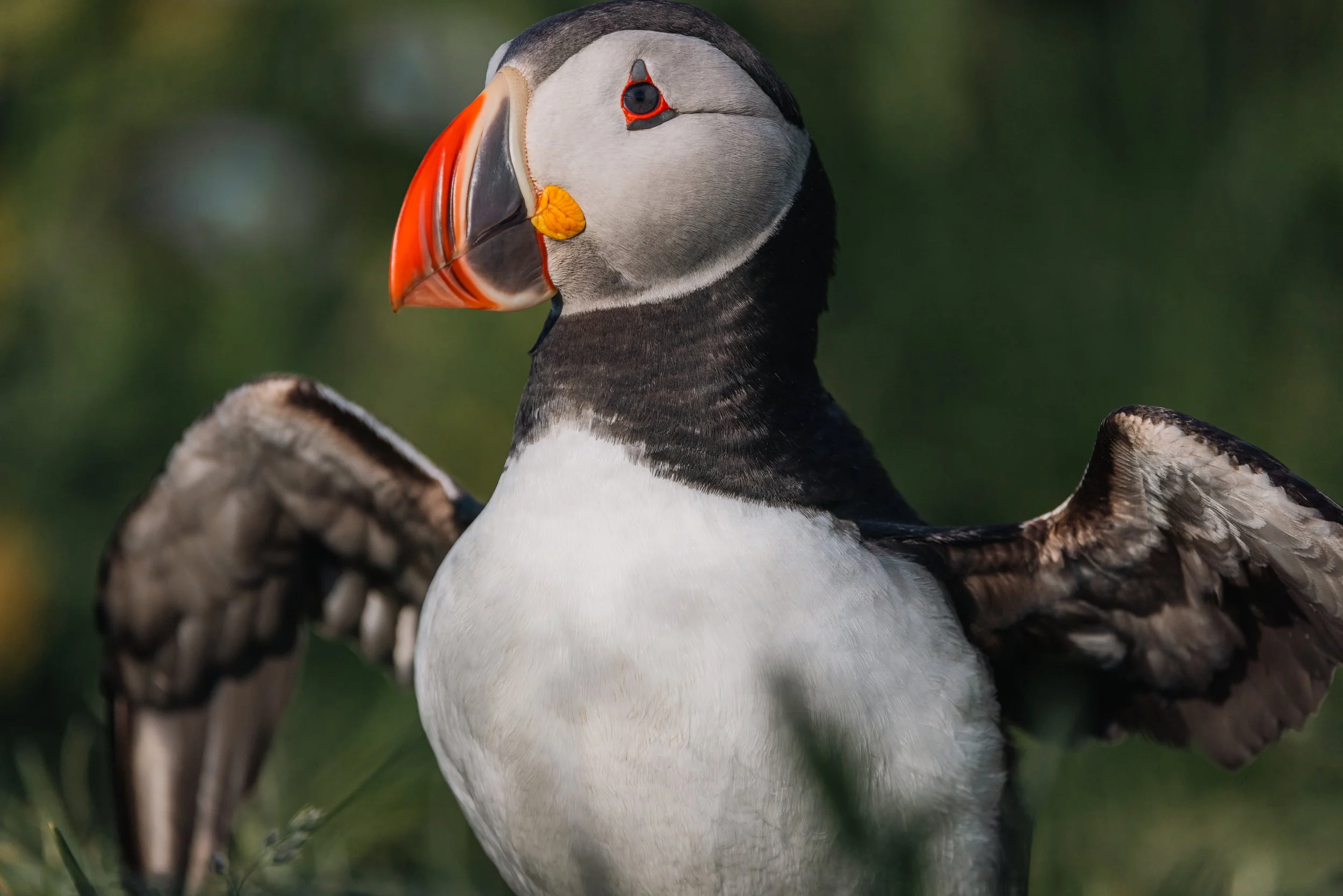
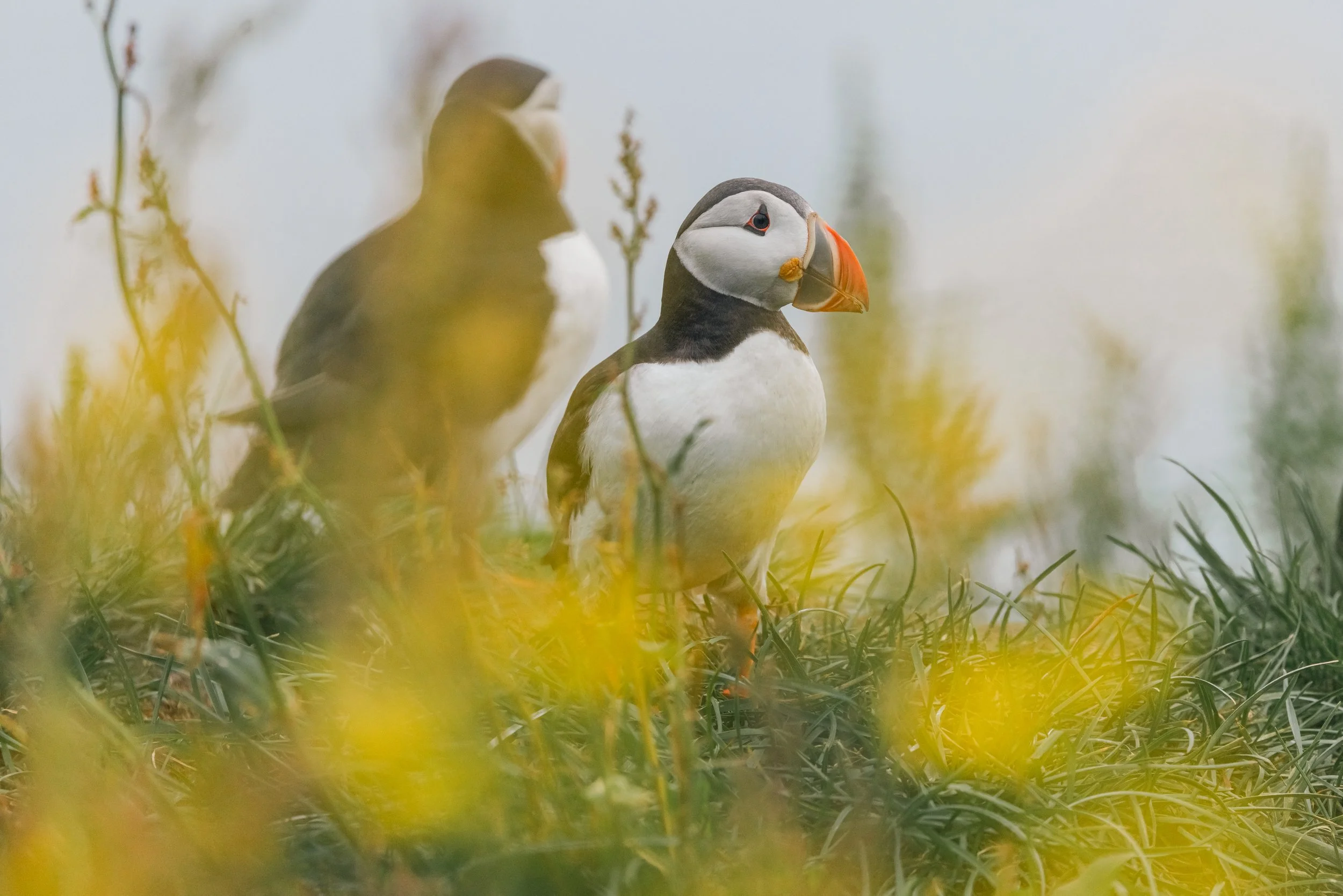
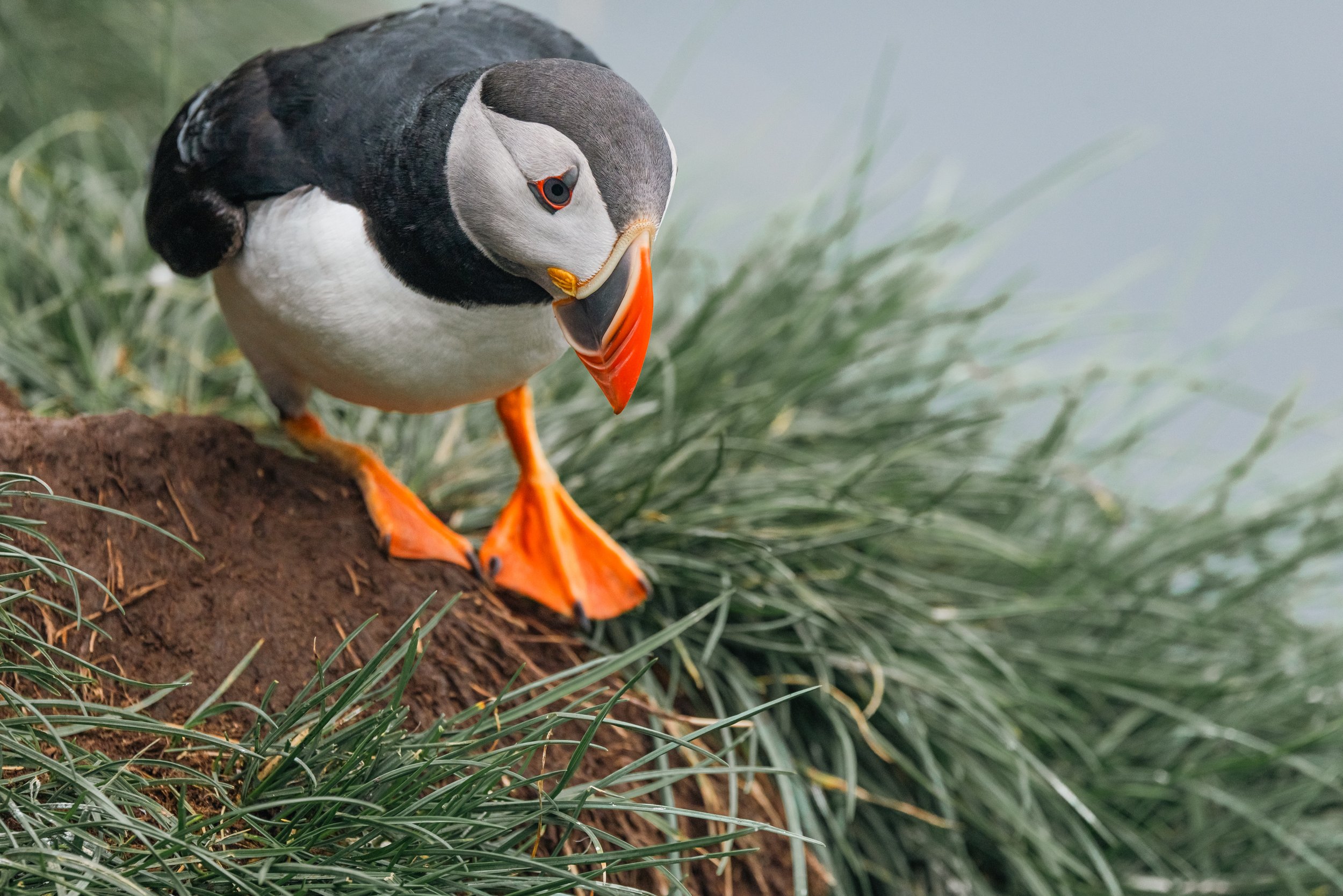
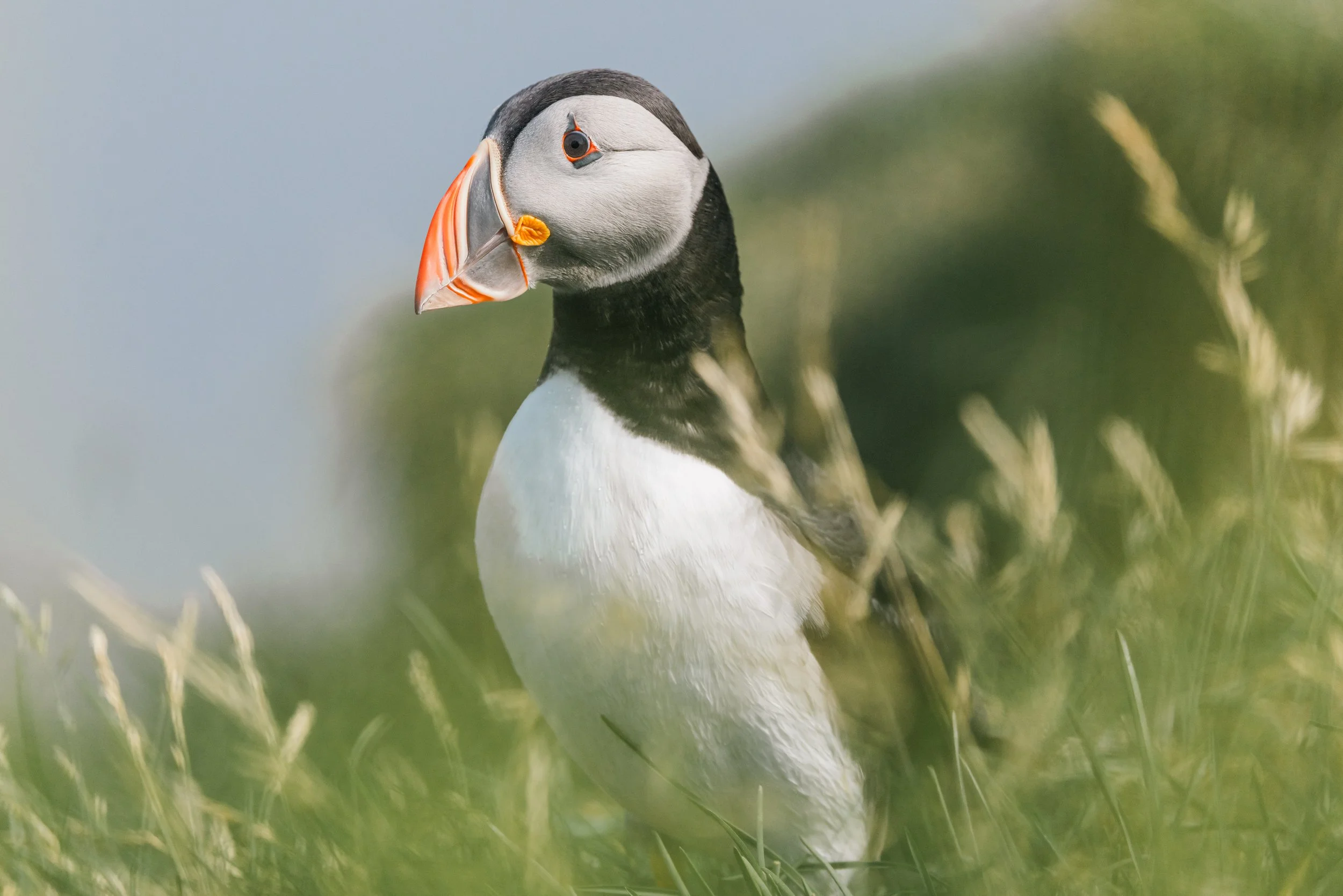
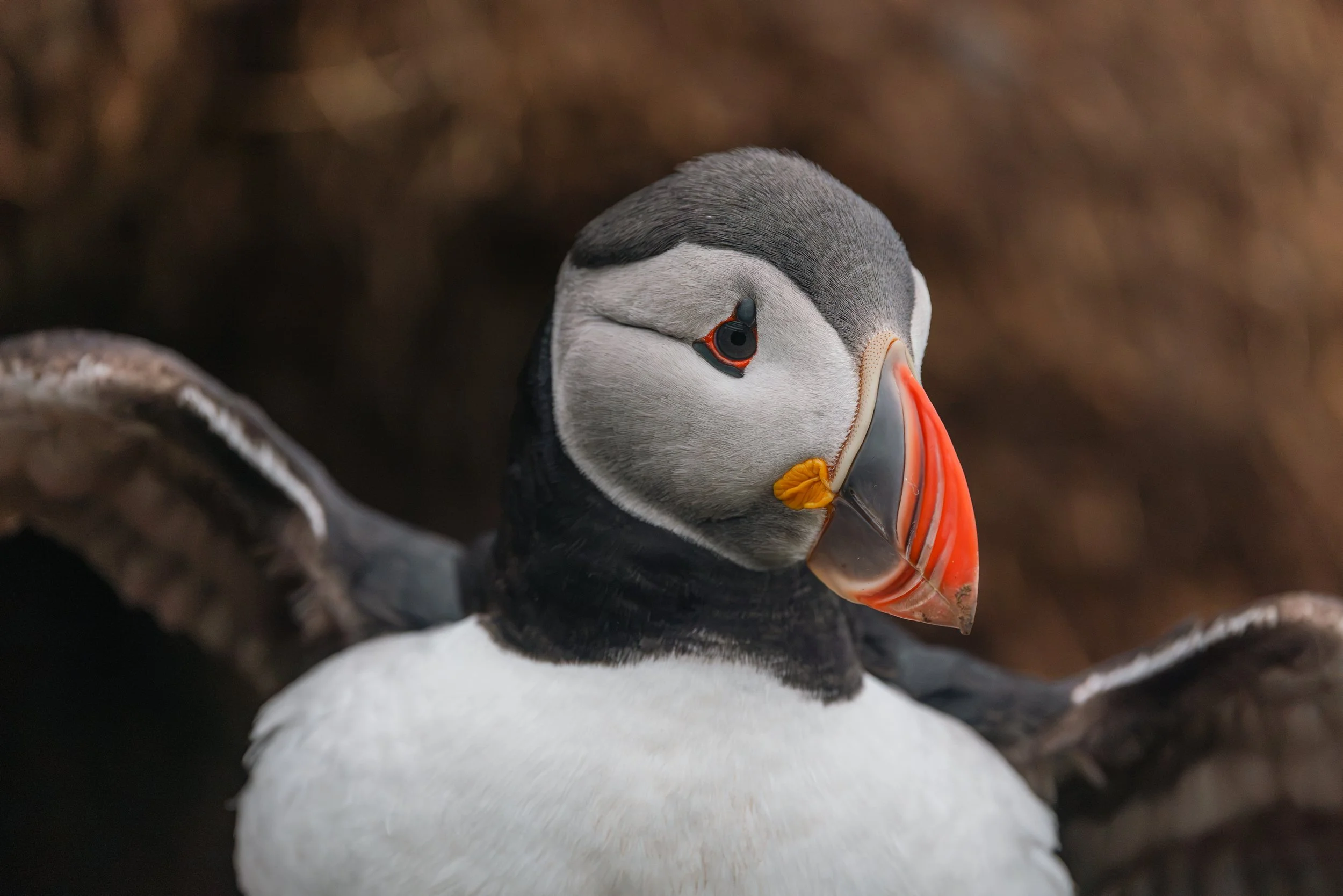
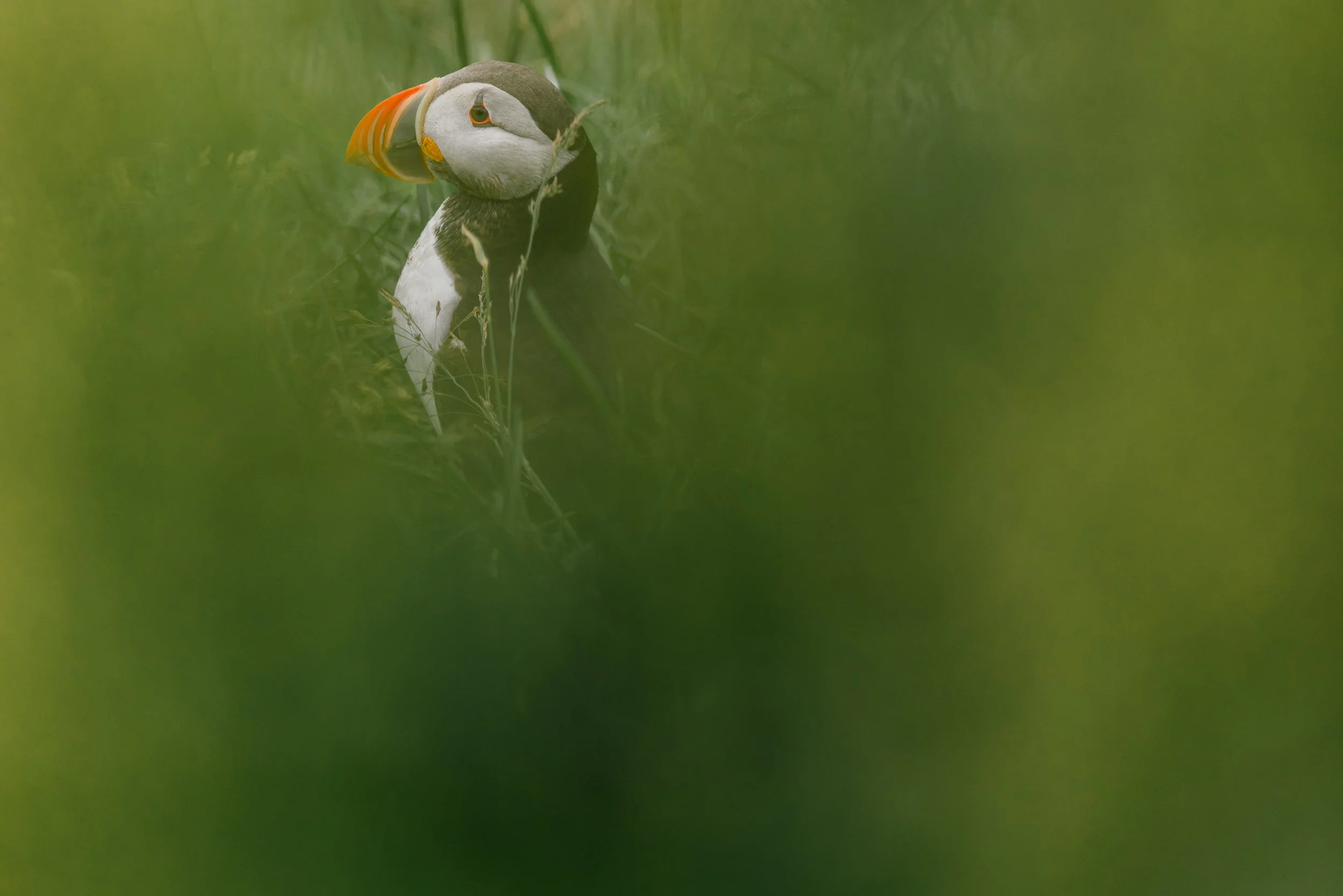
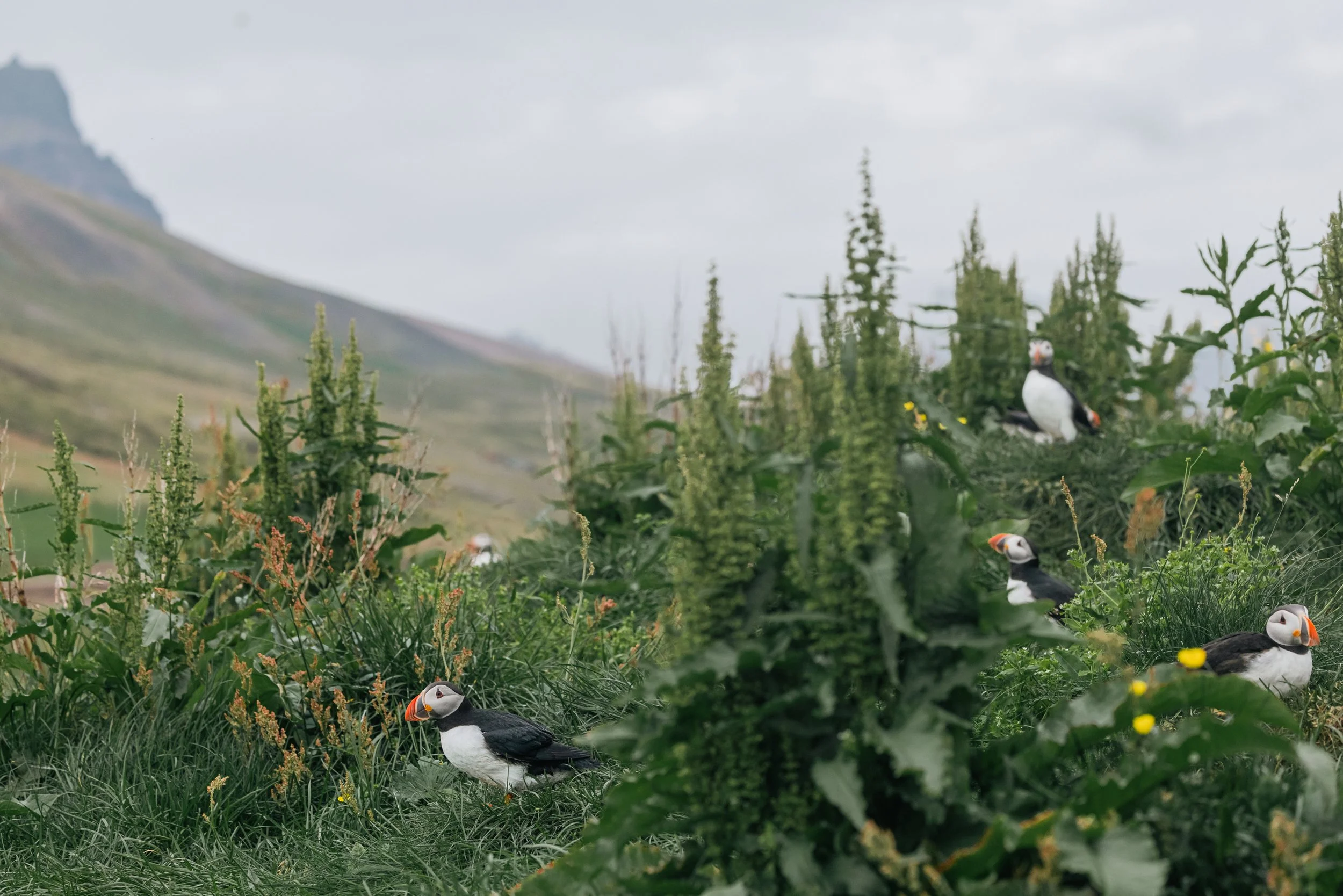
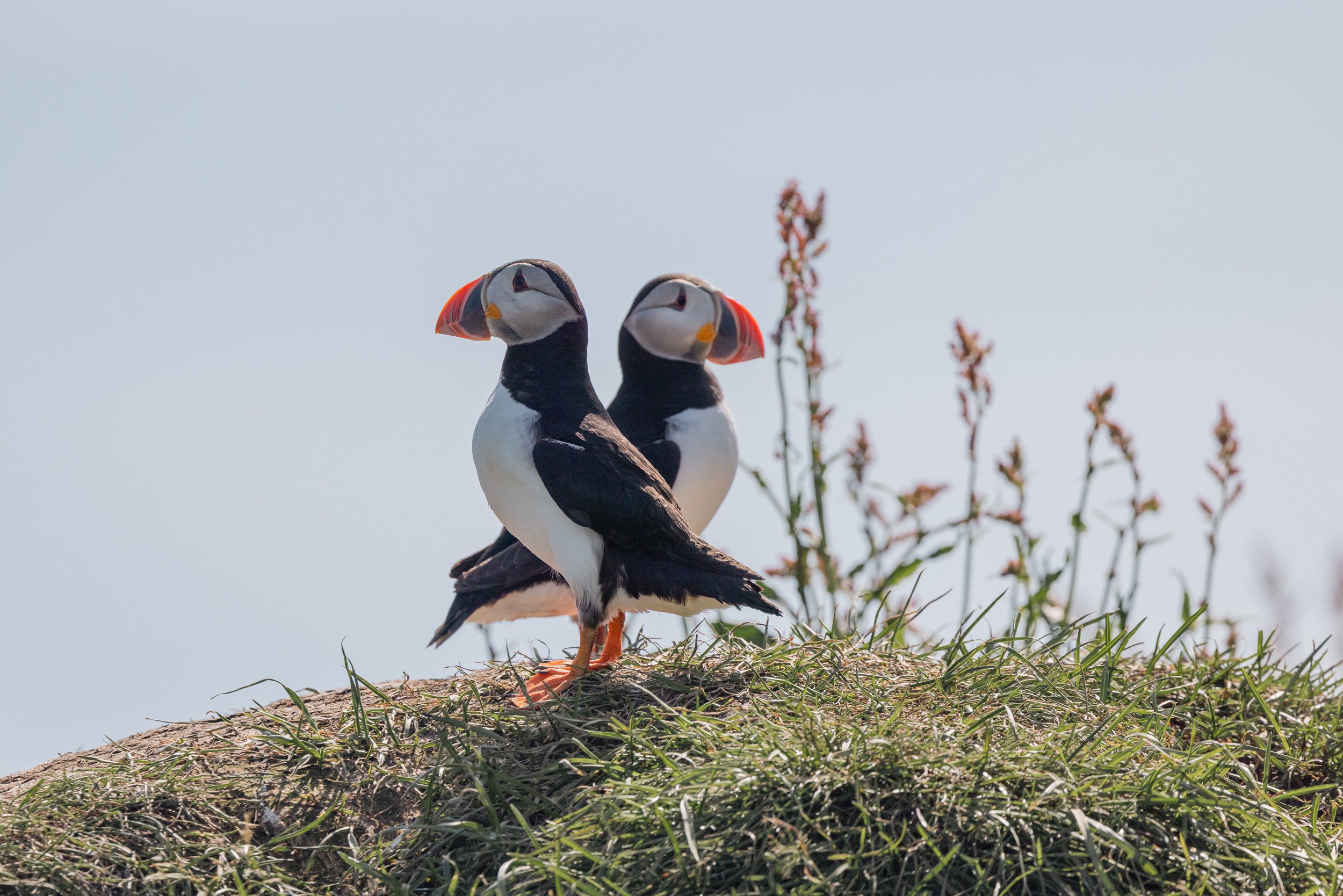
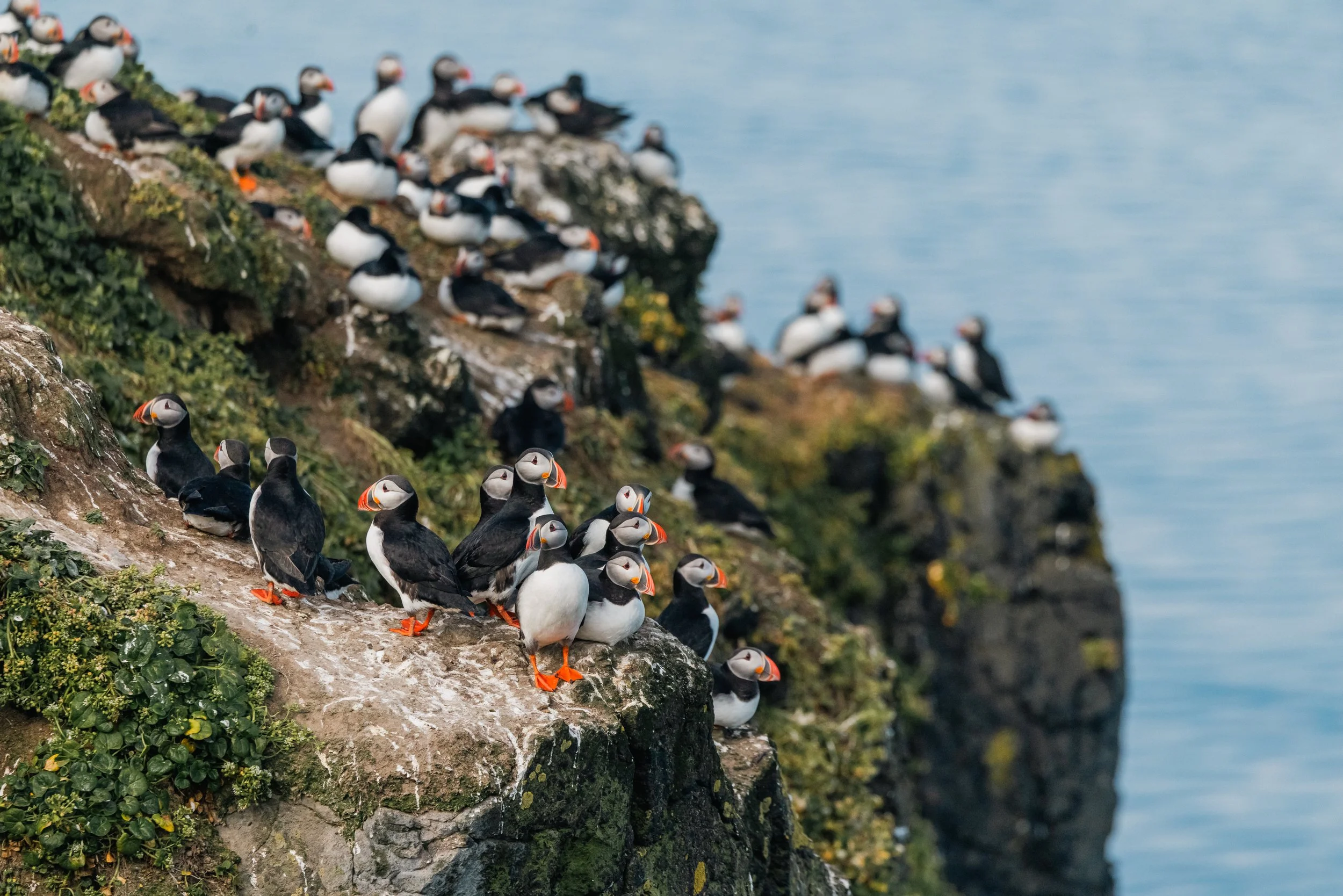
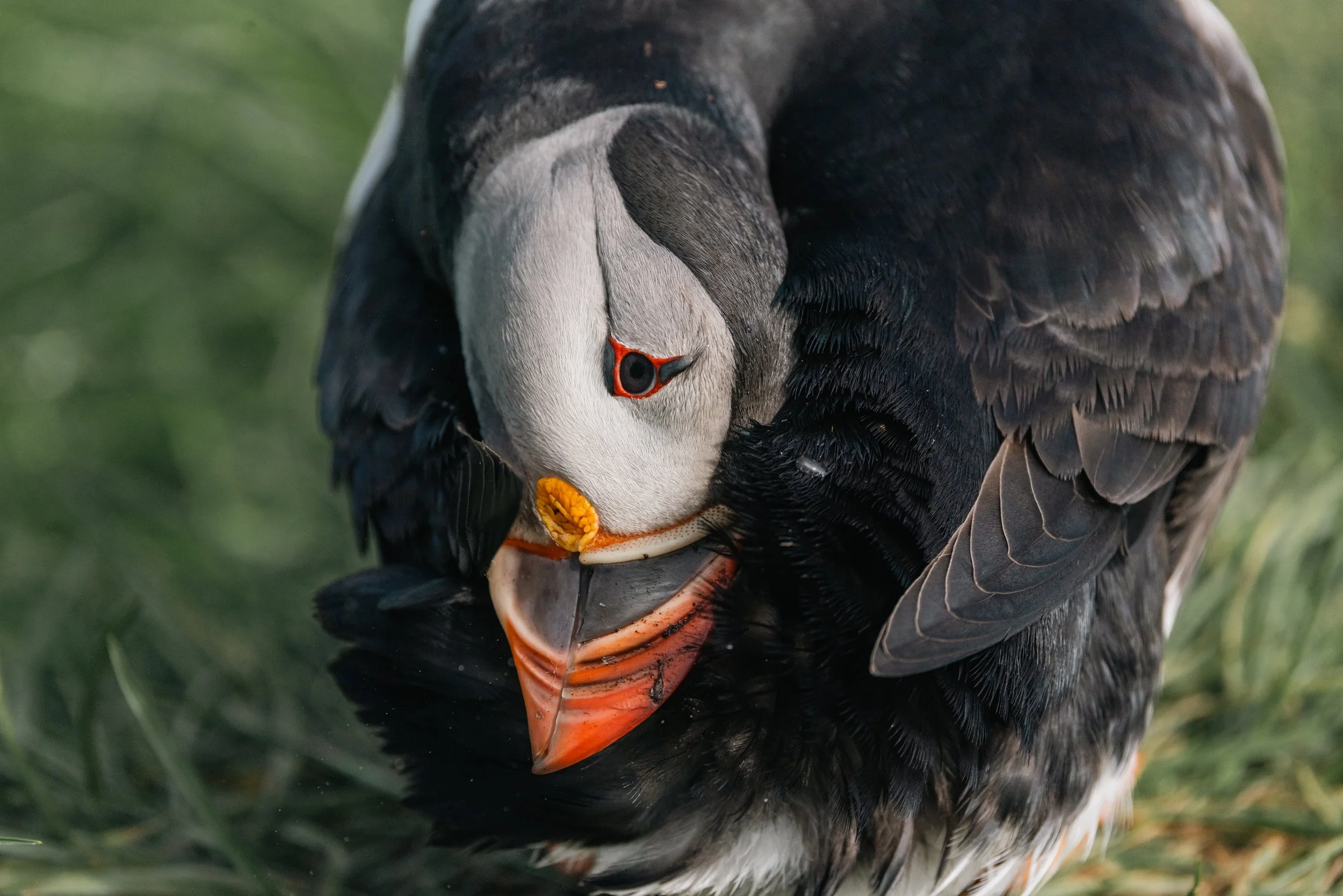
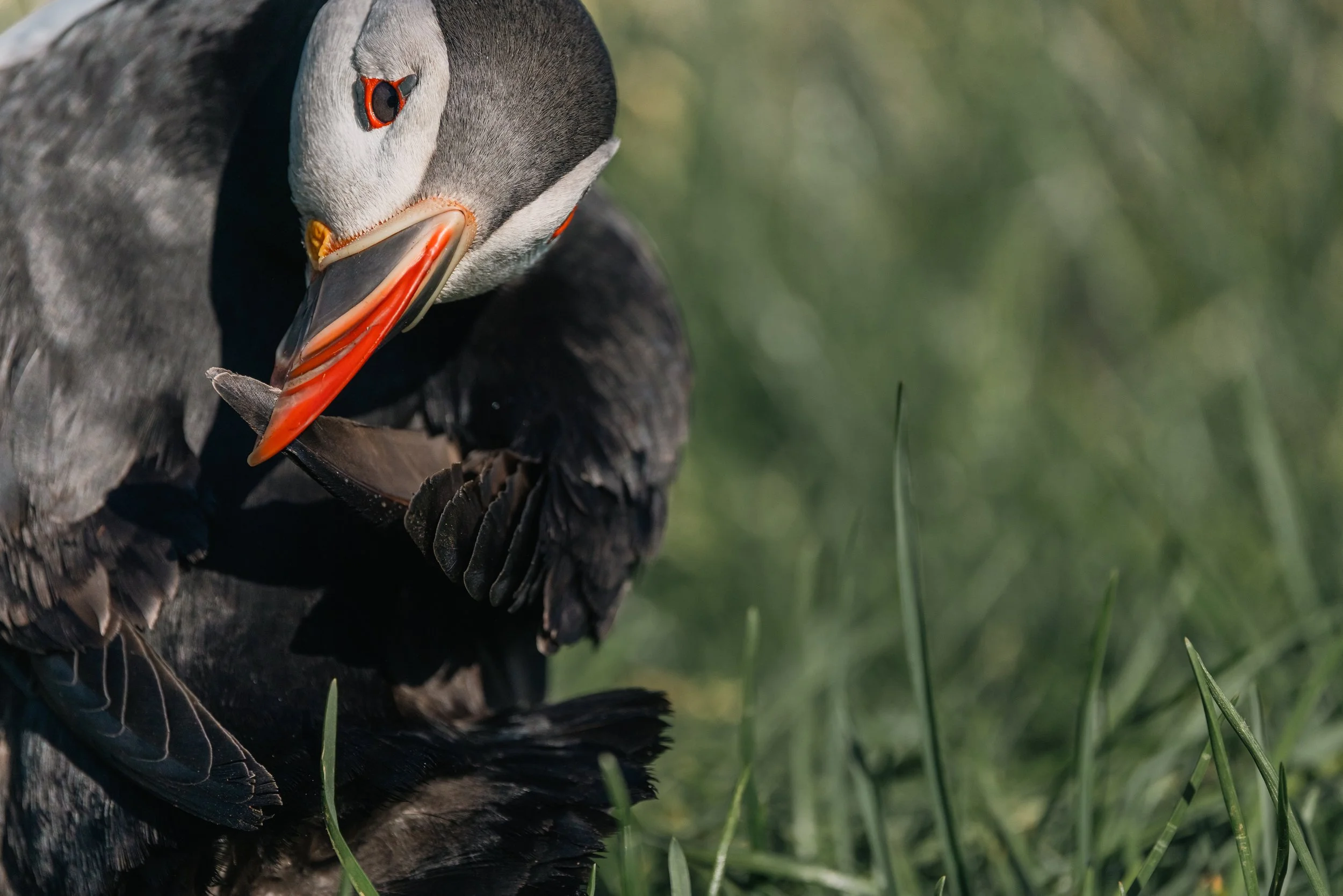
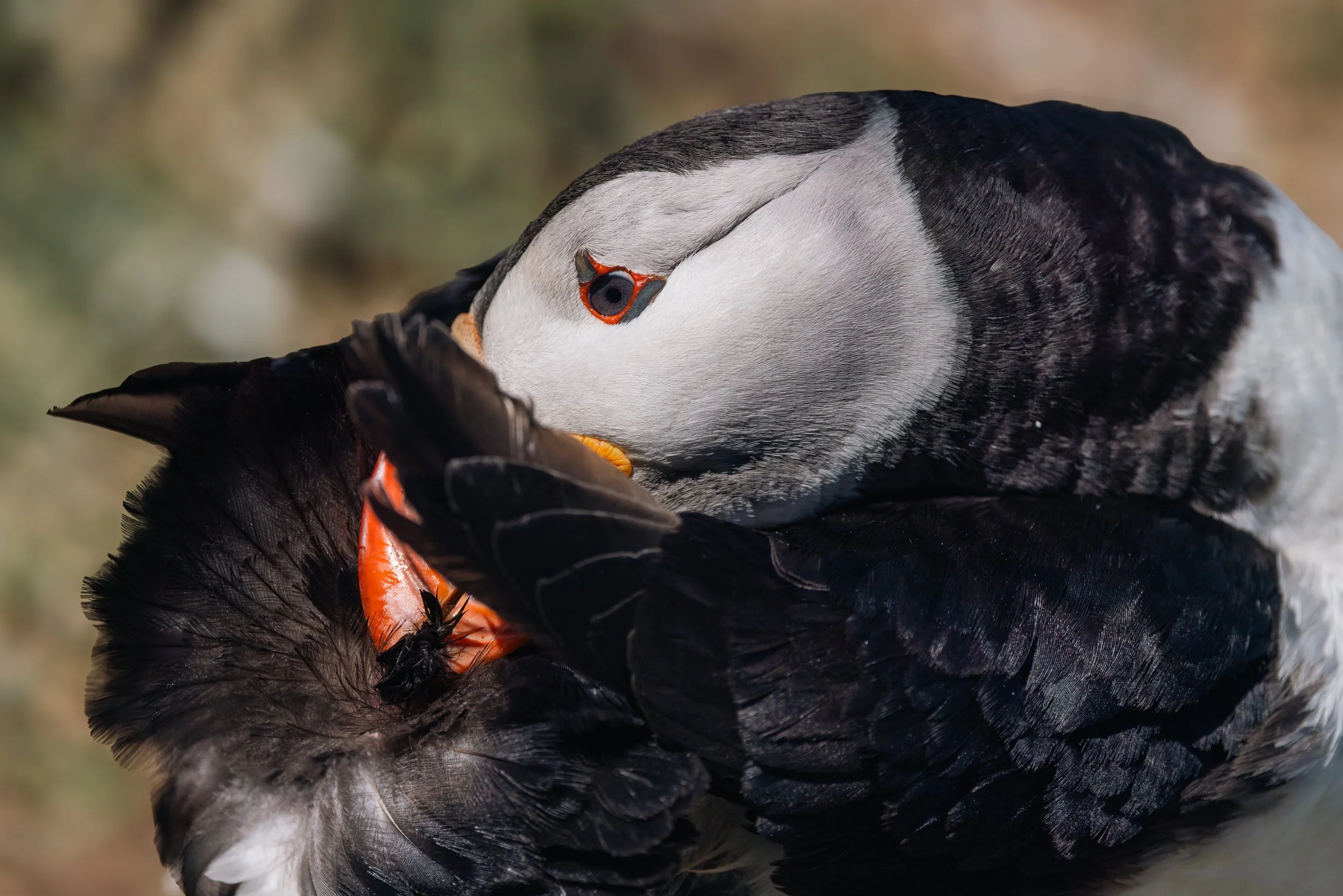
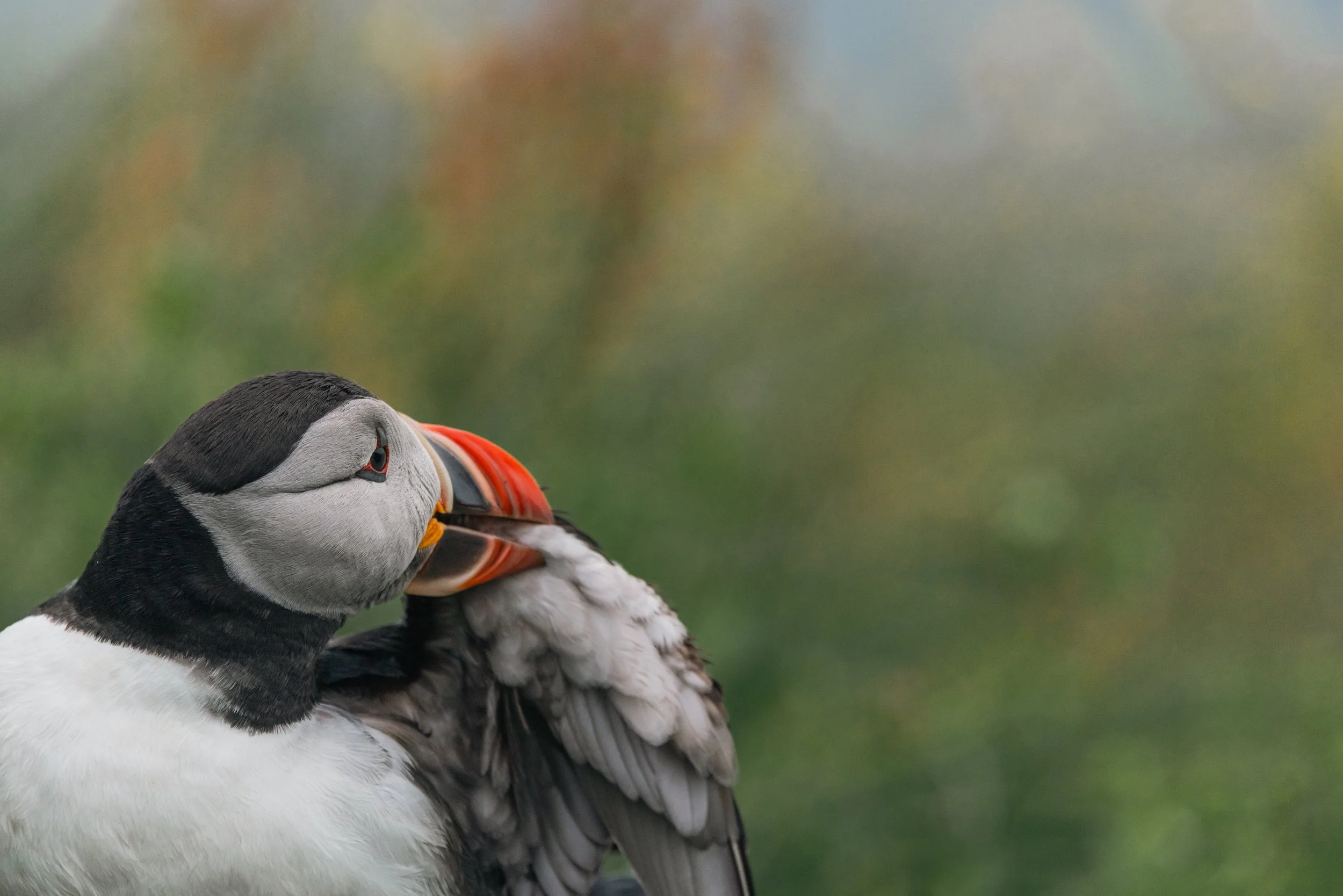
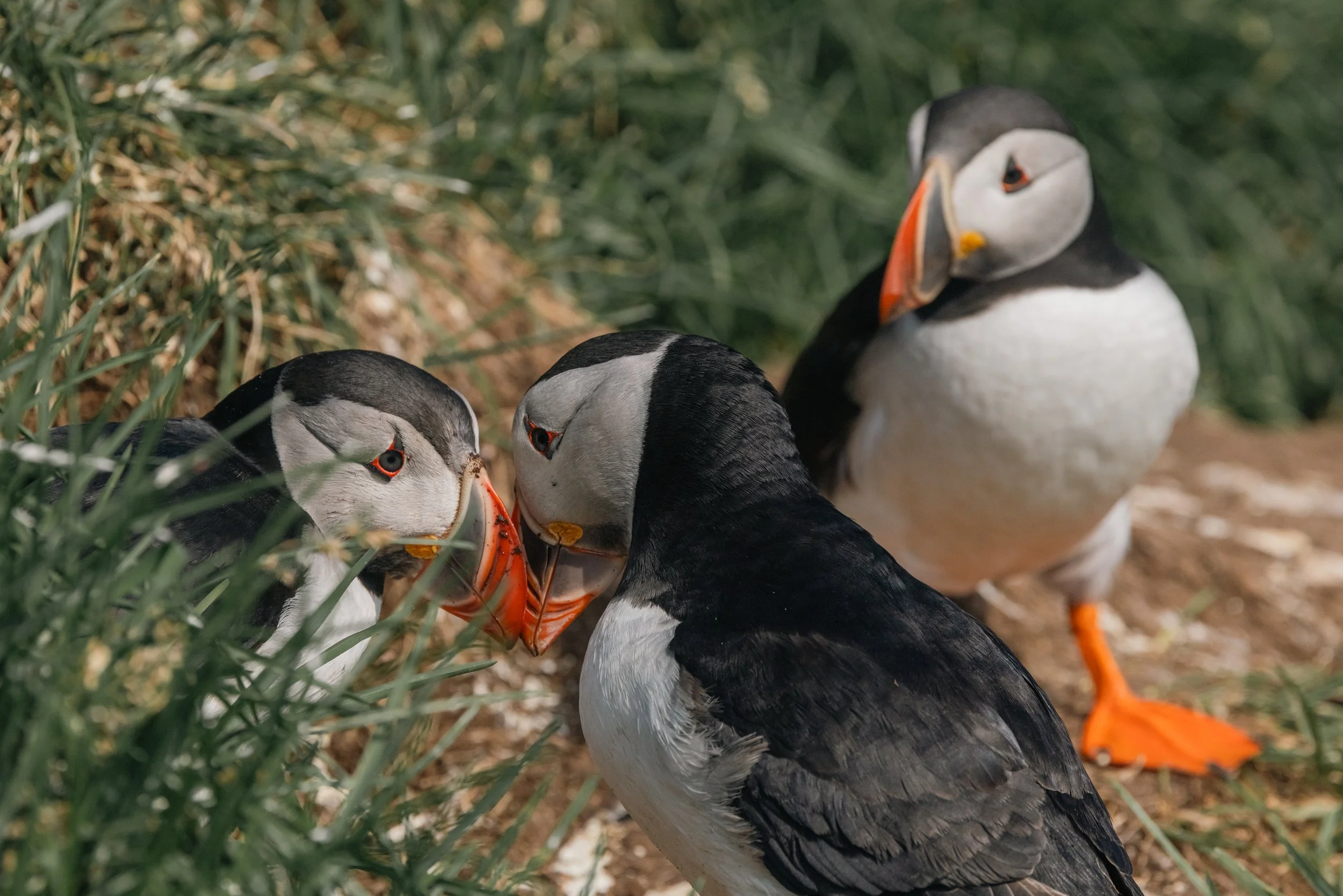
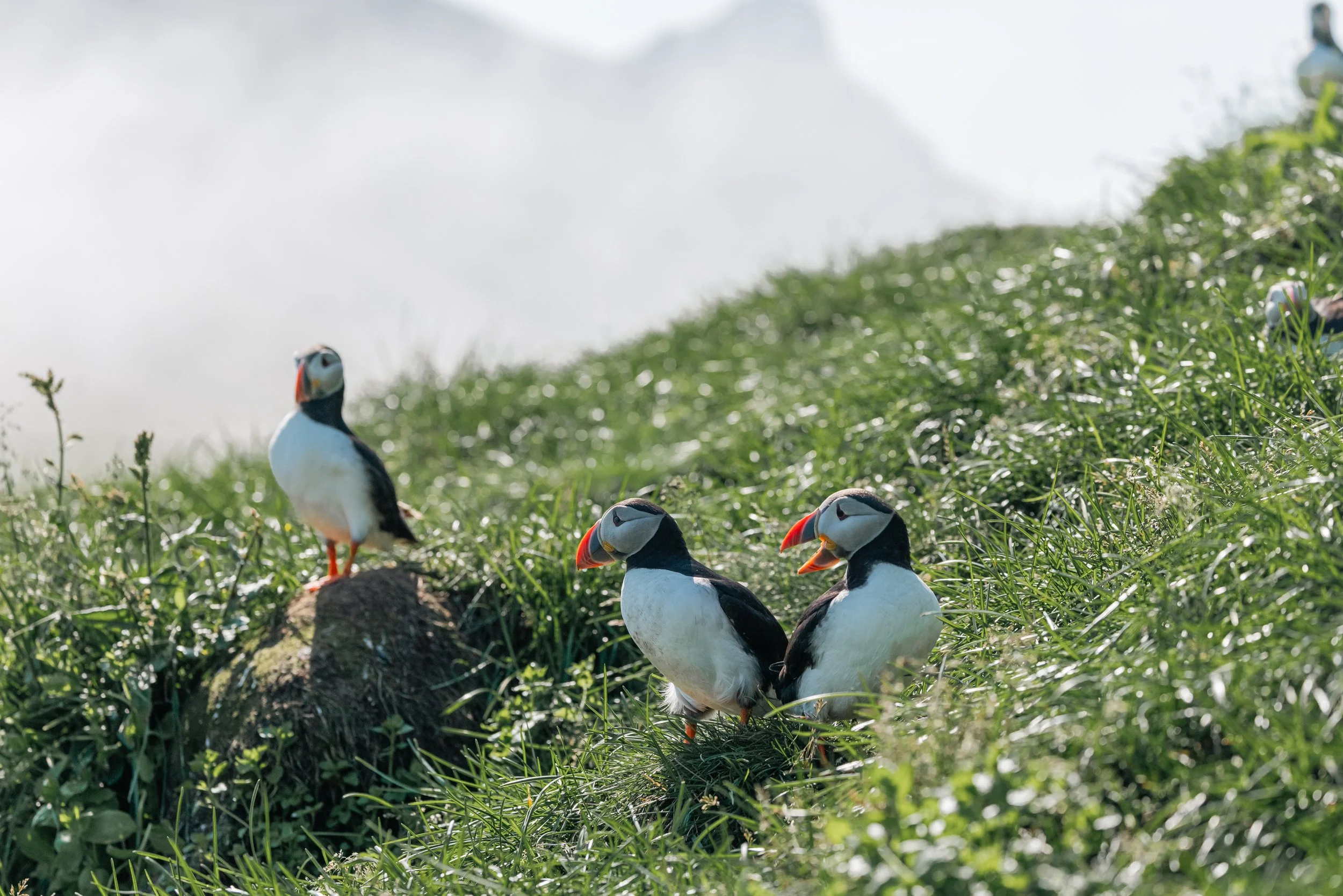
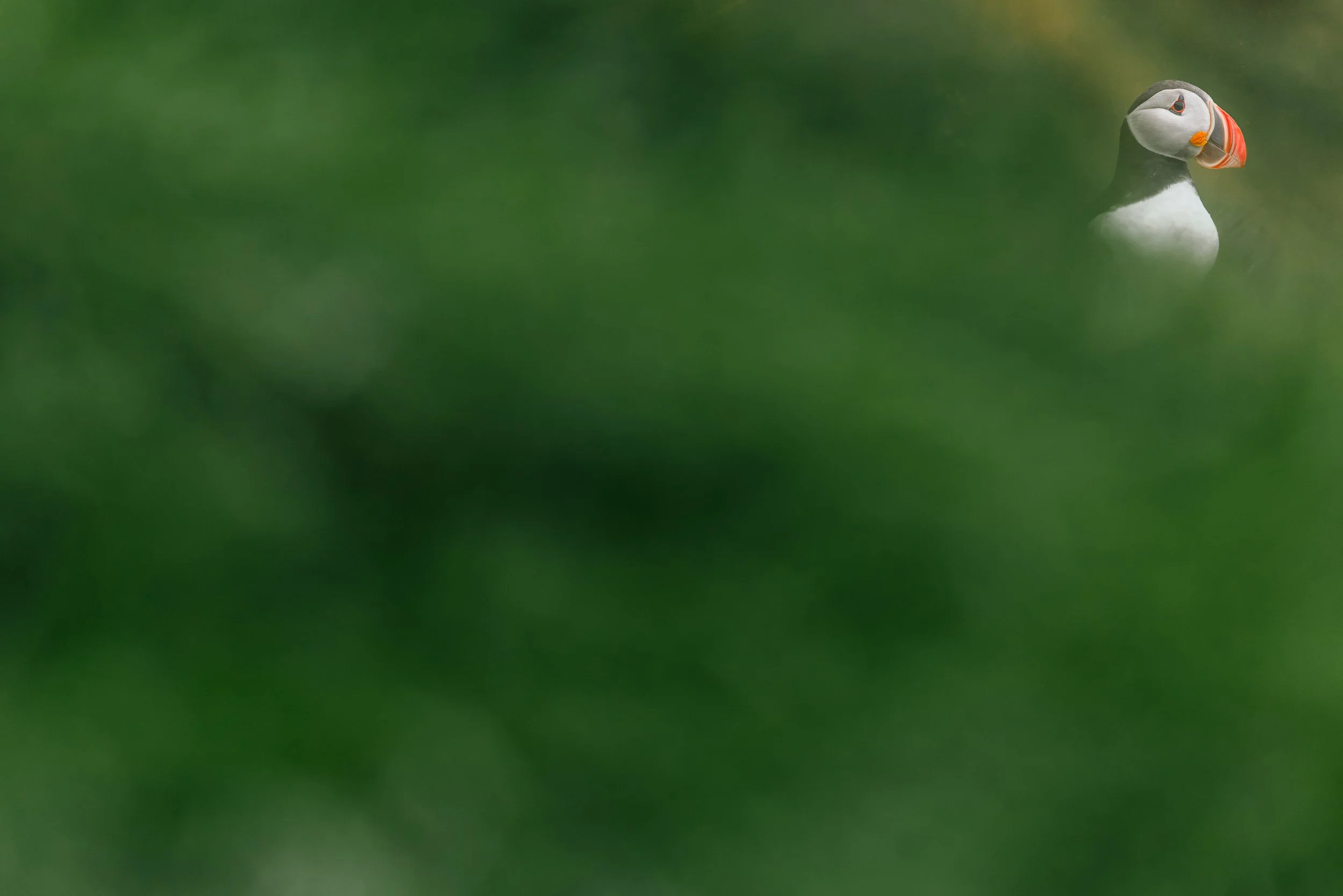
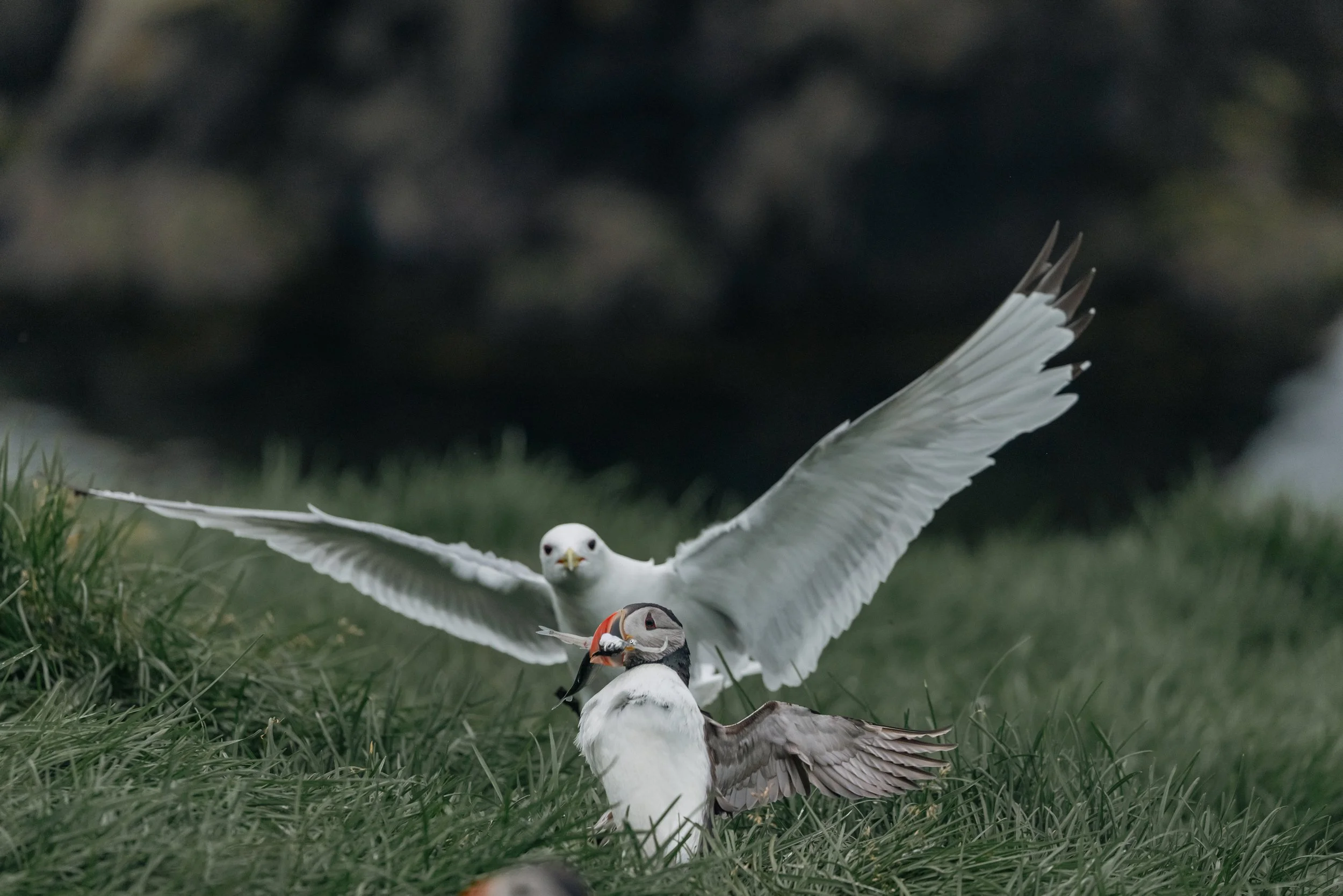
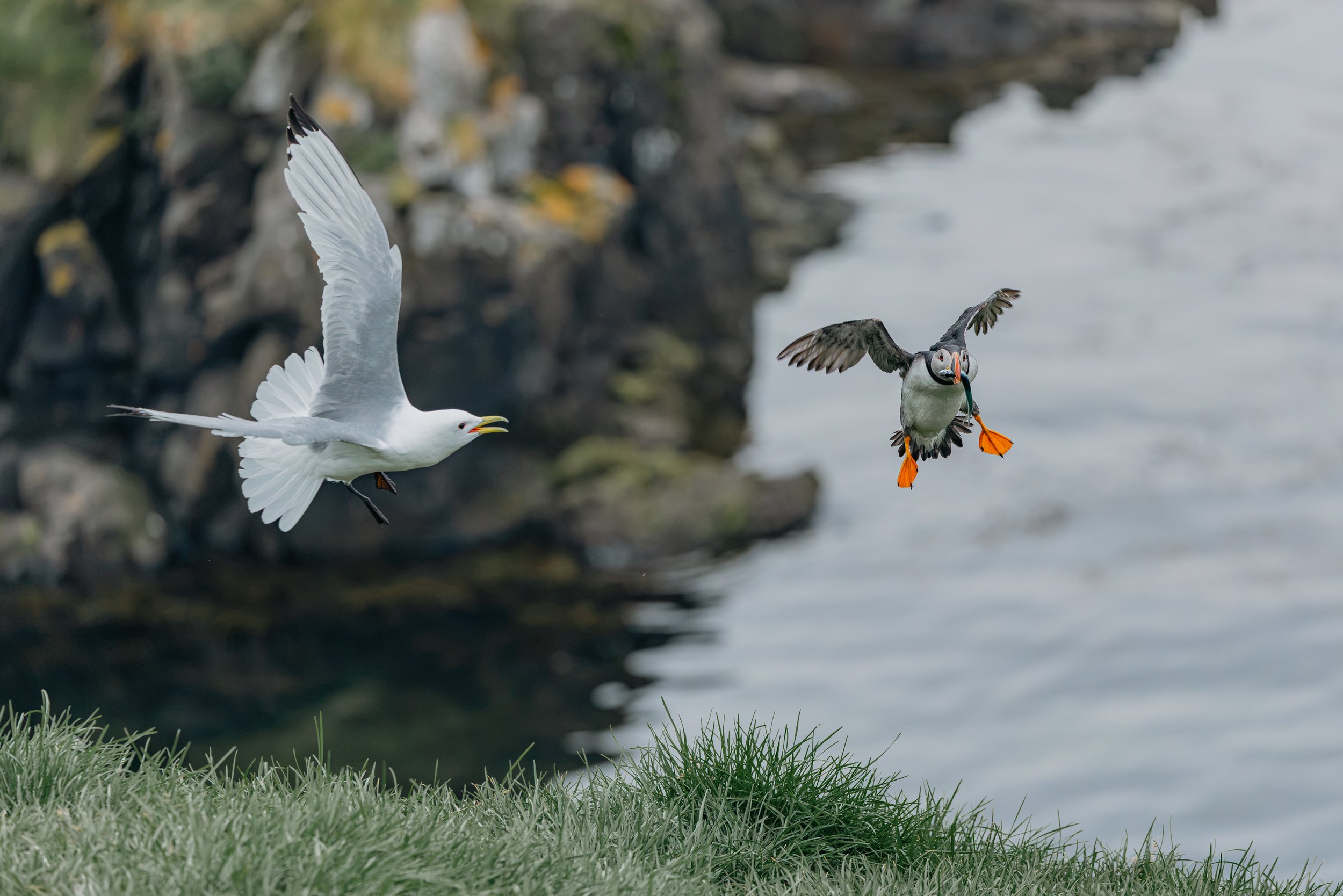
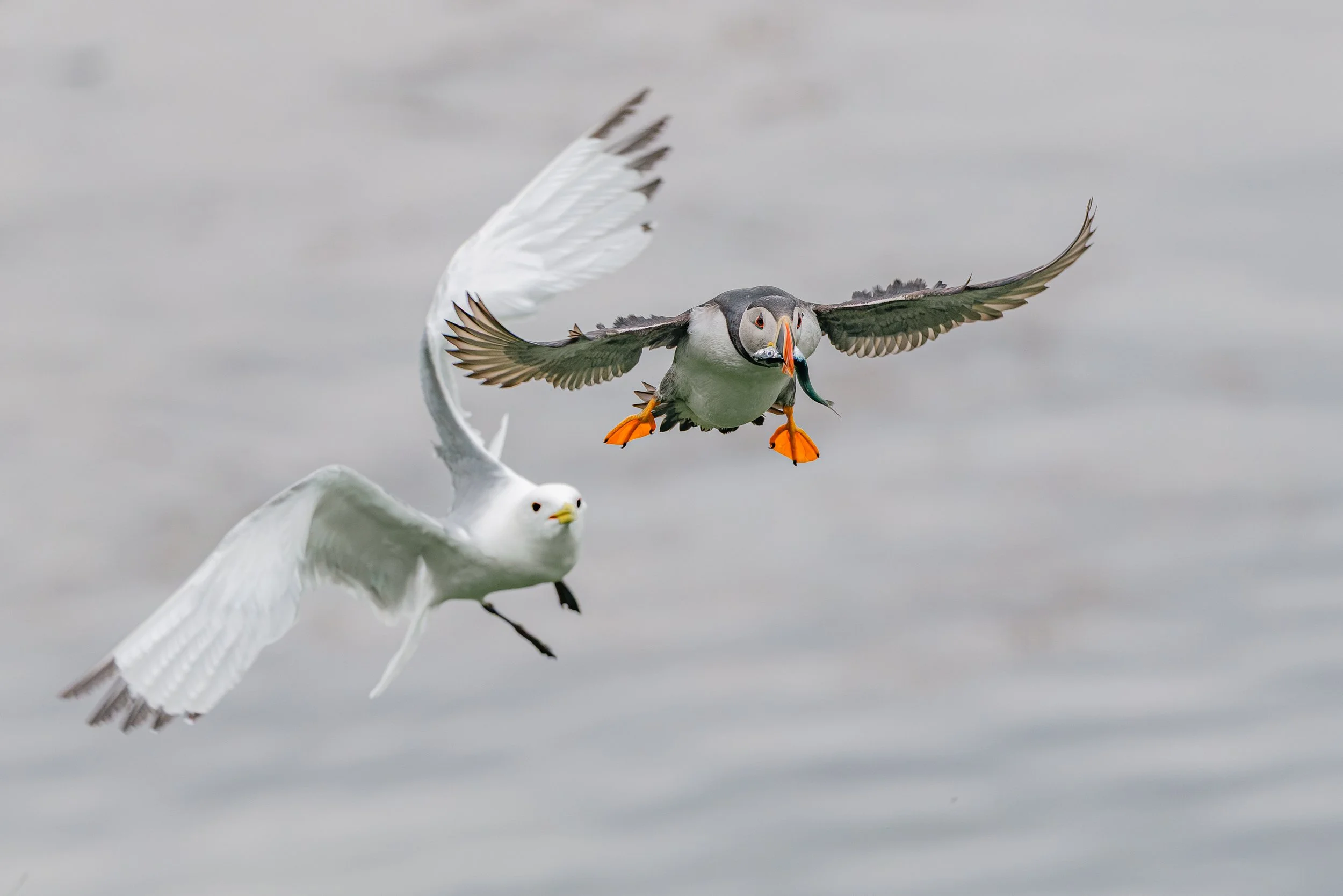
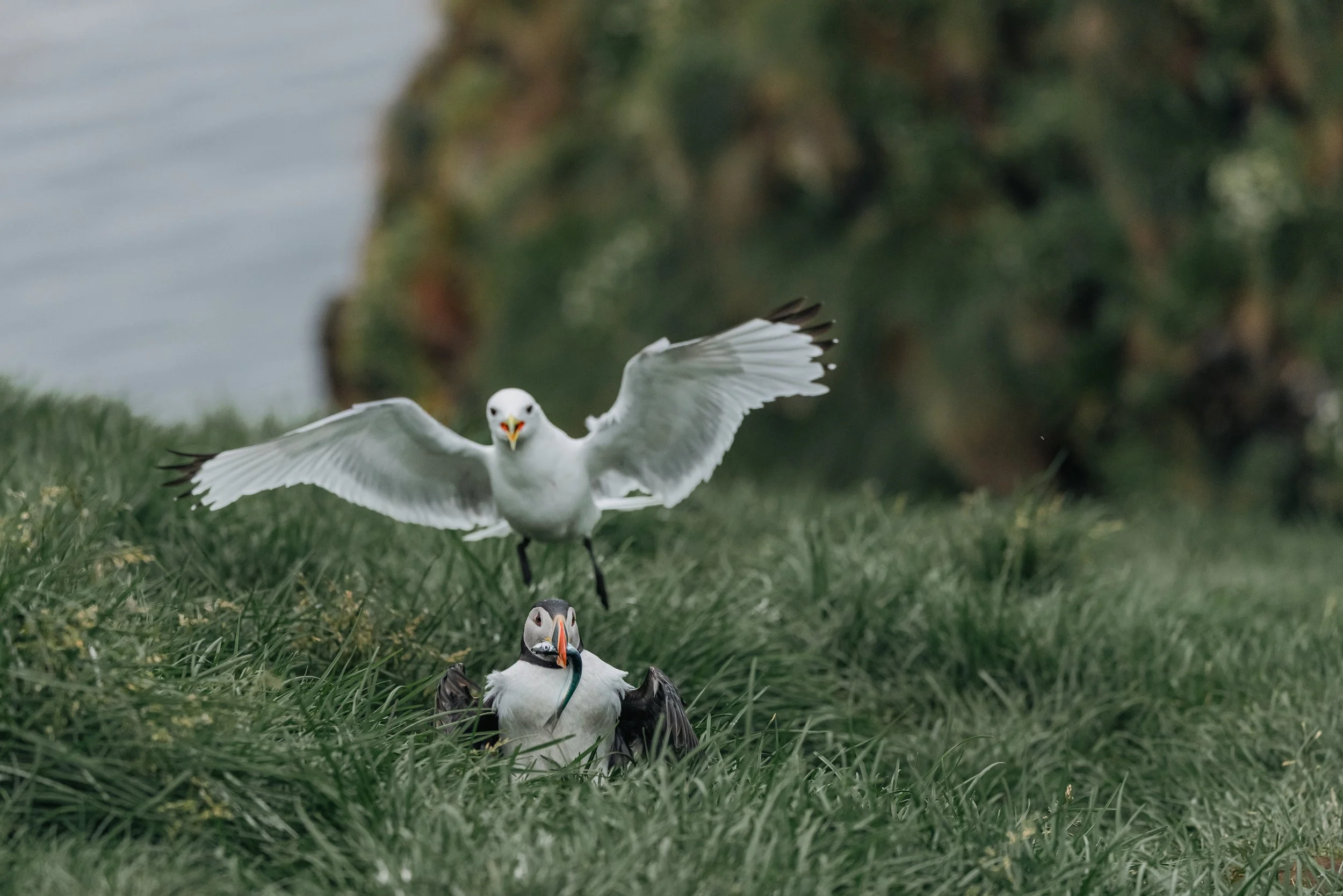
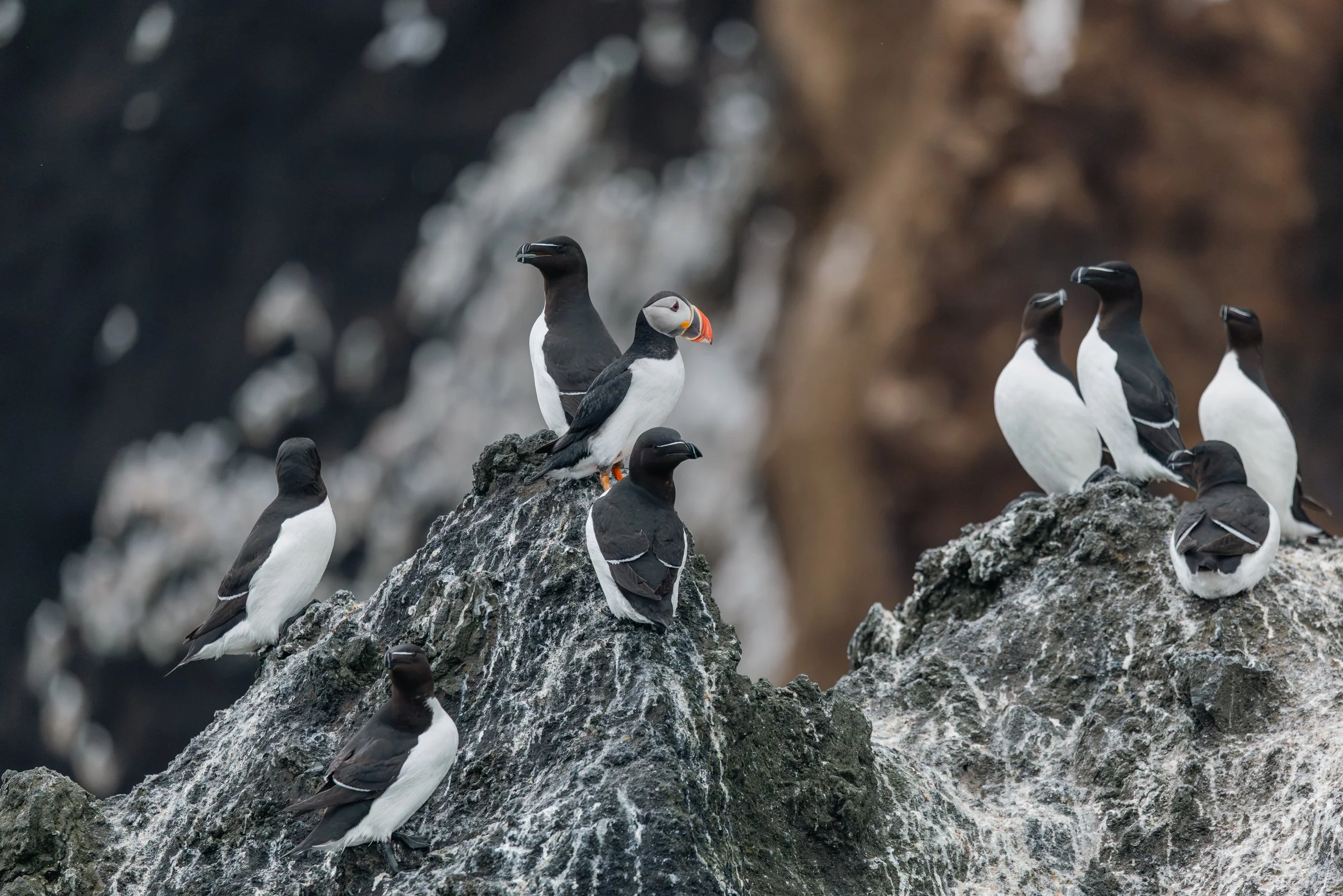
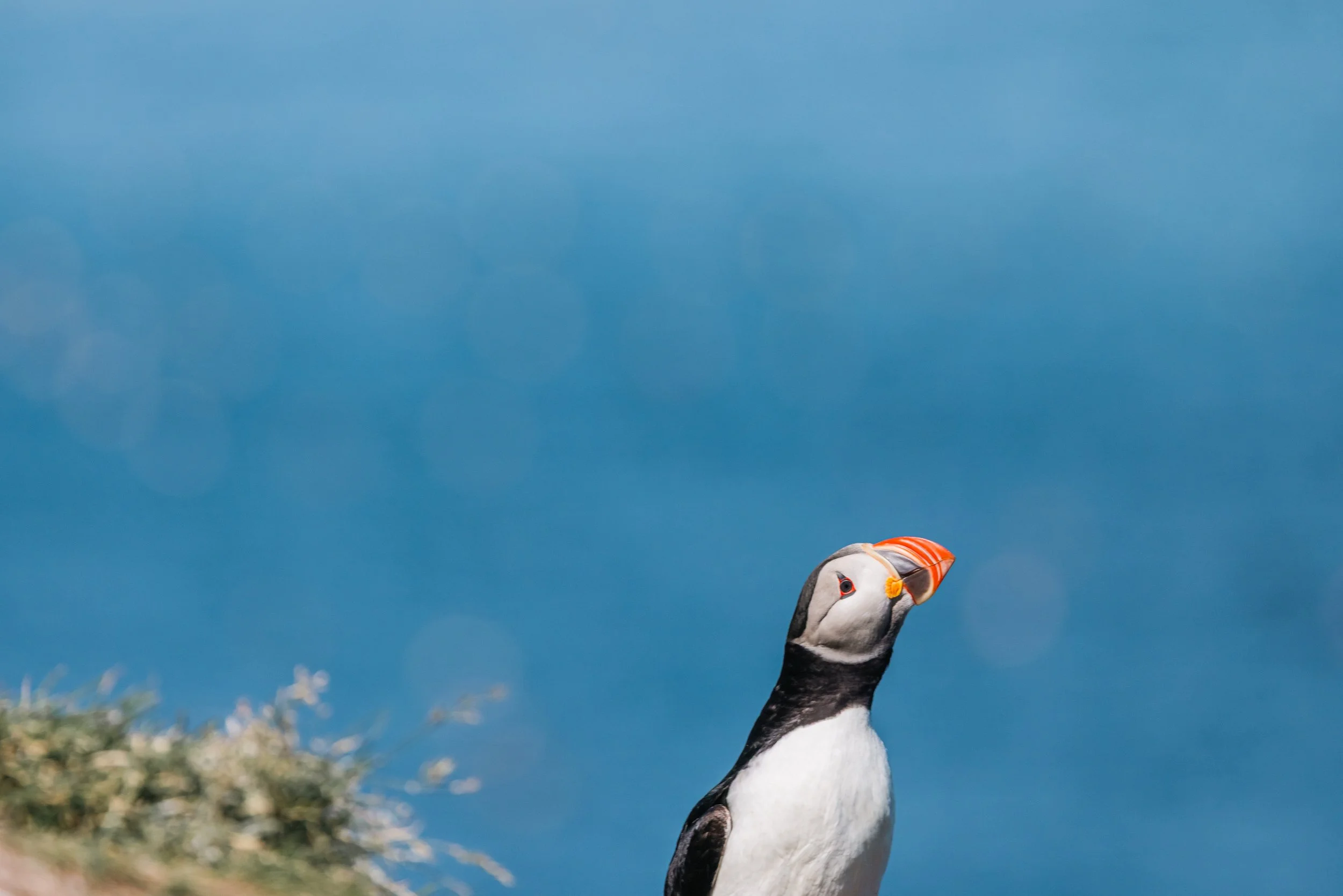
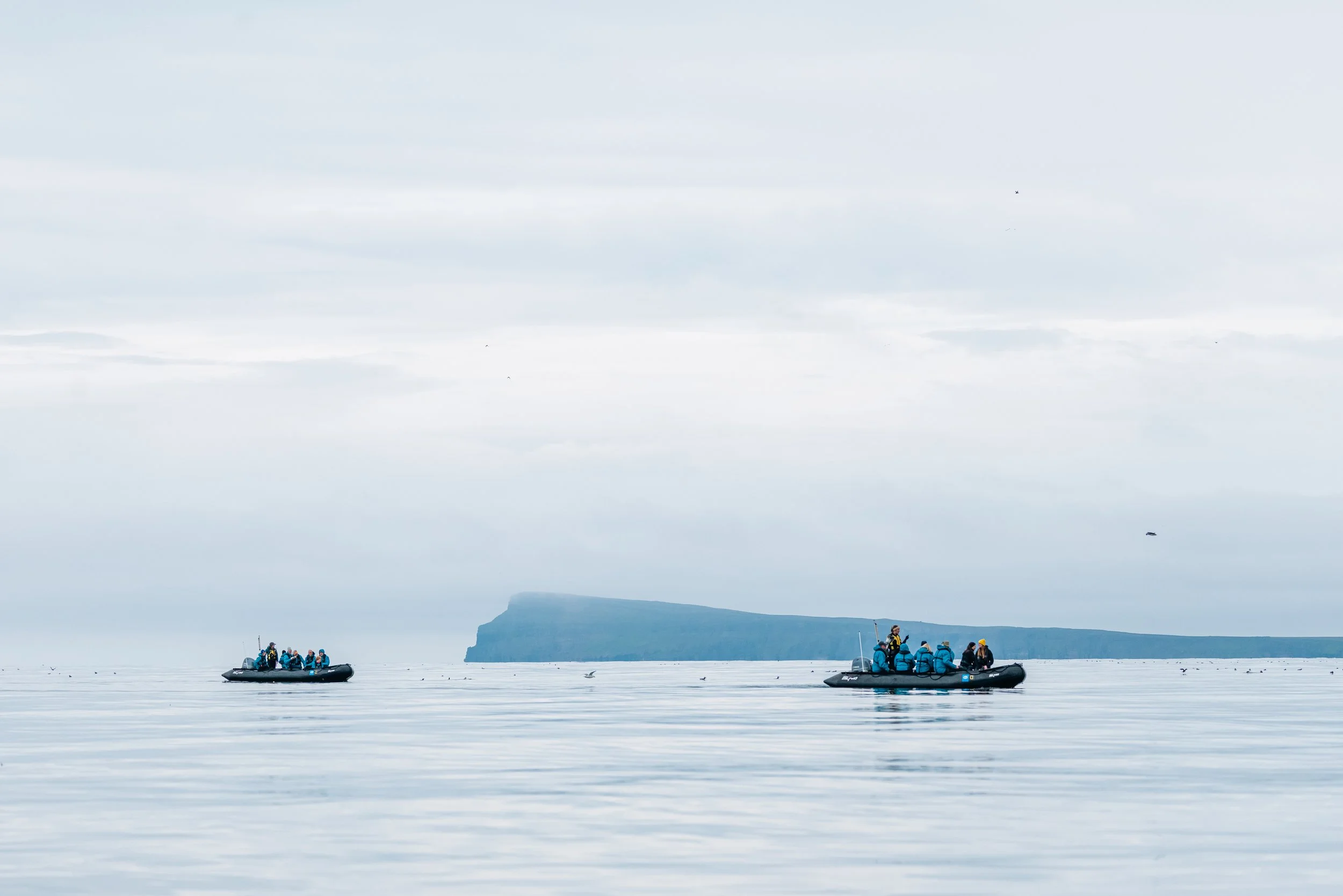
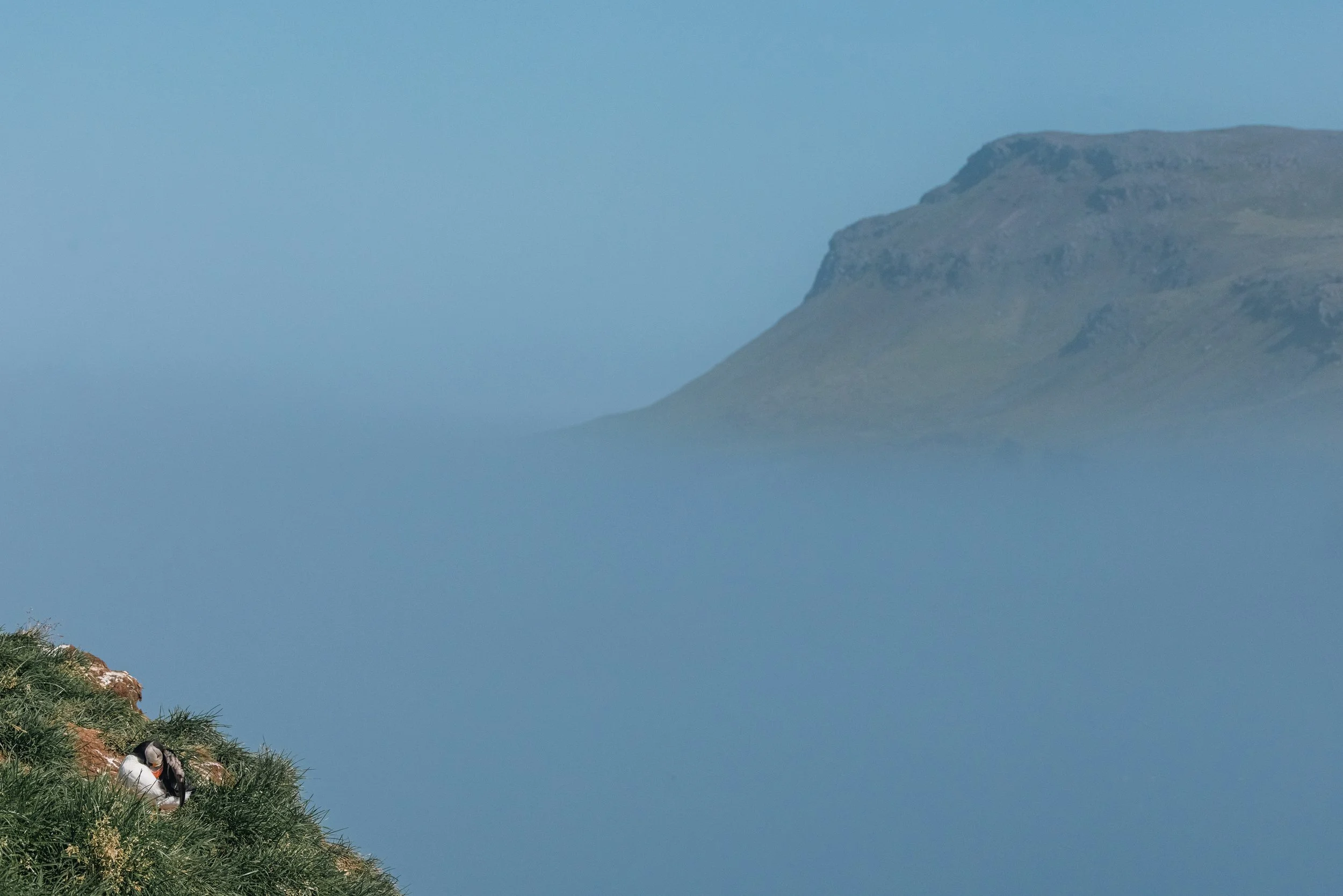
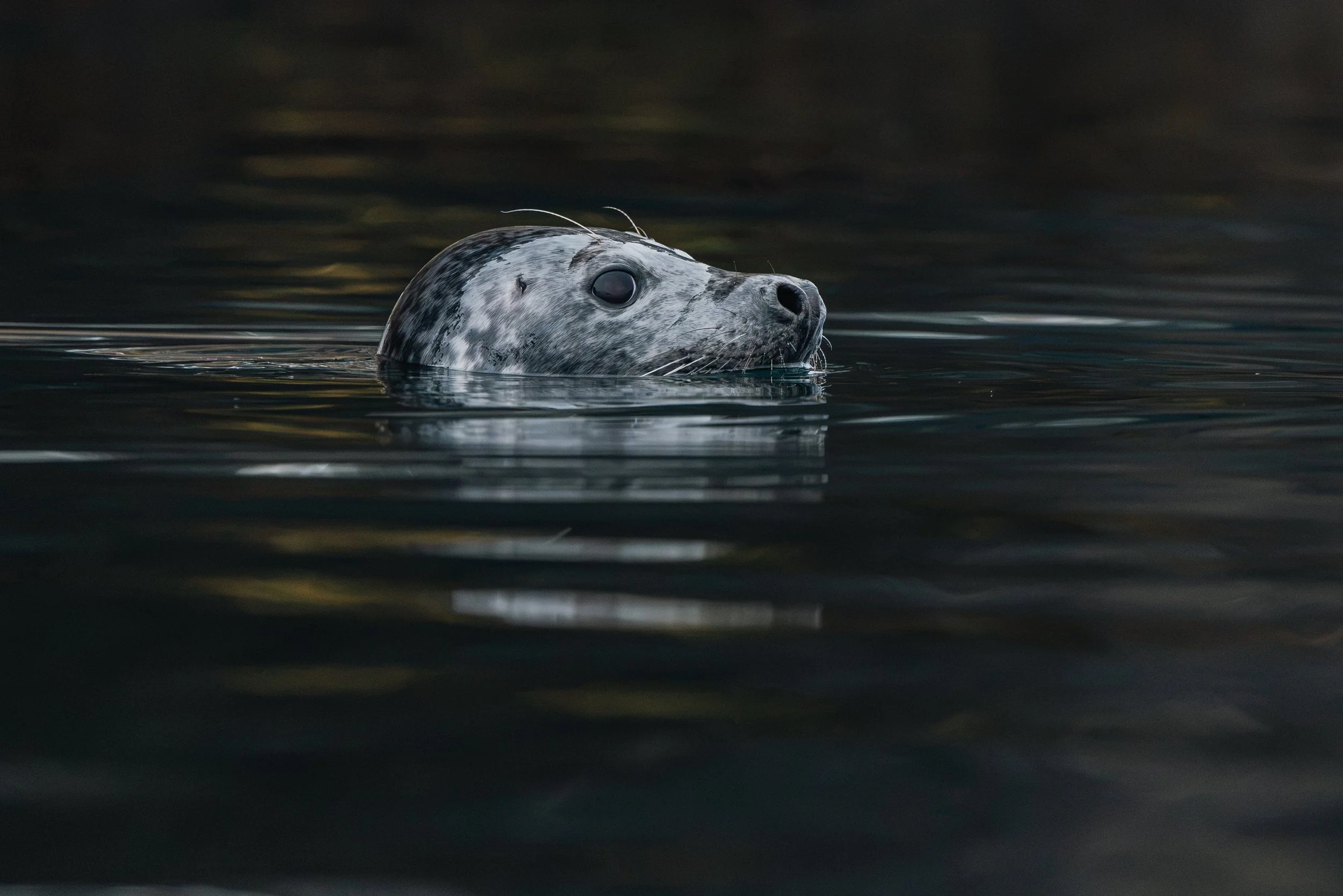
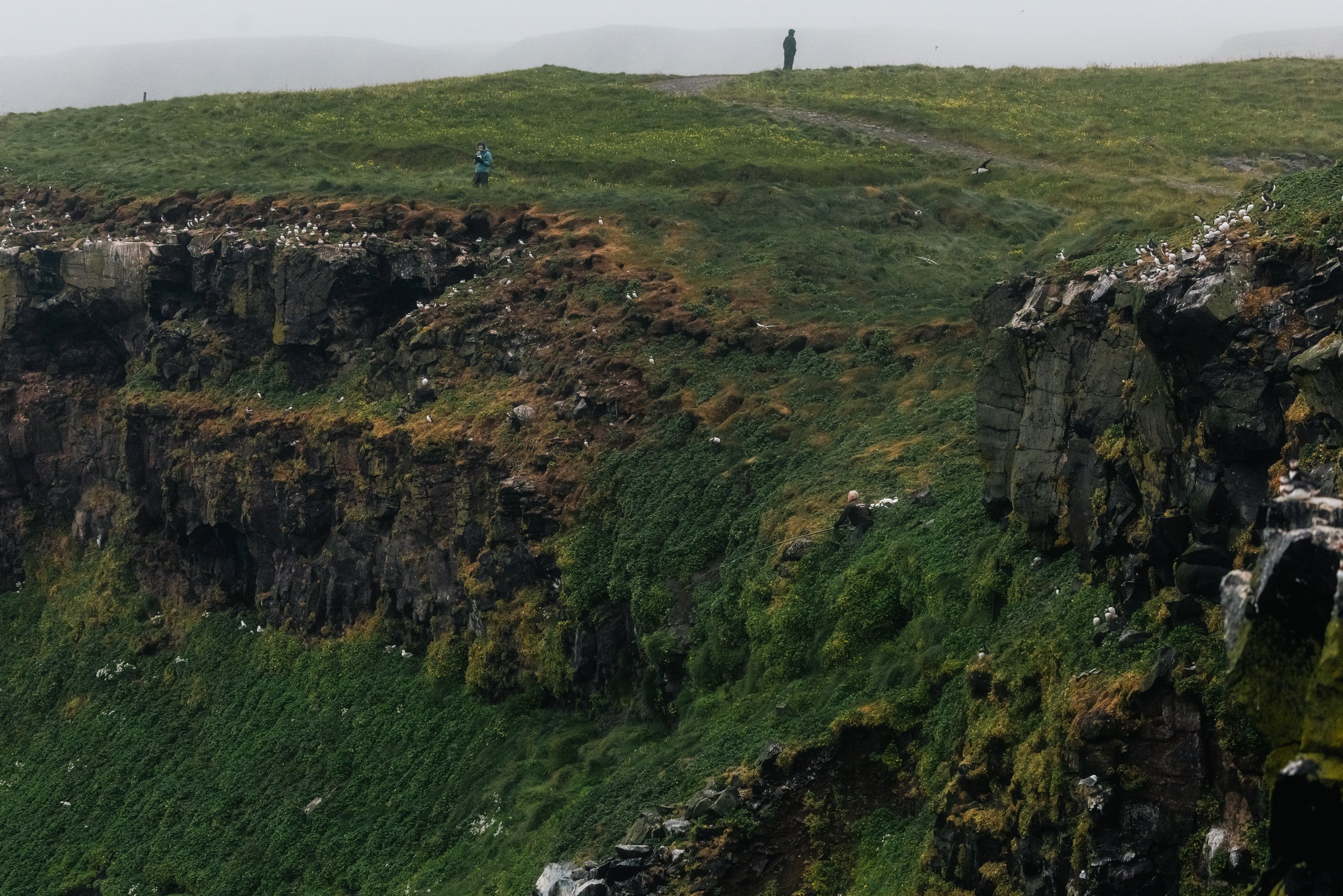
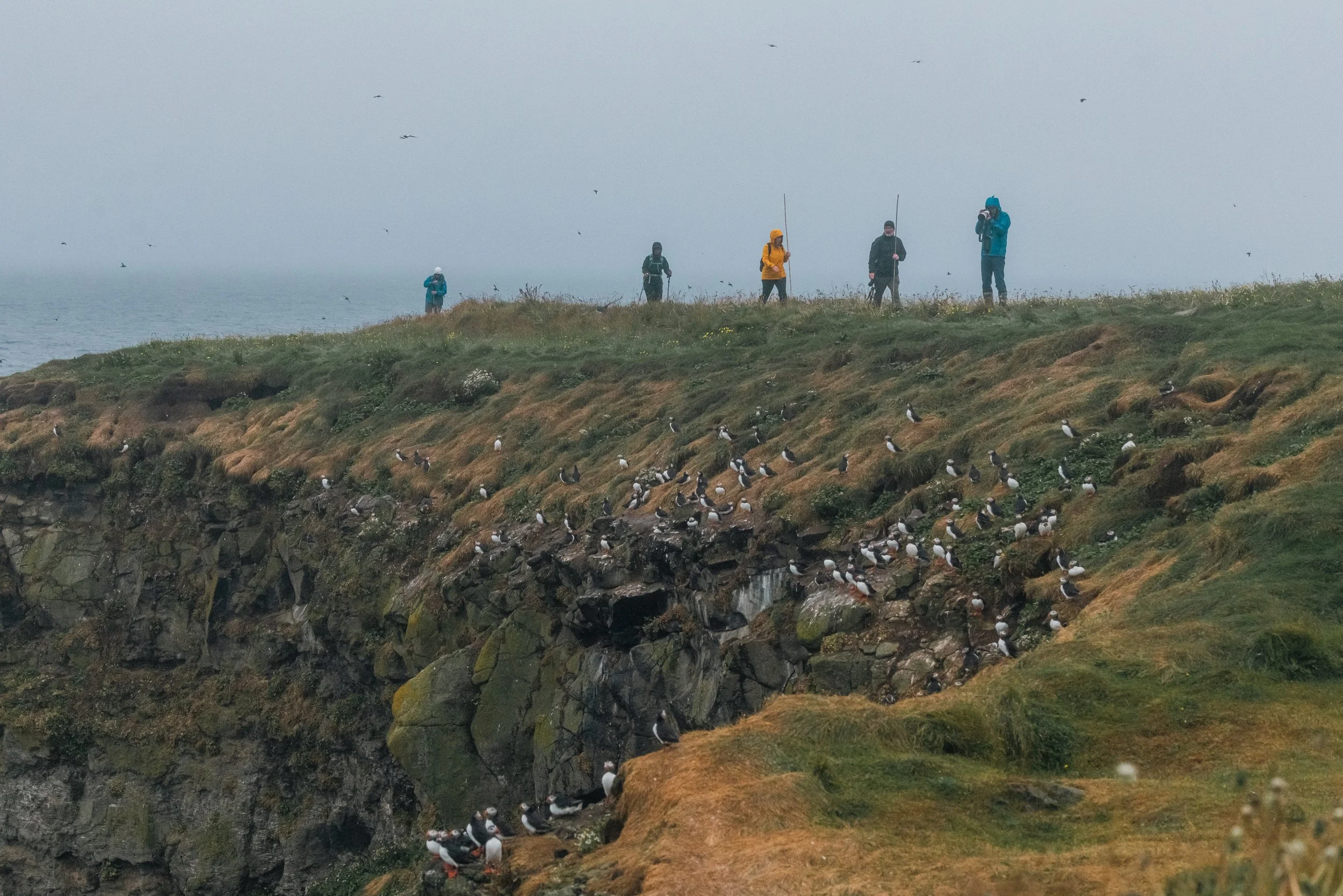
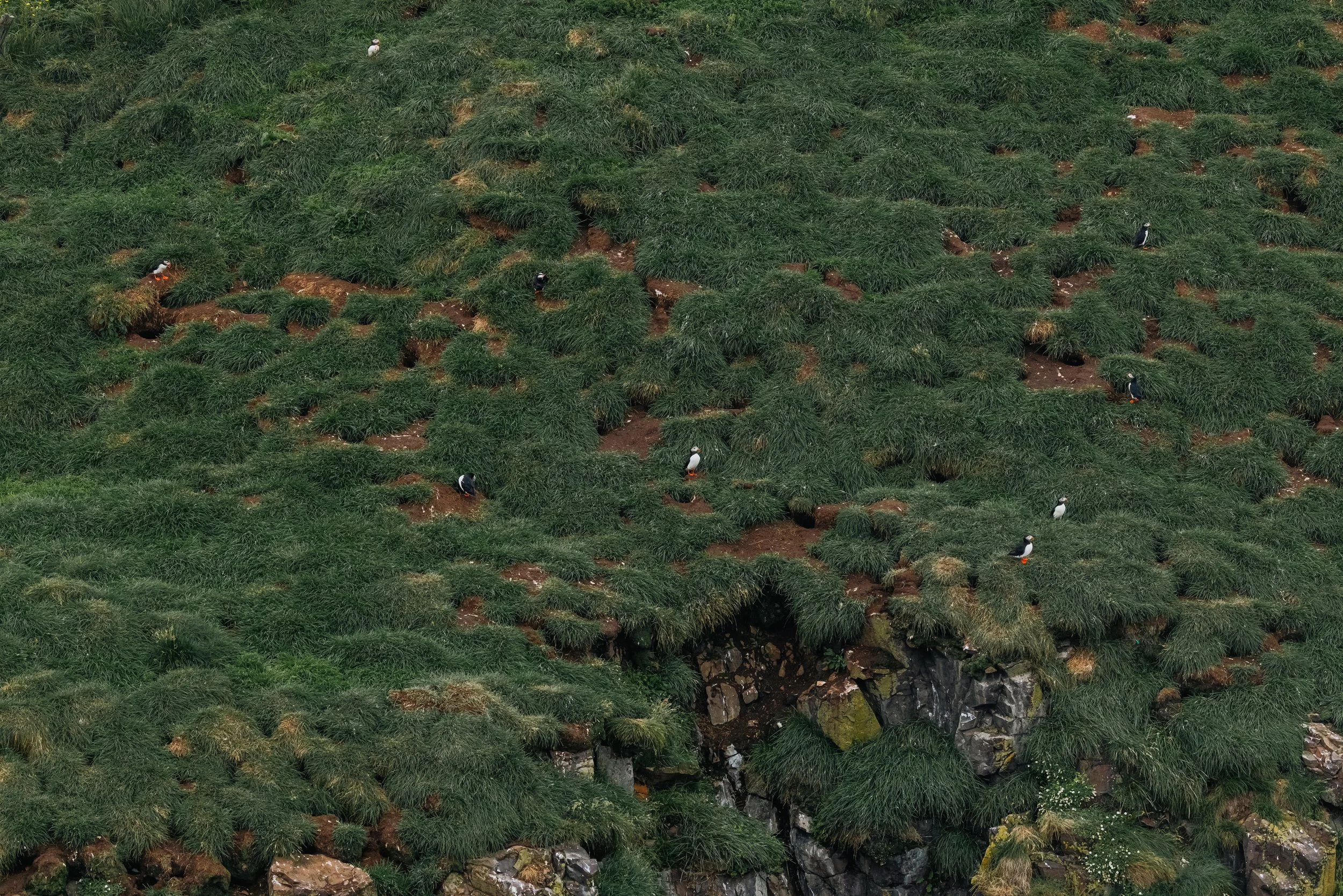
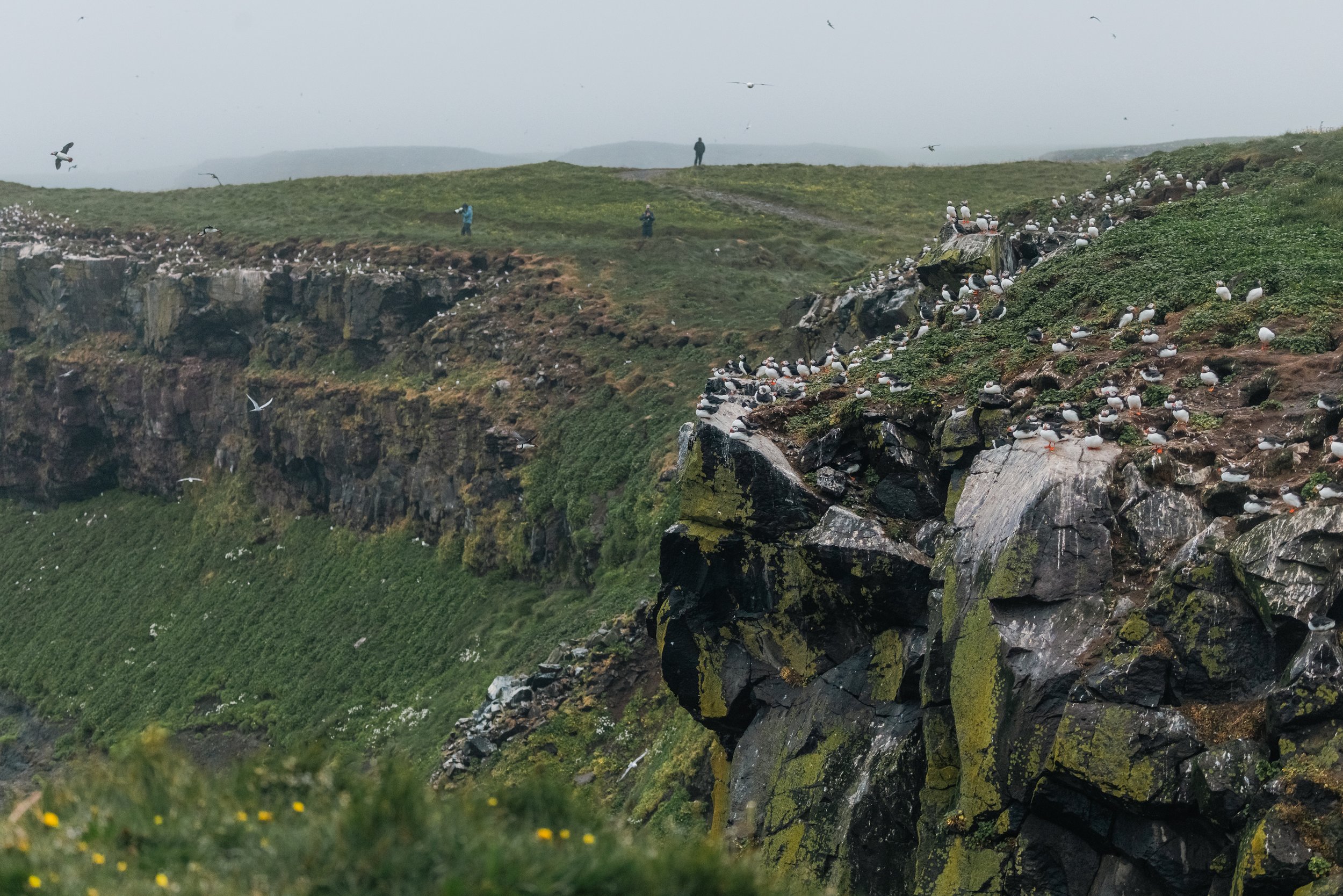
Every summer, Atlantic puffins return to the sea cliffs of eastern Iceland to breed, continuing a cycle that has endured for thousands of years. As warming oceans and shifting food supplies challenge many puffin colonies across the North Atlantic, this project explores the relationship between people and puffins, highlighting the communities, researchers, and protected habitats working to better understand and conserve one of the world's most recognizable seabirds.

Through intimate portraits and moments of behavior, the images celebrate both the beauty of the species and the collective effort required to safeguard its future. Often celebrated for their colorful appearance, puffins are far more than charismatic seabirds. They are indicators of the health of the North Atlantic, reflecting changes in fisheries, ocean temperatures, and ecosystem productivity. This project moves beyond the familiar image of the "clown of the sea" to reveal a resilient yet vulnerable species whose future is closely tied to the changing ocean.

How can photography help connect people to the science of puffin conservation?


Aiming to build a visual narrative about the lives of these birds, the research being conducted to understand them, the local communities that coexist with them and the broader story of a changing North Atlantic. Why do these birds matter, and how science and public engagement can help protect them?
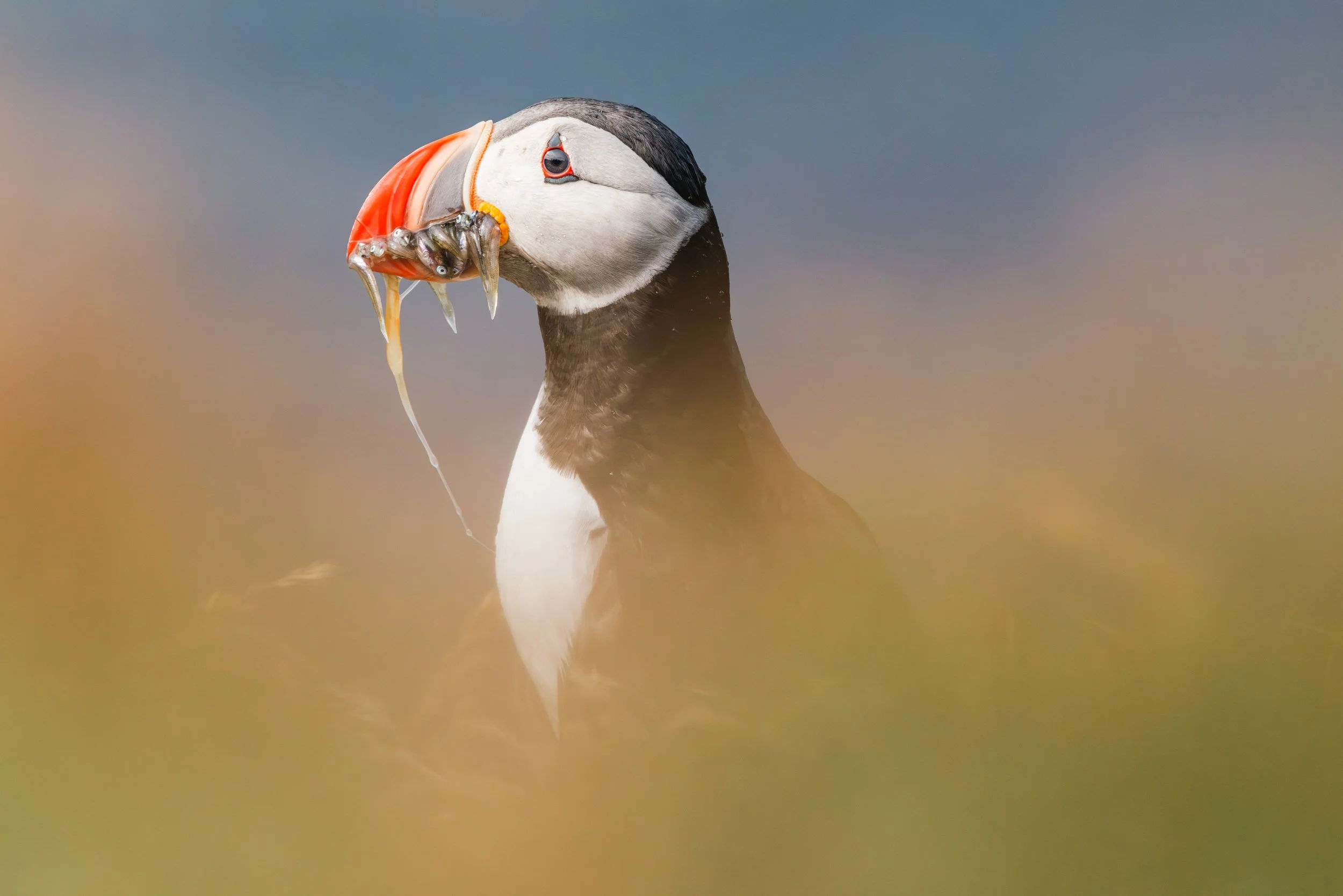
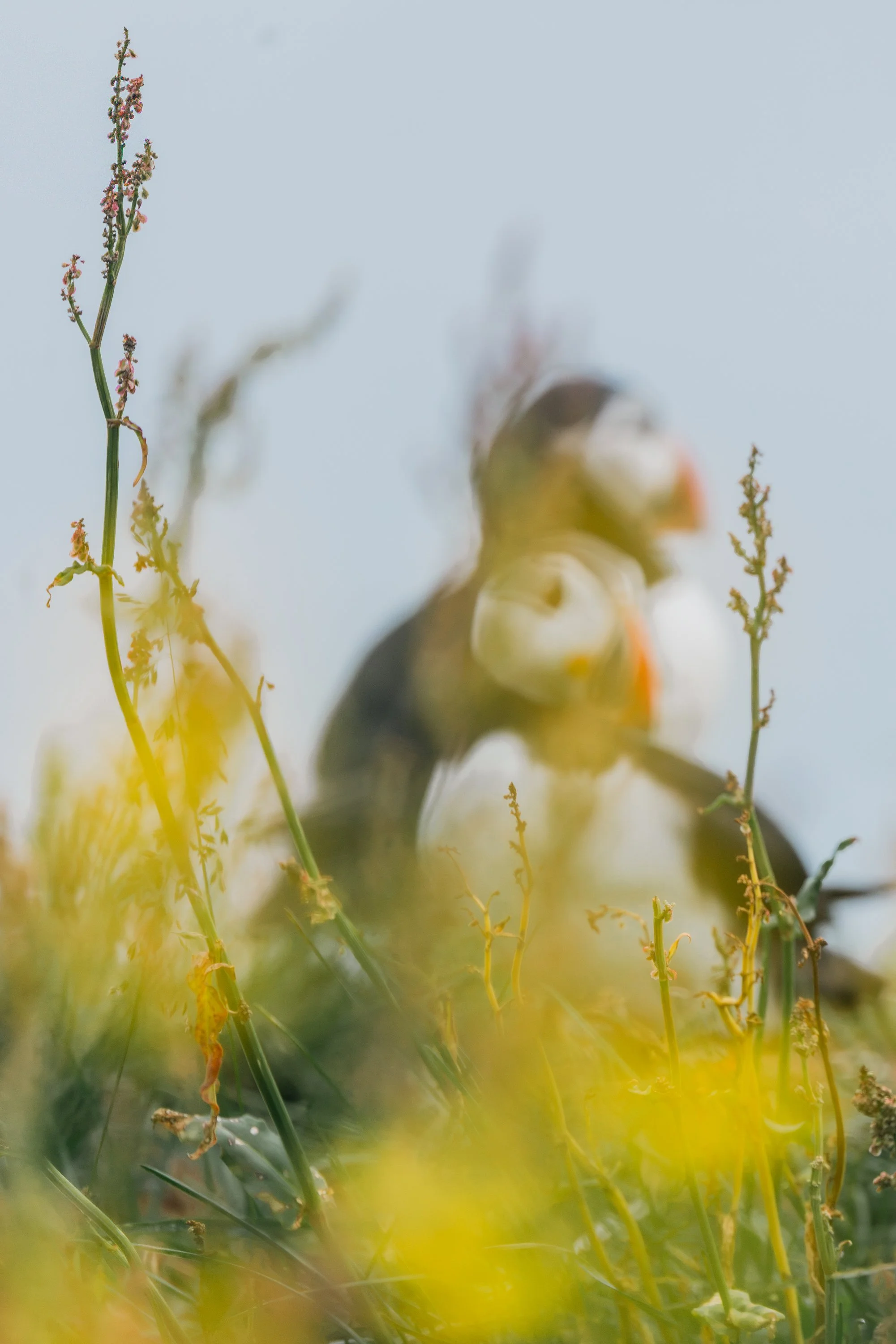
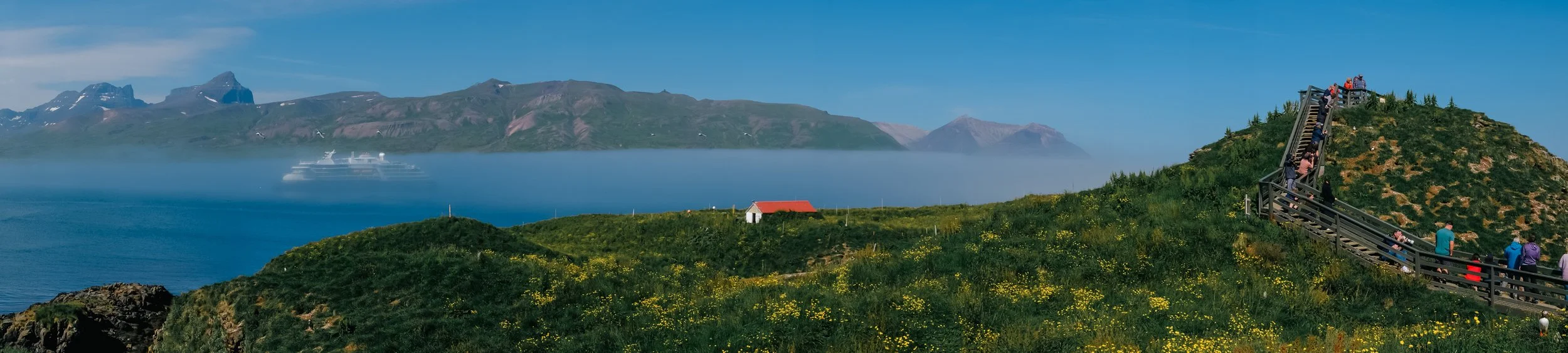
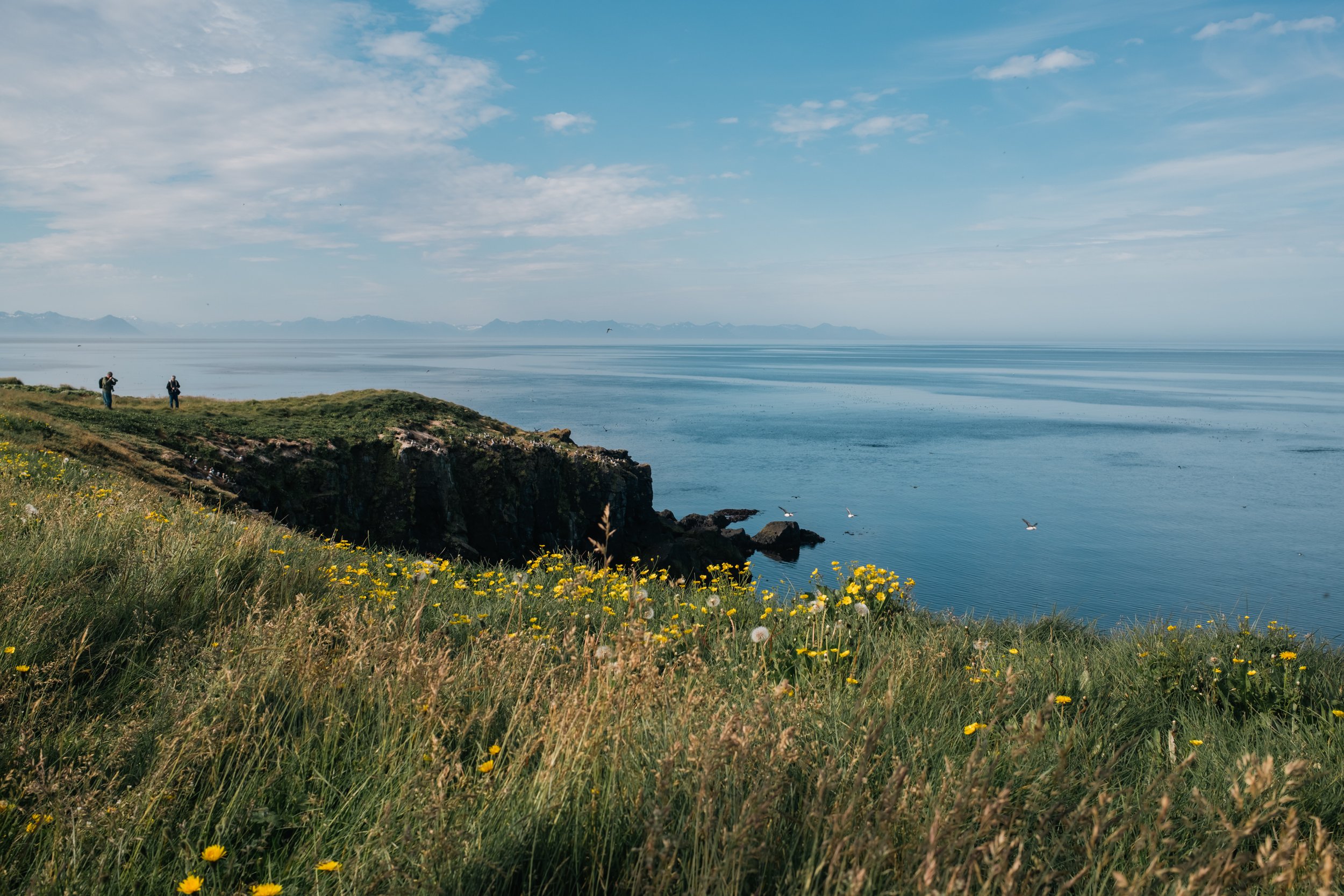
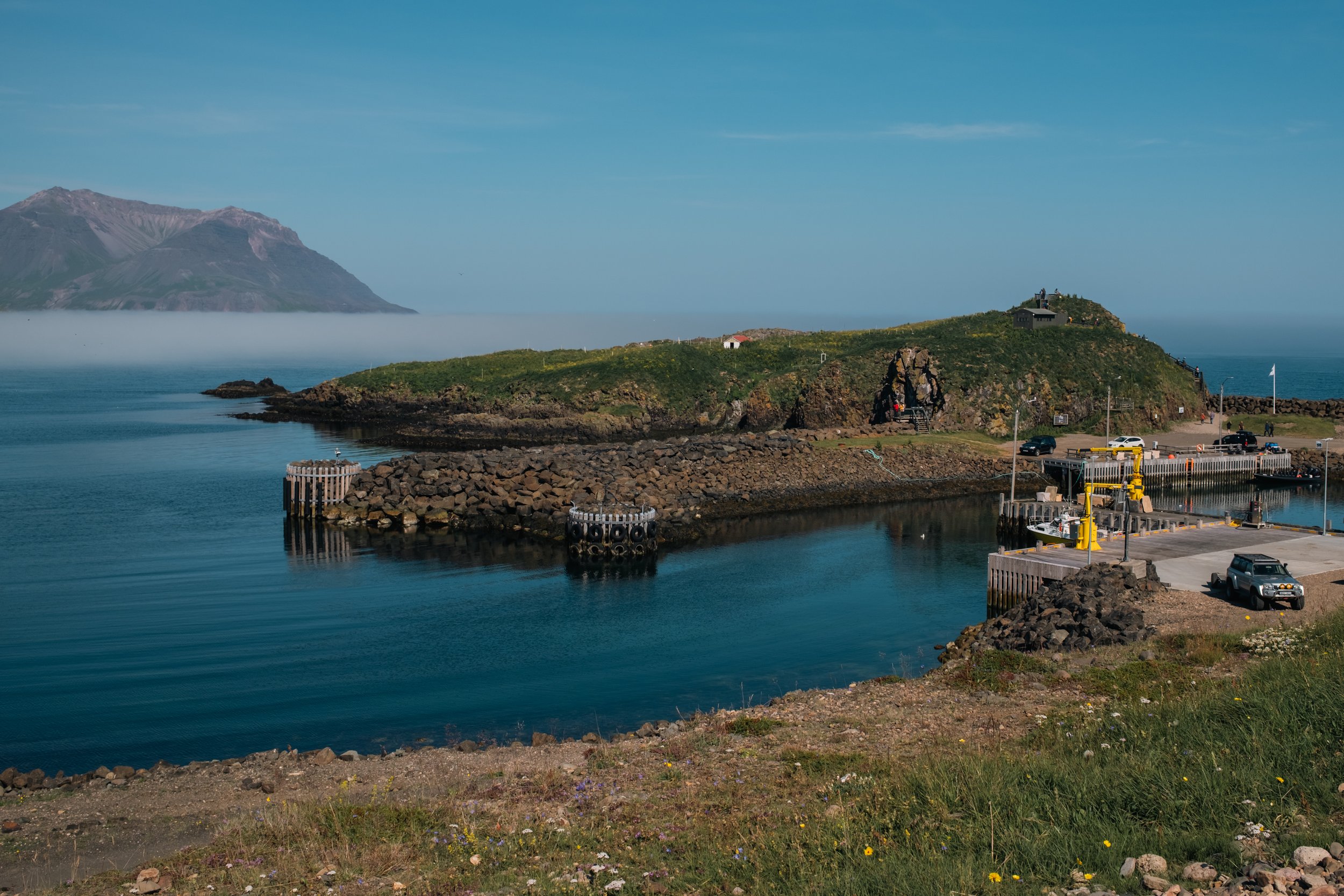
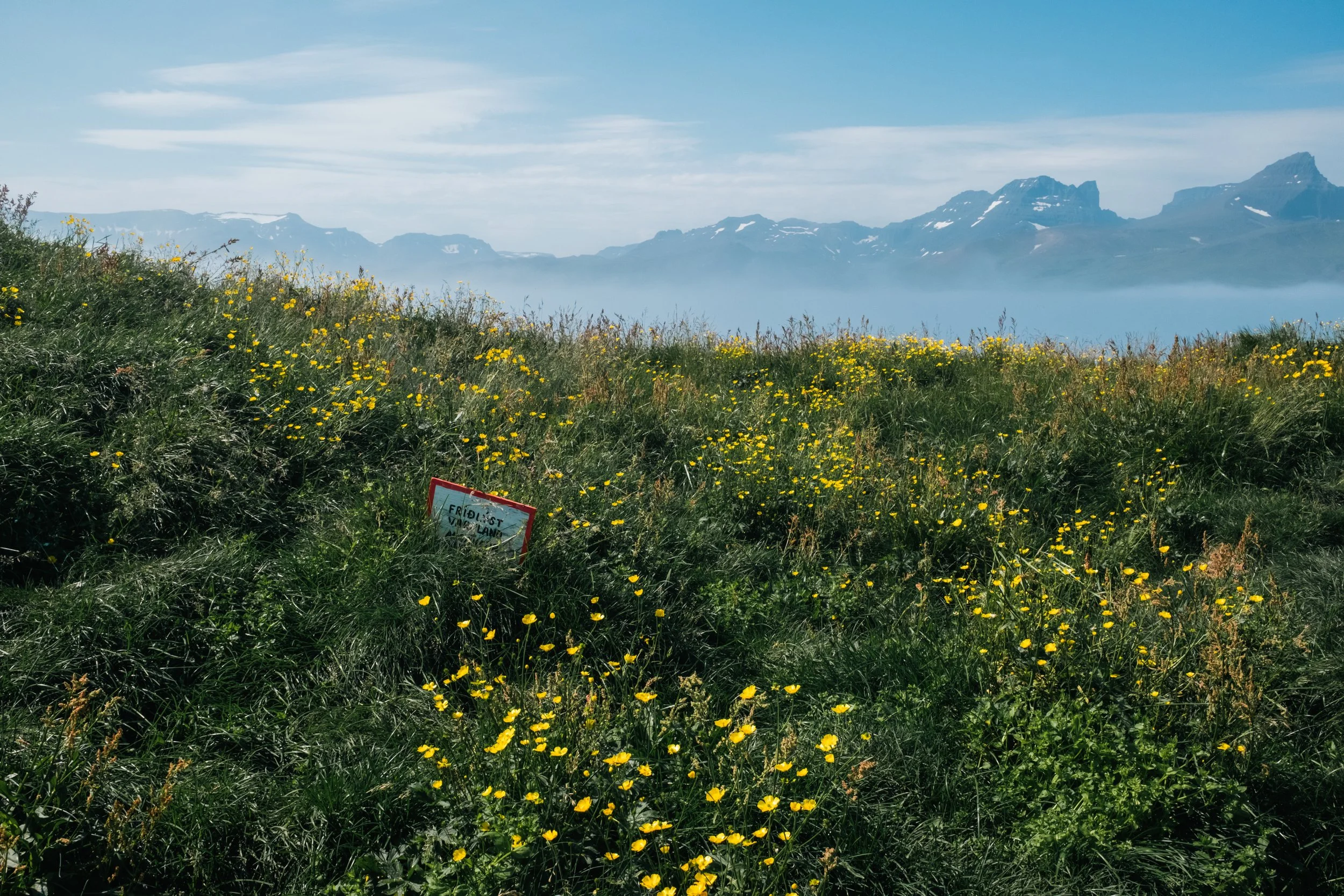
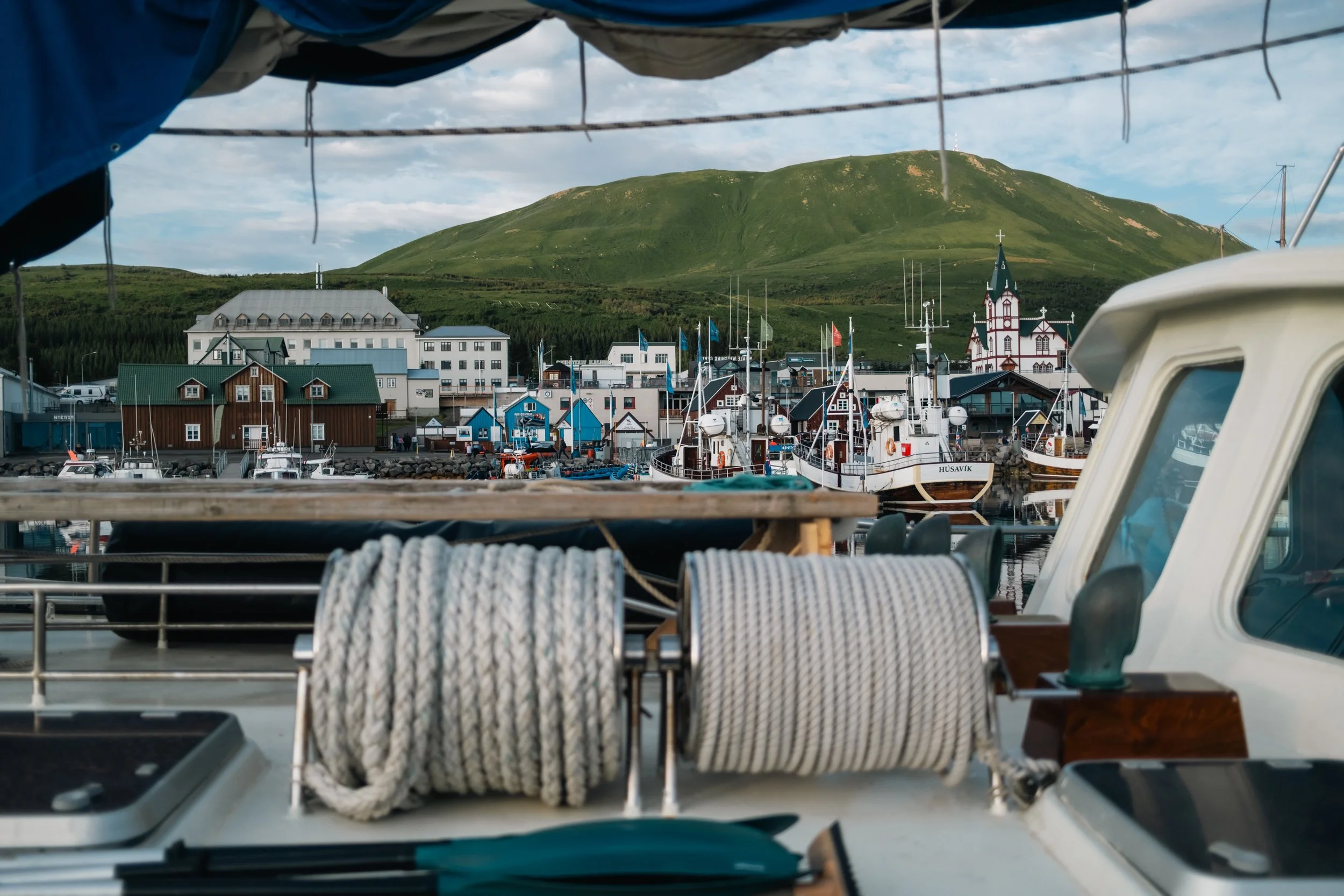
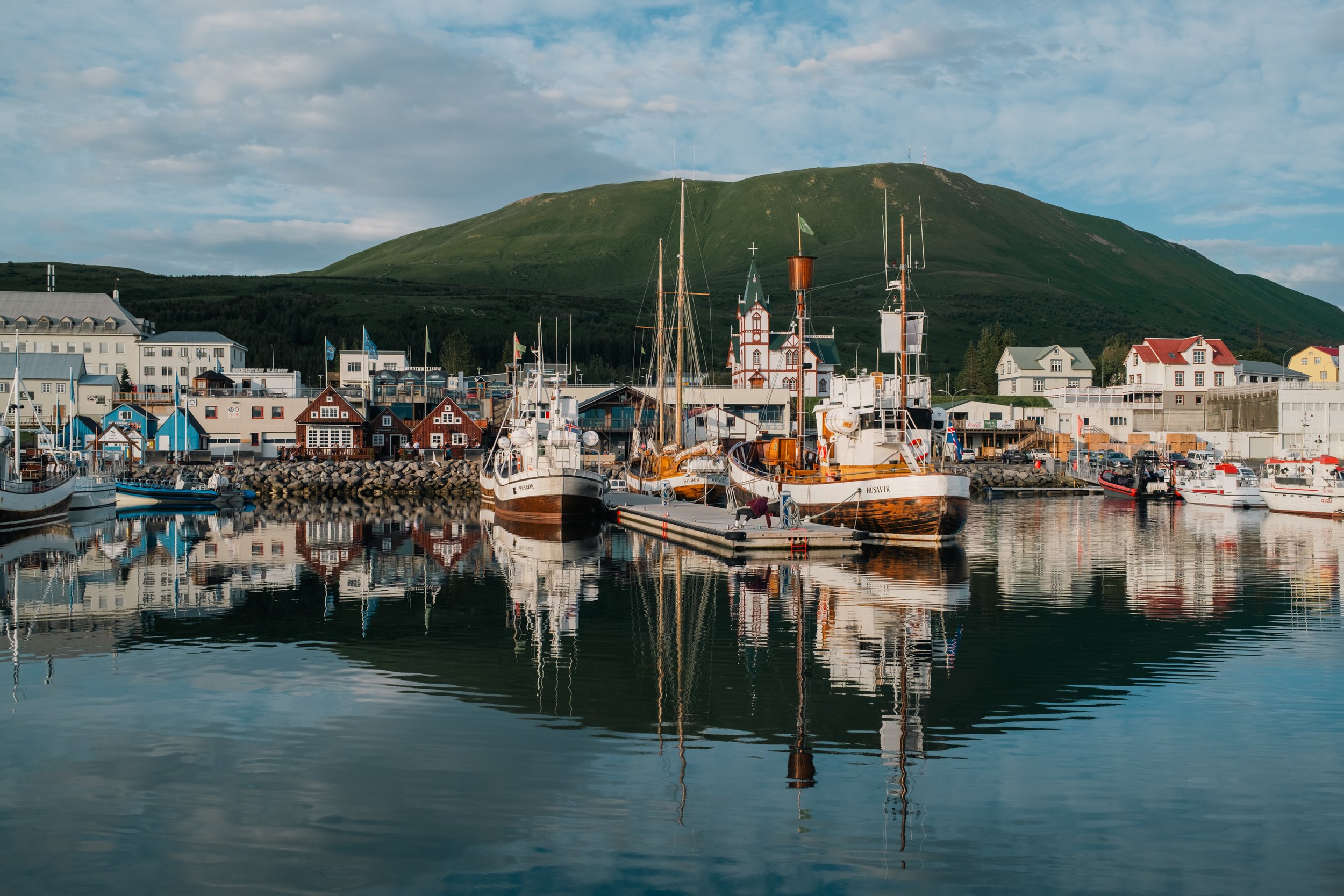
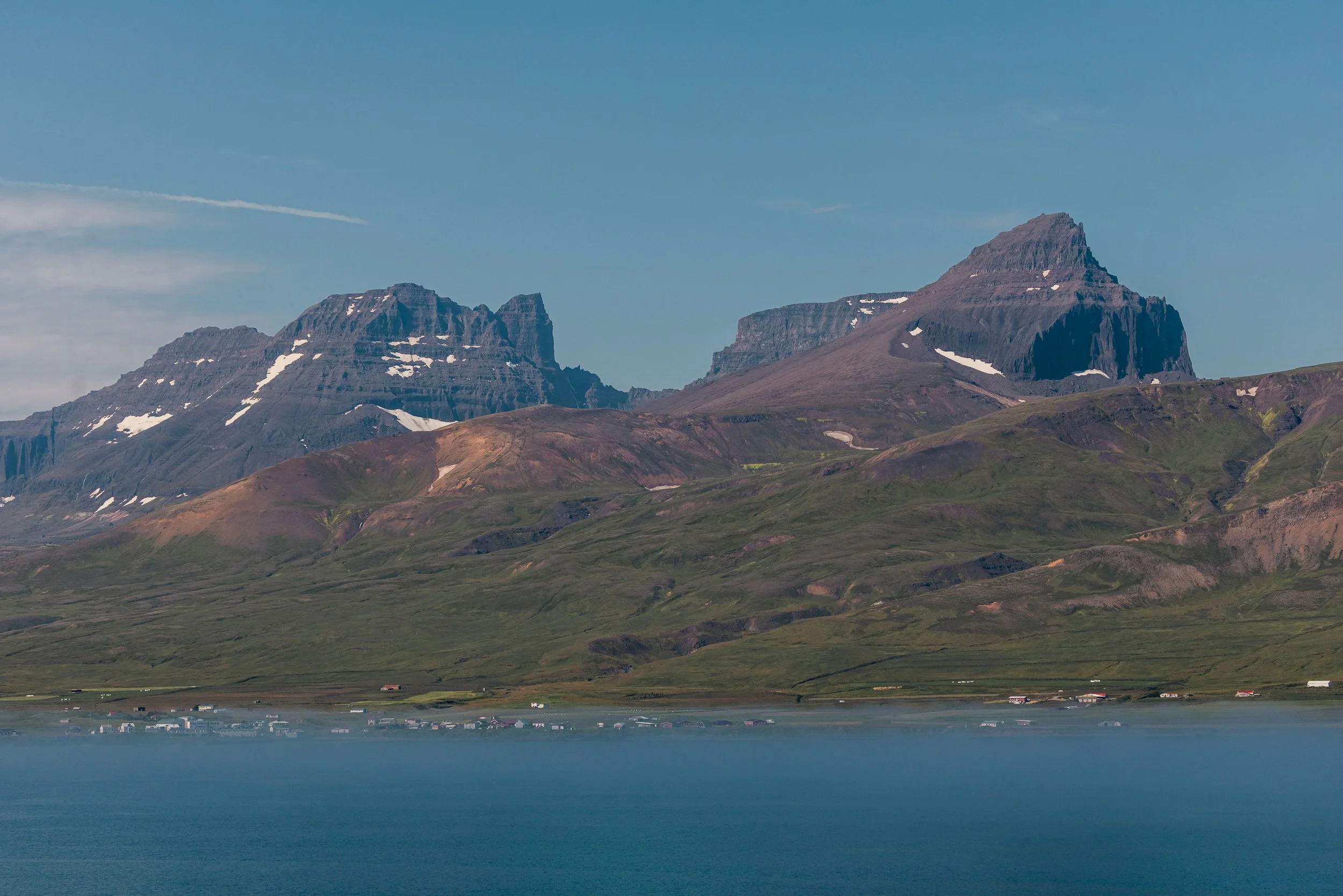
Borgarfjörður Eystri, a small fjord and village on Iceland's east coast. Although it's best known as one of Iceland's premier puffin-viewing destinations, it's also an interesting place from a conservation and science perspective.

Why is Borgarfjörður Eystri special?
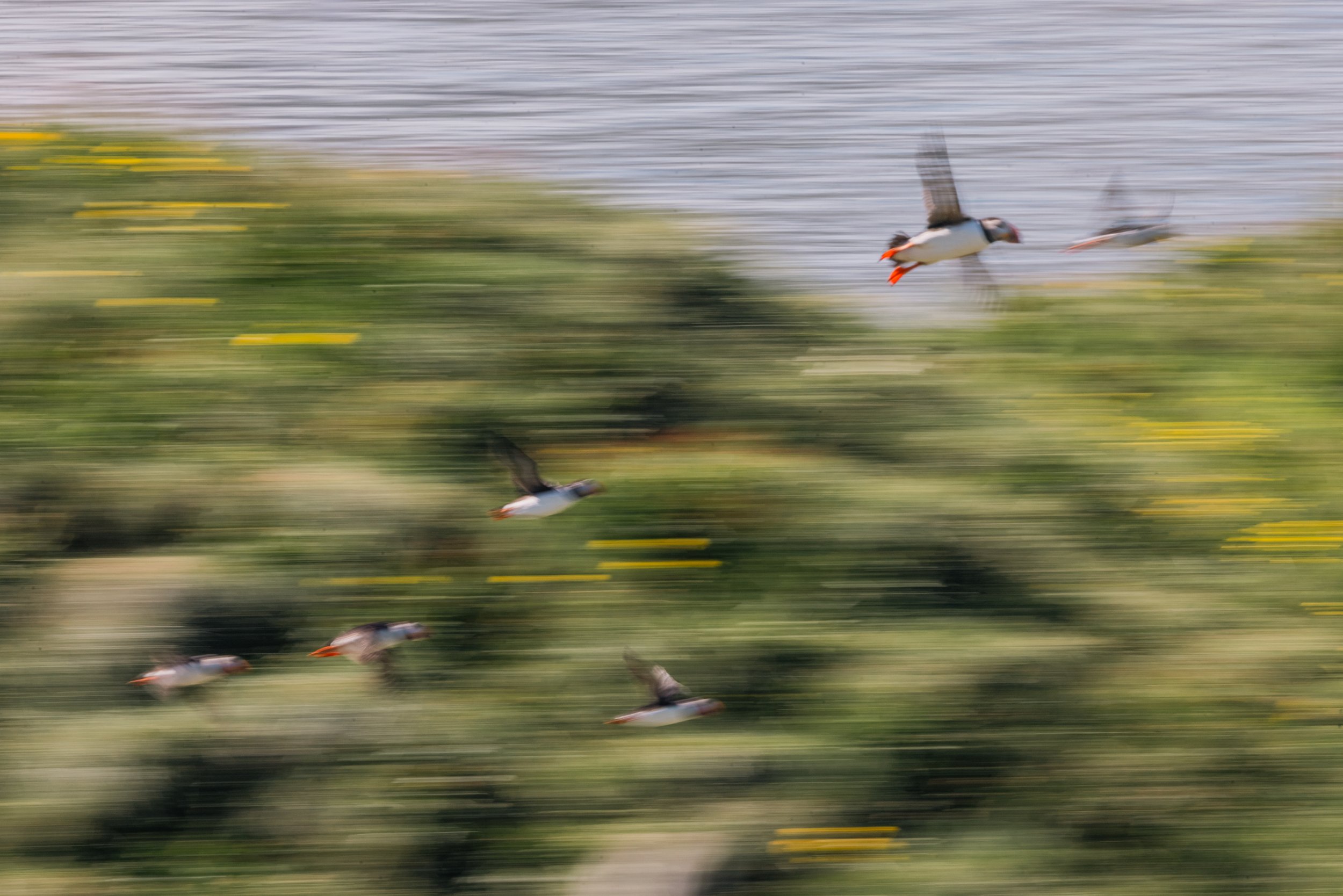
The village has only about 100 permanent residents, but it sits at the intersection of several important ecological and geological features:

  • One of Iceland's most accessible and important colonies of Atlantic puffin.

  • Dramatic volcanic geology, including ancient calderas and rhyolite mountains.

  • Productive coastal and marine ecosystems that support seabirds, seals, and marine mammals.

  • A community that has increasingly embraced nature-based tourism as part of its economy and conservation identity.

Is there research happening there?
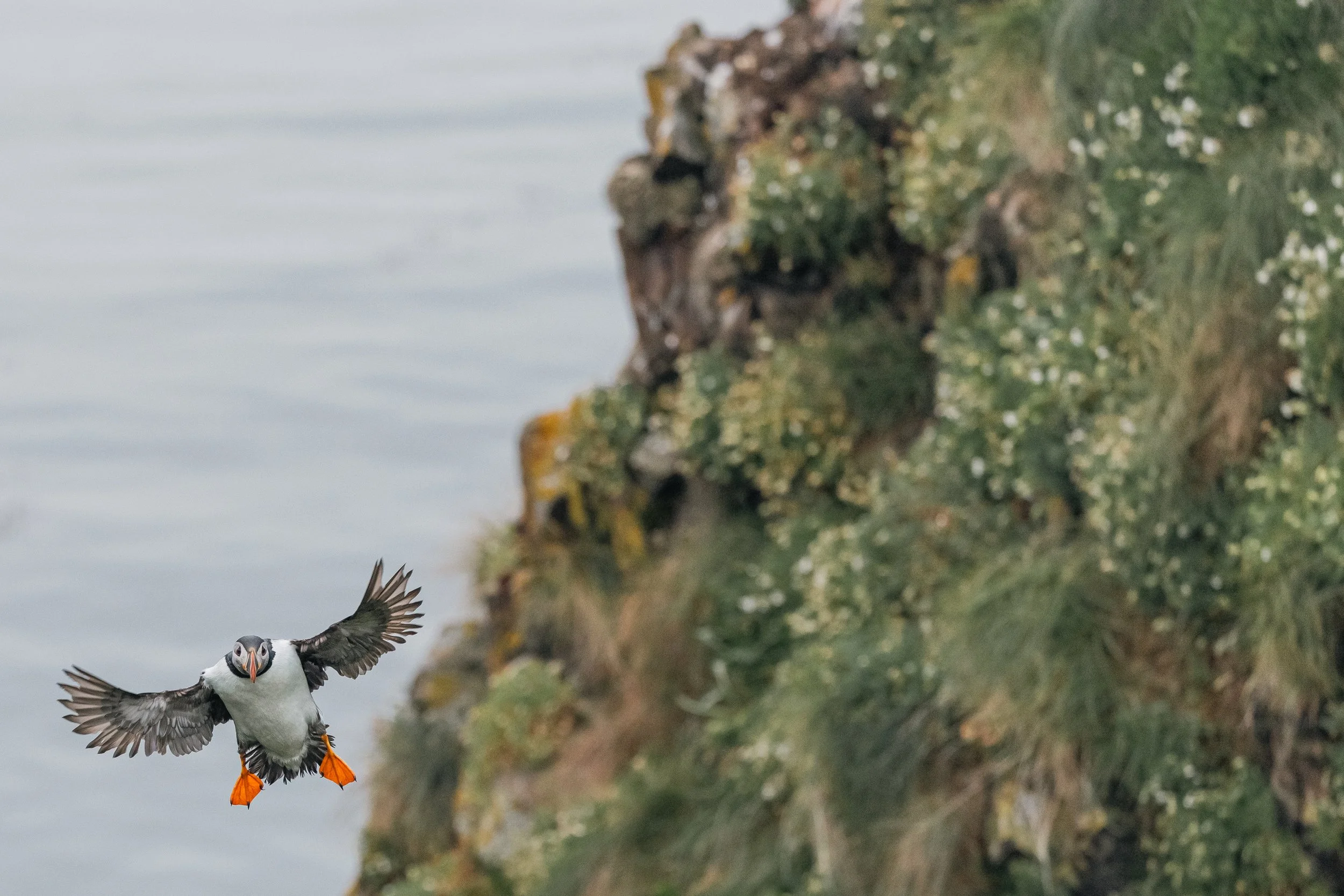
Seabird ecology

The puffin colony at Hafnarhólmi is exceptionally well documented. Researchers monitor:

  • breeding success

  • nesting density

  • population trends

  • timing of arrival and departure

  • effects of ocean conditions on breeding

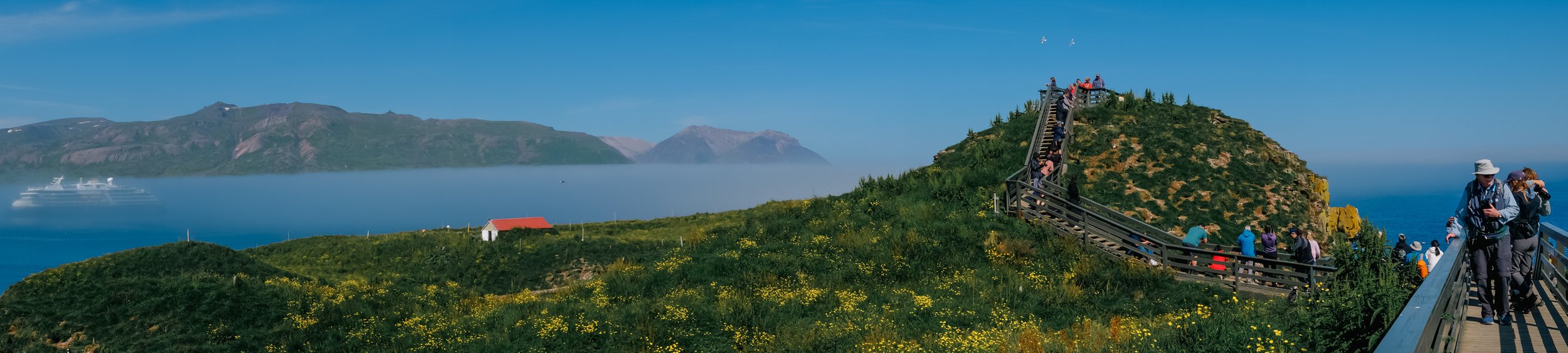
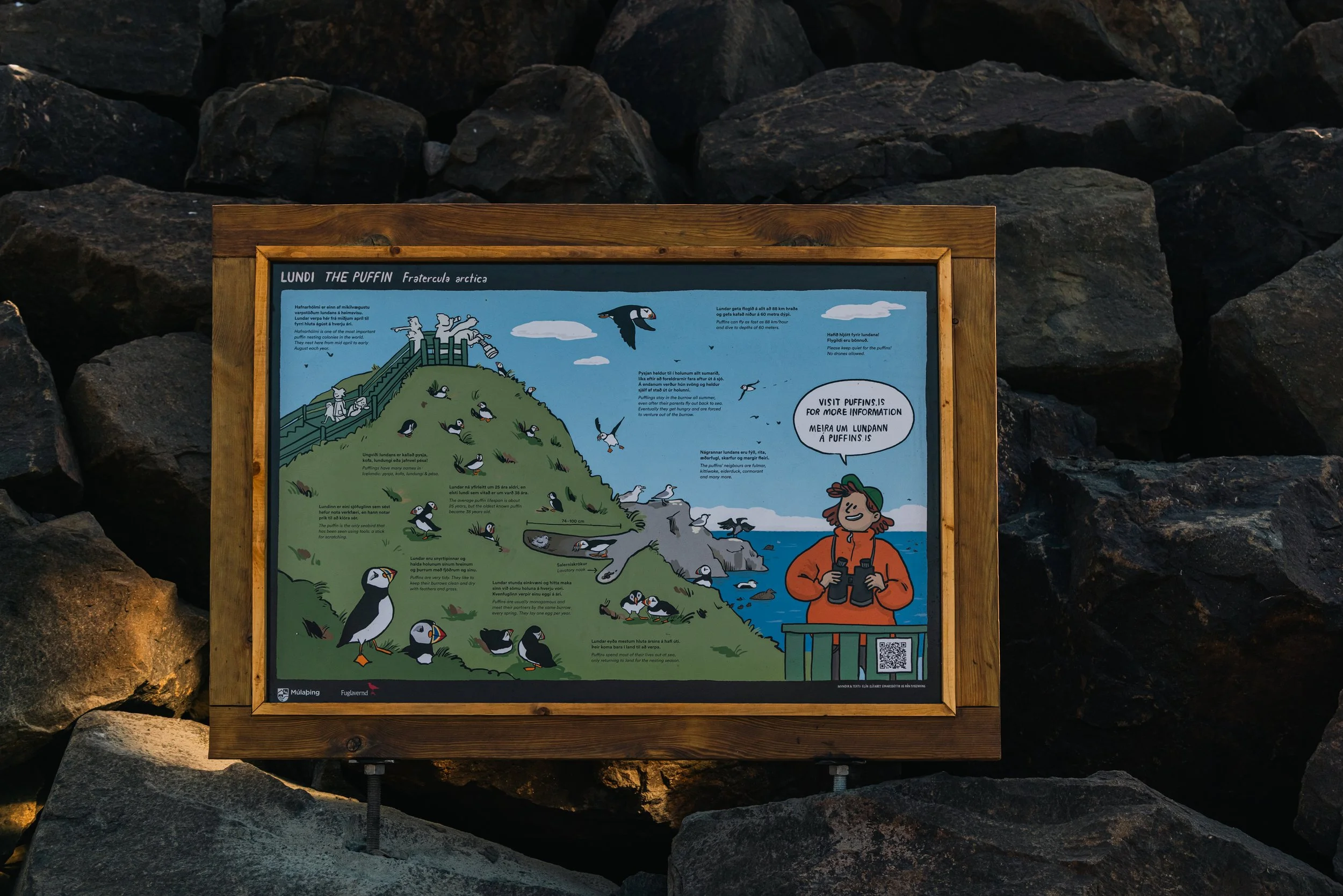
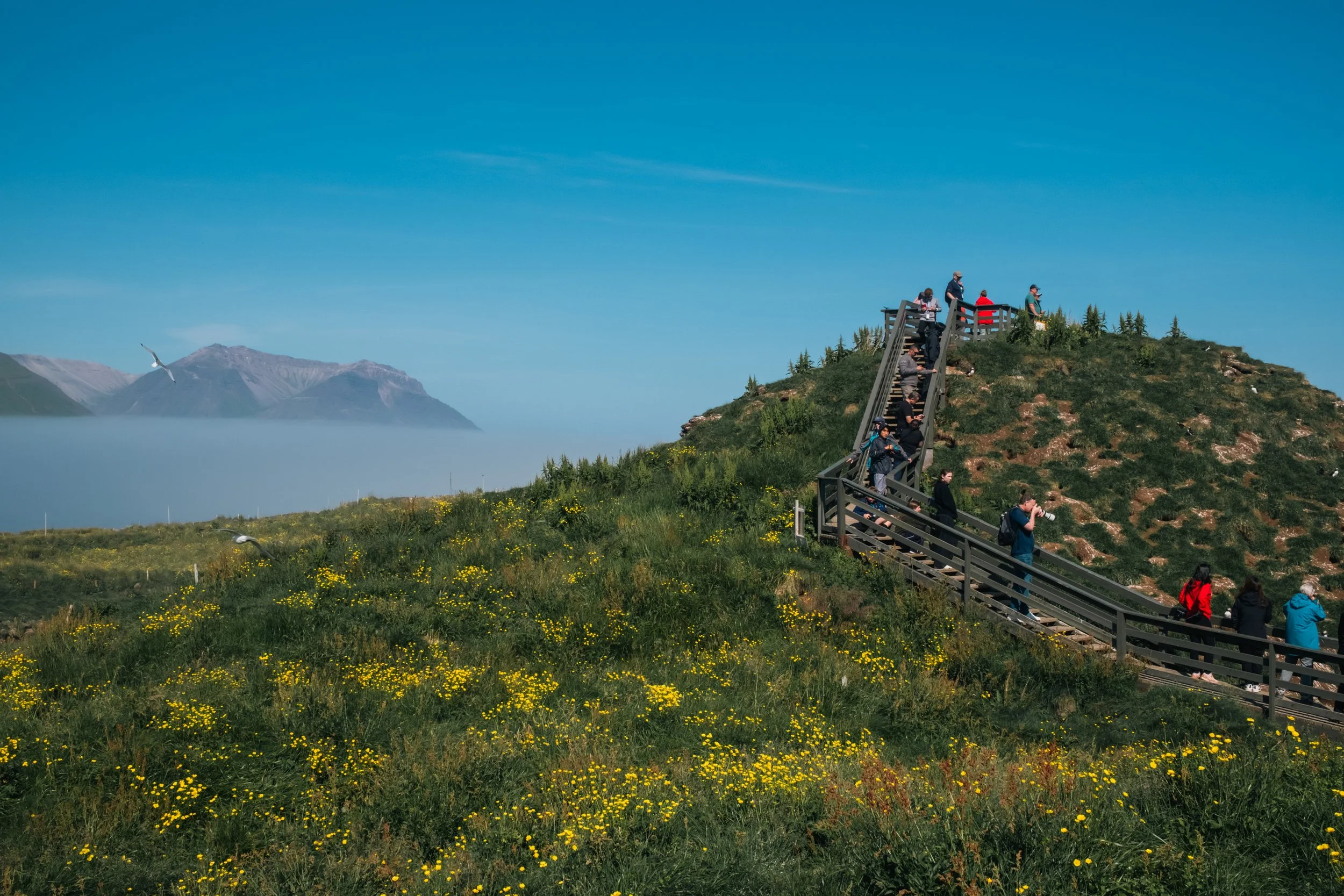
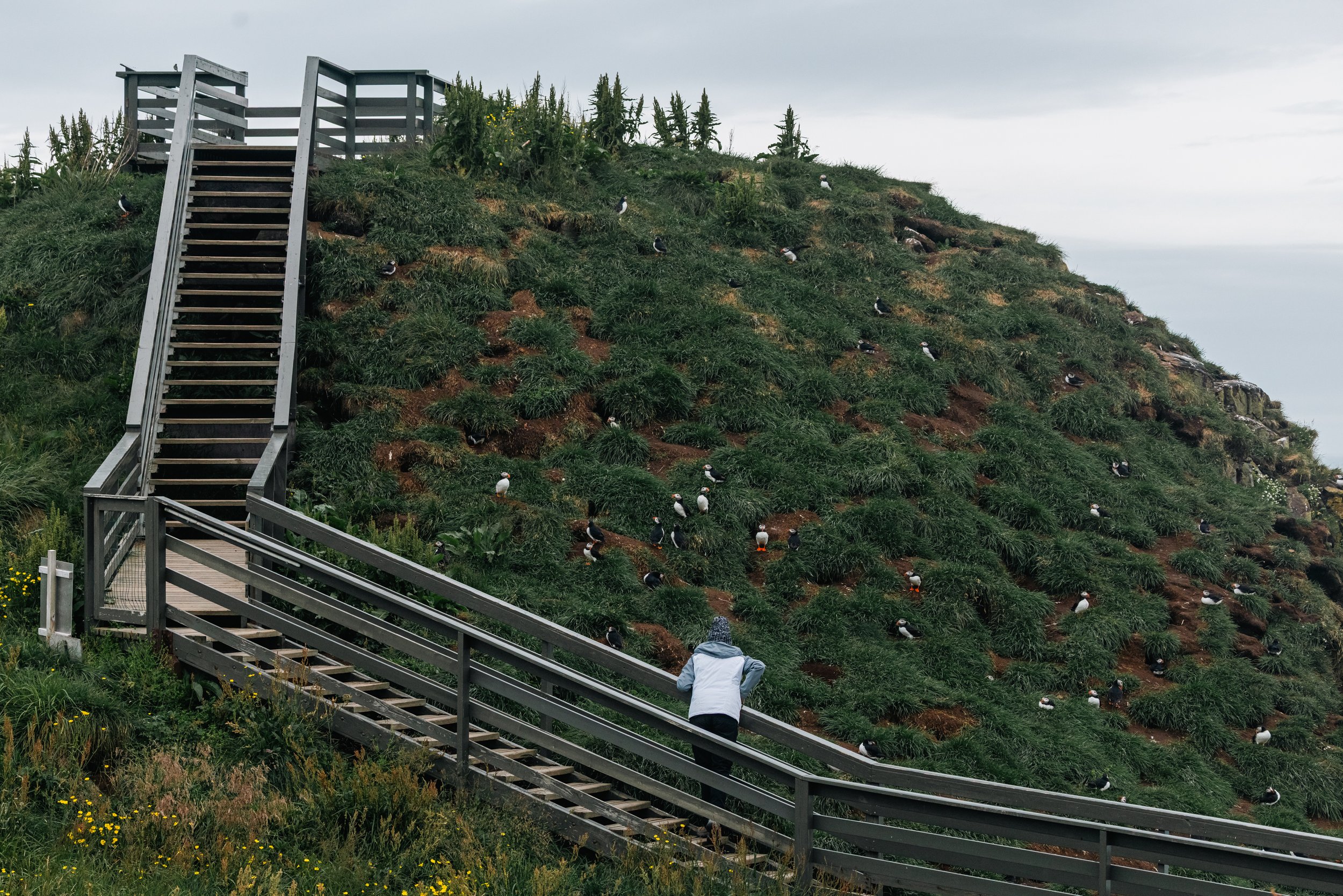
Because visitors can observe puffins from elevated boardwalks without disturbing nesting burrows, the site has become an excellent example of balancing wildlife tourism with conservation.

Tourism and conservation

Interestingly, researchers have also studied the economic value of the puffin colony itself.

Questions include:

  • How much revenue does wildlife tourism generate?

  • How does tourism support the local community?

  • How can infrastructure protect birds while allowing visitors close access?

These studies help justify conservation investments by showing that protecting wildlife can also support sustainable local economies.

Geology

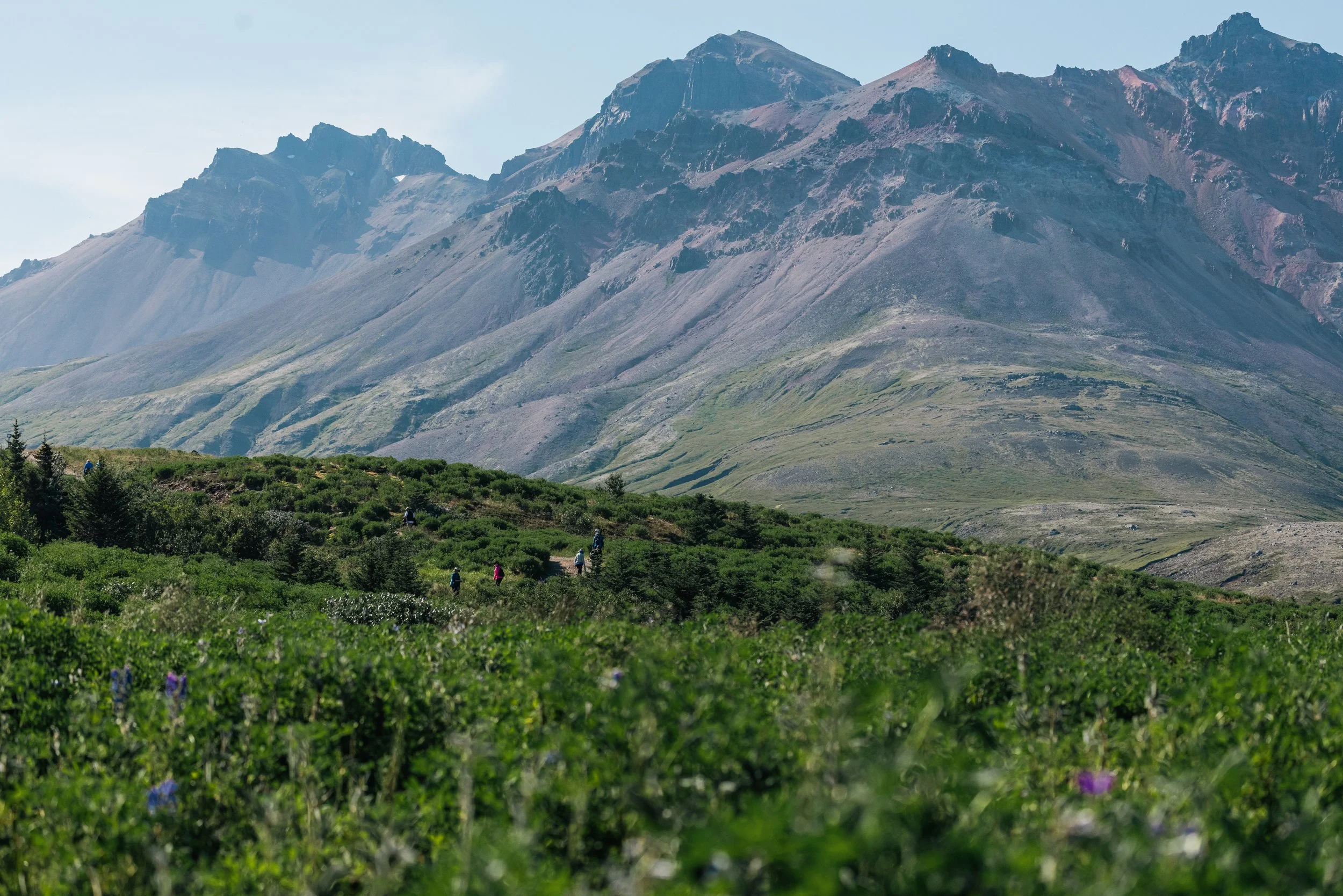
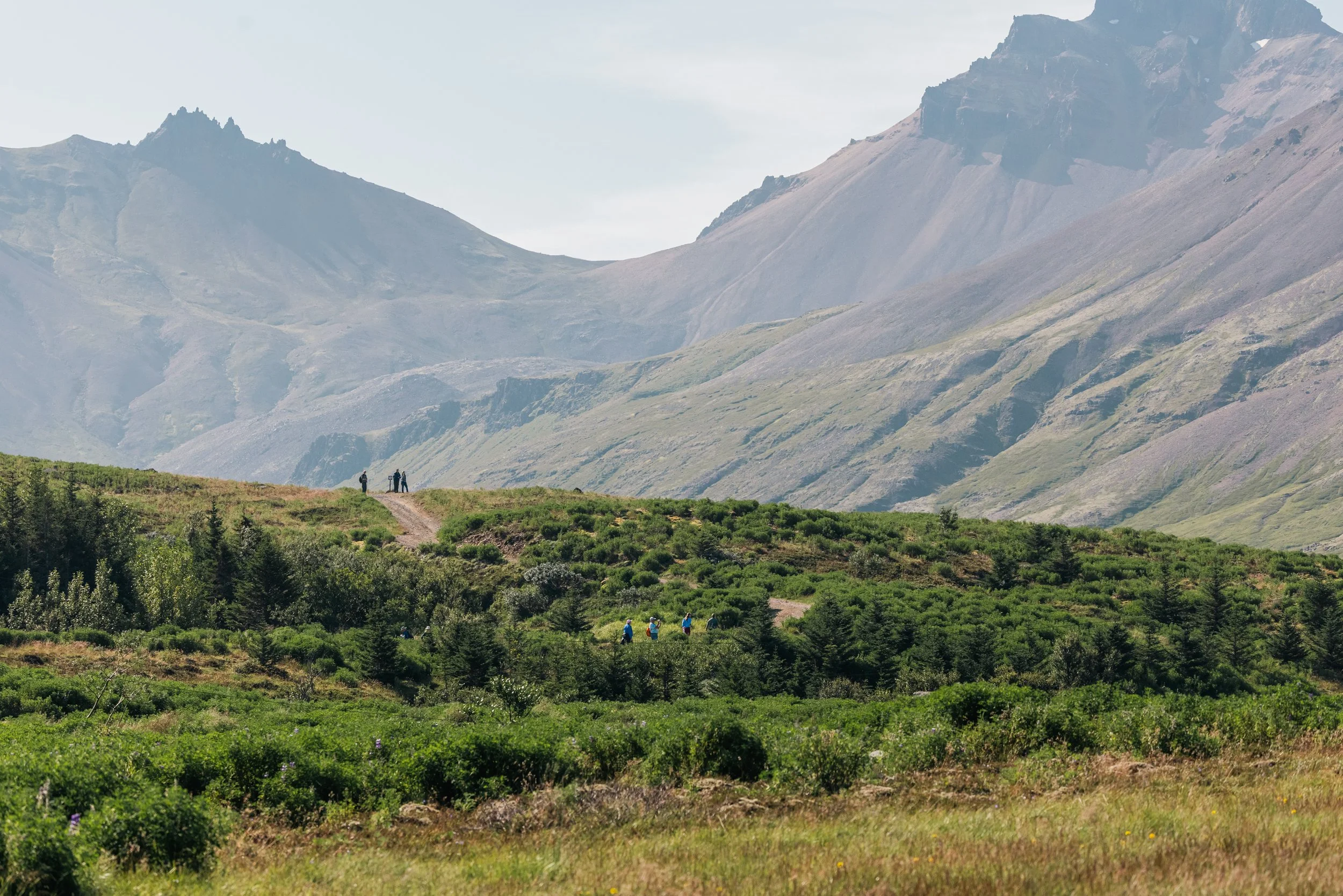
The surrounding mountains are a natural laboratory for volcanologists studying Iceland's volcanic history. The region preserves several ancient volcanic centers and caldera systems that help scientists understand how Iceland's crust evolved millions of years ago.

What is the larger conservation idea?

What makes Borgarfjörður Eystri especially interesting isn't just the puffins—it's the philosophy behind how the community has developed.

Rather than treating wildlife as something to exploit or simply photograph, the area demonstrates that:

  • healthy ecosystems can support local livelihoods,

  • carefully managed tourism can reduce pressure on wildlife,

  • visitors can become advocates for conservation after meaningful experiences in nature.

In many ways, it's a living example of the conservation philosophy: people protect what they feel connected to.

The boardwalks at Hafnarhólmi are a perfect illustration. Visitors can stand only a few meters from nesting puffins while remaining on designated paths that minimize disturbance. That combination of access, education, and protection is intentional—it allows people to experience wildlife intimately without compromising the colony.

  • How has a tiny fishing village reinvented itself around conservation?

  • What does responsible wildlife tourism actually look like?

  • How do scientists, guides, and local residents work together to protect seabirds?

  • Can close encounters with wildlife change people's attitudes toward conservation?

That story connects biology, tourism, community, and conservation—the same intersection that your own bio emphasizes. It moves beyond making beautiful wildlife images to documenting how relationships between people and place shape the future of biodiversity.

Erpur Snær Hansen

If you're interested in puffin conservation, Erpur is probably the best-known scientist in Iceland. He has spent decades studying Atlantic puffins, their breeding success, migration, food availability, and the effects of climate change. Although much of his long-term work is based in the Westman Islands, his research informs puffin conservation across Iceland, including colonies like Hafnarhólmi. He has also spoken publicly about the importance of monitoring the earlier-returning eastern colonies, including Borgarfjörður Eystri.

South Iceland Nature Research Centre (Náttúrustofa Suðurlands)

This organization has become Iceland's leading center for puffin ecology.

Their work includes:

  • GPS tracking

  • geolocators

  • diet studies

  • breeding success

  • fisheries interactions

  • climate impacts

If you were interested in documenting seabird research in Iceland, this would be one of the strongest organizations to approach.

University of Iceland

Researchers from the University of Iceland have studied Borgarfjörður Eystri from a different angle—not the birds themselves, but the relationship between conservation and the local economy.

One particularly interesting study examined:

  • visitor spending

  • economic benefits of the puffin colony

  • how wildlife tourism supports rural communities

  • why protecting the colony has value beyond biodiversity

That strikes me as a fascinating documentary angle because it asks whether conservation can also sustain people.

BirdLife Iceland (Fuglavernd)

BirdLife Iceland has partnered with the community on conservation and research surrounding the Hafnarhólmi colony.

Their interests include:

  • protecting breeding habitat

  • visitor management

  • monitoring bird populations

  • public education

The economic-impact study was commissioned in collaboration with BirdLife Iceland, showing how conservation organizations and local communities are working together.

Knowing the kind of work you're trying to build, I actually think the scientist isn't the main character.

The main character is the relationship between four groups:

  • scientists monitoring the puffins,

  • local residents whose community has embraced conservation,

  • guides helping visitors understand what they're seeing,

  • visitors whose experience may transform into conservation action.

That aligns almost perfectly with the philosophy you've described in your own bio.

Rather than another "scientist follows puffins" story, you could ask:

What happens when an entire community decides that protecting wildlife is part of its identity?

The puffins become the thread that ties together biology, tourism, economics, education, and community resilience.

From a documentary standpoint, that's a richer narrative than the birds alone because it's ultimately about how conservation succeeds—or fails—through human relationships. Helping people form meaningful connections with nature is itself part of the conservation model.

I actually think this trip could become one of the most valuable pieces of your puffin project, even if you don't photograph a single puffin.

That sounds counterintuitive, but hear me out.

One of the biggest lessons from conservation photography is that the story is rarely just the species. The story is everything surrounding it: the ocean, the people, the science, the fisheries, the tourism, the changing climate, and the communities that depend on healthy ecosystems.

Here's why September is interesting

By September, Atlantic Puffins have largely left their breeding colonies and are spending time at sea. You almost certainly won't have the close breeding-colony opportunities you had in Iceland.

But...

Your project doesn't have to end when the birds leave.

Instead, you can photograph what remains after the breeding season.

That opens up a completely different chapter.

Places on those expeditions that interest me

Depending on your exact itinerary, you'll likely visit places such as:

  • Mingan Archipelago National Park Reserve

  • Forillon National Park

  • Bonaventure Island

  • Prince Edward Island National Park

  • Cape Breton Highlands National Park

  • Bay of Fundy

  • Saguenay–St. Lawrence Marine Park

Each one offers opportunities that complement a puffin story.

I wouldn't photograph puffins...

I'd photograph their world.

Imagine chapters like:

"The Ocean They Return To"

Photograph:

  • storm-driven seas

  • forage fish

  • capelin spawning beaches

  • mackerel fisheries

  • baitfish

  • plankton-rich waters

  • seabird feeding flocks

Suddenly your project becomes about the ecosystem puffins depend on.

"People of the Puffin Coast"

Fishing communities.

Lighthouse keepers.

Boat captains.

Naturalists.

Park wardens.

Tour guides.

These are the people who witness change over decades.

Their voices strengthen a conservation story enormously.

"The Empty Colony"

If you visit somewhere like Bonaventure after the breeding season, photographing an empty colony could actually be quite powerful.

Instead of

Here are puffins.

the story becomes

This cliff is silent now. The birds are thousands of kilometres away, but the challenges they face continue year-round.

That has emotional weight.

Researchers?

This is where I think you have a real opportunity.

I'd reach out to researchers before your trip.

Groups worth investigating include:

  • Birds Canada

  • Canadian Wildlife Service

  • Parks Canada

  • MERINOV

  • Memorial University of Newfoundland

  • Université du Québec à Rimouski

Even if no one is actively handling puffins during your voyage, there may be researchers studying:

  • forage fish

  • marine protected areas

  • climate change

  • seabird monitoring

  • whales

  • ocean acoustics

  • marine food webs

All of those strengthen a puffin narrative.

Here's an idea I like even more...

You already have excellent puffin photographs from Iceland.

What if this became a project called:

Beyond the Colony

or

Where Puffins Meet the Sea

Chapter 1

  • Iceland breeding colony

Chapter 2

  • Atlantic Ocean

Chapter 3

  • Canadian Maritimes

Chapter 4

  • Fisheries

Chapter 5

  • Marine scientists

Chapter 6

  • Responsible tourism

Chapter 7

  • The future of the North Atlantic

Now you're no longer producing "a puffin project."

You're documenting an entire North Atlantic ecosystem.

One person I'd especially want you to meet

If I were planning your career, I would try very hard to arrange time with a seabird biologist rather than hoping to photograph puffins again.

Why?

Editors at conservation publications see beautiful puffin images every year.

Far fewer stories show:

  • the scientist deploying GPS tags,

  • analyzing fish samples,

  • climbing sea cliffs,

  • monitoring breeding success,

  • or explaining why colonies are changing.

Those are the photographs that distinguish a conservation story from a wildlife portfolio.

If this were my project...

I'd spend the next two months researching every scientist, seabird monitoring program, and marine conservation initiative along your September route. Then I'd begin reaching out now to arrange access while you're already in the region.

I think there's enough material to transform your Iceland puffin photographs into a much broader documentary about the health of the North Atlantic, using the puffin not as the entire story, but as the thread that ties the whole ecosystem together. That's exactly the kind of long-form, issue-driven work that resonates with conservation organizations and editors.

I spent some time looking at both itineraries, and I think you've got a much better opportunity than it first appears.

The key is that I'd stop thinking of this as "Can I photograph puffins?" and instead ask, "What stories connected to puffins are happening where I'll be?"

First, St. John's

The puffins are likely to be mostly gone by early and certainly late September. There can be a handful lingering around the Witless Bay Ecological Reserve, but photographers generally report that the huge breeding colonies have dispersed by then.

However...

I think St. John's may actually be your best place to make connections.

These are the organizations I'd contact before you arrive.

1. Memorial University of Newfoundland ⭐⭐⭐⭐⭐

This would be my first email.

Their researchers work on:

  • seabirds

  • marine ecology

  • fisheries

  • oceanography

  • climate change

  • North Atlantic ecosystems

Even if nobody is actively studying puffins that week, I would almost guarantee there are researchers working on something directly related to puffin ecology.

I'd ask something like:

"I'll be in St. John's for several days between expeditions documenting a long-term North Atlantic seabird conservation project. Is there anyone studying seabirds, forage fish, marine food webs or climate impacts who might be willing to speak with me or allow me to photograph part of their work?"

2. Fisheries and Oceans Canada

This might actually be even more valuable.

They have scientists working on

  • capelin

  • Atlantic cod

  • ocean warming

  • seabird food supply

  • marine protected areas

Capelin are one of the most important prey species for puffins.

A story about capelin is also a story about puffins.

3. Environment and Climate Change Canada

Especially their Canadian Wildlife Service biologists.

They monitor

  • seabird populations

  • nesting success

  • migration

  • marine protected areas

Then I noticed something...

Your itineraries visit some places that are arguably better conservation stories than puffins themselves.

Saguenay–St. Lawrence Marine Park ⭐⭐⭐⭐⭐

This is HUGE.

This is one of Canada's premier marine conservation areas.

You have:

  • endangered belugas

  • shipping

  • underwater noise

  • marine research

  • whale conservation

If I were building your portfolio for ILCP...

I'd absolutely photograph scientists and conservation around the belugas.

That's a conservation story editors immediately understand.

Côte-Nord

This could be incredible.

The Lindblad itinerary specifically mentions spending two days exploring with local experts.

Questions I'd ask onboard:

  • Are there seabird monitoring stations?

  • Is anyone studying forage fish?

  • Marine protected areas?

  • Indigenous Guardians?

  • Climate monitoring?

Magdalen Islands ⭐⭐⭐⭐

This is another place I'd be excited about.

Possible stories include

  • dune erosion

  • changing fisheries

  • seabirds

  • seals

  • coastal communities adapting to climate change

Even if puffins aren't present, this is still North Atlantic conservation.

Gros Morne National Park

I think this is a sleeper location.

You have

  • geology

  • climate

  • coastal ecosystems

  • boreal wildlife

Editors love stories that connect geology to biodiversity.

Here's the project I would quietly work on

Instead of

The Puffins

I'd begin building

The North Atlantic

where puffins become one chapter.

Imagine:

  • Iceland colony

  • Newfoundland researchers

  • Capelin

  • Marine protected areas

  • Belugas

  • Fisheries

  • Climate change

  • Responsible tourism

That becomes much more publishable.

One thing I would absolutely do

Since you'll be sailing with Lindblad/National Geographic, ask the expedition leader before you depart:

"Are there any scientists, conservation researchers, Parks Canada staff, Fisheries and Oceans researchers, or seabird monitoring programs we'll be visiting that I might be able to spend extra time documenting?"

The expedition staff often know researchers personally and can make introductions that are difficult to arrange on your own.

I think this story has the potential to fit several very different publications, but I would not pitch the same angle to all of them. The strongest conservation photographers tailor the story to each outlet's audience.

If your project evolves into "The North Atlantic: An Ecosystem in Transition", here are the editors I would have in mind.

Tier 1: Dream Publications

National Geographic ⭐⭐⭐⭐⭐

This would be my ultimate goal.

But I would not pitch "I photographed puffins."

I'd pitch:

Using the Atlantic puffin as a window into the changing North Atlantic, this long-term documentary follows scientists, fishing communities, expedition tourism, and marine conservation from Iceland to Newfoundland, exploring how climate change, fisheries, and protected areas are reshaping one of the world's richest ocean ecosystems.

That feels very National Geographic.

BioGraphic ⭐⭐⭐⭐⭐

Honestly?

This might be an even better fit.

BioGraphic loves:

  • long-form conservation stories

  • behind-the-scenes science

  • field researchers

  • immersive photography

  • hope alongside environmental challenges

Your interest in following scientists is exactly the kind of reporting they publish.

Audubon ⭐⭐⭐⭐⭐

This is perhaps the most obvious home.

Instead of just puffins, the story becomes

  • seabirds

  • food webs

  • marine ecosystems

  • fisheries

  • conservation

They frequently publish exactly this type of work.

Tier 2: Excellent Fits

Canadian Geographic ⭐⭐⭐⭐⭐

I actually think this should be one of your first pitches.

Why?

You're Canadian.

The story happens in Canada.

It highlights Canadian science.

It features Canadian conservation.

That combination is very attractive.

Hakai Magazine ⭐⭐⭐⭐⭐

This one excites me the most.

If you haven't read Hakai regularly...

You should.

Their entire publication lives at the intersection of

  • marine science

  • conservation

  • fisheries

  • coastal communities

  • Indigenous knowledge

  • ocean ecosystems

Your story almost sounds like something they would commission.

Mongabay ⭐⭐⭐⭐

They publish conservation reporting from around the world.

If your project becomes research-driven, I think they'd be interested.

BBC Wildlife Magazine ⭐⭐⭐⭐

Especially if you emphasize:

  • seabirds

  • North Atlantic ecology

  • changing oceans

Tier 3: Conservation Organizations

These don't always pay editorial rates, but they can create tremendous visibility and impact.

  • BirdLife International

  • Birds Canada

  • Ocean Conservancy

  • World Wildlife Fund

  • The Nature Conservancy

A Different Strategy I'd Consider

Rather than waiting until the project is "finished," I would approach it in phases.

Phase 1

Photograph the fieldwork.

Pitch a small feature to Canadian Geographic or Hakai Magazine.

Phase 2

Continue documenting Iceland.

Add Newfoundland.

Add expedition tourism.

Phase 3

Create a larger multimedia package.

Now pitch National Geographic or BioGraphic.

That's often how major projects grow. Editors like to see that a photographer has already developed access, relationships, and momentum.

One publication I think you're overlooking

Given your experience as an expedition leader, I would seriously consider pitching the tourism angle.

Not "travel."

Responsible expedition travel as a conservation tool.

That opens the door to publications and organizations interested in how carefully managed tourism can support research, protected areas, and public engagement. It's a perspective you can write about with credibility because you've worked in the field.

If I were your editor...

Based on everything we've worked on together over the last year, I would encourage you to make this your signature long-term project, not a single article.

Imagine spending the next three to five years revisiting the North Atlantic:

  • Iceland puffins

  • Newfoundland seabirds

  • St. Lawrence belugas

  • Fisheries science

  • Climate change

  • Expedition tourism

  • Marine protected areas

  • Coastal communities

  • Researchers in the field

Over time, you'd build not just one magazine story, but a body of work that could support multiple publications, exhibitions, speaking engagements, and conservation partnerships.

One observation from our conversations stands out: your strongest ideas emerge when you're following people, research, and ecological relationships, rather than chasing a single iconic species. That's a direction worth continuing to develop because it creates stories with both visual richness and lasting relevance.

Previous
Previous

Antarctica

Next
Next

Pacaya Samaria National Reserve